2027 Best Career Training Programs With Student Success Coaching

Co-Founder and Chief Data Scientist
Choosing short-term career training can be risky when a program promises job readiness but offers little help finishing coursework or finding work. Student success coaching adds structured academic, career, and personal support to certificates, diplomas, associate degrees, and nondegree training.
This matters in fields with changing technology and licensing rules: the U.S. Bureau of Labor Statistics projects healthcare support occupations to grow faster than average from 2023 to 2033. This guide compares practical program types, coaching models, costs, credentials, and career paths so you can invest in training that fits your actual goal.
Key Things You Should Know
- Choose the credential backward from the job. A certificate may build entry-level skills, while a license, industry certification, apprenticeship, or associate degree may be required for the role you want.
- Coaching should be measurable. Look for assigned advisors, progress check-ins, tutoring, resume support, employer connections, and published completion and placement definitions.
- BLS May 2024 wage data places median annual pay at $61,590 for electricians, $42,000 for medical assistants, $61,010 for paralegals, and $61,300 for graphic designers. Occupational wages are not guaranteed outcomes for any program graduate.
Top 10 Best Career Training Programs With Student Success Coaching
Popular Trade School Programs
Trade training commonly leads to a certificate, diploma, apprenticeship-related instruction, or associate degree. Electrician, HVAC, welding, plumbing, automotive technology, and industrial maintenance programs blend safety, tools, diagnostics, and supervised practice.
Choose a credit-bearing associate degree when you may later pursue management or transfer options; choose a focused certificate when local employers value a specific skill and you need faster entry. Many skilled trades require state or local licensing, documented work hours, or apprenticeship completion beyond classroom training. Ask whether coaching continues through apprenticeship applications and licensure-exam preparation.
Healthcare Programs
Healthcare career training includes medical assisting, practical nursing, dental assisting, pharmacy technician, phlebotomy, billing and coding, and medical laboratory support. Program type matters: a school certificate is not the same as a national certification, and some roles require state approval, clinical hours, an exam, or all three.
Campus or hybrid programs are often necessary when labs and clinical placements are required. Strong coaching should help students meet immunization, background-check, CPR, clinical, and exam deadlines. Verify that the program qualifies graduates for the credential or license required in the state where they intend to work.
Criminal Justice / Law Programs
Criminal justice certificates and associate degrees can introduce corrections, policing, courts, security, emergency management, and public safety administration. Legal studies and paralegal programs focus on legal research, writing, civil procedure, ethics, and document preparation. A certificate can support administrative or support roles, but it does not authorize someone to practice law.
Paralegal employers may prefer an associate degree, bachelor's degree, or education meeting voluntary certification standards. Coaching is especially useful for background-check expectations, professional writing, internships, and realistic job targeting in government, law firms, insurance, and compliance settings.
Arts & Design Programs
Arts and design training may include graphic design, web design, UX fundamentals, digital media, photography, animation, interior design, or fashion merchandising. Certificates usually emphasize software, portfolio development, and project-based work; associate degrees can add general education and broader design foundations.
Because employers often evaluate portfolios more closely than credential titles, coaching should include critique sessions, portfolio sequencing, freelance-readiness guidance, and internship support. Learners seeking regulated interior-design roles should confirm state-specific requirements. AI design tools are changing workflows, so prioritize programs that teach ethical tool use, revision skills, accessibility, and client communication.
What defines a high-quality career training program with student success coaching?
A high-quality career training program combines occupation-specific instruction with support that helps students persist, solve barriers, and transition into work. Student success coaching is not simply an admissions call or a generic career portal. It is a continuing service with named staff, scheduled outreach, clear escalation paths, and documented academic and employment support.
Use the following comparison points to separate substantive coaching from marketing language.
| Quality indicator | What to verify | Why it matters |
| Structured coaching | Assigned coach, meeting cadence, and response expectations | Students know who can help when attendance, coursework, or life barriers arise. |
| Career preparation | Resume reviews, mock interviews, portfolio support, and job-search strategy | Training is connected to an active transition plan rather than a credential alone. |
| Academic support | Tutoring, study planning, accessibility services, and early-alert outreach | Support can address problems before a student withdraws. |
| Employer relevance | Advisory boards, clinical partners, apprenticeship links, or local hiring relationships | Curriculum and job preparation are more likely to reflect local practice. |
| Transparent outcomes | Definitions and timeframes for completion, placement, and earnings data | You can judge results without mistaking enrollment counts for career outcomes. |
Programs are strongest when coaching is proactive rather than optional. A learner who only needs flexible scheduling may value self-service resources; a first-time college student, career changer, parent, or learner returning after a long break may benefit more from frequent human contact.
How do online and campus-based career training programs with coaching compare?
Online training can reduce commuting and allow working adults to study around shifts, while campus-based programs provide immediate access to labs, equipment, instructors, and peers. The better format depends on whether the occupation requires hands-on competency, clinical practice, supervised hours, or state-approved training.
This comparison shows where each delivery model tends to fit best.
| Decision factor | Online or hybrid training | Campus-based training |
| Best fit | Business, design, coding, billing, and theory-heavy coursework | Trades, clinical healthcare, equipment-intensive, and lab-based training |
| Schedule | Often more flexible; some courses are asynchronous | Usually fixed meeting times and lab schedules |
| Coaching need | Regular virtual check-ins can reduce isolation and missed deadlines | In-person coaching may be easier to access between classes |
| Hands-on requirements | May still require local practicum, externship, or skills assessment | Skills practice can occur in school facilities |
| Main risk | Assuming online delivery meets local licensing or placement requirements | Underestimating travel, childcare, and schedule constraints |
Self-directed learners may also compare online self paced degrees when they need broad scheduling autonomy. However, self-paced study is not automatically ideal for career training: externally scheduled labs, clinicals, licensing milestones, and employer deadlines can limit flexibility.
What accreditation and licensing should these career training programs have?
Accreditation and licensing are not universal requirements for every career training provider, but they are decisive in regulated fields. Institutional accreditation evaluates a school as an organization.
Programmatic accreditation evaluates a specific program against field standards. State authorization, board approval, or workforce-agency approval may also be required depending on the program and location.
Before enrolling, match the school's approval status to the occupation rather than assuming one label covers everything. Nursing, practical nursing, dental hygiene, radiologic technology, and many allied-health pathways commonly require program approval that enables graduates to seek a state license or certification exam.
Skilled-trade licensing generally depends on state or local rules plus work experience; a school certificate alone may not satisfy those rules.
Ask the admissions office for the exact accreditor, state approval, exam-eligibility statement, and complaint-contact information in writing. Then independently confirm them with the relevant licensing board, accreditor, or state education agency. If a provider will not clearly identify approval status, required practical hours, or eligibility limitations, treat that as a major red flag.
What admission requirements and prior education do these programs typically expect?
Admissions requirements vary more by provider and occupation than by the words "career training program." Noncredit workforce courses may require only age, identity, and basic-skills screening. College certificates and associate degrees often require a high school diploma, GED, or equivalent, while selective healthcare programs may add prerequisite courses, entrance testing, immunization records, background checks, drug screening, or CPR certification.
Do not assume a GPA, SAT, ACT, or transfer-credit policy applies to every option. A short provider-run certificate may not award transferable college credit; a community-college certificate may be credit-bearing and sometimes stack into an associate degree.
If long-term advancement matters, compare the program's written transfer and stackability policies with the best bachelor's degrees that may offer a later academic route.
Applicants should request a personalized requirements checklist before paying a deposit. In healthcare and public safety, confirm whether a prior conviction, driving record, health requirement, or physical-demand standard could affect clinical placement, licensure, or hiring.
How long do career training programs with coaching take, and what do they cost?
Career training can range from a few weeks for focused noncredit instruction to roughly two years for a full-time associate degree.
Completion time depends on prerequisites, part-time enrollment, clinical or lab scheduling, remediation, externships, and whether a learner must accumulate apprenticeship hours after school. Accelerated formats can work for learners with available study time, but they may leave less room to recover from missed work or family disruptions.
Costs should be evaluated as a total pathway expense, not just tuition. College Board's 2024 Trends in College Pricing reported average published tuition and fees of $4,050 for in-district students at public two-year colleges in 2024-25. That benchmark does not represent the full cost of a particular certificate, private trade school, tools, uniforms, exam fees, transportation, or lost work time.
Compare these cost questions before choosing an accelerated or lower-priced option.
- Is tuition charged per credit, clock hour, term, course, or full program?
- Which expenses are mandatory, including tools, kits, software, clinical supplies, testing, licensing, background checks, and insurance?
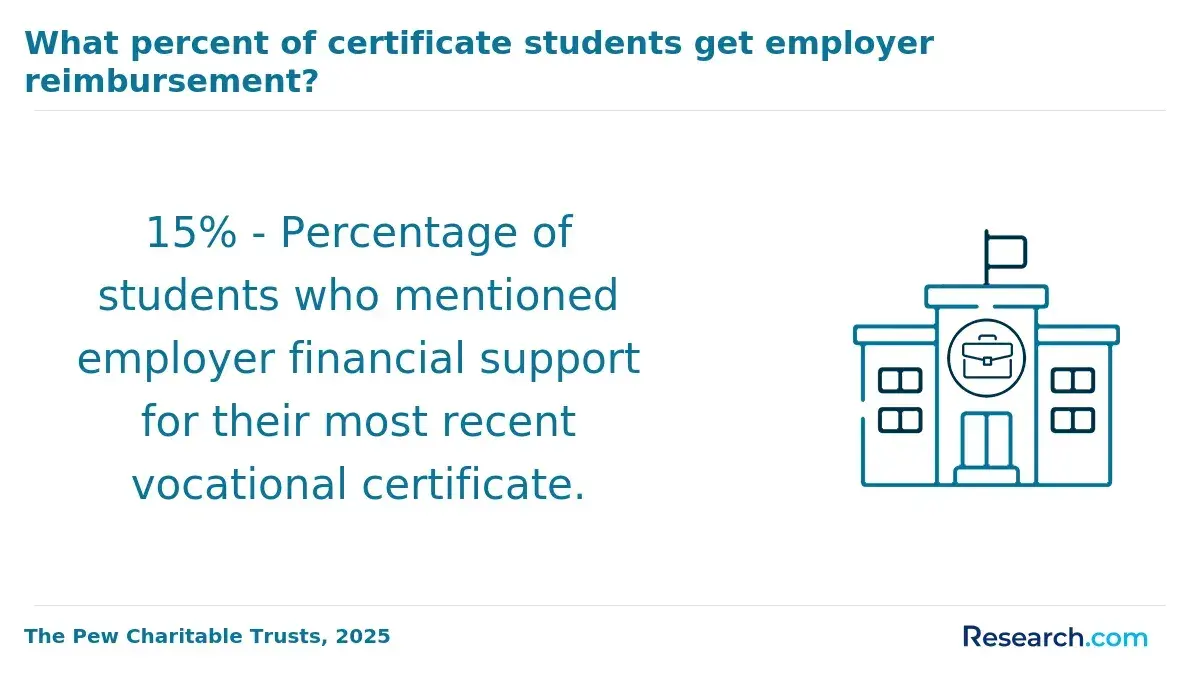
- Is the program eligible for federal student aid, workforce funding, veterans' benefits, employer assistance, or a payment plan?
- What happens financially if a clinical placement, cohort course, or licensing exam must be repeated?
Students considering a faster academic credential should compare program pacing, required support, and transfer value with fast degree programs. Speed is valuable only when the curriculum, hands-on requirements, and exam preparation remain appropriate for the target occupation.
What core skills, courses, and coaching services do students receive in these programs?
Core coursework should reflect the tasks a beginner will actually perform. Trade programs emphasize safety, measurements, tools, schematics, equipment, troubleshooting, and codes. Healthcare programs may include anatomy, medical terminology, infection control, documentation, ethics, and clinical skills.
Legal and public-safety programs emphasize writing, procedure, ethics, records, and communication. Design programs need software fluency, visual communication, accessibility, client feedback, and portfolio work.
Coaching should complement, not replace, technical instruction. The most useful services are tied to predictable points where learners commonly stall.
- Academic planning that maps prerequisite courses, lab sessions, clinical milestones, and graduation requirements.
- Study support such as tutoring, time-management plans, test preparation, and referrals for accessibility or wellbeing services.
- Career coaching that translates class projects and practical experiences into resumes, portfolios, interview examples, and job-search targets.
- Professional navigation support for externship applications, employer communication, licensing timelines, and workplace expectations.
Ask whether these services are included in tuition, limited to certain terms, available evenings, and accessible after graduation. A coaching model that ends before an externship or job search may be less useful than one that follows students through their first employment transition.
What careers and entry-level job roles can graduates pursue after these programs?
Graduates can pursue entry-level roles that align with the training and any required licensing or employer standards. Eligibility depends on the program, state, prior experience, screening requirements, and the employer; no certificate or coaching service guarantees employment.
The table connects common training pathways to realistic early-career targets and clarifies where additional steps may apply.
| Training pathway | Potential entry-level roles | Important limitation |
| Electrical, HVAC, plumbing, or welding | Helper, trainee, apprentice, technician assistant | Independent work commonly requires supervised experience and jurisdiction-specific licensing. |
| Medical assisting or phlebotomy | Medical assistant, phlebotomist, clinical support worker | Employer preferences and state rules may require or favor certification. |
| Practical nursing | Licensed practical or vocational nurse | Requires graduation from an approved program and passing the applicable licensing examination. |
| Legal studies or paralegal training | Legal assistant, paralegal, claims or compliance support worker | Paralegals work under attorney supervision and cannot provide legal representation. |
| Graphic or digital design | Junior designer, production artist, content design assistant | Portfolio quality, software skills, and relevant experience strongly influence hiring. |
A short credential is often a sensible entry route when employers hire trainees or when it supports a required exam. Choose a longer associate or bachelor's pathway when your target role routinely expects broader education, advancement potential, or substantial general-education coursework.
Learners aiming for management, advanced clinical practice, or specialized professional roles may ultimately need a bachelor's or graduate credential; compare timelines with one year masters programs only after confirming that a bachelor's degree and other prerequisites are met.
What salary ranges and advancement opportunities do these career pathways offer?
Salary should be viewed as occupational labor-market information, not as a return promise from a particular school. According to U.S. Bureau of Labor Statistics May 2024 data, median annual pay was $61,590 for electricians, $42,000 for medical assistants, $61,010 for paralegals and legal assistants, and $61,300 for graphic designers. Pay varies by region, industry, experience, union status, shift differentials, licensure, portfolio strength, and employer size.
Advancement usually comes from demonstrated competence plus the next credential or responsibility level. An electrical trainee may progress through an apprenticeship toward licensure; a medical assistant may add a specialty certification or move into office management; a paralegal may specialize in litigation, corporate work, or e-discovery; and a designer may build a stronger portfolio, specialize in UX or motion work, or lead projects.
Automation and AI tools can speed routine drafting, design production, scheduling, and documentation, making judgment, quality control, client communication, and technical verification increasingly valuable.
For a realistic return-on-investment estimate, compare local job postings, entry-level wage ranges, required credentials, program completion time, total costs, and the likelihood that you can continue earning while studying. Do not rely on a school's highest reported salary, which may reflect a small number of experienced graduates.
How can students choose a reputable program that maximizes completion and job placement?
The best program is not necessarily the shortest, cheapest, or most heavily advertised. It is the one that clearly leads to the credential, practical experience, and support required for your chosen job in your location. Start with job postings and licensing rules, then evaluate programs against those requirements.
Use this process to compare options before you sign an enrollment agreement.
- Identify two or three target job titles and record their common education, certification, licensing, physical, and scheduling requirements.
- Confirm whether the program awards a certificate, diploma, academic degree, or preparation for a separate certification or license.
- Request the full cost of attendance, including equipment, exams, transportation, clinical costs, and repeat-course policies.
- Verify institutional accreditation, program approval, and exam eligibility directly with the relevant regulator when the field is licensed.
- Ask for written definitions of completion, job placement, and earnings outcomes, including the reporting period and whether jobs must be related to training.
- Meet a coach or career-services representative and ask how often they contact students, what happens after missed coursework, and how long post-completion support lasts.
- Compare schedules, labs, clinical placements, externships, and withdrawal policies against your work and family obligations.
Common mistakes include enrolling before checking state eligibility, confusing a school certificate with a professional certification, overlooking tools or exam fees, and assuming "job placement assistance" means a job offer.
Avoid schools that pressure you to enroll immediately, cannot explain credential outcomes, make unusually broad salary claims, or refuse to provide policies in writing. A reputable provider welcomes careful questions and explains what its training can and cannot do for your career.
Other Things You Should Know About the Best Career Training Programs
It is ongoing support intended to help students complete training and prepare for work. Services may include academic planning, tutoring referrals, attendance outreach, study strategies, resume help, interview practice, and navigation of clinical, apprenticeship, or licensing steps.
No. A certificate is generally awarded by a school or training provider after completing instruction. A professional certification is typically awarded by an independent certifying organization after meeting standards that may include an examination, education, or work experience.
Some business, technology, legal support, and design programs can be completed online. Programs requiring labs, clinicals, equipment practice, or supervised skills assessments usually include campus, partner-site, or hybrid requirements.
Ask for the written placement definition, reporting period, number of graduates included, whether jobs were related to training, and whether positions were full-time or temporary. Treat the information as one comparison point, not a guarantee of your personal outcome.
References
- ROI of student success programs: Strategies for maximizing impact https://www.insidetrack.org/blog/maximizing-roi-on-your-next-student-success-initiative
- Student Success Coaching Certificate | DC Education Group https://www.dceducationgroup.com/success-coach-certificate
- How to Become a Student Coach https://www.jstcoachtraining.com/how-to-become-a-student-coach/
- How to Evaluate Academic Support & Student Success - Effective Students https://effectivestudents.com/articles/how-to-evaluate-academic-support-student-success/
- Learn More: Student Success Coaching https://www.partnershipstudentsuccess.org/success-coaching/
- Advancing Student Outcomes at Michigan's Public Universities through Student Success Coaching Programs https://www.masu.org/news/student-success/02-23-2018/advancing-student-outcomes-michigans-public-universities-through
- Academic Life Coach Training | Life Coach Schools Online https://www.coachtrainingedu.com/academic-life-coach-training/