2027 Best Online Non-Degree Programs With No Campus Visits Required

Co-Founder and Chief Data Scientist
Choosing online training is difficult when "fully online" can still hide internships, proctored exams, equipment costs, or licensing requirements. U.S. Bureau of Labor Statistics projections for 2024-2034 show faster-than-average growth in many technology and healthcare support roles, but training requirements vary sharply.
This guide compares no-campus-visit non-degree options for career changers, working adults, and skill builders. Learn which programs can be completed remotely, what they cost, how employers view them, and when a degree, apprenticeship, or in-person pathway is the better investment.
Key Things You Should Know
- Fully online non-degree programs can be valuable for IT, business, design, legal support, and selected healthcare administration roles, but hands-on trades and patient-care licenses commonly require supervised in-person training.
- Program length ranges from a few weeks for an industry-focused course to about 12 months for many college certificates. Compare total charges, software, exam fees, and required equipment rather than tuition alone.
- For occupations that require a license or certification, verify eligibility with the state board or certifying organization before paying. Completing an online certificate does not automatically authorize practice or guarantee employment.
Top 10 Best Online Non-Degree Programs With No Campus Visits Required
Popular Trade School Programs
Fully remote trade-oriented options work best when the occupation's technical skills can be practiced through simulations, software, or projects. Common choices include HVAC estimating, construction management support, electrical theory, CAD drafting, bookkeeping, IT support, and project coordination certificates.
They can strengthen entry-level applications, but electrician, welding, plumbing, and automotive technician pathways usually require lab work, apprenticeships, or employer-supervised hours. Choose remote training for estimating, drafting, or operations; choose a hybrid school or registered apprenticeship when physical competency or state-required hours matter.
Healthcare Programs
No-campus-visit healthcare options are most realistic for medical billing and coding, healthcare administration, health information support, pharmacy claims processing, and medical terminology certificates. These programs may prepare students for voluntary certification examinations, depending on the curriculum and exam sponsor.
Clinical roles such as nursing, medical assisting, dental hygiene, sonography, and phlebotomy normally require in-person labs and clinical placements, even when lectures are online. Before enrolling, confirm whether an employer requires a specific certification, whether the program includes exam preparation, and whether any practicum is mandatory.
Criminal Justice / Law Programs
Online non-degree choices include paralegal studies, legal research, compliance, court reporting theory, criminal justice support, and cybersecurity fundamentals. A certificate can help an administrative professional build legal vocabulary and document-management skills, but it does not make someone an attorney or substitute for state bar admission.
Paralegal employers may prefer programs approved by the American Bar Association, although ABA-approved paralegal programs include substantial in-person requirements and are not necessarily no-campus-visit options. For remote legal-support work, prioritize research, e-discovery, writing, and confidentiality training.
Arts & Design Programs
Graphic design, UX design, digital marketing design, web design, animation software, photography editing, and digital illustration certificates can often be completed entirely online. Portfolio quality usually matters more to employers than the certificate title alone, so select programs that require original briefs, revisions, and publishable work.
An associate degree may be more useful for learners who need broad foundations, structured critique, or transfer credit. Fine arts programs involving studio access, specialized equipment, or live performance may not be fully remote despite online coursework.
What is an online non-degree program and who are these options best for?
An online non-degree program is structured education that awards a certificate of completion, college certificate, professional certificate, microcredential, or provider badge rather than an associate, bachelor's, or graduate degree.
"No campus visits required" means lectures, assignments, advising, and assessments can be completed remotely; it does not necessarily mean that a third-party certification exam, internship, or licensing step is remote.
These options are best for people seeking a defined skill, a faster career pivot, employer-required training, or a low-commitment way to test a field. They are less suitable for careers that legally require a degree, clinical hours, apprenticeships, or a state license.
A credit-bearing college certificate may stack into a degree, while a noncredit professional certificate usually does not. Learners seeking a broader credential can compare degrees you can get online that pay well before deciding that short-form training is enough.
The key distinction is important: a certificate is awarded for finishing educational coursework, while a certification is granted by an independent professional organization after meeting its standards, which may include an exam, work experience, or continuing education.
How do fully online non-degree programs compare to campus-based certificates and bootcamps?
Fully online programs remove commuting and can fit asynchronous schedules, but they are not automatically cheaper, faster, or better recognized than campus programs. The right format depends on whether the target role requires hands-on practice, live feedback, networking, or supervised experience.
This comparison highlights the practical trade-offs a prospective student should weigh before enrolling.
| Option | Best fit | Main advantage | Main limitation |
| Fully online non-degree program | Software, business, IT, design, administrative skills | Flexible location and schedule | Limited hands-on practice and local networking |
| Campus certificate | Equipment-based or clinical training | Labs, instructor observation, local employer ties | Fixed attendance and commute |
| Bootcamp | Portfolio-driven technology or design transitions | Condensed project work | Quality and employer recognition vary widely |
| Associate degree | Roles needing general education or a deeper technical base | Broader curriculum and possible transfer credit | Usually longer and more expensive |
Online is the stronger choice when the provider can demonstrate current curriculum, instructor access, meaningful projects, and a delivery model compatible with your work schedule. Campus or hybrid training is safer when tactile skills, clinical judgment, or employer-required equipment checks are central to the job.
Learners comparing a faster degree route can review an associate degree in 6 months online free, while recognizing that accelerated claims, tuition, and transfer policies require direct verification.
How can students verify accreditation and program quality for online non-degree options?
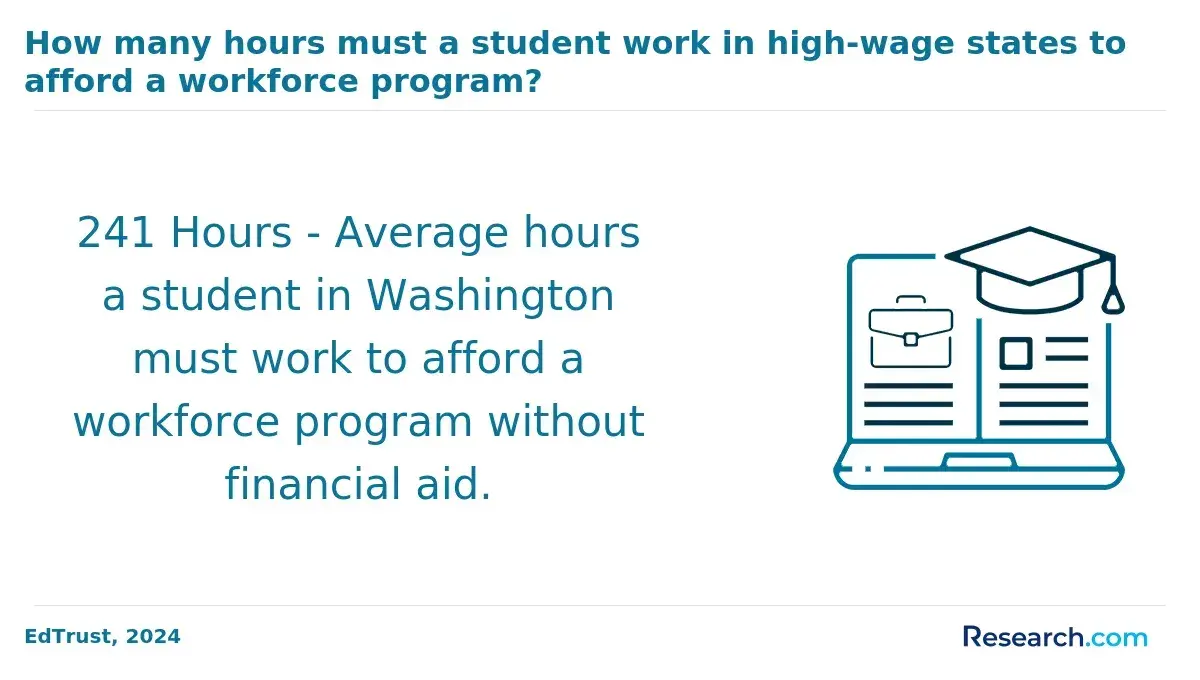
Quality review starts with the provider, then moves to the specific program and the career requirement. Institutional accreditation matters most for credit-bearing college certificates, transfer credit, and some financial-aid eligibility. It is not the same as programmatic accreditation, industry approval, or certification-exam eligibility.
Use the following checks to avoid paying for a credential that does not serve your intended purpose.
- Confirm the college's institutional accreditation through the U.S. Department of Education or Council for Higher Education Accreditation databases if the program awards academic credit.
- Ask whether the exact certificate is credit-bearing, stackable, and transferable, and obtain the policy in writing.
- For regulated careers, verify program approval and examination eligibility directly with the state board or certification body.
- Review instructor qualifications, syllabus, project requirements, learner support, refund policy, and total cost before providing payment information.
- Request outcomes definitions: determine whether reported placement figures cover all enrollees, completers, a particular time period, or only respondents.
Red flags include vague claims of "accreditation" without naming the accreditor, promises of guaranteed jobs or licenses, pressure to enroll immediately, and refusal to disclose curriculum or refund terms. For third-party training providers, employer recognition, transparent assessment standards, and current tools can matter more than academic accreditation.
What admission requirements and prior experience do online non-degree programs typically expect?
Requirements vary more by provider type than by subject. Community colleges may request an application, identity records, placement information, and proof of high school completion for credit programs.
University continuing education divisions and commercial platforms may admit learners through simple registration. Most entry-level online certificates do not require standardized tests, and GPA rules often do not apply to noncredit offerings.
The following requirements are common, but applicants should treat them as program-specific rather than universal.
- Basic computer, internet, and software access for all remote coursework
- High school diploma, GED, or equivalent for many college career certificates
- Prior coursework or work experience for advanced data, cybersecurity, accounting, or management certificates
- Background checks, immunizations, or site requirements when a program includes a healthcare placement
- Portfolio submission for some intermediate design and creative programs
Do not select an advanced program merely because it has open enrollment. A beginner without prerequisites may spend more time catching up than learning job-ready skills. Conversely, experienced workers should look for assessment-based or advanced credentials rather than repeating introductory content.
How long do online non-degree programs take, and what do they usually cost?
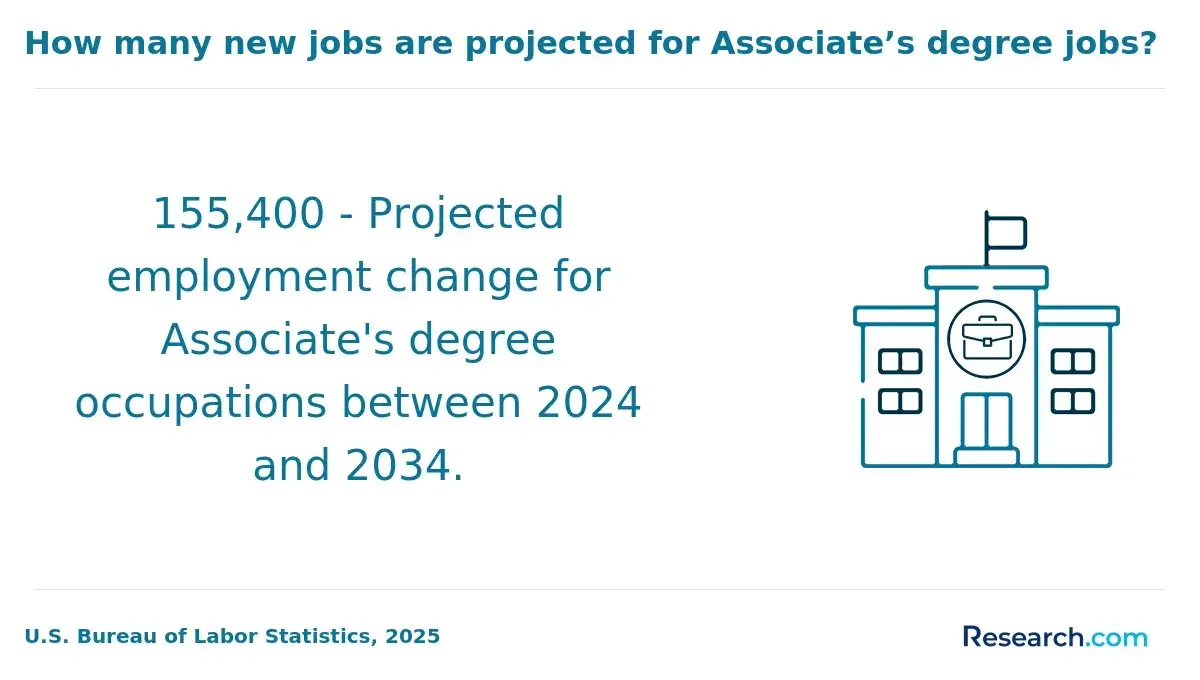
Completion time depends on weekly workload, required sequencing, and whether courses run on fixed terms. Short provider certificates may take weeks or months; college certificates often take two semesters to one year part time. Self-paced programs can be faster for experienced learners, but only if the learner has consistent time and the provider permits flexible pacing.
Price comparisons should include all required spending, because a low listed tuition can exclude major career-related costs.
| Cost factor | Why it changes the total | Question to ask |
| Tuition or subscription | May be charged per course, term, month, or program | What is the full completion price at my pace? |
| Technology | Laptop, software, webcam, or specialized tools may be required | Which specifications and licenses are mandatory? |
| Examinations | Industry certification exams often carry separate fees | Is an exam voucher included, and is a retake covered? |
| Books and materials | Texts, kits, and simulation subscriptions vary | Are materials included in the published tuition? |
| Career services | Portfolio reviews or coaching may be optional paid services | What support is included after completion? |
Federal student aid is generally more relevant to eligible credit-bearing programs at participating institutions than to standalone noncredit training. Employer tuition assistance, workforce grants, payment plans, and scholarships may help, but verify eligibility before relying on them.
If cost is the primary constraint, compare the cheapest online college options alongside certificate providers, since a low-cost credit pathway can offer better long-term flexibility.
What coursework, projects, and assessments are common in online certificate and training programs?
Strong online programs make learning observable. Rather than relying only on videos and multiple-choice quizzes, they connect instruction to projects that resemble workplace tasks.
The specific mix should match the field: coding programs may use repositories and troubleshooting exercises, while billing programs may use case scenarios and design programs may require a portfolio.
Expect some combination of the following components when evaluating curriculum rigor.
- Recorded or live lessons covering concepts, tools, standards, and terminology
- Applied assignments such as spreadsheets, briefs, code, mock client records, or workflow documents
- Instructor or peer feedback that requires revision and explains performance gaps
- Quizzes, timed assessments, written reflections, or capstone projects
- Career artifacts such as a portfolio, résumé project description, or presentation
Remote proctoring may require identity verification, a webcam, a private testing area, and reliable internet. Ask before enrolling whether assessments are scheduled at fixed times and whether a missed deadline can delay completion. Programs promising a credential with no meaningful assessment may provide weak evidence of skill to employers.
What careers, job roles, and advancement opportunities can online non-degree programs support?
Online non-degree programs can support entry-level, adjacent, or advancement roles when the curriculum matches an employer's actual skill needs. They are especially useful for workers adding software, analytics, project coordination, customer operations, digital design, bookkeeping, IT support, compliance, or healthcare administration capabilities to existing experience.
Career value is usually strongest when the credential produces evidence of work, not simply a completion record. For example, a learner may use a UX certificate to build a portfolio, an IT certificate to prepare for an industry exam, or a bookkeeping certificate to demonstrate familiarity with accounting workflows. A certificate alone may not qualify someone for roles requiring a degree, license, clearance, clinical experience, or substantial professional experience.
Remote-friendly pathways can be attractive, but job competition remains a consideration. Learners interested in work-from-home career planning can explore the best degrees for work from home jobs to determine whether a degree offers a better match for their longer-term target.
A practical next step is to review 10 current job postings for the role you want. Record the recurring required skills, preferred credentials, software, experience level, and location restrictions. Choose training only if it closes a clear gap; if postings consistently require licensure or an associate or bachelor's degree, short online training should be treated as preparation rather than a replacement.
What salary ranges and earning potential are realistic after completing an online non-degree program?
Salary potential comes from the occupation, location, experience, employer, and responsibilities, not from the certificate by itself. The U.S. Bureau of Labor Statistics reported a 2024 median annual wage of $61,550 for computer user support specialists and $49,210 for bookkeeping, accounting, and auditing clerks. These figures describe workers in those occupations, not guaranteed outcomes for online-program completers.
Use occupational wage data as a reality check rather than a marketing promise. A short credential may help a qualified applicant demonstrate relevant skills, but entry-level pay can be below an occupation's median, and some roles require experience, a degree, or an employer-sponsored pathway.
Technology and automation also reshape routine work: programs with data literacy, problem-solving, communication, and current software practice are generally more durable than training limited to a single outdated tool.
To estimate return on investment, compare the program's total cost and time away from work with local entry-level openings, not with the highest advertised salary. Ask whether the credential can lead to a first role, a promotion in your current workplace, or a stackable next credential.
Do online non-degree programs meet licensing or certification requirements in regulated fields?
Some fully online programs support exam preparation or required theory, but they do not necessarily meet licensing rules.
Licensure is a legal authorization issued by a state or other government authority; certification is a professional credential typically issued by a private certifying body. Requirements can include approved education, supervised practice, examinations, background checks, and continuing education.
Fields such as nursing, dental hygiene, cosmetology, electrical work, plumbing, teaching, and many allied-health roles commonly require in-person components or documented supervised hours.
An online medical billing certificate may help prepare for a voluntary certification exam, for example, but it does not confer a clinical license. Similarly, online legal studies does not qualify a person to practice law.
Before choosing a regulated-field program, contact the licensing board in the state where you intend to work and ask whether the exact provider, format, curriculum, and practical hours are acceptable. Obtain a written response when possible. Avoid providers that imply national acceptance without identifying the state-specific rule.
Other Things You Should Know About the Best Online Non-Degree Programs
Yes, many technology, business, design, administrative, and professional-development programs are fully remote. Confirm whether exams, orientations, internships, labs, equipment checkouts, or certification testing require in-person attendance.
Employer recognition depends on the provider, field, curriculum, portfolio or project evidence, and your experience. A well-known industry certification or a credit-bearing college certificate may carry more weight than an unassessed completion badge, but neither guarantees a job.
Possibly. Eligible credit-bearing programs at participating institutions may qualify for federal aid, while many noncredit and third-party programs do not. Check the program's aid eligibility, employer benefits, workforce funding, scholarships, and payment terms before enrolling.
Start with the job or skill goal, review local job postings, then verify the provider's credentials, total costs, delivery requirements, refund policy, and any licensing or exam eligibility. Do not enroll based solely on a short timeline or salary claim.
References
- Best Online Colleges for Working Adults [2026] https://www.straighterline.com/blog/degree-completion-best-online-colleges-for-working-adults
- Programs for Non-Degree Seeking Students | University of Phoenix https://www.phoenix.edu/blog/non-degree-seeking-student.html
- Certifications Offer Workers With No Degree a Pathway to Good Jobs https://www.luminafoundation.org/resource/professional-certifications-offer-workers-with-no-college-degree-a-pathway-to-good-jobs/
- 80 Highest Paying Jobs without a Degree (Over $50k) - USCI https://www.uscareerinstitute.edu/blog/80-Jobs-that-pay-over-50k-without-a-degree
- Explore Your Bright Horizons Benefits https://www.brighthorizons.com/article/education/navigating-non-degree-landscape