2027 Best Online Career Training Programs With Competency-Based Programs

Co-Founder and Chief Data Scientist
Choosing online career training is difficult when one program offers a completion certificate, another awards college credit, and a third promises self-paced competency progress. Competency-based programs can be efficient for experienced learners, but they are not equally suitable for hands-on or licensed fields.
The U.S. Bureau of Labor Statistics (BLS) projects healthcare occupations to grow 8% from 2024 to 2034, faster than average. This guide compares practical training paths, explains recognition and costs, and helps you identify the format that fits your target job.
Key Things You Should Know
- Competency-based online programs let learners move ahead after demonstrating mastery, but laboratory work, clinicals, apprenticeships, and licensing requirements usually still require scheduled in-person participation.
- A completion certificate is education; a professional certification is a separate credential typically earned through an industry exam or experience requirement. Confirm which one employers actually request.
- For cost context, College Board reported average 2024-25 published tuition and fees of $4,050 at public two-year colleges; career-training prices vary substantially by delivery, equipment, clinical fees, and state requirements.
Top 10 Best Online Career Training Programs With Competency-Based Programs
Popular Trade School Programs
Online trade training usually delivers safety, code, estimating, and theory, while skills assessments occur in labs, employer sites, or apprenticeships. Common certificate or associate options include HVAC/R, electrical technology, welding, industrial maintenance, construction management, and automotive service. Choose a credit-bearing community-college program when you may later pursue an associate degree; choose short noncredit training when an employer or apprenticeship accepts it. HVAC learners who will handle regulated refrigerants need EPA Section 608 certification, which is separate from completing a school program.
Healthcare Programs
Healthcare options include medical assisting, medical billing and coding, pharmacy technician, practical nursing, health information technology, and nursing-assistant training. Billing, coding, and some health-information coursework can be mostly online; patient-care programs require supervised clinical practice and may have state-specific approval rules. A certificate can prepare students for an external exam, but does not itself confer a license or certification. Before enrolling, verify clinical placement responsibility, programmatic accreditation where applicable, examination eligibility, background-check requirements, and whether the credential is accepted in your state.
Criminal Justice / Law Programs
Online certificates and associate degrees in criminal justice, legal studies, homeland security, and paralegal studies build foundations for support roles or continued education. They can fit aspiring court clerks, corrections personnel, security professionals, and legal assistants, although hiring standards vary by employer and agency. Paralegals are not attorneys, and a legal-studies certificate does not authorize someone to practice law. Students targeting paralegal work should compare employer preferences, internship access, and whether a program is approved by the American Bar Association when that recognition matters locally.
Arts & Design Programs
Career-focused certificates and associate programs may cover graphic design, UX/UI design, digital media, animation, photography, web design, and audio production. Portfolio quality often matters as much as the credential, so select programs with project critiques, current software access, and clear ownership of student work. Competency-based formats can help experienced creators document skills quickly, but beginners may benefit from instructor feedback and paced studio deadlines. Review hardware costs, software subscriptions, portfolio expectations, and whether coursework earns transferable academic credit before committing.
What Are Competency-Based Online Programs?
Competency-based online programs measure progress by demonstrated learning rather than primarily by seat time or weekly attendance. Students complete assessments, projects, simulations, examinations, or skills demonstrations when ready. In a subscription-style term, moving faster may reduce the number of terms needed; moving slowly can make the option less economical.
This format is strongest for self-directed adults who already know some material, can study consistently, and can document mastery. It is less suitable when you need frequent live coaching, have no foundation in a technical subject, or require fixed clinical, lab, or apprenticeship hours. Short 6 week courses online can be useful for a focused skill, but a short schedule alone does not make a program competency-based.
The comparison below distinguishes common delivery and credential models so you can avoid treating them as interchangeable.
| Model | How progress works | Best fit | Key limitation |
| Competency-based college program | Mastery assessments, often within a term | Experienced, independent learners seeking academic credit | Transfer rules and hands-on requirements still apply |
| Online certificate program | Modules or courses completed on a schedule | Career changers needing structured foundational training | May be noncredit and may not qualify for licensure |
| Industry certification preparation | Training aimed at an external examination | Learners pursuing a recognized vendor or professional credential | Exam eligibility and experience requirements can be separate |
| Apprenticeship or employer training | Paid or supervised work-based learning | Hands-on trades and entry-level technical work | Availability depends on employers and local programs |
Which Accreditation Do Employers and Licensure Boards Require?
Employers and licensure boards do not apply one universal accreditation rule. Institutional accreditation matters most when you want federal student aid eligibility, academic-credit transfer, or confidence that a college meets broad quality standards. Programmatic accreditation matters when a profession, certification body, employer, or state board specifically requires it.
For example, nursing programs may need approval from a state board of nursing and may pursue accreditation through organizations such as ACEN or CCNE. Medical-assisting employers may prefer graduates of programs accredited by CAAHEP or ABHES, especially when certification-exam eligibility depends on it. Trades may instead be governed by state licensing boards, apprenticeship standards, or employer requirements.
Use the following checks before paying a deposit:
- Identify the exact job title, license, or certification you need in the state where you expect to work.
- Ask the licensing board or certification body whether the specific program meets education eligibility rules.
- Confirm the school's institutional accreditation and any programmatic accreditation directly with the accreditor or regulator.
- Get written confirmation of clinical, lab, internship, and examination-preparation arrangements.
A school's general accreditation does not automatically make every career program license-qualifying, and completion of an unaccredited program may limit transfer options even if the coursework appears useful.
How Do Online and Campus Programs Compare?
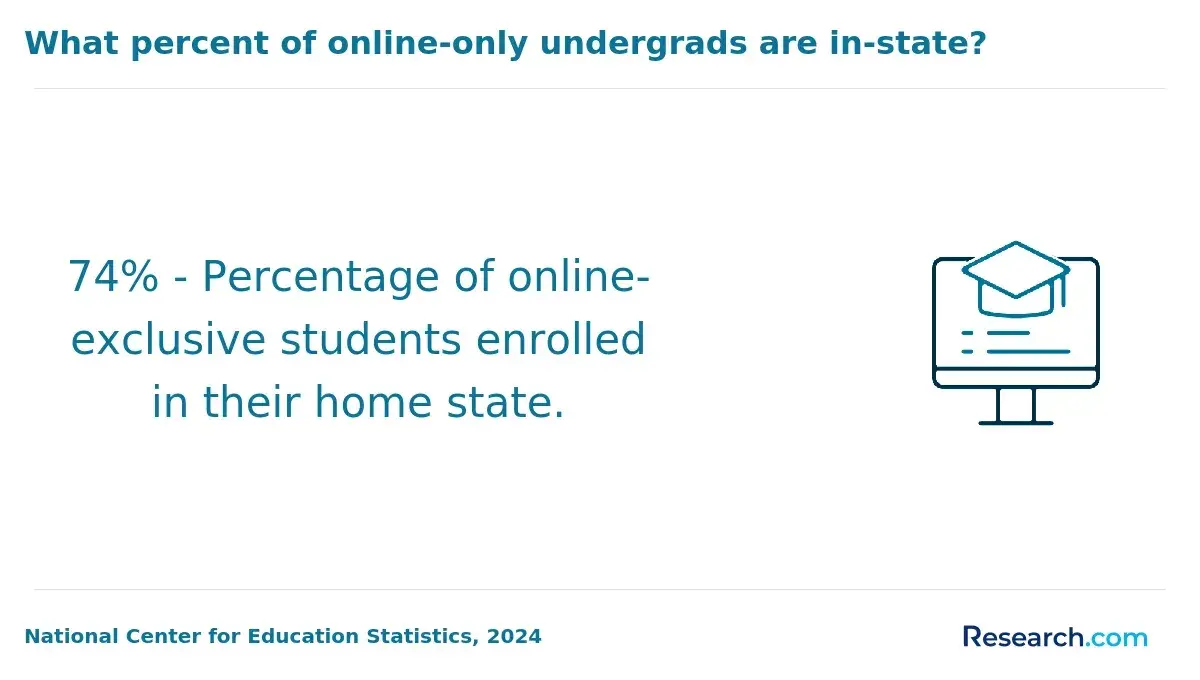
Online training can lower commuting barriers and make career change possible around work schedules. Campus or hybrid study is usually better when instructors must observe physical techniques, equipment use, patient interaction, or safety procedures. Many reputable programs combine online theory with required in-person practical experiences.
This comparison highlights the trade-off that matters most: flexibility should not replace supervised practice when the occupation demands it.
| Decision factor | Mostly online program | Hybrid or campus program |
| Schedule | Often asynchronous with flexible study blocks | More fixed lab, studio, or clinical times |
| Hands-on instruction | Simulations, video demonstrations, and remote feedback | Direct equipment practice and instructor observation |
| Best program areas | Billing and coding, IT support, legal studies, digital design theory | Healthcare patient care, welding, automotive, electrical, HVAC |
| Hidden planning issue | Proctoring, home technology, and travel for assessments | Transportation, tools, uniforms, and attendance constraints |
Do not assume "online" means fully remote. Ask where practical requirements occur, who schedules them, whether sites are near you, and what happens if a placement is delayed.
What Courses and Skills Do These Programs Teach?
Strong career-training curricula teach both job-specific techniques and the habits employers can observe: communication, documentation, safety, problem solving, digital fluency, and reliability. Competency-based assessment should show how each skill is evaluated rather than simply listing course titles.
The following examples show typical skill clusters; actual curricula differ by provider, state rules, and credential level.
| Program area | Typical technical learning | Transferable workplace skills |
| HVAC/R and industrial maintenance | Electrical basics, diagnostics, refrigeration principles, safety | Troubleshooting, documentation, customer communication |
| Medical assisting or coding | Medical terminology, records, coding systems, clinical procedures | Privacy awareness, accuracy, teamwork |
| Criminal justice or legal studies | Legal processes, report writing, ethics, records management | Professional writing, judgment, confidentiality |
| Digital design | Design software, typography, user-centered design, portfolio projects | Revision, presentation, client communication |
AI tools are changing workflow in design, administration, and documentation-heavy roles. Favor programs that teach responsible tool use, verification, privacy, and portfolio-quality work rather than promising that a single software platform will secure employment.
What Are the Admission Requirements?
Admission requirements depend on the provider and credential. Noncredit workforce courses may require only identity verification and payment. Credit-bearing certificates and associate degrees commonly require a high school diploma, GED, or equivalent, while competitive healthcare programs may add prerequisite courses, placement testing, immunizations, background checks, drug screening, or minimum grades in science courses.
Application cost is a practical barrier for some applicants. If you are comparing colleges, this guide to free online college applications can help you find institutions that may reduce that upfront expense.
Before applying, collect the requirements that affect your actual ability to start and finish:
- Official transcripts or proof of high school completion when the provider requires them.
- Prerequisite course records, placement results, or entrance assessments for selective programs.
- Technology, equipment, identity-verification, and remote-proctoring requirements for online study.
- Clinical or field-placement eligibility documents when the occupation involves patient care, public safety, or regulated work.
Do not interpret open admission as automatic entry into every specialization. A college may admit students broadly while limiting seats in clinical or high-demand cohorts.
How Long Do These Programs Take and Cost?
Completion time ranges from a few weeks for a focused noncredit course to roughly one or two years for many certificate and associate pathways. Competency-based programs may shorten time for learners who pass assessments quickly, but they cannot eliminate mandated clinical hours, lab competencies, or external examination timelines.
Price comparisons should include more than tuition. College Board reported $4,050 as average published tuition and fees at public two-year institutions for 2024-25, a useful benchmark rather than a quote for any particular online program. Private career schools, subscription terms, and specialized equipment can produce very different totals.
Use this cost lens when comparing offers:
| Cost category | Why it matters | Question to ask |
| Tuition or term charge | May be charged per credit, course, clock hour, or subscription term | What is the estimated total if I finish at my current pace? |
| Required materials | Tools, kits, uniforms, software, and textbooks can be substantial | Which items are mandatory and included? |
| Clinical or lab expenses | Travel, screenings, insurance, and assessments may be separate | Who arranges placements and what fees are mine? |
| Exams and licensing | Certification, licensure, and retake fees may not be in tuition | Which external fees should I budget for? |
Compare expected debt against local entry-level openings and advancement routes, not only against broad lists of the most profitable degrees. A lower-cost, employer-recognized program can be the better investment when it matches a specific hiring requirement.
Which Careers Do These Programs Prepare You For?
These programs can prepare learners for entry-level or support roles, but the right outcome depends on the credential level, local regulations, prior experience, and employer standards. A short course may strengthen an existing worker's skills; a credit-bearing certificate or associate degree may offer a broader route into a new field.
The career examples below clarify the difference between preparation and qualification.
| Program path | Potential entry point | Important qualification limit |
| HVAC/R certificate | Installer helper, maintenance trainee, HVAC technician trainee | Licensing and EPA Section 608 requirements can apply |
| Medical-assisting program | Medical assistant or clinical support role | Employer preferences and state scope-of-practice rules vary |
| Medical coding certificate | Billing, coding, or revenue-cycle support role | Employers may prefer external certification or experience |
| Paralegal studies certificate | Legal assistant or paralegal support role | Does not authorize legal practice or attorney work |
| Digital design certificate | Junior designer, production artist, content-design support | Portfolio and software proficiency heavily affect hiring |
If your goal ultimately requires graduate education, distinguish a short career credential from an academic degree pathway. Learners considering long-term research, teaching, or advanced leadership can compare PhD online programs separately; doctoral admission generally requires substantially more academic preparation than a career-training certificate.
What Salaries and Job Outlooks Apply?
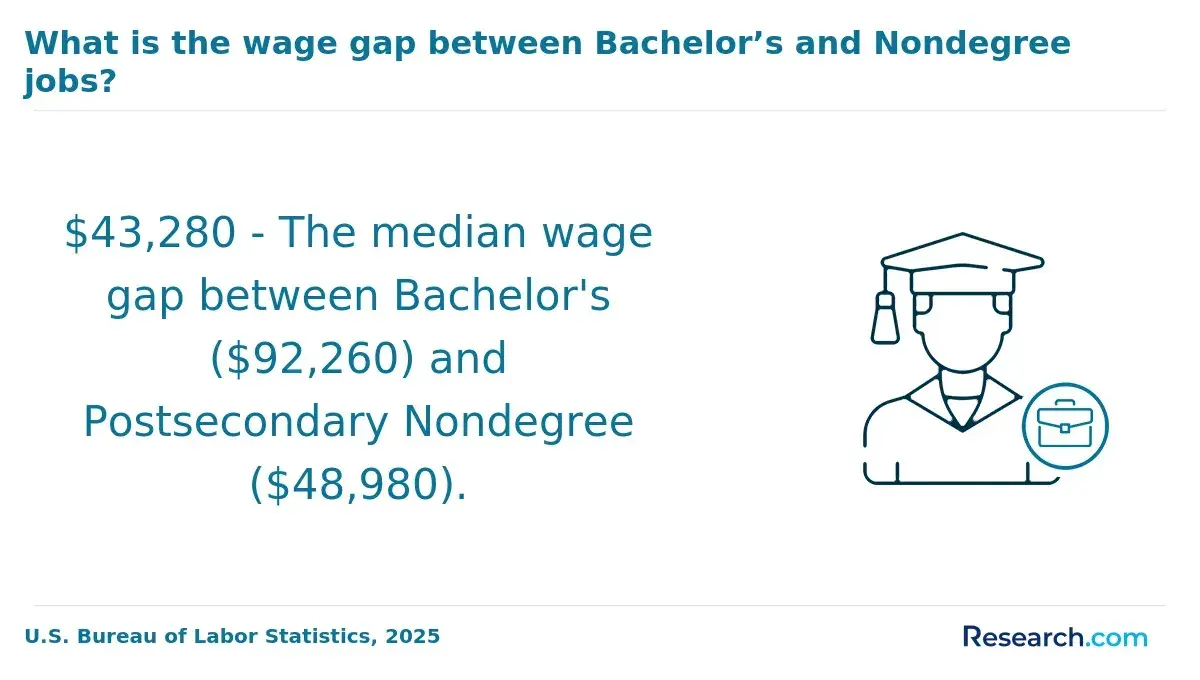
Salary data describes occupations, not a guaranteed return from any certificate or competency-based program. Local pay, work experience, licensure, shift differentials, union status, portfolio quality, and employer type can materially change an individual offer.
BLS 2024 wage and 2024-34 projection data provide a useful market check for several roles connected to common training paths.
| Occupation | 2024 median annual pay | Projected growth, 2024-34 | Training interpretation |
| Heating, air conditioning, and refrigeration mechanics and installers | $59,810 | 8% | Programs should include hands-on practice and prepare for relevant credential requirements. |
| Medical assistants | $44,200 | 12% | Clinical training and employer-recognized preparation can matter more than speed alone. |
| Paralegals and legal assistants | $61,010 | 0% | Evaluate local legal-employer demand and internship access carefully. |
| Graphic designers | $61,300 | 2% | A portfolio and current production skills are central to competitiveness. |
Projected growth is a national estimate, not a local hiring guarantee. Use it alongside job postings in your area and conversations with employers about the credentials they recognize.
How Do You Choose a Reputable Program?
A reputable program makes its credential, costs, learning format, assessment standards, and career limitations easy to verify. The "best" choice is not necessarily the fastest option; it is the program that meets the requirement for your intended job without charging for unnecessary coursework or making unsupported outcome claims.
Compare finalists using a documented process rather than promotional language:
- Start with a target job posting and list the education, certification, license, tools, and experience employers request.
- Match those requirements to the program's exact award: noncredit certificate, college certificate, associate degree, or certification-exam preparation.
- Verify accreditation, state approval, and examination eligibility with the relevant regulator or certifying body when the field is regulated.
- Request the full cost of attendance, including tools, software, travel, testing, clinical fees, and retake charges.
- Confirm how hands-on assessments, internships, labs, and clinical placements are delivered and who is responsible for arranging them.
- Ask whether credits transfer or stack into a degree, but obtain the receiving institution's policy in writing before relying on transferability.
Common red flags include vague claims that a program is "accredited" without naming the accreditor, pressure to enroll before seeing a catalog, unclear clinical-placement obligations, promises of guaranteed employment, and tuition quotes that omit required materials. A credible provider can explain what its credential does and does not qualify you to do.
Other Things You Should Know About
They can be faster for students who already understand part of the material and can pass assessments quickly. They are not automatically faster when a program requires fixed clinical hours, labs, internships, or scheduled licensing examinations.
No. A program certificate is awarded by a school or training provider after coursework. Professional certification is typically issued by an independent industry or professional organization after an examination and, in some cases, experience or continuing education requirements.
Theory courses may be online, but many trades and patient-care careers require in-person labs, supervised practice, clinical rotations, or skills testing. Confirm these requirements before enrolling, especially if you live far from campus.
Compare its total price with the qualifications in local job postings, verify any required accreditation or exam eligibility, and check whether it provides the practical training employers expect. Avoid relying on salary promises or completion-time claims alone.
References
- 10 Key Components of a Competency-Based Education Program https://www.openlms.net/blog/education/10-key-components-competency-based-education-program/
- Pros and Cons of Competency-Based Learning | ACE Blog https://ace.edu/blog/competency-based-learning-pros-and-cons/
- How to Master Competency-Based Training Programs https://www.learningeverest.com/competency-based-training-programs/
- What is Competency-Based Education (CBE) and How Does it Work Online? https://www.onlineeducation.com/features/cbe-competency-based-education-online
- The Complete Guide to Competency-Based Education https://www.d2l.com/blog/the-complete-guide-to-competency-based-education/
- Top 12 Competency-Based Training Tools in 2023 | SC Training (formerly EdApp) Microlearning https://training.safetyculture.com/blog/10-competency-based-training-tools/
- The Future of Work: Competency-Based Education with Workplaceless https://www.workplaceless.com/competency-based-education
- Skills validation assessment https://www.skillwell.com/resources/skills-validation-assessment
- Competency-based Education and the Future of Work https://trainingindustry.com/blog/workforce-development/competency-based-education-and-the-future-of-work/
- How to Assess Employee Skills and Competencies: Methods, Best Practices, and Expert Insights https://www.deel.com/blog/how-to-assess-employee-skills-competencies/