2027 Best Online Certifications for In-Demand Careers

Co-Founder and Chief Data Scientist
Choosing an online certification is difficult because a short program can save time and money, but the wrong one may not meet employer, certification-exam, or state licensing requirements. U.S. Bureau of Labor Statistics projections show healthcare occupations are expected to grow 15% from 2023 to 2033, much faster than average. This guide helps career changers, recent graduates, and working adults compare certificate programs, industry certifications, associate-degree alternatives, realistic outcomes, costs, and quality signals before enrolling.
Key Things You Should Know
- Choose a certificate program when you need structured career training; choose a professional certification when an employer or industry requires an exam-based credential.
- Healthcare, skilled trades, IT, and legal support can offer practical entry paths, but many patient-care and trade roles require supervised clinical work, apprenticeships, or state licensing beyond online coursework.
- Compare total cost, required equipment, exam fees, accreditation, completion time, and local job postings - not just a provider's marketing claims - before committing.
Top 10 Best Online Certifications for In-Demand Careers
Popular Trade School Programs
Online trade certificates work best for theory-heavy training paired with local labs, employer training, or apprenticeships. Common options include HVAC/R, electrical technology, welding fundamentals, construction management, plumbing theory, automotive technology, and industrial maintenance. An online certificate can build vocabulary, safety knowledge, blueprint-reading, and code awareness, but it rarely replaces required hands-on hours. Choose a credit-bearing community-college certificate if you may later pursue an associate degree; choose a focused noncredit program when an employer recognizes its training and you already have access to practical experience.
Healthcare Programs
Popular online healthcare pathways include medical billing and coding, medical assisting, pharmacy technician preparation, health information technology, medical office administration, and practical nursing prerequisites. Billing, coding, and administrative certificates may be largely online; clinical careers require approved in-person labs and placements. Verify whether a program prepares you for a separate national certification exam and whether your state accepts its curriculum for licensure. For direct patient-care roles, avoid programs that cannot document clinical-site arrangements, background-check requirements, immunizations, and eligibility for required examinations.
Criminal Justice / Law Programs
Online criminal justice certificates commonly cover corrections, homeland security, crime analysis, public safety administration, and legal studies. Paralegal or legal-assistant certificates are especially useful for people who already hold a degree or have office experience, but employer expectations vary by market. A certificate does not authorize legal practice or make someone an attorney. Students seeking police, probation, or corrections roles should confirm agency-specific fitness, background, academy, and state requirements. Credit-bearing legal studies certificates can be more useful when learners may later pursue an associate or bachelor's degree.
Arts & Design Programs
Online arts and design certificates often focus on graphic design, UX design, digital marketing design, web design, photography, animation, or digital illustration. These programs are best for learners who can build a portfolio with feedback and software-based projects. Employers usually evaluate demonstrated work more closely than the certificate name alone. Compare curriculum access to industry-standard tools, instructor critique, portfolio reviews, and intellectual-property policies. A short certificate may suit an entry-level portfolio goal; a longer associate degree may fit learners needing broad design foundations and general education credits.
What are the most popular online career certificates and who are they best for?
The best online career certificate depends on the target role, not on a universal ranking. Industry certifications validate tested knowledge against a vendor or professional body's standards, while educational certificates document completion of a curriculum offered by a college or training provider.
This comparison highlights widely used options and the situations in which each is most practical.
| Credential path | Best for | Typical format | Important limitation |
| IT support or cybersecurity professional certificate | Career changers seeking foundational technical skills | Self-paced or instructor-led, usually noncredit | May not substitute for experience or an employer-requested certification |
| Project management certification preparation | Professionals coordinating projects or moving into operations roles | Online coursework plus separate exam preparation | Advanced certifications can require documented work experience |
| Medical billing and coding certificate | Students targeting healthcare administration | Online coursework; optional or required exam preparation varies | Certification eligibility and employer preferences differ |
| Bookkeeping certificate | Entry-level finance support and small-business work | Online, often noncredit | Does not qualify a learner to provide regulated accounting services |
| UX or digital design certificate | Creative professionals building a portfolio | Project-based online learning | Portfolio quality remains central to hiring |
For a career requiring legal authority, patient care, regulated technical work, or a license, prioritize an approved academic program, apprenticeship, or board-recognized pathway over a general online certificate.
How do accredited online certificate programs compare to campus-based options?
Accredited online certificate programs can deliver the same curriculum and transcripted credit as campus programs, especially in business, IT, administration, and academic fields. The main difference is where interaction and practical training occur. Online delivery can reduce commuting and improve schedule flexibility, while campus or hybrid study can be stronger for labs, equipment access, clinical skills, and immediate instructor feedback.
Use this comparison to match the delivery model to the work the occupation actually requires.
| Factor | Fully online option | Campus or hybrid option |
| Best fit | Theory, software, administration, business, and portfolio work | Clinical, laboratory, shop, and equipment-intensive training |
| Scheduling | Often asynchronous, with deadlines | Fixed meetings and local travel may be required |
| Networking | Virtual peers, instructors, and career events | More face-to-face faculty and employer contact |
| Practical training | May require local placement or separate arrangements | Often organized through school facilities or partners |
| Key question | How are skills assessed and supported remotely? | Can you attend required sessions consistently? |
Students who may later move into graduate study should compare degree pathways as well. An easiest online masters option may be more appropriate for professionals whose target roles require a graduate credential rather than a short certificate.
What accreditation and licensing requirements should online certificate programs meet?
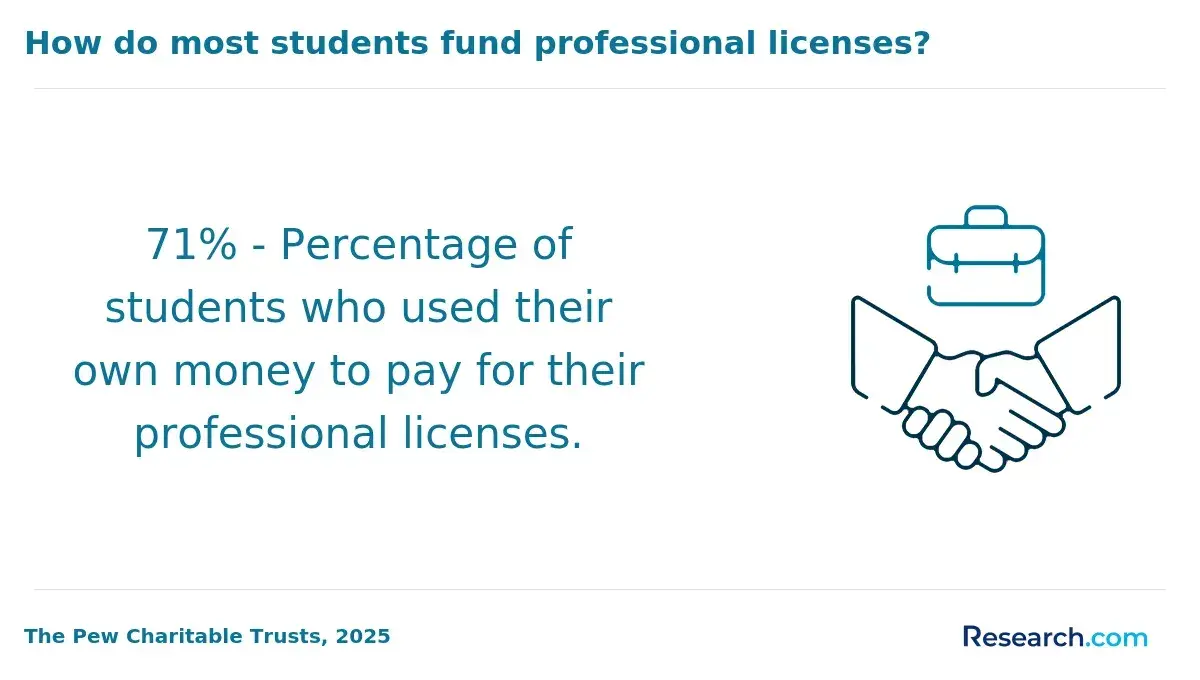
Accreditation and licensing are not interchangeable. Institutional accreditation evaluates a college or university as a whole; programmatic accreditation evaluates a specific professional program; licensure is permission from a state authority to practice a regulated occupation. A private training provider may offer useful preparation without institutional accreditation, but its certificate may not transfer for college credit or meet licensing rules.
Before paying a deposit, verify the credential against the requirement that matters for your goal.
- For college credit or federal aid questions, confirm the institution's accreditation and ask whether the certificate is credit-bearing.
- For healthcare programs, check the relevant state board and the certification-exam organization's eligibility rules.
- For trades, confirm state or local licensing rules, required supervised hours, and whether online instruction counts toward any education requirement.
- For IT, business, and design, review current job postings to identify employer-requested vendor or professional certifications.
A school should clearly state its accreditor, program approval status when applicable, hands-on requirements, examination preparation, and any geographic restrictions. Treat vague claims such as "nationally recognized" as a prompt for verification, not proof of eligibility.
What prerequisites, admission criteria, and application materials do these programs require?
Admission requirements depend on the credential type. Noncredit professional certificates often require only an account, payment method, and basic computer access. College certificates may require an application, high school completion or equivalent, placement assessment, and prerequisites. Competitive healthcare programs can add immunizations, drug screening, background checks, CPR training, and minimum grades in science courses.
Prepare these items early so an accelerated start date does not create an avoidable delay.
- Identify whether the program is noncredit, undergraduate credit, graduate credit, or exam-preparation training.
- Read prerequisite and technical requirements, including software, equipment, clinical, lab, and residency expectations.
- Request a written estimate of tuition, fees, books, exam vouchers, supplies, background checks, and travel costs.
- Ask whether credits transfer or stack into an associate or bachelor's degree before assuming they will.
- Confirm that your state and intended employer accept the training if the occupation is regulated.
Applicants comparing credit-bearing programs may reduce application costs by reviewing online colleges free application options. A waived fee is helpful, but program approval and career fit should still drive the final choice.
How long do online certification programs take and what do they cost?
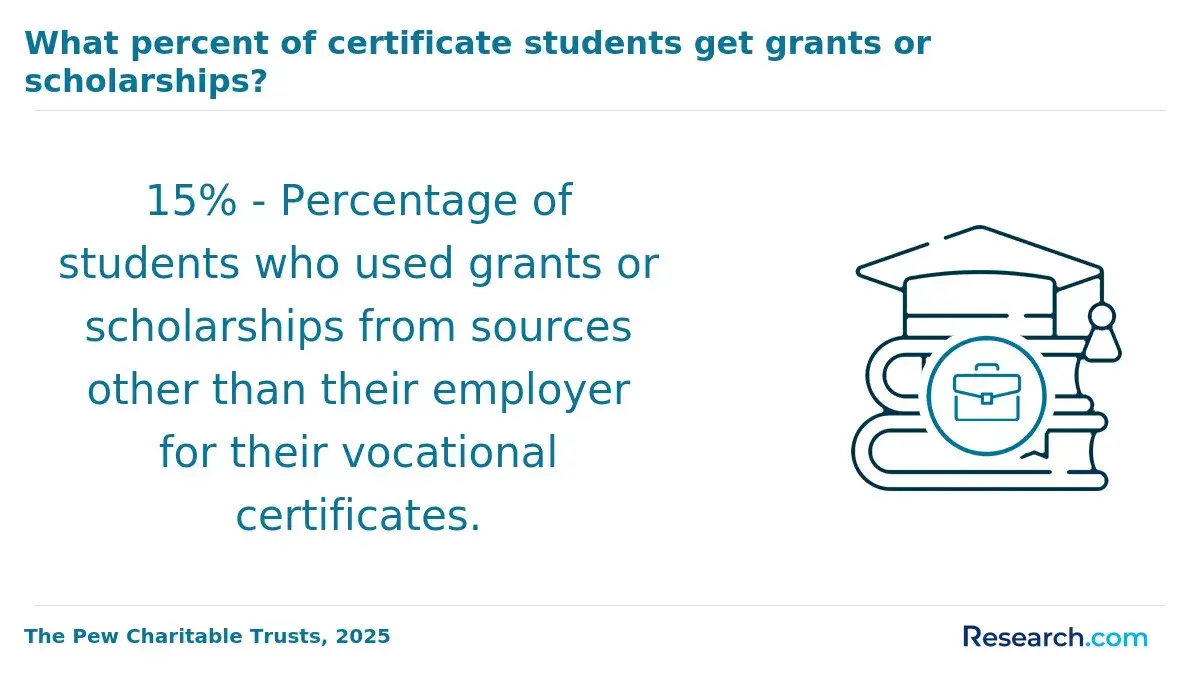
Completion time ranges from a few weeks for self-paced professional certificates to roughly one year for many college certificates; clinical and trade pathways can take longer because required practice hours cannot always be accelerated. Cost also varies widely based on provider type, credit load, equipment, examination fees, and required local training. Compare the total price to the credential's recognized value in your local market.
The following cost factors matter more than a prominently advertised monthly payment.
| Cost factor | Why it matters | Question to ask |
| Tuition or subscription | May cover instruction only | Is the quoted price the full program cost? |
| Exam and renewal fees | Professional certifications may require separate testing and renewal | Is an exam voucher included, and is renewal required? |
| Equipment and software | Trades, design, and technical programs may require specialized tools | What must I buy or access independently? |
| Clinical, lab, or travel expenses | Online programs may still require in-person participation | Where will practical training occur and who pays? |
| Lost work time | Fixed labs or internships can affect earnings | Can required experiences fit my work schedule? |
For learners deciding between a short credential and a graduate route, a quickest cheapest masters degree may be worth comparing when a master's is a stated requirement for advancement. Do not assume a faster program is lower cost without reviewing total tuition and fees.
What coursework, skills, and hands-on training do top online certificates include?
Strong online certificates teach job-relevant skills and show how those skills are assessed. The best curriculum for a particular learner mirrors the tools, regulations, documentation standards, or workflows used in the desired role. Recorded lectures alone are usually insufficient for careers requiring safety-sensitive judgment, physical technique, or supervised client interaction.
Look for evidence of these learning components before enrolling.
- Applied assignments that produce work samples, case analyses, code, designs, reports, or documented procedures.
- Instructor feedback, office hours, or mentorship rather than only automated quizzes.
- Hands-on labs, simulations, externships, clinical placements, apprenticeships, or employer projects when the field requires practical competence.
- Preparation aligned with a clearly named certification examination when an exam is relevant to employment.
- Career support that explains its actual services, such as resume review, portfolio feedback, interview practice, or employer connections.
AI tools are increasingly part of office, design, and technology workflows, but learners should still master verification, privacy, documentation, and core domain skills. Programs that teach responsible tool use alongside fundamentals are generally more durable than programs focused on a single platform.
What careers, job roles, and industries do these certifications prepare you for?
Online certifications can prepare learners for entry-level or career-adjacent roles, but the credential alone may not satisfy every employer requirement. Employers commonly weigh prior experience, portfolio quality, location, licensing eligibility, and communication skills alongside formal training. Use occupation data as labor-market context, not as a salary promise for certificate completers.
This table connects common training routes with realistic job targets and common next steps.
| Training focus | Potential job roles | Typical next step |
| IT support | Help desk technician, desktop support specialist, junior technical support | Build experience and pursue role-relevant certifications |
| Cybersecurity foundations | Security operations support, junior analyst support, IT support with security duties | Develop networking and systems experience |
| Medical coding | Medical coder, billing specialist, revenue-cycle support | Seek employer-recognized certification where requested |
| HVAC or electrical theory | Helper, trainee, maintenance support | Complete local apprenticeship, supervised hours, or licensing steps |
| Digital design | Junior designer, content designer, production artist | Expand portfolio and gain client or team experience |
Some learners may receive better long-term value from a degree pathway, particularly for roles with higher education requirements. Reviewing a highest paying degree can help clarify whether a bachelor's degree better matches the intended occupation than a short credential.
What salary ranges and advancement opportunities are realistic after earning these certificates?
Salary depends on occupation, employer, region, experience, schedule, and licensure - not simply on completing a certificate. For context, the U.S. Bureau of Labor Statistics reported a May 2024 median annual wage of $62,350 for electricians and $44,200 for medical assistants. These occupation-wide figures include workers with varying education and experience, and a certificate alone may not qualify a learner for either role.
Advancement is most realistic when the initial credential leads to documented work experience, a recognized exam credential, an apprenticeship, a portfolio, or stackable college credit. A bookkeeping certificate may lead to support work before higher-level accounting responsibilities; an IT certificate can begin a support pathway before systems, cloud, or security specialization. Be cautious of providers that imply a fixed salary, guaranteed job placement, or immediate promotion.
How can students evaluate and choose a reputable online certification program?
A reputable program makes its credential, outcomes, costs, support, and limitations easy to inspect. "Best" should mean best fit for your required job outcome, schedule, budget, and local eligibility rules - not merely the shortest completion time or the loudest advertising.
Use these steps to make a decision that is grounded in the role you want.
- Search several current local job postings and write down the education, license, software, and certification requirements that repeat.
- Match each requirement to the program curriculum, then identify what must be completed separately, such as an exam, clinical placement, apprenticeship, or portfolio.
- Request the complete cost in writing and compare it with equipment, travel, testing, and renewal expenses.
- Verify institutional accreditation, program approval, and state authorization directly when the program is college-based or regulated.
- Ask how online students receive tutoring, instructor access, career help, and hands-on placement support.
- Check withdrawal, refund, transfer-credit, and teach-out policies before signing an enrollment agreement.
Common red flags include pressure to enroll immediately, unclear clinical or lab arrangements, claims of guaranteed employment, missing faculty information, and vague statements about accreditation. The right program should be able to explain exactly what credential you earn, what it qualifies you to pursue, and what additional steps remain.
Other Things You Should Know About
They can be worthwhile when they teach skills requested in target job postings, fit your schedule, and lead to a recognized credential, portfolio, or exam pathway. They are less useful when the occupation requires a license, apprenticeship, degree, or clinical training the program cannot provide.
A certificate is typically awarded after completing an educational program. A certification is usually awarded by a professional or industry organization after meeting defined requirements, often including an examination, experience, or continuing education.
Some entry-level roles are accessible, especially in administrative, support, and digital fields, but outcomes vary. Improve your chances with projects, a portfolio, internships, volunteer work, relevant exam credentials, and targeted applications.
Many employers do, particularly when the provider is reputable and the learner can demonstrate skills. For regulated careers, acceptance depends on whether the program meets state, board, employer, and certification-exam requirements.
References
- 20 Necessary IT Certifications + Salaries I Skillsoft - Skillsoft https://www.skillsoft.com/blog/top-paying-it-certifications
- 7 in-demand certifications in 2025 | edX https://www.edx.org/resources/in-demand-professional-certifications
- Online Certificates for Job-Ready Skills | Grow with Google https://grow.google/certificates
- Top 5 High Demand Tech Skills | Can Code Communities https://cancode.org/blog/top-5-tech-skills-that-will-be-in-high-demand-in-the-next-5-years/
- The Ultimate Guide to Online Certification Programs [UPDATED] https://www.msicertified.com/blog/the-ultimate-guide-to-online-certification-programs/
- What is Accreditation? Approval and Accreditation of Courses and Certifications Could Be MUCH Better! https://brookbushinstitute.com/articles/better-accreditation-approval-certification-courses
- 10 Best Online Learning Platforms 2026 | Guide for UK Learners https://royalopencollege.org/blog/education/best-online-learning-platforms/
- 10 Certifications That Make You a Strong Candidate - United Staffing Solutions https://www.unitedstaffingsolutions.net/2025/12/11/10-certifications-that-make-you-a-strong-candidate/
- QM Program Certification Overview https://www.qualitymatters.org/qm-reviews-certifications/program-reviews
- Accredited vs. Non-Accredited Training Providers: What's the Real Difference? https://aaa-accreditation.org/accredited-vs-non-accredited-training-providers-whats-the-real-difference/