2027 Best Certificate Programs With Career Services

Co-Founder and Chief Data Scientist
A certificate can be a fast route into a new field, but weak job-placement support can turn a short program into an expensive detour. This guide is for career changers, recent graduates, and working adults comparing academic certificates, career-training certificates, and industry-aligned programs. U.S. Bureau of Labor Statistics projections show healthcare support occupations are expected to grow faster than average from 2023 to 2033, underscoring the value of training tied to real hiring needs.
Learn how to assess curriculum, cost, delivery, accreditation, and career services before enrolling.
Key Things You Should Know
- Choose a certificate only after confirming that its career services include concrete support - such as employer partnerships, résumé reviews, interview practice, internships, and outcomes reporting - not simply access to a job board.
- Certificate length ranges from a few weeks for noncredit workforce training to roughly one year for many credit-bearing college certificates; healthcare and skilled-trade paths may also require clinical hours, licensing exams, or apprenticeships.
- Use occupational data carefully: BLS reports a May 2024 median annual wage of $62,580 for all occupations, but a certificate alone does not automatically qualify a graduate for every job or guarantee that wage.
Top 10 Best Certificate Programs With Career Services
Popular Trade School Programs
Trade certificates commonly prepare students for electrician, HVAC, welding, automotive technology, plumbing, machining, and commercial driving work. Programs often combine classroom safety instruction with lab practice; some feed into registered apprenticeships, while others prepare students for employer or state-required examinations. An associate degree can add general education and broader technical coursework, but is not always necessary for entry. Choose campus-based training when equipment practice is essential. Ask whether career services connect students to local contractors, unions, dealerships, or apprenticeship sponsors rather than offering only generic job-search advice.
Healthcare Programs
Healthcare certificates include medical assisting, practical nursing, phlebotomy, pharmacy technology, dental assisting, billing and coding, and sterile processing. Many are college certificates or career-school programs, but requirements differ sharply by role and state. Clinical placements, background checks, immunizations, CPR training, examinations, and licensure may be required. A certificate may prepare a learner for a separate certification exam; it is not itself the professional certification. Strong career services should coordinate clinical sites, teach healthcare-focused interviewing, and explain local employer preferences. Verify that an online program can arrange eligible clinical training near you.
Criminal Justice / Law Programs
Common options include criminal justice certificates, paralegal studies certificates, legal assistant training, court reporting pathways, and public safety programs. They can support entry-level administrative, records, compliance, security, or legal-support work, but they do not make a student an attorney or independently authorize legal practice. Paralegal employers may prefer programs approved by the American Bar Association, although approval is not required for every role. Campus or hybrid formats can be useful for mock hearings, internships, and local networking. Ask whether the school offers placement support with law firms, courts, government agencies, or compliance employers.
Arts & Design Programs
Arts and design certificates may focus on graphic design, UX design, digital media, photography, animation, interior design, fashion, or web production. Employers often evaluate portfolios more closely than a credential title, so career services should include portfolio critiques, project briefs, internship connections, and recruiter feedback. Noncredit programs can teach current software quickly, while credit-bearing certificates may be more transferable toward an associate or bachelor's degree. Learners seeking regulated interior-design work or advanced creative leadership should check whether a certificate meets their long-term education needs. Review graduate portfolios before paying tuition.
What makes a certificate program's career services truly effective and comprehensive?
Effective career services are an operating system for the transition from training to employment, not a single appointment near graduation. The best programs connect instruction, local labor demand, and individualized job-search support from enrollment through early employment.
Look for evidence that support is both personal and measurable. A provider should be able to explain who delivers services, when students can use them, which employers participate, and how it defines placement. Useful features include:
- A dedicated career coach or advisor with scheduled one-to-one appointments
- Résumé, LinkedIn, portfolio, and interview preparation tailored to the target field
- Employer introductions, hiring events, internships, externships, clinical placements, or apprenticeship referrals
- Job-search strategy for applicants with career gaps, military experience, disabilities, or prior records where relevant
- Published outcomes showing the reporting period, denominator, job-definition rules, and whether employment is related to training
A red flag is a school that promotes "job placement assistance" but cannot identify employers, placement methodology, or post-completion support. Ask whether graduates can use career services after completing the program and whether the service is included in tuition.
How do online and campus-based certificate programs with career support compare?
Online certificates can reduce commuting and make part-time study more realistic, while campus programs can offer equipment access, immediate instructor feedback, and local employer contact. The best format depends on whether the occupation requires hands-on performance, supervised clinical work, or a portfolio rather than on convenience alone.
This comparison highlights the practical differences students should weigh before selecting a delivery model.
| Factor | Online or hybrid certificate | Campus-based certificate |
| Best fit | Digital, administrative, business, coding, and theory-heavy training | Trades, clinical training, equipment-intensive and performance-based work |
| Career support | Virtual coaching and broader employer reach; quality depends on active outreach | Local employer events, labs, instructors, and potentially stronger regional networks |
| Key risk | Assuming online coursework satisfies local practicum or licensing rules | Less scheduling flexibility and possible commuting or relocation costs |
| Before enrolling | Confirm required in-person components, proctoring, and placement eligibility | Tour facilities and ask about equipment access and work-based learning |
Students comparing longer online pathways alongside a certificate can review best online degrees to evaluate institution-level online learning options. Regardless of format, get written confirmation of career-service access and any required local placement arrangements.
How can students verify accreditation and quality of certificate programs with career services?
Quality review starts by identifying the provider. A public community college, accredited university, private career school, union training center, employer academy, and online platform may all issue certificates, but the meaning and portability of those credentials differ.
Use these verification steps before submitting an application:
- Identify whether the certificate is credit-bearing, noncredit, institution-issued, or preparation for a third-party certification or state license.
- For college programs, verify institutional accreditation through the U.S. Department of Education or CHEA-recognized accreditor listings and confirm the program appears in the college catalog.
- For regulated fields, check the relevant state licensing board and professional regulator for program approval, clinical-hour, examination, and supervised-practice rules.
- Request the curriculum, instructor qualifications, completion policy, refund policy, total-cost disclosure, and outcomes methodology in writing.
- Speak with recent graduates or local employers about whether they recognize the program and hire from it.
Institutional accreditation does not automatically mean a program meets specialized licensing requirements. Conversely, a short noncredit program may be useful for employer skills but generally will not transfer as college credit.
What admission requirements and prerequisite experience do these certificate programs typically need?
Admissions depend on the credential type. Many short workforce certificates use open enrollment and require a high school diploma or equivalent, identity documents, and basic technology access. Credit-bearing undergraduate certificates may require an application, placement assessment, and prerequisite courses; graduate certificates usually require a completed bachelor's degree. Standardized tests are uncommon for short career certificates.
Requirements become more specific when safety, patient care, or regulated practice is involved. Applicants may encounter:
- Minimum age, physical-capacity, driver's-license, or drug-screen requirements for transportation and trades programs
- Background checks, immunization records, CPR certification, drug screening, and health documentation for clinical placements
- Prerequisite math, anatomy, writing, software, or introductory technical coursework
- Portfolio submissions for advanced visual arts and design programs
- English-language proficiency or placement requirements when needed to safely complete coursework
Do not assume a prior conviction automatically prevents enrollment or employment. Ask the school and relevant licensing board how it may affect clinical placement, licensure, or hiring in the specific state.
How long do leading certificate programs with career services take and what do they cost?
Duration and price are driven more by equipment, supervised practice, academic credit, and licensing requirements than by the word "certificate." A self-paced noncredit program may be inexpensive but offer limited instructor access; a college certificate with labs or clinical placement can cost more and take longer while providing a stronger route into a regulated field.
The ranges below are planning categories rather than universal prices. Confirm tuition, fees, supplies, examination costs, tools, uniforms, transportation, and required insurance with each provider.
| Program type | Typical timeline | Primary cost considerations | Career-services expectation |
| Short noncredit professional certificate | Weeks to several months | Tuition, software, exam voucher, optional coaching | Virtual coaching and employer-facing project support |
| College credit certificate | About one semester to one year | Per-credit tuition, institutional fees, books, labs | Campus career center, internships, alumni and employer events |
| Trade or clinical career program | Several months to about two years | Labs, tools, uniforms, testing, transportation, clinical requirements | Apprenticeship, clinical, contractor, or employer placement support |
Federal aid eligibility depends on the school, program length, accreditation status, and student eligibility; noncredit programs often have different aid options. If your long-term goal requires a degree, comparing a cheap online bachelor degree can help determine whether a stackable certificate is the more economical first step.
What curriculum, skills, and career preparation are included in top certificate programs?
Top programs teach occupation-specific skills and the evidence employers use to evaluate them. That may mean a welding test coupon, an electronic health record exercise, a legal research memo, a design portfolio, or a supervised client interaction. Career preparation should be embedded in the curriculum rather than postponed until the final week.
Before enrolling, compare the program against actual entry-level job postings in your area. A strong curriculum usually includes:
- Current tools, software, safety procedures, documentation standards, and field terminology
- Hands-on assignments or work-based learning that can become portfolio or interview evidence
- Professional communication, teamwork, time management, and workplace problem-solving
- Licensure or certification-exam preparation when the occupation requires a separate credential
- Career artifacts such as targeted résumés, work samples, mock interviews, and employer introductions
For advanced goals that eventually require doctoral study, a certificate is usually a preparatory or exploratory step rather than a substitute; compare options for a cheap doctorate degree online only when the intended profession actually requires that level of education.
What careers, job roles, and industries do these certificate programs commonly lead to?
Certificates commonly lead to entry-level or support roles, not every job within a field. Employers may require experience, a license, a degree, a portfolio, union membership, or an external certification in addition to training. The table separates realistic examples by program area so readers can match the credential to the role.
| Program area | Common entry or support roles | Typical industries | Important limitation |
| Skilled trades | Apprentice, installer helper, technician trainee, welder trainee | Construction, manufacturing, repair services, utilities | Advancement may require apprenticeship hours or state licensing |
| Healthcare | Medical assistant, phlebotomy technician, pharmacy technician, billing specialist | Hospitals, clinics, laboratories, pharmacies, insurers | Clinical eligibility and credentials vary by occupation and state |
| Legal and criminal justice | Legal assistant, records clerk, compliance assistant, security worker | Law firms, courts, government, corporations, security firms | Certificates do not authorize legal practice or law-enforcement appointment |
| Arts and design | Junior designer, production artist, content assistant, freelance creative | Agencies, marketing, media, retail, technology | Portfolio quality and experience frequently drive hiring |
AI tools are changing task design in administrative, creative, and technical work. Favor programs that teach responsible use of current tools, verification of outputs, and foundational skills that remain valuable when software changes.
What salary ranges and earning potential can graduates of these certificate programs expect?
Earning potential is tied to the occupation, location, shift, experience, employer, union coverage, licensing, and education level - not simply to possession of a certificate. Use wage data as a labor-market benchmark, then compare it with total education costs and likely entry-level opportunities in your area.
The following May 2024 BLS median annual wage figures illustrate the range across occupations that certificate pathways may support. They are not estimates of what any certificate graduate will earn.
| Occupation | May 2024 median annual wage | Certificate relevance |
| Medical assistants | $44,200 | Postsecondary certificate is a common preparation route; employer expectations vary |
| Paralegals and legal assistants | $61,010 | A certificate may help, especially for learners who already hold a degree |
| Graphic designers | $61,300 | Portfolio and employer requirements matter; many roles prefer a bachelor's degree |
| Electricians | $62,350 | Typically requires apprenticeship training and may require state licensure |
Calculate a conservative return-on-investment estimate using total out-of-pocket cost, forgone work time, likely starting pay, and the probability of completing required licensing or work-based learning. Be skeptical of providers that present high wages without naming the occupation, geographic area, or wage source.
How should students choose the best certificate program and career services for their goals?
The best program is the one whose training, credential type, and career support match a specific target role. Start with the job, not the advertisement: identify the local job title, required credential, likely entry requirements, and employers you would want to approach after completion.
Use this decision sequence to narrow your choices:
- Choose one target occupation and confirm whether it requires a certificate, industry certification, license, apprenticeship, associate degree, or bachelor's degree.
- Compare at least three providers on total cost, schedule, hands-on training, completion rules, and access to career services.
- Ask for written outcomes and verify how the provider defines "placement," whether jobs are related to training, and how long graduates receive support.
- Check recognition with state boards, local employers, and professional associations where regulation or certification matters.
- Review cancellation, refund, financing, and transfer policies before signing an enrollment agreement.
Working families and military-connected learners should also assess portability, asynchronous scheduling, and relocation flexibility. Resources on online degrees for military spouses may be useful when frequent moves make a local campus program difficult to complete.
A common mistake is choosing the cheapest or fastest certificate without confirming whether it leads to the needed license, clinical experience, equipment practice, or employer-recognized credential. Another is treating career services as a guarantee. Choose documented access, relevant employer relationships, and transparent outcomes over promotional language.
Other Things You Should Know About
No. Career services can improve preparation and access to employers, but hiring decisions remain with employers. Ask for transparent outcomes and the exact services available after graduation.
No. A certificate is usually awarded by an educational provider after coursework. A professional certification is usually awarded by a certifying organization after meeting standards that may include an exam, experience, or continuing education.
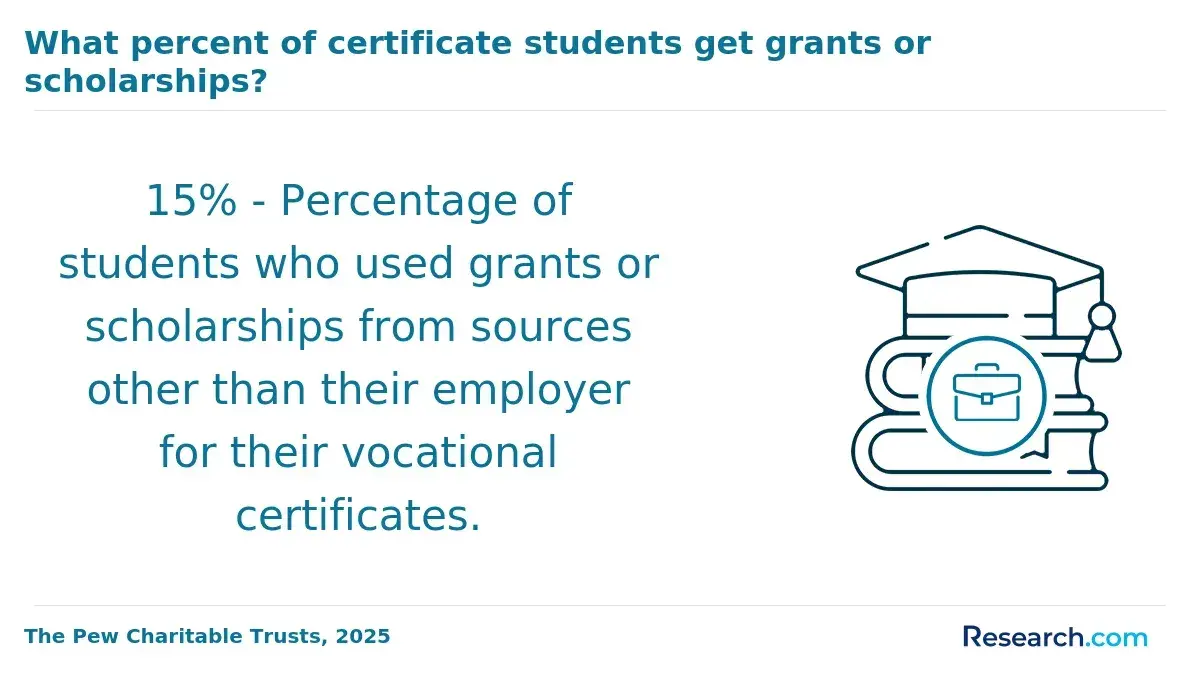
Possibly. Eligibility depends on the institution, program structure and length, accreditation status, and your individual eligibility. Ask the financial-aid office about federal aid, state aid, workforce grants, payment plans, and employer tuition assistance.
Ask who provides coaching, whether employer introductions or work-based learning are available, how long support lasts, which local employers hire graduates, and how placement outcomes are calculated.
References
- Online Certificate Programs | Certifications Programs https://www.uscareerinstitute.edu/online-certificate-programs
- CourseCareers https://coursecareers.com/compare/certification-programs
- Career Forward https://www.hiringourheroes.org/career-services/education-networking/career-forward/
- How does a college degree improve graduates' employment and earnings potential? - APLU https://www.aplu.org/our-work/publicuvalues/employment-earnings/
- The Top 5 Certificate Programs for Jobs With Growth Potential | CourseStorm https://www.coursestorm.com/blog/top-certificate-programs-for-jobs
- Career Services | COACH by CareerVillage.org https://www.aicareercoach.org/careerservices
- Career Training Oregon | Online Certificate Programs https://digitalworkshopcenter.com/training/oregon-career-training/
- Online Career Training | Certificate Programs | CareerStep https://www.careerstep.com/
- Career Paths https://arizonacareerpathways.org/career-paths/
- Career Coach Certifications | Insurance Canopy https://www.insurancecanopy.com/blog/career-coach-certifications