2027 Best Online Non-Degree Programs With Scholarship Options

Co-Founder and Chief Data Scientist
Choosing an online certificate, career-training program, or microcredential can be difficult when tuition assistance and job relevance vary widely. This guide helps adult learners compare scholarship-supported non-degree options in skilled trades, healthcare, legal studies, and design.
U.S. Bureau of Labor Statistics data show that occupations requiring postsecondary nondegree awards had a 2024 median annual wage of $48,980. Learn how to evaluate total cost, credential value, licensing rules, and realistic next steps before enrolling.
Key Things You Should Know
- Online non-degree programs range from college certificates for academic credit to noncredit workforce training and vendor-issued professional certificates; scholarships, employer reimbursement, and tuition discounts depend on the provider and may not cover exams, tools, supplies, or licensing fees.
- For occupations that require a license, such as practical nursing, dental assisting in some states, or many skilled trades, an online program is useful only if its clinical, lab, apprenticeship, and state-approval components meet local requirements.
- Postsecondary nondegree-award occupations had a 2024 median annual wage of $48,980, according to the U.S. Bureau of Labor Statistics, but earnings vary by occupation, location, experience, licensure, and employer - not simply by completing a certificate.
Top 10 Best Online Non-Degree Programs With Scholarship Options
Popular Trade School Programs
Common online or hybrid trade options include HVAC technician certificates, electrical technology certificates, welding fundamentals, construction management, automotive service, and industrial maintenance. Fully online study usually covers theory, safety, codes, estimating, and diagnostics; hands-on labs, supervised practice, and apprenticeships often occur locally.
Choose a credit-bearing community-college certificate if you may later pursue an associate degree. Choose short noncredit training when you need focused upskilling and the employer recognizes it. Confirm whether the program prepares you for EPA Section 608, NCCER, or state-specific licensing requirements.
Healthcare Programs
Online healthcare certificates may include medical billing and coding, pharmacy technician preparation, health information technology, medical assisting theory, patient care coordination, and behavioral health support.
Clinical professions commonly require in-person externships, background checks, immunizations, and state authorization. A school certificate is not the same as national certification from an organization such as AAPC, AHIMA, PTCB, or NHA. Before paying, verify exam eligibility, clinical-placement responsibility, and whether employers in your area recognize the credential. Programs promising direct clinical employment with no practicum should be treated cautiously.
Criminal Justice / Law Programs
Online options include criminal justice certificates, legal studies certificates, paralegal studies, court reporting foundations, cybersecurity investigations, and homeland security coursework. These programs can strengthen writing, research, ethics, records management, and procedural knowledge.
A paralegal certificate may be appropriate for someone who already has a bachelor's degree or relevant experience, but rules and employer expectations differ by state and firm. It does not authorize independent legal practice. For public-safety roles, separately review agency fitness standards, background requirements, academy training, and civil-service hiring rules.
Arts & Design Programs
Digital design, UX fundamentals, graphic design, web design, photography, animation, and interior-design coursework are common online non-degree pathways. Portfolio quality usually matters more than course completion alone, so prioritize programs with project feedback, accessible software, and a clear portfolio outcome.
A short professional certificate can help working learners add a specific tool or workflow; a college certificate may fit learners seeking transferable credit. Check software subscriptions, hardware needs, and intellectual-property policies. Interior design and architecture-related work may involve separate education, experience, or licensing standards.
What types of online non-degree programs offer scholarships and tuition discounts?
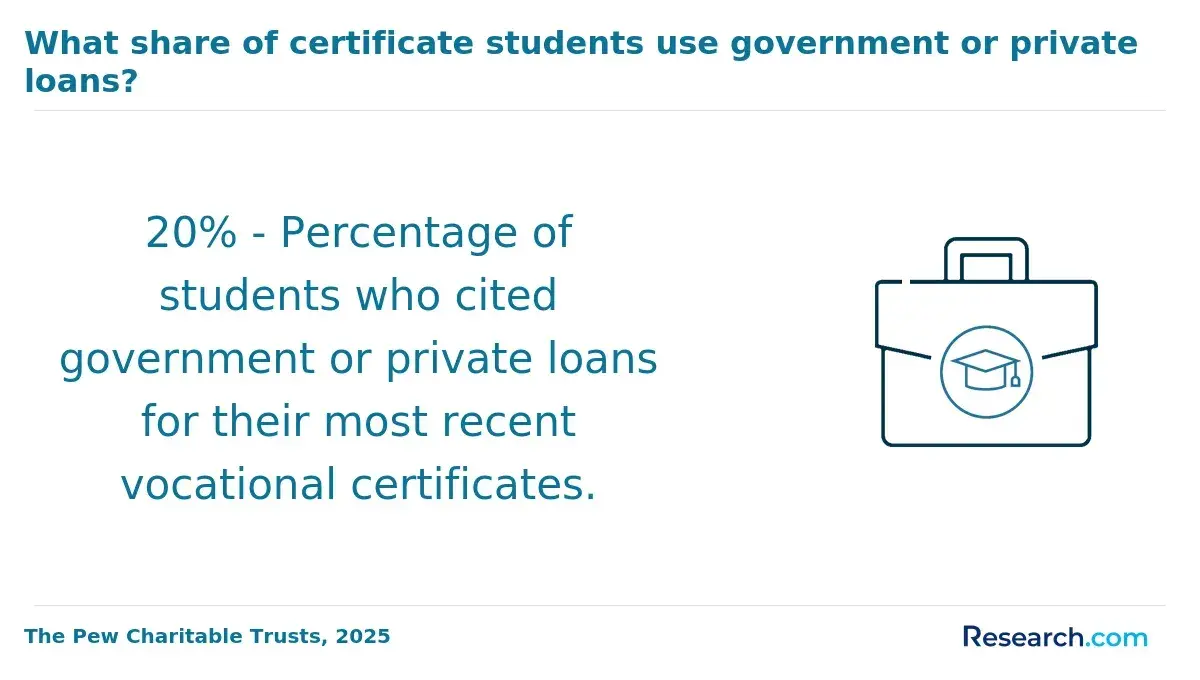
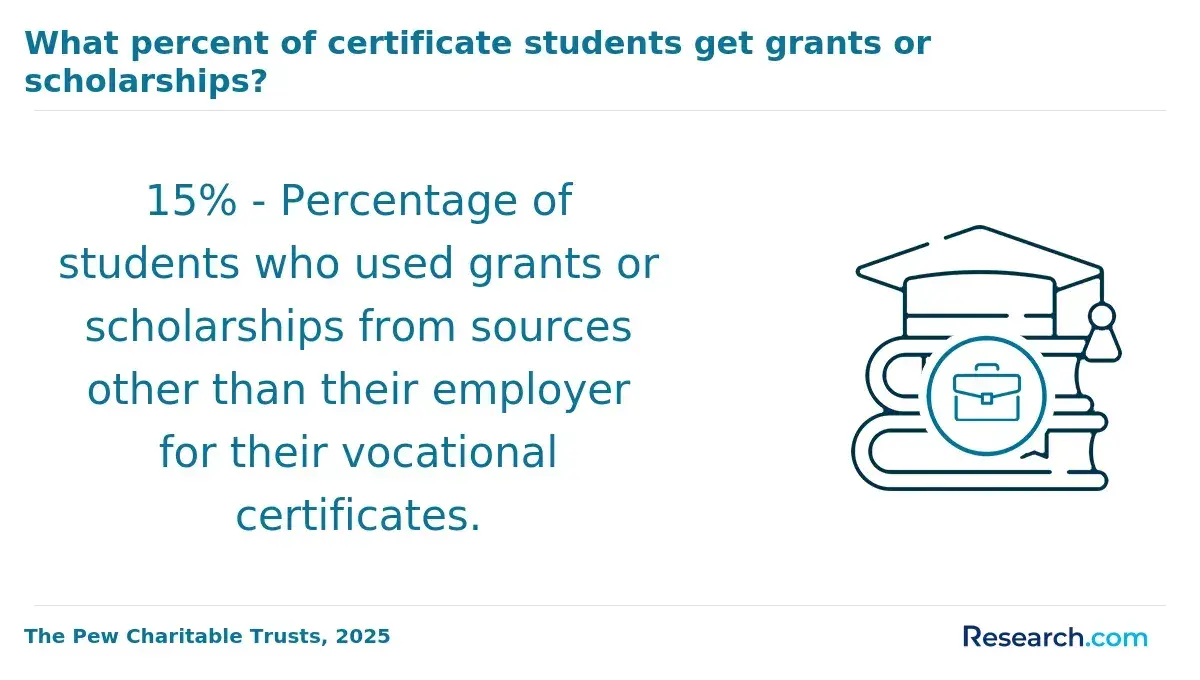
Scholarships and discounts are most common in college-based certificates, workforce-development programs, employer-aligned training, and nonprofit or workforce-board initiatives. Eligibility can depend on income, residency, military affiliation, employment status, field of study, or a commitment to complete the program. Federal Pell Grants generally apply only to eligible programs at participating institutions; many short noncredit courses do not qualify.
This comparison shows where learners are most likely to find assistance and what they should verify before treating an award as funding.
| Program type | Typical support options | Important limitation |
| Credit-bearing college certificate | Institutional scholarships, state aid, employer benefits, and potentially federal aid | Eligibility depends on program length, enrollment status, and institutional participation |
| Noncredit workforce certificate | Workforce Innovation and Opportunity Act funding, local grants, employer sponsorship | Availability is local and may require career-center approval |
| Industry professional certificate | Provider scholarships, subscription discounts, employer reimbursement | Usually does not qualify for traditional federal student aid |
| Licensed career training | School aid, workforce grants, veterans benefits where approved | Tuition assistance does not replace required clinical, exam, or licensing steps |
Start by comparing the school's net price, not its advertised tuition. Learners seeking eligible degree or certificate pathways can also compare online colleges with financial aid before choosing a private training provider.
To reduce avoidable costs, take these steps before accepting an offer:
- Request a written breakdown of tuition, technology fees, books, labs, proctoring, exams, tools, and required travel.
- Ask whether scholarships are automatic, competitive, renewable, refundable, or applied only after enrollment.
- Compare the award deadline with program start dates and confirm whether dropping a course creates repayment obligations.
- Ask whether an employer, union, workforce board, or military-benefit program will pay the provider directly.
How do online non-degree certificates compare to campus programs for career advancement?
Online non-degree credentials can support career advancement when they teach a clearly requested skill, carry credible institutional or industry recognition, and produce evidence of competence such as a portfolio, lab record, or exam eligibility. They are often a practical choice for employed adults who need targeted training without completing a full degree.
Campus programs may be stronger when a field requires equipment, faculty-supervised practice, clinical placement, networking, or employer recruiting. Online delivery is not automatically less rigorous, but a self-paced course with no assessment or feedback may carry less weight than a structured certificate from an accredited college or a recognized certifying body.
This comparison separates the major trade-offs.
| Factor | Online non-degree option | Campus or hybrid option |
| Schedule | Often flexible and suitable for working adults | More fixed meeting times and travel |
| Hands-on learning | May require local labs, externships, or self-arranged practice | Usually easier access to equipment and supervision |
| Networking | Depends on live instruction, career services, and local partnerships | Often stronger in-person employer and peer contact |
| Best fit | Digital, administrative, analytical, or theory-based skills | Clinical, technical, lab-intensive, and apprenticeship-linked roles |
Accelerated course schedules can help with a narrow skill goal, but they demand consistent weekly study time. Compare 5-week college courses online carefully to determine whether a compressed format includes meaningful instructor feedback and fits your workload.
How can students verify accreditation and program quality for online non-degree options?
Accreditation and quality checks depend on who issues the credential. For a college certificate, verify the institution's institutional accreditation through the U.S. Department of Education or Council for Higher Education Accreditation directories and confirm that the specific online program is offered under the school's authorization.
For a noncollege provider, evaluate industry recognition, instructor qualifications, assessment design, refund policies, and employer relevance rather than assuming institutional accreditation applies.
Use the following checks to avoid a credential that cannot serve your intended purpose:
- Confirm the legal name of the provider, its accreditor when applicable, and its authorization to enroll students in your state.
- Ask whether the credential is credit-bearing, whether credits may transfer, and obtain the receiving college's transfer decision in writing when transfer is important.
- For licensed fields, check the relevant state licensing board's approved-program list before enrolling.
- Review the syllabus for graded work, instructor access, practical training, completion policies, and a transparent total-price disclosure.
- Search for the credential in real job postings and ask local employers whether they recognize it.
Red flags include guaranteed job claims, vague statements about accreditation, pressure to enroll before receiving a catalog, and claims that a certificate alone qualifies a learner for licensure. A legitimate provider should clearly distinguish education completion from a separate certification exam or license.
What admission requirements do online non-degree programs typically have for adult learners?
Adult learners often face lighter entry requirements for non-degree programs than for degree programs, but requirements vary substantially. Open-enrollment online courses may require only identity verification and payment. College certificates may require an application, high school completion or equivalent, placement steps, and prerequisite courses. Advanced professional certificates may expect prior coursework, work experience, or familiarity with specific software.
Programs tied to patient care, public safety, clinical placements, or employer sites may add background checks, drug screening, immunization records, CPR training, physical-capacity documentation, or minimum age requirements. These requirements can add time and expense, so ask for them before applying.
A practical admissions screen should answer three questions: Can you enroll, can you complete every required component where you live, and will the completed credential meet your actual goal? Do not assume a school's general admission is the same as admission to a clinical cohort, practicum, or exam-preparation pathway.
How long do online non-degree programs take, and what do they typically cost?
Completion time ranges from a few weeks for a focused noncredit course to roughly one year for many college certificates; associate degrees commonly take about two years of full-time study. Actual pace depends on prerequisites, course sequencing, clinical or lab availability, and whether a learner studies part time. Self-paced programs can be faster only when the learner has enough time and prior knowledge to progress consistently.
Cost also varies more by provider type and required practical components than by the word "online." The table below identifies the cost drivers readers should compare instead of relying on a headline tuition figure.
| Pathway | Typical timeline | Major total-cost factors |
| Short noncredit course | Weeks to a few months | Course fee, platform access, optional exam, software |
| College certificate | Several months to about one year | Per-credit tuition, fees, books, residency status, labs |
| Industry certificate preparation | Weeks to several months | Training, certification exam, retake fees, continuing education |
| Hybrid clinical or trade training | Months to more than one year | Tuition, equipment, travel, background checks, clinical or lab costs |
Military-connected learners should also verify transfer policies, deployment flexibility, and benefit eligibility; best online colleges for military spouses can be a useful starting point for comparing flexible institutional options.
Before choosing the cheapest program, calculate cost per usable outcome: the credential, required practice, exam eligibility, and employer recognition. A lower-priced course can be poor value if it omits the supervised component needed for the next career step.
Employer Confidence in Online vs. In-Person Degree Skills, Global 2024

What curriculum and coursework can students expect in common online certificate fields?
Common online certificate curricula combine foundational knowledge with applied assignments. Quality programs state what learners will be able to do, how they will be assessed, and which activities must occur in person. Curriculum depth should match the goal: introductory skill-building, employer upskilling, academic credit, certification-exam preparation, or entry into a regulated occupation.
Typical coursework differs by field in the following ways:
- Information technology programs often cover networking, operating systems, cloud tools, cybersecurity fundamentals, scripting, troubleshooting, and documentation.
- Business and project-management programs may include spreadsheets, accounting basics, communication, scheduling, budgeting, process improvement, and team collaboration.
- Healthcare administration programs commonly teach medical terminology, coding systems, privacy rules, electronic records, billing workflows, and compliance.
- Trade programs may cover safety, measurements, blueprints, codes, diagnostic concepts, estimating, and equipment-specific practice.
- Design programs typically include visual principles, user research, digital tools, critique, accessibility, and portfolio projects.
Ask to see a current syllabus and grading rubric. If the intended outcome is an industry certification, confirm that the curriculum maps to the current exam objectives, while recognizing that course completion does not itself award the certification.
What careers and job roles can online non-degree programs help you qualify for?
Online non-degree programs can help learners develop skills for entry-level, support, technician, coordinator, and specialist roles. They are most useful when the program aligns with a defined job target and the employer accepts the credential or the learner can show relevant work samples. They may not be sufficient for roles requiring a degree, license, substantial supervised experience, or competitive portfolio.
This table connects common pathways to realistic role categories while separating training from hiring requirements.
| Program area | Possible role categories | Important qualification check |
| IT support or cybersecurity | Help desk technician, technical support specialist, junior security support | Employers may seek certifications, practical projects, or prior experience |
| Medical billing and coding | Billing specialist, coding support, patient-account representative | Employers may prefer certification and healthcare-system experience |
| Skilled trades | Apprentice, installer helper, maintenance trainee, service technician | State licensing, apprenticeship, and hands-on requirements may apply |
| Legal studies | Legal assistant, records clerk, litigation-support assistant | Paralegal roles may require degree-level education or employer-specific experience |
| Design | Production artist, junior content designer, freelance creative support | Portfolio quality and software proficiency are central to hiring |
Use job postings within commuting distance or in your target remote market to identify recurring requirements. If most listings require a bachelor's degree, licensure, or years of experience, a short program may be a first step rather than a replacement for that requirement.
What salary ranges and earning potential are associated with popular certificate pathways?
Salary research should be used as occupational context, not as a promise attached to a certificate. The U.S. Bureau of Labor Statistics reported a May 2024 median annual wage of $61,550 for computer user support specialists, $49,210 for medical records specialists, and $59,810 for paralegals and legal assistants. These figures reflect workers across education and experience levels, and a non-degree credential alone may not meet every employer's hiring criteria.
This comparison helps learners interpret earnings data alongside the education usually associated with each role.
| Occupation | May 2024 median annual wage | Credential interpretation |
| Computer user support specialist | $61,550 | Certificates and vendor certifications can support entry, but requirements vary by employer |
| Medical records specialist | $49,210 | Certificate training may be relevant; coding roles can require additional certification or experience |
| Paralegal and legal assistant | $59,810 | Employers may prefer an associate or bachelor's degree plus paralegal education |
For a longer-term comparison of fields with higher earnings potential, review degrees that make the most money. A degree may make more sense when a target occupation routinely requires one, while a shorter credential may be better for a focused skill upgrade or an exploratory first step.
How do licensing and industry certifications work for professions requiring formal credentials?
Licensure, certification, and certificates are separate credentials. A school certificate documents completion of a course of study. Professional certification is awarded by an independent certifying organization after its eligibility standards are met, often through an examination. A license is government authorization to practice a regulated occupation and is controlled by state law.
For regulated careers, follow this sequence rather than relying on marketing language:
- Identify the state where you intend to work and locate the relevant licensing board or regulatory agency.
- Confirm the exact education, clinical, apprenticeship, examination, background-check, and continuing-education requirements.
- Verify that the online or hybrid program is approved or accepted for that state before paying tuition.
- Determine whether the program only prepares you for an exam or whether it also meets formal eligibility requirements.
- Keep written records of approvals, clinical hours, transcripts, and certification results for future employers or boards.
Licensing portability is not automatic. A program accepted in one state may not satisfy another state's curriculum, clinical-hour, or supervised-experience standards. For unregulated fields, industry certifications can still matter, but readers should confirm employer demand before paying for an exam.
Other Things You Should Know About
Sometimes. Credit-bearing certificates at eligible colleges may qualify for institutional, state, employer, veterans, or federal aid when program and enrollment rules are met. Short noncredit and third-party programs more often use scholarships, payment plans, workforce funding, or employer reimbursement.
They can be, especially when issued by a recognized college, industry organization, or established provider and when they demonstrate job-relevant skills. Employer recognition is strongest when the credential aligns with local job postings, includes assessed work, or prepares learners for a recognized certification.
It may be part of the path, but completion alone rarely creates a license. Many licensed occupations require an approved program, supervised clinical or field hours, examinations, background checks, and an application to the state licensing board.
Compare the written net cost after confirmed aid, required fees, completion timeline, delivery format, practical-training requirements, credential type, and local employer value. Do not choose based on scholarship size alone if the program does not meet licensing, certification, or career requirements.
References
- Find Scholarships for College for FREE | Fastweb https://www.fastweb.com/
- Online Colleges In Georgia: Earn Your Degree https://www.learnhowtobecome.org/online-universities-and-colleges/georgia/
- 2025 Most Affordable Online Master's Programs https://www.onlineu.com/most-affordable-colleges/masters-degrees
- Programs for Non-Degree Seeking Students | University of Phoenix https://www.phoenix.edu/blog/non-degree-seeking-student.html
- External Scholarships - Alpha Lambda Delta https://www.nationalald.org/externalscholarships
- Explore Scholarships for Online Education https://www.oedb.org/online-scholarship/
- Top 50 Scholarships for Non-Traditional Students to Apply for in July 2026 https://bold.org/scholarships/by-type/non-traditional-scholarships/
- Non-Degree Programs: Declining Enrollments and Future Prospects https://wenr.wes.org/americas/non-degree-programs-in-the-u-s-declining-enrollments-and-future-prospects/
- Current Scholarship Opportunities - Seattle Foundation https://www.seattlefoundation.org/current-scholarship-opportunities/
- 2025's Best Online Graduate Certificate Programs in the U.S. https://www.onlinemastersdegrees.org/graduate-certificate-programs/