2027 Best Stackable Credentials With Credit for Work Experience

Co-Founder and Chief Data Scientist
Experienced workers often face a costly choice: start college from zero or find a program that recognizes what they already know. Stackable credentials combine short, career-focused awards into a larger certificate or degree and may grant credit for documented learning from employment, military service, licenses, or industry certifications.
This matters as employers increasingly use skills-based hiring, while the Bureau of Labor Statistics projects healthcare support and skilled-trade demand to remain significant through 2033. This guide helps working adults compare credit-bearing pathways, avoid nontransferable training, and choose a credential sequence that supports a realistic career goal.
Key Things You Should Know
- Choose a credit-bearing certificate or associate pathway when your goal is a degree, employer tuition benefit, or licensed occupation; noncredit training can build skills but usually will not transfer into college.
- Work experience is not automatically converted into credit: schools commonly require a portfolio, standardized exam, evaluated certification, military transcript, or faculty assessment before awarding prior-learning credit.
- Use occupation data as context, not a promise: BLS 2024 median pay was $62,350 for electricians and $50,250 for medical records specialists, but local licensing, experience, and employer requirements determine eligibility and wages.
Top 10 Best Stackable Credentials With Credit for Work Experience
Popular Trade School Programs
Stackable trade pathways often begin with a certificate in electrical technology, HVAC/R, welding, industrial maintenance, or construction management and lead to an associate degree in applied science. Experienced helpers, military technicians, and licensed workers may receive credit after skills testing or portfolio review. Choose a credit-bearing community-college program if you may later pursue supervision or an associate degree. Choose an apprenticeship when paid field hours and state licensing are the priority. A school certificate does not replace required apprenticeship hours, local permits, or state contractor licensing.
Healthcare Programs
Common healthcare stacks include nursing assistant-to-practical nursing-to-registered nursing, medical assisting-to-health-information technology, and emergency medical technician-to-paramedic. Some schools evaluate military medical training or current credentials for prior-learning credit, but clinical courses and required supervised hours usually cannot be waived broadly. A certificate may prepare a learner for a separate certification examination, while state licensing boards control eligibility for regulated roles. Verify clinical-placement availability before enrolling online; a flexible lecture schedule is not useful if required clinical rotations cannot be completed near home.
Criminal Justice / Law Programs
Credit-bearing certificates in criminal justice, corrections, homeland security, legal studies, and paralegal studies can stack into an associate degree. Prior police, military, security, dispatch, or corrections experience may support portfolio-based credit, depending on institutional policy. These programs can strengthen advancement or transition plans, but they do not automatically qualify a graduate as a sworn officer, attorney, or licensed investigator. Paralegal certificate programs are most useful when they include legal research, writing, ethics, and technology; employers may prefer American Bar Association-approved education in some markets, although approval is not universally required.
Arts & Design Programs
Graphic design, digital media, UX design, photography, animation, and web-production certificates may stack into an associate degree or digital-media diploma. Work portfolios can sometimes demonstrate prior learning, especially for software, production, or client-project competencies. For design careers, the portfolio often carries more hiring weight than the certificate title alone. Select programs that produce current, editable work samples and teach accessible design, copyright, client communication, and AI-assisted workflow practices. Avoid programs that promise a design job without requiring portfolio development, feedback, or practical software training.
What are stackable credentials with credit for work experience, and how do they work?
Stackable credentials are intentionally sequenced education awards. A student may complete a short certificate first, apply those credits toward an advanced certificate or associate degree, and later transfer eligible coursework toward a bachelor's degree. "Credit for work experience" usually means credit for prior learning, not payment for time spent in a job.
A strong pathway has published course maps showing exactly which credits apply at each stage. For example, an entry-level IT support certificate might apply toward a cybersecurity certificate and then an associate degree in information technology. The first credential offers an earlier résumé milestone; the later award broadens academic and career options.
| Pathway type | What the learner earns | Best fit | Main limitation |
| Noncredit microcredential | Badge or completion record | Fast skill refresh | Usually no college credit |
| Credit-bearing certificate | Academic certificate and transcripted credits | Workers planning to continue | Transfer rules vary by school |
| Industry certification | Professional credential, often exam-based | Employer-recognized technical validation | May require renewal and may not carry academic credit |
| Associate degree pathway | Degree plus embedded certificates | Longer-term advancement | More general-education coursework |
For workers who want a short first step, compare the curriculum, employer relevance, and credit status of certificate programs before assuming that every certificate can stack into a degree.
How can prior work experience and certifications be evaluated for college credit?
Colleges use prior-learning assessment (PLA) to determine whether learning gained outside a classroom matches a specific course's outcomes. The evaluation is typically more rigorous than submitting a résumé. Credit awarded through PLA may count toward graduation, but institutions can limit how much applies to a program or transfers elsewhere.
Ask the registrar or prior-learning office which evaluation methods apply to your occupation. The most common routes are:
- Submit official transcripts for prior college coursework, military training, or evaluated workforce education.
- Provide active licenses or industry certifications that the college has preapproved for course equivalencies.
- Take a standardized subject examination or institution-developed challenge exam when permitted.
- Build a portfolio mapping work products, supervisor verification, training records, and reflective explanations to course outcomes.
- Obtain a written degree audit showing the awarded credits, remaining requirements, and any residency requirement.
Credit is commonly denied when documentation is thin, skills are outdated, or the requested course requires supervised clinical, laboratory, or hands-on assessment. A legitimate school should tell you the fee, appeal process, credit cap, and whether an unsuccessful assessment becomes part of your academic record.
Which accredited schools and platforms offer the most flexible stackable credential pathways?
The most flexible options are usually regionally or institutionally accredited community colleges, public universities with adult-learning divisions, and universities that publish PLA and transfer policies. Nationally accredited career schools can be appropriate for targeted training, but students should check whether their credits will be accepted by the institution where they hope to finish a degree.
Compare providers by the pathway evidence they publish rather than marketing terms such as "fast-track" or "career-ready." The following criteria reveal whether a program is genuinely stackable.
| What to compare | Strong sign | Reason it matters |
| Credential map | Named certificates apply to a named degree | Shows that stacking is built into the curriculum |
| PLA policy | Methods, fees, limits, and appeal process are published | Lets workers estimate time saved before enrolling |
| Transfer agreements | Written articulation agreements with destination schools | Reduces uncertainty when progressing to a bachelor's degree |
| Course format | Clear distinction between online instruction and required in-person work | Prevents clinical, lab, or practicum surprises |
| Industry alignment | Current licensure, exam, or employer expectations are identified | Helps connect study to a specific role |
Multiple start dates can help adults avoid waiting for a traditional semester, but accelerated terms require careful workload planning. Review online universities with multiple start dates alongside their transfer and prior-learning rules, not as a substitute for them.
What admission requirements apply to adult learners seeking stackable credentials for career advancement?
Admission requirements depend on the award and provider. A noncredit workforce badge may require only registration and payment. A college certificate or associate degree generally requires an application, identity documentation, and prior education records; placement or prerequisite evidence may be required for math, writing, technical, or health courses. Many adult-focused institutions do not emphasize standardized tests, but selective programs can have additional screening.
Healthcare, public safety, and skilled-trade programs may add requirements because students work in regulated or safety-sensitive environments. Before applying, confirm whether you need:
- A high school diploma, GED, or equivalent documentation
- Prerequisite coursework or placement into college-level English and math
- Background check, drug screening, immunizations, CPR training, or physical-capacity clearance for clinical or field placement
- Current license, employer verification, portfolio, or certification records for prior-learning credit
- A minimum GPA or separate competitive application for limited-enrollment programs
Do not confuse admission with eligibility for a license, internship, or certification exam. Request those requirements in writing from the program and, where relevant, the state board or certifying organization.
How do online stackable credential programs compare with campus options for busy professionals?
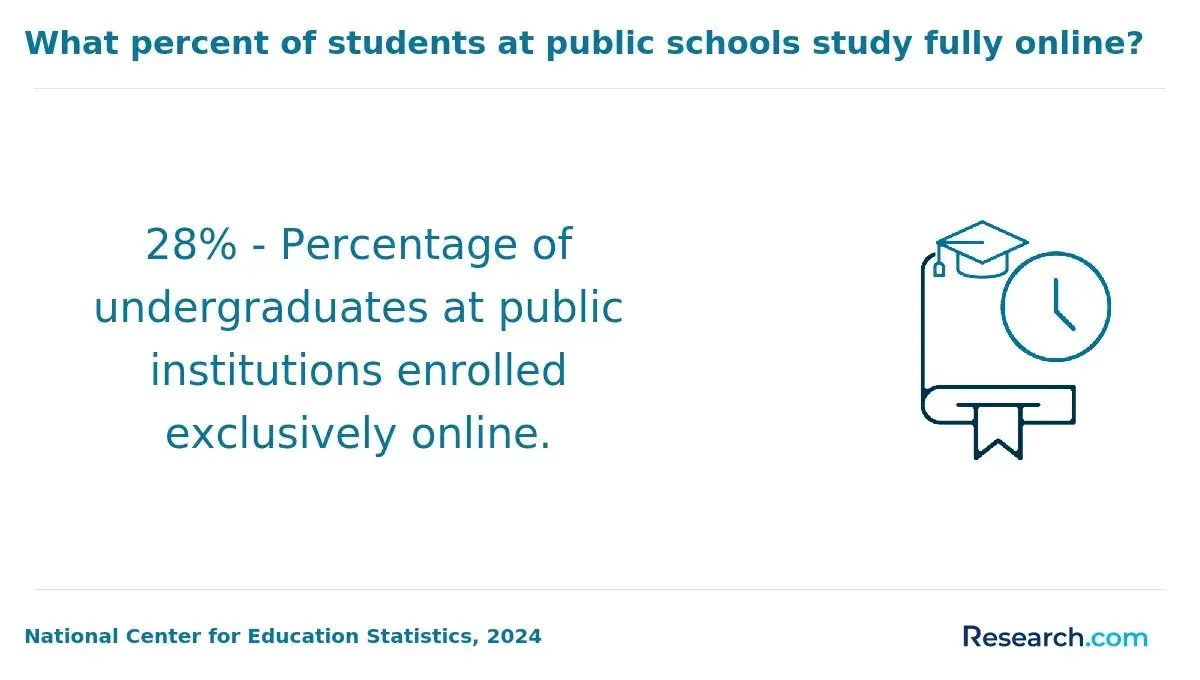
Online stackable programs work well when the learning is primarily digital, administrative, analytical, or project-based. They can be less suitable when competence must be observed in person, such as welding, nursing, electrical work, or emergency care. Hybrid programs often offer the practical compromise: online theory with scheduled labs, clinicals, simulations, or apprenticeships.
| Factor | Online option | Campus or hybrid option |
| Scheduling | Often asynchronous, with fixed deadlines | Set meeting and lab times |
| Best for | IT, business, legal studies, design, health information | Clinical, lab, equipment, and performance-based learning |
| Prior-learning support | Portfolio advising may be remote | May allow in-person skill demonstration |
| Networking | Requires deliberate virtual engagement | More direct access to labs, faculty, and local employers |
| Key risk | Underestimating weekly self-directed workload | Commute and inflexible attendance requirements |
Busy professionals should calculate weekly study time, not just total program length. A six-week course can be demanding if it compresses the same learning outcomes found in a longer term. Choose online delivery when you have reliable technology and self-management; choose campus or hybrid instruction when supervised practice is essential to your intended role.
What typical courses and competencies are included in high-value stackable credential programs?
High-value stacks teach a coherent set of competencies that can be documented to employers and applied to the next academic level. The best curriculum combines occupation-specific skills with durable abilities such as communication, documentation, problem-solving, digital fluency, and ethical decision-making.
Course content should match the target role rather than simply repeat experience you already have. Common competency patterns include:
- Trade programs: safety codes, blueprint reading, diagnostics, tools, estimating, and supervised equipment practice
- Healthcare programs: privacy, documentation, anatomy foundations, patient safety, clinical workflow, and electronic records
- Legal programs: legal research, writing, civil procedure, records management, ethics, and litigation technology
- Design programs: visual communication, design software, user-centered research, accessibility, portfolio development, and copyright basics
- Business and technology programs: spreadsheets, data literacy, project management, cybersecurity awareness, and stakeholder communication
AI tools are changing entry-level task design in office, technology, and creative work. Look for programs that teach verification, privacy, intellectual-property awareness, and responsible use of AI rather than treating tool familiarity as a replacement for foundational judgment.
How long do stackable credential programs take, and what tuition and fees should students expect?
Completion time depends on the number of credits, transfer or PLA awards, required sequencing, and whether labs or clinicals are available when needed. A short academic certificate may take one or two terms; an associate degree commonly takes about two academic years of full-time study before prior credit. Part-time students should plan around course rotation, because a required class offered once a year can delay completion.
Cost is more than tuition. Public community colleges are often the lower-cost route for credit-bearing certificates and associate degrees, while private and proprietary providers may charge substantially more for convenience or specialized scheduling. PLA can reduce tuition when it replaces courses, but portfolio reviews, exams, transcripts, books, software, tools, uniforms, testing, licensure, travel, and clinical compliance can add meaningful expense.
| Cost question | Why it changes the total | What to request |
| Per-credit versus flat tuition | PLA savings matter more in per-credit programs | Program-by-program tuition calculation |
| Prior-learning fees | Portfolio and examination charges may be separate | Written PLA fee schedule and credit limit |
| Required materials | Tools, software, and clinical supplies vary widely | Itemized first-term and full-program estimate |
| Financial aid status | Eligibility depends on the institution and program structure | Confirmation of aid-eligible credits and enrollment level |
| Employer support | Reimbursement may require approved schools or grades | Employer policy before registering |
Compare net cost after employer assistance, grants, and realistic PLA credit - not the advertised starting tuition. Learners aiming beyond an associate degree can also evaluate a cheap online PhD only after confirming that their bachelor's and graduate pathway, not a short credential alone, meets doctoral admission requirements.
What careers, salaries, and promotion opportunities can stackable credentials help unlock?
Stackable credentials can help workers document skills for a first role, a specialized assignment, or advancement into supervisory and technical work. Their value is strongest when the credential matches an employer-recognized role and builds toward a larger credential. They are weaker when used as a generic substitute for education required by a regulated profession.
The table uses U.S. Bureau of Labor Statistics 2024 median wage data for occupations, not earnings guarantees for credential completers. It helps readers assess the scale of the labor market and determine whether additional licensing, degree completion, or experience is likely necessary.
| Occupation | Typical related stack | 2024 U.S. median pay | Important qualification note |
| Electrician | Electrical certificate to apprenticeship or associate pathway | $62,350 | Most states require licensing; supervised hours are typically essential |
| HVAC/R mechanic and installer | HVAC certificate to advanced refrigeration coursework | $59,810 | EPA refrigerant certification may be required for certain work |
| Medical records specialist | Medical coding or health-information certificate to associate degree | $50,250 | Employers may prefer coding certification or experience |
| Paralegal or legal assistant | Legal studies certificate to associate degree | $61,010 | Requirements and employer preferences vary by jurisdiction |
| Graphic designer | Digital design certificate to associate degree | $61,300 | Portfolio quality and software capability are central to hiring |
For broader comparisons of education and occupational earnings, explore majors that make the most money. Use salary information to evaluate possible long-term pathways, not to assume that a specific certificate produces a specified wage.
How can students verify accreditation, licensing alignment, and industry recognition for stackable credentials?
Verify recognition before paying a deposit. Institutional accreditation matters most when you need federal aid eligibility, transfer credit, or a degree from an established college. Programmatic accreditation matters in certain fields, particularly healthcare, where it may affect exam or licensure eligibility. Industry certifications and licenses have separate issuing bodies and renewal rules.
Use this verification sequence to protect your investment:
- Confirm the institution's accreditation through the accreditor named by the school and the U.S. Department of Education database.
- Read the exact program page for whether the award is credit-bearing, noncredit, certificate-level, or degree-level.
- Check the relevant state licensing board or certification organization for current education, examination, clinical-hour, and residency requirements.
- Ask for a written articulation agreement or transfer evaluation if you plan to continue at another institution.
- Speak with local employers or review job postings to confirm that the credential, required software, license, or certification is recognized in your target market.
- Keep copies of syllabi, competency lists, certificates, licenses, and supervisor verification for future transfer or PLA requests.
Major red flags include vague accreditation claims, guaranteed job or salary language, unclear total costs, no explanation of where credits transfer, and promises that work experience will automatically replace clinical or licensing requirements. A reputable provider will explain limitations as clearly as benefits.
Other Things You Should Know About
Usually not automatically. You may need to document learning through a portfolio, exam, current license, evaluated certification, military transcript, or faculty assessment. The school decides whether your evidence matches a specific course.
They can be worthwhile when the first credential is credit-bearing, applies to a larger award, and fills a documented employer, licensing, or promotion requirement. They are less useful if the credential has no transfer path and does not add a skill your target employer recognizes.
It may, but online delivery does not determine transferability. Transfer depends on institutional accreditation, course content, grades, the receiving school's policies, and any written articulation agreement. Obtain a transfer evaluation before relying on an assumed pathway.
No. A college certificate is an educational award for completing coursework. A professional certification is usually granted by a certifying organization after meeting its standards, which may include an exam, experience, continuing education, or renewal requirements.
References
- Stackable Certificates & Credentials - Complete College America https://completecollege.org/our-approach/structure/stackable-certificates-credentials/
- Microcredentials: Empowering Modern Learners & Employers https://evolllution.com/microcredentials-empowering-modern-learners-employers
- What are Stackable Credentials? https://assess.com/stackable-credentials/
- Stackable Credentials: Living Links Between Learning and Work https://www.cael.org/resouces/pathways-blog/stackable-credentials-living-links-between-learning-and-work
- Video: Stackable Credentials at California Community Colleges https://www.ppic.org/blog/video-stackable-credentials-at-california-community-colleges/
- What Are Stackable Credentials and Why Do They Matter? https://www.pltw.org/blog/what-are-stackable-credentials
- USHE initiative helps students earn meaningful credentials on their way to a degree - Utah System of Higher Education https://ushe.edu/stackable-credentials-help-students-earn-credentials-on-their-way-to-a-degree/
- Six Types of Credentials Non-Traditional Students Want https://laurelridgeworkforce.com/six-types-of-credentials-non-traditional-students-want/
- Credential As You Go Dictionary - Credential As You Go https://credentialasyougo.org/credential-as-you-go-dictionary/