2027 Best Career Training Programs With Financial Aid Options

Co-Founder and Chief Data Scientist
Choosing career training is difficult when a low advertised tuition can hide equipment fees, unpaid clinical hours, or a program that does not meet licensing rules. Career and technical education can lead to fast entry into skilled work, but outcomes vary sharply by field and school.
U.S. Bureau of Labor Statistics data published in 2024 shows that several healthcare and skilled-trade occupations have median annual pay above the median for all occupations. This guide helps prospective students compare financial-aid-eligible certificates and associate degrees, verify program quality, estimate total costs, and select training that fits a real career goal.
Key Things You Should Know
- Federal aid generally requires enrollment in an eligible program at a Title IV-participating school; short noncredit courses, many bootcamps, and industry certifications often do not qualify on their own.
- Compare total cost, not tuition alone: account for tools, books, uniforms, exam fees, transportation, required background checks, and income lost during full-time training.
- For regulated fields, choose a program approved by the relevant state board before enrolling; completing an unapproved program may not make you eligible for licensure or certification exams.
Top 10 Best Career Training Programs With Financial Aid Options
Popular Trade School Programs
Trade programs combine technical instruction with shop, lab, or work-based practice. Common certificate options include welding, HVAC/R, electrical technology, automotive service, plumbing, diesel technology, and industrial maintenance. Associate degrees may add general education and broader systems training.
A certificate can suit adults seeking focused entry-level preparation; an associate degree can be better for students who want transferable college credit or supervisory pathways. Check whether the program prepares you for required apprenticeships, employer tests, or credentials such as EPA Section 608 for HVAC work.
Healthcare Programs
Healthcare training ranges from short certificates in medical assisting, phlebotomy, dental assisting, practical nursing, and surgical technology to associate degrees in nursing, radiologic technology, respiratory therapy, and dental hygiene. Clinical placements are essential and may require immunizations, drug screening, CPR certification, and background checks.
A school certificate is not the same as a professional credential: many roles require graduates to pass a separate certification or licensing examination. Verify clinical-site availability and state eligibility rules, especially for online or hybrid programs.
Criminal Justice / Law Programs
Certificates and associate degrees in criminal justice, paralegal studies, legal support, corrections, emergency management, and homeland security can build foundational knowledge in law, ethics, report writing, and procedures.
Paralegal programs are most useful when they include legal research, drafting, and supervised practical work; some employers prefer programs approved by the American Bar Association, though approval is not required for every role. Police and corrections employment commonly adds agency-specific fitness, background, and academy requirements, so academic training alone may not qualify an applicant.
Arts & Design Programs
Arts and design certificates commonly cover graphic design, web design, digital media, photography, animation, interior design support, and UX-related production skills. Associate degrees usually provide a larger portfolio, critique experience, and general education credits.
These programs fit learners who need structured practice and portfolio feedback, but a credential does not replace demonstrable work samples. Compare software access, studio or lab time, instructor feedback, portfolio requirements, and internship opportunities. For regulated design specialties, confirm whether the program meets any state-specific education or experience expectations.
What types of career training programs qualify for federal and state financial aid?
Career training qualifies for federal or state aid only when the institution and program meet the applicable rules. The key distinction is not whether a program is called a "career certificate," but whether it is an eligible educational program at a participating school.
Programs that may qualify include credit-bearing certificates, diplomas, and associate degrees at eligible public colleges, nonprofit institutions, and qualifying proprietary schools.
Many programs must lead to a degree, certificate, or other recognized credential and meet federal length requirements. State grants may impose residency, enrollment, income, or program-of-study conditions beyond federal rules.
Use this comparison to avoid assuming every short course has the same funding options:
| Training type | Typical aid status | What to verify |
| Eligible college certificate or associate degree | May qualify for federal grants, loans, work-study, and state aid | School Title IV participation, program eligibility, enrollment status |
| Registered apprenticeship | Funding varies; some related instruction may be aid eligible | Sponsor, wage progression, related-instruction provider, state support |
| Private bootcamp or vendor course | Usually not eligible for federal student aid | Employer funding, workforce grants, refund terms, outcomes |
| Industry certification exam | Exam alone is generally not federal-aid eligible | Exam fee assistance, workforce funding, employer reimbursement |
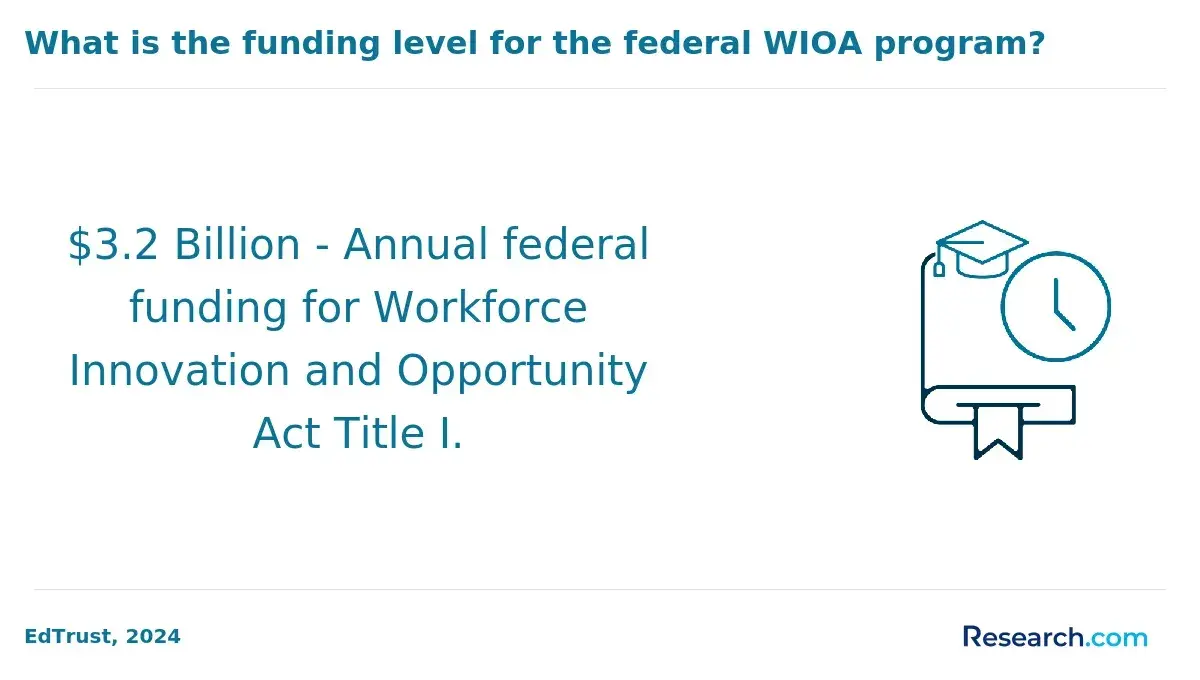
Complete the FAFSA first, then ask the financial aid office whether the exact program code is eligible. Workforce Innovation and Opportunity Act funding, vocational rehabilitation assistance, union benefits, military education benefits, and employer tuition assistance can also help, but eligibility is local and individual.
How can students compare online vs campus career training options effectively?
Online career training can lower commuting costs and improve schedule flexibility, while campus or hybrid formats can provide equipment, live supervision, and faster access to labs. The better option depends on the occupation, not simply personal preference. Students comparing theory-heavy programs may also want to review affordable online colleges if they could later need a bachelor's degree.
Compare the delivery model against the work you will actually perform:
| Decision factor | Online or mostly online | Campus or hybrid |
| Best fit | Administrative, legal support, IT theory, and flexible schedules | Trades, clinical care, imaging, labs, and equipment-intensive work |
| Hands-on requirements | May require local externships, proctored assessments, or intensives | Usually built into scheduled labs, shops, and clinical rotations |
| Primary cost trade-off | Potential savings on travel and housing; technology costs remain | Potentially higher travel and parking costs; access to school equipment |
| Main risk | Assuming online coursework meets state licensing requirements | Assuming fixed schedules can fit work and caregiving responsibilities |
Before choosing online delivery, get written confirmation that distance students can complete required practical hours where they live. Ask who secures placements, how long placement waits are, whether attendance is synchronous, and what happens if a clinical or internship site is unavailable.
What accreditation and licensing requirements should career training programs meet?
Accreditation evaluates an institution or program against established standards; licensure is legal permission to practice a regulated occupation. Neither term should be used loosely. Institutional accreditation matters for federal aid and transfer options, while specialized programmatic accreditation or state approval can be essential in healthcare and certain technical fields.
For a regulated pathway, verify requirements in this order:
- Identify the state board or agency that licenses the occupation where you intend to work.
- Confirm that the exact campus, delivery format, and program meet the board's education requirements.
- Check whether graduation makes you eligible for the required licensing or certification examination.
- Ask whether clinical, practicum, or supervised-hour requirements are included and documented.
- Save written confirmation from the school and independently review the regulator's published requirements.
Examples include nursing board approval for nursing programs and programmatic accreditation commonly expected for fields such as radiography, respiratory care, and dental hygiene.
Trades may instead rely on state licensing rules, apprenticeship standards, local permits, or employer-recognized certifications. A school's general accreditation does not automatically establish eligibility for every professional license.
What admission requirements and application steps do financial-aid-eligible programs typically have?
Admissions requirements vary with the credential and the safety-sensitive nature of the field. Open-access certificates may require only a high school diploma or equivalent, identification, placement testing, and an application.
Selective healthcare programs often add prerequisite courses, minimum grades, entrance exams, immunization records, and background checks. Programs serving minors may require additional consent.
A practical application sequence reduces last-minute delays:
- Confirm the credential, format, start date, and financial-aid eligibility for the exact program.
- Submit the school application and FAFSA early enough to resolve verification requests.
- Request official transcripts and determine whether prior college, military, or industry training can be evaluated for credit.
- Complete any placement tests, prerequisite courses, interviews, or skills assessments.
- Budget for health clearances, tools, uniforms, licensing exams, and transportation before accepting aid.
Do not assume a high GPA is universally required. Many entry-level career certificates use limited academic screening, but competitive cohorts may rank applicants by prerequisite grades or test results. Noncredit provider courses can have very different enrollment rules and may not offer federal aid.
How long do career training programs take, and what do they cost after financial aid?
Completion time can range from several months for a focused certificate to about two years for a full-time associate degree. Part-time enrollment, prerequisite courses, waitlists for clinical placements, and apprenticeship schedules can extend the calendar.
Faster is not always cheaper if acceleration prevents you from working or creates a larger borrowing need; compare this trade-off with best accelerated programs when speed is your main priority.
Published tuition is only one part of the budget. The National Center for Education Statistics reported average published tuition and fees of $4,050 for in-district students at public two-year institutions in the 2023-24 academic year; individual program charges can differ substantially. Use the school's net price estimate and formal aid offer rather than this national benchmark to make a decision.
The following cost categories should appear in your personal comparison:
| Cost category | Why it changes the net cost |
| Tuition and mandatory fees | May vary by residency, credits, clock hours, and delivery format |
| Books, tools, software, and uniforms | Often required before practical coursework begins |
| Testing, licensure, and credential fees | May be separate from program tuition |
| Transportation, childcare, and housing | Can determine whether a schedule is financially workable |
| Grants, scholarships, and employer aid | Reduce out-of-pocket cost without creating the same repayment obligation as loans |
Prioritize grants, scholarships, employer assistance, and manageable payment plans before borrowing. If loans are necessary, borrow only after understanding interest, repayment, completion risk, and the school's withdrawal policy.
What core courses and hands-on training should high-quality career programs include?
High-quality career programs teach both the technical tasks of the occupation and the habits employers expect on the job. The curriculum should match current equipment, workplace software, safety rules, documentation standards, and applicable regulations rather than relying only on lectures or generic career-readiness courses.
Ask to see the course sequence and identify where each competency is assessed. Strong programs commonly include:
- Foundational theory that explains why procedures, codes, or systems work.
- Structured hands-on practice in labs, shops, simulations, studios, or supervised field settings.
- Safety, ethics, communication, documentation, and problem-solving instruction tied to the field.
- Performance assessments using equipment and tasks similar to entry-level work.
- Externships, clinical rotations, internships, apprenticeships, or employer projects when the occupation requires workplace practice.
Be cautious when a program cannot explain the number of practical hours, instructor qualifications, equipment access, or how it evaluates competency. For online programs, simulations can support learning but may not substitute for in-person practice required by an employer, licensing board, or accreditor.
What entry-level and advanced career paths do these training programs prepare you for?
Career training usually prepares learners for entry-level work, not automatic advancement into every related role. Advancement often depends on experience, a license, employer training, additional certifications, or a higher degree. The right program should identify the first job it supports and the next credential that expands options.
This comparison illustrates how pathways can build over time:
| Program area | Possible entry-level direction | Potential advancement route |
| HVAC/R certificate | Installer helper, maintenance technician trainee, service apprentice | Journeyman status, specialized refrigeration work, field supervision |
| Practical nursing program | Licensed practical/vocational nurse where state requirements are met | Bridge education, specialty experience, registered nursing pathway |
| Paralegal studies certificate | Legal assistant or paralegal support role | Practice-area specialization, senior legal support, further education |
| Digital design certificate | Production artist, junior designer, content support role | Portfolio growth, UX specialization, art direction with experience |
Choose a stackable, credit-bearing option when you may pursue an associate or bachelor's degree later, but get transfer policies in writing. Learners seeking technical office work or independent digital roles can also explore jobs for introverts that pay well to compare work environments before committing to a field.
What salary ranges and earning growth can graduates of career training programs expect?
Salary depends on occupation, location, industry, schedule, experience, licensure, and employer - not solely on the credential completed. The U.S. Bureau of Labor Statistics' May 2023 wage data, published in 2024, reported median annual pay of $61,420 for HVAC mechanics and installers, $59,200 for paralegals and legal assistants, and $86,900 for registered nurses.
These are occupation-level medians and do not mean every certificate or associate degree graduate qualifies for, obtains, or earns those amounts.
Use wage data as a comparison tool alongside entry requirements. Higher-paying roles may require an associate degree, state license, apprenticeship completion, clinical experience, or work schedules that include evenings and weekends. For additional field ideas, review certificate programs that pay well, then verify whether each listed career requires training beyond a certificate.
The BLS projects employment based on national trends, which may not match local hiring. Check local job postings for required licenses, software, physical demands, and experience levels before estimating your likely first-job pay.
How can students verify program quality, outcomes, and job placement before enrolling?
Program quality is best evaluated through evidence, not advertising language such as "career-ready" or "job placement assistance." Ask for the most recent outcomes report and make sure its definitions match what you need: completion, licensure pass rates, employment in-field, time to placement, and typical debt are different measures.
Before enrolling, take these verification steps:
- Confirm institutional accreditation, financial-aid participation, and any program-specific approval with the appropriate external agency.
- Request the program's total cost of attendance, refund policy, graduation rate, withdrawal rate, and cohort size in writing.
- Ask how the school defines "placed," whether jobs are full-time and in-field, and how many graduates were included in the reported outcome.
- Speak with current students or recent graduates about instructor access, scheduling, equipment, clinical placements, and job-search support.
- Compare the curriculum with several local job postings and ask employers whether they recognize the training.
Red flags include pressure to sign immediately, vague placement claims, missing licensing disclosures, unusually high private-loan reliance, no clear equipment or clinical plan, and refusal to provide outcomes by program. A reputable school can explain limitations as well as benefits.
Other Things You Should Know About
Yes, if the school participates in federal student aid and the specific program is eligible. Submit the FAFSA and confirm eligibility with the financial aid office before enrolling, because not every short course or campus program qualifies.
They can be when offered through an eligible institution and program. Online delivery alone does not determine eligibility. You should also verify whether the format satisfies practical-training and state licensing requirements.
A certificate is often better for focused, faster entry-level preparation. An associate degree can make more sense when the occupation requires it, when you want broader education, or when you may transfer credits toward a bachelor's degree later.
A certificate is an educational credential awarded after completing a program of study. A certification is a professional credential generally issued by a certifying organization after meeting its standards, which may include an examination, work experience, or continuing education.
References
- Financial Aid for Trade Schools - Online or On-Campus Programs - PCI https://www.pcitraining.edu/admissions/financial-aid
- Career and Technical Education Policy: A Multistate Case Study on Employment Outcomes https://www.americanprogress.org/article/career-and-technical-education-policy-a-multistate-case-study-on-employment-outcomes/
- Getting Financial Assistance for Career Training https://ccitraining.edu/blog/getting-financial-assistance-for-career-training/
- Paying for Career Training: Cost of Career Training and Trade Schools | Climb Credit https://climbcredit.com/resources/data/pay-for-trade-school-career-training/
- Quick college credentials: Student outcomes and accountability policy for short-term programs | Brookings https://www.brookings.edu/articles/quick-college-credentials-student-outcomes-and-accountability-policy-for-short-term-programs/
- Finacial Aid | Payment Plans, Ignite ISA, Grants, GI Bill https://digitalworkshopcenter.com/about/financial-aid/
- Tuition Assistance for Job Training Programs https://www.fastweb.com/financial-aid/articles/tuition-assistance-for-job-training-programs
- Best Student Loans for Certificate Programs - Credible https://www.credible.com/student-loans/student-loans-for-certificate-programs
- Stepful Grant Options https://www.stepful.com/grants
- Paying for Trade School: Grants, Loans and Aid https://www.uti.edu/blog/education/paying-for-trade-school-financial-aid-grants-loans