2027 Best Career Training Programs With Job Placement Support

Co-Founder and Chief Data Scientist
Choosing career training is difficult when programs advertise "job placement" without explaining what support actually means. U.S. Bureau of Labor Statistics projections published in 2024 estimate about 1.9 million openings per year in healthcare occupations from 2023 to 2033, making career-focused training especially relevant for people seeking practical entry routes.
This guide compares program types, placement services, costs, licenses, and realistic job outcomes so you can identify training that fits your target occupation - not just a marketing promise.
Key Things You Should Know
- Job placement support is not a job guarantee: strong programs provide career coaching, employer connections, interview preparation, and documented outcome data.
- Healthcare and skilled-trade paths can offer clearer entry routes because many lead to regulated roles, apprenticeships, or employer-recognized credentials; BLS projected healthcare employment to grow 8.6% from 2023 to 2033.
- Compare total cost, required licensing exams, clinical or lab hours, accreditation, and placement outcomes before enrolling; the lowest tuition is not always the lowest-risk option.
Top 10 Best Career Training Programs With Job Placement Support
Popular Trade School Programs
Trade programs combine technical instruction with lab practice, shop time, or apprenticeships. Common certificate and associate options include HVAC, welding, electrical technology, automotive service, diesel technology, plumbing, machining, construction management, and industrial maintenance. Certificates can suit learners seeking faster entry-level preparation; associate degrees may add general education and broader advancement options. Many trades require an apprenticeship, state license, or employer training after school. Choose campus-based training when hands-on equipment and supervised practice are essential, and verify whether the program prepares you for required local licensing exams.
Healthcare Programs
Healthcare career training includes medical assisting, practical nursing, dental assisting, pharmacy technology, surgical technology, medical billing and coding, phlebotomy, sonography, and respiratory care. Short certificates may prepare learners for support roles or a separate certification exam, while associate degrees are common for fields such as nursing, dental hygiene, and diagnostic imaging. Clinical placements are often required and cannot always be completed fully online. State rules vary substantially for licensure. Before enrolling, confirm programmatic accreditation, required clinical hours, exam eligibility, and whether local employers recognize the credential.
Criminal Justice / Law Programs
Criminal justice certificates and associate degrees can support entry-level work in corrections, security, dispatch, court administration, or public-service settings. Legal studies and paralegal certificates focus more directly on legal research, document preparation, and litigation support. A certificate is academic training; it is not the same as professional certification from an industry organization. Paralegals generally work under attorney supervision and cannot provide legal advice. Background checks, agency fitness standards, and state or employer requirements may apply to public-safety roles. Programs with internships, mock casework, and local employer relationships provide more useful placement preparation.
Arts & Design Programs
Arts and design training commonly includes graphic design, web design, digital media, animation, photography, interior design, fashion design, and UX-focused coursework. Certificates can build software and portfolio skills quickly, while associate degrees may provide more design theory, critique, and general education. Employers often assess portfolios more closely than the credential title, so placement support should include portfolio reviews, internships, freelance-business guidance, and employer introductions. Fully online programs can work well for software-based design, but students should confirm access to required tools, instructor feedback, and opportunities to develop original work.
What Are the Best Career Training Programs With Job Placement Support?
The best career training program with job placement support is the one that matches a specific occupation, meets that occupation's entry requirements, and can document how it helps graduates transition into work. For many learners, community colleges, accredited technical schools, union apprenticeships, and employer-backed programs are safer choices than providers that only advertise broad "career services."
This comparison separates common options by the kind of outcome they can realistically support. A program may offer a certificate, an associate degree, or noncredit training; those credentials have different transfer, licensing, and hiring value.
| Program type | Best for | Typical placement support | Key limitation to check |
| Community college certificate | Affordable technical or healthcare entry training | Career center, internships, local employer referrals | Whether the certificate meets licensing or exam requirements |
| Associate degree | Roles needing broader coursework or clinical preparation | Advising, clinical coordination, recruiting events | Longer timeline and prerequisite courses |
| Union or registered apprenticeship | Skilled trades learners who want paid work-based learning | Employer placement is built into the model | Competitive entry and location-specific availability |
| Private career school | Accelerated, occupation-specific preparation | Resume support and employer outreach | Outcome reporting, total cost, and accreditation |
| Industry certification training | Workers adding a recognized technical skill | Exam preparation and sometimes career coaching | It may not include academic credit or hands-on experience |
For roles where an associate credential is the practical entry point, compare an online associates degree with local campus options, especially if labs, clinicals, or licensing requirements limit fully remote study.
How Do Job Placement Support Services Work?
Job placement support refers to services intended to help students search for and compete for work after training. It does not mean a school must place every graduate in a job, and it should never be treated as a guaranteed salary or offer.
Ask a school to explain its process in writing. Meaningful support generally includes the following elements.
- Career staff help students identify job titles, employers, and entry requirements aligned with the program.
- Students receive resume, interview, portfolio, and job-search coaching tailored to the field.
- The school connects learners with internships, clinical sites, apprenticeships, recruiters, or employer events where available.
- Staff track outcomes using a stated methodology, including the share of graduates employed in-field and the timeframe used.
- Graduates can access follow-up support if they need help searching after completion.
Request the most recent placement report and ask whether "employed" includes temporary work, unrelated jobs, self-employment, or jobs obtained before graduation. Also ask how many graduates were included and how many did not report outcomes. A high rate is less useful when the definition is vague or the reporting group is very small.
Which Career Training Programs Lead to the Highest-Paying Jobs?
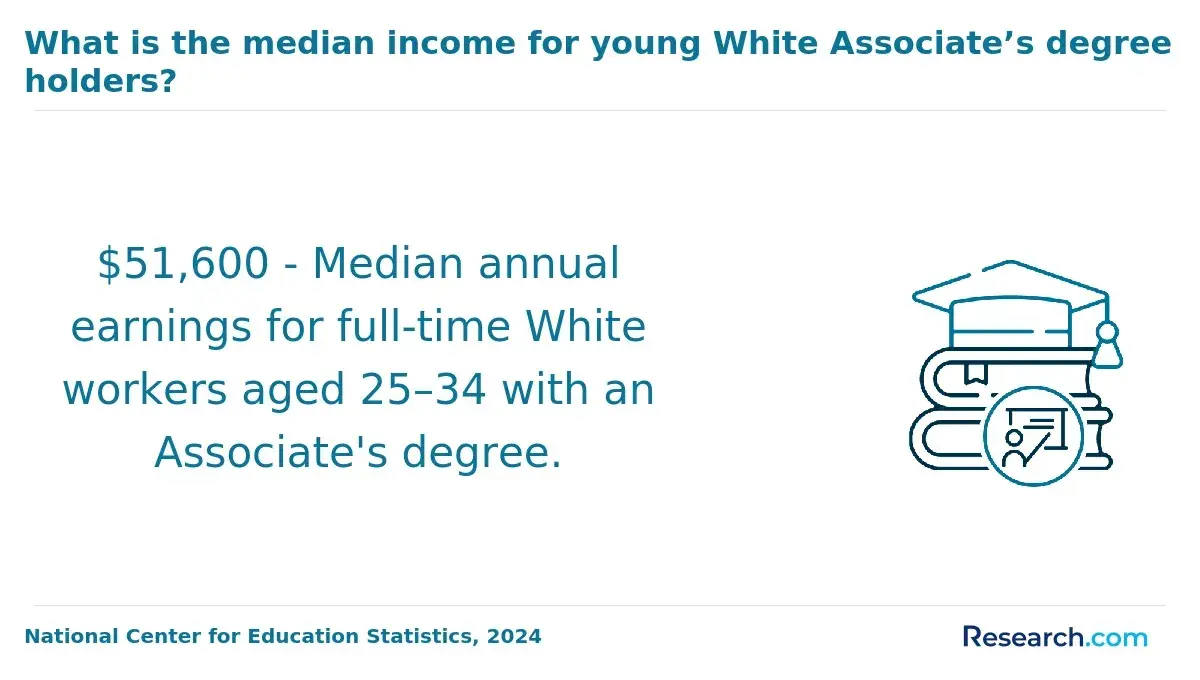
The highest-paying career-training routes often involve regulated healthcare occupations or highly technical maintenance work, not necessarily the shortest certificate. Occupational wages are not the typical earnings of any particular program's graduates; pay varies by location, experience, shift, employer, and licensure.
The table uses U.S. Bureau of Labor Statistics May 2024 national median annual wage data to show occupations commonly connected to career-focused associate-degree or postsecondary training routes.
| Occupation | Median annual wage | Common preparation route | Important consideration |
| Radiation therapist | $101,990 | Associate degree or certificate plus clinical training | Most states require licensure; program eligibility matters. |
| Dental hygienist | $94,260 | Accredited associate degree | State licensure is required. |
| Diagnostic medical sonographer | $89,340 | Associate degree or postsecondary certificate | Employers may prefer certification; clinical education is central. |
| Aircraft and avionics equipment mechanic or technician | $78,680 | FAA-aligned technical training or qualifying experience | Certification and employer requirements differ by role. |
These routes can be worthwhile when you can meet the science prerequisites, clinical demands, licensing rules, or technical standards. If you already hold a bachelor's degree and need a different career level, a one year masters degree may be a more suitable alternative than entry-level career training.
What Accreditation Should Career Training Programs Have?
Accreditation is a quality-review process, but the right type depends on the program and career goal. Institutional accreditation matters most when you want federal student aid eligibility, transferable academic credit, or confidence that the college meets broad educational standards. Programmatic accreditation is often more important for regulated healthcare education because it may be required for licensure or certification-exam eligibility.
Before applying, verify these points directly with the school and the relevant licensing board or certifying organization.
- Confirm the institution's accreditor is recognized by the U.S. Department of Education or the Council for Higher Education Accreditation.
- For healthcare programs, identify the specific programmatic accreditor required for your occupation, such as CAAHEP, ABHES, CODA, or another field-specific body.
- Ask whether graduates are eligible for the required licensing or certification examination in the state where you intend to work.
- Check whether a noncredit provider has industry recognition even if it is not a college and does not award transferable academic credit.
A common mistake is assuming institutional accreditation alone makes every program license-eligible. For regulated occupations, the program, curriculum, clinical experience, and state rules may all matter.
What Are the Best Online Vs Campus Career Training Programs?
Online career training works best when the target role is software-based, administrative, or compatible with remote instruction. Campus or hybrid delivery is usually stronger when students need labs, equipment, clinical supervision, shop practice, or direct performance assessment.
Use this comparison to decide whether flexibility or hands-on access should carry more weight in your choice.
| Factor | Online program | Campus or hybrid program |
| Schedule | Often more flexible for working adults | Usually follows set meeting and lab times |
| Hands-on training | May require local externships or intensives | Direct access to labs, equipment, and instructors |
| Best-fit fields | IT, billing and coding, business support, some design | Welding, HVAC, nursing, imaging, dental, automotive |
| Placement access | May be broader but less locally connected | Often stronger local employer and clinical relationships |
| Main risk | Assuming online coursework satisfies practical or licensure requirements | Less flexibility and possible commuting costs |
Choose online learning only after confirming where required labs, clinicals, internships, and exams occur. Learners who need asynchronous scheduling can also evaluate self paced college courses, but self-paced delivery is not appropriate when a program requires cohort-based clinical or lab sequences.
How Long Do Career Training Programs Take to Finish?
Completion time depends on the credential, prerequisites, required clinical or field hours, and whether you study full time. A short program can speed up classroom instruction, but it cannot always shorten state-mandated practice hours, apprenticeship requirements, or certification testing.
The ranges below are planning estimates rather than promises; individual schools may structure programs differently.
| Training route | Typical timeline | Best use |
| Short noncredit training | Weeks to several months | Foundational skills or exam preparation |
| Career certificate | Several months to about one year | Focused entry-level preparation |
| Diploma program | About one year | Structured occupational training |
| Associate degree | About two years full time | Clinical, technical, or credit-bearing career pathways |
| Apprenticeship | Often multiple years | Paid, supervised trade progression |
Acceleration is useful only when you have the time and prerequisites to sustain the pace. If your goal requires a bachelor's rather than a certificate, an online accelerated bachelor's degree can be worth comparing with shorter training options.
What Do Career Training Programs Cost?
Career training costs range widely because public colleges, private career schools, apprenticeships, and noncredit providers use different pricing models. Tuition is only one part of the decision: tools, uniforms, exam fees, background checks, transportation, insurance, and lost work time can materially change affordability.
As a broad benchmark, College Board reported average published in-district tuition and fees of $4,050 at public two-year colleges for 2024-25. That figure is not a quote for a specialized career program, which may cost more because of labs, clinical instruction, or equipment.
| Cost category | Why it matters | Question to ask |
| Tuition and mandatory fees | Usually the largest billed expense | What is the full program price, not the per-term price? |
| Books, tools, and software | Can be substantial in trades and design | Which items are required and can any be purchased used? |
| Clinical, lab, and licensing expenses | May be required to finish or work in the field | Are exams, immunizations, scrubs, and background checks included? |
| Living and transportation costs | Can affect completion for intensive campus programs | How often must I attend campus, labs, or clinical sites? |
Ask for a written cost sheet and compare net price after grants, employer tuition assistance, workforce funding, veterans benefits, or other aid for which you qualify. Federal aid generally requires an eligible program at an eligible institution; many short noncredit offerings do not qualify.
What Certifications or Licenses Do These Programs Require?
Certificates, certifications, and licenses serve different purposes. A certificate is an educational credential awarded after completing a school or training program. A certification is typically awarded by a professional organization after meeting its standards, often through an exam. A license is government permission to practice a regulated occupation.
The requirements depend on the role, so confirm the exact sequence before you pay a deposit.
- Healthcare roles such as practical nursing, dental hygiene, radiologic technology, and respiratory care commonly require approved education and state licensure.
- Medical assistants, pharmacy technicians, coders, and IT workers may face employer-preferred or state-specific certification requirements rather than universal licensing.
- Electricians, plumbers, and other tradespeople may need apprenticeships, supervised experience, examinations, or local licenses beyond school completion.
- Design, legal support, and many business-support roles usually rely more on portfolios, demonstrated skills, or voluntary credentials than state licensure.
Do not rely on a school's general statement that a program is "career ready." Contact the relevant state board or certification body and ask whether that exact program makes you eligible for the exam or license you need.
How Do You Choose a Reputable Career Training Program?
A reputable program makes its credential, total cost, requirements, and outcomes understandable before enrollment. The best choice is not necessarily the fastest program or the one with the highest advertised placement rate; it is the option that clears the entry barrier for your intended job at an acceptable cost.
Use these steps to compare programs consistently.
- Choose a target job title first, then identify its usual education, licensing, certification, and experience requirements.
- Confirm that the program's credential type matches the requirement: a noncredit course, certificate, associate degree, apprenticeship, or exam-preparation course may lead to very different outcomes.
- Request written details on total charges, equipment, clinical or externship placement, refund policies, and schedule expectations.
- Verify institutional and programmatic accreditation when transfer credit, federal aid, certification eligibility, or licensure depends on it.
- Ask for the latest outcome report, including the definition of placement, reporting period, in-field employment rate, and median time to employment.
- Talk with local employers or recent graduates about whether they recognize the program and what entry-level applicants actually need.
Red flags include pressure to enroll immediately, unclear tuition, claims of guaranteed employment, refusal to provide outcome definitions, vague statements about accreditation, and promises that online coursework automatically qualifies you for a hands-on licensed role.
Other Things You Should Know About
No. "Job placement support" usually means career coaching, employer referrals, interview help, or internship coordination. Ask for written outcome data and the school's definition of placement before treating the service as a meaningful benefit.
Neither is automatically better. A certificate can be efficient for a specific entry-level skill, while an associate degree may be required or preferred for clinical, technical, or advancement-oriented roles. Start with the education requirement for your target job.
Some programs can be completed online, particularly in IT, design, and administrative fields. Programs requiring labs, clinical rotations, equipment practice, or licensing verification often use campus, hybrid, or local placement components.
Ask what counts as a placement, whether jobs must be related to the field, how long graduates have to find work, how many graduates were surveyed, and whether the school can identify employers that have hired recent completers.
References
- Calculating the ROI of Training: From Expense to Necessity https://learn.toolingu.com/blog-start/2025/april/calculating-the-roi-of-training/
- San Antonio Ready to Work - Train for a Great Job and Earn More https://readytoworksa.com/
- Workforce Innovation and Opportunity Act - Alabama Department of Labor https://adol.alabama.gov/job-seeker/workforce-innovation-and-opportunity-act/
- Career Development and Training | Gulf Coast Workforce Solutions https://www.wrksolutions.com/job-seekers/career-development-and-training
- Resources for Job Seekers https://www.commerce.nc.gov/jobs-training/resources-job-seekers
- Job Training Programs in Philadelphia with OIC https://oicphila.org/career-training-programs-philadelphia/
- Job and Career Training - Massachusetts Adult Education Help Desk https://adultedhelpdeskma.org/for-students/job-and-career-training/
- Job Training - United Way of Metropolitan Dallas https://unitedwaydallas.org/resources/job-training/
- Employer Engagement and Calculating Return on Investment for Industry - AACC https://www.aacc.nche.edu/programs/workforce-economic-development/expanding-community-college-apprenticeships/intro-virtual-apprenticeship-network/virtual-apprenticeship-network/effective-messaging-on-the-value-of-registered-apprenticeship-programs/employer-engagement-and-calculating-return-on-investment-for-industry/
- Workforce Development, Inc. https://wowi.com/about/workforce