2027 Best Career Training Programs With No SAT or ACT Requirement

Co-Founder and Chief Data Scientist
Choosing career training without SAT or ACT scores can remove a major barrier, but it does not make every program equally valuable. The U.S. Bureau of Labor Statistics reported a $49,500 median annual wage across all occupations in May 2024, making program cost, time to completion, and local job demand important return-on-investment questions.
This guide helps prospective students compare trade, healthcare, legal, and design training, understand no-test admissions, and identify the credentials and licenses their target jobs actually require.
Key Things You Should Know
- Many community colleges, technical schools, adult career centers, and nondegree providers do not require SAT or ACT scores; they may instead use a high school credential, placement assessment, interview, or prerequisite course.
- A certificate is education completed through a school or provider, while a certification is a professional credential usually earned from a certifying organization; regulated careers may require a separate license or exam after training.
- Career value varies sharply by occupation: BLS May 2024 median pay ranged from $39,530 for nursing assistants to $62,350 for electricians, so confirm local hiring, required credentials, and total costs before enrolling.
Top 10 Best Career Training Programs With No SAT or ACT Requirement
Popular Trade School Programs
Trade programs commonly include welding certificates, HVAC technician certificates, electrician apprenticeships, automotive technology certificates, plumbing training, and construction management associate degrees. Most emphasize hands-on labs and employer-facing skills rather than SAT or ACT results.
A short certificate may support entry-level work, while electrician and plumbing careers usually require paid apprenticeship hours and state or local licensing. Choose a credit-bearing associate degree if you may later transfer; choose a focused certificate when a local employer or licensing pathway clearly recognizes it.
Healthcare Programs
No-test healthcare options often include medical assistant, dental assistant, phlebotomy, pharmacy technician, practical nursing, and nursing assistant programs. Admission may require immunizations, background checks, drug screening, CPR training, placement testing, or prerequisite science courses even when SAT or ACT scores are not required.
Verify that clinical placements are included and that the curriculum meets your state's eligibility rules. For example, a medical-assistant certificate is educational training; national certification may be optional or employer-preferred rather than automatic.
Criminal Justice / Law Programs
Career-focused options include criminal justice certificates or associate degrees, paralegal studies certificates, legal assistant programs, corrections training, and security-guard preparation. Many open-access colleges admit applicants without SAT or ACT scores, though police academies and agencies commonly set separate physical, background, age, and citizenship requirements.
A paralegal certificate can build legal research and document-preparation skills, but it does not authorize independent legal practice. Compare programs by local employer recognition, internship access, and whether coursework meets state-specific requirements.
Arts & Design Programs
Graphic design, digital media, web design, photography, animation, UX basics, and interior design certificates can offer test-free entry. Portfolio quality, software practice, and completed projects generally matter more to employers than admissions test scores.
Short noncredit programs can be useful for targeted software skills, while a credit-bearing certificate or associate degree may provide broader design foundations and a transfer route. Students seeking licensed interior-design roles should check state requirements, because a brief certificate alone may not satisfy education or examination standards.
What types of career training programs accept students without SAT or ACT scores?
Career training programs with no SAT or ACT requirement are usually open-admission or workforce-oriented programs. "No test required" generally means the school does not use college entrance-test scores for admission; it does not mean every applicant is automatically eligible for every course, clinical site, or license.
The following comparison separates common program types because the credential, provider, cost structure, and career purpose differ.
| Program type | Typical provider | What it awards | Best fit |
| Academic certificate | Community college or technical college | Credit-bearing school certificate | Students wanting structured, potentially stackable coursework |
| Career diploma or noncredit certificate | Career school, adult education center, or online provider | Institutional completion credential | Students seeking focused job skills without college credit |
| Associate degree | Community college or technical college | Credit-bearing degree | Students needing broader general education or transfer options |
| Apprenticeship | Employer, union, or sponsor | Paid work experience and related instruction | People pursuing skilled trades with supervised work hours |
| Certification preparation | School, employer, or training provider | Training that may prepare for an external exam | Students whose field recognizes an industry credential |
Choose a shorter noncredit option only when employers recognize the training and you do not need transferable college credit. An associate degree can take longer, but it may be a better fit for nursing pathways, advancement plans, or future bachelor's-degree study.
How do admission requirements work for programs with no SAT or ACT?
Admissions commonly begin with an application, identity and education documentation, and confirmation that you meet program prerequisites. Open-access institutions may admit applicants to the college without SAT or ACT scores but use placement tools to determine whether developmental or college-level math and English support is needed. Selective cohorts can still rank applicants using grades, prerequisite performance, interviews, entrance assessments, or deadlines.
Applicants should distinguish general school admission from entry to a limited-enrollment program. Healthcare clinical programs, for example, often have additional compliance requirements that are unrelated to standardized testing.
Before applying, use this sequence to avoid discovering a requirement after paying an enrollment deposit.
- Read the program-specific admissions page, not only the institution's general admission policy.
- Ask whether a placement test is required and whether its result affects admission, course placement, or both.
- Confirm prerequisite courses, minimum grades, background checks, immunizations, physical requirements, and clinical or lab schedules.
- Request the written policy for transfer credit, refunds, leaves of absence, and progression standards.
- Match the program credential to your longer-term education plan before committing.
Students planning an eventual advanced degree should treat career training as one step rather than assume credits will transfer. For a later graduate-school comparison, review online doctoral programs without dissertation only after confirming the undergraduate education and professional experience those programs require.
Which accredited schools offer reputable no-test career training options?
Reputable no-test options are most often found at institutionally accredited community colleges, public technical colleges, state-approved workforce centers, registered apprenticeship sponsors, and career schools with programmatic approval where a field requires it. There is no universal "best" school: the strongest choice is one that is authorized to operate, transparent about costs and outcomes, and recognized by the employers, licensing board, or transfer institution relevant to your goal.
For online academic programs, start by comparing recognized institutions rather than relying on advertising claims; this overview of online colleges can help frame that broader search. Institutional accreditation does not automatically prove that every individual program meets professional licensing requirements.
Check these items directly with the school and, where applicable, the state licensing board before enrollment.
- Whether the institution appears in the U.S. Department of Education's accreditation and school search resources.
- Whether the specific program has required specialized approval, such as nursing-board approval or accreditation needed for a certification exam.
- Whether published tuition includes tools, uniforms, books, testing, lab, clinical, and licensing expenses.
- Whether completion, job-placement, and licensure-pass information is defined clearly and available in writing.
- Whether local employers, union halls, or professional associations recognize the credential.
A major red flag is a school that promises employment, discourages you from reviewing the enrollment agreement, or cannot explain whether its online curriculum meets requirements in your state.
How do online and campus-based no-test career programs compare in flexibility and outcomes?
Online no-test programs can reduce commuting and make asynchronous coursework easier to fit around work. Campus-based programs usually provide scheduled labs, equipment, peer practice, and direct access to instructors. Neither format is inherently better; the right choice depends on whether the occupation requires hands-on competency, clinical hours, supervised practice, or local employer relationships.
This comparison highlights the operational differences that matter most before enrollment.
| Decision factor | Online or mostly online | Campus-based or hybrid |
| Schedule | Often more flexible for lectures and assignments | Fixed meeting times and travel required |
| Hands-on training | May require local placements, kits, or intensives | Usually integrated through labs and equipment |
| Best suited fields | Business software, design theory, legal studies, some IT | Welding, HVAC, automotive, nursing, dental, and lab-based work |
| Networking | Requires deliberate use of virtual career services and local outreach | Often easier through instructors, classmates, and employers |
| Key verification | Confirm state authorization, proctoring, and placement availability | Confirm lab access, equipment quality, and schedule feasibility |
Do not assume an online program is cheaper after equipment, required travel, proctoring, or local clinical costs. For regulated healthcare and trade work, ask exactly where practical hours occur and who secures the placement.
What are typical program lengths, schedules, and costs for these training options?
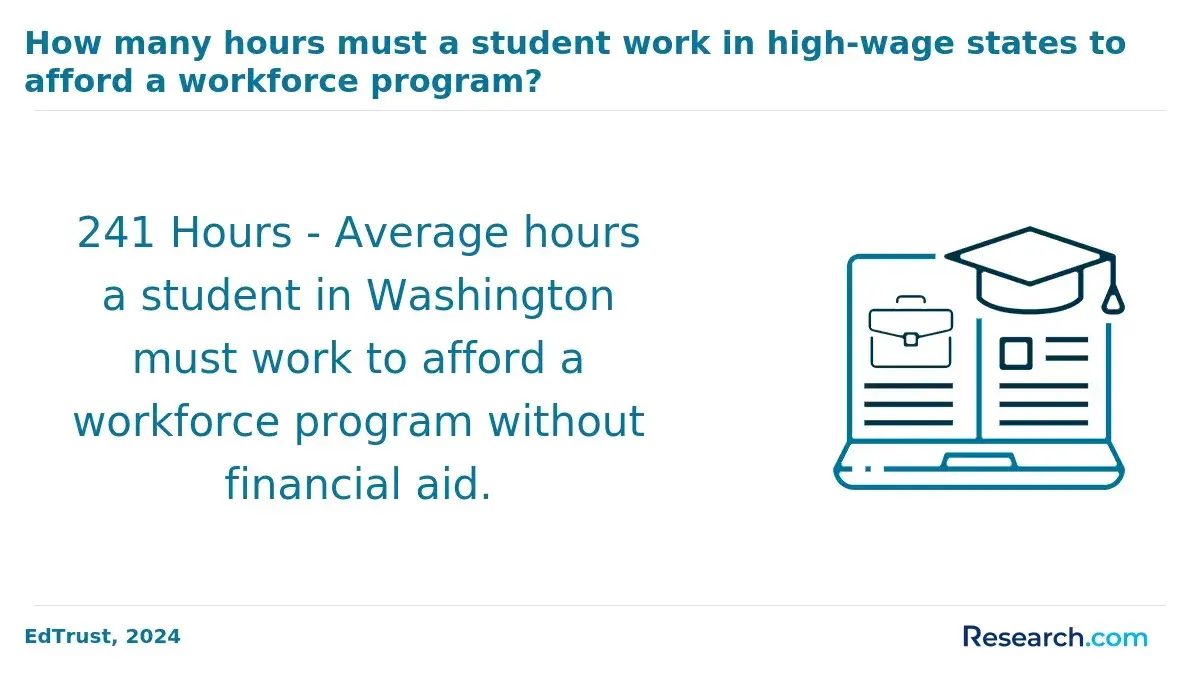
Program length ranges from a few weeks for narrow workforce training to about two years for a full-time associate degree. Tuition is only one cost: books, tools, uniforms, exams, transportation, lost work time, insurance, and licensing fees can materially change the total. Public colleges may offer lower published tuition for in-district residents, while private career schools may package services differently.
Use this planning guide to compare the trade-off between speed, depth, and expected expenses rather than choosing solely by the shortest advertised timeline.
| Pathway | Common length | Schedule pattern | Cost considerations |
| Short workforce course | Weeks to several months | Evening, weekend, or accelerated | Tuition, materials, exam fee, and limited aid eligibility |
| Certificate or diploma | Several months to about one year | Full-time, part-time, hybrid, or cohort-based | Tuition plus supplies, labs, tools, and possible clinical expenses |
| Associate degree | About two years full-time | Semester-based; part-time extends completion | Credit-based tuition, general education courses, and broader aid options where eligible |
| Apprenticeship | Often multiple years | Paid work plus related instruction | May earn wages while training; tools, dues, and exam costs may still apply |
Ask for a written net-price estimate and identify which costs are refundable. Federal aid may be available for eligible students in eligible programs at participating schools, but many short noncredit courses do not qualify. If your comparison eventually includes advanced online study, the cost framework used for cheapest online PhD programs in USA illustrates why total price and completion requirements matter more than headline tuition.
What coursework and skills are taught in no-test career training programs?
No-test admission changes the entry screen, not the learning expectations. Effective career training combines technical knowledge, safety practices, documentation, communication, and supervised application. Coursework should map to tasks a beginner is expected to perform, not merely provide broad introductions or software demonstrations.
The skills below are commonly taught, but the exact mix depends on the credential and occupation.
- Trade programs commonly teach tool use, blueprint reading, measurements, troubleshooting, safety procedures, and code-aware work practices.
- Healthcare programs may cover anatomy, infection control, patient communication, documentation, privacy, clinical procedures, and emergency response.
- Legal and criminal justice programs often develop legal research, report writing, records handling, ethics, case documentation, and procedural knowledge.
- Arts and design programs typically build portfolio projects, visual communication, digital-production workflows, client feedback skills, and intellectual-property awareness.
- Most employers also expect reliability, teamwork, digital literacy, problem solving, and the ability to follow documented processes.
Review the syllabus and required practical hours. A program that cannot show which equipment, software, clinical competencies, or work samples you will complete may not provide enough evidence of job readiness.
What jobs can you get after completing a no-test career training program?
Completing no-test career training can support entry-level job searches, but a credential alone does not guarantee a job or satisfy every occupation's legal requirements. Job access depends on local demand, prior experience, background rules, licensing, employer preferences, and the quality of your practical work samples or clinical record.
This table connects common training routes with realistic entry points and important limitations.
| Training area | Possible entry-level roles | Important limitation |
| HVAC, electrical, plumbing, welding | Helper, installer trainee, maintenance technician, apprentice | Independent work commonly requires supervised hours and licensing |
| Medical assisting and dental assisting | Medical assistant, dental assistant, patient-care support role | Employer and state requirements vary; certification may be preferred |
| Practical nursing | Licensed practical or vocational nurse | Requires graduation from an approved program and passing NCLEX-PN for licensure |
| Paralegal studies | Paralegal, legal assistant, document specialist | Paralegals cannot provide legal advice or practice law independently |
| Graphic and digital design | Junior designer, production artist, content-production assistant | Portfolio quality and software capability often outweigh the credential title |
Build evidence while enrolled: save permitted work samples, request feedback from supervisors, document software and equipment skills, and use internships or externships where available. For trades, contact local employers or apprenticeship sponsors before enrolling to learn which credential they actually value.
What salary ranges and growth potential can graduates of these programs expect?
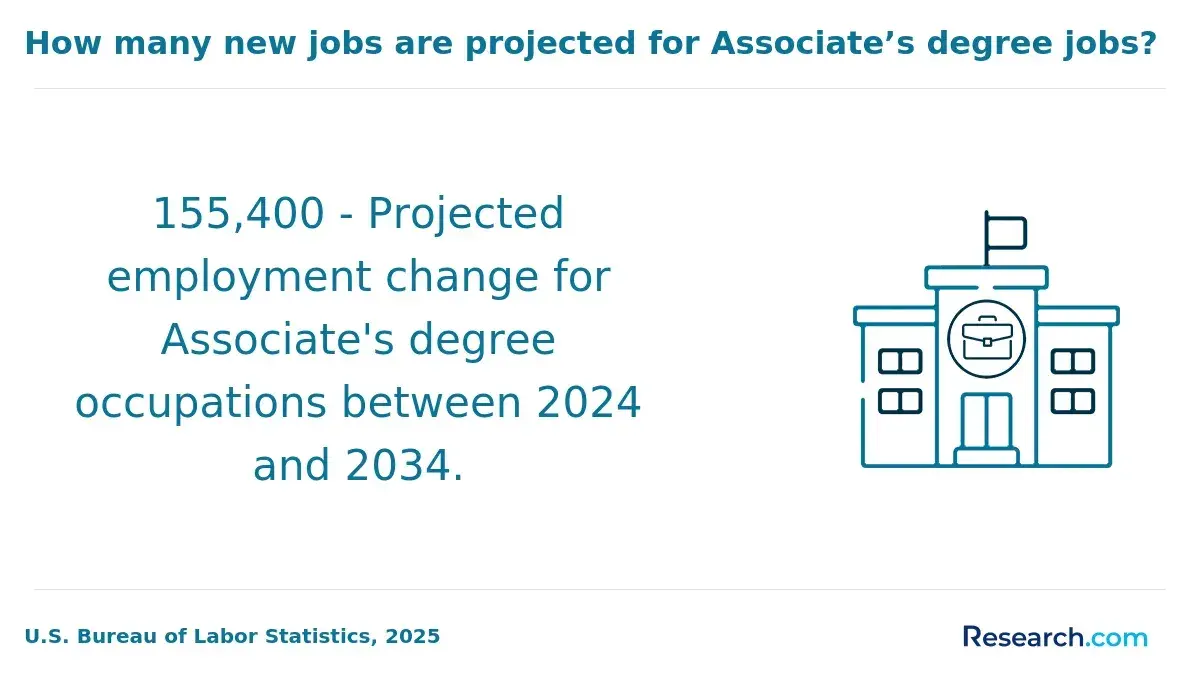
Occupation-level wage data is useful for comparing career directions, but it is not proof of what a certificate holder will earn. Pay varies by experience, location, industry, shift, union coverage, licensure, and employer. The U.S. Bureau of Labor Statistics' May 2024 national median wage figures below describe workers in each occupation, not the earnings of all program graduates.
The comparison can help readers evaluate whether the time and cost of a pathway are proportionate to its longer-term opportunity.
| Occupation | Median annual pay, May 2024 | Growth context |
| Electricians | $62,350 | Growth is projected faster than the average for all occupations through 2033. |
| Heating, air conditioning, and refrigeration mechanics and installers | $59,810 | Growth is projected faster than average through 2033. |
| Licensed practical and licensed vocational nurses | $62,340 | Openings also reflect replacement needs, not only new job growth. |
| Paralegals and legal assistants | $61,010 | National growth projections should be weighed against local legal-market demand. |
| Graphic designers | $61,300 | Portfolio strength and specialization can affect access to work. |
| Nursing assistants | $39,530 | Entry requirements are shorter, but work conditions and state rules vary. |
Career training may be worthwhile when it leads to a recognized entry point, manageable debt, and a clear advancement path. Students who need broader academic options can also compare most lucrative majors before deciding whether a short credential or a longer degree better fits their target field.
How do licensing and certification work for careers accessible through no-test training programs?
Licensing, certification, and school completion are separate milestones. A school certificate shows that you completed its curriculum. A professional certification is typically awarded by an independent organization after an exam or other eligibility requirements. A license is legal authorization from a state board or agency to work in a regulated occupation.
Regulated paths require careful verification because rules can change by state and because online or out-of-state education may not meet local eligibility standards. Practical nursing is a clear example: graduates generally must complete a board-approved program and pass the NCLEX-PN before they can be licensed. Electricians, plumbers, cosmetologists, security guards, and many healthcare workers may also face state or local requirements.
Use these safeguards before paying for training.
- Identify the exact job title you want and check the responsible state licensing board's eligibility rules.
- Ask the school whether its program has the approval required for examination or licensure eligibility in your state.
- Confirm whether background findings, prior convictions, health requirements, or supervised-hour rules can affect eligibility.
- Budget separately for examination, fingerprints, application, renewal, continuing education, and credential-maintenance costs.
- Get claims about certification preparation, pass rates, and state eligibility in writing.
A common mistake is assuming that a school's accreditation or marketing language makes a graduate license-eligible everywhere. Verify the occupation-specific rule yourself before enrolling.
Other Things You Should Know About
Yes. Many trade schools, technical colleges, community colleges, and apprenticeship pathways do not require SAT or ACT scores. They may still require a high school diploma or equivalent, placement assessment, interview, physical ability review, or program prerequisites.
No. Test-free admission is not a quality measure. Evaluate approval, accreditation where relevant, instructor qualifications, equipment, clinical or lab access, local employer recognition, completion policies, and total cost.
Possibly. Eligibility depends on the student, school, and program. Credit-bearing programs at eligible institutions are more likely to participate in federal aid programs, while short noncredit training may rely on employer support, state workforce funding, payment plans, or private financing.
The fastest option depends on the job's required training and licensing. Short courses can prepare students for limited entry-level roles within weeks or months, but regulated healthcare and skilled-trade careers often require longer coursework, exams, clinical practice, or supervised work hours.
References
- Types of Financial Aid https://www.hhloans.com/types-of-financial-aid/
- Colleges that Allow Self-Reporting of SAT and ACT Scores https://www.compassprep.com/self-reporting-test-scores/
- Best Online Colleges for Working Adults [2026] https://www.straighterline.com/blog/degree-completion-best-online-colleges-for-working-adults
- Do Trade Schools Require SAT Scores? - Center for Employment Training https://cetweb.edu/blog/do-trade-schools-require-sat-scores
- Trade School vs. College: A Straightforward Comparison https://www.ncstrades.edu/trade-school-vs-college/
- Elite colleges are returning to the SAT and ACT. Will others follow? https://www.highereddive.com/news/elite-colleges-are-returning-to-the-sat-and-act-will-others-follow/827299/
- Online vs. In-Person Test Prep: Which One Works Best? - Score At The Top https://www.scoreatthetop.com/blog/evaluating-online-vs-in-person-test-prep-effectiveness
- Find Test-Optional Colleges - No SAT/ACT Requirement https://www.accreditedschoolsonline.org/online-colleges/no-sat-or-act/
- Jobs That Don't Require a Degree: Insight into High-Paying Careers in Arizona https://www.asreb.com/blog/careers-dont-require-degree/
- Skills Based Hiring https://www.acct.org/center-for-policy-practice/skills-based-hiring