2027 Online Data Science Master's Options for Professionals in Washington, District of Columbia

Co-Founder and Chief Data Scientist
For Washington, D.C., professionals, choosing an online data science master's means looking beyond a university's address. A nearby campus may offer useful connections, but a national online program can be just as workable if its schedule, curriculum, and cost fit your goals.
This guide compares credible program options and shows how to evaluate them for a career in the District's government, nonprofit, consulting, or private-sector workforce.
Key Things You Should Know
- Washington, D.C., residents can consider national online programs, including options at Johns Hopkins, the University of Virginia, UT Austin, and UC Berkeley; confirm current enrollment eligibility and any in-person requirements before applying.
- Compare the full degree price, required live sessions, technical prerequisites, and project opportunities - not just the school's location or the advertised tuition rate.
- The U.S. Bureau of Labor Statistics reports a $120,230 national median annual wage for data scientists in May 2025; that figure is not a D.C. salary estimate or a predicted return on a master's degree.
What is an online data science master's degree in Washington, D.C.?
It is a graduate program that a professional living in Washington, D.C., can complete primarily online while studying subjects such as statistics, programming, machine learning, and applied analysis. The university does not have to be in the District. What matters locally is whether the program accepts D.C. residents, whether live classes work in Eastern Time, and whether any required campus visits are practical.
Degree titles deserve a close look. A data science degree may emphasize statistical modeling and computation; an analytics degree may lean toward organizational decisions; and an AI degree may focus more heavily on machine-learning systems. If AI is your main objective, explore artificial intelligence degrees online alongside data science options rather than assuming the titles describe identical curricula.
Which online data science master's programs are available to Washington, D.C., professionals?
The programs below give D.C. residents a practical starting shortlist. They have distinct academic emphases, but online availability, residency eligibility, schedules, and requirements should be confirmed on each university's current program pages before applying.
| Program | Useful distinction | Decision to verify |
| Johns Hopkins University, Engineering for Professionals MS in Data Science | Engineering-oriented graduate study with an online option | Current course availability, prerequisite expectations, and opportunities to use Baltimore-area resources |
| University of Virginia online MS in Data Science | An online data science degree from a Virginia university | Live-session expectations, cohort schedule, and any travel requirements |
| University of Texas at Austin online MS in Data Science | An online option worth comparing on academic requirements and price | Whether its course structure and available support fit your preferred pace |
| University of California, Berkeley Master of Information and Data Science | A data science degree housed in an information school | Live-class timing in Eastern Time and any required in-person experiences |
Choose a nearby institution when verified campus access, local faculty connections, or employer partnerships add value you expect to use. Otherwise, compare national programs on the same terms. Do not assume that a D.C.-area university's campus-based data science degree also has a fully online version - or that attending a university in another state changes your D.C. residency for tuition purposes.
How much do online data science master's programs in Washington, D.C., cost?
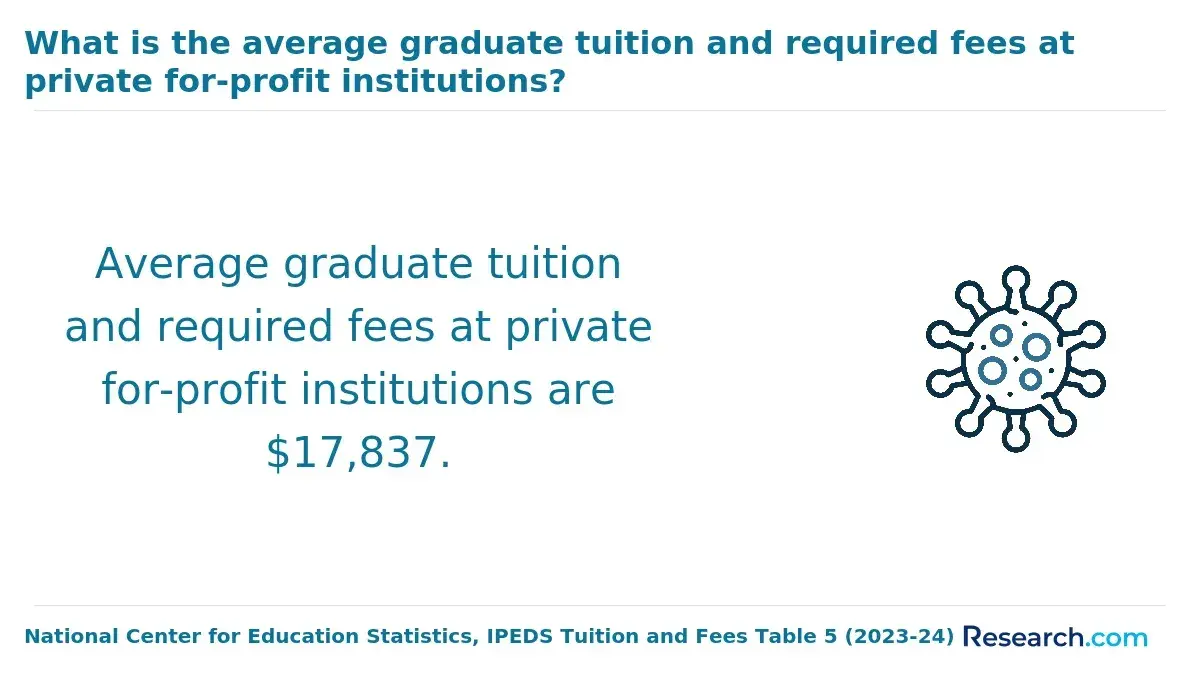
There is no single D.C. price: the universities set their own rates and fees, and published figures may cover different items. A current, comparable total for the programs above cannot be established without each school's applicable tuition schedule and your enrollment plan. Ask for a written estimate of all required credits plus mandatory fees, not just a per-credit rate.
Budget separately for software or equipment requirements, books, travel if a visit is required, and financing costs if you borrow. A working professional should also consider whether a course load would reduce paid work hours. Employer tuition assistance can change the comparison substantially, but check annual reimbursement limits, grade rules, and any requirement to repay benefits if you leave your job.
A lower sticker price is not automatically a better investment if the curriculum misses skills needed for your target role. For a broader comparison framework, see online artificial intelligence master's value comparisons; apply the same caution here: a salary figure cannot establish that a particular degree caused an earnings increase.
What accreditation should online data science master's programs have?
Start by verifying that the university holds recognized institutional accreditation. Then check the specific degree in the current academic catalog. Do not assume that institutional accreditation means a particular data science curriculum has separate programmatic accreditation, or that separate programmatic accreditation is required for a data scientist job.
Before paying an application deposit, also ask the university to confirm that it can enroll a student residing in Washington, D.C. State authorization concerns where a student lives while studying, not simply where the university is located. If you may move during the degree, ask how a change of residence affects eligibility.
What do you learn in an online data science master's program?
Expect some combination of probability and statistics, programming, data management, machine learning, model evaluation, and communication of results. The balance varies: one program may devote more work to mathematical methods, while another emphasizes applying models to organizational problems.
For D.C. professionals, the strongest fit often depends on the data they want to handle. Someone targeting public policy or program evaluation should look for rigorous inference and clear communication of uncertainty. Someone targeting production-oriented technical roles should inspect software engineering, data pipelines, and substantial coding projects. If work with sensitive or consequential decisions is central to your goal, compare the depth of privacy, fairness, and governance coursework rather than relying on a brief mention in a course description. A dedicated track is another option when choosing an AI ethics and governance track.
Ask to see recent course descriptions and examples of acceptable final projects. A named machine-learning course alone does not show how much independent modeling, evaluation, or reproducible work you will complete.
What are the admission requirements for online data science master's programs?
Requirements vary by institution and can include a bachelor's degree, transcripts, evidence of quantitative preparation, programming experience, recommendations, and a statement of purpose. Some programs specify prior coursework; others assess readiness through several forms of evidence. Check the current admissions page for each degree rather than treating a general university policy as a program requirement.
If your experience comes from policy, business, or government work, explain the analytical problems you have solved and identify any gaps in calculus, statistics, or coding. Self-study can help you prepare, but it does not automatically fulfill a formal course prerequisite. Applicants comparing alternatives can examine bridge and foundation options for AI graduate study for a related approach to closing technical gaps; confirm separately what each data science program accepts.
How long does an online data science master's degree take to complete?
Completion time depends on required credits, course sequencing, the number of courses you take at once, and whether the program follows a fixed cohort. An advertised timeline may assume continuous enrollment at a pace that is difficult alongside full-time work.
For a realistic plan, ask an adviser which required courses run every term, whether students can reduce their course load, and how long they may take to finish. Confirm the timing of live meetings and group work in Eastern Time. These details matter more to a D.C. professional's weekly schedule than the university's distance from the District.
What careers can a data science master's degree prepare you for?
Depending on prior experience and technical depth, the degree may support applications for data scientist, machine-learning, analytics, or research-focused roles. In the D.C. area, potential settings include federal contractors, agencies, nonprofits, healthcare organizations, and consulting firms. Employers define these jobs differently, so compare actual postings for the roles you want with the program's required courses and projects.
A master's is particularly useful when it helps you demonstrate skills missing from your current résumé. A policy professional might build a reproducible evaluation project; a software developer might demonstrate statistical modeling and model assessment. Neither example guarantees a career switch. Preserve evidence of your existing domain expertise rather than presenting yourself as a new graduate with no relevant experience.
How much do data scientists earn in Washington, D.C.?
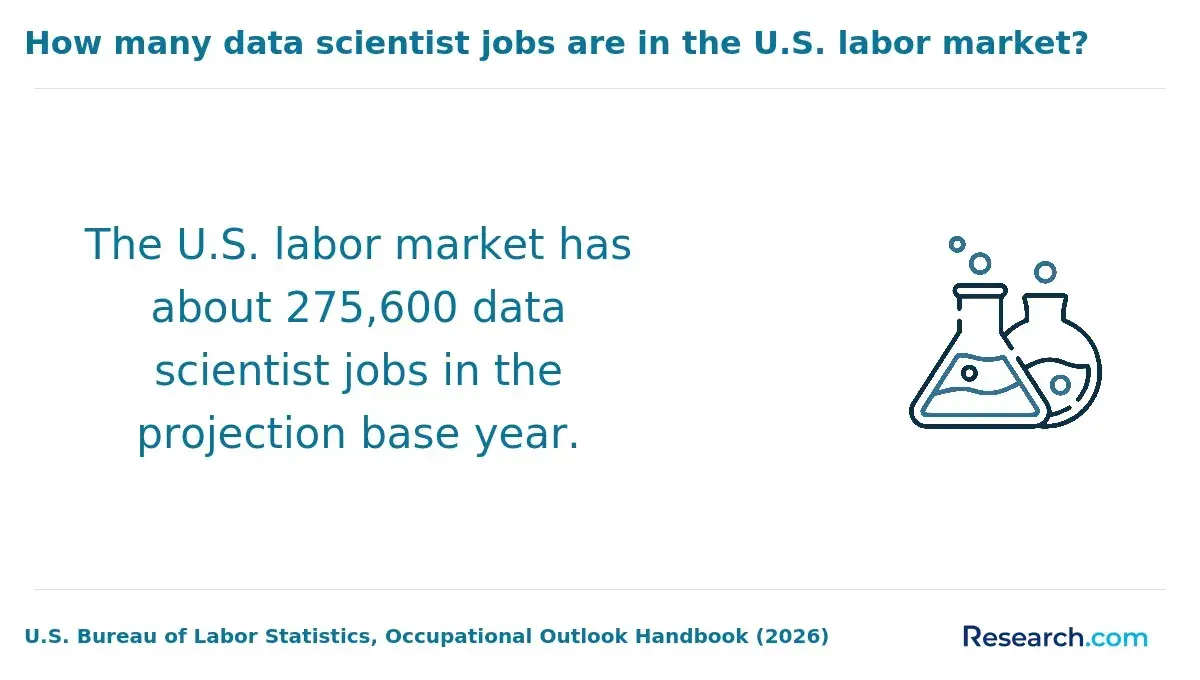
A verified, current D.C.-specific wage figure is not available here, so the national median should not be presented as local pay. The U.S. Bureau of Labor Statistics reports a $120,230 median annual wage for data scientists nationwide in May 2025. That is a measure of wages across employed data scientists - not an entry-level offer, a graduate outcome, or the increase attributable to a master's degree.
To estimate your own prospects, compare current D.C.-area job postings for roles matching your experience and ask programs whether any reported graduate salary data separates career changers from experienced professionals. Pay can differ substantially by employer, role, and industry; data science graduate earnings across the economy offers additional context, but should not substitute for local offers.
What is the job outlook for data science professionals in Washington, D.C.?
The BLS projects 35% growth in U.S. data scientist employment from 2025 to 2035. That indicates strong national demand relative to many occupations, but it is not a forecast for the District or a promise that a particular graduate will find work there.
For a D.C.-specific decision, review current openings at the employers you might realistically join. Note whether they ask for statistical research, production software skills, a particular policy domain, or eligibility to work on restricted projects. Rapid advances in AI make this comparison especially important: a program should teach you to evaluate and use evolving tools, not merely list them. If few target postings match the projects you would complete, reconsider the program before enrolling.
Other Things You Should Know About Data Science
Some roles involving government work do; many do not. Read each posting's eligibility language carefully. A university cannot promise that completing its degree will qualify you for a clearance.
Only if your employer permits it and the project follows applicable privacy, security, and university rules. Ask the program whether public or appropriately anonymized data can be used instead.
There is no universal certification requirement for data scientist roles. A specific employer may value a tool or cloud credential, but demonstrated work relevant to the job may be more important.
A doctorate may fit someone seeking research-intensive positions that require original scholarly work. If your goal is applied analysis while continuing your career, compare master's-level projects and job requirements before committing to the longer research path.
References
- Cost of Attendance (Budget) | 2025-2026 Federal Student Aid Handbook https://fsapartners.ed.gov/knowledge-center/fsa-handbook/2025-2026/vol3/ch2-cost-attendance-budget
- Student Internship Program | state.gov https://careers.state.gov/interns-fellows/student-internship-program/
- Students and Internships | intelligencecareers.gov https://www.intelligencecareers.gov/dhsia/students-and-internships
- Employer-offered educational assistance programs can help pay for college | Internal Revenue Service https://www.irs.gov/newsroom/employer-offered-educational-assistance-programs-can-help-pay-for-college
- Understanding College Costs | studentaid.gov https://studentaid.gov/resources/prepare-for-college/students/choosing-schools/consider-costs
- Tuition and Mandatory Fees | University of Houston-Downtown https://www.uhd.edu/administration/cashiers/cashiers-tuition-fees.html
- Admission Requirements https://graduate.appstate.edu/graduate-admissions/apply-graduate-school/application-requirements
- Tuition & Fees | Costs & Financial Aid | University of Houston https://www.uh.edu/financial/undergraduate/tuition-fees/
- Data Science vs. Computer Science: Choosing the Right Major | Syracuse University https://ischool.syracuse.edu/data-science-vs-computer-science/
- Financial Aid for Online Students | ASU Online https://asuonline.asu.edu/what-it-costs/financial-aid/