2027 Best Online Non-Degree Programs With High Acceptance Rates

Co-Founder and Chief Data Scientist
Choosing a short online program is difficult when "high acceptance rate" can mean anything from open enrollment to a lightly screened cohort. These programs can offer a faster route to job skills than a degree, but they vary sharply in cost, credit, licensing value, and employer recognition. BLS projects healthcare support occupations to grow faster than average from 2024 to 2034. This guide helps career changers, working adults, and first-time students compare accessible online options, verify quality, and avoid paying for training that does not fit their goal.
Key Things You Should Know
- Many online non-degree programs use open enrollment or basic eligibility screening instead of competitive admissions, but schools often do not publish a formal acceptance rate; confirm the actual entry requirements before applying.
- Short certificates can build job-ready skills in months, while credit-bearing certificates and associate degrees may take longer but can be more useful for transfer, financial aid eligibility, and regulated careers.
- Use occupation data - not provider salary promises - to judge value: BLS reports a $62,350 median annual wage for electricians and $50,250 for medical records specialists in May 2024, though a certificate alone may not qualify you for either role.
Top 10 Best Online Non-Degree Programs With High Acceptance Rates
Popular Trade School Programs
Accessible online trade training commonly includes HVAC fundamentals, electrical theory, welding safety, construction estimating, automotive service, and logistics. Programs may award a school certificate, not an occupational license or industry certification. HVAC and electrical learners usually need supervised hands-on labs, apprenticeships, or employer training before independent work. Choose online theory training if you already have access to local practical experience; choose a hybrid program when lab competencies are required. Ask whether tuition includes tools, exam preparation, externships, and state-specific licensing content.
Healthcare Programs
Common online healthcare options include medical billing and coding, medical office administration, pharmacy technician preparation, health information technology, and medical assisting coursework. Admission may be open or require a diploma, background check, immunizations, and placement clearance. Clinical occupations, including medical assisting and phlebotomy, generally require in-person skills practice or an externship; a fully online course alone may not meet employer or state expectations. Coding certificates can prepare learners for voluntary certification exams, but passing an exam remains separate from completing the program.
Criminal Justice / Law Programs
Online non-degree choices include legal studies certificates, paralegal studies certificates, criminal justice certificates, court reporting prerequisites, and compliance training. These programs can suit administrative, research, records, or entry-level support work, but they do not make a learner an attorney, police officer, or licensed investigator. Paralegal employers may prefer a program approved by the American Bar Association or coursework paired with a degree, depending on the role. Review local hiring requirements, background standards, and whether the credential is academic credit or noncredit career training.
Arts & Design Programs
Graphic design, UX design, digital marketing design, photography, video editing, web design, and computer-aided drafting certificates are common online choices with relatively accessible entry. Portfolio quality often matters more to employers than selectivity. A noncredit professional certificate can be efficient for building software skills and work samples, while a credit-bearing certificate may be a better fit if you may later pursue an associate or bachelor's degree. Compare instructor feedback, portfolio reviews, software access, and project ownership before enrolling.
What are online non-degree programs?
Online non-degree programs are structured learning experiences that do not award an associate, bachelor's, master's, or doctoral degree. They may award an academic certificate from a college, a continuing-education certificate, a workforce credential, a professional certificate, or simply a completion record. Delivery may be fully online, live online, hybrid, or online with required local labs or clinical work.
The credential type matters. A certificate documents completion of education or training. A certification is usually awarded by an independent professional organization after a learner meets standards that may include an exam, work experience, or continuing education. One program may prepare students for a certification exam without issuing that certification itself.
For learners deciding between a short credential and a degree, quick degree programs can be a stronger option when an employer, licensure board, or future transfer plan requires college credit. Non-degree training makes more sense when you need a specific skill, an entry-level credential, or a low-commitment way to test a field.
| Program type | Typical provider | Credit status | Best use |
| Academic certificate | College or community college | Often credit-bearing | Career entry or future degree pathway |
| Workforce certificate | College or career school | May be noncredit | Focused job-skills training |
| Professional certificate | University extension or training provider | Usually noncredit | Skill building and portfolio development |
| Industry certification | Certifying organization | Not academic credit | Verifying job-specific competency |
Which online non-degree programs have the highest acceptance rates?
The programs with the most accessible admission are typically open-enrollment continuing education courses, workforce certificates at community colleges, and provider-based professional certificates. They may accept applicants who meet a minimum age or education requirement until a cohort is full. This is not the same as a published college acceptance rate, and it does not indicate program quality.
Programs are more likely to screen applicants when they have limited clinical placements, safety-sensitive labs, employer sponsorship, advanced prerequisites, or selective portfolio review. Healthcare programs with externships and skilled-trade programs requiring labs may be accessible overall but still have placement requirements.
Use this comparison to distinguish genuinely accessible entry from an unclear admissions claim.
| Program format | Admission pattern | What to verify | Best fit |
| Open-enrollment online course | Enrollment while seats remain | Whether it awards a meaningful credential | Skill exploration or upskilling |
| College workforce certificate | Basic application and prerequisites | Credit status, placement, and total fees | Career-focused learners |
| Clinical or lab-based certificate | May require screening and limited placement | Externship, background, and licensing rules | Regulated or hands-on fields |
| Portfolio-based design program | Often accessible, sometimes reviewed | Portfolio support and software requirements | Creative career changers |
How do you choose a reputable online non-degree program?
A reputable program makes clear what learners receive, what the credential can realistically support, and which requirements remain after completion. Start with the job you want, then work backward to the education, license, certification, portfolio, or experience employers request.
Before paying an application or enrollment fee, use this process to compare programs on outcomes rather than marketing.
- Search recent job postings in your target area and identify the required credential, software, license, and experience.
- Confirm whether the program is credit-bearing, noncredit, exam preparation, or an industry certification pathway.
- Check the provider's institutional accreditation when academic credit, federal aid, transfer, or licensure is relevant.
- Get the complete cost in writing, including textbooks, software, tools, exams, background checks, labs, and travel.
- Ask how hands-on requirements, clinical placements, instructor support, and career services work for online students.
- Review withdrawal, refund, and transfer policies before accepting financing.
Red flags include guaranteed jobs or salaries, vague claims of "accreditation" without naming the accreditor, pressure to enroll immediately, and no disclosure of extra fees. For an associate-level route with broader general education and transfer potential, compare easy associate degrees that pay well instead of assuming the shortest option has the best return.
Are online non-degree programs accredited?
Some are, but accreditation applies differently depending on the provider and credential. A college may hold institutional accreditation while offering both credit-bearing certificates and noncredit continuing education. A standalone training company may offer useful instruction without institutional accreditation. An industry certification body may be respected by employers but is not a college accreditor.
Accreditation is most important when you need transferable college credit, federal student aid eligibility, a credential for a licensed profession, or employer recognition in a regulated field. Programmatic accreditation can also matter in certain health and technical disciplines. Check the accreditor's official directory and your state licensing board rather than relying on a school logo or a generic "accredited" statement.
Do not reject every nonaccredited course automatically. A short software, design, or business-skills certificate can still be useful if employers value the portfolio or demonstrated skill. It is a weaker choice when the advertised career normally requires a license, supervised practice, or an accredited academic program.
What admission requirements do online certificate programs need?
Requirements range from none beyond payment and age eligibility to a formal college application, high school diploma or equivalent, prerequisite courses, placement testing, portfolio review, or work experience. High acceptance generally means fewer academic filters, not necessarily no requirements.
Career programs may add nonacademic conditions because of their setting. Healthcare learners may need a background check, drug screening, immunizations, CPR training, or clinical-site approval. Technical programs can require equipment, safety training, or in-person attendance. Advanced professional certificates may expect prior college coursework or field experience.
If application cost is your obstacle, look for a free online college application option at accredited institutions. Ask admissions staff whether your application is for the college, the certificate, or both, and whether acceptance into a school guarantees a seat in a limited clinical or lab cohort.
How long do online non-degree programs take?
Completion time depends on program scope, prerequisites, schedule, and required fieldwork. A self-paced professional certificate may take weeks or several months. A college certificate commonly takes one or two academic terms when studied full time, while a part-time sequence can take a year or longer. Associate degrees are degree programs, not non-degree programs, and usually require substantially more coursework.
Accelerated study is best for learners who can consistently meet weekly deadlines and do not need extensive tutoring or hands-on placement coordination. It is not automatically better: compressed courses can leave less time for portfolio building, exam preparation, or retaining technical material.
Before enrolling, request a term-by-term plan that identifies synchronous meetings, lab days, clinical hours, externships, and the maximum time allowed to finish. Also ask whether a missed prerequisite or delayed placement can extend the advertised timeline.
How much do online non-degree programs cost?
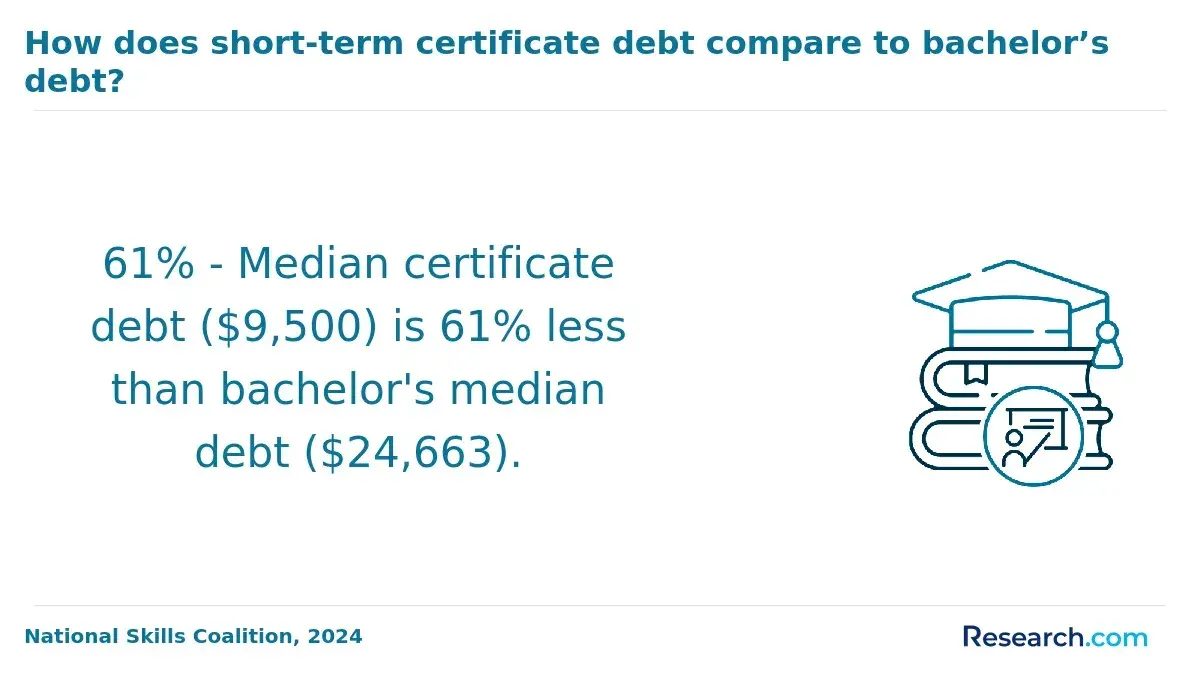
Costs range from low-cost self-paced courses to college certificates with tuition, fees, books, software, labs, and required examinations. College Board reported average published tuition and fees of $4,050 for public two-year colleges in 2024-25. That figure is a broad annual benchmark, not the price of a particular certificate, and it excludes living and many program-specific costs.
Compare the total cost rather than tuition alone. A lower advertised price may exclude proctoring, professional exams, uniforms, tools, liability insurance, clinical compliance, or required travel. Credit-bearing programs can cost more but may provide a clearer transfer route; noncredit programs can be less expensive and faster but often do not transfer.
To reduce out-of-pocket cost, ask whether the program qualifies for federal aid, state workforce funding, veterans' education benefits, employer tuition assistance, payment plans, or local workforce grants. Eligibility varies by provider and program length, so never assume all certificates qualify.
- Tuition and mandatory institutional fees
- Books, software licenses, and equipment
- Certification exam, application, and renewal fees
- Background checks, immunizations, and clinical compliance costs
- Travel or lodging for labs, testing, or externships
- Lost work hours if required sessions occur during the day
What jobs can online non-degree programs lead to?
Online non-degree programs can support entry-level roles, skill upgrades, or movement into adjacent work, but the outcome depends on the occupation's legal and employer requirements. A certificate may help a learner qualify for consideration; it does not replace required licensure, experience, an internship, or a degree where those are expected.
These examples show the connection between training and realistic next steps.
| Training focus | Possible entry or adjacent roles | Important limitation |
| Medical billing and coding | Billing specialist, coding support, patient accounts representative | Employers may prefer industry certification or experience |
| HVAC or electrical fundamentals | Helper, apprentice, maintenance trainee | Independent work usually requires apprenticeship or licensing |
| Legal studies | Legal assistant, records clerk, compliance support | Does not qualify a person to practice law |
| Graphic or web design | Junior designer, production artist, freelance project work | Portfolio and software proficiency are central |
| IT support fundamentals | Help desk trainee, technical support representative | Some roles prefer certifications or prior customer-service experience |
Choose a short program when its curriculum maps to a specific entry role and you can show the skill through an exam, portfolio, supervised practice, or work sample. Consider a degree path if job listings repeatedly require one or if you want promotion options that depend on academic credentials.
What salaries and job outlooks follow these programs?
Salary and demand belong to occupations, locations, experience levels, and employers - not automatically to a non-degree credential. BLS May 2024 data lists median annual pay of $62,350 for electricians, $61,010 for paralegals and legal assistants, $61,300 for graphic designers, and $50,250 for medical records specialists. Use these figures as occupational context, not as a promise that program completers will earn those amounts.
BLS projects employment for medical records specialists to grow 7% from 2024 to 2034, faster than the average for all occupations. That outlook can make coding and health-information training worth investigating, but employers may still prefer certification, prior experience, or knowledge of specific electronic health record systems.
Compare pay potential with the actual entry route. Electricians usually need paid apprenticeships and licensing; paralegal roles may favor substantial academic preparation; design roles often depend on a portfolio. If your goal is a later leadership or specialized role, review masters degrees that make the most money only after confirming that a graduate degree is relevant to your intended field.
Other Things You Should Know About
They may be easier to enter, but coursework can still be demanding. Programs with clinical, lab, portfolio, or certification-exam expectations may require significant independent work.
Possibly. Eligibility depends on the school, program length, credit status, and federal or state rules. Confirm eligibility directly with the institution's financial aid office before enrolling.
Only credit-bearing coursework may be transferable, and acceptance is determined by the receiving institution. Obtain written information about course numbers, credits, and transfer agreements before assuming a pathway exists.
Often no. Licensure may require approved education, examinations, supervised practice, background checks, and state-specific steps. Verify requirements with the licensing board in the state where you plan to work.
References
- High Acceptance Rate Online Colleges https://www.affordablecollegesonline.org/college-resource-center/high-acceptance-online-colleges/
- Comparing financial aid offers: How to choose the right college https://www.citizensbank.com/learning/financial-aid-offer.aspx
- The Non-Degree Market: Oasis or Mirage? https://www.encoura.org/resources/wake-up-call/the-non-degree-market-oasis-or-mirage/
- Apply to a Graduate Non-degree Program https://www.albany.edu/graduate/admissions/apply-non-degree-program
- How Employers View Online Degrees: Interviews with Nine Hiring Executives https://www.onlineeducation.com/features/how-employers-view-online-degrees
- 14 Good Colleges with High Acceptance Rates | HelloCollege https://sayhellocollege.com/blog/good-colleges-with-high-acceptance-rates/
- Measuring - and Proving - the Effectiveness Of Non-Degree Programs https://www.calbright.edu/newsroom/blog/measuring-and-proving-the-effectiveness-of-non-degree-programs/
- Best Online Colleges for Working Adults [2026] https://www.straighterline.com/blog/degree-completion-best-online-colleges-for-working-adults