2027 Best Online Microcredentials for Working Adults

Co-Founder and Chief Data Scientist
Working adults often need a faster way to build job-ready skills without committing to a full degree. Online microcredentials can offer targeted training in weeks or months, but their value depends on the provider, employer recognition, and career goal.
The U.S. Bureau of Labor Statistics reported that workers age 25 and older with a bachelor's degree had median weekly earnings of $1,543 in 2024, compared with $930 for high school graduates. This guide explains when a microcredential is a practical step, how to compare options, and when a degree, license, or industry certification may be the better investment.
Key Things You Should Know
- Choose a microcredential only after matching it to a specific job skill, employer requirement, certification exam, or next academic step; a short course alone does not guarantee hiring or promotion.
- For working adults, the best options usually combine asynchronous coursework, transparent weekly workload expectations, instructor support, and a digital credential that can be verified by employers.
- Compare total cost, not tuition alone: include exam fees, software, equipment, proctoring, subscriptions, and whether the credential carries academic credit or stacks into a certificate or degree.
Top 10 Best Online Microcredentials for Working Adults
Popular Trade School Programs
Online trade-oriented programs work best for theory, estimating, safety, code review, and business skills; hands-on trades still require labs, apprenticeships, or supervised field experience. Common certificate or associate degree paths include HVAC/R, electrical technology, welding, construction management, diesel technology, plumbing, industrial maintenance, and solar installation. Choose a certificate for entry-level technical knowledge or an associate degree when you want broader general education and possible transfer credit. Before enrolling, confirm whether local employers, unions, or licensing boards require in-person hours, apprenticeships, or a separate licensing exam.
Healthcare Programs
Healthcare microcredentials can strengthen administrative, informatics, billing, coding, patient-navigation, and health data skills. Certificate and associate degree options may include medical billing and coding, health information technology, medical assisting, pharmacy technician preparation, sterile processing, and practical nursing prerequisites. Fully online study is more realistic for nonclinical content; clinical occupations generally require supervised placements and may have state-specific rules. A program certificate is not the same as professional certification such as a coding credential. Verify clinical placement support, exam eligibility, background-check requirements, and whether the program meets the rules where you intend to work.
Criminal Justice / Law Programs
Working adults may find online certificates or associate degrees useful for criminal justice administration, legal studies, paralegal foundations, cybersecurity investigations, emergency management, and court support. These programs can develop research, documentation, ethics, and procedural knowledge. They do not automatically qualify a graduate to practice law, become a sworn officer, or work as a paralegal where employers require specific education or experience. For paralegal study, ask whether the curriculum aligns with local employer expectations and whether coursework is offered by an institution with appropriate academic oversight. Police and corrections roles commonly have separate agency hiring standards.
Arts & Design Programs
Online arts and design credentials are often most useful when they produce a portfolio. Relevant certificate or associate degree areas include graphic design, UX/UI design, digital illustration, web design, photography, animation, video production, and interior design foundations. A microcredential can help an experienced worker learn a focused tool or workflow, while an associate degree usually provides broader design theory and portfolio development. Compare instructor feedback, software access, portfolio review, and intellectual-property policies. For regulated fields such as interior design, a short online credential may not meet education or examination requirements for professional licensure.
What are online microcredentials and how do they differ from certificates and degrees?
An online microcredential is a short, focused learning experience that documents mastery of a defined skill set, such as project management fundamentals, data analytics, cloud tools, digital marketing, or healthcare administration. It may be offered by a college, university, employer, professional association, or private learning provider. Delivery is commonly online and asynchronous, making it easier to fit around work and family responsibilities.
Microcredentials vary widely. Some are credit-bearing and may stack into a college certificate or degree; others are noncredit digital badges with value determined mainly by the provider's reputation and employer recognition. Adults exploring longer-term education can also compare fields through best college majors for the future before choosing a short credential that may not transfer.
This comparison helps separate educational credentials from professional credentials awarded by certifying bodies.
| Option | What it usually represents | Best use case | Key limitation |
| Microcredential | Short skill-based course, badge, or credential | Rapid upskilling or testing a career area | Recognition and transferability vary |
| Academic certificate | Structured college program, sometimes credit-bearing | Career preparation or stackable academic study | May still not meet licensure requirements |
| Professional certification | Credential awarded by a certifying organization | Showing competency against industry standards | May require an exam, experience, renewal, or fees |
| Associate or bachelor's degree | Broader academic credential with general education | Occupations requiring deeper preparation | Higher time and cost commitment |
Do not assume a digital badge has the same weight as a college certificate or an industry certification. Read the credential description to determine who awards it, what was assessed, whether it expires, and whether it has recognized labor-market value.
How can working adults choose a reputable, accredited online microcredential provider?
A reputable provider clearly identifies the credential issuer, curriculum, instructors, assessment method, workload, refund policy, and whether the program is credit-bearing. For a college-based microcredential, institutional accreditation matters because it indicates the institution has met recognized quality standards; it does not automatically make every noncredit badge transferable. For a professional certification pathway, evaluate the certifying organization and its eligibility rules instead.
Older adults returning to learning may benefit from providers that offer orientation, accessibility support, advising, and realistic pacing. Options discussed in college degrees for seniors can also help learners decide whether a short credential or a broader degree program better fits their goals.
Use the following checks before paying an enrollment deposit or subscription fee.
- Find out whether the credential is issued by an accredited college, a known employer, a professional association, or a third-party platform.
- Ask employers in your target field whether they recognize the provider or value the specific skills taught.
- Confirm whether the program awards college credit, continuing education units, a certificate, a badge, or only a course-completion record.
- Review instructor qualifications, assessment standards, student support, technology requirements, and the full cancellation policy.
- For regulated work, verify requirements directly with the relevant state licensing board or certifying organization before enrolling.
Red flags include vague claims about guaranteed jobs, salary promises without evidence, unclear credential ownership, pressure to enroll immediately, hidden recurring charges, and statements that a program "qualifies" students for a license without naming the applicable state rules.
What admission requirements do online microcredential programs typically have for adult learners?
Admission requirements depend on the type of microcredential. Many noncredit online programs have open enrollment and require only an email address, payment method, and basic computer access. College-issued credit-bearing microcredentials may require an application, identity verification, prior coursework, placement testing, or proof that the learner meets a prerequisite. Graduate-level offerings commonly require a prior degree or relevant professional experience.
Working adults should distinguish entry requirements from recommended preparation. A program may technically admit beginners but still expect comfort with spreadsheets, academic writing, statistics, design software, or industry terminology. If a credential leads toward an external certification exam, the exam sponsor may impose separate education or experience requirements that the course itself does not satisfy.
Before applying, gather the information that prevents costly surprises.
- Check whether the credential is open enrollment, application-based, undergraduate, graduate, credit-bearing, or noncredit.
- Identify required technology, software licenses, reliable internet access, webcam proctoring, and any live-session attendance.
- Ask whether prior learning, military training, or transfer credit can reduce requirements when the program awards academic credit.
- Confirm background checks, immunizations, drug screening, clinical placement, or fieldwork requirements for healthcare and other supervised programs.
How long do online microcredentials take to complete and how flexible are the schedules?
Most online microcredentials take from a few weeks to several months, but the label does not establish a standard length. A focused noncredit course may take 10 to 40 hours, while a credit-bearing sequence can span one or more academic terms. The right pace is one that lets you complete assessments and apply the skill at work without repeatedly missing deadlines.
Asynchronous programs allow learners to view lessons and complete assignments on their own schedule, though they may still have weekly due dates. Synchronous programs require live online meetings and can provide stronger accountability, but may conflict with shift work, travel, or caregiving. Hybrid programs add campus labs, clinicals, or intensives.
This comparison highlights the schedule trade-offs that matter most to employed learners.
| Format | Typical flexibility | Best fit | Watch for |
| Self-paced online | Highest | Independent learners with variable schedules | Subscription deadlines and limited instructor access |
| Instructor-led asynchronous | High | Adults who need weekly structure | Fixed assignment due dates |
| Live online | Moderate | Learners who value real-time interaction | Required meeting times and attendance rules |
| Hybrid or clinical | Lower | Hands-on or regulated fields | Travel, placement, and on-site hour requirements |
Before enrolling, ask for the expected weekly hours, not merely the program's calendar length. A six-week program with 12 hours of work each week may be less workable than a 12-week program requiring five hours weekly.
What do typical online microcredential curricula include and how are courses delivered?
Typical online microcredential curricula combine short lessons with applied assessments. Depending on the field, learners may complete videos, readings, simulations, case studies, discussion boards, quizzes, projects, labs using remote tools, and a final portfolio or skills assessment. Stronger programs make the assessed skill visible: for example, a spreadsheet analysis, project plan, code repository, design prototype, or documented workflow.
Course delivery should match the skill being taught. Digital tools, business processes, analytics, communication, and compliance topics often work well online. Skills requiring physical performance, patient interaction, machinery, or supervised safety practice need a hybrid format, approved lab arrangement, or work-based component.
Ask providers for a syllabus or module list and compare it with actual job postings. The most useful curriculum teaches the software, terminology, documentation, and problem-solving tasks employers expect, rather than offering only broad awareness content.
How much do online microcredentials cost and what financial aid or employer funding is available?
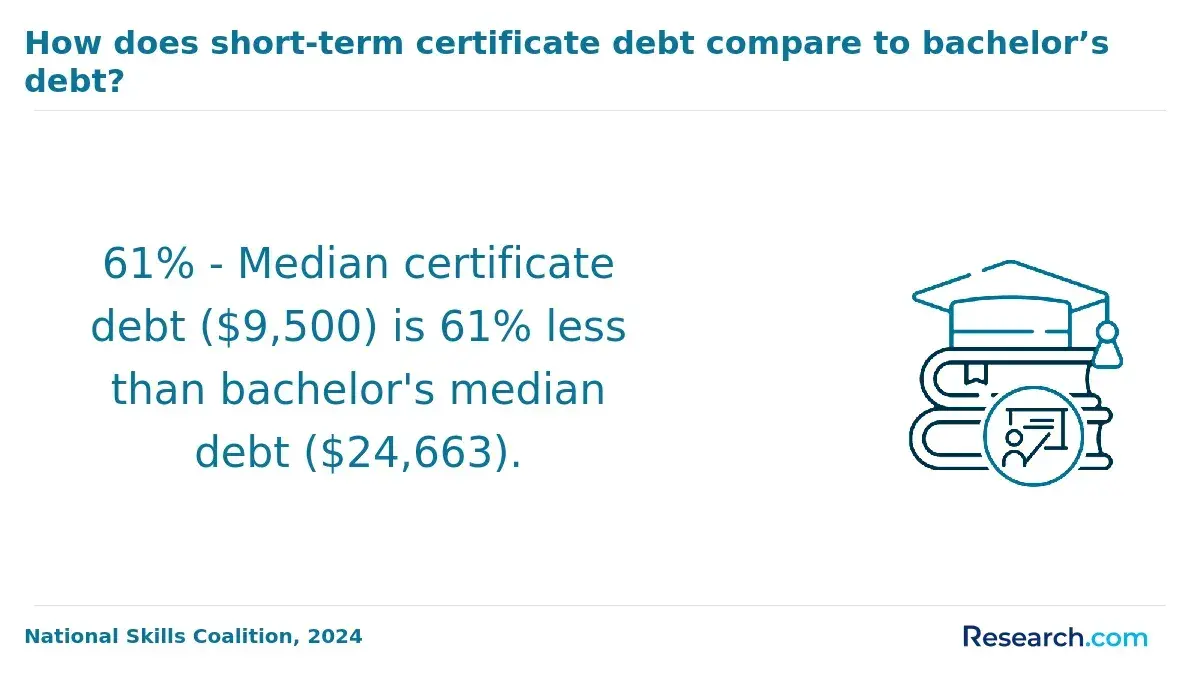
Online microcredential costs range from free employer-sponsored learning to several thousand dollars for university-issued, credit-bearing programs. Price alone is not a quality measure. A lower-cost course can be a better choice when it teaches one clearly defined skill and has a credible assessment, while a higher-priced option should offer recognizable instruction, advising, academic credit, portfolio review, or direct alignment with an industry requirement.
Federal student aid generally applies to eligible students in qualifying programs at eligible institutions; many short noncredit microcredentials do not qualify. Employer tuition assistance, workforce-development grants, military education benefits, payment plans, and scholarships may be available, but rules vary by provider and learner eligibility.
Compare the full financial commitment, including costs that may not appear in the advertised tuition.
| Cost factor | Why it matters | Question to ask |
| Tuition or subscription | May be charged per course, term, month, or attempt | What is the maximum total cost if I need more time? |
| Exam and credential fees | External certifications often charge separately | Is an exam voucher included, and are retakes covered? |
| Software and equipment | Design, IT, and trade programs may require tools | Are licenses, kits, or lab materials included? |
| Opportunity cost | Time away from work or family has value | What weekly workload is realistic for me? |
Do not borrow simply because financing is available. First identify the job outcome you are targeting, confirm the credential's relevance with employers, and compare the cost with lower-cost alternatives such as employer training or a single certification exam.
What career paths and job roles can online microcredentials help working adults access or advance?
Microcredentials can help working adults demonstrate a current, specific skill, especially in fields shaped by changing software, automation, data practices, and compliance rules. They are most useful for career advancement when paired with relevant work experience, a portfolio, employer referral, or an established degree. They are less likely to replace the formal education, clinical training, apprenticeship, clearance, or license required for regulated and highly technical roles.
Common targets include project coordinator, customer success specialist, data or business analyst support roles, digital marketing coordinator, IT support technician, cloud support associate, medical billing specialist, operations coordinator, cybersecurity support roles, and UX design assistant. Actual hiring standards vary by employer and region.
For roles that consistently request a four-year degree, a short credential may be a supplement rather than a substitute. Review best bachelor's degrees if your target occupation requires broader academic preparation or offers stronger long-term mobility through a degree.
The table separates practical uses from situations where a different pathway is usually more appropriate.
| Career goal | When a microcredential can help | When to choose another route |
| Update skills in a current role | When the credential teaches a tool or process used by your employer | Choose employer training if it is free and directly recognized internally |
| Move into an adjacent office or technology role | When you can show projects and transferable experience | Consider a certificate or degree if postings require formal education |
| Enter a licensed occupation | Only as preparation for required coursework or an exam | Choose an approved degree, certificate, clinical program, or apprenticeship |
| Change careers completely | When used to test interest before a larger investment | Consider a stackable academic pathway for durable career change |
What salary impact and return on investment can adults expect from online microcredentials?
The return on investment from an online microcredential depends on whether it closes a verified skills gap, not on the credential name. A learner who uses a credential to perform higher-value work, qualify for an internal opportunity, or meet a stated employer requirement may see stronger value than someone who collects unrelated badges. Salary data should be interpreted as pay for an occupation, not as a promised outcome of credential completion.
For context, the U.S. Bureau of Labor Statistics reported a 2024 median annual wage of $60,340 for computer user support specialists. That figure describes the occupation across workers with different education and experience levels; a short IT credential alone may not qualify an applicant, particularly where employers prefer experience or a degree.
Use a simple decision test: calculate total cost, estimate the time commitment, identify the exact role or responsibility the credential supports, and check several current job postings for matching requirements. Adults considering a more advanced pivot can compare the commitment of a microcredential with a fastest masters degree, but should verify admissions standards and whether the accelerated pace is realistic alongside full-time work.
A positive ROI is more plausible when the program is affordable, skills are immediately usable, and the credential is recognized in your workplace or target industry. Avoid providers that portray salary estimates as individual results or imply that a brief course produces the same labor-market outcome as a degree, license, or extensive experience.
How do online microcredentials align with industry certifications, licensing, and professional standards?
Online microcredentials may support preparation for industry certifications, but they do not automatically confer certification. For example, a course may teach project management, cloud computing, coding, or information security concepts, while the professional certification is awarded only after meeting the certifying organization's examination, experience, ethics, or renewal rules.
Licensing is different again. State licensing boards regulate entry into occupations such as nursing, teaching, cosmetology, electrical work, and many clinical roles. An online microcredential may provide background knowledge, but it may not satisfy required clock hours, supervised practice, clinical placement, approved curriculum, or examination eligibility.
Before selecting a credential connected to a professional standard, take these steps.
- Identify whether your target role requires a license, voluntary certification, employer-specific training, or no formal credential.
- Read the requirements on the relevant licensing board or certifying organization's official materials.
- Compare each requirement with the provider's written curriculum, delivery format, and documented outcomes.
- Ask whether the program includes an exam voucher, supervised hours, required labs, or only test preparation.
- Keep records of syllabi, completion documents, assessments, and continuing education hours if renewal or employer verification may be required.
The safest choice is a program that describes its relationship to external standards precisely. Language such as "prepares learners for" is not equivalent to "meets eligibility requirements" or "leads to licensure."
Other Things You Should Know About
They can be worthwhile when they teach a skill tied to a current job, a realistic target role, or a recognized certification pathway. They are less valuable when the provider cannot explain employer recognition, assessment standards, or how the credential connects to your goal.
Usually not. A microcredential can demonstrate targeted skills, while a degree provides broader academic study and may be required for many occupations. A short credential is often best used to supplement experience or test a field before pursuing a certificate or degree.
Some do, particularly when the issuer is a respected college, employer, professional association, or technology company and the badge documents an assessed skill. Ask employers in your intended field whether they recognize the specific provider rather than assuming all badges carry equal weight.
Possibly, but eligibility is limited. Credit-bearing programs at eligible institutions may have more funding options than short noncredit courses. Check employer tuition assistance, scholarships, workforce programs, payment plans, and the provider's aid policies before using private financing.
References
- Course Completion Rate Benchmarks: Improve Yours (2026) | Ruzuku https://www.ruzuku.com/learn/articles/course-completion-rates
- Which Online Certification Programs Are Recognized by Employers in the U.S.? https://fellow.msicertified.com/blog/which-online-certification-programs-are-recognized-by-employers-in-the-u-s
- Micro-Credentials | NEA https://www.nea.org/professional-excellence/professional-learning/micro-credentials
- 7 Powerful Ways Microcredentials Are Reshaping How Employers Hire - Lloyd Staffing https://www.lloydstaffing.com/7-powerful-ways-microcredentials-are-reshaping-how-employers-hire/
- How Microcredentials Are Revolutionizing the Higher-Education Business Model https://manhattan.institute/article/how-microcredentials-are-revolutionizing-the-higher-education-business-model
- Microcredentials and Higher Education: Your Questions, Answered | Blog https://www.ellucian.com/blog/microcredentials-and-higher-education-your-questions-answered
- Guide to Financial Aid for Online Students https://www.onlineu.com/resources/financial-planning/financial-aid
- Microcredentialing and the role it will play in the future of work https://standtogether.org/stories/future-of-work/microcredentialing-and-the-role-it-will-play-in-the-future-of-work
- Microcredentials: Empowering Modern Learners & Employers https://evolllution.com/microcredentials-empowering-modern-learners-employers
- Micro-Credentials 101: The Ultimate Career Boost for Job Seekers https://www.atriumstaff.com/micro-credentials-101/