2027 Best Online Certifications for Working Adults

Co-Founder and Chief Data Scientist
Choosing an online credential is difficult when you need career results without pausing work or taking on unnecessary debt. Online certificates can build targeted skills quickly, but a school certificate, an industry certification, and a license serve different purposes. The U.S. Bureau of Labor Statistics projects healthcare support occupations to grow faster than average from 2023 to 2033, underscoring demand for practical, career-focused training.
This guide helps working adults compare flexible programs, verify recognition, estimate total costs, and select a credential that fits a specific job goal.
Key Things You Should Know
- Choose a certificate when you need structured education in a subject; choose an industry certification when employers value a credential earned through an exam or assessed standard, such as CompTIA or project-management certification.
- Flexible online programs are best for working adults when they offer asynchronous coursework, predictable deadlines, accessible instructors, and required labs or clinical placements scheduled near your location.
- BLS projections for 2023-2033 show faster-than-average growth in several healthcare support and technology-related occupations, but a short online certificate alone may not meet state licensing rules or employer experience requirements.
Top 10 Best Online Certifications for Working Adults
Popular Trade School Programs
Online trade programs commonly cover HVAC fundamentals, electrical theory, construction management, welding theory, automotive technology, logistics, and industrial maintenance. They work best for adults who need classroom instruction around work hours but can complete required hands-on labs, apprenticeships, or supervised practice locally. A school-issued certificate can teach job-ready concepts; it does not automatically grant a journeyman license. Before enrolling, confirm the program's lab arrangements, state approval where applicable, tool and exam costs, and whether employers in your area recognize the credential.
Healthcare Programs
Common online or hybrid healthcare options include medical billing and coding, healthcare administration, pharmacy technician preparation, medical assisting coursework, health information technology, and patient-care certificates. Fully online study is most realistic for administrative and coding paths; clinical roles generally require in-person skills labs and externships. Check whether the curriculum prepares you for a separate certification exam, such as coding or pharmacy technician certification, and whether your state requires registration or licensure. Do not enroll in a clinical program until its placement requirements are confirmed in writing.
Criminal Justice / Law Programs
Working adults can find online certificates and associate degree programs in criminal justice, legal studies, paralegal studies, homeland security, cybersecurity, and emergency management. Criminal justice certificates can support advancement in security, corrections, or public-service settings, while paralegal programs may be more useful when they include legal research, writing, and ethics. Paralegals are not lawyers and cannot independently provide legal advice. For law-related careers, verify employer expectations, local court or agency hiring standards, background-check policies, and whether a program has meaningful practical assignments.
Arts & Design Programs
Online arts and design certificates commonly focus on graphic design, UX design, digital marketing design, animation, web design, photography, and video production. These programs suit adults who can devote time to portfolio work outside scheduled lessons. Employers often evaluate samples of completed work as closely as the credential itself, so select programs with instructor feedback, current software training, and portfolio projects tied to real briefs. A certificate can build a focused skill set, while an associate degree may provide broader foundations and general education coursework.
What are the most in-demand online certifications for working adults today?
The most in-demand online credentials are usually those aligned with an identifiable job task, recognized employer requirement, or licensing pathway. Strong options include IT support and cybersecurity certifications, cloud-platform certifications, data analytics professional certificates, project-management credentials, medical coding preparation, pharmacy technician preparation, bookkeeping, supply-chain training, and skilled-trade theory certificates.
Demand alone should not decide your enrollment. BLS projects information security analyst employment to grow 33% from 2023 to 2033, but that occupation commonly requires a bachelor's degree plus related experience; an entry-level cybersecurity certificate is better viewed as a first step toward support, analyst, or help-desk roles rather than a guaranteed direct route to that title.
The comparison below separates credentials by the problem they solve for a working adult.
| Credential type | Typical provider | Best use | Key limitation |
| Academic certificate | College or university | Focused, credit-bearing study that may stack into a degree | Transfer rules vary by institution |
| Professional certificate | University, employer, or training provider | Career exploration and job-specific skill development | May be noncredit and not transfer to a degree |
| Industry certification | Independent certifying organization | Validating knowledge against an employer-recognized standard | Often requires an exam, renewal, or experience |
| License-qualifying education | State-approved school or college | Meeting education requirements for regulated work | Online coursework may still require in-person practice |
For career changers, start with job postings in your target metro area. Record the degree, certification, software, clearance, portfolio, or license employers actually request, then choose the shortest credible credential that closes the most important gap.
How do online certificate programs compare to campus-based options for flexibility and quality?
Online certificate programs can match campus programs in academic content when the same institution uses the same curriculum, qualified faculty, assessments, and student support. Their main advantage for working adults is scheduling: asynchronous courses let you complete lectures and assignments outside standard business hours. Campus or hybrid study may be better for fields that depend on equipment, supervised practice, networking, or immediate feedback.
Quality is not determined by whether classes meet online. It depends on the provider, curriculum, assessment design, support services, and whether the credential has value in the target field. Adults who need a rapid start may benefit from online colleges with frequent start dates, but frequent enrollment should not replace careful program review.
This comparison highlights the trade-offs that matter most when balancing work, family, and training.
| Factor | Online option | Campus or hybrid option |
| Scheduling | Often asynchronous with weekly deadlines | Usually fixed meeting times |
| Hands-on learning | May require local labs, proctors, or placements | Direct access to labs and equipment |
| Networking | Requires intentional virtual participation | More spontaneous peer and employer contact |
| Travel costs | Usually lower, though fees may still apply | Commuting and parking may add cost |
| Best fit | Self-directed adults with reliable study time | Learners needing structured practice or accountability |
A practical test is to map a normal week before applying. If you cannot reserve recurring study blocks, live sessions, and any placement hours, a self-paced format may still become overwhelming.
How can you verify that an online certification program is properly accredited and recognized?
Verification begins with identifying what the program claims to award. A college certificate may rely on institutional accreditation, while an industry certification should be evaluated by its certifying body, exam requirements, renewal terms, and employer recognition. A career-training provider may be legitimate without institutional accreditation, but it should be transparent about outcomes, costs, and the credential's limits.
Use these checks before paying an application fee or deposit.
- Confirm the legal school or provider name and whether the credential is credit-bearing, noncredit, exam-based, or license-preparatory.
- For colleges, check institutional accreditation through the U.S. Department of Education or the Council for Higher Education Accreditation directory.
- For regulated occupations, compare the curriculum with the relevant state licensing board's education and clinical requirements.
- Read the certifying organization's eligibility rules to see whether an exam, work experience, background check, or continuing education is required.
- Ask employers or hiring managers whether they recognize the credential and which alternatives they prefer.
Red flags include vague claims that a program is "accredited" without naming an accreditor, pressure to enroll immediately, guaranteed job or salary promises, and unclear charges for exams, equipment, externships, or certification attempts.
What admission requirements do online certification programs typically have for working professionals?
Admission requirements vary much more by credential type than by delivery format. Noncredit professional certificates may require only an account, payment, and basic computer access. Credit-bearing college certificates commonly require an application and proof of prior education; some programs also require placement testing, prerequisites, immunizations, background checks, or drug screening for clinical placements. Industry certification exams may have separate eligibility rules that the training provider cannot waive.
Working professionals returning to college should ask whether prior coursework, military training, professional learning, or credit-by-exam can reduce time to completion. Service members and veterans can also compare good online colleges for military when evaluating transfer support, tuition policies, and deployment-friendly scheduling.
Before applying, prepare a short file with transcripts, résumé, employer training records, identification, and any required professional licenses. Request written confirmation of prerequisites rather than relying on marketing pages or informal conversations.
How long do online certification programs take, and what do they cost on average?
Completion time ranges from a few weeks for a focused noncredit course to roughly one year for many college certificates; associate degrees commonly take about two years of full-time study and longer when taken part-time. The right pace depends on whether the curriculum includes clinical hours, labs, proctored exams, or a capstone. Accelerated programs reduce calendar time, not necessarily total workload.
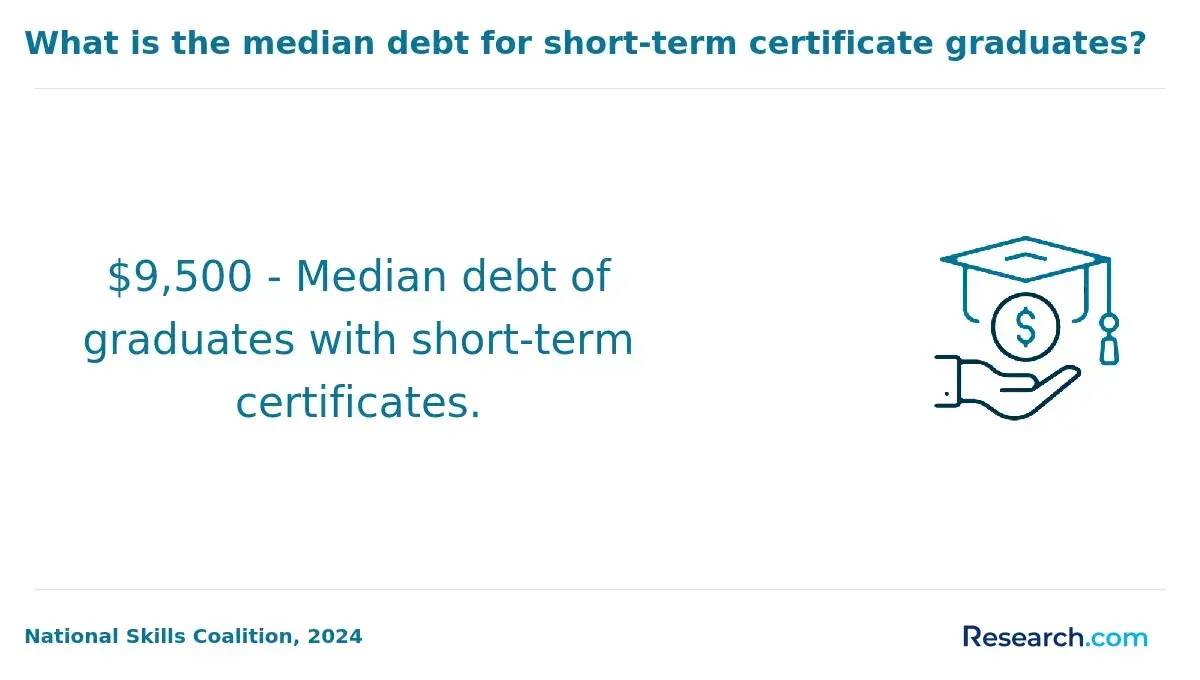
Costs also vary widely. Public college tuition is generally lower for in-district residents, while private providers may package instruction, software, exam preparation, and career support differently. Federal student aid may be available for eligible credit-bearing programs at eligible institutions, but many noncredit certificates do not qualify. If you are deciding between a short credential and a broader degree path, compare an easiest associate degree only after checking whether "easiest" also fits the skills and jobs you want.
Estimate the full investment rather than comparing advertised tuition alone.
| Cost category | Why it matters | Question to ask |
| Tuition or subscription | May be charged per credit, course, term, or month | What is the total cost at my intended pace? |
| Exam and renewal fees | Industry certifications often charge separately | Is the exam included, and what does renewal cost? |
| Technology and materials | Software, kits, tools, and testing equipment can add expenses | Which items must I buy myself? |
| Clinical or lab travel | Hybrid requirements can create transportation and unpaid-time costs | Where are required sites located? |
| Opportunity cost | Course load can affect overtime or family responsibilities | How many study hours are expected each week? |
Ask for a written estimate covering every required charge. Employer tuition assistance, workforce grants, veterans' education benefits, and installment plans can reduce upfront cost, but eligibility and coverage differ.
What coursework and skills do top online certification programs usually include?
Top online certificate programs teach a defined set of skills and require learners to demonstrate them through assignments, projects, simulations, or supervised practice. A credible program explains what you will be able to do at completion, not merely the topics it mentions. For technical and design fields, prioritize work samples; for healthcare and regulated fields, prioritize required competencies and exam alignment.
Common coursework patterns include the following, although exact content should match the career target.
- IT and cybersecurity: operating systems, networking, troubleshooting, security controls, scripting, cloud tools, and incident documentation.
- Business and project work: budgeting, scheduling, stakeholder communication, data interpretation, agile or traditional project methods, and reporting.
- Healthcare administration: medical terminology, privacy rules, billing systems, coding concepts, records management, and patient-service workflows.
- Skilled trades: safety, measurements, technical drawings, codes, diagnostics, and hands-on competency practice.
- Design and marketing: design principles, user research, portfolio development, content strategy, analytics, and relevant software.
AI tools are increasingly part of workplace workflows, but a worthwhile program teaches judgment: checking outputs, protecting confidential information, documenting decisions, and showing original work. Avoid programs that promise mastery of a fast-changing tool without teaching transferable foundations.
What careers can online certifications help working adults transition into or advance within?
Online certifications can help adults enter adjacent roles, validate a specialty, or prepare for promotion. They are most effective when paired with evidence of applied skill: a portfolio, internship, internal project, supervised placement, or relevant work history. They are less likely to replace degrees or licenses where employers and regulators explicitly require them.
Examples of realistic transitions include IT support to junior systems or security work; administrative work to medical billing or project coordination; customer service to sales operations; and creative work to junior digital-design roles. Readers considering a longer academic investment can compare best college degrees when their target roles routinely require a bachelor's degree.
Use the following sequence to turn a credential into a career move.
- Choose one target job title and review current local and remote job descriptions.
- Identify the recurring skills, tools, licenses, and credentials in those postings.
- Select a program that produces evidence of the missing skills, not just a completion badge.
- Update your résumé and professional profile with projects, measurable outcomes, and relevant coursework.
- Apply first to bridge roles that use your existing experience alongside the new skill.
Career changers should expect a transition period. A certificate may open conversations and improve readiness, but entry-level hiring can still require networking, applications, and practical experience.
What salary ranges and earning potential are associated with common online certifications?
Earning potential depends on occupation, location, experience, employer, shifts, and whether a role requires a degree or license. It should not be treated as the salary of certificate completers. BLS reported a 2023 median annual wage of $48,780 for computer user support specialists, an occupation where some employers accept relevant postsecondary training or certifications; requirements still vary substantially by employer.
This snapshot shows why matching the credential to the occupation matters more than choosing the fastest program.
| Career area | How a credential may help | Important qualification limit |
| IT support | Demonstrates foundational troubleshooting and technical knowledge | Employers may still prefer experience or a degree |
| Medical coding | Builds coding and reimbursement knowledge | Certification eligibility and employer preferences vary |
| Project coordination | Supports scheduling, reporting, and process skills | Senior project-management credentials may require experience |
| Graphic design | Can strengthen a software-based portfolio | Portfolio quality and client experience remain central |
| Skilled trades | Provides technical theory and safety preparation | Licensure usually requires documented field experience |
For a personal return-on-investment estimate, compare total out-of-pocket cost and expected reduced work hours with the pay range for realistic entry roles in your location. Treat salary data as labor-market context, not a promise.
How do licensing and industry certification requirements affect your choice of online program?
Licensing and certification rules can determine whether an online program is useful. Licensure is government permission to practice in a regulated occupation, such as certain healthcare or trade roles. Certification is usually a private credential awarded by a professional body after an exam or other requirements. A school certificate is evidence that you completed instruction; it may prepare you for certification or licensing steps but is not automatically either one.
Before choosing a program, verify these points with the relevant state board or certifying organization.
- Whether the occupation requires a state license, registration, certification, or background clearance.
- Whether online coursework is accepted and which components must occur in person.
- Whether the program's curriculum meets required hours, competencies, examinations, or clinical-placement standards.
- Whether graduation is enough to sit for an exam or whether work experience is also required.
- Whether the credential must be renewed through continuing education, fees, or retesting.
A common mistake is enrolling in an out-of-state online program before checking local rules. Get confirmation from the state authority, especially if you plan to relocate, work with patients, handle legal matters, or perform regulated technical work.
Other Things You Should Know About
They can be worthwhile when they teach skills required for a specific role, fit your schedule, and come from a credible provider. They are less valuable when the target job requires a degree, license, portfolio, or experience that the program does not provide.
A certificate is typically awarded after completing an educational program. A certification is a professional credential awarded by a certifying organization after meeting its standards, often including an exam and sometimes work experience or renewal requirements.
Administrative programs, such as medical billing and coding, may be mostly online. Clinical programs commonly require in-person labs, skills assessments, background checks, and supervised externships or clinical placements.
Only credit-bearing coursework may be considered for transfer, and acceptance is decided by the receiving institution. Ask both schools for written transfer guidance before enrolling if a future degree is part of your plan.
References
- Course Completion: Boost Rates with 3 Key Insights https://360learning.com/blog/90-course-completion-rates/
- Explore Online Certificate Programs Approved by FAFSA https://www.edumed.org/online-schools/fafsa-approved-certificate-programs/
- Which Online Certification Programs Are Recognized by Employers in the U.S.? https://fellow.msicertified.com/blog/which-online-certification-programs-are-recognized-by-employers-in-the-u-s
- How to Improve Learning Completion Rates: 5 Key Tactics https://www.docebo.com/learning-network/blog/how-to-improve-learning-completion-rates/
- The Benefits of Continuing Education - UNE Online https://online.une.edu/the-benefits-of-continuing-education-how-upskilling-opens-new-career-opportunities/
- Exploring the Professional Benefits of Online Learning https://educate360.com/blog/benefits-of-online-learning/
- Best online certificates for career growth | edX https://www.edx.org/certificates
- Online Certificate Programs | Certifications Programs https://www.uscareerinstitute.edu/online-certificate-programs
- Financial Aid for Adult Learners: Grants, Scholarships & How to Pay for College (2026 Guide) https://www.straighterline.com/blog/financial-aid-resources-adults
- 14 Benefits of Online Learning for Working Professionals | ELVTR https://elvtr.com/blog/14-benefits-of-online-learning-for-working-professionals