2027 Best Online Stackable Credentials With Transfer-Friendly Policies

Co-Founder and Chief Data Scientist
Choosing a short online credential is risky when its courses cannot later count toward a certificate, associate degree, or bachelor's degree. Stackable options can reduce that risk by creating planned academic steps.
The Bureau of Labor Statistics projects healthcare occupations to grow 8% from 2024 to 2034, faster than average, illustrating why flexible career-entry pathways matter. This guide helps prospective students compare credit-bearing programs, transfer policies, costs, licensure limits, and realistic career routes before enrolling.
Key Things You Should Know
- Choose credit-bearing certificates from institutionally accredited colleges when a future degree is important; receiving colleges, not the original school, decide whether credits transfer.
- Strong pathways usually move from a short certificate to an associate degree and then a bachelor's degree, but clinical programs may have separate state approval, placement, and licensing requirements.
- Career value varies by field: BLS projects medical assistant employment to grow 12% from 2024 to 2034, while some administrative and design roles face slower growth or changing technology demands.
Top 10 Best Online Stackable Credentials With Transfer-Friendly Policies
Popular Trade School Programs
Online trade pathways commonly start with certificates in HVAC fundamentals, electrical technology, welding theory, construction management, or industrial maintenance. General education and theory courses may transfer into an associate degree, while lab-intensive skills usually require campus sessions, approved local training, or an apprenticeship.
Choose a credit certificate if you may pursue an applied associate degree; choose employer training only when immediate job-specific preparation matters more than college transfer. Licensing for electricians and HVAC technicians is state or local, so confirm that online coursework meets local rules.
Healthcare Programs
Stackable healthcare options include medical billing and coding certificates, practical nursing pathways, medical assisting certificates, and associate degrees in nursing or health information technology. Medical billing can be fully online, but nursing and medical assisting require supervised clinical experiences.
A certificate can prepare a student for an industry certification examination, but it is not the certification itself. Prioritize programs with clearly identified clinical partners, state approval where required, and written course-equivalency pathways.
Students aiming for registered nursing should verify whether prerequisite and general education credits apply to the intended associate or bachelor's program.
Criminal Justice / Law Programs
Online criminal justice certificates and associate degrees may stack into bachelor's study in criminal justice, public administration, homeland security, or legal studies. Paralegal certificates are more specialized: employers may prefer programs approved by the American Bar Association, although approval is not universally required.
A criminal justice credential can support entry-level preparation but does not automatically qualify someone as a police officer, attorney, or licensed investigator. Students should compare required internships, background-check expectations, state-specific training rules, and whether legal research or general education credits will transfer.
Arts & Design Programs
Graphic design, digital media, web design, UX fundamentals, and photography certificates can stack into associate or bachelor's degrees when they carry academic credit. Portfolio quality often matters as much as the credential, so review course projects, software access, faculty feedback, and portfolio support.
Noncredit bootcamps may build practical skills quickly but usually do not transfer as college credit. A credit-bearing design certificate is a better fit for learners who may pursue a degree later; a focused noncredit program can suit experienced professionals updating a specific toolset.
What are stackable credentials in online education?
Stackable credentials are intentionally connected education milestones. A learner may complete a short academic certificate, apply its courses toward an associate degree, and later use qualifying credits toward a bachelor's degree. The sequence can also include industry certifications, but those are separate credentials awarded by certifying bodies rather than colleges.
The best online stackable pathway has a documented curriculum map rather than a verbal promise. It identifies which courses apply to the next credential, minimum grades required, expiration limits on technical coursework, and any residency requirement at the degree-granting college.
| Credential type | Typical purpose | Transfer and stackability | Key limitation |
| Credit-bearing certificate | Build entry-level knowledge in a subject | May apply toward a related degree under published rules | Acceptance by another college is never automatic |
| Associate degree | Complete career preparation and general education | Often designed for bachelor's transfer or workforce entry | Major-specific course matching can still be required |
| Noncredit certificate or bootcamp | Learn a focused skill quickly | Usually does not carry academic transfer credit | May have limited eligibility for federal student aid |
| Professional certification | Verify competence against industry standards | May complement a degree but is not college credit | May require an exam, experience, renewal, or fees |
For learners who need a shorter first step, this structure can limit upfront commitment. It is less useful when the target occupation requires a specific degree, extensive clinical training, or an apprenticeship that cannot be replaced by online coursework.
Which online programs offer transferable credits?
Online programs most likely to offer transferable credits are offered by accredited community colleges, public universities, and nonprofit colleges that publish course numbers, credit hours, catalog descriptions, and articulation agreements. General education, business, information technology, criminal justice, and liberal studies courses tend to be more portable than narrowly branded proprietary courses.
Students considering a two-year route can compare online associate degrees that combine career coursework with general education. Those general education courses can be especially valuable when a bachelor's degree remains a possibility.
Before paying a deposit, get answers in writing. The following sequence helps separate a genuinely planned pathway from a loosely marketed one.
- Identify the final credential and the institution where you expect to finish it.
- Request a current degree map showing exactly which certificate courses apply to the next program.
- Ask whether a minimum grade, time limit, or residency requirement affects the pathway.
- Send course descriptions or syllabi to the prospective receiving institution for a preliminary evaluation.
- Keep official transcripts, course syllabi, assignments, and catalog pages until your transfer review is complete.
A transfer agreement improves predictability, but it does not eliminate requirements such as admission to a competitive major, a minimum GPA, or course sequencing. Treat it as a planning tool, not a guarantee of degree completion.
How do accreditation and licensing affect transferability?
Accreditation and licensing answer different questions. Institutional accreditation evaluates the college as a whole and is a central consideration for academic credit transfer and federal aid eligibility. Programmatic accreditation evaluates a specific program and may be essential in regulated fields such as nursing, sonography, dental hygiene, or certain technical disciplines.
Licensure is permission from a state authority to practice a regulated occupation. An online program can be accredited yet still fail to meet another state's clinical-hour, curriculum, examination, or supervised-practice rules. This is especially important for students studying outside the institution's home state.
Use this comparison to determine which approval matters for your goal.
| Question | Why it matters | What to verify |
| Is the college institutionally accredited? | Supports credibility and may affect transfer and aid | Accreditor recognition and current institutional status |
| Does the program need specialized approval? | Required in some clinical and professional fields | Program accreditor, approval status, and renewal date |
| Does the occupation require a license? | Education alone may not permit practice | Your state board's education, clinical, exam, and background rules |
| Will another college accept these courses? | Transfer remains a receiving-school decision | Written evaluation or a formal articulation agreement |
A common mistake is relying on a school's statement that credits are "transferable." The accurate question is whether your intended receiving institution will accept specific credits toward your selected major.
Which fields offer the best stackable career pathways?
The strongest stackable career pathways combine an entry-level milestone with a clear next credential employers recognize. Healthcare, information technology, skilled trades, business operations, and public safety can work well, but the right choice depends on whether the role requires a license, a portfolio, hands-on practice, or a degree.
BLS projects information security analyst employment to grow 29% from 2024 to 2034. That outlook reflects demand for cybersecurity work, but an entry certificate alone may not meet employer expectations for analyst jobs; learners often need technical experience, projects, and sometimes a bachelor's degree.
| Field | Common first credential | Potential next step | Best fit |
| Healthcare administration | Billing, coding, or medical office certificate | Health information or healthcare administration degree | Students seeking nonclinical healthcare roles |
| Nursing and allied health | Prerequisite or practical-care pathway | Associate or bachelor's program with clinical training | Students prepared for regulated, hands-on study |
| Information technology | IT support, networking, or cybersecurity certificate | Associate or bachelor's degree plus industry certification | Career changers who will build labs and projects |
| Business | Accounting, bookkeeping, or business certificate | Associate or bachelor's degree in business | Students wanting broad transfer options |
| Skilled trades | Technical certificate | Advanced certificate, apprenticeship, or applied associate degree | Learners able to complete required hands-on training |
Do not choose a pathway solely because it is short. Choose one whose first credential has stand-alone value while still moving you toward the education level the target occupation actually requires.
How do online and campus formats compare for transfer students?
Online study can make stackable education workable for employed adults, caregivers, and rural students, particularly for general education, business, IT, legal studies, and administrative healthcare coursework. Campus or hybrid delivery is usually stronger when learning depends on equipment, laboratories, studios, clinical placements, or repeated instructor observation.
Students needing flexible pacing can explore online college classes at your own pace, but self-paced does not necessarily mean a program is transfer-friendly. Confirm credit hours, proctored assessment rules, transcript availability, and the receiving college's policy before enrolling.
| Format | Transfer advantage | Main trade-off | Best use case |
| Fully online, scheduled | Often uses standard college courses and transcripts | Fixed deadlines and limited hands-on practice | Academic certificates and general education |
| Fully online, self-paced | May offer scheduling flexibility | Credit recognition and pacing rules vary widely | Independent learners with written transfer confirmation |
| Hybrid | Combines online theory with supervised practice | Requires travel and scheduled attendance | Technical, lab, and clinical pathways |
| Campus-based | Usually simplest for equipment-intensive learning | Less geographic and schedule flexibility | Programs requiring labs, studios, or clinical work |
For transfer students, course equivalency matters more than modality. A well-documented online course can transfer; an on-campus course without a matching equivalent may not.
What admissions requirements do stackable programs have?
Admissions requirements depend on the credential provider and level. Many undergraduate certificates and associate programs require an application, high school completion or equivalent, and placement information. Some open-admission colleges do not require standardized tests, but selective healthcare programs may require prerequisite grades, entrance testing, immunizations, criminal background checks, drug screening, or clinical compliance documents.
Noncredit training providers may require only payment and basic technology access, while graduate certificates usually require a completed bachelor's degree. Never assume a short program has easy entry simply because it is online.
Ask admissions staff these questions before applying so you can avoid a dead-end first credential.
- Is this credential college credit, continuing education, or preparation for an external certification exam?
- What prior coursework, placement, technical skills, or background requirements apply?
- Which completed courses apply directly to the next credential at this institution?
- Can you provide the current catalog, course syllabus, and a written transfer or articulation policy?
- Are clinical placements, labs, internships, equipment, or in-person assessments required?
Applicants with prior college credit should submit official transcripts early. A transfer evaluation may change the time and cost estimate substantially, but schools can set limits on age, grade, and applicability of transferred courses.
How long do these programs take and what do they cost?
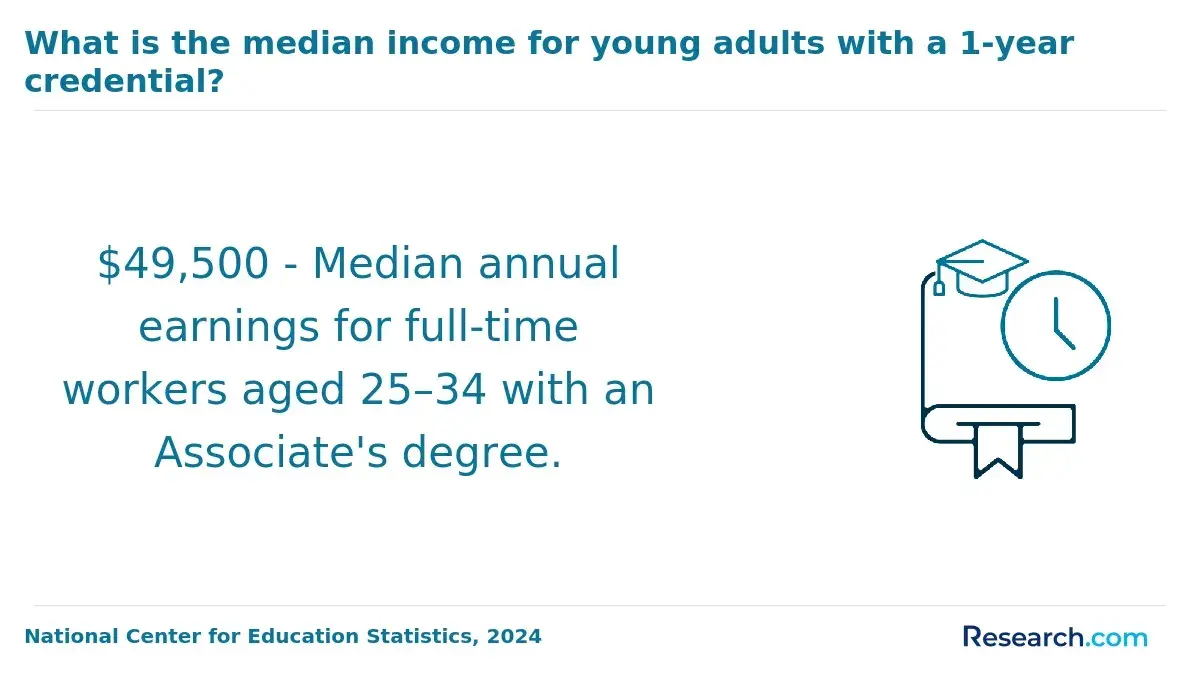
Completion time ranges from a few months for a focused certificate to about two years of full-time study for an associate degree. Part-time enrollment, prerequisites, clinical rotations, course availability, and transfer evaluation can extend the calendar. The lowest advertised tuition is not always the lowest total cost.
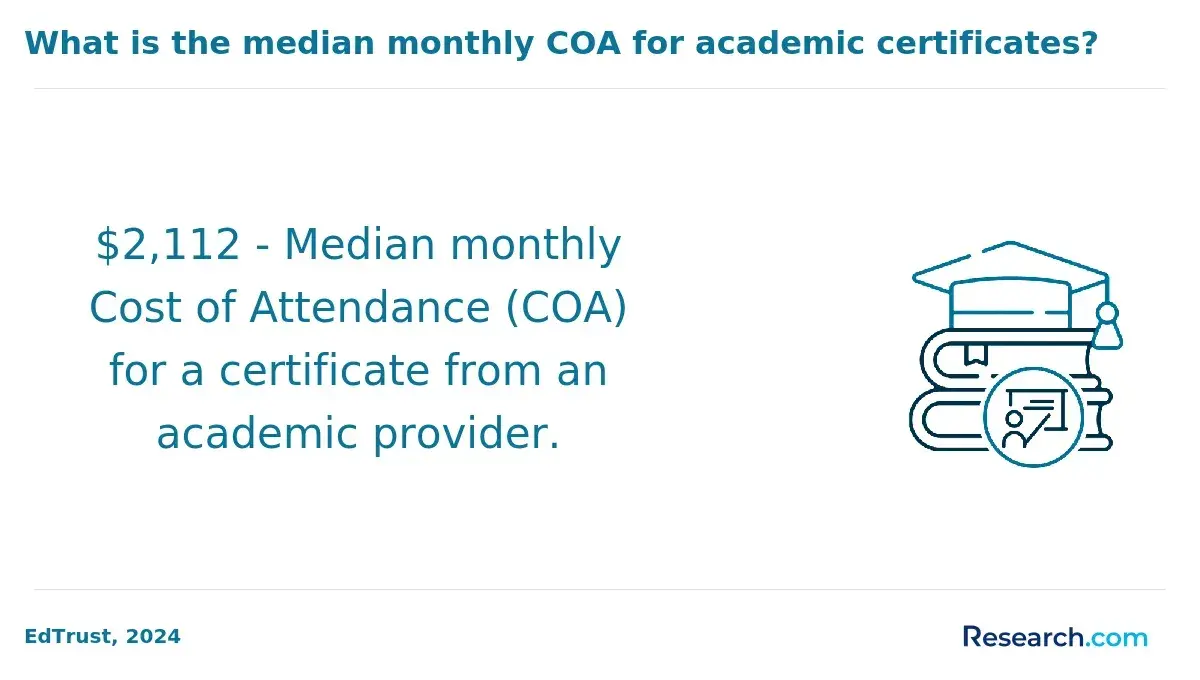
Cost comparisons should include tuition, mandatory fees, books, software, examinations, tools, lab supplies, travel, background checks, and lost work time for required placements. Credit-bearing programs may have federal aid eligibility when the student and program qualify; noncredit programs commonly rely on payment plans, employer assistance, or private financing.
The table highlights the cost drivers to compare rather than implying a universal price, because charges vary sharply by residency, institution, and required equipment.
| Pathway | Typical time range | Major cost factors | Transfer value |
| Noncredit short course | Weeks to months | Course fee, software, exam preparation | Usually limited academic transfer |
| Credit-bearing certificate | About 6-18 months | Per-credit tuition, fees, books, possible labs | Can be strong within a planned pathway |
| Associate degree | About 2 years full time | Tuition, general education, major courses, supplies | Often supports bachelor's transfer |
| Accelerated bachelor's completion | Varies by transfer credit and pace | Remaining credits, fees, and potential residency requirements | Best after a careful transfer audit |
Students with a large block of applicable credit may consider 2-year bachelor degree programs. Acceleration is worthwhile only if the school accepts enough prior coursework and the faster schedule remains manageable.
What jobs and salaries follow stackable credentials?
Stackable credentials can support career exploration, entry-level employment, promotion preparation, or progression to a degree. They do not create identical outcomes for every student. Employers may value experience, local licensing, portfolios, background eligibility, and industry certification alongside formal education.
The following BLS 2024 median pay figures describe occupations, not guaranteed earnings for certificate completers. Use them to judge the broader field and then compare local job postings with each program's actual preparation.
| Occupation | BLS 2024 median pay | Projected change, 2024-2034 | Credential caution |
| Medical assistants | $44,200 | 12% | Employers may prefer certification; state duties vary |
| HVAC mechanics and installers | $59,810 | 8% | Licensing and apprenticeship requirements vary by location |
| Paralegals and legal assistants | $61,010 | -1% | A certificate may help, but employers set education preferences |
| Graphic designers | $61,300 | 2% | Portfolio and software capability strongly affect opportunities |
| Information security analysts | $124,910 | 29% | Typically requires more than an introductory certificate |
Automation and generative AI are changing routine documentation, design, and administrative tasks, increasing the value of judgment, communication, compliance knowledge, and demonstrable work samples. In fields with advanced degree requirements, review easiest master's degrees only after confirming that the graduate credential aligns with the occupation and is not merely the fastest available option.
How can students choose a reputable transfer-friendly program?
A reputable transfer-friendly program makes its academic claims easy to verify. It publishes a catalog, identifies credit hours, names its accreditor where applicable, explains how courses apply to higher credentials, and provides student support that matches online delivery. It should also be candid about clinical, laboratory, licensing, and employment limitations.
Use these checks to compare finalists before committing money or time.
- Match the program's curriculum to the education level required in current job postings for your target role.
- Verify institutional accreditation and any program-specific approval directly through the relevant accreditor or state board.
- Request a written degree pathway and have the intended receiving college evaluate course equivalencies.
- Calculate total cost, including supplies, exams, travel, technology, and unpaid clinical or practicum time.
- Review withdrawal, refund, repeat-course, and credit-expiration policies before signing an enrollment agreement.
- Ask how online students receive advising, tutoring, technical support, career services, and required placement assistance.
Red flags include vague promises that "all credits transfer," pressure to enroll before reviewing the catalog, unclear accreditation statements, unusually broad job guarantees, and a program that cannot explain state authorization or licensure eligibility. The best option is not necessarily the fastest or cheapest; it is the one with documented progression to your intended credential and career target.
Other Things You Should Know About
They can be worthwhile when the first credential has practical value on its own and its courses are documented to apply toward your next academic step. They are less compelling when the provider offers no credit, no recognized industry value, and no written pathway.
No. Noncredit certificates usually do not transfer as academic credit, and even credit-bearing courses are accepted at the receiving college's discretion. Confirm course equivalencies before enrollment.
Sometimes, but only if the program meets the education and practical-training requirements set by the relevant state licensing board. Many licensed occupations also require examinations, supervised hours, background screening, or additional degrees.
Choose a certificate first if you need a faster, lower-commitment entry point and the credits clearly apply to an associate degree. Choose the associate degree first when your target role requires broader general education, clinical preparation, or a credential that employers commonly expect.
References
- What are Stackable Credentials? https://assess.com/stackable-credentials/
- Stackable Credentials | Learn & Work Ecosystem Library https://learnworkecosystemlibrary.com/topics/stackable-credentials/
- Stackable Credentials: Living Links Between Learning and Work https://www.cael.org/resouces/pathways-blog/stackable-credentials-living-links-between-learning-and-work
- USHE initiative helps students earn meaningful credentials on their way to a degree - Utah System of Higher Education https://ushe.edu/stackable-credentials-help-students-earn-credentials-on-their-way-to-a-degree/
- What Are Stackable Credentials and Why Do They Matter? https://www.pltw.org/blog/what-are-stackable-credentials