2027 Best Stackable Credentials With 5-Week Courses

Co-Founder and Chief Data Scientist
Choosing a short program is difficult when "fast" can mean a single 5-week class, not a career-ready credential. Stackable credentials combine smaller certificates or credit milestones into a larger certificate, associate degree, or advanced pathway. This matters as employers increasingly assess demonstrable skills, while tuition and time away from work remain major concerns. The U.S. Bureau of Labor Statistics reported a $49,500 median annual wage across all occupations in May 2024.
This guide helps career changers, working adults, and recent graduates compare realistic 5-week-course options, costs, recognition, and next steps.
Key Things You Should Know
- A 5-week format usually describes one accelerated course; completing a stack of credentials commonly takes several terms, so confirm the full pathway timeline before enrolling.
- Credit-bearing certificates from institutionally accredited colleges can be more likely to transfer or apply toward an associate degree, but transfer acceptance is always decided by the receiving school.
- Career value depends on the target role: BLS reported a $49,500 median annual wage for all U.S. occupations in May 2024, while regulated healthcare and skilled-trade jobs may require separate exams, supervised hours, or state licensure.
Top 10 Best Stackable Credentials With 5-Week Courses
Popular Trade School Programs
Trade stacks often begin with short safety, tools, blueprint-reading, or electrical fundamentals courses and build toward a college certificate, apprenticeship entry, or associate degree. Common options include welding, HVAC/R, electrical technology, industrial maintenance, diesel technology, and construction management. A 5-week course can build one competency, but hands-on labs and required clinical-style shop hours may extend the total timeline. Choose campus or hybrid training when equipment practice is essential. Verify whether the program prepares students for EPA Section 608, OSHA training, an apprenticeship, or a state-specific licensing process; the educational certificate itself is not a license.
Healthcare Programs
Healthcare stacks may include medical billing and coding, pharmacy technician, medical assisting, practical nursing prerequisites, sterile processing, or health information technology. They suit learners seeking administrative, support, or entry-level clinical pathways, but patient-care roles generally require supervised practice and may be regulated by state boards. Online coursework can work for terminology, coding, and compliance; labs, externships, and clinical rotations cannot always be completed remotely. Ask whether tuition includes exam preparation, background checks, immunizations, uniforms, liability coverage, and placement support. Confirm that a certificate aligns with the specific certification examination or state approval required for the intended role.
Criminal Justice / Law Programs
Stackable criminal justice and law options commonly cover policing foundations, corrections, legal studies, paralegal support, cybersecurity basics, or forensic documentation. A short academic certificate can strengthen knowledge for administrative or support work, while an associate degree may provide a broader foundation for advancement or transfer. It does not automatically qualify a graduate as a police officer, attorney, or licensed private investigator; agencies and states set separate eligibility, academy, background, fitness, and licensing rules. Learners interested in paralegal work should compare employer expectations and seek programs with practical legal research, writing, ethics, and document-management training.
Arts & Design Programs
Arts and design stacks can combine graphic design, digital photography, web design, UX foundations, animation, drafting, or digital marketing courses. Five-week classes work best for focused software, portfolio, and production skills when students can devote substantial weekly time to projects. These programs are especially useful for people building a portfolio or adding a specialized skill to an existing degree. A certificate alone rarely substitutes for a strong body of work, client experience, or technical proficiency. Compare software access, instructor feedback, portfolio reviews, intellectual-property policies, and whether courses award college credit before selecting a provider.
What are stackable credentials and how do 5-week course formats work?
Stackable credentials are intentionally connected learning milestones. A learner may earn a short certificate first, apply its courses toward a longer certificate, and later use the same credits toward an associate or bachelor's degree if the college's policies allow it. This differs from collecting unrelated badges: the sequence should have documented course overlap, credit value, and a clear next credential.
In a 5-week model, students typically take one compressed course at a time or a small number of concurrent courses. The course covers the same stated learning outcomes as a longer term only when the workload is compressed; students should expect frequent deadlines, reading, assignments, and assessments. A five-week course is therefore a pacing model, not proof that an entire certificate takes five weeks.
The comparison below shows when common short-format options make sense and where their limits matter most.
| Pathway type | Usually credit-bearing? | Best use | Key limitation |
| College stackable certificate | Often yes | Building toward a certificate or degree | Transfer is not automatic outside the institution |
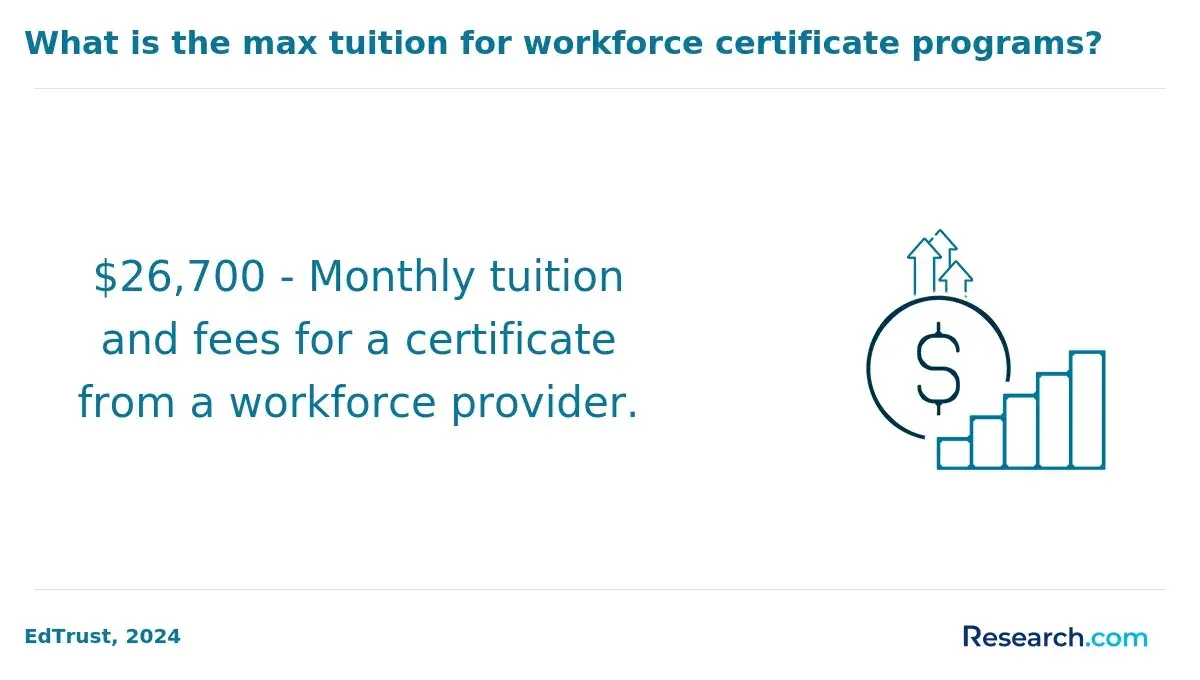
| Noncredit workforce certificate | Usually no | Fast skills training or employer upskilling | May not qualify for federal student aid or academic transfer |
| Industry certification preparation | Varies | Preparing for a separate vendor or professional exam | Course completion does not guarantee certification |
| Apprenticeship-related training | Varies | Combining paid work with technical instruction | Entry requirements and availability depend on sponsors |
Which accredited schools offer high-quality 5-week stackable certificate programs?
High-quality options are most often found at public community and technical colleges, accredited private career colleges, and universities that publish a formal credential map. Rather than relying on a "best" label, look for schools that identify course numbers, credit hours, next-step awards, delivery requirements, total program length, and the occupational purpose of each credential.
For learners who need a larger degree after an initial credential, compare the broader field of accelerated career programs alongside short stacks. A degree pathway may take longer, but it can be the more direct choice when an employer, licensing board, or promotion standard requires one.
Prioritize a school when its published catalog answers these questions clearly.
- Does each 5-week course carry identified credits or documented continuing-education units?
- Which earned courses apply to the next certificate, associate degree, or bachelor's completion program?
- Are labs, practicums, proctored exams, or campus sessions required despite online advertising?
- What credential, examination, employer requirement, or transfer goal is the sequence designed to support?
How do online 5-week stackable programs compare to campus-based options?
Online 5-week programs provide scheduling flexibility and can reduce commuting, but they are not inherently easier or universally suitable. They work particularly well for theory-heavy subjects such as business software, coding fundamentals, medical terminology, legal research, and general education. Campus-based or hybrid formats are usually stronger when learning requires equipment, clinical observation, studio critique, or immediate hands-on correction.
Students who ultimately want a bachelor's degree should also compare accelerated programs online. A stackable certificate can be a lower-risk starting point, whereas a degree completion format may better fit a learner who already has transferable college credit.
This comparison highlights the trade-off to evaluate before choosing delivery mode.
| Factor | Online 5-week format | Campus or hybrid format |
| Schedule | Often asynchronous, with firm weekly deadlines | Fixed meeting and lab times are common |
| Hands-on learning | May require local placements or kits | Direct access to labs, studios, and equipment |
| Networking | Requires intentional virtual participation | More informal peer and instructor contact |
| Best fit | Self-directed learners with reliable technology | Learners needing structured practice and facilities |
What admission requirements and prior education do these short-format programs require?
Admission rules depend on whether the credential is college credit, noncredit workforce training, or preparation for an external certification. Many entry-level college certificates require a high school diploma, GED, or equivalent, plus an application and placement process. Some noncredit programs use simpler registration. Competitive or regulated programs may require prerequisites, immunizations, drug screening, criminal-background checks, entrance testing, or proof of English and math readiness.
Do not assume that a "no application fee" school has no admission requirements. If application cost is a concern, review online universities with no application fee, then separately confirm the program's prerequisites and course-start schedule.
Before paying a deposit, request written answers about prior-learning credit, transcript evaluation, minimum grades needed to progress, and whether failed accelerated courses can delay the next stack. This prevents a common mistake: enrolling in a first course that cannot actually lead to the intended credential.
How much do 5-week stackable credential programs cost and what aid is available?
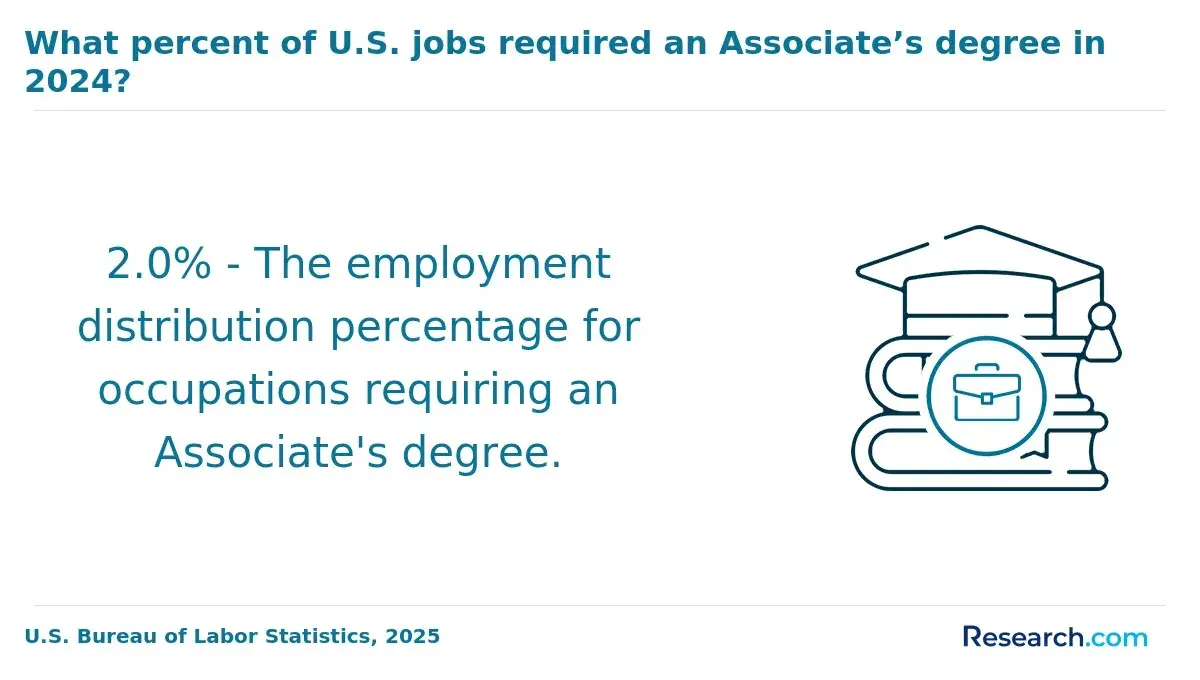
Cost is more than advertised tuition. Credit-bearing programs may charge per credit plus technology, lab, equipment, textbooks, examination, clinical, background-check, or graduation fees. Noncredit programs may bundle materials but may not qualify for the same aid options. For context, College Board reported average published tuition and fees of $4,050 for in-district students at public two-year colleges in 2024-25; individual certificate pricing can be materially different because of program length and required supplies.
Federal aid eligibility generally depends on the institution, program eligibility, enrollment status, and student circumstances. Eligible credit programs may use FAFSA-based aid, while employer tuition assistance, Workforce Innovation and Opportunity Act funding, veterans' education benefits, payment plans, state aid, and scholarships may be relevant in other cases. Doctoral study is a different financial decision, but learners planning a long academic ladder can compare cheapest PhD programs online after confirming that their undergraduate pathway meets doctoral admission requirements.
Use a total-cost calculation rather than a tuition-only comparison.
- Add all mandatory fees, supplies, examination charges, travel, childcare, and lost-work-time costs.
- Divide the total by the number of credits that clearly apply to your next intended credential.
- Ask whether aid, employer reimbursement, or payment plans apply before accepting private financing.
- Compare the cost with local job postings and the minimum credential actually requested for your target role.
What coursework and learning outcomes can students expect from stackable credential paths?
Strong stackable pathways use each course to create a usable skill while preparing students for a more advanced course. Early courses often cover safety, terminology, digital tools, communication, mathematics, documentation, and professional ethics. Later courses apply those foundations through labs, cases, simulations, portfolios, supervised practice, or capstone projects.
Expected outcomes should be observable. For example, an IT learner may configure a basic network and document troubleshooting steps; a billing student may apply coding rules to sample records; a design student may produce a portfolio piece with an accessible workflow. Ask for the syllabus and assessment method, not just a course title. Vague outcomes such as "gain career knowledge" are weaker than measurable competencies tied to workplace tasks.
A compressed schedule is a poor fit if you need extensive remediation, have unpredictable work shifts, or need time to practice a physical skill between sessions. In those situations, a standard-length course or part-time campus pathway can produce better retention and less risk of repeating a class.
Which careers, job roles, and industries align best with stackable credentials?
Stackable credentials align best with occupations where employers value defined technical skills, documented training, or progressive education. They can support entry into a field, help an incumbent worker specialize, or create an academic bridge. They are less appropriate as a shortcut into occupations that require a bachelor's degree, graduate degree, license, extensive apprenticeship, or employer-sponsored academy.
The table separates career relevance from eligibility. Occupational pay and requirements vary by location, experience, employer, and state rules.
| Career area | Useful stack examples | Potential role direction | Important qualification check |
| Information technology | IT support, networking, cybersecurity foundations | Help desk or technical support | Employers may prefer industry certifications and hands-on experience |
| Skilled trades | Electrical, HVAC/R, welding, industrial maintenance | Technician or apprentice entry | Confirm apprenticeship and state licensing requirements |
| Healthcare support | Billing, coding, assisting, pharmacy support | Administrative or clinical support | Check exam eligibility, clinical requirements, and state rules |
| Business operations | Project coordination, bookkeeping, digital marketing | Coordinator or support specialist | Portfolio, software proficiency, and experience may matter most |
AI tools are changing task design in administrative, design, and technology work, increasing the value of learners who can verify outputs, protect confidential information, communicate clearly, and demonstrate real workflow competence. Choose a stack that teaches both the tool and the judgment needed to use it responsibly.
What salary ranges and earning growth can these credentials help students achieve?
A credential does not create a fixed salary, and occupational wage data should not be treated as the earnings of certificate completers. Pay depends on occupation, region, shifts, union status, licensure, experience, and employer. Still, occupational data can help test whether a pathway points toward work with enough earning potential to justify its full cost.
For example, BLS reported May 2024 median annual wages of $61,550 for computer user support specialists, $59,810 for HVAC mechanics and installers, and $48,780 for medical records specialists. These figures describe workers in those occupations, not a guaranteed outcome after completing a short program. Some roles may require experience, an employer credential, or state approval beyond a certificate.
Estimate potential return cautiously by comparing local entry-level postings, likely hours worked, the full program cost, and the time needed to reach the role. A low-cost stack with transferable credits can be valuable even when its first job is modestly paid, because it preserves a path to a higher credential later.
How can students verify accreditation, licensing, and certification alignment for these programs?
Verification is the most important protection against a short program that does not lead where you expect. Institutional accreditation evaluates the college or university; programmatic accreditation evaluates certain professional programs; licensing boards regulate practice in some occupations; and certification bodies award separate professional certifications. These are related but not interchangeable.
Use the following steps before enrolling, especially for healthcare, trades, education, and legal-service pathways.
- Check the school's institutional accreditation through the U.S. Department of Education or CHEA-recognized accreditor information.
- Ask the program for written confirmation of whether its courses meet any programmatic accreditation, state-board, clinical, or exam-eligibility requirements.
- Contact the relevant state licensing board directly if your intended occupation is licensed.
- Verify the certifying organization's eligibility rules, including examination, experience, education, and renewal requirements.
- Save the catalog page showing course numbers, credits, total costs, transfer policy, and the credential awarded.
Red flags include promises of guaranteed jobs or licenses, unclear instructors, no published curriculum, pressure to enroll immediately, and claims that a certificate is "nationally accredited" without naming the accreditor. Also avoid assuming credits transfer because a school is accredited; obtain a receiving institution's transfer evaluation when a degree is your end goal.
Other Things You Should Know About
Usually, no. A five-week format commonly refers to one course. A short certificate may require several five-week courses, and a full stack leading to an associate degree can take much longer. Confirm the complete course sequence and prerequisites.
They can be worthwhile when each credential has a clear labor-market or academic purpose and credits apply to a larger goal. They are less valuable when courses are unrelated, nontransferable, or do not meet employer, certification, or licensing requirements.
Possibly, but eligibility depends on the school, program, enrollment status, and your individual aid eligibility. Many noncredit courses do not qualify. Ask the financial aid office whether the exact program is eligible before enrolling.
Online delivery does not determine transferability. Credit transfer depends on the issuing institution, accreditation, course equivalencies, grades, and the receiving school's policies. Request a written transfer evaluation whenever possible.
References
- Explaining Stackable Credentials https://knowledge.umassfive.coop/paying-for-college/saving/article/explaining-stackable-credentials
- Rethinking Credentialing in Higher Education for the 21st Century https://moderncampus.com/blog/rethinking-credentialing-for-the-21st-century.html
- Building Stackable Credentials That Truly Deliver Value and Economic Mobility: 7 Steps for Success https://mcacs.talentfirst.net/building-stackable-credentials-that-truly-deliver-value/
- Stackable Certificates & Credentials - Complete College America https://completecollege.org/our-approach/structure/stackable-certificates-credentials/
- Stackable Credentials: Living Links Between Learning and Work https://www.cael.org/resouces/pathways-blog/stackable-credentials-living-links-between-learning-and-work
- What Are Stackable Credentials and Why Do They Matter? https://www.pltw.org/blog/what-are-stackable-credentials
- USHE initiative helps students earn meaningful credentials on their way to a degree - Utah System of Higher Education https://ushe.edu/stackable-credentials-help-students-earn-credentials-on-their-way-to-a-degree/
- Stackable Credentials in Career Education at California Community Colleges https://www.ppic.org/publication/stackable-credentials-in-career-education-at-california-community-colleges/
- How to Create Stackable Credentials That Will Draw Learners to Your School https://jenzabar.com/blog/how-to-create-stackable-credentials-that-will-draw-learners-to-your-school
- What are Stackable Credentials? https://assess.com/stackable-credentials/