2027 Best Short Certificate Programs for Transfer Students

Co-Founder and Chief Data Scientist
Transfer students often need a faster, lower-cost credential without losing the value of credits they have already earned. Short certificates can build job-ready skills in months, but their transferability, licensing value, and employer recognition vary widely. The College Board reported average published tuition and fees of $4,050 for in-district students at public two-year colleges in 2024-25, making community-college certificates a potentially economical starting point.
This guide compares practical program types, delivery formats, costs, admissions, and career fit so you can choose a credential that supports your next academic or employment move.
Key Things You Should Know
- For transfer students, the best short certificate is usually a credit-bearing, stackable program aligned with a specific job target; confirm in writing which prior courses apply before enrolling.
- Many certificates take one semester to about one year, while public two-year colleges charged average in-district tuition and fees of $4,050 in 2024-25; supplies, exams, clinical costs, and tools can raise the total.
- A certificate is an educational award, not automatically a professional certification or license, healthcare, skilled-trade, and legal-support paths may require a separate exam, supervised training, or state approval.
Top 10 Best Short Certificate Programs for Transfer Students
Popular Trade School Programs
Transfer-friendly trade certificates commonly include HVAC/R, welding, electrical technology, industrial maintenance, automotive service, construction management support, and computer-aided drafting. Credit-bearing community-college programs may accept general education or technical credits and can lead into an associate degree. Apprenticeship-oriented electrical and plumbing paths are stronger when paid work experience and state licensing matter; a short classroom certificate alone may not qualify a student for independent work. Compare lab hours, tool costs, employer partnerships, and whether the curriculum prepares students for recognized industry exams.
Healthcare Programs
Common short healthcare options include medical assisting, phlebotomy, pharmacy technician, sterile processing, billing and coding, practical nursing prerequisites, and patient care technician training. Programs with clinical placements usually require immunizations, background checks, drug screening, CPR training, and health documentation. A certificate can prepare students for an external certification exam, but completion does not itself grant a license. Choose state-approved programs where required, especially for nursing-related pathways, and confirm that clinical sites are available before paying a deposit.
Criminal Justice / Law Programs
Short programs in criminal justice, corrections, emergency management, paralegal studies, legal office technology, and cybersecurity support can help transfer students explore public-service or legal-support work. A paralegal certificate is most useful when it includes legal research, writing, ethics, and practical software training; some employers prefer American Bar Association-approved education, although approval is not required for every role. Police officer, attorney, and many investigator roles require separate academy, degree, examination, or agency-specific standards. Verify local hiring requirements before treating a certificate as a direct entry route.
Arts & Design Programs
Graphic design, digital media, UX/UI fundamentals, photography, video production, animation, and web design certificates can help students assemble a focused portfolio quickly. These programs are best when coursework produces work samples, offers instructor critique, and teaches current tools rather than software alone. Transfer credit may apply to art history, studio foundations, or digital-production courses in a later associate or bachelor's program. Because hiring is portfolio-driven, evaluate graduate portfolios and project briefs before enrolling. A short certificate can strengthen entry-level applications but does not replace sustained portfolio development.
What are short certificate programs for transfer students and how do they work?
Short certificate programs are focused programs of study, commonly offered by community colleges, technical colleges, universities, and workforce providers. They may be credit-bearing academic certificates or noncredit career-training certificates. For transfer students, the key distinction is whether completed courses can satisfy certificate requirements and whether the certificate's courses can later count toward an associate or bachelor's degree.
A stackable certificate is designed to fit into a larger credential pathway. It makes sense for students who want a near-term employment skill while preserving a route to a degree. Noncredit programs can be faster and may be employer-aligned, but they usually do not accept transfer credit and generally cannot be applied to a degree.
| Program type | Best fit for transfer students | Transfer-credit potential | Important limitation |
| Credit-bearing college certificate | Students planning to continue toward a degree | Often possible under institutional policies | Acceptance at another college is not guaranteed |
| Noncredit workforce certificate | Students seeking rapid, targeted skills | Usually limited or unavailable | May not qualify for federal student aid |
| Industry certification preparation | Students needing exam-aligned training | Varies by provider | Program completion is separate from passing the exam |
How do online and campus-based certificate programs compare for transfer students?
Online certificates work well for software, business operations, coding, billing, legal research, and design theory when you need asynchronous scheduling. Campus or hybrid programs are usually better for welding, HVAC, nursing support, laboratory work, and other fields requiring supervised equipment practice or clinical experience.
The comparison below separates convenience from training requirements. A fully online format is not automatically cheaper once proctoring, software, equipment, travel, or local clinical expenses are included.
| Factor | Online | Campus or hybrid |
| Schedule | Often flexible, especially asynchronous courses | Fixed lab, studio, or clinical meeting times are common |
| Best for | Theory, digital tools, and working learners | Hands-on practice, equipment access, and clinical training |
| Transfer review | Same policy questions apply as campus courses | May make advising and transcript review easier |
| Main risk | Insufficient practical experience or weak learner support | Commuting, scheduling, and limited course availability |
Working adults who need accelerated pacing should also compare degree programs for working adults if a short certificate would not meet the education level required for their target role.
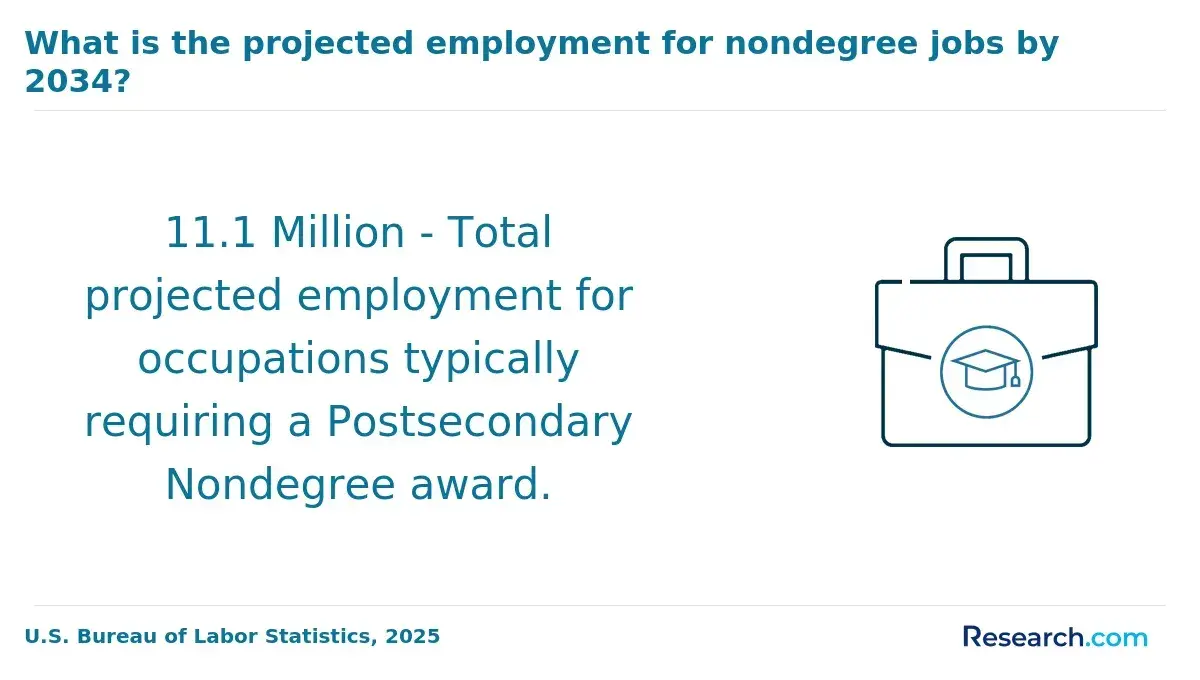
What admission requirements do certificate programs typically have for transfer students?
Admissions rules depend on the provider and credential type. Credit-bearing college certificates commonly require an application, official transcripts from prior institutions, identity or residency documentation, and placement information where applicable. Selective healthcare programs may add prerequisite grades, entrance testing, background screening, and health-clearance requirements. Noncredit certificates may require only registration and payment.
Before applying, ask the receiving school to complete an official transcript evaluation rather than relying on a course title or an unofficial adviser estimate. Transfer credit may be accepted as elective credit but still fail to satisfy a required certificate course.
Use these questions to prevent a costly mismatch:
- Which of my completed courses satisfy certificate requirements, and is the decision recorded in my student file?
- Is there a minimum grade, time limit, or residency requirement for transferred coursework?
- Can certificate courses apply to the associate or bachelor's program I may pursue later?
- Do clinical, lab, internship, or licensure prerequisites create additional admissions barriers?
How can you verify accreditation and program quality for short certificates?
For a college certificate, start by confirming institutional accreditation through the school's accreditor and checking that the institution is authorized to operate in your state. Programmatic approval matters more in regulated fields: nursing, medical assisting, surgical technology, HVAC, and some legal or public-safety pathways may have additional standards set by states, agencies, or professional bodies.
Quality is more than accreditation. Review completion outcomes, curriculum currency, instructor credentials, hands-on hours, employer relationships, certification-exam eligibility, and published total costs. Be cautious when a provider promises employment, uses vague claims about "accreditation," will not disclose outcomes, or pressures you to enroll before you can review the catalog and refund policy.
Students aiming for a later graduate credential should protect their academic pathway early; comparing easy masters degrees online can help clarify whether a future degree requires a particular undergraduate major or prerequisite sequence.
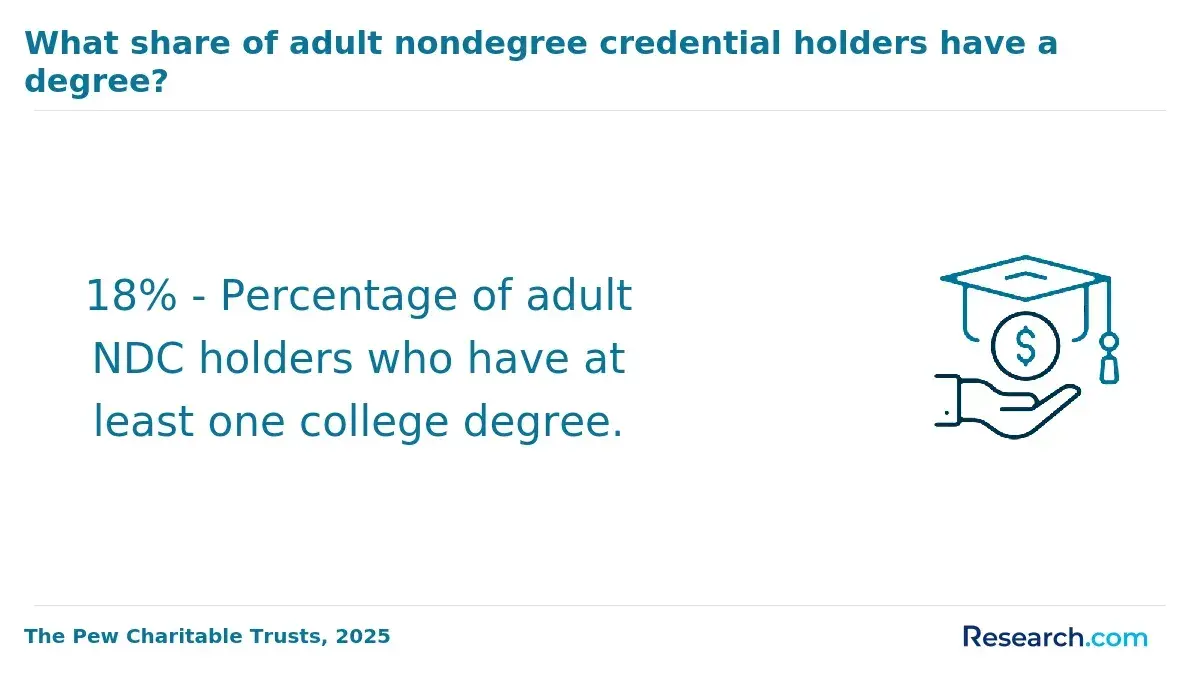
How long do short certificate programs take and what do they cost?
Short certificates commonly range from a few weeks for narrow noncredit training to roughly one year for credit-bearing technical or healthcare programs. Actual completion time depends on prerequisite courses, course sequencing, clinical placement availability, part-time enrollment, and whether transferred credits replace required classes.
Public two-year colleges reported average published in-district tuition and fees of $4,050 in 2024-25, according to College Board. That figure is an institution-wide annual benchmark rather than the price of every certificate, so use it only as a starting point. A shorter program can cost less in tuition but more in mandatory equipment, uniforms, liability coverage, testing, and licensing expenses.
Compare the full financial picture, not tuition alone:
- Required course tuition and fees after confirmed transfer credit.
- Books, software subscriptions, tools, uniforms, kits, and safety equipment.
- Exam fees, background checks, immunizations, insurance, and licensure applications where applicable.
- Transportation, childcare, lost work hours, and clinical or internship scheduling costs.
- Financial aid eligibility, employer tuition assistance, scholarships, and refund terms.
If a certificate will not meet your employment goal, compare its total cost with affordable master's degrees online only when a graduate degree is genuinely relevant to your planned field and you already meet admission prerequisites.
What coursework and skills do leading short certificate programs usually cover?
Leading short certificates focus on a narrow set of skills that employers or licensing pathways can recognize. The strongest curricula combine technical instruction with documentation, communication, safety, ethics, and supervised practice where the occupation requires it. Transfer students should look for programs that fill a specific skill gap rather than repeat courses they have already completed.
Coursework varies by field, but the patterns below help distinguish a career-focused certificate from a collection of unrelated classes.
| Field | Typical coursework | Evidence of skill development |
| Skilled trades | Safety, diagnostics, codes, blueprint reading, equipment practice | Lab competencies, practical assessments, supervised shop work |
| Healthcare support | Anatomy basics, patient procedures, documentation, privacy, clinical practice | Clinical hours and eligibility for relevant certification exams |
| Legal support | Legal research, writing, civil procedure, ethics, document management | Research memos, filings, case-management exercises |
| Digital design | Design principles, software workflows, accessibility, portfolio production | Portfolio projects with documented design decisions |
AI tools are increasingly part of office, design, coding, and administrative workflows. Prefer programs that teach responsible verification, privacy, accessibility, and professional judgment instead of treating automation as a substitute for foundational skills.
What career paths and entry-level roles can these certificates support?
Short certificates can support entry-level roles, career exploration, or advancement for people who already have relevant experience. They are most useful when employers in the local market recognize the training, when the role does not require a longer degree or license, and when the program includes the practical experience employers expect.
This comparison shows realistic directions a certificate may support. Job titles, hiring standards, and state rules vary, so review local postings and licensing requirements before enrolling.
| Certificate focus | Possible entry-level or support roles | When a longer pathway may be needed |
| HVAC, electrical, welding, maintenance | Helper, technician trainee, maintenance assistant, fabrication trainee | Independent practice commonly requires apprenticeship, experience, or licensure |
| Medical assisting, phlebotomy, billing and coding | Medical assistant, phlebotomist, billing specialist, patient-services support | Clinical roles may require certification, state approval, or employer-specific credentials |
| Paralegal or legal office studies | Legal assistant, records clerk, litigation support assistant | Attorney roles require law school and bar admission; employers may prefer degrees for advanced work |
| Graphic or digital design | Production artist, junior content designer, digital-media assistant | Competitive roles often require a stronger portfolio and sometimes a degree |
Career changers and caregivers should weigh schedule flexibility against the need for labs or clinicals. Some best degrees for stay-at-home moms may offer a better long-term fit when a short certificate cannot provide the required credential or predictable advancement route.
What salary ranges and earning growth can certificate holders expect?
Salary should be evaluated by occupation, location, experience, shift, union status, and education requirements - not as a guaranteed result of a certificate. The U.S. Bureau of Labor Statistics reported a May 2024 median annual wage of $48,780 for medical assistants and $59,810 for HVAC mechanics and installers. These occupation-level figures can help compare fields, but they do not show what every certificate holder earns or whether a particular program leads to those roles.
Use job-posting research to test the local value of a credential. Look for repeated requirements such as an external certification, clinical experience, portfolio, apprenticeship registration, software proficiency, or an associate degree. A certificate is a stronger investment when it closes one of those documented requirements and its total cost is manageable relative to likely entry-level opportunities.
Earning growth often comes from experience, specialization, licensure, responsibility, or a later degree. In trades, logged work hours and apprenticeship progression may matter more than additional classroom certificates. In healthcare and legal support, advancement may depend on employer experience, specialty credentials, or further education.
How do licensing or industry certification requirements affect program choice?
Licensing and certification rules should shape program choice before you apply. A school certificate confirms completion of coursework; an industry certification is awarded by an independent organization after meeting its standards; a license is legal permission from a government authority to practice in regulated work. One may be required without the others.
For example, a medical assisting program may prepare a student to pursue a national certification exam, while a practical nursing route requires state-board-approved education and a licensing examination. Trade programs may prepare learners for entry-level work, but a state or local license can require supervised hours, an apprenticeship, or a separate exam.
Take these steps before committing:
- Identify the exact occupation and state where you intend to work.
- Check the relevant state board, agency, or employer requirement for education, examination, and supervised experience.
- Ask the school whether the specific program meets those requirements and request the answer in writing.
- Confirm whether online coursework, out-of-state clinicals, or transferred courses affect eligibility.
- Budget separately for exam registration, applications, renewals, continuing education, and background checks.
A major red flag is a provider that says a program "qualifies" students for a license without naming the governing board, required examination, or state. Requirements can change, and final eligibility decisions generally rest with the licensing authority.
Other Things You Should Know About
Yes, if the school accepts prior coursework toward required certificate classes. Request an official evaluation before enrollment because transferred credits may count only as electives or may be too old for technical or healthcare requirements.
Employers generally focus on the provider's credibility, curriculum, practical experience, portfolio or exam eligibility, and the skills you can demonstrate. For hands-on fields, ensure online learning includes required labs, clinicals, or supervised practice.
Some credit-bearing certificates at eligible institutions may qualify for federal, state, or institutional aid, but eligibility depends on program length, school participation, enrollment status, and individual circumstances. Noncredit training often uses different payment options.
Choose a certificate when you need a defined skill quickly and local employers recognize it. Choose an associate degree when your target role requires broader education, licensing prerequisites, stronger advancement options, or a clearer pathway to a bachelor's degree.
References
- What You Should Know About Short-Term Certification Programs https://www.learnhowtobecome.org/career-resource-center/short-term-certifications/
- Transfer credit practices https://admission.universityofcalifornia.edu/counselors/preparing-transfer-students/transfer-credit-practice.html
- IP Short-Term Certificate https://intl.seattlecolleges.edu/ip-short-term-certificate
- Explore Your Bright Horizons Benefits https://www.brighthorizons.com/article/education/navigating-non-degree-landscape
- Lower Division Certificate (L.D.C.) in Transfer Studies https://www.carrollcc.edu/programs/degrees-credit-certificates/transfer-studies-certificate/
- Post-Master's Certificate | NISTS https://www.nists.org/certificate-in-transfer-leadership
- New certificates offered at University of Utah expand career options for recent grads - Utah System of Higher Education https://ushe.edu/new-certificates-offered-at-university-of-utah-expand-career-options-for-recent-grads/
- CourseCareers https://coursecareers.com/blog-posts/best-certifications-start-a-career
- Glossary of Transfer Terms https://sdmiramar.edu/services/transfer/glossary
- Certificate Programs: Programs, Costs, Duration & Are They Worth It? - University of the Potomac https://potomac.edu/certificates-programs-costs-duration-are-they-worth-it/