2027 Best Professional Certificates for Career Changers

Co-Founder and Chief Data Scientist
Changing careers is expensive when you choose training that employers do not recognize or that does not meet licensing rules. Professional certificates can offer a shorter, targeted route into fields such as healthcare, IT, skilled trades, and design.
The U.S. Bureau of Labor Statistics projects employment in healthcare occupations to grow faster than the average for all occupations from 2024 to 2034. This guide helps career changers compare certificate types, costs, delivery formats, credentials, and realistic job outcomes before enrolling.
Key Things You Should Know
- Choose a certificate only after confirming it matches the specific job target: a college certificate, industry certification, apprenticeship, and state license serve different purposes and are not interchangeable.
- High-demand options include information security, data analytics, medical assisting, HVAC, and electrical work; BLS projects information security analyst employment to grow 29% from 2024 to 2034.
- Cost and speed vary widely: College Board reported average published tuition and fees of $4,150 for public two-year colleges in 2025-26, while noncredit professional certificates may use separate tuition and aid rules.
Top 10 Best Professional Certificates for Career Changers
Popular Trade School Programs
Trade certificates and associate degrees prepare career changers for hands-on work where local employers value practical training, safety knowledge, and, in some fields, apprenticeships. HVAC/R certificates teach refrigeration, electrical fundamentals, diagnostics, and EPA Section 608 exam preparation. Electrical, welding, plumbing, automotive, and industrial-maintenance programs commonly combine lab work with job-site safety. An associate degree may add general education and broader technical coursework, while a certificate is usually faster. Confirm whether a program leads to an apprenticeship opportunity or meets your state's licensing education rules before paying tuition.
Healthcare Programs
Healthcare certificates can support entry into patient-care and administrative roles, but requirements differ sharply by occupation and state. Medical assisting, phlebotomy, pharmacy technician, dental assisting, medical billing and coding, practical nursing, and surgical technology are common choices. Programs may prepare students for a voluntary national certification exam, while practical nursing and some allied-health roles require state-approved education and a licensing examination. Clinical placements, immunizations, background checks, drug screening, uniforms, and exam fees can raise the total cost. Ask whether required clinical hours are guaranteed and whether graduates meet local employer expectations.
Criminal Justice / Law Programs
Criminal justice and legal studies certificates can introduce law, ethics, report writing, evidence procedures, and court systems. Paralegal and legal assistant certificates may be useful for people who already hold a bachelor's degree and want legal-specialty training. However, a certificate does not authorize someone to practice law or independently provide legal advice. Some employers prefer paralegal programs approved by the American Bar Association, although ABA approval is not required for every role. Corrections, security, victim advocacy, compliance support, and records roles may also require background checks, employer training, or state-specific standards.
Arts & Design Programs
Arts and design certificates are most valuable when they produce a strong portfolio and teach software used in the target field. Options include graphic design, UX/UI design, digital marketing, photography, animation, web design, and interior design. A college certificate can provide instructor feedback and structured projects; an industry platform credential may be faster and lower cost. For design roles, employers often assess work samples more closely than the credential name alone. Career changers should review graduate portfolios, software access, copyright policies, and whether the program includes portfolio reviews, internships, or client-based projects.
Which professional certificate programs are best for switching careers into high-demand fields?
The best professional certificate is the one that closes a clear hiring or licensing gap for a role you can realistically enter. For career changers, programs with employer-recognized skills, supervised practice, a portfolio, or a direct path to a required exam tend to be stronger investments than broad certificates with vague career claims.
This comparison distinguishes common pathways. Occupational outlook figures are BLS projections for 2024 to 2034, not guarantees of hiring or proof that a certificate alone qualifies a person for every listed role.
| Career direction | Useful certificate route | Best fit for | Employment outlook | Important limitation |
| Cybersecurity | IT support, networking, security operations, or cybersecurity certificate | Career changers with strong problem-solving skills who can build technical projects | Information security analysts: 29% projected growth | Many analyst roles prefer prior IT experience; a certificate is often a starting point, not the final credential. |
| Data analytics | Data analytics certificate covering spreadsheets, SQL, visualization, and statistics | People moving from operations, finance, marketing, or administration | Data scientists: 34% projected growth | Data-scientist roles commonly require deeper mathematics and degree-level preparation than entry-level analyst work. |
| Healthcare support | Medical assisting, phlebotomy, pharmacy technician, or billing and coding certificate | People seeking patient-facing or healthcare-office entry roles | Medical assistants: 12% projected growth | Clinical placements, certification preferences, and state rules vary by occupation. |
| Skilled trades | HVAC/R, welding, electrical, industrial maintenance, or plumbing certificate | Career changers who prefer physical, hands-on work | HVAC mechanics and installers: 8% projected growth | Apprenticeship hours and state licensing may still be required. |
| Project coordination | Project management or agile certificate | Experienced professionals repositioning existing industry knowledge | Project management specialists: 6% projected growth | Certificates help demonstrate methods but rarely replace relevant work experience. |
Technology certificates are especially useful when paired with proof of work: a GitHub project, dashboard, case study, or documented troubleshooting lab. For readers seeking a degree rather than a short credential, these fast degrees online may offer a better fit when target occupations require formal academic credentials.
Choose healthcare or trades programs when the training includes the practical component employers or regulators expect. Choose data, IT, design, or marketing certificates when you can build a visible work sample while studying. Consider an associate or bachelor's degree instead if job postings consistently require one, the field has a statutory education requirement, or you need long-term advancement into management or licensed practice.
Online certificates work well for software-based subjects such as analytics, IT, project management, bookkeeping, digital marketing, and design. Campus or hybrid programs are usually safer choices when learning requires laboratories, equipment, live skill checks, or clinical experience. The right format depends less on convenience alone than on whether you can demonstrate job-ready competence afterward.
The comparison below can help you weigh scheduling flexibility against the practical support a career transition may require.
| Factor | Online certificate | Campus or hybrid certificate | Decision implication |
| Schedule | Often asynchronous, with flexible weekly deadlines | Usually fixed class, lab, or clinical times | Online formats suit working adults, but require consistent self-management. |
| Hands-on learning | Strong for digital tools and theory; limited for physical skills | Direct access to labs, equipment, simulations, and instructors | Favor campus or hybrid training for clinical and skilled-trade pathways. |
| Networking | May include virtual events and peer communities | May offer local employer visits, instructors, and career fairs | Ask how the provider connects learners with employers in your location. |
| Licensure readiness | May not meet every state's supervised-hour or practical-training rules | Often designed around local program approvals and placements | Verify requirements with the relevant state board before enrolling online. |
| Total cost | May reduce commuting and housing costs | May add transportation, tools, uniforms, or lab fees | Compare all required expenses, not tuition alone. |
A common mistake is assuming "online" means fully self-paced. Some online programs require proctored exams, scheduled live sessions, group work, local clinical rotations, or in-person intensives. Get those requirements in writing before committing.
Campus-based programs can be more practical for career changers who need accountability, immediate instructor feedback, and a local professional network. Online programs may be the better option for military-connected learners who move frequently; explore online degrees for military spouses when a degree pathway, rather than a standalone certificate, better supports that situation.
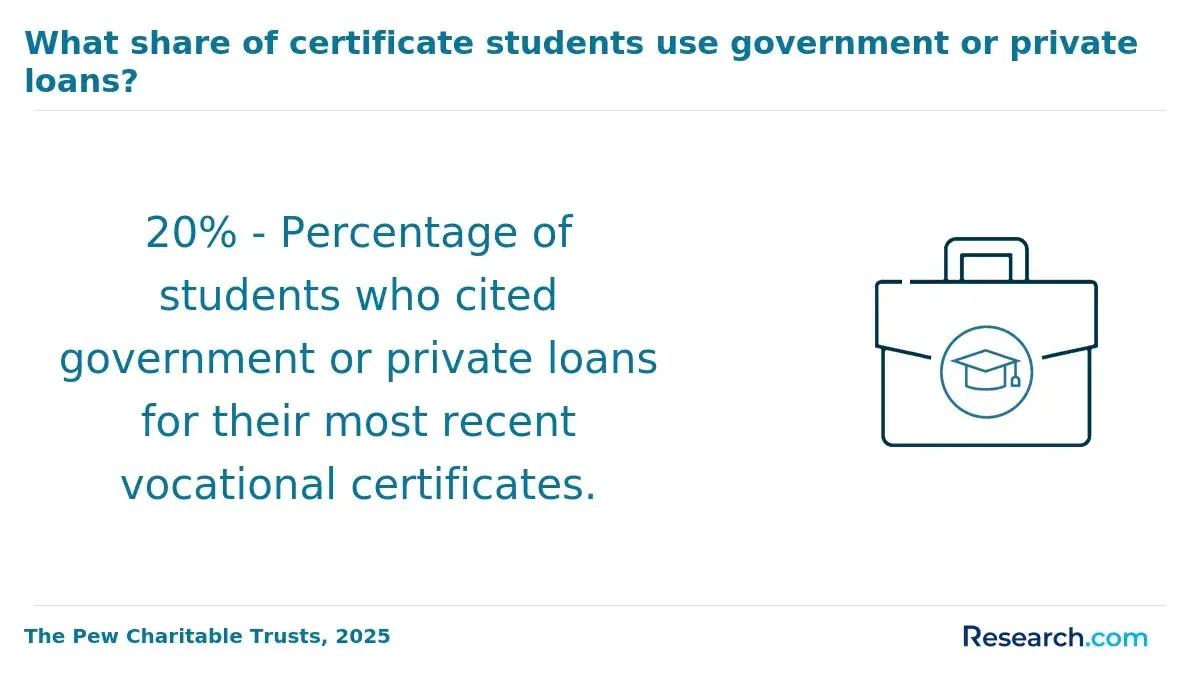
Requirements depend on the provider and credential type. A noncredit certificate from a training platform may only require payment and basic computer access. A credit-bearing college certificate may require an application, proof of high school completion or equivalent, placement testing, and prerequisite coursework. Healthcare and public-safety programs can add compliance requirements because students work with patients, vulnerable populations, or regulated systems.
Before applying, identify which of these requirements apply to your target program and whether they can delay your start date.
- Academic prerequisites: Math, anatomy and physiology, writing, computer literacy, or prior college coursework may be required for technical and healthcare certificates.
- Eligibility screening: Clinical programs may require immunization records, CPR training, criminal background checks, drug screening, and health documentation.
- Technology and equipment: Online programs may require a current computer, reliable broadband, webcam, specific software, or a quiet testing location.
- Experience requirements: Advanced certificates, especially cybersecurity and project management programs, may expect prior work experience or foundational coursework.
- Placement availability: Clinical, internship, and apprenticeship-linked programs may limit enrollment based on available sites rather than academic criteria alone.
Do not assume a GPA or standardized test is required for every certificate. Conversely, do not assume open enrollment means the program is appropriate for beginners. Ask whether the curriculum starts at an introductory level, whether tutoring is available, and what learners who lack the stated prerequisite should do first.
Transfer credit is relevant mainly to credit-bearing college certificates. If you might later pursue an associate or bachelor's degree, ask whether the certificate courses apply toward that degree, how long credits remain valid, and whether the receiving institution controls the final transfer decision.
Professional certificates range from a few weeks of focused online coursework to 18 months or more for programs with laboratories, clinical training, or extensive technical content. A short timeline is valuable only if it covers the competency, exam eligibility, and work experience expectations for the job you want. Self-paced programs can finish quickly, but working adults should estimate completion based on available weekly study time, not the provider's fastest possible timeline.
Use this cost framework to compare offers on an equal basis. College Board reported average published tuition and fees of $4,150 at public two-year colleges for 2025-26; individual certificate costs can be lower or substantially higher depending on residency, clock hours, and equipment needs.
| Program type | Typical timeline | Common cost components | Funding considerations |
| Noncredit online professional certificate | Weeks to several months | Subscription or course fee, exam fee, software | Usually does not qualify for federal student aid; employer reimbursement may be available. |
| Community college credit certificate | One to three academic terms | Tuition, fees, books, supplies, testing | May qualify for aid if the program and student meet eligibility rules. |
| Trade or clinical certificate | Several months to about 18 months | Tuition, tools, uniforms, labs, background checks, licensing or exam fees | Ask about workforce grants, apprenticeships, and payment plans. |
| Graduate or advanced university certificate | About six months to one year part time | Per-credit tuition, technology, books | Often requires a prior degree; aid and employer support vary. |
Calculate total cost by adding every required expense and the income you may forgo by reducing work hours. Then compare that total with local entry-level job postings, not only national salary headlines. If a certificate is credit-bearing, check financial-aid eligibility with the institution; if it is not, investigate Workforce Innovation and Opportunity Act support, state workforce grants, union training, veterans' education benefits when applicable, and employer tuition assistance.
Readers who need a faster degree route rather than a standalone credential can compare best accelerated programs. Accelerated study can reduce time to completion, but it also increases weekly workload and may leave less room for paid work.
Evaluate quality based on the credential type. Institutional accreditation matters most for credit-bearing college certificates, federal financial-aid eligibility, and possible credit transfer. Programmatic approval matters more for regulated programs such as nursing and certain allied-health occupations. Industry-recognized certifications matter most when employers expect a specific exam credential in fields such as IT, project management, or skilled trades.
Use the following checks before enrolling. They help identify whether a provider's marketing claims match the credential's real-world value.
- Confirm the provider's legal name, location, refund policy, and complaint process.
- For college programs, verify institutional accreditation through the U.S. Department of Education or the Council for Higher Education Accreditation database.
- For regulated careers, confirm program approval and licensure eligibility directly with your state licensing board.
- Ask whether the curriculum prepares you for a named certification examination and whether exam fees, practice tests, and eligibility requirements are included.
- Request current outcome information, including completion, job-placement methodology, employer partners, and the percentage of students who obtain required clinical placements.
- Read several local job postings and compare their stated education, certification, experience, and schedule requirements with the program curriculum.
Red flags include guaranteed-job language, pressure to sign immediately, unclear total charges, vague accreditation claims, missing instructor qualifications, and placement statistics without definitions. A school can be institutionally accredited while a particular program still fails to meet another state's licensing rules, so verify both levels when regulation applies.
For noncollege professional certificates, do not force an accreditation test that may not apply. Instead, assess the provider's curriculum, instructor expertise, assessment quality, employer recognition, and whether the certificate documents verifiable skills rather than mere attendance.
Strong professional certificates teach a narrow set of job-relevant competencies and require learners to demonstrate them. They are not simply collections of introductory lectures. The best curriculum for a career changer includes foundational knowledge, current tools, applied assessment, and communication skills that make the learner employable in an entry-level setting.
The skills below are common across effective certificate pathways, although the balance changes by field.
| Career area | Core coursework | Evidence of skill employers may value |
| IT and cybersecurity | Operating systems, networks, cloud basics, security controls, incident response | Labs, documented troubleshooting, security analyses, and relevant certification preparation |
| Data analytics | Spreadsheets, SQL, data cleaning, dashboards, visualization, basic statistics | Portfolio projects that explain a business question and support a decision |
| Healthcare support | Medical terminology, patient safety, privacy, clinical procedures, electronic records | Supervised clinical performance and eligibility for a relevant certification exam where applicable |
| Skilled trades | Safety, blueprint reading, tools, diagnostics, codes, equipment maintenance | Lab assessments, logged work hours, and apprenticeship or employer references |
| Design and marketing | Design principles, user research, content strategy, analytics, software workflows | A polished portfolio with original, clearly explained projects |
AI tools are changing workflows in analytics, design, marketing, customer support, and software development. A useful certificate should teach responsible use of these tools, including verification, privacy, copyright awareness, and explaining your own judgment. Employers still need people who can define problems, check output, communicate with colleagues, and work within industry standards.
Before enrolling, compare course titles with 10 to 20 local or remote job postings. If the same software, technical standards, or customer-facing tasks appear repeatedly but are absent from the curriculum, the program may not be current enough for your goal.
A certificate usually prepares career changers for a first step, not an entire career ladder. The immediate job may be technician, assistant, coordinator, junior analyst, apprentice, or support specialist. Advancement commonly depends on experience, a separate certification, licensure, portfolio quality, additional coursework, or an employer-sponsored training pathway.
This pathway view helps set realistic expectations about what a completed program can and cannot do.
| Certificate focus | Possible entry-level roles | Industries | Common next step |
| IT support or cybersecurity | Help desk specialist, technical support specialist, junior security operations support | Technology, finance, healthcare, government contractors, education | Build experience and pursue role-specific industry certifications. |
| Data analytics | Reporting assistant, operations analyst, junior data analyst | Retail, logistics, insurance, healthcare, marketing, public sector | Develop a portfolio and deepen SQL, statistical, or business-domain knowledge. |
| Medical assisting | Medical assistant, clinical support staff | Physician offices, outpatient centers, clinics | Gain clinical experience and pursue specialty responsibilities where available. |
| HVAC/R | HVAC installer helper, maintenance technician, apprentice | Construction, facilities, manufacturing, building services | Accumulate supervised hours and meet local licensing or contractor requirements. |
| Paralegal studies | Legal assistant, litigation support assistant, records specialist | Law firms, corporate legal departments, government agencies | Build legal-document and case-management experience; legal practice requires attorney licensure. |
Certificate holders are often most competitive when they connect the new skill to prior experience. A former retail manager moving into project coordination can highlight scheduling, vendor communication, and budget tracking. A former nurse aide moving into medical billing can emphasize healthcare terminology and patient privacy knowledge.
A common mistake is applying only to the job title printed in a program brochure. Search related titles, review required skills, and tailor your résumé to concrete projects, supervised hours, tools, and outcomes. If your goal requires a degree for advancement, compare the certificate path with most profitable degrees before treating a short program as the only option.
A certificate does not create a standard salary. Pay depends on occupation, geography, shift differentials, union coverage, experience, licensing, employer size, and whether the role requires more education than the certificate provides. Use occupational wage data as context for the job itself, then validate it with local listings and conversations with employers.
The following BLS national median annual wage figures for May 2024 describe occupations, not earnings guaranteed to certificate completers.
| Occupation | National median annual wage | Certificate relevance |
| Information security analysts | $124,910 | Usually requires substantial IT knowledge and experience; an entry certificate alone may not qualify candidates. |
| Software developers | $133,080 | Many employers prefer a bachelor's degree or demonstrable equivalent skills; a short certificate is not a universal substitute. |
| HVAC mechanics and installers | $59,810 | Trade certificates can support entry, alongside apprenticeship, EPA requirements, and state rules. |
| Paralegals and legal assistants | $61,010 | A certificate may help, particularly for degree holders; employer expectations vary. |
| Graphic designers | $61,300 | Portfolio quality and software proficiency strongly affect access to work. |
| Medical assistants | $44,200 | Certificate training is common, but certification preferences and duties differ by employer and state. |
To estimate your own return on investment, compare total training cost and likely lost work time with realistic first-job wages in your metro area. Then identify the next credential or experience milestone that can increase responsibility. This approach is more reliable than choosing a program based solely on the highest national median wage.
Be cautious of schools that present a high occupational median as though every graduate will earn it quickly. Entry-level earnings can be lower, especially when changing industries with no directly related experience.
How do licensing, exams, and industry certifications work after completing a certificate program?
Completing a certificate program and earning a professional certification are different events. A certificate confirms that you completed a course of study offered by a college, university, training organization, or other provider. A certification is awarded by a professional association, vendor, or certifying body after you meet its standards, which may include an exam, education, work experience, ethics agreement, or continuing education.
Licensure is different again: it is legal permission from a state or other government authority to practice a regulated occupation. Nursing, practical nursing, some allied-health roles, and many trade occupations may involve state-specific approval, examinations, supervised hours, or both.
Follow this sequence to avoid paying for training that does not lead to the credential your target role actually requires.
- Identify whether the target job requires a state license, employer-preferred certification, vendor certification, apprenticeship credential, or no formal credential.
- Check eligibility rules directly with the licensing board or certifying organization, including education, clinical hours, work experience, background review, and examination requirements.
- Confirm that the proposed certificate program is approved or accepted when approval is required.
- Budget separately for applications, exam registration, fingerprints, background checks, renewal, continuing education, and retesting if needed.
- Keep transcripts, course descriptions, clinical records, and completion documents in case an employer or board requests them.
For example, an HVAC certificate may prepare a learner for EPA Section 608 testing, but state contractor licensing can require additional experience. A medical assistant certificate may prepare a graduate for a national certification exam, but medical-assistant scope of practice varies by state and employer. Verify the exact rule where you plan to work.
Other Things You Should Know About
They can be worthwhile when they teach skills employers request, meet a licensing or exam requirement, include practical assessment, and fit a realistic entry-level job target. They are less useful when the target occupation requires a degree, substantial experience, or state-approved education that the program does not provide.
A professional certificate is typically an educational credential awarded after completing a program. A professional certification is usually awarded by a certifying body after meeting independent requirements, often including an exam. Some certificate programs prepare students for certification exams, but completion does not automatically award the certification.
Possibly. Eligible credit-bearing programs at qualified institutions may participate in federal, state, or institutional aid programs, subject to student eligibility rules. Many noncredit and third-party certificates do not qualify for federal student aid, though employer reimbursement, workforce grants, payment plans, and veterans' benefits may be available in some cases.
Choose a certificate for a focused, near-term skill gap; a bootcamp when intensive project-based training fits an unregulated digital field; an associate degree when you need broader coursework or technical depth; and a bachelor's degree when job postings, advancement paths, or licensure requirements consistently demand one. Compare the requirement for your specific destination job before deciding.
- How Employers Use Certifications to Identify Job-Ready Candidates - Certification Partners https://ciwcertified.com/how-employers-use-certifications-to-identify-job-ready-candidates/
- Best IT Certifications for Career Changers - ONLC https://www.onlc.com/blog/best-it-certifications-career-change/
- Highest Paying Certifications 2025-2026: IT, Cybersecurity, Medical & Career Growth Guide https://www.frontlinesourcegroup.com/blog-certifications-that-pay-the-most.html
- How Long to Earn an HR Certificate? | HR Training Timelines https://hrcertification.com/blog/hr-certificate-completion-time-guide-biid1000172
- CourseCareers https://coursecareers.com/blog-posts/best-certifications-start-a-career
- Degree vs Certifications: What Employers Value Most in 2026 https://cccareersolutions.com/degree-vs-certifications-what-employers-value-most-2026/
- Best Student Loans for Certificate Programs - Credible https://www.credible.com/student-loans/student-loans-for-certificate-programs
- The Top 5 Certificate Programs for Jobs With Growth Potential | CourseStorm https://www.coursestorm.com/blog/top-certificate-programs-for-jobs
- 7 in-demand certifications in 2025 | edX https://www.edx.org/resources/in-demand-professional-certifications
- Top 10 Benefits of Professional Certification - Identity Management Institute® https://identitymanagementinstitute.org/top-10-benefits-of-professional-certification/