2027 Best Online Certifications With Rolling Admissions

Co-Founder and Chief Data Scientist
Choosing a credential often cannot wait for a traditional fall semester. Online certificates with rolling admissions let qualified learners apply throughout the year, but start dates, recognition, and career value vary widely. The U.S. Bureau of Labor Statistics projects healthcare support occupations to grow 15% from 2023 to 2033, faster than the average for all occupations, illustrating why short, job-focused training remains a practical option. This guide helps working adults, career changers, and recent graduates compare flexible certificate paths, avoid weak programs, and select training that matches a specific goal.
Key Things You Should Know
- Rolling admissions means applications are reviewed as spaces remain available; it does not always mean you can begin coursework immediately, so confirm the next start date before paying a deposit.
- Online certificates can take a few weeks to about one year; credit-bearing college certificates may stack into an associate or bachelor's degree, while noncredit career certificates often do not transfer.
- For career planning, use occupational - not graduate - data: BLS projects healthcare support employment growth of 15% from 2023 to 2033, but a certificate alone may not meet employer, certification, or state licensure requirements.
Top 10 Best Online Certifications With Rolling Admissions
Popular Trade School Programs
Online trade certificates work best for the classroom portion of a hands-on field. Common options include HVAC fundamentals, electrical theory, construction management, welding technology, automotive service, and industrial maintenance. Expect simulations, safety modules, code coursework, and diagnostic theory online; labs, apprenticeships, or supervised practice may still be required locally. Choose a school only after confirming whether the program prepares you for an industry exam, provides required lab access, and meets state or employer expectations. Learners seeking immediate field work may prefer an apprenticeship or hybrid program over a fully online certificate.
Healthcare Programs
Rolling-admission healthcare options can include medical billing and coding, pharmacy technician preparation, medical assisting theory, health information technology, and patient care certificates. Programs may prepare learners for a separate national certification examination, but completing coursework does not automatically confer professional certification. Clinical occupations such as practical nursing, dental assisting, and medical assisting may require in-person labs, externships, background checks, immunizations, CPR training, or state approval. Verify the program's clinical-placement policy before enrolling; online convenience is less valuable if a required practicum cannot be arranged near you.
Criminal Justice / Law Programs
Online certificates in criminal justice, legal studies, paralegal studies, cybersecurity, corrections, and emergency management suit learners seeking foundational knowledge or advancement in adjacent roles. A paralegal certificate can be useful for applicants who already hold a degree, but requirements differ by employer and state; it does not authorize independent legal practice. Criminal justice certificates are generally not substitutes for police academy training, peace-officer standards, or security licensing. Compare curricula for legal research, report writing, ethics, digital evidence, and constitutional law, then confirm whether local employers recognize the credential.
Arts & Design Programs
Online certificates in graphic design, UX/UI design, digital marketing design, photography, animation, and web production emphasize portfolio-ready work. They are often noncredit professional certificates or credit-bearing college certificates, and the distinction affects transferability and financial aid. For creative hiring, a strong portfolio, software fluency, and clear project explanations can matter as much as the certificate title. Review whether tuition includes software, critique sessions, portfolio reviews, and instructor feedback. A self-paced course may be affordable, while a cohort-based certificate can provide deadlines and more direct feedback.
What are online certifications with rolling admissions and who are they best for?
An online certificate with rolling admissions is an educational program that accepts and reviews applications on an ongoing basis rather than using one fixed deadline. Depending on the provider, it may be a credit-bearing undergraduate or graduate certificate, a noncredit workforce credential, or a professional certificate issued by a university or training provider. It is not automatically the same as a professional certification earned through an independent certifying body.
These programs are best for people who need timing flexibility but have a defined outcome: gaining a focused skill, testing a field before pursuing a degree, updating job-related knowledge, or completing a stackable credential. Start with the occupation or skill you want, not the certificate's marketing label. Exploring university majors can help learners decide whether a short certificate is enough or whether a degree better fits the long-term career target.
The comparison below identifies the most important distinctions before applying.
| Credential type | Typical provider | Best use | Key limitation |
| Credit-bearing academic certificate | College or university | Building college credits or a stackable pathway | May have term dates even with rolling applications |
| Professional certificate | University continuing education unit or training provider | Targeted workplace skills and portfolio development | Usually does not create transferable college credit |
| Industry certification preparation | College, training provider, or employer partner | Preparing for a separate certification exam | Course completion does not guarantee exam eligibility or passing |
How do online certification programs compare to campus-based options for flexibility and outcomes?
Online programs usually offer stronger scheduling flexibility because lectures, readings, and assignments may be asynchronous. Campus programs can be better when the field requires equipment, live labs, clinics, studio critique, or close local employer connections. Neither format is inherently superior: outcomes depend on curriculum quality, learner support, practical experience, and whether the credential is recognized in the target field.
For learners who ultimately need a degree rather than a short credential, compare the certificate route with a best accelerated bachelor's degree online option. An accelerated degree generally requires a larger time and tuition commitment, but may meet education requirements that a standalone certificate cannot.
This comparison clarifies the trade-off between convenience and hands-on preparation.
| Factor | Online certificate | Campus or hybrid certificate |
| Scheduling | Often asynchronous and compatible with work schedules | Usually fixed meeting, lab, or clinical times |
| Hands-on training | May rely on simulations or local placements | Direct access to labs, equipment, and instructors |
| Networking | Virtual events and broader geographic reach | Potentially stronger local employer and peer connections |
| Best fit | Digital, administrative, analytical, or theory-based skills | Licensed, clinical, technical, or equipment-intensive work |
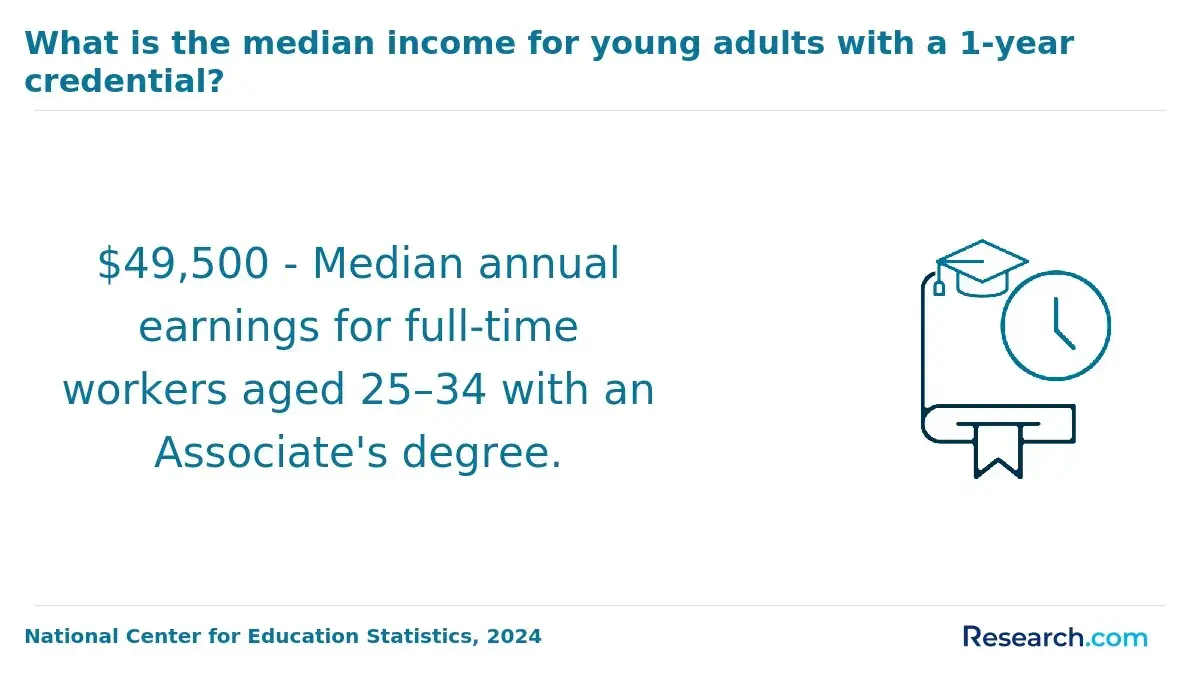
How can students verify accreditation and program quality for online certificates?
Accreditation matters most when a certificate carries college credit, is intended to transfer, uses federal student aid, or prepares learners for regulated work. Institutional accreditation applies to the college or university as a whole. Programmatic accreditation may be required or strongly preferred in fields such as nursing, allied health, and some technical disciplines. Noncredit professional certificates may not have either form of accreditation, so evaluate their employer relevance, instructor qualifications, assessments, and published policies instead.
Before enrolling, use these checks to separate a legitimate program from a vague or overly promotional offer.
- Confirm the institution's accreditor and status through the U.S. Department of Education or the Council for Higher Education Accreditation directory.
- Ask whether the exact certificate is credit-bearing, how many credits it carries, and whether credits transfer to a named degree pathway.
- For regulated careers, check the relevant state board's education rules and ask whether the program meets them in your state.
- Request the full curriculum, faculty information, refund policy, technology requirements, and all fees in writing.
- Ask whether the program prepares students for a specific industry examination and independently verify that exam's eligibility rules.
Red flags include promises of guaranteed jobs or licenses, unclear total pricing, no physical or administrative contact information, pressure to pay immediately, and claims that a certificate is "accredited" without naming the accreditor. Recognition should be verifiable, not merely asserted.
What admission requirements and application steps do rolling-admission certificate programs have?
Rolling-admission requirements depend on the credential type. A college certificate may request an application, identification, transcripts, placement information, and proof of prerequisites. A noncredit professional certificate may require only registration and payment. Healthcare or clinical programs commonly add background checks, drug screening, immunization records, CPR certification, and proof that the learner can complete required fieldwork.
Apply early enough to resolve missing documents and secure a practical start date. The following sequence reduces surprises.
- Identify whether the credential is credit-bearing, noncredit, exam preparation, or licensure preparation.
- Read the published admission criteria and note prerequisites such as prior coursework, work experience, or degree completion.
- Confirm application-review timing, seat availability, orientation dates, and the actual first day of class.
- Submit transcripts and supporting documents, then monitor the applicant portal or email for requests.
- Review the enrollment agreement, refund deadline, required supplies, and placement obligations before accepting admission.
A common mistake is assuming rolling admissions means open enrollment with unlimited seats. Cohort-based programs may stop admitting learners once a class, clinical site, or lab section is full.
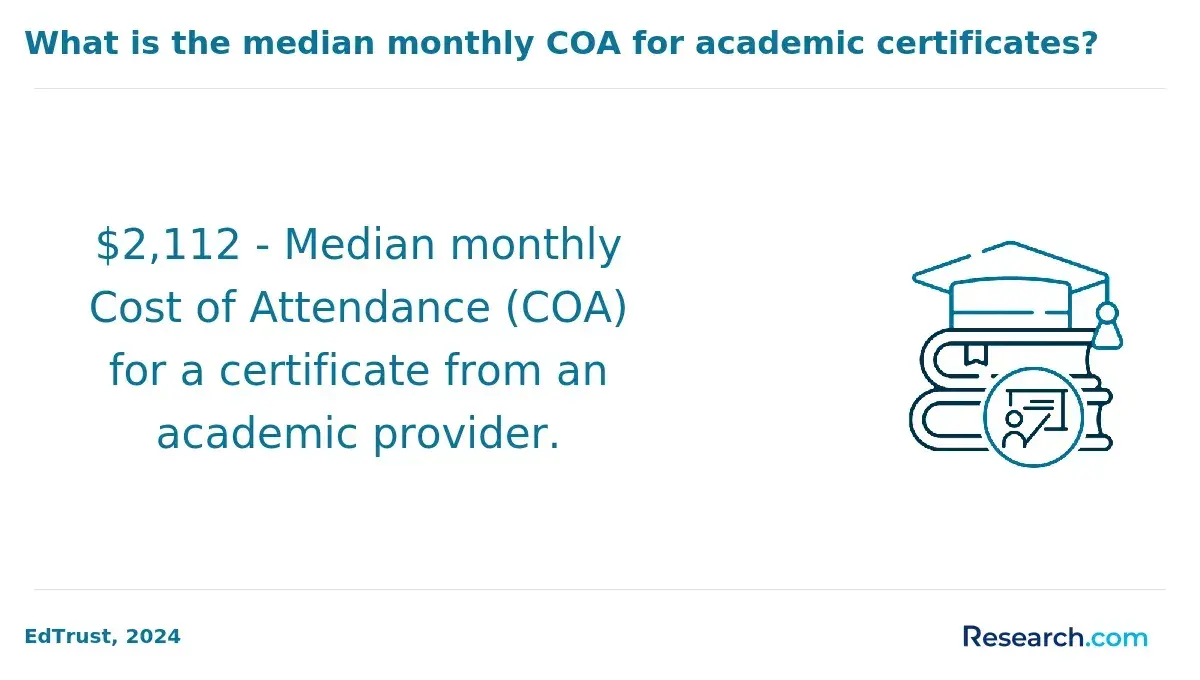
How long do online certification programs with rolling admissions typically take to complete?
Completion time ranges widely because "online certificate" covers several credential types. Short self-paced professional certificates may take weeks or months. College certificates commonly require several courses and may take one or two terms part time, while clinical and technical certificates can take longer because of sequencing, labs, or externships. A rolling application process does not shorten the required coursework.
If speed is the priority, compare course load, required start dates, and prerequisites - not just the advertised program length. Some 1 year degree programs may be more suitable for learners who need a broader credential than a narrowly focused certificate.
Use the school's catalog to calculate realistic timing: divide required credits or courses by the number available each session, then add time for orientation, transfer-credit review, practicum placement, and exam preparation. Working learners should choose a pace they can sustain; an accelerated format can create costly delays if repeated courses or missed deadlines extend completion.
What do students learn in top online certificate curricula and coursework?
Strong certificate curricula teach a coherent set of skills that can be demonstrated through projects, assessments, simulations, or supervised practice. The best coursework aligns with the actual work learners expect to perform, rather than providing only broad introductory content. For example, a coding certificate may cover medical terminology, classification systems, compliance, and claims workflows; a design certificate may require portfolio projects and critique.
When comparing curricula, look for evidence of these features.
- Clearly named courses that progress from fundamentals to job-relevant applications.
- Current tools, standards, software, or regulations used in the target field.
- Assessment through projects, case work, labs, simulations, or proctored examinations.
- Instructor access, feedback timelines, tutoring, career support, and technical support.
- Externship, practicum, lab, or portfolio requirements when the occupation depends on demonstrated experience.
AI tools are increasingly part of office, design, technology, and administrative workflows. Favor programs that teach responsible use, verification, privacy, and field-specific judgment rather than treating AI output as a substitute for foundational skills.
What do online certification programs cost, and what financial aid is available?
Cost depends on provider type, credit load, residency rules, delivery format, required software, exams, books, equipment, and clinical or background-check fees. Public colleges may charge per credit; private providers may charge one bundled price or subscription. Compare the total amount due through completion, not the monthly payment or introductory price.
Federal aid may be available for eligible students in qualifying, credit-bearing programs at participating institutions, but many short noncredit certificates do not qualify. The National Center for Education Statistics reported that average undergraduate tuition and fees at public two-year institutions were $3,990 in 2022-23; that broad figure is useful context, not a price quote for any particular certificate or online program.
Ask the provider whether these funding paths apply before you enroll.
- Federal, state, or institutional aid for eligible college-based programs.
- Employer tuition assistance or workforce-development benefits.
- Workforce Innovation and Opportunity Act funding through local workforce agencies, when available.
- Payment plans, scholarships, veterans education benefits, or rehabilitation benefits for eligible learners.
A low tuition figure can be misleading if it excludes certification exams, required subscriptions, supplies, travel to labs, or unpaid clinical hours. Do not borrow solely on an assumed salary increase; compare the full cost with local job postings and realistic entry requirements.
What careers and job roles can online certificates with rolling admissions lead to?
Online certificates can support entry-level job searches, targeted skill development, or advancement for people already working in a field. They are most useful when they fill a clearly identified requirement in job postings or prepare the learner for a recognized exam. Employers may also prioritize experience, a portfolio, a degree, security clearance eligibility, or state authorization.
The table maps common certificate areas to plausible roles and important limits.
| Certificate area | Potential job roles | Important qualification limit |
| Medical billing and coding | Billing specialist, coding assistant, claims representative | Employers may prefer an industry certification or experience |
| IT support or cybersecurity fundamentals | Help desk technician, technical support specialist, junior security support roles | Advanced cybersecurity roles often require experience and certifications |
| Paralegal studies | Paralegal assistant, legal assistant, document specialist | Does not permit independent legal practice |
| Digital design | Production artist, junior designer, content designer | Portfolio quality can be decisive |
| Construction or HVAC theory | Estimator assistant, dispatcher, trainee, maintenance support | Field roles may require apprenticeship, supervised hours, or licensure |
Criminal justice learners considering a longer academic path can also review online PhD criminal justice no dissertation options, although a doctoral program serves a substantially different purpose than an entry-level certificate. It may fit experienced professionals pursuing advanced leadership, policy, research, or teaching-related goals.
What salary ranges and job outlook can graduates of these certificates expect?
Salary and outlook data describe occupations, not a guaranteed return from any certificate. They are useful for checking whether a target field has enough opportunity to justify the cost and time of training. The U.S. Bureau of Labor Statistics reported a May 2024 median annual wage of $48,780 for medical assistants and projects employment growth of 15% from 2023 to 2033. That outlook reflects demand for the occupation, while individual eligibility depends on state rules, employer preferences, and whether the role requires clinical training.
Use labor data as one part of an ROI check. Look at local job postings for required education, certifications, schedules, and experience; compare those requirements with the exact curriculum; and calculate how long it could take to recover total out-of-pocket costs. A certificate is a stronger investment when it addresses a documented hiring requirement or creates a credible next step toward a degree, apprenticeship, or recognized certification.
Other Things You Should Know About
Not always. You may apply year-round, but programs can use monthly, quarterly, or term-based starts. Cohort, lab, clinical, and instructor capacity can limit the next available start date.
They can be. Verify the provider, institutional accreditation when relevant, curriculum, faculty, refund policy, and employer or licensing recognition. Rolling admissions itself is neither a quality signal nor a red flag.
Some college-issued certificates are credit-bearing and may stack into a degree. Many professional or noncredit certificates do not transfer. Ask for the exact credit total and written transfer policy before enrolling.
Some eligible college-based programs may qualify students for federal, state, institutional, or veterans benefits. Short noncredit programs often do not. Confirm eligibility directly with the school's financial aid office before relying on aid.
References
- Best Online Courses to Take to Get a Job https://quickcv.io/blog/best-online-courses-to-get-a-job
- Rolling Admissions Guide: What, When, Why? https://www.ivywise.com/blog/what-does-rolling-admissions-mean/
- Understanding College Decision Types: What They Mean for You - Jack Kent Cooke Foundation https://www.jkcf.org/our-stories/understanding-college-decision-types-what-they-mean-for-you/
- Online Certificate Programs, Online Certificate Courses https://www.onlinedegrees.com/best-online-certificate-programs/
- Comprehensive On-Demand Training: Foundation of Financial Aid https://www.nacacnet.org/foundations-of-financial-aid/
- What Does Rolling Admissions Mean? https://www.ultimatemedical.edu/blog/what-is-rolling-admissions/
- 2025's Best Online Graduate Certificate Programs in the U.S. https://www.onlinemastersdegrees.org/graduate-certificate-programs/
- Which Online Certification Programs Are Recognized by Employers in the U.S.? https://fellow.msicertified.com/blog/which-online-certification-programs-are-recognized-by-employers-in-the-u-s
- Best Student Loans for Certificate Programs - Credible https://www.credible.com/student-loans/student-loans-for-certificate-programs
- Tuition and Financial Aid https://www.relay.edu/tuition-and-financial-aid