2027 Best Professional Certificates for Students With Low GPA

Co-Founder and Chief Data Scientist
A low GPA can limit admission to selective degree programs, but it does not end your options for career-focused training. College Board reported average published in-district tuition and fees of $4,050 at public two-year colleges for 2024-25, making carefully chosen certificates a potentially lower-cost starting point. This guide helps students compare academic certificates, workforce programs, and industry credentials; understand GPA requirements; verify career value; and choose a path that fits their budget, skills, and long-term goals.
Key Things You Should Know
- Students with a low GPA often have the broadest access to open-enrollment workforce certificates, community-college certificates, and third-party professional certificates; selective healthcare and licensure programs may still require prerequisite grades.
- A certificate is education completed through a school or provider, while a certification is a professional credential usually earned through an exam or other standards; many careers require both training and a separate license or certification.
- Compare total cost, schedule, accreditation or approval, exam eligibility, and local job requirements - not tuition alone. Public two-year colleges averaged $4,050 in published in-district tuition and fees in 2024-25.
Top 10 Best Professional Certificates for Students With Low GPA
Popular Trade School Programs
Trade certificates can be practical for students whose GPA does not reflect their hands-on ability. Common options include welding, HVAC, electrical technology, plumbing, automotive service, diesel technology, machining, and construction trades. Many career-training schools and community colleges use open enrollment or modest placement requirements, though apprenticeships and employer-sponsored routes may have separate screening. Programs often combine shop safety, tools, blueprint reading, and supervised practice. Choose a program aligned with state licensing rules or an employer-recognized certification, not simply the shortest advertised course.
Healthcare Programs
Healthcare certificates include medical assisting, phlebotomy, pharmacy technician, dental assisting, medical billing and coding, and nursing assistant training. These programs can be accessible after a low GPA, but clinical placements, background checks, immunizations, drug screening, and minimum grades in prerequisite courses can be decisive. A certificate may prepare students for a national certification exam, but it does not automatically confer a state license. Confirm whether graduates are eligible for the relevant exam and whether local employers prefer accredited program graduates.
Criminal Justice / Law Programs
Entry-level legal and public-safety training may include paralegal studies, legal assisting, court reporting support, security officer training, corrections, emergency dispatch, and criminal justice associate degrees. GPA policies vary widely: open-admission colleges may admit students to general coursework while limiting entry to specialized tracks. A paralegal certificate can build legal research and document-preparation skills, but it does not authorize legal practice. Police, corrections, and security roles may also require background reviews, physical standards, agency training, or state licensing beyond classroom completion.
Arts & Design Programs
Graphic design, digital media, UX/UI foundations, photography, video production, animation, web design, and fashion certificates often weigh portfolios and demonstrated work more heavily than prior GPA. Noncredit professional certificates can teach software and project workflows quickly, while credit-bearing college certificates may be more transferable. For creative hiring, a strong portfolio, current software skills, and client-ready projects usually matter as much as the credential name. Avoid programs that promise employment without showing instructor experience, portfolio requirements, software costs, or career-support details.
What types of professional certificates are best for students with a low GPA?
The best professional certificates for students with a low GPA are usually programs with transparent entry requirements and a direct connection to a realistic entry-level role. "Professional certificate" can describe either a college-based, credit-bearing certificate or a noncredit career credential from a university, training provider, or industry organization. These are not automatically interchangeable.
For many applicants, the strongest choices fall into the following categories. The right category depends on whether you need academic credit, a license-qualifying education, a portfolio, or a recognized skills signal for employers.
| Program type | Best for | Typical GPA relevance | Key trade-off |
| Open-enrollment community-college certificate | Students seeking affordable, credit-bearing technical training | Often limited for college admission, but competitive cohorts may set course-grade standards | May take longer and have placement or prerequisite requirements |
| Noncredit workforce certificate | Fast job skills, adult learners, and career changers | Usually no traditional GPA review | Usually does not transfer as college credit or qualify for federal aid on its own |
| Industry professional certificate | Technology, business, digital marketing, project support, and analytics foundations | Generally no GPA requirement | Employer recognition varies by field and region |
| License-preparation certificate | Healthcare, skilled trades, and regulated occupations | May require minimum prerequisite grades despite general open admission | Completion alone may not meet state licensing or examination rules |
| Associate degree pathway | Careers needing broader general education or advancement options | May be accessible through open admission and academic rebuilding | Higher time and total-cost commitment |
A low GPA should not push you toward the least demanding option by default. Select a short program when an employer recognizes its curriculum, a local job posting requests the related skill, or it prepares you for a required exam. Consider an associate degree instead when the target occupation routinely requires it, when licensure prerequisites are substantial, or when you want transfer options later.
Students should be particularly cautious with "no GPA required" marketing. It may mean no GPA is needed to enroll in a school, not that every clinical, apprenticeship, internship, or advanced course is open without academic standards.
How can students with low GPA meet admission requirements for certificate programs?
Students with a low GPA can often meet certificate admission requirements by choosing the correct provider type and showing recent readiness rather than relying solely on an older transcript. A low GPA is not a uniform barrier: noncredit programs may only require identification and payment, while credit-bearing or cohort-based programs may review placement results, prerequisites, or cumulative GPA.
Take these steps before applying. They help distinguish an accessible program from one that merely has broad initial enrollment.
- Read the program - not just college - admission page for minimum GPA, prerequisite, placement-test, immunization, background-check, and clinical requirements.
- Request an unofficial transcript review and ask whether the school uses cumulative GPA, recent GPA, prerequisite GPA, or no GPA for program entry.
- Complete developmental education, adult basic education, or a low-cost prerequisite course if you need to demonstrate current academic readiness.
- Use a personal statement or admissions conversation to explain documented improvement, work experience, caregiving responsibilities, military service, or a change in career direction when the provider considers context.
- Start in an open-enrollment certificate or individual courses and earn strong grades before applying to a selective allied-health or technical cohort.
- Ask whether completed courses can stack into a longer certificate, diploma, or associate degree if you perform well.
Do not alter records, hide required transcripts, or assume a provider will waive a safety-related prerequisite. In clinical and regulated programs, minimum grades may protect students from entering a sequence they are not prepared to complete. If you are denied, request the written reapplication criteria and build a specific academic-recovery plan.
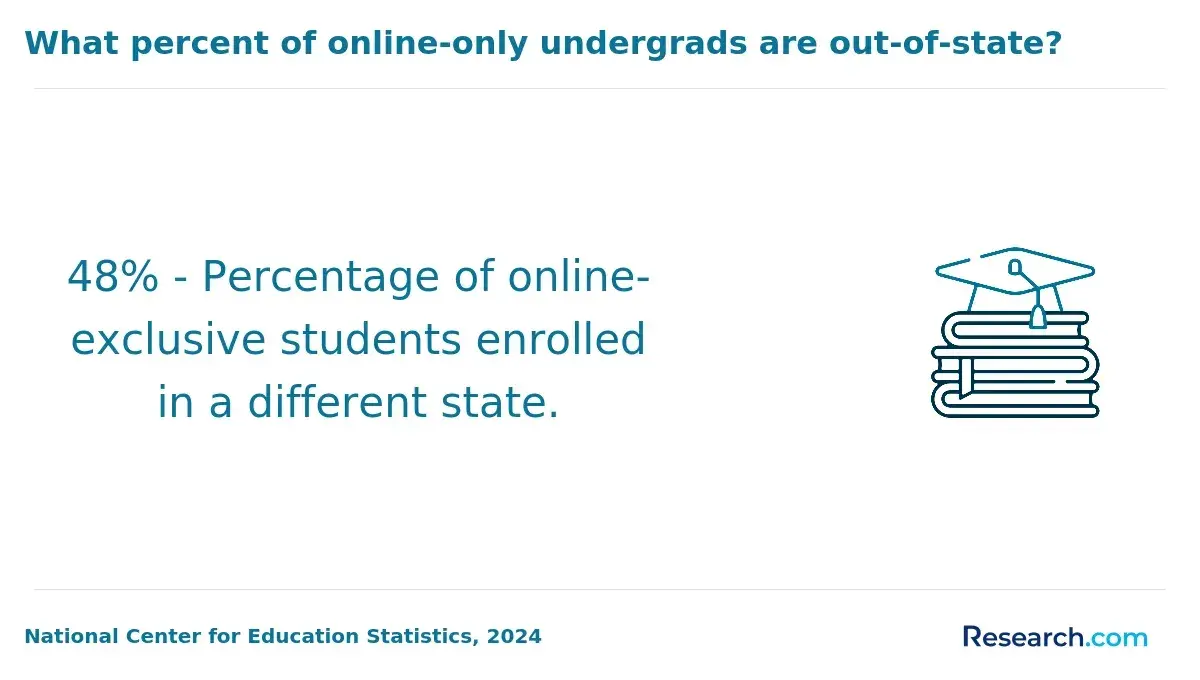
What should students compare when choosing online vs campus professional certificates?
Online professional certificates are often the easiest route around traditional GPA screening because many use open enrollment. However, convenience does not prove that a program has employer value, hands-on training, or eligibility for a certification exam. Campus and hybrid formats can be better when equipment practice, clinical hours, labs, or direct employer connections are central to the occupation.
This comparison shows the factors that matter most beyond delivery preference.
| Factor | Online certificate | Campus or hybrid certificate | Better choice when |
| Schedule | Usually asynchronous or flexible | Often fixed class, lab, or clinical times | Choose online if work or caregiving limits attendance |
| Hands-on learning | May use simulations, projects, or home equipment | Can provide labs, shops, and supervised practice | Choose campus or hybrid for trades, clinical skills, and equipment-heavy work |
| Networking | May offer virtual career support | May provide local instructors, employers, and placements | Choose the format with documented local career support |
| Licensure preparation | Requirements vary by state and program | May more easily include required practical hours | Verify approval before enrolling, especially across state lines |
| Cost beyond tuition | May require technology, proctoring, or self-supplied materials | May add commuting, parking, uniforms, and lab fees | Compare the complete written cost estimate |
Online learning works best for self-directed students pursuing digital, administrative, business, or theory-based skills. Students who need structure should confirm attendance expectations, instructor response times, tutoring, disability services, and the amount of live interaction. If you are exploring broader online degree programs, compare whether a certificate can later apply to that degree rather than assuming it will transfer.
A common mistake is choosing an online healthcare or trade program before checking field-placement rules. Ask in writing whether the school arranges placements, whether you must find your own site, and whether the program is approved for students who live in your state.
Which accredited schools and providers offer reputable professional certificates for low-GPA students?
Reputable providers are not defined solely by brand name or by whether they advertise low-GPA admission. For credit-bearing certificates, begin with a public community college, technical college, or institution accredited by an agency recognized by the U.S. Department of Education or the Council for Higher Education Accreditation. For noncredit professional certificates, evaluate the provider's industry relevance, instructor qualifications, assessment methods, and employer acceptance.
Different fields require different forms of quality assurance. The comparison below helps match the provider check to the credential you are considering.
| Provider or program | What to verify | Why it matters |
| Community college or technical college | Institutional accreditation, program admission rules, credit status, and transfer policy | Supports academic quality review and clearer options for future study |
| Allied-health certificate | Programmatic accreditation or state approval when applicable, clinical eligibility, and exam eligibility | Employers and certifying bodies may require specific preparation |
| Trade school | State authorization, apprenticeship alignment, safety training, equipment access, and completion requirements | Hands-on quality and local licensing relevance can outweigh advertising claims |
| University or platform professional certificate | Named issuing institution, curriculum, assessment, instructor support, and job relevance | Many are noncredit and should be judged by skills evidence, not academic transfer assumptions |
| Certification-prep provider | Whether the program prepares for, but does not itself award, a third-party certification | Prevents confusion between course completion and professional certification |
Ask an admissions representative for the exact credential title you will receive, whether it carries academic credit, and whether it has a separate programmatic approval. Get answers by email when licensure, clinical placement, transfer credit, or examination eligibility is important.
Institutional accreditation is especially relevant if you may later continue your education. A short certificate can be a useful first step, but it is not equivalent to a doctorate; students planning far beyond entry-level training should compare pathways such as cheapest doctoral programs only after building the required undergraduate and graduate foundation.
Red flags include pressure to enroll immediately, vague claims about accreditation, no written refund policy, guaranteed-job language, unexplained fees, and refusal to identify the licensing board or certification exam connected to the program.
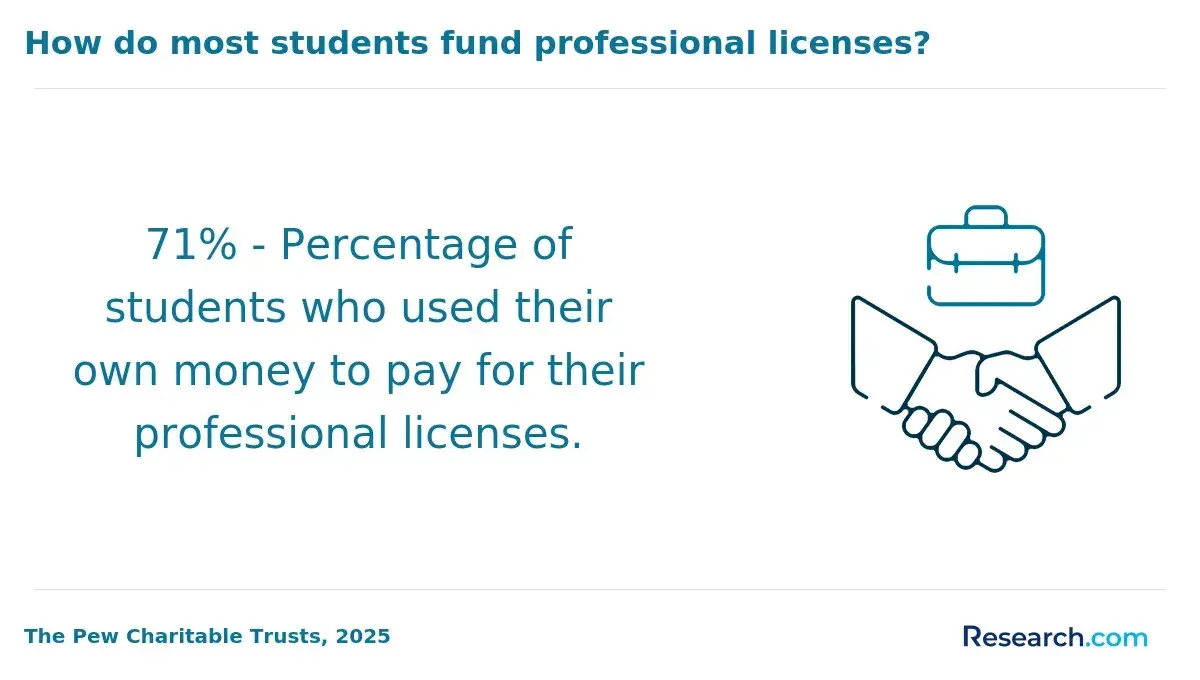
What are typical program length, tuition costs, and financial aid options for certificates?
Certificate length and cost vary more by occupation and delivery model than by GPA policy. A self-paced online professional certificate may take weeks or months, while credit-bearing technical and healthcare certificates commonly run one or more academic terms. Programs requiring labs, clinical placements, tools, uniforms, exams, or background checks can cost materially more than their listed tuition.
Use this cost framework to compare a short credential with a longer academic path. Amounts should always be confirmed directly with the provider because local tuition, residency, required materials, and aid eligibility differ.
| Cost or funding factor | What to ask | Decision impact |
| Tuition and mandatory fees | Is the quoted price per course, term, clock hour, or entire program? | Allows an apples-to-apples total estimate |
| Tools, software, uniforms, and books | Which items must be purchased before class or clinical work begins? | Prevents underestimating out-of-pocket costs |
| Exam, licensing, and background fees | Which fees are required after completion, and are retakes included? | Shows whether the certificate leads efficiently to the intended credential |
| Federal student aid | Is the certificate eligible, credit-bearing, and offered by a participating institution? | Not all short or noncredit programs qualify |
| Workforce grants and employer support | Does the school accept state workforce funding, veterans' benefits, union support, or employer tuition assistance? | May reduce borrowing, but availability varies |
For perspective, the 2024-25 published in-district tuition-and-fee average at public two-year colleges was $4,050, according to College Board. That is a benchmark, not a certificate price: a brief noncredit course may cost less, while a specialized program with clinical or lab components may cost more.
Start with the FAFSA if the school says the program is eligible, then ask about state workforce agencies, college payment plans, scholarships, employer reimbursement, and veterans' education benefits where applicable. Learners comparing faster, career-focused options can also review 12 month certificate programs that pay well, while still checking whether each listed path requires a license, experience, or additional education.
Avoid borrowing for a program until you know its total required cost, likely completion schedule, and local hiring relevance. A low sticker price is not a good value if it lacks the practical training or approval needed for your target role.
What coursework and skills do top professional certificate programs usually include?
Top professional certificate programs focus on demonstrable skills rather than only lecture completion. The best curriculum depends on the field, but it should make clear what students will practice, how performance is assessed, and what evidence of learning they can show to an employer.
Look for coursework that connects foundational knowledge to job tasks. The following elements are especially useful because they help students translate training into a resume, portfolio, interview example, or examination preparation.
- Technical foundations, such as industry terminology, equipment use, software workflows, codes, regulations, or documentation standards.
- Applied assignments, including labs, simulated cases, shop projects, client briefs, coding exercises, or supervised skill demonstrations.
- Safety, ethics, privacy, and compliance content when the field handles people, property, health information, machinery, or regulated services.
- Professional communication, including customer interaction, report writing, teamwork, scheduling, and escalation procedures.
- Career evidence, such as a portfolio, capstone, competency checklist, mock interview, externship, or exam-preparation plan.
For technology and design certificates, current tools and project work matter because employers can evaluate tangible output. For healthcare and trades, supervised competency assessment matters because online quizzes alone cannot prove safe performance. Ask whether instructors are active practitioners, how often curriculum is updated, and what happens if you need tutoring or extra practice.
AI is changing entry-level work in administrative, design, and technology roles, but it does not eliminate the value of job-specific judgment. Prefer programs that teach responsible use of current tools alongside verification, privacy, communication, and problem-solving - not programs that market AI as a shortcut to employment.
Which careers and entry-level roles are accessible with professional certificates instead of degrees?
Professional certificates can support entry into roles where employers prioritize practical skills, required training, a portfolio, or an external certification. They are less likely to replace a degree in occupations that legally require a degree, state license, extensive clinical education, or advanced theoretical preparation.
This table separates realistic entry points from roles that normally need more than a certificate. Local employer requirements can be stricter than the minimum preparation described here.
| Certificate-related path | Possible entry-level roles | Important limitation |
| IT support or cybersecurity foundations | Help desk technician, desktop support trainee, technical support representative | Employers may prefer hands-on labs, a portfolio, or a separate vendor certification |
| Medical assisting or phlebotomy | Medical assistant, phlebotomist, clinical support worker | State rules, employer preferences, and certification eligibility vary |
| HVAC, electrical, or welding training | Helper, installer trainee, shop worker, apprentice candidate | Independent work and advancement may require apprenticeship hours or licensure |
| Bookkeeping or payroll certificate | Accounts payable clerk, billing specialist, payroll assistant | Complex accounting roles often require additional education or experience |
| Paralegal or legal-assistant certificate | Legal assistant, litigation support assistant, file clerk | It does not permit legal advice or representation |
| Design or digital marketing certificate | Production assistant, junior content coordinator, marketing assistant | Portfolio quality and demonstrated results can outweigh the certificate itself |
Choose a certificate when you can name the job title, read local postings, and identify the exact capabilities employers request. Choose an associate or bachelor's degree when job listings consistently require one, when you want broader mobility, or when the occupation is licensed at a degree level. Students targeting flexible digital work should also compare relevant degrees for remote jobs; a short certificate may help build skills, but it does not guarantee remote employment.
A practical first move is to save 15 to 20 local job postings, identify repeated requirements, and compare them against each program's curriculum. This reduces the risk of paying for a credential that does not match actual hiring language.
What salary ranges and earning growth can certificate holders realistically expect?
Certificate holders should evaluate earnings by occupation, location, schedule, experience, licensing status, and employer - not by a school's headline salary claim. U.S. Bureau of Labor Statistics occupational data is useful context, but the median pay for an occupation is not proof that a new certificate completer will earn that amount or qualify for the role immediately.
The following May 2024 national median annual wage figures illustrate why field selection matters. They describe the occupation, including workers with varied education and experience levels.
| Occupation | May 2024 U.S. median annual wage | Certificate-path context |
| Medical assistants | $44,200 | A certificate is common preparation, but employer preferences and state rules vary |
| Heating, air conditioning, and refrigeration mechanics and installers | $59,810 | Training may lead to trainee work; experience, EPA requirements, and licensing can affect progression |
| Electricians | $62,350 | Most advance through apprenticeship and supervised work rather than certificate completion alone |
| Paralegals and legal assistants | $61,010 | Certificate value depends on prior education, legal software skills, and local employer expectations |
| Graphic designers | $61,300 | Portfolio, specialization, client work, and location strongly influence opportunities |
| Web developers and digital designers | $95,380 | Some enter through skills-based paths, but portfolios and technical capability are essential |
Earning growth is often tied to supervised experience, stronger technical specialization, a license, a recognized certification, leadership responsibilities, or moving from support work into a higher-level role. BLS projects employment for medical assistants to grow 15% from 2023 to 2033, which signals relatively strong national demand but does not predict openings, wages, or hiring conditions in every city.
For a realistic return-on-investment estimate, compare entry-level local wage listings with the program's full cost, time away from work, exam expenses, and the likelihood that you will need additional education. Be skeptical of salary claims that do not identify the occupation, geographic area, sample size, and time period.
How can students verify licensing, certification exams, and industry recognition for these programs?
Verify licensing, certification exams, and industry recognition before you pay a deposit. This is particularly important for healthcare, skilled trades, security, cosmetology, and other regulated fields, where an inexpensive program can be unusable if it does not meet state or exam requirements.
Use this sequence to confirm that a program supports your intended career path.
- Identify the exact job title and the state where you plan to work.
- Find the relevant state licensing board, employer agency, or certification organization and read its current eligibility rules directly.
- Confirm whether the program is approved, accredited, or accepted for the required exam, clinical hours, classroom hours, or supervised practice.
- Ask the school for the credential title, program approval details, completion requirements, and any examination pass-rate information it can document.
- Separate the educational certificate from the external certification, license, registration, or apprenticeship requirement you may need afterward.
- Check total post-completion obligations, including exam fees, fingerprints, background checks, continuing education, renewal fees, and insurance where relevant.
Industry recognition is different from formal accreditation. A technology certificate may be respected because employers recognize the issuing company or skill area, while a healthcare program may need formal program approval for graduates to sit for an exam. Neither type of validation should be assumed from the word "professional."
Do not rely on a recruiter's verbal assurance that a program "meets requirements." Save the written policy, verify it with the regulator or certifying body, and ask whether rules differ for online students or students completing practical hours outside the school's home state.
Other Things You Should Know About
Often, yes. Many noncredit workforce and online professional certificates do not use traditional GPA admission. Credit-bearing college certificates may admit students broadly but require placement, prerequisite courses, or minimum grades before entry into selective cohorts such as nursing-related or clinical programs.
They can be worthwhile when the program teaches skills requested in local job postings, prepares you for a required exam, or creates a portfolio or work sample. They are less valuable when the target role requires a degree, license, apprenticeship, or experience that the certificate does not provide.
A credit-bearing certificate course may create a new college record and can demonstrate recent success, but whether it changes an existing GPA depends on the institution's transcript and grade-replacement policies. Noncredit certificates generally do not calculate into a college GPA.
It depends on the role. Employers may value a short certificate for focused, job-ready skills, especially in trades, IT support, and administrative work. An associate degree may be stronger when roles require broader education, advancement potential, transfer options, or formal eligibility for licensure.
References
- 7 in-demand certifications in 2025 | edX https://www.edx.org/resources/in-demand-professional-certifications
- How important are college GPA / grades in getting a job? - MBA Crystal Ball https://www.mbacrystalball.com/blog/2019/08/28/how-important-college-gpa-grades-for-job/
- The Top 5 Certificate Programs for Jobs With Growth Potential | CourseStorm https://www.coursestorm.com/blog/top-certificate-programs-for-jobs
- 10 Certifications That Make You a Strong Candidate - United Staffing Solutions https://www.unitedstaffingsolutions.net/2025/12/11/10-certifications-that-make-you-a-strong-candidate/
- Five certifications that actually impress recruiters - Engage TU https://www.engagetu.com/2019/04/09/certificates-to-impress-recruiters/
- How to Get Professional Certificates in High School - Ivy Scholars https://www.ivyscholars.com/professional-certificates-high-school/
- CourseCareers https://coursecareers.com/blog-posts/best-certifications-start-a-career