2027 Best Online Non-Degree Programs With Subscription Tuition

Co-Founder and Chief Data Scientist
A subscription tuition program can be a smart way to control costs if you can study consistently, but it can become expensive when progress slows. These online, non-degree options include career certificates, professional training, and competency-based pathways rather than traditional degrees.
This guide helps career changers, working adults, and upskillers compare program formats, verify quality, estimate total cost, and match training to realistic job goals. U.S. Bureau of Labor Statistics projections show overall employment is expected to grow 6% from 2024 to 2034, making targeted, job-relevant training worth evaluating carefully.
Key Things You Should Know
- Subscription tuition usually charges a recurring monthly or term-based amount for access, so the total cost depends heavily on how quickly you complete required coursework.
- Non-degree online programs can build job skills, but a school-issued certificate is not the same as an industry certification or a state license; some careers require additional exams, clinical hours, or supervised experience.
- Compare the credential's employer value, required tools and fees, pacing rules, and recognition before enrolling; occupational wages vary widely, from a $44,200 median for medical assistants to $62,350 for electricians in May 2024 BLS data.
Top 10 Best Online Non-Degree Programs With Subscription Tuition
Popular Trade School Programs
Online trade training commonly covers HVAC fundamentals, electrical theory, welding concepts, construction estimating, industrial maintenance, and automotive systems. These certificates can suit learners seeking foundational knowledge or advancement in related work. However, hands-on trades usually require labs, employer training, an apprenticeship, or supervised field experience that cannot be completed entirely online. Choose a subscription option only if it clearly explains practical-training requirements, equipment costs, and whether coursework supports preparation for an external exam. An associate degree may be better for learners who want broader technical education or transferable college credit.
Healthcare Programs
Common online healthcare non-degree options include medical billing and coding, pharmacy technician preparation, medical assisting theory, health information support, and patient care training. Programs may award a completion certificate; that does not automatically confer professional certification or eligibility for state-regulated practice. Clinical roles often require in-person externships, background checks, immunizations, and location-specific approval. Subscription learning works best for administrative healthcare skills with clearly defined certification preparation. Before enrolling, confirm whether an employer or certifying body accepts the curriculum and whether practical placement support is included or is the learner's responsibility.
Criminal Justice / Law Programs
Online non-degree options in this area include paralegal studies, legal research, legal transcription, victim advocacy, corrections, and cybersecurity fundamentals for public-safety settings. A certificate can strengthen practical knowledge but does not qualify someone to practice law, become a police officer, or meet every paralegal employer's education preferences. Paralegal programs are most useful when they teach legal writing, research platforms, ethics, and document preparation. Learners should check local employer expectations, especially where firms prefer American Bar Association-approved paralegal education or a degree plus legal-work experience.
Arts & Design Programs
Subscription-based arts and design training may include graphic design, UX fundamentals, digital illustration, web content production, photography, and video editing. These programs are generally portfolio-driven: employers often care more about demonstrated work, software fluency, and client-ready communication than a completion certificate alone. A short program can be worthwhile for a focused software or portfolio gap, while a credit-bearing certificate or associate degree may fit learners seeking deeper critique and structured studio work. Confirm software access, project feedback, portfolio ownership, and whether the curriculum reflects current tools used by employers.
What are online non-degree subscription tuition programs?
Online non-degree subscription tuition programs provide access to a set of courses, assessments, learning resources, or coaching for a recurring fee rather than charging separately for every course or credit. They may be offered by colleges, continuing-education divisions, workforce providers, or online learning platforms. The resulting credential may be a school certificate, a professional certificate, a digital badge, or simply a record of completion.
The central trade-off is pace. A subscription can reduce cost for a self-directed learner who finishes quickly, while fixed per-course pricing can be safer for someone with unpredictable work or caregiving demands. Many certificate programs use different pricing models, so confirm whether "subscription" covers all required assessments, retakes, labs, textbooks, software, and proctoring.
A certificate is an education credential awarded after completing instruction. A certification is usually awarded by an independent professional organization after meeting eligibility standards, often including an exam. A program may prepare you for a certification exam, but completion alone does not mean you are certified.
Which accredited schools offer subscription-based online programs?
Accredited institutions do offer flexible and competency-based education, but truly subscription-priced non-degree options are less common than subscription-priced degree pathways. Availability, credential names, and pricing can change by term. Institutional accreditation applies to the college or university, while individual noncredit offerings may not carry academic credit or be independently accredited.
Use this comparison to separate institutional quality from the value of the specific credential you are buying.
| Provider type | What to verify | Best fit |
| Accredited college or university | Institutional accreditor, credit status, catalog listing, transcript policy | Learners who may later seek college credit or employer-recognized coursework |
| College continuing education unit | Whether the offering is credit-bearing, instructor qualifications, external-exam alignment | Working adults needing focused professional development |
| Industry or training provider | Exam alignment, employer recognition, refund terms, practical support | Learners pursuing a specific tool, role, or industry certification |
Verify a school through its official catalog and accreditor listing, then ask whether the exact program is credit-bearing. Do not assume that a recognizable university name means every short online offering transfers into a degree or qualifies for federal student aid.
How do online non-degree programs compare with campus programs?
Online non-degree study can offer scheduling flexibility and lower commuting costs, while campus programs can provide equipment, instructor access, peer accountability, and required practical experiences. Neither format is automatically better; the right choice depends on the occupation and how much hands-on training it requires.
The comparison below focuses on factors that affect completion and job readiness, not just convenience.
| Factor | Online subscription program | Campus or scheduled program |
| Pacing | Often self-paced or flexible within a billing period | Usually follows a fixed semester or cohort schedule |
| Cost predictability | Total rises if completion takes longer than planned | Charges are often known by course, term, or program |
| Hands-on learning | May require separate local labs, externships, or equipment | May include labs, studios, and supervised practice |
| Transfer potential | Varies greatly by credit status and receiving school policy | Credit-bearing coursework may be easier to document, not guaranteed to transfer |
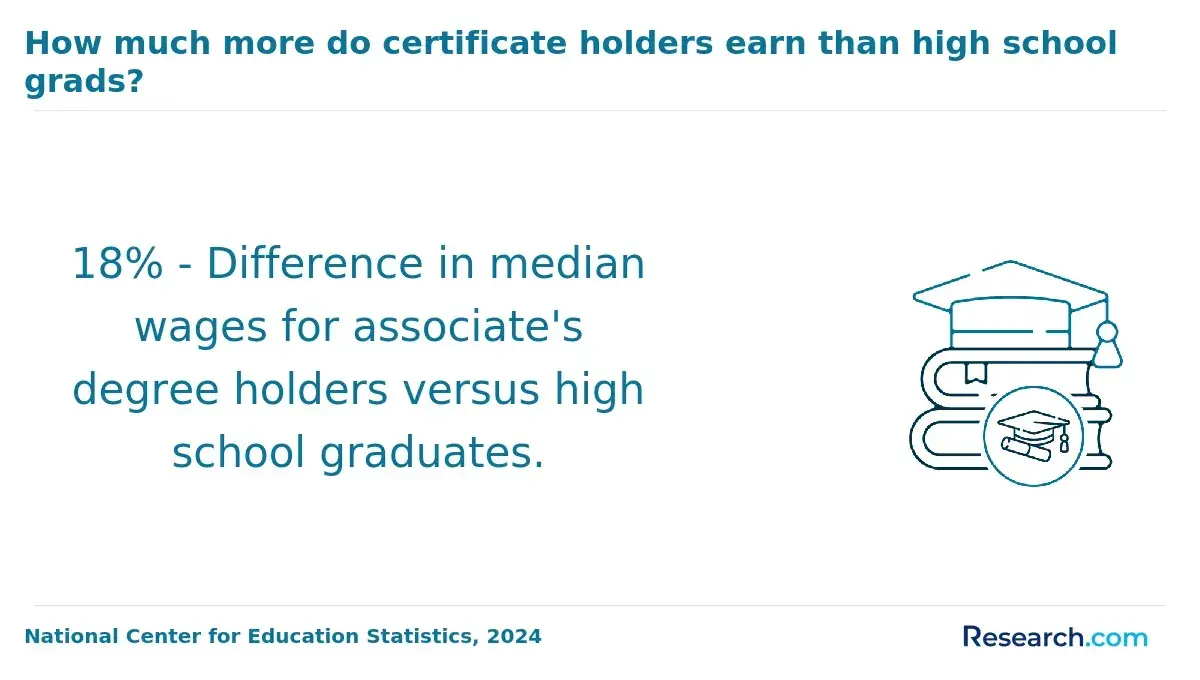
If your long-term goal is a degree, compare the course-level credit policy with associates degrees online before committing. A structured associate program may cost more or take longer, but it can make more sense when you need general education, labs, or a credential with clearer transfer documentation.
What admission requirements do these programs usually have?
Admissions requirements depend on the provider and credential type. Noncredit training may require only an online account and payment, while college-issued certificates may require an application, identity verification, prerequisite coursework, placement testing, or proof of a high school diploma or equivalent. Programs leading toward healthcare placements can add background checks, drug screening, health records, and immunization requirements.
Before paying, obtain written answers to these enrollment questions:
- Is the program credit-bearing, noncredit, or preparation for a separate certification exam?
- Are there required prerequisites, software, equipment, clinical placements, or in-person sessions?
- Does the subscription include assessments, retakes, coaching, and a final credential?
- What happens if work or family obligations prevent completion before the next billing period?
GPA and standardized tests are not universal requirements for non-degree programs. Do not spend time assembling college-style application materials unless the specific provider requests them.
How long do subscription tuition programs take to finish?
Completion time is usually driven by curriculum length, weekly study time, assessment rules, and whether a required practicum has limited placement dates. Some online subscriptions allow learners to move ahead after demonstrating competence; others merely bill monthly while courses remain instructor-paced. "Self-paced" does not always mean instant completion.
Estimate your timeline before you enroll. Divide the provider's stated learning hours by the study time you can reliably protect each week, then add time for exams, revisions, technical problems, and any required in-person training. If the resulting timeline crosses another billing cycle, include that cost in your comparison.
A short certificate is best for a narrow, existing skill gap. Consider a longer credit-bearing certificate, apprenticeship, or degree route when the target occupation requires extensive supervised practice, licensing eligibility, or broad technical preparation.
How much do online subscription programs cost?
Subscription tuition is not automatically low-cost tuition. The meaningful number is the total amount needed to finish, including recurring access charges and expenses outside the subscription. Programs may bill monthly, quarterly, or by a fixed multi-month session; a slower pace can materially change the final price.
Build a complete cost estimate using the items below rather than comparing advertised subscription fees alone.
- Subscription payments expected during your realistic completion window
- Enrollment, technology, proctoring, examination, or credential-issuance fees
- Required textbooks, software licenses, tools, uniforms, and consumable supplies
- Travel, clinical, lab, background-check, or externship expenses when applicable
- Lost access or re-enrollment costs if you pause before finishing
Ask whether federal aid is available for the exact program rather than assuming it is. Eligibility depends on the institution, program, enrollment arrangement, and student circumstances. Employer tuition assistance, workforce grants, and payment plans may help, but review repayment and withdrawal terms first. If career advancement requires a degree, compare the longer-term value of easiest bachelor's degree options without treating "easy" as a substitute for career relevance or academic quality.
What careers can non-degree online programs support?
Non-degree online programs can support entry-level work, career transitions, and advancement when the curriculum maps to skills employers actually use. They are particularly useful for administrative, technical-support, design-software, bookkeeping, customer-success, and project-support roles. They are less likely to be sufficient on their own for licensed clinical work, engineering, law practice, or skilled trades requiring an apprenticeship.
This table shows how to connect a program choice to a realistic employment goal.
| Program focus | Potential supporting roles | Important limitation |
| Medical billing and coding | Billing specialist, coding support, patient-account representative | Employers may prefer an external coding certification and relevant experience |
| IT support or cybersecurity fundamentals | Help desk technician, technical support specialist, junior security support | Hands-on troubleshooting and industry certifications can be important |
| Paralegal studies | Legal assistant, document specialist, litigation support | Does not authorize legal practice; employer expectations vary |
| Design and digital media | Production artist, content assistant, junior designer | A strong portfolio usually matters as much as the credential |
Use job postings in your local market to identify the requested software, certifications, portfolio standards, and experience level. For broader career planning, review online degrees that pay well as an alternative when a degree is a common hiring baseline in your intended field.
What salaries and job outlooks apply to these programs?
Occupational wage data describes workers in an occupation, not the earnings of people who completed a particular subscription program. Education, experience, location, industry, hours worked, licensing, and employer requirements all influence pay. The following U.S. Bureau of Labor Statistics May 2024 median annual wage figures provide context for roles related to common program areas.
| Occupation | May 2024 median annual wage | Credential context |
| Medical assistants | $44,200 | Requirements vary by employer and state; clinical preparation may be necessary |
| Paralegals and legal assistants | $61,010 | Employers may seek a degree, certificate, or relevant legal experience |
| Graphic designers | $61,300 | Portfolio quality and software skills are central to hiring |
| Electricians | $62,350 | Typically requires apprenticeship training and state-specific licensing steps |
Use wage figures as a market benchmark, not a return-on-investment promise. Compare them with local job-posting requirements and the total cost of the program. Automation and AI tools are also changing task expectations: training in design, legal support, and administrative work should include workflow judgment, verification, communication, and current software - not only routine production tasks.
How do you choose a reputable non-degree program?
A reputable program makes its credential, price structure, learning outcomes, and limits easy to understand before payment. The best subscription option is not necessarily the fastest one; it is the one that delivers the specific skills, practice, and recognition your target role requires within a timeline you can sustain.
Use these steps to compare programs and avoid common enrollment mistakes:
- Start with several current job postings and write down the credentials, skills, licenses, and software they request.
- Confirm whether the program awards academic credit, a noncredit certificate, or preparation for an external certification exam.
- Verify the institution's accreditation when relevant and check whether your target employer, certifying body, or licensing board recognizes the training.
- Calculate the cost at your realistic pace, including every fee and required supply, rather than relying on the first subscription payment.
- Read cancellation, pause, refund, assessment-retake, and credential-completion policies before enrolling.
- Ask how labs, clinicals, portfolios, internships, apprenticeships, or career support work in practice.
Red flags include vague claims about guaranteed jobs, salary promises, unclear billing renewal dates, pressure to enroll immediately, and statements that imply a certificate automatically produces a license or certification. Get important claims in writing and compare at least two alternatives before making a financial commitment.
Other Things You Should Know About
They can be cheaper when you complete quickly and the subscription includes most required services. They can cost more than expected if you need extra billing periods, retakes, supplies, labs, or external examinations. Compare total completion cost, not the monthly price.
Sometimes, but not automatically. Eligibility depends on the school, the specific program, enrollment arrangement, and your individual aid eligibility. Ask the institution's financial aid office whether the exact program qualifies before enrolling.
Only if the relevant state board or regulator says it meets its education requirements. Many licenses also require supervised hours, examinations, background checks, or in-person training. Check directly with the licensing authority in the state where you intend to work.
Most providers require another payment period to maintain access, but policies differ. Before enrolling, confirm whether you can pause, retain completed work, access transcripts, receive extensions, or pay a re-enrollment fee.
References
- Online Degree vs. Traditional: Choosing the Right Path https://beal.edu/online-degree-vs-traditional/
- What Non-Completers Want From Higher Ed https://www.wgulabs.org/posts/bridging-the-gap-what-non-completers-need-from-higher-ed
- 2025 List of Accredited Online Degree Programs https://www.onlineu.com/degrees
- Flexible online colleges https://www.gatewayunj.org/student-stories/flexible-college-programs-making-it-possible-to-earn-your-degree-on-your-schedule
- 15 Best Online Learning Platforms for Professionals, and Lifelong Learners In 2025 https://buddyboss.com/blog/best-online-learning-platforms-for-professionals-and-learners/
- Subscription-Based Learning Platforms: The Smarter Way to Learn in 2026 https://www.nplus.global/blogs/subscription-based-learning-platforms/
- Online College Tuition Comparison: Online vs. In-Person https://www.uagrantham.edu/blog/online-college-tuition-comparison-online-vs-in-person/
- Non-Degree Education https://www.brighthorizons.com/article/education/non-degree-education-tips
- Cost of Online Education vs. Traditional Education [2025]: Comparison https://educationdata.org/cost-of-online-education-vs-traditional-education
- Skill Acquisition vs. Higher Education? Why This Is A False Choice https://www.suitable.co/knowledge-center/blog/skill-acquisition-vs-higher-education-why-this-is-a-false-choice