2027 Best Online Non-Degree Programs for Transfer Students

Co-Founder and Chief Data Scientist
Transfer students often need a fast credential without losing the value of courses they have already completed. Online non-degree programs can provide targeted training, but credit acceptance, licensure rules, and job value vary sharply by provider.
The U.S. Bureau of Labor Statistics projects about 19 million occupational openings per year, on average, from 2024 to 2034. This guide helps former college students, career changers, and working adults compare credit-bearing certificates, noncredit training, and stackable options before enrolling.
Key Things You Should Know
- The best online non-degree option is usually a credit-bearing certificate with a written transfer-credit evaluation, especially if you may later pursue an associate or bachelor's degree.
- Check whether prior coursework applies to the specific credential, not merely whether a school "accepts transfer credits"; noncredit certificates generally do not accept or award academic transfer credit.
- Career value depends on the field: healthcare and skilled-trade pathways may require clinical training, an exam, or state licensure, while fields such as design and IT often emphasize portfolios or employer-recognized skills.
Top 10 Best Online Non-Degree Programs for Transfer Students
Popular Trade School Programs
Online trade programs work best for theory-heavy coursework paired with local labs, apprenticeships, or employer training. Common options include HVAC certificates, electrical technology certificates, welding fundamentals, construction management certificates, and industrial maintenance programs. Transfer students should prioritize credit-bearing programs that can apply prior math, safety, blueprint-reading, or general education courses. Fully online training alone rarely meets hands-on requirements for welding, electrical work, or HVAC licensing. Ask whether the program includes lab access, prepares students for an industry exam, and meets requirements in the state where you intend to work.
Healthcare Programs
Healthcare non-degree options include medical billing and coding certificates, pharmacy technician training, medical assisting certificates, health information technology certificates, and practical nursing pathways. Some can be substantially online, but patient-facing programs typically require supervised clinical experiences at approved sites. Prior anatomy, medical terminology, and college English courses may transfer into credit-bearing certificates. A school certificate is not the same as professional certification; for example, employers may prefer or require a separate coding or technician certification. Confirm clinical placement support, state authorization, examination eligibility, and background-check requirements before paying a deposit.
Criminal Justice / Law Programs
Transfer-friendly online options include criminal justice certificates, paralegal studies certificates, legal research certificates, homeland security certificates, and corrections training. These programs can suit students who already have general education credits and want focused coursework in law, procedure, ethics, or report writing. A paralegal certificate may improve preparation for support roles, but it does not authorize legal practice or make someone an attorney. Transferability matters most in college-based, credit-bearing programs. Students should verify whether a paralegal curriculum meets employer expectations and whether any local court, agency, or employer has additional hiring standards.
Arts & Design Programs
Online arts and design options include graphic design certificates, UX/UI design certificates, digital photography certificates, web design certificates, and animation programs. Transfer students may receive credit for studio art, design software, writing, or general education courses in academic certificate programs. Portfolio quality commonly matters more to employers than the certificate title alone, so review required projects and instructor feedback. Noncredit bootcamps can be faster but may not transfer into a degree. Choose a program that provides current software training, accessible critique, ownership of completed work, and a portfolio aligned with the jobs you want.
What Are Online Non-Degree Programs for Transfer Students?
Online non-degree programs are structured learning options that award a certificate, career-training completion credential, microcredential, or digital badge rather than an associate, bachelor's, or graduate degree. For transfer students, the most relevant category is usually a credit-bearing academic certificate offered by a college. It may apply accepted prior college coursework toward required classes and may later stack into a degree.
Noncredit workforce programs can also be useful when speed and job-specific skills matter more than academic transferability. They typically have simpler enrollment processes and may prepare learners for an external certification exam, but they generally do not convert old college credits into shorter completion time. The right choice depends on whether your next goal is employment, licensure preparation, professional certification, or eventual degree completion.
Which Online Programs Accept Transfer Credits?
Many community colleges, public universities, and accredited private institutions accept transfer credits into online undergraduate certificates, particularly in business, IT, healthcare administration, criminal justice, and general education-based programs. Acceptance is never automatic: the registrar evaluates course equivalency, grades, age of coursework, and the program's residency requirement.
The comparison below shows why the credential format matters before you request transcripts.
| Program type | Can prior college credit apply? | Best fit | Key limitation |
| Credit-bearing undergraduate certificate | Often, after official evaluation | Students planning to stack credits into a degree | May require a minimum grade and credits completed at the institution |
| College continuing-education certificate | Sometimes, but policies vary | Career-focused learners seeking shorter training | May be noncredit and not degree-applicable |
| Third-party professional certificate | Usually no | Skill building or preparation for an employer-recognized credential | Not typically recorded as college credit |
| Industry certification preparation course | Usually no | Learners pursuing an external examination | Course completion does not itself confer certification |
Start by comparing policies at best online universities, then request a preliminary transfer review in writing. Ask how many credits can count toward the exact certificate, not simply how many credits the institution may accept overall.
How Do Accreditation and Licensing Affect Program Choice?
Accreditation affects whether coursework is likely to be recognized by another college, whether students may qualify for federal aid in eligible programs, and whether a credential meets professional expectations. For academic certificates, institutional accreditation is the central check. A program may also hold specialized accreditation when a profession expects it, particularly in healthcare.
Licensure is separate from accreditation. Nursing, practical nursing, medical assisting in some settings, electrical work, and other regulated occupations may have state-specific education, clinical, examination, supervised-experience, or background-check rules. An online program can be accredited yet still fail to meet your state's licensing requirements. Contact the relevant state licensing board and ask the school for a written statement about eligibility in your state.
Warning signs include vague accreditation language, claims that a certificate "qualifies" every student for a license, no disclosure of clinical or lab arrangements, and pressure to enroll before a transfer evaluation. These concerns warrant a pause, not an assumption that the program is invalid.
What Is the Difference Between Certificates and Degrees?
A certificate is an educational award for completing a defined curriculum. A degree requires a broader program of study and typically includes general education, major coursework, and more total credits. A professional certification is different: it is awarded by a certifying body after a candidate meets its standards, which may include an examination, education, and work experience.
This distinction is crucial for transfer students. A short, credit-bearing certificate can be an efficient bridge when it shares courses with an associate or bachelor's program. A noncredit certificate may be better for immediate skill development but usually offers less transfer value. If you are still deciding on a long-term academic direction, review the best degree to get options alongside the certificate's stackability map.
| Option | Primary purpose | Transfer potential | When it makes sense |
| Academic certificate | Focused college-level study | Potentially high when credits are part of a degree pathway | You want a shorter credential without closing the door on a degree |
| Noncredit certificate | Practical workforce training | Usually limited | You need targeted skills quickly and do not need college credit |
| Professional certification | Verification against external standards | Not academic credit by itself | An employer or occupation values a specific certification |
| Associate degree | Broader academic and career preparation | Often transferable under formal agreements | Your target role requires a degree or a longer foundation |
How Do Online and Campus Programs Compare?
Online programs can reduce commuting and allow students to complete lectures around work or family obligations. They are strongest for subjects with digital assignments, discussion-based learning, software practice, billing and coding, business, legal studies, and many general education requirements. Campus or hybrid delivery is usually better when competency must be observed in person, such as clinical care, technical labs, welding, or electrical practice.
The choice is not simply online versus campus; it is whether the program provides the required learning environment and support. Online learners should confirm live-session times, exam-proctoring rules, local placement responsibilities, accessibility services, tutoring, and technical requirements. Students seeking speed should compare accelerated programs carefully: compressed terms reduce calendar time but increase weekly workload and may leave less room to repeat a difficult course.
| Factor | Fully online | Hybrid or campus-based |
| Scheduling | Usually more flexible for lectures and assignments | Requires travel or attendance at set times |
| Hands-on learning | May require an external local site | Direct access to labs, equipment, and faculty observation |
| Transfer student support | Convenient transcript review and advising when well staffed | May offer more face-to-face advising and registration help |
| Best use | Theory, software, administration, and portfolio work | Clinical, laboratory, and skilled-trade competencies |
What Are the Admission Requirements and Prerequisites?
Admission requirements depend on the provider and credential type. College-based certificates commonly require an application, official transcripts for transfer review, identity or residency information, and placement or prerequisite verification when relevant. Some programs require a minimum grade in prior coursework, particularly anatomy, math, English, or computer courses. Noncredit training may require only registration, while advanced professional certificates may expect prior education or work experience.
Before applying, collect documents and verify requirements in this order:
- Identify whether the program is credit-bearing, noncredit, or preparation for an external certification exam.
- Request official transcripts from every previously attended college and ask for an evaluation for the named program.
- Compare prerequisites with your transcript, including course expiration rules for science or technology classes.
- Confirm any clinical, background-check, immunization, equipment, portfolio, or placement requirements.
- Get the total cost and transfer decision in writing before enrolling in replacement courses.
Working adults who need a degree rather than a standalone credential can also explore accelerated bachelors degree programs for adults. That route is more appropriate when transferred credits can materially shorten a degree required by the target occupation.
How Long Do These Programs Take, and What Do They Cost?
Completion time ranges from a few weeks for a noncredit microcredential to roughly one academic year for many college certificates. Your timeline depends more on accepted credits, prerequisite sequencing, course availability, and required clinical or lab hours than on a program's advertised fastest path. Part-time study can be the safer choice for students balancing work, but it may delay courses offered only once per term.
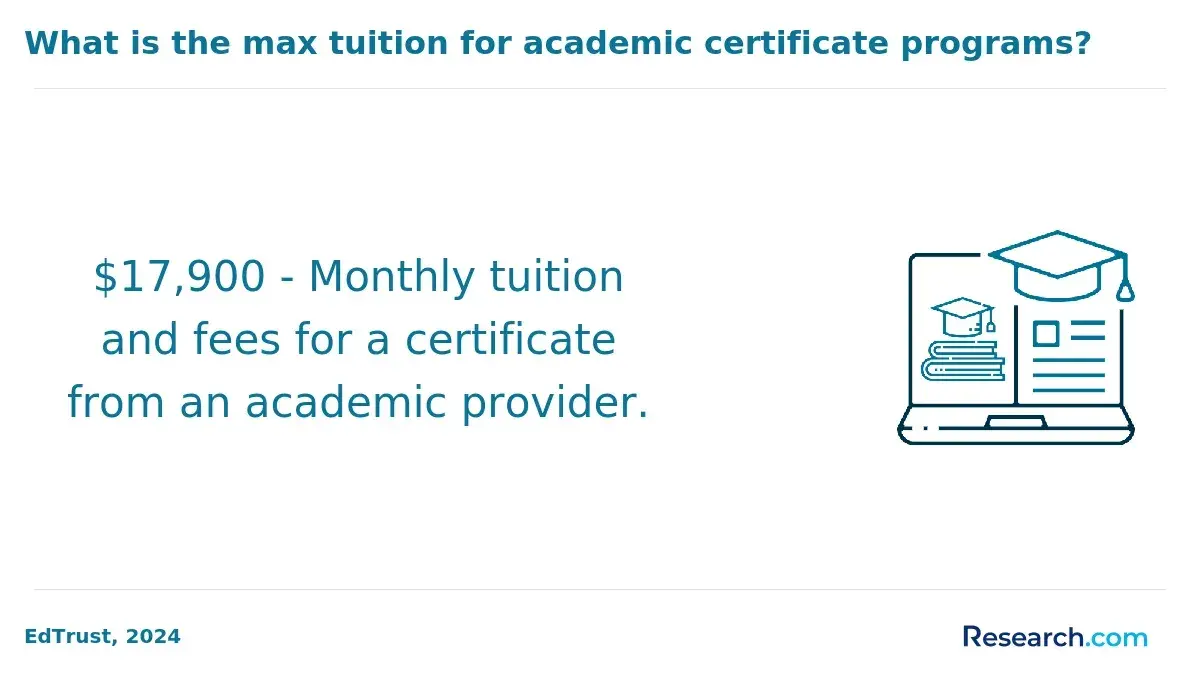
Tuition is only one cost. College Board reported average published tuition and fees of $4,150 for in-district students at public two-year colleges in the 2024-25 academic year. That broad benchmark does not represent the price of a particular certificate, but it helps explain why community-college credit pathways can be cost-conscious for local transfer students.
| Cost category | What to verify | Why it matters |
| Tuition and required fees | Per-credit or flat program price; in-district eligibility | Transfer credit may reduce billable credits |
| Books, software, and equipment | Required subscriptions, laptop specifications, tools, uniforms, or kits | These expenses can be substantial in technical fields |
| Clinical, lab, and examination expenses | Placement, insurance, background checks, testing, and travel charges | Often excluded from advertised tuition |
| Lost-work-time cost | Required daytime labs, clinical shifts, or synchronous sessions | Schedule conflicts can affect the real affordability of a program |
For eligible credit-bearing programs, ask the financial aid office about federal aid eligibility, institutional aid, workforce grants, payment plans, and employer tuition assistance. Do not assume aid applies to noncredit programs or to every short certificate.
What Careers Can These Programs Lead To?
Non-degree programs can support entry-level work, advancement in a related field, or preparation for a separate certification or license. They are most valuable when the curriculum matches a specific job's requirements and your existing education fills any broader requirements. A certificate alone may not satisfy hiring standards for regulated roles, supervisory jobs, or occupations that normally require a degree.
This comparison connects common program areas with realistic next-step roles rather than promising a particular outcome.
| Program area | Possible entry or adjacent roles | What may be needed beyond the program |
| Medical billing and coding | Billing specialist, coding support staff, medical records clerk | Employer-preferred certification, experience, or a coding exam |
| HVAC or electrical technology | Helper, apprentice, maintenance trainee | Hands-on training, apprenticeship, and state or local licensing requirements |
| Paralegal studies | Legal assistant, paralegal support, litigation support staff | Employer-specific education expectations and legal software proficiency |
| Graphic or web design | Junior designer, production artist, content design support | A strong portfolio and current software skills |
| IT support | Help desk technician, user support specialist, desktop support trainee | Demonstrated troubleshooting skills and possibly an industry certification |
A good return on investment starts with job postings in your area. Compare the stated education level, required certification, schedule, and pay range with the exact credential you are considering before assuming the program meets employer expectations.
What Salaries and Job Outlook Should Students Expect?
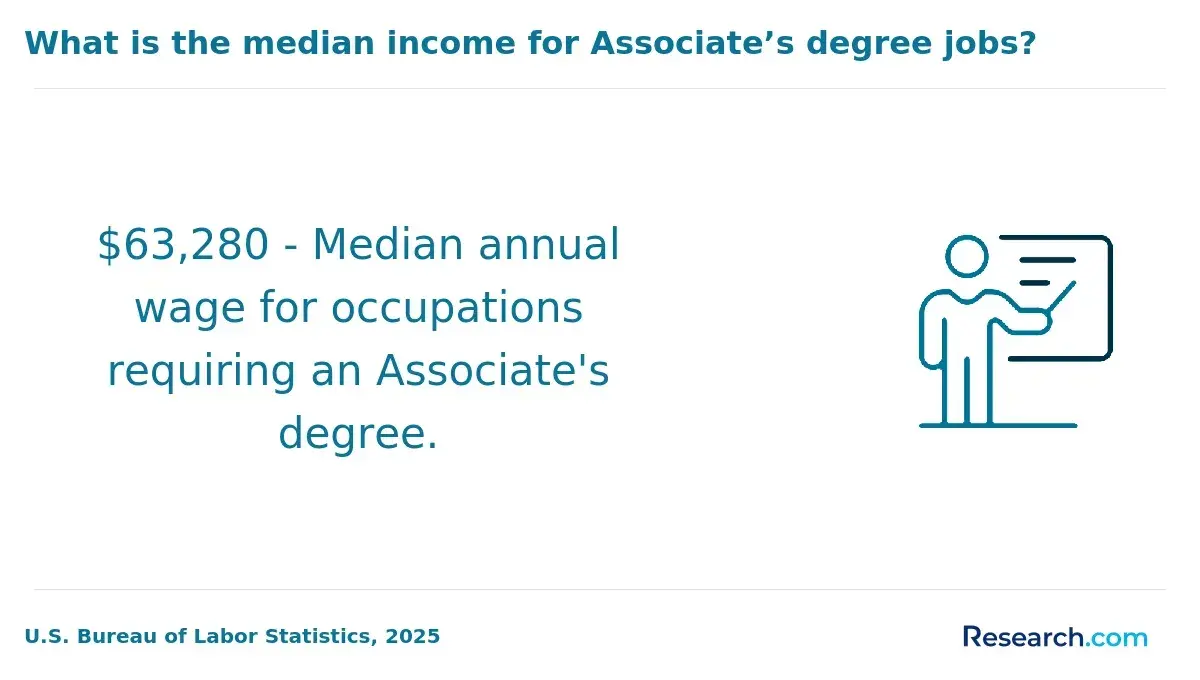
Salary figures describe occupations, not what every certificate holder earns. Pay varies by location, experience, employer, schedule, licensure, and whether a role requires a degree or additional credential. The latest U.S. Bureau of Labor Statistics occupational data provide a useful market check for several fields commonly associated with non-degree training.
| Occupation | 2024 median annual wage | Projected employment change, 2024-2034 | How to use the figure |
| Medical records specialists | $50,250 | 7% | Relevant to health information and coding pathways; employer certification preferences vary. |
| Heating, air conditioning, and refrigeration mechanics and installers | $59,810 | 8% | Relevant to HVAC training; hands-on experience and licensing may be required. |
| Paralegals and legal assistants | $61,010 | 0% | Relevant to paralegal studies; some employers prefer an associate or bachelor's degree. |
| Graphic designers | $61,300 | 2% | Relevant to design training; portfolios and experience are important hiring signals. |
Use occupational data as a screening tool, not a forecast of your personal earnings. A stronger opportunity usually combines a recognized credential, local employer demand, a realistic path to required experience, and transferable skills that remain useful as AI changes routine administrative and design tasks.
Other Things You Should Know About
Often, yes, if the certificate is credit-bearing and the institution finds your previous courses equivalent. Ask for a program-specific evaluation because accepted credits may not all apply to certificate requirements.
They can be worthwhile when they shorten training for a defined job goal or stack into a degree. They are less compelling when a noncredit credential does not match local employer requirements or cannot support your longer-term plan.
Not necessarily. Some programs prepare students for an external exam, but eligibility is set by the certifying organization or state board. Verify requirements directly before enrolling.
Submit official transcripts early, save course descriptions and syllabi, obtain the transfer decision in writing, and confirm the institution's residency requirement. Choose a program with a documented stackable pathway if you may continue toward a degree.
References
- Transferology https://www.transferology.com/
- Academic Advising https://ctstate.edu/academics/academic-advising
- How Career Pathways Software Helps Students Navigate Their Academic Journey https://moderncampus.com/blog/how-career-pathways-software-helps-students-navigate-their-academic-journey.html
- Community college transfer processes discourage degree completion https://journalistsresource.org/education/community-college-transfer-bachelors-degree-barriers-research/
- Top Online Schools That Accept Transfer Credits https://www.edvisorly.com/student-guides/online-schools-that-accept-transfer-credits
- Best Online Colleges for Working Adults [2026] https://www.straighterline.com/blog/degree-completion-best-online-colleges-for-working-adults