2027 Best Certifications With 4-Week Courses

Co-Founder and Chief Data Scientist
A four-week course can add a practical skill quickly, but it cannot replace the training, exam eligibility, or license required for every occupation. This guide is for career changers, working adults, and students seeking a fast credential with credible value. The U.S. Bureau of Labor Statistics projects healthcare occupations to have about 1.9 million openings each year from 2024 to 2034, making targeted short training especially relevant. Learn which options fit a month-long timeline, what they cost, and how to avoid credentials employers may not recognize.
Key Things You Should Know
- A four-week certificate course documents completed training; a professional certification usually requires meeting an outside organization's standards, often including an exam.
- The strongest fast options are role-specific: CPR/AED, OSHA safety, food protection, IT fundamentals, and some healthcare support training; most licensed clinical and skilled-trade careers require more than four weeks.
- Compare total cost, exam fees, employer recognition, state rules, and renewal requirements - not just course length. BLS projects healthcare occupations to generate about 1.9 million annual openings from 2024-2034.
Top 10 Best Certifications With 4-Week Courses
Popular Trade School Programs
Four-week trade courses usually provide introductory, safety, or job-readiness training rather than full trade qualification. Options may include OSHA 10-hour construction safety, forklift operator training, basic welding workshops, HVAC fundamentals, and electrical safety certificates. These can help an applicant show readiness for an entry-level helper role, but they do not normally replace an apprenticeship, supervised hours, or state licensing. Choose short trade training when an employer accepts it as a hiring advantage. Choose an apprenticeship or longer certificate when you need hands-on competency, union access, or a journey-level path.
Healthcare Programs
Healthcare's fastest legitimate options are commonly CPR/AED, basic life support renewal, first aid, HIPAA training, phlebotomy review, and patient-care skill refreshers. A four-week course may prepare students for a separate exam only when the provider and state rules permit it. Certified nursing assistant, medical assistant, phlebotomy, and emergency medical technician pathways often take longer because clinical practice, background checks, immunizations, or state-approved instruction may be required. Verify approval with the relevant state board before paying, especially for online clinical coursework. A short course is best for an existing worker's update, not assumed initial licensure.
Criminal Justice / Law Programs
Short criminal justice and law programs often cover security-guard preparation, de-escalation, report writing, legal research basics, records management, or paralegal software. They may be useful for exploring the field or supplementing related work experience. However, security licensing is regulated state by state, and paralegal employers may prefer an associate degree, bachelor's degree, or a longer certificate from an established school. A four-week course does not confer police authority, qualify a person to practice law, or automatically meet guard licensing requirements. Confirm required fingerprints, training hours, and agency approval before enrolling.
Arts & Design Programs
Four-week arts and design courses can build a focused portfolio piece in graphic design, digital illustration, UX fundamentals, photography, video editing, or Adobe software. These are generally noncredit professional-development courses, not industry certifications or degrees. They work best for learners who already have basic skills and need a current work sample, software fluency, or a narrow specialization. Beginners seeking employable portfolios often need several projects, critique, and more sustained study. Before choosing a bootcamp-style course, ask whether you retain portfolio rights, receive instructor feedback, and can show completed work to employers.
What are the fastest career-boosting certifications available in four-week programs?
The fastest career-boosting credentials solve a specific employer need and can be verified independently. Good candidates are generally standardized safety, software, compliance, or support credentials - not broad promises of a new career in one month.
Consider these options according to the work you want to pursue:
- CPR/AED or Basic Life Support: Useful for healthcare, childcare, fitness, and public-facing roles; employers may require a particular provider or renewal cycle.
- OSHA safety training: Relevant to construction and industrial settings; it shows safety education but is not an occupational license.
- Food protection manager preparation: Helpful for food-service supervisors when paired with the required certification exam accepted by the local jurisdiction.
- Entry-level IT training: Vendor or professional certificates can demonstrate foundational skills, but certification exams may require additional study beyond four weeks.
- Bookkeeping or office-software microcredentials: Best for people who can combine the credential with prior administrative experience and work samples.
For a wider comparison of provider-led options, review what certifications can I get online. Favor a credential named in actual job postings for your target role; otherwise, a portfolio, apprenticeship, or longer program may produce better evidence of ability.
How do four-week certification courses work, and who are they designed for?
Four-week programs are compressed learning experiences, commonly delivered as intensive online modules, live virtual classes, evening sessions, or short campus labs. They may award a school certificate of completion, continuing-education units, a digital badge, or preparation for a separate certification exam. Those outcomes are not interchangeable.
They are designed primarily for adults who need a narrow skill quickly, workers renewing a required credential, and learners testing a field before investing in longer education. A full-time format can demand 20 or more hours weekly; part-time formats may take longer than four calendar weeks. Read the syllabus closely: "four-week access" can mean self-paced access rather than four weeks of instructor-led training.
Short training is a sensible fit when you already meet the job's education requirements and need one recognizable skill. It is a poor fit when the target career requires extensive clinical practice, an apprenticeship, supervised field hours, a degree, or state licensure.
Are four-week certification programs from online schools and bootcamps reputable?
Online schools and bootcamps can be reputable, but format alone does not establish quality. Credibility comes from the provider's identity, transparent curriculum, qualified instructors, verifiable assessment, and alignment with employers, certification bodies, or state regulators. Online delivery works especially well for theory, software, compliance, and exam preparation. It is less suitable when a program claims to teach hands-on patient care or skilled-trade work without required supervised practice.
Use these checks before paying a deposit:
- Identify whether you receive a completion certificate, academic credit, exam preparation, or an actual certification from a certifying body.
- Search job listings in your area for the exact credential name and note whether employers mention it.
- Confirm that any promised exam is administered by the stated organization and ask whether the fee is included.
- Request the refund policy, total instructional hours, instructor qualifications, and any required equipment costs in writing.
- Reject claims of guaranteed jobs, guaranteed licensing, or unusually high earnings without clear evidence and eligibility limits.
A reputable provider explains what its training does not qualify you to do. That limitation is useful information, not a weakness.
What accreditation and industry recognition should four-week certification programs have?
The recognition to verify depends on the credential type. Institutional accreditation matters most for credit-bearing college certificates and may affect transferability and federal aid eligibility. Industry recognition matters most for professional certifications, where the issuing organization, exam security, recertification rules, and employer acceptance are central. State approval matters for regulated training such as nurse aide, security, cosmetology, and many technical occupations.
Before enrollment, match the program to the applicable standard:
- College certificate: Confirm institutional accreditation, whether credits apply to a degree, and the receiving school's transfer policy.
- Certification preparation: Verify that the course maps to the current exam objectives and that you independently qualify to sit for the exam.
- Licensure-related training: Check the state licensing board or agency list of approved schools; school marketing is not sufficient proof.
- Employer-required training: Ask the employer which provider, card, or credential version it accepts.
Do not confuse a provider's business registration, a glossy badge, or general online-school approval with accreditation or licensing-board approval. If your long-term goal requires a degree, compare the short route with highest paying bachelor degrees before committing to a nontransferable program.
Which high-demand careers offer entry through four-week certification training?
High-demand work does not necessarily mean a four-week credential provides entry. The U.S. Bureau of Labor Statistics projects employment for information security analysts to grow 29% from 2024 to 2034, but those roles typically require substantially more education and experience than a one-month course. Use short credentials as a first signal of interest or a supplement to existing experience, not as a substitute for stated hiring requirements.
More realistic entry points include customer support with software credentials, administrative work with spreadsheet or bookkeeping training, food-service supervision with approved food-safety certification, construction helper roles with safety training, and certain security roles after meeting state requirements. Healthcare support pathways may have demand, but initial qualification often includes longer state-approved education.
Look at local postings before choosing a path. If postings routinely request a degree, a portfolio, prior experience, or a license, plan for those requirements. For candidates managing a record-related barrier, college degrees for felons can help identify broader education pathways and considerations.
What admission requirements and prior experience do four-week certification programs need?
Admission requirements vary far more by provider than by course length. Many noncredit online courses use open enrollment and require only payment, a computer, and basic English or math skills. College-based short certificates may require an application, placement steps, or prerequisites. Certification exams can impose separate education, training, work-experience, identity, or age requirements that a course cannot waive.
Healthcare and public-safety programs may also require a background check, drug screening, immunization documentation, physical ability confirmation, or CPR status before a placement or clinical component. Skilled-trade training may require safety gear and in-person lab attendance. Ask whether requirements apply at enrollment, before externship, or before the certification exam.
Do not assume no GPA requirement means no eligibility standard. It may simply mean the provider is offering noncredit continuing education rather than college admission. Request a written list of prerequisites and the consequences if you cannot complete a required clinical, lab, or background-check step.
How much do four-week certification courses cost, and are financial aid options available?
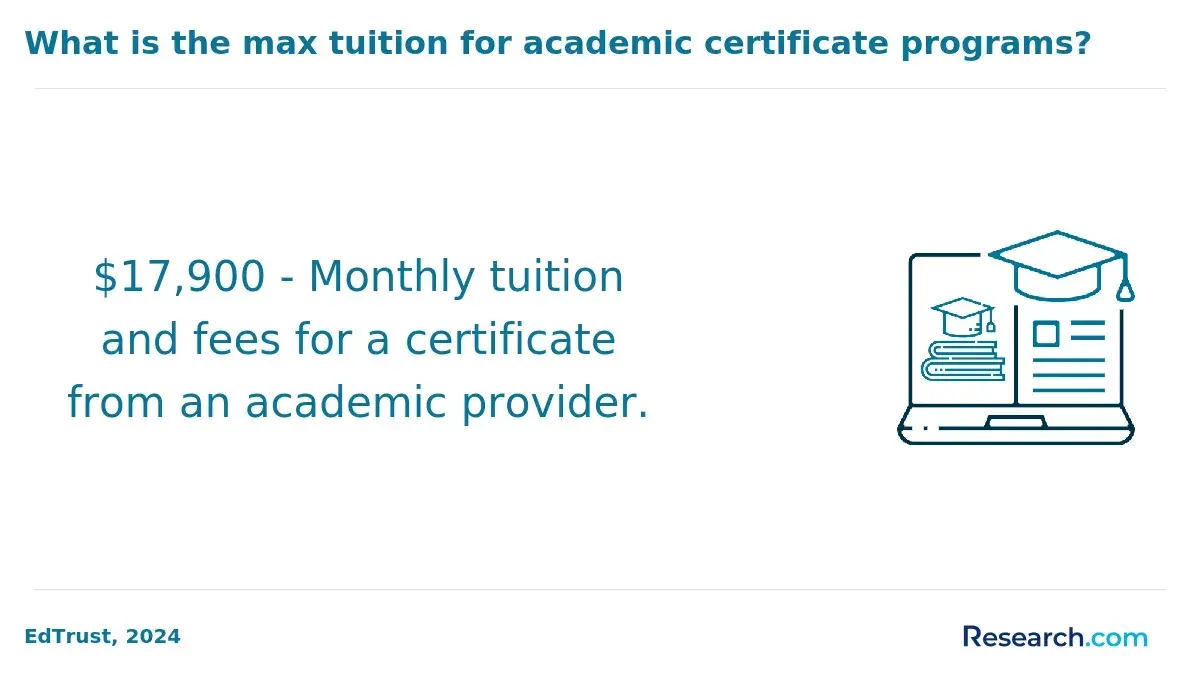
Four-week course prices range from low-cost self-paced training to several thousand dollars for instructor-led bootcamps with equipment or exam preparation. Tuition is only one cost. Budget for exam attempts, proctoring, textbooks, tools, software subscriptions, uniforms, background checks, transportation, and credential renewal where applicable.
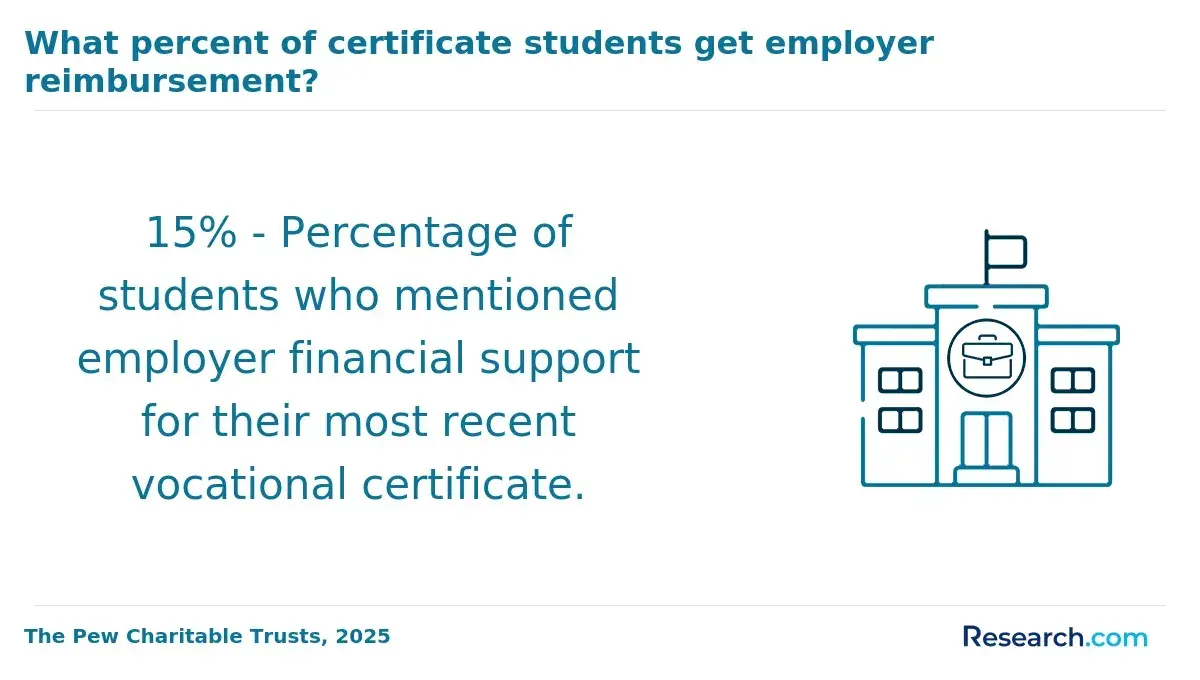
Financial aid is not automatic for short programs. Federal student aid generally applies only to eligible programs at participating institutions and does not typically cover standalone noncredit courses. More practical funding sources may include employer tuition assistance, workforce-development agencies, veterans' education benefits when a program qualifies, scholarship funds, and payment plans. Compare the out-of-pocket total with the likely value of the exact credential in your local market.
A lower-priced course can be the better value if it meets an employer's requirement. A costly bootcamp can be reasonable only when its instructional support, projects, equipment, and recognized exam alignment solve a need that cheaper options do not.
What salaries and promotion opportunities can four-week certifications realistically support?
A four-week credential can support a promotion or job search when it documents a skill your employer values, but it does not create a predictable salary outcome. Occupational wage data reflects workers across education and experience levels, not the earnings of short-course completers. The BLS reported a 2024 median annual wage of $61,900 for all workers, a useful broad benchmark rather than a promise for any credential holder.
Short credentials are most likely to help when they support a measurable change: eligibility to use required software, compliance with a safety rule, a completed portfolio project, or readiness for a defined exam. They are less likely to change pay when they duplicate skills you already have or are unknown to local employers.
For advancement beyond entry-level work, stack recognized training with experience, documented results, and - where relevant - a degree. Professionals considering a longer academic investment can compare which masters degrees are worth it after identifying whether their field actually rewards graduate education.
How can students verify licensing, exam eligibility, and renewal rules for certifications?
Verify licensing and exam rules directly with the authority that controls them: a state licensing board, state workforce agency, testing organization, or employer. Training providers can explain their course, but they cannot change the legal eligibility rules for an independent license or certification.
Follow this sequence before enrolling in any program that advertises certification or licensure preparation:
- Write down the exact job title, state where you intend to work, and credential name required by employers or regulators.
- Find the official eligibility criteria for the exam, license, or registration, including education, experience, background-check, and age requirements.
- Confirm that the course is approved when approval is required and determine whether it satisfies all or only part of the requirement.
- Calculate the full timeline, including exam scheduling, processing time, clinical hours, and any supervised-work requirement.
- Record renewal dates, continuing-education obligations, fees, and lapse consequences before you make a payment.
This process prevents a common and expensive mistake: completing a course that issues a certificate of attendance but does not make you exam-eligible or license-eligible.
Other Things You Should Know About
Sometimes. You may complete training and earn a certificate of completion in four weeks, and some certifications can be earned quickly if you already meet eligibility requirements and pass the exam. Regulated or advanced certifications often require more time, experience, or approved education.
Yes, when the credential is recognizable to the employer and relevant to the job. List the issuing organization, completion date, and any associated certification exam passed. A vague course title from an unknown provider carries less weight.
It can support an existing healthcare worker or prepare you for limited entry steps, but many patient-care roles require state-approved training, clinical practice, exams, or background screening that exceed four weeks. Check your state's rules first.
Choose four weeks for a defined skill, renewal, or career test-drive. Choose a longer certificate, apprenticeship, or degree when the role requires hands-on practice, licensure, substantial portfolio development, or employer-recognized depth.
References
- Knowledge Retention Strategies for Training | Mindstamp https://mindstamp.com/blog/knowledge-retention-strategies
- 8 Best Training Methods for Employees in 2023 | ClickLearn https://www.clicklearn.com/blog/training-methods-for-employees/
- 20 Necessary IT Certifications + Salaries I Skillsoft - Skillsoft https://www.skillsoft.com/blog/top-paying-it-certifications
- Short-Term Certificates | Columbus State Community College https://www.cscc.edu/academics/certificates.shtml
- How To Create an Effective Employee Training Program: 8 Steps to Success https://www.vectorsolutions.com/resources/blogs/how-to-create-an-effective-training-program-8-steps-to-success/
- Building Certifications That Matter: A Practical Guide https://www.intellum.com/resources/blog/certification-best-practices
- Employee Training and Development: The Benefits of Upskilling or Reskilling Your Team https://www.greatplacetowork.com/resources/blog/employee-training-development-benefits-planning
- Weighing the Value of Industry-Based Certifications against Their Costs https://www.nasbe.org/weighing-the-value-of-industry-based-certifications-against-their-costs/
- 9 Best Online Certificate Programs that Lead to Higher Pay https://blackstone.edu/9-best-online-programs-for-higher-pay/
- Job Training | Focus: HOPE https://www.focushope.edu/programs/job-training/