2027 Best Professional Certificates for Parents

Co-Founder and Chief Data Scientist
Parents often need training that fits school pickups, caregiving, and a realistic budget, not another degree with an unclear payoff. Professional certificates can build targeted job skills in months, but the right choice depends on whether a field requires college credit, industry certification, or state licensure.
U.S. Bureau of Labor Statistics projections for 2024-2034 show faster-than-average growth for several certificate-accessible fields, including medical assisting. This guide compares practical options, flexible formats, costs, requirements, and career outcomes so you can choose training that fits both family life and your goal.
Key Things You Should Know
- For parents seeking a fast career change, a certificate in medical assisting, bookkeeping, IT support, project coordination, skilled trades, or design can be more practical than a degree, but confirm the credential matches the employer, certification, or licensing requirement.
- Flexible programs vary widely. Self-paced noncredit professional certificates may take weeks, while credit-bearing college certificates commonly take two to four semesters and can sometimes stack toward an associate degree.
- BLS 2024-2034 projections show medical assistant employment is expected to grow 12%, while electrician employment is expected to grow 9%. Demand does not eliminate the need to verify local schedules, clinical placement rules, and licensing requirements.
Top 10 Best Professional Certificates for Parents
Popular Trade School Programs
Trade certificates and associate degrees suit parents who want hands-on, locally available work. Common options include HVAC technician, electrician, welding, plumbing, automotive technology, and commercial driving programs. Certificates usually teach entry-level technical skills; apprenticeships, employer training, and state licensing may still be required.
An associate degree can add general education and broader technical coursework but takes longer. Evening labs can help with scheduling, while fully online trade training is usually insufficient because employers and licensing boards may require supervised practical work. Compare local apprenticeship access before paying for private career-school training.
Healthcare Programs
Healthcare certificates can lead to patient-facing support roles, but clinical education and state rules matter. Medical assisting, pharmacy technician, dental assisting, practical nursing, medical billing and coding, and sterile processing are common options. Medical assistant and practical nursing programs often include in-person labs and clinical placements that may occur during daytime hours.
Billing and coding can be more online-friendly, though employers may prefer candidates with recognized certification. A certificate is education; certification, such as a national exam credential, is separate. Verify that a program meets your state's requirements before enrolling, especially for nursing, imaging, and other licensed occupations.
Criminal Justice / Law Programs
Paralegal studies, legal studies, court reporting, corrections, and criminal justice certificates offer different paths. A paralegal certificate can be useful for adults who already hold a bachelor's degree or want focused legal-skills training, but it does not authorize someone to practice law.
Some employers prefer programs approved by the American Bar Association, although approval is not legally required for every paralegal job. Criminal justice certificates may support entry-level public safety or administrative roles, but police, corrections, and court positions can have separate background, fitness, academy, or civil-service requirements. Check local hiring standards first.
Arts & Design Programs
Graphic design, UX design, web design, digital marketing, photography, animation, and interior design certificates can fit parents who need remote-friendly creative work. A portfolio usually matters more than the certificate title alone, so choose a program with feedback, project-based assignments, and current software training.
Noncredit certificates can build skills quickly but may not transfer to a degree. Credit-bearing community-college certificates may be more stackable. For regulated fields such as interior design, requirements vary by state and job type. Parents should budget for software, a capable computer, portfolio hosting, and time to create work samples.
What Are the Best Online Certificates for Parents?
The best online certificates for parents are those that match a specific job target and offer predictable, manageable coursework.
Strong choices often include bookkeeping, payroll, IT support, Google or Microsoft productivity tools, digital marketing, project coordination, medical billing and coding, and web or UX design. These paths can be completed remotely more easily than programs requiring clinicals, laboratories, or trade practice.
Use this comparison to separate flexible skill-building options from programs that require in-person attendance.
| Certificate type | Typical format | Best for | Important limitation |
| Industry professional certificate | Online, often self-paced | Career exploration and portfolio or software skills | Usually noncredit and may not meet licensing rules |
| College career certificate | Online, hybrid, or campus-based | Structured training and possible academic credit | Schedules, transfer policies, and aid eligibility vary |
| Healthcare support certificate | Hybrid in many cases | Medical administration or patient-support preparation | Clinicals, exams, or state requirements may apply |
| Trade certificate | Primarily campus or shop-based | Hands-on technical careers | Online theory alone rarely qualifies a learner for field work |
Parents who need a quick starting point can compare 6 week college courses, but short format alone does not prove that a credential is employer-recognized. Ask whether the course produces a transcript, a completion certificate, preparation for a certification exam, or only continuing education.
Which Certificates Lead to Flexible Parent-Friendly Careers?
Flexible careers tend to be those where work can be scheduled around deliverables rather than shifts, direct patient care, or job-site assignments. Bookkeeping, payroll support, virtual administrative work, digital marketing, web design, customer success, project coordination, and some IT support roles can offer remote or hybrid opportunities. Flexibility remains employer-specific: an online certificate does not guarantee remote work.
The following distinctions can help parents select training based on daily scheduling realities rather than marketing claims.
| Career direction | Parent-friendly feature | Common certificate route | Scheduling caution |
| Bookkeeping or payroll | Potential remote, deadline-based work | Accounting software or bookkeeping certificate | Month-end and tax-season workloads can be intense |
| Digital marketing | Portfolio-based freelance or remote work may be available | Digital marketing or analytics certificate | Entry-level competition can be significant |
| IT support | Some remote help-desk roles | IT support certificate plus vendor certification preparation | Coverage shifts and on-call duties may apply |
| Medical billing and coding | Some employers offer remote work after experience | Medical billing/coding certificate | Employers may prefer certification and prior experience |
Choose a flexible certificate when it builds demonstrable skills, such as software proficiency, work samples, or exam preparation. Consider a degree, apprenticeship, or licensed pathway instead when your target occupation legally requires one.
How Do Accredited Certificate Programs Work for Parents?
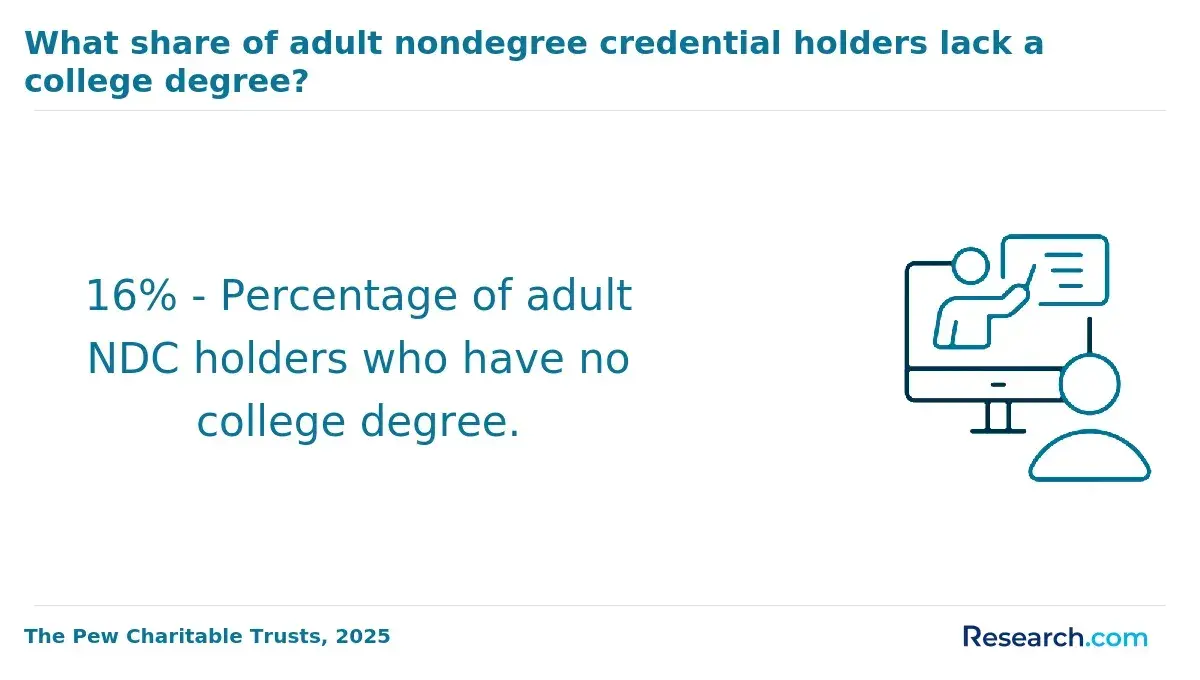
Accredited certificate programs work differently depending on the provider. A college certificate may be credit-bearing coursework on an official transcript, while a noncredit professional certificate usually documents completion of a defined training sequence.
Institutional accreditation matters most when you want federal student aid eligibility, transfer credit, or confidence that a college meets recognized quality standards. Programmatic accreditation can matter in fields such as nursing and allied health.
For parents, the key question is whether the credential is recognized for the exact next step you want.
- Confirm whether the institution holds recognized institutional accreditation and whether your specific program has any required specialized accreditation.
- Ask whether credits transfer or stack into an associate or bachelor's degree; noncredit certificates generally do not transfer automatically.
- Verify whether the curriculum qualifies you to sit for a separate certification examination or meets state licensing education rules.
- Request the clinical, laboratory, internship, proctored-exam, and attendance schedule in writing before enrolling.
Do not confuse accreditation with certification. Accreditation evaluates an institution or program; professional certification is generally awarded by a credentialing organization after eligibility requirements and, often, an examination.
What Admission Requirements Do Certificate Programs Usually Have?
Admission requirements depend on whether the credential is a college certificate, a workforce-training program, or an industry certificate. Many entry-level online professional certificates require only an account, payment, and basic computer access.
College certificates often require an application, high school completion or equivalent, and placement steps; selective healthcare programs may add prerequisite courses, background checks, immunizations, drug screening, and minimum grades.
Before applying, compare the requirements that can affect whether a parent can begin on the intended date.
| Program type | Common entry requirement | Parent planning issue |
| Noncredit online professional certificate | Basic digital access and payment | Usually flexible, but may offer limited instructor support |
| Community-college certificate | Application and proof of prior education | Registration deadlines and placement requirements may apply |
| Healthcare certificate | Prerequisites and compliance documentation | Clinicals may begin only after clearance is complete |
| Graduate certificate | Bachelor's degree and program-specific eligibility | Often unsuitable for a first entry-level career change |
Do not assume a "no GPA requirement" claim means no screening. Ask whether progression courses require minimum grades and whether a failed course delays clinicals or completion.
How Long Do Professional Certificates Take to Finish?
Completion time ranges from a few weeks for self-paced industry certificates to roughly one year for many college career certificates. The actual timeline depends on weekly study time, course sequencing, clinical or lab requirements, and whether you attend part time.
A program advertised as accelerated can still be difficult for a parent if assignments have fixed weekly deadlines or if required in-person sessions conflict with childcare.
This time comparison helps set realistic expectations before you commit.
| Credential format | Typical completion pattern | Best use |
| Self-paced professional certificate | Weeks to several months | Focused skill development or career exploration |
| Instructor-led noncredit certificate | Several weeks to several months | Structured upskilling with a fixed cohort schedule |
| Credit-bearing college certificate | Two to four semesters part time or full time | Career preparation with possible degree stackability |
| Clinical or trade program | Often several months to more than one year | Roles requiring supervised skills practice |
If your schedule changes often, look for online colleges with frequent start dates. Frequent starts can reduce waiting time, but confirm that required courses are offered in the sequence you need.
How Much Do Certificate Programs Cost for Parents?
Certificate costs range from relatively low monthly subscriptions for noncredit online training to several thousand dollars for college, clinical, or trade programs. Tuition is only one part of the decision.
Parents should calculate the total cost of attendance, including books, equipment, exam fees, uniforms, background checks, transportation, childcare during labs or clinicals, and lost work hours.
These cost factors explain why two programs with similar tuition can have very different real budgets.
- Noncredit professional certificates may charge a subscription, course fee, or bundled price; employer recognition and academic credit can be limited.
- Community-college certificates generally charge per credit plus institutional and course fees; eligible students may have access to federal aid when enrolled in an approved program.
- Healthcare and trade programs can add substantial costs for supplies, liability coverage, clinical requirements, tools, examinations, and licensing applications.
- Employer tuition assistance, workforce-agency grants, and payment plans may reduce upfront cost, but verify repayment terms and eligibility conditions.
Compare net cost rather than sticker price, and do not borrow before confirming the credential's career relevance. Parents considering a longer academic route can also compare what is the easiest masters degree to get online, though a master's degree is usually not necessary for entry-level certificate careers.
Which Jobs Can Parents Get With Professional Certificates?
Parents can use professional certificates to pursue entry-level roles, strengthen an existing résumé, or prepare for a separate industry certification. Realistic job options depend on local employers, prior experience, portfolio quality, legal requirements, and the specific certificate.
For example, an IT support certificate can demonstrate foundational skills, but many employers also value hands-on troubleshooting experience or a vendor certification. A medical billing certificate can support applications for revenue-cycle roles, but it does not make someone a nurse or licensed clinician.
The table distinguishes common certificate-related roles from occupations that usually require additional steps.
| Certificate area | Potential job target | Additional consideration |
| Bookkeeping | Bookkeeping clerk or accounts payable assistant | Software skills and relevant experience improve prospects |
| IT support | Help-desk or technical support specialist | Employer-recognized certification may be requested |
| Medical assisting | Medical assistant | State rules and employer certification preferences vary |
| Paralegal studies | Paralegal or legal assistant | A certificate alone does not permit legal practice |
| Web design | Junior web designer or digital content specialist | A portfolio is often essential |
Start by reviewing several local job descriptions before enrolling. Record the required software, certifications, experience, hours, and education; then choose the shortest credible program that closes the most important gap.
What Salaries Do Certificate Careers Offer?
Salary information is best used as occupation-level context, not as a promise of what certificate completers earn.
According to the U.S. Bureau of Labor Statistics' May 2024 wage data, median annual pay was $44,200 for medical assistants, $61,010 for paralegals and legal assistants, $62,350 for electricians, and $95,380 for web developers and digital designers. These figures include workers with varied education and experience levels, and a certificate alone may not qualify an applicant for every role.
The comparison below pairs wage context with the major qualification issue parents should investigate.
| Occupation | May 2024 median annual pay | Certificate decision context |
| Medical assistants | $44,200 | Certificate training is common; requirements vary by state and employer |
| Paralegals and legal assistants | $61,010 | Employers may prefer a degree, relevant experience, or a specialized certificate |
| Electricians | $62,350 | Apprenticeship and licensure are central to the career pathway |
| Web developers and digital designers | $95,380 | Portfolio, technical capability, and experience strongly affect access to roles |
For broader degree-level comparisons, see what degrees make the most money. Higher occupational medians do not automatically make a longer degree the better choice when childcare, time away from work, or licensing barriers change the return on investment.
How Do You Choose a Reputable Certificate Program?
A reputable certificate program clearly states what learners receive, what it prepares them to do, and what it does not qualify them to do. The best program for a parent is not necessarily the shortest or cheapest; it is the one that meets a documented employer, certification, licensing, or advancement requirement while fitting family logistics.
Use these steps before submitting an application or paying a deposit.
- Choose a target role first, then review local job postings for required education, software, credentials, and work schedules.
- Confirm the provider's identity, institutional accreditation where relevant, program approval, and eligibility for any certification or licensing examination.
- Request a complete cost sheet covering tuition, fees, tools, books, exams, transportation, clinical requirements, and withdrawal policies.
- Ask for the exact weekly workload and all mandatory live sessions, labs, externships, clinicals, and proctored exams.
- Check whether credits transfer, whether the credential stacks into a degree, and whether career services serve online or part-time students.
- Compare at least two programs using the same job target instead of choosing based only on advertising, rankings, or an "accelerated" label.
Red flags include guaranteed job or salary claims, vague statements about accreditation, pressure to borrow immediately, missing refund policies, and claims that online coursework alone satisfies a hands-on licensing requirement. If an admissions representative cannot answer in writing, pause before enrolling.
Other Things You Should Know About the Best Professional Certificates
They can be worthwhile when they teach a skill employers request and fit your schedule and budget. They are less useful when the target job requires a license, degree, apprenticeship, or experience that the certificate does not provide.
Many business, technology, design, and administrative certificates can be completed online. Healthcare, laboratory, and skilled-trade programs often require in-person labs, clinical placements, supervised practice, or examinations.
A certificate is usually awarded after completing an educational program. A certification is a professional credential awarded by a certifying organization after meeting its standards, which may include an examination, work experience, or continuing education.
Possibly. Eligibility depends on the school, whether the program is approved for federal aid, enrollment level, and your individual circumstances. Noncredit online professional certificates often do not qualify for federal student aid, though employer assistance or workforce grants may be available.
References
- Parent Educator Certification Training | CCALP https://www.ccalp.org/parent-educator
- Professional Qualifications and Development in Family Child Care | HeadStart.gov https://headstart.gov/professional-development/article/professional-qualifications-development-family-child-care
- Early Intervention and Parenting, Advanced Certificate (Online) https://www.brooklyn.edu/academics/programs/early-intervention-and-parenting-ac/
- National Early Childhood Organizations - Center for Early Learning Professionals https://center-elp.org/resourcesforms/national-early-childhood-organizations/
- What Parents Should Know About Child Development Credentials - post https://www.childcareed.com/a/what-parents-should-know-about-child-development-credentials.html
- Weighing the Value of Industry-Based Certifications against Their Costs https://www.nasbe.org/weighing-the-value-of-industry-based-certifications-against-their-costs/
- Degrees, Certifications, and Credentials in Early Childhood https://earlychildhoodny.org/resources/degrees-certifications-credentials-in-early-childhood