2027 Best Stackable Credentials With Year-Round Enrollment

Co-Founder and Chief Data Scientist
Choosing training that can start soon without closing the door on a future degree is a practical challenge for career changers, working adults, and recent graduates. Stackable credentials let learners earn a short certificate, build job-ready skills, and apply eligible credits toward a longer credential.
The U.S. Bureau of Labor Statistics projects healthcare occupations to grow much faster than average from 2024 to 2034, making flexible pathways especially relevant. This guide compares year-round options, explains what actually stacks, and helps you vet cost, recognition, and career fit before enrolling.
Key Things You Should Know
- Year-round enrollment can mean monthly, rolling, or multiple-term starts, but it does not guarantee that every course is available immediately; confirm the sequence for required classes and clinical or lab placements.
- The strongest stack is usually a credit-bearing certificate that is documented in writing as applying to an associate or bachelor's degree; noncredit training may build skills but often does not transfer.
- For labor-market context, BLS projects healthcare occupations to add about 1.9 million jobs from 2024 to 2034; demand alone does not replace state licensure, supervised practice, or employer-specific requirements.
Top 10 Best Stackable Credentials With Year-Round Enrollment
Popular Trade School Programs
Trade pathways often stack from a short certificate into a diploma, apprenticeship, or associate degree. Common options include HVAC, welding, electrical technology, industrial maintenance, diesel technology, and construction management. They suit learners who want hands-on work and relatively direct entry routes. Year-round schools may offer frequent starts, but shop, lab, and apprenticeship availability can control the actual timeline. Verify whether the curriculum prepares you for an industry exam, such as EPA Section 608 for HVAC work, rather than assuming the school certificate itself is a license. Ask whether technical credits apply toward an associate degree.
Healthcare Programs
Healthcare stacks can begin with certificates in medical assisting, phlebotomy, pharmacy technology, practical nursing, or medical billing and coding, then continue to an associate degree or advanced clinical program. This route works best when each step meets the requirements of the next credential and, where needed, a state licensing board. Clinical placements, immunizations, background checks, and entrance testing may delay a "year-round" start. A certificate may prepare graduates for a separate certification examination, but eligibility rules vary by certifier and state. Confirm accreditation and clinical eligibility before paying deposits.
Criminal Justice / Law Programs
Criminal justice certificates, paralegal studies certificates, legal office programs, and associate degrees can build related knowledge in procedure, records, ethics, and legal research. They may fit aspiring corrections officers, court clerks, security professionals, or legal support staff. A paralegal certificate is not a law degree and does not authorize legal practice. Background standards, employer screening, and state rules can affect access to public-safety roles. Learners with a record should compare program policies and realistic employer requirements early; this overview of the best degree for felons can help frame broader education options.
Arts & Design Programs
Graphic design, digital media, UX design, photography, animation, web design, and interior design certificates may stack into an associate or bachelor's degree when offered for academic credit. These programs are best evaluated by portfolio development, software access, instructor feedback, and the rights to use finished work in a job search. Frequent online starts can be useful for software-based courses, while studios and equipment may require campus attendance. For regulated fields such as interior design, a certificate alone may not meet licensure or title-use requirements. Confirm transfer rules before choosing a noncredit portfolio course.
What Are Stackable Credentials?
Stackable credentials are intentionally connected educational awards that let a learner complete a smaller credential first and apply its learning or academic credits toward a larger credential. A common sequence is a certificate, then an associate degree, then a bachelor's degree. The essential feature is a documented pathway, not simply earning several unrelated badges.
A college certificate is an educational award issued after completing a program of study. A professional certification is different: it is typically granted by an independent organization after an examination and sometimes work-experience requirements. Some stackable programs prepare learners for certification exams, but completing the academic program does not automatically confer certification or a license.
The comparison below shows why the credential label alone is not enough to judge value.
| Option | Usually issued by | May count toward a degree? | Best use |
| Credit-bearing certificate | College or university | Often, if a formal pathway exists | Entry skills plus future academic progression |
| Noncredit workforce certificate | College, training provider, or employer partner | Usually not automatically | Focused upskilling or employer-required training |
| Professional certification | Certifying body | Rarely as academic credit | Demonstrating industry standards or exam-based competence |
| Associate degree | Accredited college | Often, subject to transfer policies | Broader general education and technical preparation |
"Stackable" should be treated as a contractual academic question. Obtain the catalog language, program map, and transfer policy showing exactly which courses apply, the minimum grade required, and whether credits have an expiration date.
Which Stackable Credentials Lead to High-Paying Jobs?
The most promising stacks connect to occupations with a clear progression in responsibility: technical support to network administration, practical nursing to registered nursing, or manufacturing maintenance to engineering technology. However, a short credential alone may only qualify a learner for an entry-level support role, while the higher-paying occupation may require a degree, license, apprenticeship, experience, or all of these.
For example, BLS May 2024 wage data reported a median annual wage of $93,600 for registered nurses. That figure describes the occupation, not the expected earnings of certificate completers; registered nursing generally requires an approved nursing program and licensure. Use occupational wage data to assess the destination role, then verify the education and legal requirements for reaching it.
High-earning pathways usually have a meaningful barrier to entry, such as clinical licensure, advanced mathematics, supervised fieldwork, or a technical apprenticeship. Learners comparing longer academic routes can also review most lucrative college majors to see how bachelor's-level fields differ from short credential paths.
Choose a stack for earning potential only when it has all three elements: a realistic entry job after the first award, clearly transferable coursework, and a documented next step that meets the higher role's requirements.
How Do You Choose an Accredited Program?
Accreditation matters most when you need federal financial aid, transfer credit, professional licensure, or employer confidence in a college credential. Institutional accreditation evaluates the college as a whole. Programmatic accreditation evaluates a specific discipline and can be essential in fields such as nursing, medical assisting, and certain technical or legal education programs.
Before enrolling, use this process to test whether a program is truly stackable and appropriate for your goal.
- Identify the exact target job and determine whether it requires a license, certification examination, apprenticeship, degree, or background clearance.
- Confirm the school's institutional accreditation and, if relevant, the programmatic accreditation required by your state board or certification organization.
- Request a written program map showing the certificate courses, credits, grade thresholds, and the degree into which they apply.
- Calculate the full cost, including tools, uniforms, software, testing, clinical fees, transportation, and certification or licensing fees.
- Ask for course schedules for the next two terms so that a year-round promise can be tested against actual availability.
- Compare completion, licensure-exam, and employment information with the school's definitions and reporting period clearly stated.
Red flags include vague claims that credits are "transferable everywhere," pressure to enroll before reviewing costs, no named accreditor, and promises of licensure without identifying the relevant state board. Transfer is always decided by the receiving institution, even when coursework comes from an accredited school.
What Credentials Stack Toward a Degree?
Credit-bearing undergraduate certificates are the most common credentials that stack toward an associate or bachelor's degree. In a well-designed pathway, the certificate courses are identical to courses required in the larger program rather than merely accepted as electives. Some institutions also offer undergraduate microcredentials composed of credit courses, but the number of transferable credits and their applicability vary.
Stacking becomes less certain when the first program is noncredit, offered by a third-party platform, or built around proprietary training. Those options can still be worthwhile for skill building, but learners should not budget on receiving college credit unless the college confirms it in writing.
The table distinguishes common degree pathways and the questions that prevent unpleasant surprises.
| Starting credential | Typical next step | What to verify |
| Career certificate with college credit | Associate degree | All certificate courses fulfill named degree requirements |
| Technical diploma | Associate degree or apprenticeship advancement | Credit equivalencies and residency requirements |
| Associate degree | Bachelor's degree | Articulation agreement, major prerequisites, and lower-division transfer limit |
| Graduate certificate | Master's degree | Graduate credit applicability, grade minimum, and time limit |
Doctoral study is generally not the next stack after a short career certificate; it follows substantial undergraduate and graduate preparation. Readers considering a long academic pathway can compare online PhD programs after assessing whether their professional goal truly requires a doctorate.
Are Online Stackable Credentials Better Than Campus Programs?
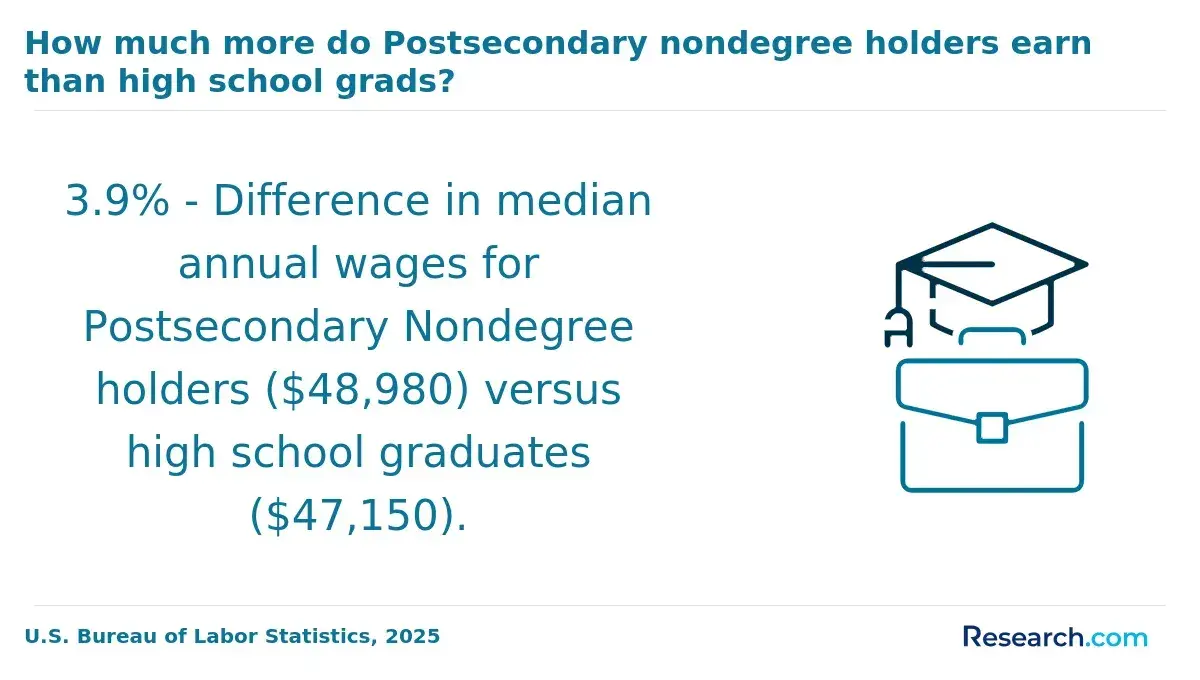
Online stackable credentials are better for learners who need asynchronous coursework, frequent starts, and reduced commuting. Campus or hybrid programs are usually better when skill development depends on laboratories, equipment, clinical practice, studio critique, or supervised fieldwork. Neither format is inherently more transferable; the curriculum, credit status, accreditation, and receiving school's policy matter more.
Online delivery can also be misleading in regulated fields. A program may deliver lectures online while still requiring in-person clinicals, proctored tests, internships, or skills checkoffs near the student's location. Ask where placements occur, who arranges them, and whether a student can progress if a site is unavailable.
Short accelerated terms can help motivated students move quickly, but they require reliable weekly study time and may not suit prerequisite-heavy sequences. If condensed scheduling is your priority, compare options such as 5 week college courses online while confirming that accelerated courses fit the credential's degree map.
Choose online when flexibility is the constraint and the program has credible student support. Choose campus or hybrid when supervised practice, networking, and immediate access to specialized facilities are central to employability.
What Courses and Skills Do These Programs Cover?
Stackable programs generally combine occupation-specific training with foundational skills that remain useful at the next credential level. The content should become more complex at each stage; repeating introductory material across awards is a poor value unless repetition is required for safety, licensing, or mastery.
Typical curriculum patterns include the following, although course titles differ by school and state.
- Trade programs often cover safety, tools, blueprint reading, diagnostics, electrical or mechanical systems, and hands-on repair procedures.
- Healthcare programs may cover medical terminology, anatomy, patient privacy, documentation, infection control, pharmacology, and supervised clinical skills.
- Criminal justice and legal support programs commonly include legal terminology, ethics, report writing, procedure, records systems, and research.
- Arts and design programs emphasize visual communication, design software, typography, portfolio creation, accessibility, and client or project workflows.
- Degree-level steps often add communication, quantitative reasoning, leadership, advanced technical coursework, and general education requirements.
AI tools are changing tasks in design, administration, and technology-oriented occupations, but they do not eliminate the need for judgment, communication, documentation, safety, and responsible use of tools. Favor programs that teach learners to validate outputs, protect confidential information, and demonstrate work through projects or supervised practice.
What Are the Admission Requirements?
Admissions vary by credential type. A credit-bearing college certificate may require a high school diploma or equivalent, an application, placement steps, and program prerequisites. A noncredit course may only require registration and payment. Selective healthcare programs can add prerequisite courses, entrance examinations, health records, drug screening, background checks, and clinical-site requirements.
Do not assume GPA or standardized tests apply to every program. Many open-access colleges admit students broadly but still require placement or prerequisite completion before a student can take technical courses. Conversely, an industry certification may require work experience even if its preparatory course has no admission standard.
Before applying, separate the requirements for enrollment from the requirements for employment, certification, and licensure. A school may admit you into a program even when later clinical placement, a licensing board, or an employer imposes separate eligibility conditions. Ask admissions staff to identify which requirements are school policies and which are external rules.
How Long Do Programs Take and Cost?
Year-round enrollment can shorten waiting time between terms, but completion depends on course sequencing, prerequisites, clinical placements, and how many credits a student takes. A short certificate may take months, while an associate-degree stack commonly takes longer because it includes technical courses and general education. Part-time enrollment improves flexibility but usually extends the calendar timeline.
For a broad benchmark, College Board reported average published tuition and fees of $4,050 for in-district students at public two-year colleges in 2024-25. This is not a total program price: local residency rules, program length, books, tools, transportation, and mandatory fees can materially change the amount a learner pays.
Use this cost framework to compare programs on the same basis rather than relying on advertised tuition alone.
| Cost category | Why it matters for stackable pathways | What to confirm |
| Tuition and institutional fees | May rise as students move from certificate to degree courses | Per-credit rate, residency status, and future-term pricing |
| Books, software, and equipment | Can be substantial in trade and design programs | Required purchases versus loaned or lab-provided items |
| Clinical, lab, and background costs | Often required before healthcare field experiences | Frequency, refundability, and placement consequences |
| Exams and licensure | Usually separate from academic tuition | Exam eligibility, retake cost, and state-specific fees |
| Lost work time and commuting | Affects the real affordability of campus or clinical attendance | Class times, mandatory attendance, and placement location |
Ask about federal aid eligibility only for eligible programs at participating institutions. Credit-bearing status alone does not guarantee aid. Employer tuition assistance, workforce grants, scholarships, payment plans, and apprenticeship wages may reduce out-of-pocket cost, but each has separate eligibility rules.
What Jobs, Salaries, and Outlook Follow These Credentials?
Stackable credentials can support entry into roles such as medical assistant, pharmacy technician, HVAC technician, welder, paralegal assistant, court clerk, graphic designer, or IT support specialist. Whether a particular certificate qualifies someone for a role depends on local employers, state regulation, prior experience, portfolio quality, and required certifications or licenses.
BLS employment projections for 2024 to 2034 show especially strong overall demand in healthcare occupations, while opportunities in other fields vary by specialty and location. Use outlook information as a market signal, not a guarantee of hiring in your area. Review local job postings to see whether employers ask for a certificate, an associate degree, certification, a license, or experience.
This comparison links credential levels to realistic early-career expectations.
| Pathway | Possible entry roles | Common advancement requirement |
| Healthcare certificate | Medical assistant, phlebotomy technician, pharmacy technician | Certification exam, state registration, experience, or additional nursing education |
| Skilled-trades certificate | Helper, trainee technician, fabrication or maintenance worker | Apprenticeship hours, licensing, employer training, or advanced technical coursework |
| Legal or criminal justice certificate | Legal assistant, records clerk, security or corrections support roles | Background clearance, employer training, associate degree, or specialized experience |
| Design certificate | Production artist, junior designer, digital content support | Portfolio, software proficiency, client experience, or bachelor's degree for some roles |
A strong ROI calculation compares total educational cost and time away from work with the likely entry role - not only with the salary of a later occupation that requires additional credentials. Ask each school which jobs its curriculum directly prepares you to pursue and which jobs require another step.
Other Things You Should Know About
Some schools have rolling or monthly starts, while others have multiple terms each year. Required courses, labs, and clinical placements may still begin only on set dates, so request a term-by-term schedule before enrolling.
No. Credit-bearing certificates are more likely to apply, but only a written program map or articulation agreement can confirm how courses fit a specific degree and grade requirement.
Eligibility depends on the institution, program length, credential type, enrollment status, and federal or state rules. Ask the financial aid office whether the exact program is aid-eligible rather than assuming all certificates qualify.
It can be a sensible lower-risk first step when it leads to a recognized entry-level role and clearly applies to a future degree. It is less attractive when credits do not transfer, required licensing is unclear, or the target job needs a longer credential immediately.
References
- USHE initiative helps students earn meaningful credentials on their way to a degree - Utah System of Higher Education https://ushe.edu/stackable-credentials-help-students-earn-credentials-on-their-way-to-a-degree/
- What are Stackable Credentials? https://assess.com/stackable-credentials/
- Stackable Credential Programs | Martin University https://www.martin.edu/stackableprograms
- How to Create Stackable Credentials That Will Draw Learners to Your School https://jenzabar.com/blog/how-to-create-stackable-credentials-that-will-draw-learners-to-your-school
- Teacher Education California Teaching Credential - CGU https://www.cgu.edu/academics/program/teacher-education-california-preliminary-credential-online/
- Stackable credentials can open doors to new career opportunities | Brookings https://www.brookings.edu/articles/stackable-credentials-can-open-doors-to-new-career-opportunities/
- The Power of Industry-Recognized Stackable Credentials - The EvoLLLution https://evolllution.com/programming/credentials/the-power-of-industry-recognized-stackable-credentials
- Pillar 4: Industry-Recognized Credentials https://futurereadypathways.org/pillar-4-industry-recognized-credentials/
- Build a Bridge Between Education and Industry with Credentials https://www.nga.org/futureworkforce/pathways/build-a-bridge-between-education-and-industry-with-credentials/
- What Are Stackable Credentials, and How Can You Build Programs Around Them? https://www.jenzabar.com/blog/what-are-stackable-credentials-and-how-can-you-build-programs-around-them