2027 Best Online Non-Degree Programs With Weekend Classes

Co-Founder and Chief Data Scientist
Choosing a weekend program is difficult when you need career training without pausing work or family responsibilities. Online non-degree programs can offer focused certificates, workforce training, or industry preparation, but their value depends on whether the format meets employer and licensing requirements.
The U.S. Bureau of Labor Statistics projects medical assistant employment to grow 12% from 2024 to 2034, illustrating why short healthcare training remains a popular option. This guide helps working adults compare weekend-friendly programs, verify credibility, estimate total costs, and choose a realistic path.
Key Things You Should Know
- Weekend online programs are usually certificates, career-training programs, or noncredit credentials - not degrees - and may take weeks to about one year depending on required labs, clinicals, or externships.
- Online delivery does not remove hands-on requirements: healthcare, skilled-trade, and legal-support programs may require local clinical placements, labs, proctored exams, or campus sessions.
- Check employer recognition before paying: BLS reports a 2024 median annual wage of $44,200 for medical assistants, but a certificate alone does not guarantee employment, certification eligibility, or that pay level.
Top 10 Best Online Non-Degree Programs With Weekend Classes
Popular Trade School Programs
Weekend-friendly trade training commonly includes HVAC fundamentals, electrical technician preparation, welding theory, construction management support, and industrial maintenance. Fully online study works best for safety, blueprint reading, estimating, codes, and theory; welding, electrical labs, and equipment repair generally require in-person practice.
Choose a credit-bearing community-college certificate if you may later pursue an associate degree. Choose employer-recognized short training when you need a specific skill quickly. Verify whether the program prepares you for an apprenticeship, EPA Section 608 examination, or a state licensing step rather than assuming it grants a license.
Healthcare Programs
Common online weekend options include medical billing and coding, medical assisting theory, pharmacy technician preparation, health information support, and patient care training. Billing and coding can often be completed online, while medical assisting, phlebotomy, nursing aide, and pharmacy programs may require supervised clinical or laboratory hours.
A school certificate is different from a certification such as CPC or CPhT, which is issued by an independent certifying body after its eligibility and examination requirements are met. Confirm that a program meets your state's rules before enrolling, especially for direct patient-care roles.
Criminal Justice / Law Programs
Weekend online programs in this area may cover paralegal studies, legal research, court reporting preparation, criminal justice support, cybersecurity basics, or private-security training. Paralegal certificates are useful for people who already hold a degree or have office experience, but employers may prefer programs approved by the American Bar Association or substantial legal-work experience.
Criminal justice certificates can strengthen applications for administrative, records, compliance, or public-safety support roles; they do not automatically qualify a graduate as a police officer, attorney, investigator, or licensed security professional. Local agency standards remain decisive.
Arts & Design Programs
Online weekend arts and design options include graphic design, digital marketing design, UX foundations, photography, video editing, web design, and interior design basics. These programs are often portfolio-focused, so project quality can matter more to employers than the certificate title alone.
Select a program that provides current software access, instructor feedback, and portfolio assignments tied to the work you want to pursue. Interior design and architecture-related pathways deserve extra caution: a short certificate generally does not meet education requirements for professional licensure. Ask whether the credential is academic, noncredit, or industry-aligned.
What are online non-degree programs with weekend classes and who are they best for?
Online non-degree programs with weekend classes are focused learning options that do not culminate in an associate, bachelor's, or graduate degree. Providers include community colleges, universities, trade schools, workforce agencies, and private training companies.
The credential may be a college certificate, continuing-education certificate, professional certificate, microcredential, or completion record; these are not interchangeable.
They are best for adults who need a predictable study window, want to test a career field, need targeted upskilling, or already have education and need job-specific knowledge. Weekend delivery may mean live Saturday sessions, recorded modules completed by Sunday night, or a hybrid schedule with periodic labs. It does not necessarily mean self-paced learning.
This option is usually a strong fit when the target role values demonstrable skills, a portfolio, a recognized examination, or short occupational training. It is a weaker fit when the intended occupation legally requires a degree, extensive supervised practice, apprenticeship hours, or state licensure.
Learners seeking a full academic credential may instead compare accelerated programs online that can provide broader education and more formal progression options.
How do online weekend non-degree programs compare to campus-based and evening options?
The best format depends on whether the occupation is knowledge-based, hands-on, regulated, or portfolio-driven. Online weekend programs reduce commute time and can protect weekday work hours, but they require reliable technology and disciplined independent study.
Campus programs provide equipment access and direct practice, while evening programs may suit people who prefer shorter, more frequent instructor contact.
The comparison below shows the practical trade-offs that matter most before committing to a schedule:
| Format | Best use | Main advantage | Main limitation |
| Online weekend | Working adults and theory-heavy training | Concentrated schedule and no routine commute | May still require in-person labs or exams |
| Campus daytime | Hands-on technical or clinical programs | Regular access to faculty and equipment | Can conflict with full-time work |
| Evening hybrid | Learners needing both flexibility and practice | Frequent contact plus local lab time | Requires weekday availability |
Before choosing online delivery, obtain the actual calendar. Ask whether attendance is mandatory, whether weekend meetings occur every week, how clinical placement is arranged, and what happens if work conflicts with a live session. For learners who need a compressed degree rather than a short credential, fast track career programs can be a more suitable comparison point.
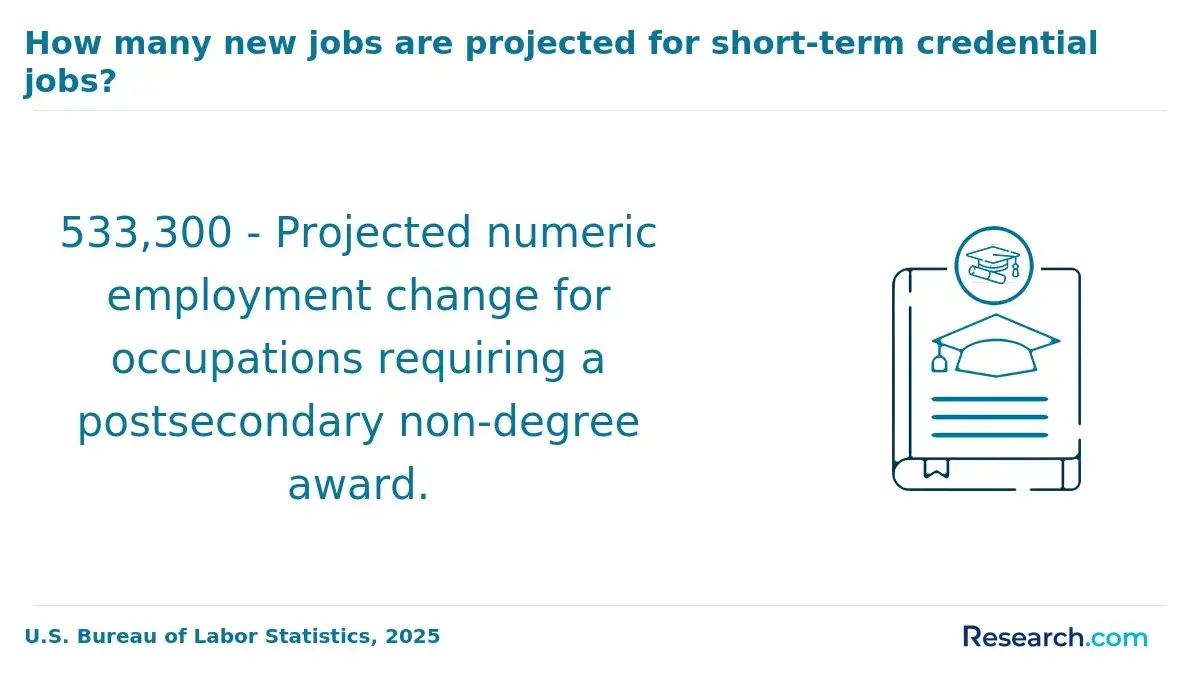
What accreditation and licensing standards should these programs meet for career credibility?
Credibility has two separate parts: the provider's educational standing and the occupation's external requirements. Institutional accreditation is most relevant for college-issued, credit-bearing certificates and for access to federal student aid.
Programmatic accreditation matters in fields where a specialized accreditor evaluates curriculum, faculty, clinical training, or outcomes. Neither type automatically creates a professional license.
For a regulated career, start with the state licensing board or employer requirement, then work backward to the program. A school should state clearly whether its curriculum is designed to meet a specific state's education requirements. If it cannot provide that answer in writing, do not assume online coursework will transfer across state lines.
Watch for these red flags before enrolling:
- A provider promises that a completion certificate is the same as a license or national certification.
- The program cannot identify required clinical hours, labs, background checks, or examination eligibility.
- The school uses vague claims about "accreditation" without naming the accrediting organization or approval scope.
- Marketing emphasizes rapid completion but does not explain employer recognition or local placement requirements.
For nonregulated fields such as design, software, or office administration, industry recognition, current tools, instructor expertise, project feedback, and portfolio relevance can matter more than specialized accreditation.
What admission requirements and prior education do online weekend certificate programs need?
Admission requirements vary more by provider type than by subject. Community-college credit certificates may require an application, identity documents, placement steps, prerequisites, and high school completion or equivalent.
University continuing-education and private career programs may use simpler enrollment processes. Advanced professional certificates can require prior college coursework, work experience, or an existing credential.
Applicants should separate enrollment eligibility from career eligibility. A school may admit an adult learner with no degree, yet an employer, certification body, clinical site, or licensing board may impose stricter requirements.
Background checks, immunizations, drug screening, CPR training, or physical-capacity documentation are especially common when clinical or field placement is involved.
Use these questions to prevent enrolling in a program that cannot support your goal:
- Is the credential credit-bearing, noncredit, or an industry-issued professional certificate?
- What prior education, work experience, software skills, or placement tests are required?
- Can I complete every required lab, clinical, practicum, or exam while working weekends or weekdays?
- Does completion make me eligible for a named certification examination, and are there additional eligibility rules?
- Will credits transfer into a specific associate or bachelor's program if I continue my education?
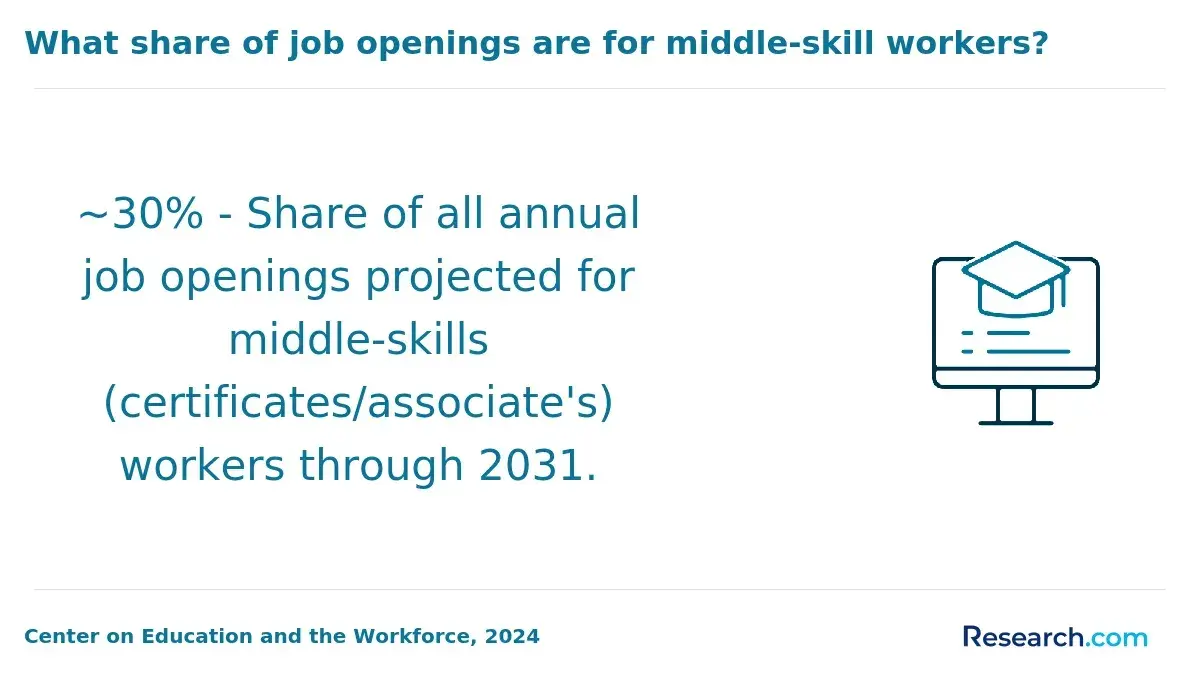
How long do online weekend non-degree programs take and what schedules do they follow?
Most weekend non-degree programs range from a few weeks for narrowly focused training to roughly 6-12 months for college certificates with multiple courses. Timelines become longer when a program includes clinical rotations, supervised fieldwork, required labs, or sequential technical courses. "Accelerated" should describe the calendar, not reduced competency requirements.
Schedules typically fall into three patterns: asynchronous work due each weekend, live online sessions on Saturday or Sunday, or hybrid instruction with online theory and scheduled in-person practice. A stated weekend format may still include weekday clinical shifts because host sites control patient-care scheduling.
The following planning guide helps match schedule design to realistic availability:
| Schedule pattern | Typical fit | What to verify |
| Asynchronous weekend modules | Independent learners with variable work shifts | Weekly deadlines, proctoring, response times |
| Live weekend classes | Learners who benefit from structure | Attendance policy, time zone, makeup options |
| Hybrid weekend labs | Trades and clinical skills learners | Campus travel, equipment, lab frequency |
| Externship or clinical placement | Programs requiring supervised practice | Whether weekday hours are unavoidable |
Build in extra time for onboarding, technology training, certification-exam preparation, and a possible placement wait. A shorter published timeline is only valuable if you can attend every required component.
What tuition costs, fees, and financial aid options apply to online weekend programs?
Total cost is more than published tuition. Credit-bearing certificates may charge per credit, while noncredit programs may use a flat program price. Required books, software, tools, uniforms, exam fees, background checks, immunizations, travel, and retake fees can materially change the budget.
Federal student aid is generally tied to eligible programs at participating institutions; many short noncredit offerings do not qualify. Ask the financial-aid office, not only an admissions representativel, whether the exact program and enrollment level are aid eligible.
Employer tuition assistance, workforce-agency funding, veterans' education benefits, payment plans, and state workforce grants may be relevant, but eligibility differs by learner and provider.
Compare these cost categories in writing before signing an enrollment agreement:
| Cost category | Why it matters | Question to ask |
| Tuition and mandatory fees | Determines the baseline price | What is the total charge for the full program? |
| Equipment and software | May be required for online labs or design work | Is a computer, kit, license, or tool purchase required? |
| External examinations | Certification testing may be separate | Is the exam fee included, and how many attempts are covered? |
| Travel and placement costs | Hybrid and clinical programs can add local expenses | Where are labs or placements located? |
A low tuition figure is not automatically the lowest-cost choice if it excludes required training components. Avoid financing a program until you understand the withdrawal policy, refund terms, and whether the credential aligns with a real local job target.
What core courses and skills do typical online weekend certificate curricula cover?
Curricula vary by field, but quality weekend programs organize learning around tasks learners will actually perform. A trade certificate may combine safety, measurements, tools, and code awareness.
A healthcare support program may include terminology, privacy, documentation, billing systems, and supervised procedures. Legal-support study commonly emphasizes research, writing, ethics, and document management.
Look for a deliberate balance between technical instruction and employability skills. The most useful programs make assessment visible through projects, simulations, case studies, labs, portfolios, or supervised practice rather than relying solely on passive video completion.
Typical skill areas include:
- Digital fluency with field-specific platforms, records systems, creative software, or learning tools.
- Communication, documentation, and professional ethics appropriate to clients, patients, teams, or legal matters.
- Problem-solving through scenarios, troubleshooting exercises, research tasks, or portfolio projects.
- Safety, privacy, compliance, and accessibility practices when the occupation requires them.
Automation and generative AI are increasing the value of learners who can verify outputs, protect confidential information, document decisions, and use job-specific tools responsibly. Ask how the curriculum addresses current software and human oversight rather than assuming a general AI lesson makes training career-ready.
What careers, job roles, and advancement paths can these programs help you access?
These programs can help learners enter support roles, build a portfolio, prepare for a separate certification examination, or gain a defined skill for a current job. They are most valuable when the credential is tied to a job posting requirement, a documented employer preference, or a clear next step such as an apprenticeship or exam.
Possible pathways differ substantially by training type:
| Program focus | Potential entry or support roles | Common next step |
| Medical billing and coding | Billing specialist, coding support, medical office staff | Build experience and pursue applicable certification |
| HVAC or electrical fundamentals | Helper, technician trainee, maintenance support | Apprenticeship, supervised work, or required licensing path |
| Paralegal studies | Legal assistant, document specialist, litigation support | Develop legal-office experience and advanced skills |
| Graphic or digital design | Production artist, junior designer, content support | Strengthen portfolio and specialize |
Workers seeking roles designed around location flexibility should assess the actual work, not just the online format of training. Some administrative and design pathways may align with best degrees for work from home jobs, while clinical and equipment-based careers usually require on-site work.
Do not treat a certificate as a substitute for a degree where employers or laws require one. Conversely, a short program may be the more efficient investment when a targeted certification, portfolio, or supervised experience is the decisive hiring signal.
What salaries and job outlook can graduates of online weekend certificate programs expect?
Salary depends on occupation, location, experience, industry, shifts, credentials, and employer - not simply on having completed a weekend program. Use occupational data as a labor-market reference, then compare it with local job postings and the actual requirements of employers you may apply to.
The U.S. Bureau of Labor Statistics reports that medical assistants had a $44,200 median annual wage in May 2024 and are projected to see 12% employment growth from 2024 to 2034.
That combination can make a properly structured medical-assisting path worth investigating, but graduates still need to meet employer, clinical, certification, and state-specific expectations. BLS also reports a $61,300 median annual wage for graphic designers in May 2024; design hiring depends heavily on portfolio quality, specialization, and experience.
For a higher-level career shift that requires graduate education rather than short training, reviewing easiest masters can help clarify the difference between an accessible degree path and a non-degree credential.
To assess return on investment, compare the all-in program cost with realistic entry-level openings in your area, required unpaid hours, examination costs, and the time you may need before qualifying for better-paid work. Avoid schools that present broad occupational salary figures as though they are guaranteed outcomes for certificate completers.
Other Things You Should Know About
They can be legitimate when the provider is reputable and the credential fits the occupation. Verify institutional or program approval where relevant, employer recognition, required hands-on components, and whether the program prepares you for any necessary external exam or license.
Administrative programs such as billing and coding may be largely online. Programs involving direct patient care commonly require in-person labs, clinical rotations, background checks, and health documentation; clinical schedules may include weekdays.
Transfer is possible mainly for credit-bearing certificates from appropriately accredited colleges, but it is never automatic. Ask the receiving college for a written transfer evaluation or published articulation agreement before enrolling.
A certificate is usually awarded by a school after completing a course of study. A certification is awarded by an independent professional organization after meeting its standards, which may include an examination, experience, continuing education, or other requirements.
References
- Beyond Financial Aid - Finaid https://finaid.org/beyond/
- Financial Aid Guide for Students at Online Colleges - OnlineColleges.net https://www.onlinecolleges.net/for-students/financial-aid-online-students/
- Explore Your Bright Horizons Benefits https://www.brighthorizons.com/article/education/navigating-non-degree-landscape
- How Do Employers Feel About Online Degrees | CSU Global Blog https://csuglobal.edu/blog/how-do-employers-feel-about-online-degrees
- Programs for Non-Degree Seeking Students | University of Phoenix https://www.phoenix.edu/blog/non-degree-seeking-student.html
- Financial Aid for Adult Learners: Grants, Scholarships & How to Pay for College (2026 Guide) https://www.straighterline.com/blog/financial-aid-resources-adults
- Online Learning https://conted.northseattle.edu/online-learning
- Course Completion Rate Benchmarks: Improve Yours (2026) | Ruzuku https://www.ruzuku.com/learn/articles/course-completion-rates