2027 Best Online Professional Certificates

Co-Founder and Chief Data Scientist
Choosing an online professional certificate is difficult because providers use similar labels for credentials with very different employer value. The U.S. Bureau of Labor Statistics projects employment across all occupations to grow 4% from 2023 to 2033, while demand varies sharply by field and licensing rules. This guide helps career changers, working adults, and upskillers compare reputable certificate paths, understand costs and recognition, and avoid paying for training that does not support their target role.
Key Things You Should Know
- Choose a certificate only after matching it to a specific job target: university certificates can build structured skills, while industry certifications usually validate knowledge through an independent exam.
- Verify delivery, total cost, credit status, provider reputation, and any state licensing requirements before enrolling; an online certificate alone does not automatically qualify a learner for every occupation.
- For salary context, BLS May 2024 data reports a $102,420 median annual wage for information security analysts and $59,200 for medical records specialists, but occupational pay is not a guaranteed outcome of certificate completion.
Top 10 Best Online Professional Certificates
Popular Trade School Programs
Online trade certificates work best for the classroom portion of a hands-on career, not as a substitute for supervised practice. Common options include construction management, HVAC theory, electrical technology, welding safety, automotive service fundamentals, and computer-aided design. Programs may prepare students for entry-level work or an industry exam, but apprenticeships, shop labs, and state rules often remain necessary. Choose hybrid training when employers require demonstrated equipment skills. For a shorter, job-focused comparison, review short certificate programs that pay well before committing to a longer pathway.
Healthcare Programs
Online healthcare certificates commonly cover medical billing and coding, health information technology, medical assisting theory, pharmacy technician preparation, and healthcare administration. They suit learners seeking administrative or support roles, but clinical programs usually require in-person labs, background checks, immunizations, and supervised placements. Confirm whether the curriculum qualifies graduates to sit for a certification examination and whether the employer or state requires that certification. A certificate in coding can support preparation for an exam such as CPC or CCS; it is not itself professional certification.
Criminal Justice / Law Programs
Online certificates and associate programs in criminal justice, paralegal studies, legal research, cybersecurity, and public safety can build foundational knowledge for support roles. A paralegal certificate may be useful for people who already hold a degree or have office experience, while an associate degree provides broader general education. Neither credential authorizes someone to practice law, become a police officer, or meet every agency's hiring standards. Review local hiring requirements, background standards, and internship opportunities before using a program as a route into public-safety work.
Arts & Design Programs
Online arts and design certificates may focus on graphic design, UX design, digital marketing creative, web design, photography, animation, or video editing. A portfolio usually carries as much weight as the credential, so prioritize programs with critique, project briefs, current software, and work you can show employers. Certificates are often noncredit and may not transfer to a degree. Learners who need deeper studio practice, broad design theory, or internship access may be better served by an associate or bachelor's program.
What is an online professional certificate and how does it differ from a degree?
An online professional certificate is a focused educational credential earned by completing a defined program of study, usually in a career-focused subject such as data analytics, project management, cloud computing, accounting, healthcare administration, or digital design. Universities, community colleges, professional associations, and private learning platforms may issue them. The provider and curriculum matter more than the label alone.
A certificate is different from a degree and from professional certification. A degree includes broader academic requirements and typically takes longer. A certification, such as a vendor or association credential, is awarded by a certifying body after meeting its rules, which may include an examination, continuing education, or work experience. Some certificate programs prepare learners for a separate certification exam, but completion does not guarantee passing it.
This comparison clarifies which option fits common goals.
| Credential | Primary purpose | Typical provider | Best fit |
| Professional certificate | Teaches a targeted skill set | College, university, platform, association | Upskilling or structured career exploration |
| Industry certification | Validates knowledge against external standards | Vendor, association, certifying body | Roles where employers request a named credential |
| Associate or bachelor's degree | Provides broader academic and career preparation | Accredited college or university | Jobs requiring a degree or long-term advancement |
| Bootcamp or career training | Delivers intensive practical instruction | Private training provider or college | Portfolio-based or technical entry-level transitions |
Credit-bearing certificates may apply toward a later degree if the receiving institution accepts them; noncredit certificates generally do not. Get transfer policies in writing rather than relying on a recruiter's verbal assurance.
How do online professional certificate programs work compared with campus-based options?
Online professional certificates usually combine recorded lessons, readings, assessments, discussion boards, live sessions, and project work. Many are asynchronous, letting students study around work schedules; others use scheduled virtual classes. Campus-based options can provide in-person equipment, labs, networking, and immediate instructor access, which may matter more in clinical, skilled-trade, and studio fields.
The right format depends on how the occupation is learned, not simply on convenience. Use this comparison to identify the trade-off before paying a deposit.
| Factor | Fully online certificate | Campus or hybrid certificate |
| Schedule | Often flexible, especially asynchronous programs | Fixed meetings, labs, or placements may apply |
| Hands-on training | Best for digital, administrative, and knowledge-based skills | Better for equipment, clinical practice, and supervised demonstrations |
| Networking | Requires deliberate use of virtual events and alumni tools | May offer easier local employer and peer contact |
| Location | May be available nationwide, subject to state restrictions | Usually requires commuting or relocation |
| Cost considerations | May reduce commuting and housing costs | May include facility, lab, and commuting expenses |
Ask whether required labs, proctored exams, internships, or clinical placements are included in the advertised online format. "Online" sometimes describes coursework only, while the practical component happens locally.
How can you verify that an online professional certificate is properly accredited?
Accreditation is most relevant when a certificate is issued by a college, when learners need federal student aid, when credits may transfer, or when a regulated occupation requires programmatic approval. Institutional accreditation evaluates a college or university as a whole; programmatic accreditation evaluates certain professional programs. Many private, noncredit professional certificates are not accredited because they are not college programs, so evaluate their employer recognition and curriculum instead.
Use these checks before enrollment to avoid a common and expensive mistake: assuming that a polished website or a certificate of completion signals formal approval.
- Confirm that the issuing college appears in the U.S. Department of Education's Database of Accredited Postsecondary Institutions and Programs.
- For regulated fields, check the relevant state board and employer requirements for approved programs, clinical hours, examinations, and supervision.
- Identify the exact credential awarded, whether it carries academic credit, and whether it prepares for a separate certification examination.
- Ask for the published curriculum, instructor qualifications, refund policy, total charges, and any transfer-credit agreement in writing.
- Search current job postings in your target area to see whether employers name the provider, a degree level, or an industry certification.
Do not confuse accreditation with reputation or job placement. Accreditation can support transferability and aid eligibility, but it does not ensure that a particular certificate meets every employer's expectations.
What admission requirements and prior education are needed for online professional certificates?
Admission requirements depend on the provider and level of study. Short noncredit certificates may require only registration and payment. College-based undergraduate certificates commonly require a high school diploma or equivalent, while graduate certificates usually require a bachelor's degree and may expect prior coursework or professional experience. Technical certificates can require placement testing, software access, or prerequisite classes.
Professional certificates offered through platforms may not use GPA, transcripts, standardized tests, or traditional admissions at all. That accessibility is useful for career explorers, but learners should confirm whether the credential will satisfy an employer's education requirement. If your target role explicitly requires a bachelor's degree, a certificate is usually a supplement rather than a substitute.
Before applying, separate eligibility from readiness. A program may admit beginners while still moving quickly through statistics, coding, anatomy, accounting, or design software. Review sample assignments and expected weekly hours, then choose foundational coursework first if needed. Learners seeking a degree rather than a standalone credential can compare best affordable online colleges to assess a broader credential path.
How long do online professional certificate programs take and what do they cost?
Completion time ranges from a few weeks for a self-paced, noncredit program to one year or more for a college certificate with multiple courses. A practical estimate comes from total instructional hours, required projects, and whether the learner studies part time. Accelerated schedules reduce calendar time but increase weekly workload; they do not necessarily reduce the amount of learning required.
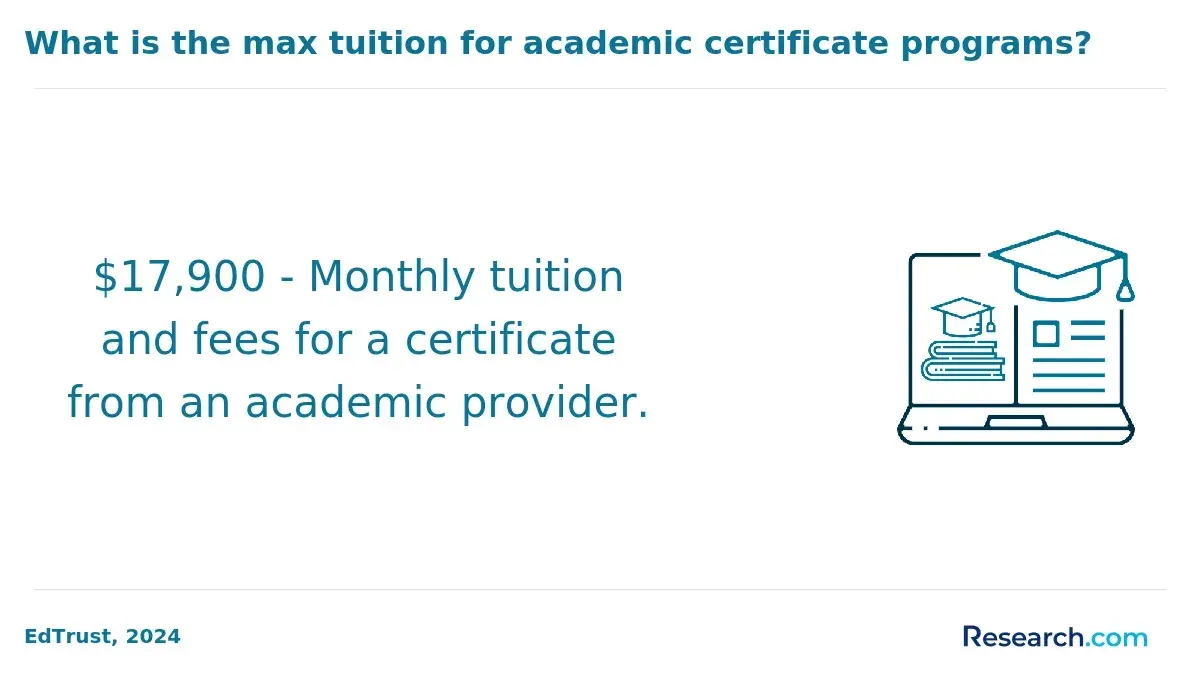
Published tuition is only one part of the investment. Compare the cost categories below across finalists, using the same enrollment status and completion plan.
| Cost factor | Why it changes the total | What to confirm |
| Tuition or subscription fee | May be charged per course, term, month, or program | Price through expected completion date |
| Required technology | Laptop, software, webcam, and internet may be necessary | Minimum device and software specifications |
| Exams and credentials | Certification tests, proctoring, and retakes may be separate | Whether exam fees are included |
| Hands-on requirements | Labs, tools, travel, uniforms, and placements can add costs | All required in-person expenses |
| Financing | Federal aid is generally limited to eligible programs at eligible institutions | Eligibility, employer reimbursement, and refund terms |
For a longer academic route, compare an accelerated bachelor's degree with stacking certificates. A degree can cost more and take longer, but may be the more direct fit when postings consistently require one.
What core courses and skills are typically covered in online professional certificate curricula?
Professional certificate curricula are narrower than degree curricula and should map directly to a workplace capability. Common core areas include industry terminology, tools and workflows, ethics and privacy, communication, documentation, data interpretation, and applied projects. Strong programs show exactly which software, standards, or frameworks students will use rather than promising vague "career readiness."
Compare curriculum depth against the job description you want. The following signals help distinguish a practical program from a collection of introductory videos.
- Projects resemble real tasks, such as a dashboard, campaign brief, coded record, risk assessment, or project plan.
- Assessments require applied work and feedback rather than only multiple-choice quizzes.
- Instructors or curriculum advisors have relevant current industry experience.
- The program explains whether students retain a portfolio, work samples, or verifiable digital record of completion.
- Required tools match those used in recent job postings for the target role.
AI literacy is increasingly relevant in office, analytics, design, and technology programs, but evaluate it carefully. Useful instruction covers responsible use, verification, privacy, workflow improvement, and field-specific tools; a generic AI module should not replace core technical or professional skills.
What careers can online professional certificates lead to and in which industries?
Online professional certificates can support entry-level roles, role transitions, or advancement when they teach skills employers recognize. Common destinations include IT support, data analysis support, project coordination, digital marketing, bookkeeping, medical records, customer success, UX support, and cybersecurity-adjacent work. The realistic outcome depends on prior education, experience, portfolio quality, local hiring, and whether the occupation has legal entry requirements.
Use career evidence rather than provider marketing to decide whether a certificate is enough. Review several current job postings and identify the minimum credential, required tools, requested experience, and any named certification. If postings require a degree or license, treat the certificate as preparation or a complement.
Certificates are often strongest for people who already have transferable experience and need a credible way to demonstrate a new specialty. Career changers without related experience may need projects, volunteer work, internships, apprenticeships, or a broader degree alongside the certificate. Professionals who need graduate-level specialization can also evaluate 1 year master's programs when a short certificate will not meet the role's education threshold.
What salary ranges and earning potential are common for roles requiring professional certificates?
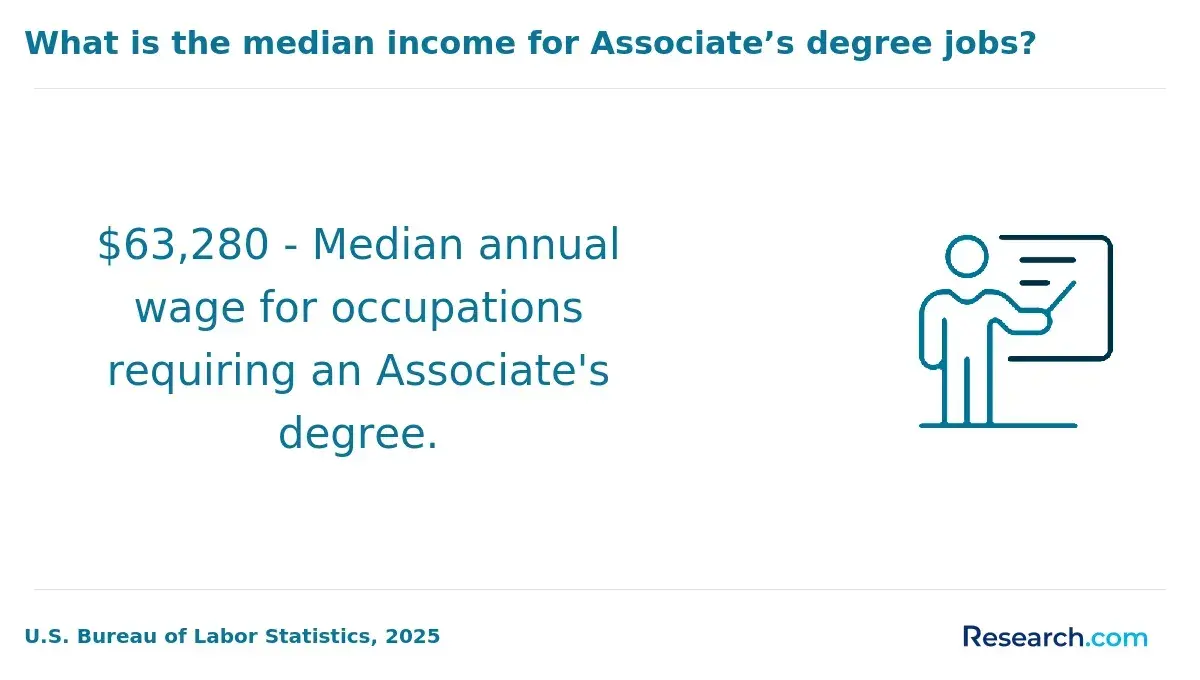
Salary research should start with the occupation, location, experience level, and employer - not a certificate provider's advertised outcome. The U.S. Bureau of Labor Statistics' May 2024 Occupational Employment and Wage Statistics reported a national median annual wage of $102,420 for information security analysts. That figure indicates the earning level across the occupation, whose roles typically require substantial education and experience; it does not mean a short certificate qualifies someone for or produces that pay.
This context helps set realistic expectations for several certificate-adjacent pathways.
| Occupation | BLS May 2024 median annual wage | Certificate relevance and limitation |
| Medical records specialists | $59,200 | Certificates may support coding or records skills; employers may prefer or require certification. |
| Computer user support specialists | $60,340 | Certificates can demonstrate technical skills, but employer education requirements vary. |
| Paralegals and legal assistants | $61,010 | A paralegal certificate may help, particularly with related education or experience; it does not authorize legal practice. |
| Web developers and digital designers | $95,380 | Portfolio and demonstrated skills can matter substantially; job requirements differ by employer. |
Use national medians as a benchmark, not a personal forecast. State and metro pay, specialization, years of experience, schedule, and industry can materially change offers. Compare tuition and lost work time against the incremental opportunities the credential could plausibly unlock.
Do online professional certificates meet licensing or certification requirements in regulated fields?
Sometimes, but only when the program is specifically designed to meet the relevant requirements. Licensure is a legal authorization issued by a government authority, while certification is typically a voluntary or employer-requested credential issued by a private certifying organization. Online coursework can be part of either pathway, but regulated fields frequently require supervised clinical hours, approved curriculum, examinations, background checks, or state-specific applications.
Before enrolling in healthcare, education, counseling, skilled trades, law-related, or public-safety training, confirm these details directly with the state board or certifying organization:
- Whether the exact program, provider, and delivery format are accepted in your state.
- Whether in-person labs, practicum hours, apprenticeship hours, or clinical placement are required.
- Whether program completion makes you eligible for an exam or whether additional work experience is required.
- Whether the credential has renewal, continuing education, or reciprocity rules.
- Whether the school can enroll students in your state and arrange required placements.
A major red flag is language implying "license eligible everywhere" without naming the state or approval basis. Requirements can change, and a provider's general statement should never replace confirmation from the applicable regulator.
Other Things You Should Know About
They can be worthwhile when the curriculum teaches skills tied to a specific role, the provider is credible to target employers, and the total cost is proportionate to the opportunity. They are less compelling when a job requires a degree, license, extensive experience, or a different named certification.
A certificate can strengthen an application, especially for skills-based or support roles, but it is not a job guarantee. Pair it with relevant projects, a portfolio where applicable, networking, and the experience level employers request.
Recognition varies by employer and field. Check local job postings and ask hiring managers or professionals in your target field which credentials they value. A well-known industry certification may carry more weight than a general course-completion certificate in some technical fields.
Choose a certificate for targeted upskilling, career exploration, or a specific employer-recognized skill. Choose a degree when job postings require it, when you need broad foundational learning, or when you want a credential with wider long-term mobility. A credit-bearing certificate can be a useful first step if it can stack into a degree.
References
- Best Continuing Education Courses: Rankings [2026] https://www.straighterline.com/blog/degreecompletion-best-continuing-education-courses
- Accredited Online School Programs: High Completion Rates https://advantagesschool.com/accredited-online-school-programs-with-high-completion-rates/
- Course Completion Rate Benchmarks: Improve Yours (2026) | Ruzuku https://www.ruzuku.com/learn/articles/course-completion-rates
- Best Online Professional Certificate Programs in 2026 - SchoolMaker https://schoolmaker.com/blog/best-online-professional-certificate-programs
- Best online certificates for career growth | edX https://www.edx.org/certificates
- 2025's Best Online Graduate Certificate Programs in the U.S. https://www.onlinemastersdegrees.org/graduate-certificate-programs/
- Why Choosing the Right Certifications Can Help Your Career https://www.managementconcepts.com/resource/why-choosing-the-right-certifications-can-define-and-accelerate-your-career/
- Online Certificates for Job-Ready Skills | Grow with Google https://grow.google/certificates
- The Certification Advantage: How Credentials Drive Career Growth https://courses.msicertified.com/blog/the-certification-advantage-how-credentials-drive-career-growth
- Are online education programs worth it? Understanding their value - MSU Denver https://www.msudenver.edu/innovative-lifelong-learning/blog/are-online-education-programs-worth-it-understanding-their-value/