2027 Best Online Certificate Programs That Pay Well

Co-Founder and Chief Data Scientist
Choosing a short online program is difficult when "high paying" can mean very different things across employers and occupations. Online certificates can build job-ready skills faster than a degree, but they do not automatically create eligibility for licensed roles or guarantee a salary. The U.S. Bureau of Labor Statistics reports a 2024 median annual wage of $61,010 for paralegals and legal assistants, illustrating the potential of some certificate-aligned careers. This guide helps career changers, working adults, and recent graduates compare program types, costs, recognition, and realistic next steps.
Key Things You Should Know
- High-value online certificates usually align with a specific employer need, such as IT support, medical coding, bookkeeping, paralegal work, web design, or skilled-trade theory; confirm that the credential matches the job posting and any required exam.
- Occupation-level pay can be strong: BLS reports 2024 median wages of $77,660 for radiologic technologists and technicians and $62,350 for electricians, but many clinical and trade roles require in-person labs, supervised experience, apprenticeships, or state licensing beyond online coursework.
- Compare total cost, completion time, accreditation, exam eligibility, and local job demand - not tuition alone. For reference, average published in-district tuition and fees at public two-year colleges were $4,050 in 2024-25, though individual certificate costs can be far lower or higher.
Top 10 Best Online Certificate Programs That Pay Well
Popular Trade School Programs
Online trade certificates commonly cover HVAC fundamentals, electrical theory, construction estimating, welding safety, CAD, and industrial maintenance. They suit learners who need flexible theory instruction before hands-on training. A fully online program is rarely enough for a licensed electrician, HVAC technician, or welder because employers and state boards may require field hours, apprenticeships, practical assessments, or EPA certification. Choose a credit-bearing community-college certificate when you may later pursue an associate degree; choose focused career training when a local employer recognizes it and the program clearly states its hands-on component.
Healthcare Programs
Online healthcare certificates can prepare students for medical billing and coding, health information support, pharmacy technician coursework, medical assisting theory, and medical office administration. They are best for administrative or documentation-focused entry paths, while patient-facing programs usually require clinical placements. Medical records specialists had a 2024 median annual wage of $50,250, according to BLS, but coding roles may favor applicants with an industry certification after training. Before enrolling, confirm whether the program prepares you for a certification exam, arranges clinical experiences if needed, and meets requirements in the state where you intend to work.
Criminal Justice / Law Programs
Online certificates in paralegal studies, legal research, e-discovery, court reporting support, criminal justice, and legal office administration can help learners enter legal services or public-safety support roles. A paralegal certificate is an educational credential; it is not a law license or a guarantee of paralegal employment. For career-switchers with a bachelor's degree, a post-baccalaureate paralegal certificate may be more relevant than an introductory course. Review whether employers in your area prefer American Bar Association-approved paralegal education, because approval is voluntary and program recognition varies by market.
Arts & Design Programs
Online arts and design certificates often teach graphic design, UX/UI foundations, digital marketing design, web production, photography, animation, or CAD. They can be worthwhile when the program produces portfolio-ready work and teaches current software workflows. For web developers and digital designers, BLS reports a 2024 median annual wage of $95,380; however, that occupation includes workers with varied education and experience, not certificate holders alone. Prioritize programs with project critique, accessible software costs, portfolio ownership, and a clear distinction between design training and broader software engineering preparation.
What are the highest-paying online certificate fields for fast career entry?
The strongest fast-entry choices are usually fields where a short credential supports a specific entry role, while experience, an exam, or a portfolio creates advancement potential. IT support, cybersecurity foundations, medical coding, paralegal support, bookkeeping, payroll, and web design can be substantially online. Licensed clinical, electrical, and technical-trade careers may pay well but are not truly online-only pathways.
This comparison separates jobs that can plausibly begin after short training from occupations that require additional regulated experience. BLS wage figures are occupation-wide medians for 2024, so they are useful for comparing labor markets but should not be read as starting pay or as outcomes caused by a certificate.
| Field | Typical online credential route | Additional gate to consider | Relevant 2024 occupation median wage |
| IT support | Noncredit professional certificate or college certificate | Vendor certification and hands-on troubleshooting practice may help | Computer support specialists: $61,550 |
| Paralegal support | Certificate in paralegal studies | Employer preferences and local program recognition vary | Paralegals and legal assistants: $61,010 |
| Medical records | Medical billing, coding, or health information certificate | Industry certification may be preferred | Medical records specialists: $50,250 |
| Web and digital design | Portfolio-based design or web certificate | Portfolio and technical skill testing commonly matter | Web developers and digital designers: $95,380 |
| Electrician pathway | Online electrical theory certificate | Apprenticeship, supervised hours, and licensing rules | Electricians: $62,350 |
For the fastest employability, select a role with local entry-level postings, a defined skill test, and no missing legal requirement. A learner seeking quick remote work may favor IT support or coding; a learner seeking long-term skilled-trade earnings should treat online instruction as one component of an apprenticeship pathway, not a substitute for it.
How do online certificate programs compare to campus programs for flexibility and outcomes?
Online programs can make scheduling easier, especially for theory-heavy training, but flexibility does not remove deadlines, practicum requirements, or employer expectations. Asynchronous courses work well for working adults who can manage weekly assignments independently. Live online classes may provide more interaction but require attendance at set times. Campus or hybrid delivery is often the better fit where instructors must assess physical techniques, laboratory work, equipment use, or patient care.
A competency based degree can be a useful alternative for experienced learners who can demonstrate skills quickly, though it is broader than a short certificate and may require a larger time and financial commitment.
The table highlights the practical trade-off: online delivery can improve access, while program design determines whether learners can meet occupational standards.
| Decision factor | Fully online certificate | Hybrid or campus certificate | Best fit |
| Schedule control | Usually highest, particularly in asynchronous courses | Lower because labs or meetings occur on site | Working adults needing theory coursework |
| Hands-on assessment | Limited unless arranged locally | Direct equipment and instructor access | Trades and patient-facing healthcare |
| Networking | May require deliberate virtual outreach | Often easier through local classmates and employers | Career changers seeking local placement |
| Career outcome evidence | Must be verified program by program | Must be verified program by program | Any learner comparing value |
Do not assume an online credential has weaker or equal outcomes simply because of delivery mode. Instead, ask whether the same instructors, curriculum, assessment standards, career services, and eligibility for external exams apply to online students.
How can you verify that an online certificate program is properly accredited?
First identify what needs recognition. A credit-bearing college certificate should generally come from an institution accredited by an agency recognized by the U.S. Department of Education or the Council for Higher Education Accreditation. A noncredit professional certificate may not be institutionally accredited; in that case, its value depends more on employer recognition, curriculum currency, instructor expertise, and whether it meets a named certification body's education requirements.
Use this verification sequence before paying a deposit:
- Confirm the legal name of the provider and whether the certificate is credit-bearing, noncredit, undergraduate, graduate, or continuing education.
- Check the institution and any relevant programmatic accreditor in official directories rather than relying on a logo on the provider's website.
- Read the state licensing board's rules if the target role is regulated, especially for nursing, allied health, counseling, electrical work, or cosmetology.
- Ask in writing whether online students qualify for required clinical placements, examinations, and licensure application steps in their state.
- Compare recent completion, placement, and exam-pass information only when the provider explains its definitions and reporting period.
Common red flags include claims of "national accreditation" without naming an accreditor, vague promises of licensing eligibility, pressured enrollment deadlines, and no written refund policy. Military-connected students should also compare transfer policies, deployment flexibility, and benefit support at an online military college if those features are central to their decision.
What admission requirements and prior education do online certificate programs typically need?
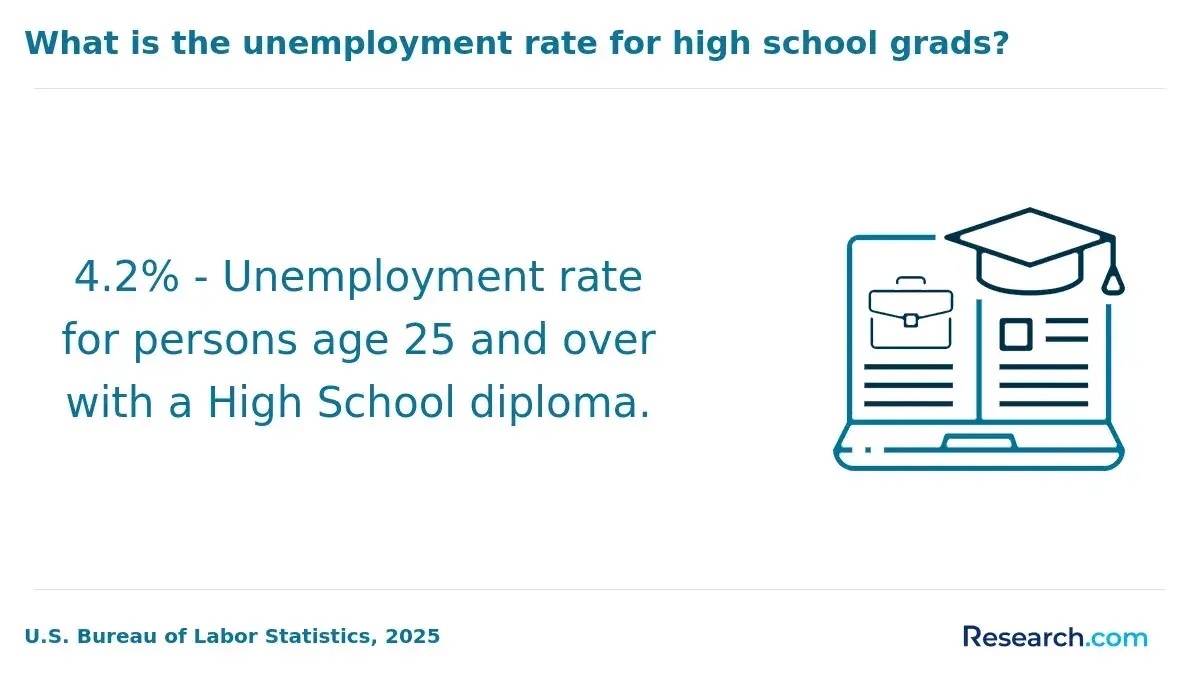
Requirements depend on the credential type, not on whether classes are online. Short, noncredit career certificates may require only a minimum age, payment, identity verification, and basic computer access. College-issued undergraduate certificates commonly require a high school diploma or equivalent and an application. Post-baccalaureate or graduate certificates generally require a prior degree, and advanced technical certificates may require prerequisites in math, anatomy, programming, or professional experience.
Before applying, distinguish between an open-enrollment course and a selective program. The following questions expose whether a program fits your current preparation:
- Is the certificate designed for beginners, career changers, or experienced professionals?
- Are placement tests, prerequisite courses, background checks, immunizations, drug screening, or health clearances required?
- Will prior college credit, military training, industry certifications, or work experience satisfy prerequisites?
- Does admission guarantee a clinical placement, internship, lab seat, or only access to online coursework?
- Are international, out-of-state, or employer-sponsored learners subject to different eligibility rules?
A GPA and standardized tests are often irrelevant for short noncredit training, but applicants should not assume that applies to academic or clinical certificates. Request a program-specific checklist and calculate the time needed for prerequisites before comparing advertised completion times.
How long do online certificate programs take, and what do they cost overall?
Many online professional certificates can be completed in weeks or a few months, while academic certificates often run one or two terms and clinical or trade pathways can take longer because of required in-person components. Completion time depends on course sequencing, transfer credit, weekly availability, practicum scheduling, and whether a learner studies part time. An advertised "six-month" program can take longer if the next required course is not offered immediately.
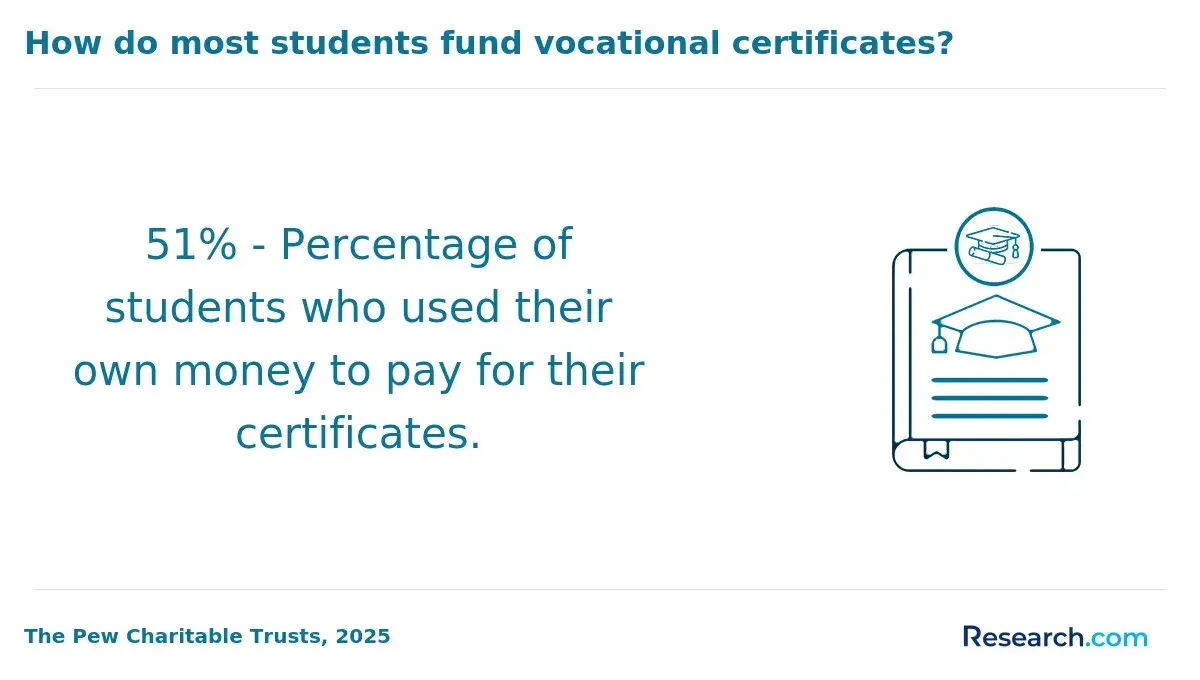
Published tuition is only one part of cost. College Board reported average 2024-25 published in-district tuition and fees of $4,050 at public two-year colleges; use that as broad context, not as a price quote for any specific certificate. Private providers, public colleges, and employer training programs can have very different pricing models.
This cost checklist helps compare programs on a like-for-like basis:
- Tuition or subscription charges, including whether the price covers every required course
- Application, technology, proctoring, graduation, laboratory, and practicum fees
- Books, software licenses, equipment, tools, uniforms, insurance, and background checks
- External certification examination fees, preparation materials, and renewal costs
- Travel, unpaid clinical time, reduced work hours, and other opportunity costs
Federal aid eligibility depends on the institution, program structure, and student eligibility; noncredit programs often do not qualify. Ask about payment plans, employer tuition assistance, workforce grants, and whether credits could later apply to a degree. If your goal ultimately requires a bachelor's degree, compare the certificate's stackability with a cheapest online bachelor's degree option rather than paying separately for training that will not transfer.
What courses and skills do top-paying online certificate programs usually cover?
High-value programs teach a defined workflow that an employer can observe, test, or verify. They combine technical knowledge with documentation, communication, security, compliance, and problem-solving rather than offering only broad career advice. The best curriculum depends on the target job, but learners should be able to point to completed projects, simulations, case files, or supervised competencies.
The table shows common skill patterns and the evidence that can make a certificate more useful in a job search.
| Career area | Common course topics | Skills employers can evaluate | Useful evidence of readiness |
| IT support and cybersecurity | Operating systems, networking, troubleshooting, security basics | Ticket resolution, user support, documentation, access control | Lab work, help-desk simulations, vendor exam preparation |
| Medical coding and records | Medical terminology, coding systems, privacy, revenue cycle | Accurate coding, data quality, confidentiality | Timed coding exercises and exam-aligned coursework |
| Paralegal support | Legal research, writing, civil procedure, ethics, e-discovery | Research, citation, document organization, deadline management | Writing samples and legal-document portfolio |
| Digital design | Design principles, UX research, prototyping, web tools | Visual communication, prototyping, accessibility awareness | Curated portfolio with process explanations |
| Skilled-trade theory | Safety, codes, measurements, schematics, equipment fundamentals | Technical interpretation and safety knowledge | Practical training plan or apprenticeship progression |
AI tools are increasingly part of workplace workflows, particularly in support, coding, design, and legal-document tasks. Choose programs that teach responsible verification, privacy, and human review, not programs that imply automation eliminates the need to learn core concepts.
What jobs can you get with an online certificate, and in which industries?
An online certificate can support an application for entry-level or junior roles when the credential matches the employer's needs and the role is not restricted by licensing rules. Job titles vary widely, and employers may prioritize experience, a portfolio, a separate certification, or a degree. Read current local postings before choosing a program so the credential is tied to actual hiring language.
Potential entry points include IT support specialist, help-desk technician, junior web designer, billing specialist, medical records clerk, coding trainee, legal assistant, paralegal assistant, payroll clerk, bookkeeper, project coordinator, CAD drafter trainee, and customer success support. Healthcare providers, insurers, law firms, government agencies, financial-services firms, managed IT providers, manufacturers, and digital agencies all use some of these roles.
For learners who already have a bachelor's degree and need specialized advancement rather than entry-level training, a 1 year online masters may offer a better return than stacking unrelated short certificates. Conversely, a certificate is often the lower-risk starting point when you need to test a field before committing to graduate study.
Apply strategically by translating coursework into evidence: name relevant tools, include projects where appropriate, describe supervised hours honestly, and state any exam date or certification status accurately. Never claim eligibility for a licensed role until the relevant board confirms it.
What salary ranges and earning growth can certificate holders realistically expect?
Salary depends on occupation, location, experience, shift differentials, employer type, performance, and credentials beyond a certificate. A certificate can lower the barrier to proving foundational skills, but it does not establish the wage for an entire occupation. Use occupational wage data to understand a field's ceiling and market, then review local entry-level postings to estimate a realistic starting range.
BLS reported a 2024 median annual wage of $61,550 for computer support specialists. That benchmark includes workers with different education levels and experience, so a new certificate holder may start below it; the figure is most useful as a signal that support skills can lead to a sizable established occupation rather than as a personal earnings forecast.
Assess earning growth through a career ladder, not a single number. In IT, entry support work may lead to systems administration, cloud operations, cybersecurity, or specialized applications support. In healthcare administration, coding, auditing, compliance, and revenue-cycle roles may offer progression. In trades, apprentice-to-journeyworker progression and local licensing can matter more than the original classroom certificate. Ask schools for role-specific outcomes, the number of graduates included, and whether reported earnings cover full-time workers only.
How do licensing, certification exams, and professional standards work for these programs?
Licensure, certification, and a program certificate are separate things. A school issues a certificate after you complete its curriculum. A certification is normally awarded by an independent professional organization after candidates meet requirements and often pass an exam. A license is government authorization to practice a regulated occupation within a state or jurisdiction. One program may prepare you for an exam, but completion does not itself award the external credential or license unless the provider explicitly says so.
Before enrolling in a regulated or exam-driven pathway, take these steps:
- Name the exact job title and the state where you intend to work.
- Find the relevant state board or certification body and review current eligibility rules directly.
- Confirm that the program's curriculum, clinical hours, laboratory requirements, and delivery format satisfy those rules for online students.
- Budget for exam registration, fingerprinting, background checks, continuing education, and renewal requirements where applicable.
- Keep written confirmation from the school if it represents that the program meets a particular state or examination requirement.
Be particularly cautious with healthcare and skilled-trade advertising. A school may provide valuable exam preparation while leaving the learner responsible for clinical placement, work hours, or a separate application. For nonregulated fields such as design, a portfolio and demonstrable skills may carry more weight than a third-party credential.
Other Things You Should Know About
They can be worthwhile when they teach skills tied to a specific entry role, are recognized by employers, and fit your budget. They are less useful when they do not provide required hands-on training, exam eligibility, or a portfolio.
An online certificate is usually awarded by a school or training provider after coursework. A professional certification is awarded by a certifying organization after meeting its standards, which may include an examination, experience, or continuing education.
Usually not without additional in-person requirements. Many patient-facing healthcare occupations require clinical training, supervised practice, and state-specific licensing steps. Verify requirements with the relevant state board before enrolling.
Review local job postings, compare their requested skills with the curriculum, ask whether the program includes projects or placements, and verify whether employers recognize the provider or require a separate certification.
References
- Best online certificates for career growth | edX https://www.edx.org/certificates
- Online Certificate Programs, Online Certificate Courses https://www.onlinedegrees.com/best-online-certificate-programs/
- Top IT Certifications that Will Make You the Most Money https://www.onlc.com/blog/top-certifications-will-make-money/
- The Top 5 Certificate Programs for Jobs With Growth Potential | CourseStorm https://www.coursestorm.com/blog/top-certificate-programs-for-jobs
- Professional Business Certifications to Boost Your Career in 2025 https://www.business.com/articles/best-business-certifications/
- Best Online Certificate Programs | Enhance Your Skills https://bootcampgis.com/best-certificate-programs-online/
- The Highest-Paying Skills You Can Learn Online: Career Skills That Can Increase Your Earning Potential https://fatumasvoice.org/312891/
- 9 Best Online Certificate Programs that Lead to Higher Pay https://blackstone.edu/9-best-online-programs-for-higher-pay/
- Upskilling Certificates: An Affordable Way to Increase Income https://allcampus.com/newsroom/upskilling-certificates-an-affordable-way-to-increase-income/
- 20 Necessary IT Certifications + Salaries I Skillsoft - Skillsoft https://www.skillsoft.com/blog/top-paying-it-certifications