2027 Best Online Microcredentials for Career Growth

Co-Founder and Chief Data Scientist
Choosing an online microcredential is difficult because short programs vary widely in rigor, recognition, cost, and career value. The U.S. Bureau of Labor Statistics projects total employment to grow by 6.7 million jobs from 2023 to 2033, with technology, healthcare, and service occupations shaping much of that demand.
This guide helps career changers, working adults, and recent graduates compare reputable online microcredentials, understand what they can realistically lead to, and avoid paying for training that does not match their target role.
Key Things You Should Know
- Choose a microcredential by the job skill it proves, the provider's credibility, and whether employers in your field recognize it - not by course length or marketing claims alone.
- Online microcredentials commonly take days to several months; credit-bearing university certificates usually take longer but may be stackable toward a degree, while noncredit badges often are not.
- BLS projects 6.7 million additional U.S. jobs between 2023 and 2033, but a microcredential alone does not replace required degrees, supervised training, certification exams, or state licenses.
Top 10 Best Online Microcredentials for Career Growth
Popular Trade School Programs
Online trade-focused microcredentials can teach estimating, blueprint reading, OSHA awareness, construction management software, HVAC fundamentals, or electrical theory. They suit workers seeking introductory knowledge or advancement into coordination roles. Hands-on trades such as welding, plumbing, electrical work, and HVAC service normally require in-person labs, apprenticeships, supervised experience, and sometimes state or local licensing. Choose a hybrid or employer-sponsored pathway when physical skills or licensing are central to the job goal. Confirm whether the program prepares you for a separate industry exam rather than assuming completion creates a license.
Healthcare Programs
Healthcare microcredentials may cover medical terminology, health information privacy, electronic health records, patient navigation, billing, coding foundations, or healthcare data analytics. They can be useful for administrative and support roles or for testing interest in the field. However, online-only training generally cannot qualify someone for licensed clinical work such as nursing, dental hygiene, radiologic technology, or medical assisting with required clinical hours. Check employer requirements carefully: a course certificate differs from a professional certification such as a coding credential earned through an exam and eligibility standards.
Criminal Justice / Law Programs
Common online options include legal research, paralegal studies, cybersecurity law, victim advocacy, corrections, emergency management, and criminal justice administration. These credentials can strengthen job-related knowledge for current public safety workers, legal support staff, or students exploring a longer degree path. They do not authorize legal practice, replace a Juris Doctor degree, or guarantee eligibility for law-enforcement employment. Background checks, academy training, physical standards, state rules, and employer hiring policies may apply. For paralegal work, review local employer expectations and any voluntary certification requirements.
Arts & Design Programs
Online microcredentials in UX design, graphic design, digital marketing, video editing, animation, web design, and content strategy can help learners build focused portfolio skills. Their value is strongest when coursework produces work samples that match real job descriptions. A badge without a portfolio is usually less persuasive in creative hiring. Compare instructor feedback, software access, project ownership, and portfolio review opportunities before enrolling. Learners pursuing licensed architecture or regulated design specialties generally need a degree and supervised pathway rather than a short online credential alone.
What are online microcredentials?
An online microcredential is a short, focused learning credential that verifies completion of a defined set of skills or outcomes. Providers may include universities, community colleges, professional associations, employers, technology companies, and online learning platforms. Formats include digital badges, noncredit certificates, credit-bearing certificates, professional certificates, and vendor-specific training.
The best option depends on the outcome you need: a job-relevant project, preparation for a certification exam, academic credit, or documented upskilling for a current employer. This comparison separates common formats so you can avoid treating every short credential as equivalent.
| Credential type | Typical provider | Best use | Important limitation |
| Digital badge or course certificate | University or learning platform | Documenting a narrow skill | Usually noncredit and may have limited transfer value |
| Professional certificate | University, employer, or platform | Structured career preparation and portfolio work | Employer recognition varies by field |
| Credit-bearing certificate | Accredited college or university | Academic progression or stackable study | Often costs more and follows academic policies |
| Industry certification | Independent certifying organization | Meeting a profession's competency standard | May require an exam, experience, renewal, or continuing education |
A certificate is awarded for completing education or training. A certification is awarded by a certifying body after meeting its standards, which may include an examination and ongoing renewal. Some microcredentials prepare learners for certification, but they are not automatically certifications themselves.
How do I choose an accredited program?
Accreditation matters most when you need college credit, federal financial aid eligibility, transfer options, or preparation for a regulated profession. Institutional accreditation evaluates a college or university as a whole; programmatic accreditation evaluates particular professional programs. A platform or private training provider may be legitimate without being accredited, but its credential may not transfer or satisfy licensing rules.
Use the following checks before paying a deposit. They help distinguish a credible skills program from one that makes vague promises.
- Identify whether the credential is credit-bearing, noncredit, or an industry certification preparation course.
- For colleges, verify institutional accreditation through the U.S. Department of Education or the Council for Higher Education Accreditation databases.
- For regulated occupations, ask the state licensing board whether the exact online format meets educational and clinical requirements.
- Review the curriculum, instructor qualifications, assessment method, refund policy, and total required fees.
- Search current job postings in your target area to see whether employers request the named skill, credential, degree, or certification.
Red flags include claims of guaranteed jobs or licenses, refusal to identify the issuing organization, unclear tuition, no description of graded work, and language suggesting that a completion certificate is the same as a professional certification.
Are online microcredentials worth it?
Online microcredentials can be worth it when they solve a specific skills gap, support a promotion discussion, prepare you for a recognized certification, or produce evidence of work you can show employers. They are usually a weaker investment when a target occupation requires a degree, apprenticeship, clinical placement, clearance, or license that the program cannot provide.
Value is easier to judge by comparing the credential with alternatives. A short credential is often appropriate for focused reskilling; a degree may be better when employers consistently require broad academic preparation. Readers considering a longer but still efficient pathway can also compare quick degrees that pay well before committing to several unrelated badges.
Ask yourself whether one completed project, exam eligibility, or measurable workplace skill would change your candidacy. If the answer is no, pause before enrolling. Build a small portfolio, request employer feedback, or take an introductory course first.
Which jobs accept microcredentials?
Employers may accept microcredentials for jobs where demonstrable skills matter more than a regulated academic pathway. Common examples include help desk support, data support, digital marketing coordination, project coordination, customer success, bookkeeping support, web content work, UX support, and entry-level cybersecurity tasks. Acceptance varies by employer, location, experience, and the strength of your work samples.
The table shows how a microcredential typically functions in selected career areas. Occupational wages are not wages earned because of a credential; they describe the occupation and may require additional education or experience.
| Career area | How a microcredential can help | What may still be required |
| IT support | Builds troubleshooting, networking, or cloud fundamentals | Portfolio, vendor certification, experience, or degree preference |
| Data analytics | Demonstrates spreadsheet, SQL, visualization, or dashboard skills | Projects and stronger statistics or programming skills for advanced roles |
| Digital marketing | Shows campaign, analytics, SEO, or content skills | Portfolio and current platform knowledge |
| Healthcare administration | Introduces terminology, privacy, records, or billing workflows | Employer-specific software experience or separate certification |
| Skilled trades management | Supports estimating, safety, scheduling, or project coordination | Field experience, apprenticeship, or licensure for trade work |
If employers in your field require an associate degree, compare the credential against an easiest associates degree option that still meets the employer's educational standard. The "easiest" choice is not automatically the best choice if it lacks required coursework or local recognition.
How long do microcredentials take?
Completion time ranges from a few hours for a single badge to several months for a structured professional certificate. Credit-bearing undergraduate certificates often follow academic terms and may take roughly one or more semesters part time, while self-paced provider certificates can move faster if you already have the required background.
Speed has trade-offs. An accelerated course may be useful for experienced workers refreshing one skill, but beginners often need time for projects, feedback, and practice. A microcredential is not necessarily the fastest route if your destination requires graduate preparation; compare program requirements with a fastest masters degree only when a master's degree is genuinely required for your intended role.
Before enrolling, estimate weekly workload from the syllabus, not only the advertised completion time. Add time for software setup, assignments, exam preparation, portfolio revisions, and any proctored assessment.
How much do online microcredentials cost?
Online microcredential pricing ranges widely because providers package different services: recorded lessons, live instruction, assessments, academic credit, career coaching, lab access, exam vouchers, and software licenses. A low tuition figure can become expensive if a required certification exam, subscription, textbook, equipment, or retake fee is excluded.
Compare the full cost rather than the advertised course price. The categories below help you request a usable total before you enroll.
- Tuition or platform subscription
- Application, registration, technology, and proctoring fees
- Required software, devices, tools, textbooks, or lab materials
- Certification examination, background-check, or renewal costs where applicable
- Lost work time, travel for required labs, and costs of repeating a course or assessment
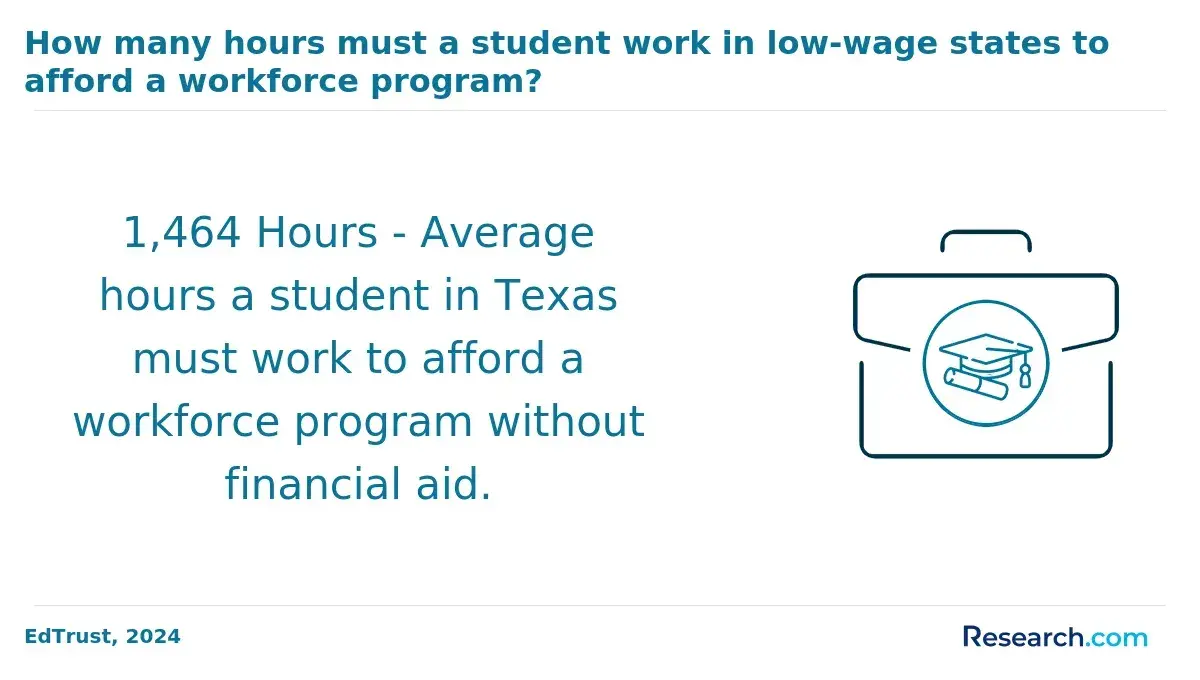
Federal student aid is generally tied to eligible programs at participating institutions and may not apply to short noncredit offerings. Ask about employer tuition assistance, workforce grants, installment plans, and refund deadlines. If schedule flexibility matters more than a short credential, explore a self-paced bachelor's degree online option that may provide a broader credential and aid eligibility, depending on the school and program.
What are the admission requirements?
Admission requirements depend on the provider and credential level. Many noncredit microcredentials have open enrollment and require only an email account, payment method, and basic technology access. University certificates may require an application, prior coursework, a degree, or evidence of professional experience. Advanced technology, analytics, healthcare, and graduate-level programs may expect prerequisite knowledge.
Do not assume GPA, standardized tests, transfer credit, or formal admissions apply to every program. Instead, confirm the requirements that affect your ability to finish successfully:
- Required prior education, work experience, or prerequisite courses
- Minimum technical skills, software, equipment, and reliable internet access
- English-language, identity-verification, or proctored-exam requirements
- Clinical, background-check, vaccination, or placement requirements for applicable healthcare pathways
- Whether prior learning, transfer credit, or employer training can reduce coursework
A program with open enrollment can still be demanding. Review a sample assignment and ask whether tutoring, instructor access, and accessibility accommodations are available.
What skills do these programs teach?
The strongest online microcredentials teach a defined capability that can be assessed: using a tool, analyzing a dataset, applying a framework, communicating findings, or completing a realistic workflow. Generic "career readiness" content has less value unless it is paired with concrete practice and employer-relevant evidence.
For career growth, prioritize programs that develop both technical and transferable skills. A useful curriculum usually includes the following combination:
- Role-specific technical skills, such as SQL, cloud tools, bookkeeping systems, design software, or medical-record workflows
- Applied problem solving through case studies, simulations, labs, or client-style projects
- Written, visual, or verbal communication of work results
- Ethical, privacy, security, and accessibility practices relevant to the field
- A final artifact, assessment score, or portfolio piece you can explain in an interview
AI-related skills are increasingly relevant, but choose instruction that teaches verification, privacy, workflow design, and responsible use rather than relying on a tool-specific badge alone. Tools change quickly; sound judgment and demonstrated work remain portable.
How do I verify licensing requirements?
Licensing is controlled by states, territories, and sometimes local boards - not by an online course provider. This is particularly important for healthcare, teaching, counseling, accounting, construction trades, real estate, legal practice, and other regulated fields. A provider's statement that a course is "career-ready" does not establish eligibility for a license.
Verify requirements in this order before enrolling in a program tied to regulated work:
- Locate the official licensing board for the state where you plan to work.
- Find the board's current education, examination, supervised-experience, background-check, and renewal requirements.
- Ask the school whether the exact program and online delivery format meet those requirements in your state.
- Request the answer in writing and retain it with the program curriculum and cost information.
- Confirm whether a separate exam, practicum, internship, or apprenticeship is required after completion.
If the provider cannot answer clearly, contact the licensing board directly. This step is essential because rules can change and may differ for residents, distance learners, and applicants educated in another state.
Other Things You Should Know About
Employers may recognize them when the provider, curriculum, and demonstrated skills align with the role. Recognition is strongest when you can show a portfolio, assessment, work experience, or an industry certification alongside the credential.
Some credit-bearing certificates may transfer or stack into a degree at the issuing institution. Most noncredit badges and platform certificates do not automatically transfer. Get the policy in writing before enrolling.
In 2027, industries like information technology, healthcare, and digital marketing are best suited for online microcredentials. Each offers targeted microlearning paths to quickly update skills tailored to industry-specific advances and emerging technologies, helping professionals stay competitive in evolving fields.
Choose a university when academic credit, transferability, or institutional reputation is important. Choose a reputable platform or industry provider when you need a narrow, current skill quickly and employers value the provider's training or related certification.
References
- Explore Microcredentials for Career Growth | HirePaths https://hirepaths.com/blog/2024/09/02/explore-microcredentials-career-growth
- Microcredentials: Empowering Modern Learners & Employers https://evolllution.com/microcredentials-empowering-modern-learners-employers
- Microcredentials: What They Are and Why They Matter https://www.citizensbank.com/student/articles/what-are-microcredentials.aspx
- 10 Key Questions About Micro-Credentials https://trainingmag.com/10-key-questions-about-micro-credentials/
- Microcredentialing and the role it will play in the future of work https://standtogether.org/stories/future-of-work/microcredentialing-and-the-role-it-will-play-in-the-future-of-work
- The Value of a Degree vs. Micro-credentials in Higher Education | Elmhurst University https://www.elmhurst.edu/blog/the-value-of-a-degree-vs-micro-credentials-in-higher-education/
- Micro-Credentials | NEA https://www.nea.org/professional-excellence/professional-learning/micro-credentials
- The Growing Importance of Micro-Credentials in Higher Education https://www.keg.com/news/the-rising-significance-of-micro-credentials-in-higher-education
- How can micro-credentials help employee development? https://employmenthero.com/blog/micro-credentials-employee-development/
- The Ultimate Guide to Microcredentials | BenchPrep https://www.benchprep.com/ebooks/ultimate-guide-microcredentials