2027 Best Online Non-Degree Programs for Career Changers

Co-Founder and Chief Data Scientist
Changing careers can feel risky when a traditional degree requires years of study and substantial tuition. Online non-degree programs offer shorter, targeted routes into technical, healthcare, legal-support, and creative fields. U.S. Bureau of Labor Statistics projections show medical assistant employment is expected to grow 15% from 2023 to 2033, well above the average for all occupations.
This guide helps career changers compare certificates, bootcamps, and career-training programs by cost, flexibility, recognition, licensing needs, and realistic entry-level outcomes before enrolling.
Key Things You Should Know
- Choose a program based on the job's actual entry requirement: a short certificate may support entry into IT support, design, or administrative work, but regulated healthcare and skilled-trade roles often require state-approved training, examinations, clinical hours, or apprenticeships.
- Completion time ranges from a few weeks for a noncredit professional certificate to about 6-18 months for many career certificates; compare total costs, equipment, exam fees, and unpaid practicum requirements rather than tuition alone.
- Career potential varies sharply by field: BLS reports a $62,350 median annual wage for electricians and $44,200 for medical assistants in May 2024, but those occupation figures do not mean every program graduate will earn those amounts immediately.
Top 10 Best Online Non-Degree Programs for Career Changers
Popular Trade School Programs
Online trade programs commonly cover electrical theory, HVAC fundamentals, welding concepts, construction estimating, CDL preparation coursework, and industrial maintenance. A certificate can build technical vocabulary and prepare students for an apprenticeship or employer training, but hands-on trades cannot usually be completed entirely online. Look for hybrid labs, local employer partnerships, required tools, and state-specific licensing preparation. An associate degree may be worthwhile for learners seeking broader technical education or later advancement, while a short certificate suits workers testing a field before committing to an apprenticeship.
Healthcare Programs
Online healthcare non-degree options include medical billing and coding, pharmacy technician coursework, medical assisting theory, health information support, and community health training. Programs involving direct patient care generally require in-person labs and supervised clinical experiences; fully online study alone may not meet state or employer requirements. A school certificate documents program completion, while an industry certification, such as a coding credential, usually requires a separate exam. Career changers should verify whether a program is approved for their state, includes externship placement support, and meets the eligibility rules of the intended certification exam.
Criminal Justice / Law Programs
Relevant online options include legal studies certificates, paralegal certificates, legal research training, court reporting foundations, and criminal justice certificates. These programs can strengthen writing, records management, legal terminology, and procedural knowledge for support roles. They do not qualify graduates to practice law, become police officers, or obtain jobs that require academy training and background screening. Aspiring paralegals should check employer preferences and whether a program has recognized institutional quality standards. A certificate is most useful when paired with strong research, document-management, and communication skills.
Arts & Design Programs
Online arts and design programs often teach graphic design, UX/UI foundations, digital marketing creative, web production, illustration, video editing, and portfolio development. These are usually noncredit certificates or bootcamps rather than licenses or professional certifications. Employers frequently evaluate a portfolio more closely than the program name, so learners should prioritize instructor feedback, current software training, accessible project briefs, and work samples they can publish. A shorter program works best for people with a focused target role; an associate degree can provide a broader foundation in design principles and visual communication.
What are online non-degree programs and how do they support career changers?
Online non-degree programs are structured learning experiences that do not award an associate, bachelor's, or graduate degree. They include academic certificates from colleges, noncredit workforce certificates, professional certificates from universities or training providers, bootcamps, and employer-focused career training.
For career changers, their main advantage is focus. Instead of completing broad general-education requirements, students concentrate on a defined skill set such as bookkeeping, data analytics, medical coding, cybersecurity, digital design, or project coordination. The best option depends on the target job rather than the credential's label.
A certificate is an educational award for completing a program. A certification is a separate professional credential awarded by a certifying body, often after an exam and sometimes verified work experience. A program may prepare students for a certification exam without awarding that certification itself.
Non-degree training is a strong fit for someone who has transferable work experience, a clear job target, and a need to move quickly. It is a weaker fit when the intended occupation legally requires a degree, license, apprenticeship, or extensive supervised practice. Readers considering a longer academic path can also compare the fastest degree to get online when a degree would create more durable access to the field.
How do online non-degree programs compare to campus options for flexibility and outcomes?
Online programs are usually the more flexible choice for career changers balancing employment, caregiving, or a job search. Asynchronous lessons let students work at different hours, while live online sessions can provide accountability and instructor access. Campus programs may be better for fields needing laboratories, specialized equipment, clinical training, shop time, or face-to-face networking.
The meaningful comparison is not simply online versus campus; it is whether the delivery format produces the evidence employers or regulators expect. Review the following trade-offs before deciding.
- Choose fully online learning for digital roles when the program includes practical projects, software access, feedback, and career support.
- Choose hybrid learning for healthcare, trades, and technical programs requiring hands-on demonstrations, labs, clinicals, or supervised assessments.
- Choose a campus program when local employers recruit directly from it, equipment is expensive to access independently, or required practical hours are difficult to arrange.
- Choose part-time study when income stability matters more than the shortest completion date; accelerated schedules can create a heavy weekly workload.
Online outcomes are strongest when students build a portfolio, complete real-world assignments, and pursue required credentials. Flexibility does not eliminate the need for consistent study time, active networking, and careful verification of practical requirements.
How can students verify accreditation and program quality for online certificates?
Program quality should be checked before paying a deposit, especially when a provider promises rapid employment or uses vague claims about "accreditation." Institutional accreditation applies to colleges and universities, while programmatic approval may matter for particular healthcare, trade, or licensure pathways. Many reputable noncredit providers are not accredited institutions, so evaluate their employer relevance, curriculum, instructor qualifications, and assessment methods instead.
Use this verification sequence to distinguish credible training from a weak credential.
- Identify the exact occupation and read the licensing board, certification-body, or major-employer requirements for that role in your state.
- Confirm whether the provider is an accredited college, a recognized industry training partner, or an independent noncredit provider, and ask what the credential represents.
- Request the full curriculum, required software or equipment, instructor background, expected weekly hours, and all fees in writing.
- Ask whether the program qualifies graduates for a specific certification exam, clinical placement, apprenticeship, or license; do not accept general claims of "career readiness."
- Review refund policies, complaint procedures, placement claims, and the evidence behind any reported outcomes.
Red flags include guaranteed jobs, unexplained salary claims, pressure to enroll immediately, missing instructor information, and a refusal to state whether practical placements are included. For programs that award college credit, also ask whether the credits are transcripted and whether another institution is likely to accept them; transfer acceptance is always decided by the receiving school.
What admission requirements and prior experience do online non-degree programs typically expect?
Admission requirements depend on the provider and credential type. Noncredit professional certificates and bootcamps often require only an application, payment arrangement, basic computer access, and sufficient English or math readiness for the coursework. College-based certificates may require a high school diploma or equivalent and placement steps, though they may not use the same GPA expectations as degree programs.
Programs become more selective when safety, patient care, or advanced technical content is involved. Healthcare training may require immunizations, background checks, drug screening, CPR certification, or prerequisite science coursework before clinical placement. Advanced cybersecurity, analytics, or design programs may expect prior coursework, a skills assessment, or a portfolio.
Career changers should not interpret minimal admissions requirements as proof that a program is beginner-friendly. Ask for a sample lesson, a list of prerequisite skills, and an honest estimate of weekly study time. People rebuilding schedules around caregiving may benefit from reviewing online courses for stay at home moms alongside program scheduling policies, pacing options, and support services.
How long do online certificate and bootcamp programs take and what do they cost?
Short online certificates may take weeks or a few months, while college workforce certificates commonly take two to four terms. Bootcamps often use intensive schedules lasting several months. Hybrid clinical and trade programs can take longer because lab, externship, and apprenticeship requirements follow fixed calendars rather than self-paced timelines.
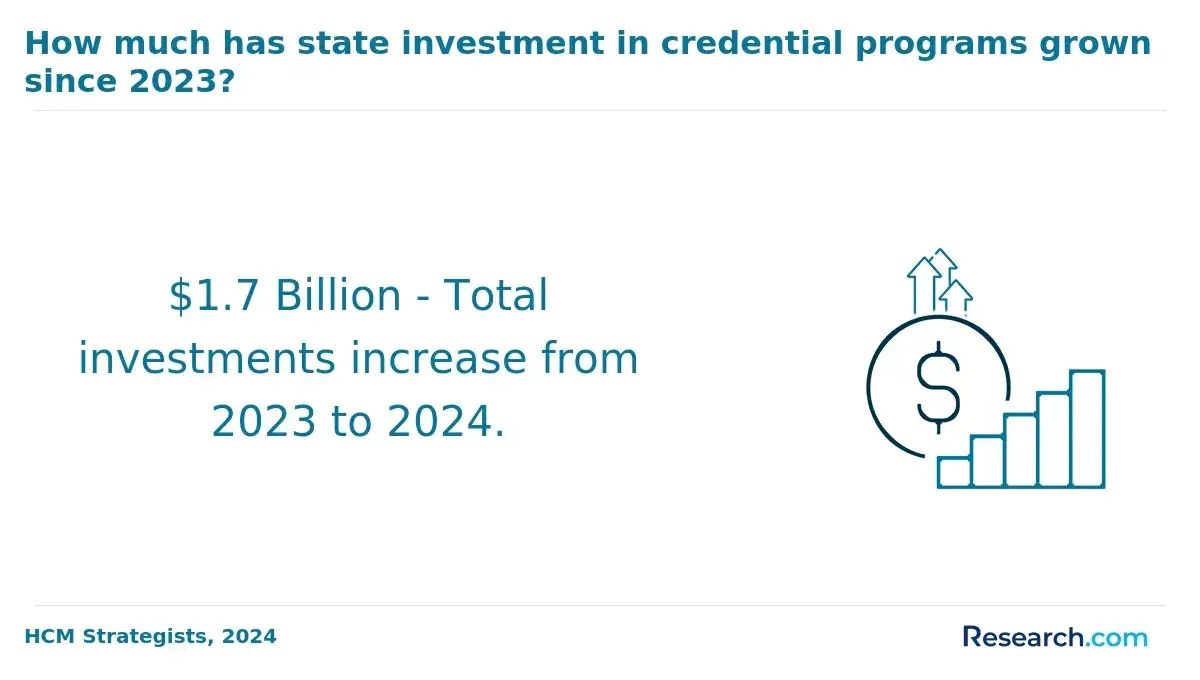
Cost varies more by provider and field than by delivery mode. Noncredit courses can be relatively low cost but may not carry academic credit or qualify for federal student aid. College certificates may have higher tuition but can be credit-bearing, eligible for certain aid programs when students meet requirements, or stackable into an associate degree. Equipment, software subscriptions, books, exam vouchers, background checks, uniforms, tools, travel, and licensing fees can materially change the final price.
Compare the full financial commitment, not the advertised monthly payment. Learners seeking a degree route with lower tuition should examine cheap online degrees, particularly when their target role routinely prefers or requires a bachelor's degree.
Before enrolling, calculate how many work hours you may need to reduce, whether required in-person sessions create transportation costs, and whether employer tuition assistance can be used. Avoid private financing until you have compared cash pricing, payment plans, scholarships, workforce-agency support, and any available employer reimbursement.
What curriculum and skills do leading online non-degree programs focus on for career pivots?
Leading online non-degree programs emphasize job-relevant practice rather than survey-level exposure. The strongest curriculum aligns assignments with the work products of an entry-level role: a design portfolio, coding project, claims exercise, electrical calculation, legal memorandum, spreadsheet model, or customer-support case.
Across fields, career changers should look for programs that build both technical ability and employability. Core elements often include digital fluency, communication, documentation, problem-solving, ethical decision-making, and evidence of completed work. AI tools are increasingly present in office, design, coding, and marketing workflows, so a current program should teach responsible use, quality checking, privacy awareness, and how to explain one's own contribution to a project.
Do not choose a curriculum solely because it lists popular software. Tools change quickly. A better program teaches transferable concepts, gives students repeated feedback, and helps them create evidence for interviews. For example, a data program should include data cleaning and interpretation, not only dashboard clicks; a legal-support program should address research and confidentiality, not only terminology.
What entry-level roles and career pathways can online non-degree programs lead to?
Online non-degree programs can support entry into roles where employers prioritize practical skills, portfolios, demonstrated knowledge, or a recognized industry credential. They are most useful when the program maps directly to a realistic first role rather than an aspirational senior title.
Potential pathways include IT support specialist, junior web or digital content assistant, bookkeeping assistant, medical billing specialist, pharmacy technician trainee, medical assistant where program and state requirements are met, paralegal assistant, customer support specialist, junior graphic designer, and trade apprentice. Titles and hiring requirements vary by employer and location.
A useful career-pivot plan moves from training to proof of readiness.
- Choose one target role and collect several local job descriptions before selecting a program.
- Match the program's curriculum and required credential to the recurring skills in those postings.
- Build a portfolio, project file, documented practicum experience, or certification-exam plan while enrolled.
- Apply for related entry-level roles, internships, apprenticeships, contract work, or internal transfers before graduation.
- Use early experience to decide whether a higher credential, degree completion, or advanced certification is worth pursuing.
For occupations where advancement eventually requires graduate study, a non-degree program is only an early exploration tool. It should not be treated as an alternative to required professional education or advanced options such as doctoral programs without dissertation.
What salary ranges and job outlook can career changers expect after these programs?
Salary and outlook depend on the occupation, location, experience, employer, shifts, and credentials - not simply on program completion. BLS May 2024 occupational data provides useful context for comparing fields, but it should not be read as an entry-level salary guarantee.
Electricians had a median annual wage of $62,350 in May 2024, while medical assistants had a median of $44,200. BLS projects employment growth of 6% for electricians and 15% for medical assistants from 2023 to 2033. These figures suggest different trade-offs: electrical work can offer higher occupational pay but generally requires apprenticeship and licensing progression; medical assisting shows faster projected demand but usually involves lower occupational median pay and hands-on clinical requirements.
Creative and legal-support pathways require additional caution. Graphic designers and paralegals may benefit from certificates or portfolios, but competition, local employer expectations, and prior experience can affect entry opportunities. Compare job postings in your area, not national wage data alone, and ask schools for transparent outcome definitions if they publish placement information.
How do licensing and industry certifications work for fields that require formal credentials?
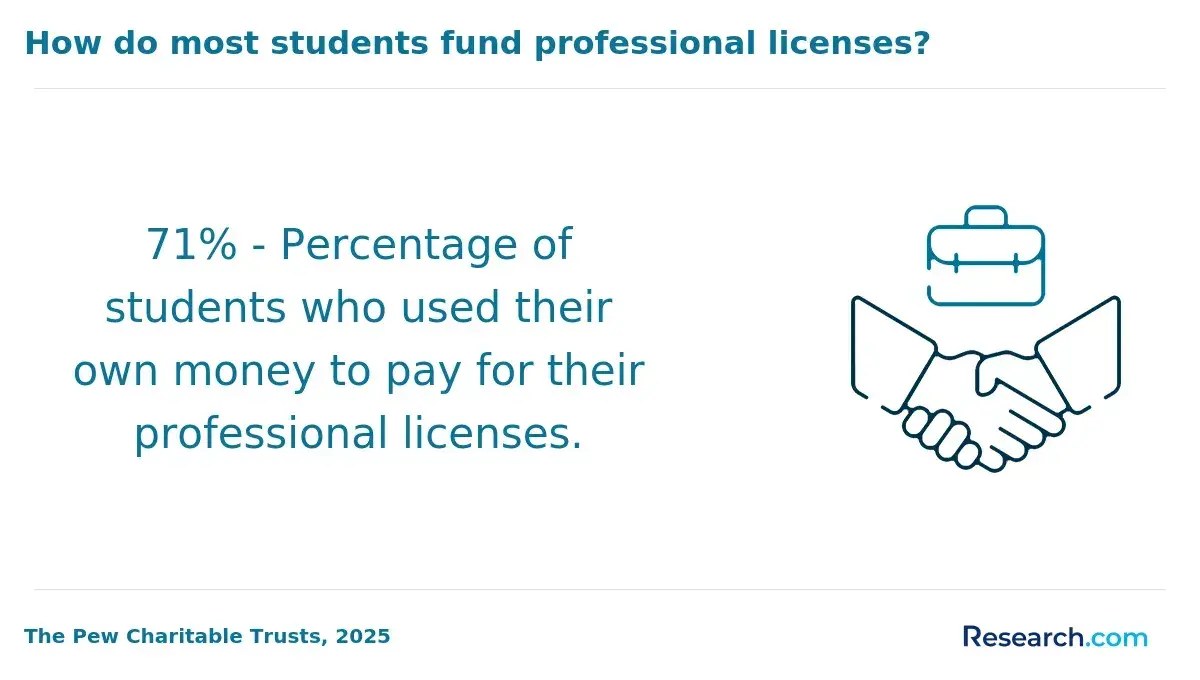
Licensure, certification, and certificates serve different purposes. A school certificate shows that a learner completed a course of study. Professional certification generally verifies that a candidate met standards set by an independent certifying organization. A license is legal permission from a government authority to work in a regulated occupation.
Fields such as nursing, many allied-health roles, electrical work, cosmetology, commercial driving, and certain building trades may require state-specific approvals, examinations, supervised hours, or background checks. An online course can support preparation, but it does not automatically satisfy every requirement. Requirements can change and may differ even between neighboring states.
Before paying for training, verify the exact sequence with the relevant state board or certifying organization. Confirm that the program meets eligibility requirements, determine whether practical hours are arranged by the school or student, budget for exam and renewal fees, and ask whether graduates have successfully met the pathway requirements in your state. This step is particularly important for programs marketed nationally but used for locally regulated careers.
Other Things You Should Know About
They can be worthwhile when they teach skills tied to a specific entry-level role and the role does not require a degree or license the program cannot provide. Compare job postings, total costs, practical training, and credential requirements before enrolling.
Possibly. Employers in areas such as support, digital operations, design, bookkeeping, and some technical roles may prioritize skills and work samples. Regulated occupations and many professional roles may require additional training, certification, licensure, or a degree.
A certificate is usually awarded by a school or provider after course completion. A certification is typically awarded by an independent professional organization after meeting standards, which may include passing an exam and completing continuing education.
Check the provider's status, curriculum, instructor experience, total fees, refund policy, hands-on requirements, and any licensing or exam eligibility claims. Avoid programs that guarantee employment, conceal required costs, or cannot explain how their training connects to a specific job.
References
- Tech Training Programs for Career Transition - Merit America https://meritamerica.org/career-track/
- Top Careers for Psychology Master's Graduates https://www.onlinemastersdegrees.org/best-programs/for-career-changers/
- CourseCareers https://coursecareers.com/blog-posts/high-paying-office-careers-without-a-degree-17-paths-that-pay-more-than-you-might-expect
- Programs Like Year Up: 8 Alternatives for Job Training https://climbhire.co/career-development/programs-like-year-up-alternatives/
- Support Workforce Development | National Able Network https://www.nationalable.org/support-us/
- How does a college degree improve graduates' employment and earnings potential? - APLU https://www.aplu.org/our-work/publicuvalues/employment-earnings/
- How Higher Ed Can Meet Demand for Online Degree Programs | ACE Blog https://ace.edu/blog/how-higher-ed-can-meet-demand-for-online-degree-programs/
- Best Online Degrees for Working Adults in 2026 https://www.straighterline.com/blog/degreecompletion-best-online-degrees-for-working-adults-in-2026
- Alternative to College - Computer Training Classes - No Degree Required https://www.computercoach.com/individuals/alternative-to-college/
- Research Summary: Education and Lifetime Earnings https://www.ssa.gov/policy/docs/research-summaries/education-earnings.html