2027 Best Online Certifications With Low Textbook Costs

Co-Founder and Chief Data Scientist
Choosing an online certificate can be frustrating when low tuition is followed by costly access codes, kits, exams, and subscriptions. This guide helps career changers, working adults, and recent graduates identify programs with genuinely low learning-material costs.
College Board reported average published tuition and fees of $4,050 at public two-year colleges for 2024-25, making avoidable textbook charges especially important. Learn which credentials tend to use free digital materials, how to compare total costs, and when a certificate is a better fit than a degree or industry certification.
Key Things You Should Know
- Low-cost online certificates usually rely on open educational resources, library e-books, included digital materials, or courses with no access-code requirement; tuition alone does not show the full price.
- Academic certificates can be credit-bearing and sometimes stack into an associate degree, while professional certifications are separate credentials typically earned through an exam, experience requirements, or both.
- For career-focused choices, compare required equipment, certification exams, clinical or fieldwork needs, and state licensing rules alongside tuition; these costs can exceed textbook expenses in hands-on fields.
Top 10 Best Online Certifications With Low Textbook Costs
Popular Trade School Programs
Online trade certificates work best for theory-heavy preparation, not for replacing supervised practical training. Common options include HVAC fundamentals, electrical theory, construction management, welding technology theory, industrial safety, and computer-aided drafting. Textbook costs can stay low when courses use digital manuals or open resources, but tools, safety gear, lab intensives, and licensing exams may add substantial costs. Choose a hybrid or apprenticeship-linked option if your intended trade requires hands-on skill verification. A short certificate can support entry-level work, while electrician and HVAC licensure pathways commonly require state-specific supervised experience.
Healthcare Programs
Affordable online healthcare certificates often include medical billing and coding, medical office administration, health information support, pharmacy technician preparation, and patient navigation. These programs may use digital coding tools rather than traditional textbooks, but exam vouchers, background checks, immunizations, clinical placements, and software can still be required. Medical coding certificates may prepare students for an industry certification examination, but passing an academic course is not the same as earning certification. Avoid fully online clinical-care programs that cannot clearly document required labs, supervised clinical hours, and state authorization.
Criminal Justice / Law Programs
Low-material-cost online options include criminal justice certificates, legal studies certificates, paralegal studies, court administration, homeland security, and cybersecurity foundations. Reading-intensive courses often work well with library databases, court opinions, statutes, and instructor-provided materials, reducing print textbook needs. A paralegal certificate can be useful for people who already hold a degree or have office experience, but employer expectations vary. It does not authorize independent legal practice. Compare whether the program is credit-bearing, whether it meets local employer expectations, and whether any paralegal credentialing organization recognizes its coursework.
Arts & Design Programs
Online certificates in graphic design, digital marketing design, web design, UX foundations, photography, and digital media can limit textbook spending because instruction often centers on projects and digital tutorials. The trade-off is software: students may need Adobe Creative Cloud, drawing tablets, cameras, portfolio hosting, or printing. A low-textbook program is not necessarily low-cost if it requires premium software every term. Choose programs that identify software versions, student discounts, hardware specifications, and portfolio expectations before enrollment. For design roles, a strong portfolio usually matters more to employers than the certificate title alone.
What types of online certifications have the lowest overall textbook and material costs?
The lowest overall material costs usually occur in reading- and software-based programs where schools can assign open educational resources (OER), digital articles, public datasets, or library-licensed materials. Programs requiring consumable supplies, specialized tools, clinical practice, or proprietary testing systems generally cost more even if their listed textbook total is $0.
This comparison separates textbook savings from the other expenses that can determine whether a certificate is truly affordable.
| Certificate type | Typical material-cost pattern | Important cost caution |
| Business, office administration, project support | Often low when OER and digital documents are used | Microsoft Office or simulation subscriptions may be required |
| Legal studies and criminal justice | Often low because courses are reading-based | Some courses require paid legal-research platforms |
| Medical billing, coding, and health information | Moderate; e-books may replace print texts | Current code books, exam preparation, and certification exams can add costs |
| Web, digital media, and design | Low textbook spending is common | Software, hardware, and portfolio production can be significant |
| Skilled trades and clinical programs | Usually higher overall materials costs | Tools, uniforms, kits, labs, and in-person requirements matter most |
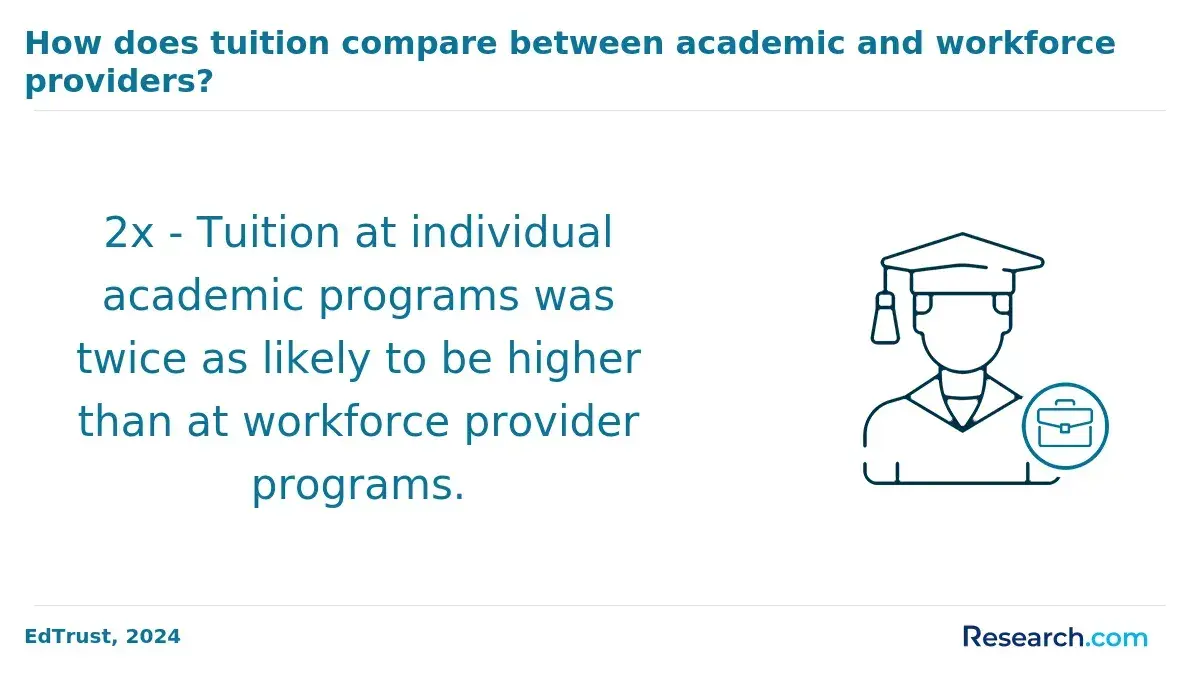
For a general academic credential with transferable credit, community-college certificates are often the strongest value. For a narrow job skill, a noncredit workforce certificate may cost less and finish faster, but it may not transfer to a degree. Learners considering a later graduate credential can compare 1 year master's programs after confirming that their current certificate builds the prerequisite academic foundation.
How can students accurately compare tuition, textbook, and fee costs across online certificates?
Compare programs using a written total-cost estimate for the entire credential, not a single course or term. Ask each school for the current program map and identify every charge that is mandatory rather than optional. This prevents the common mistake of selecting the lowest tuition rate only to discover several required access codes or fees later.
Use the following process before applying.
- Multiply tuition by the required number of credits or courses, using the program's current catalog rather than a promotional starting price.
- Add mandatory course materials, digital platforms, proctoring, technology, graduation, and distance-learning fees.
- Price required external items separately, including tools, uniforms, background checks, certification exams, software, and travel for labs or clinicals.
- Confirm whether materials are reusable, included in tuition, available through the library, or replaced every term by a new access code.
- Compare the resulting total with the credential's career relevance, schedule, transfer value, and employer recognition.
A school should be able to explain its tuition schedule and required fees in writing. If it cannot identify textbook ISBNs, software licenses, or likely out-of-pocket expenses before enrollment, treat that as a red flag. Students who need a compressed academic route can also review fast track degree programs, but should check whether acceleration increases weekly workload or limits time to use free library materials.
Which accredited online schools offer reputable low-cost textbook certification programs?
Reputable low-cost choices are commonly offered by public community colleges, regional public universities, and established private nonprofit institutions that publish program requirements and student-support information. There is no single school that is lowest-cost for every learner because resident tuition, state authorization, transfer policies, and required materials vary.
For credit-bearing certificates, start by verifying that the institution holds recognized institutional accreditation through an accreditor recognized by the U.S. Department of Education or the Council for Higher Education Accreditation. Then check whether the specific program needs specialized approval. Nursing, medical assisting, HVAC, and some legal or technical programs may have additional standards beyond institutional accreditation.
Good signs include a public catalog, transparent per-credit charges, named faculty, clear completion requirements, and a list of required materials. Workforce and continuing-education certificates may be noncredit and therefore use different quality signals: employer advisory boards, recognized exam preparation, instructor qualifications, and documented outcomes can matter more than transfer credit. If timing is your primary concern, online colleges that start soon can offer flexible entry points, but confirm that frequent starts do not add administrative or course-material charges.
What admission requirements do affordable online certification programs typically have?
Affordable online certificate admissions are usually simpler than bachelor's-degree admissions, but requirements depend on whether the program is credit-bearing, post-baccalaureate, workforce-focused, or tied to a license. Many undergraduate certificates require a high school diploma, GED, or equivalent. Some community colleges use open admission but may still require placement assessment or prerequisite coursework.
Applicants should expect some combination of the following, particularly in regulated or advanced fields.
- Proof of high school completion or prior college education, depending on the certificate level.
- Prerequisite courses in math, writing, science, technology, or anatomy..
- Minimum grade requirements in prerequisite courses for selective healthcare programs.
- Identity verification, background checks, drug screening, immunizations, or CPR training for clinical placements.
- Portfolio review or software familiarity for some design certificates.
- A bachelor's degree or relevant work experience for graduate or advanced professional certificates.
Do not assume a school's general admission means admission to every certificate. Also ask whether students outside the institution's home state can enroll and complete any required practicum there. Noncredit provider programs may have no formal admission process, but that convenience does not establish academic credit, licensing eligibility, or employer acceptance.
How do online certification formats and course delivery reduce textbook expenses?
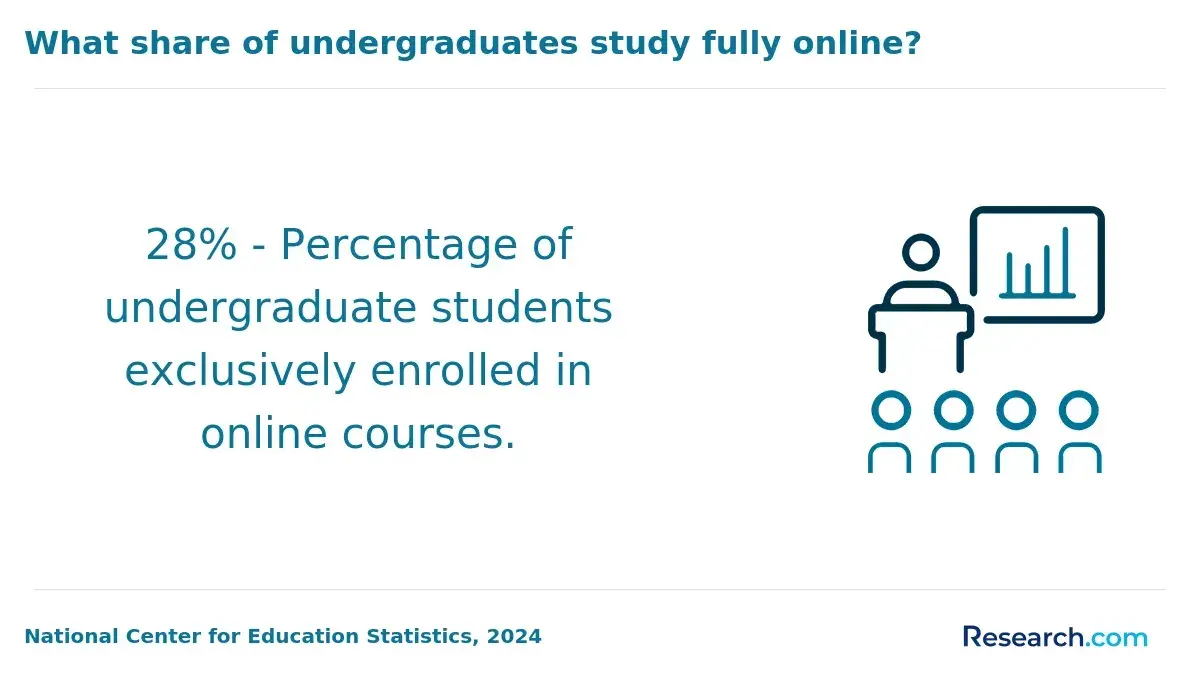
Online delivery lowers textbook expenses when instructors use OER, library e-books, downloadable readings, shared cloud tools, and assignments built around publicly available professional resources. It can also eliminate commuting and campus parking costs. However, online format does not automatically make a program inexpensive: remote-proctoring charges, platform subscriptions, mailed kits, and required personal technology can offset book savings.
Ask whether courses are asynchronous, scheduled live, or hybrid. Asynchronous programs can suit working adults and may let students progress without purchasing print materials immediately. Live or cohort programs can provide stronger instructor access and peer feedback, but may require fixed meeting times. Hybrid programs are often the safer choice for occupations that demand hands-on competencies, labs, supervised clinical experience, or equipment demonstrations.
The best low-material-cost design is transparent: it lists every digital platform, identifies whether access remains available after the course ends, and offers alternatives when a required text is unavailable. Avoid programs that bundle "digital textbooks" without explaining whether the charge is optional or whether the access code expires before you can reuse it.
What curriculum and coursework should you expect in low-cost textbook certification programs?
Coursework should align with the credential's purpose. A credit-bearing academic certificate typically includes sequenced college courses and may be stackable into an associate or bachelor's degree. A noncredit career certificate usually concentrates on practical job tasks and may prepare learners for a separate industry examination. Neither format is automatically better; choose based on your goal.
The table shows what low-textbook programs commonly teach and what students should verify before paying.
| Path | Common coursework | What to verify |
| Business or office certificate | Spreadsheets, communication, bookkeeping, customer service, office systems | Whether software training reflects current workplace tools |
| Healthcare administration certificate | Medical terminology, records, coding basics, billing, privacy rules | Whether it prepares for a named certification exam and whether exam costs are separate |
| Trade-related certificate | Safety, blueprint reading, electrical or HVAC theory, regulations | Which competencies require in-person practice or apprenticeship hours |
| Legal studies certificate | Legal research, writing, civil procedure, ethics, document preparation | Whether coursework matches local employer and paralegal-association expectations |
| Digital design certificate | Typography, layout, UX, web tools, portfolio projects | Whether students leave with reviewable portfolio work and current software skills |
Before enrolling, request the course sequence and assess whether materials are current enough for the field. This is particularly important in coding, law, software, and regulated trades, where outdated references can reduce the value of otherwise inexpensive instruction.
What careers and entry-level job roles can these certifications help you qualify for?
Certificates can help candidates build targeted skills for entry-level or support roles, especially when paired with relevant experience, a portfolio, an apprenticeship, or an employer-recognized certification. They are less likely to be sufficient for occupations requiring a degree, state license, extensive supervised practice, or advanced technical experience.
Examples of realistic entry points include the following.
- Medical records specialist, billing support representative, or health information clerk after relevant healthcare administration or coding coursework.
- Legal assistant, intake specialist, records clerk, or litigation-support assistant after legal studies or paralegal coursework.
- Junior graphic design assistant, production artist, content-design support worker, or freelance portfolio builder after digital design training.
- HVAC helper, electrical trainee, maintenance assistant, or construction-office support worker after trade-focused education plus required practical training.
- Administrative assistant, customer support representative, or project support coordinator after business software and office-skills training.
Match the certificate to job postings in your target location before enrolling. If most postings ask for an associate or bachelor's degree, plan the certificate as a first step or choose a stackable academic option. Readers who are deciding between short training and a degree can compare career-return differences among highest paying majors before committing to a longer program.
What salary ranges and advancement opportunities are realistic after completing these certifications?
Salary depends on occupation, location, experience, employer, licensure, and education beyond a certificate. A certificate does not cause or guarantee these wages. The U.S. Bureau of Labor Statistics' May 2024 national median annual wage estimates provide useful occupational context for learners evaluating related pathways.
| Occupation | 2024 median annual wage | Certificate-only limitation |
| Medical records specialists | $50,250 | Employers may prefer coding certification or prior healthcare experience |
| Paralegals and legal assistants | $61,010 | Many employers prefer an associate degree, bachelor's degree, or substantial legal-office preparation |
| Graphic designers | $61,300 | Portfolio quality and software skills are central; some employers prefer a degree |
| Heating, air conditioning, and refrigeration mechanics and installers | $59,810 | Licensing, apprenticeship, and employer-required credentials may be necessary |
Advancement is most realistic when learners treat a low-cost certificate as one part of a plan: gain supervised experience, document skills, earn any required industry certification, and stack credit toward a higher credential when needed. For example, an office certificate may lead to administrative work, while later coursework in accounting, project management, or health information can broaden responsibilities. Be cautious of schools that advertise occupational wages as if every certificate completer receives them.
How can students verify accreditation, licensing, and employer recognition for an online certificate?
Verify recognition before you pay a deposit, especially if your goal involves healthcare, public safety, skilled trades, or legal services. Institutional accreditation, programmatic accreditation, professional certification eligibility, and state licensure are different checks. A school can be institutionally accredited while a particular program does not meet the education rules for a license or certification exam.
Use these steps to confirm that the credential fits your intended outcome.
- Identify the exact target job, state, and employer type, then read several current job postings for required education, licenses, and certifications.
- Confirm the school's institutional accreditation through the U.S. Department of Education or CHEA database and verify the program's approval directly with the relevant accreditor when applicable.
- Contact the state licensing board for regulated occupations and ask whether the online curriculum, practical hours, and out-of-state delivery meet its rules.
- Check the certifying organization's eligibility policy instead of relying on a school's statement that a course "prepares" students for an exam.
- Request written confirmation of credit transferability, practicum arrangements, and total required costs before enrolling.
Major red flags include vague accreditation claims, promises of licensure without naming the state, missing material lists, pressure to enroll immediately, and claims that a certificate is equivalent to an industry certification. Keep copies of catalog pages and emails because requirements can change.
Other Things You Should Know About
Yes, provided the school or provider is reputable and transparent. Many legitimate programs use open educational resources, library materials, and instructor-created content. Verify the credential's recognition, curriculum, required fees, and any licensing or exam implications rather than judging quality by textbook price alone.
A certificate is an educational credential awarded after completing a course of study. A certification is usually a professional credential issued by a certifying organization after an examination, experience requirement, or both. A certificate program may prepare you for certification, but it does not automatically award it.
It may, but eligibility depends on the school, program length, credit status, and federal or state rules. Credit-bearing certificates at eligible institutions are more likely to have aid options than short noncredit programs. Ask the financial-aid office whether the exact certificate qualifies before enrolling.
Choose a certificate when you need a focused skill quickly and job postings accept that level of preparation. Choose an associate degree when employers commonly require broader education, you want transfer credit, or you expect to advance into roles needing more coursework. A stackable certificate can offer a practical middle path.
References
- Unlocking Student Success with Open Educational Resources (OER) https://www.textbookbrokers.com/post/unlocking-student-success-with-open-educational-resources-oer
- Online Certificates for Job-Ready Skills | Grow with Google https://grow.google/certificates
- How Much Should You Charge for an Online Course? 5 Pricing Models With Real Numbers https://oasis-lms.com/post/how-much-should-i-charge-for-an-online-course-a-complete-pricing-guide
- College, But Make it Affordable https://www.straighterline.com/
- Flexible online courses with certificates | edX 2025 https://www.edx.org/courses
- 12 Best Online Learning Platforms for 2026 | Think Orion https://thinkorion.com/blog/best-online-learning-education-platform
- 15 Best Online Learning Platforms for Professionals, and Lifelong Learners In 2025 https://buddyboss.com/blog/best-online-learning-platforms-for-professionals-and-learners/
- Udemy vs Coursera vs Udacity vs Edx: The Ultimate Comparison https://www.transizion.com/udemy-vs-coursera-vs-udacity-vs-edx/
- The Big Three Platforms Revisited: The Latest on Coursera, edX, & Udemy https://encoura.org/resources/wake-up-call/the-big-three-platforms-revisited-the-latest-on-coursera-edx-udemy/
- Weighing the Value of Industry-Based Certifications against Their Costs https://www.nasbe.org/weighing-the-value-of-industry-based-certifications-against-their-costs/