2027 Best Online Certificate Programs With Self-Paced Courses

Co-Founder and Chief Data Scientist
Choosing a self-paced online certificate means weighing flexibility against recognition, hands-on requirements, and career relevance. These programs can help working adults, career changers, and returning students build focused skills without a fixed class schedule. The U.S. Bureau of Labor Statistics reported a 2024 median annual wage of $49,500 across all occupations, making short-term training worth evaluating against realistic job requirements rather than marketing claims.
This guide explains program types, costs, accreditation, career paths, and practical steps for comparing options that fit your goal.
Key Things You Should Know
- Self-paced certificates let students progress through lessons on their own schedule, but most still impose an enrollment window, graded assessments, deadlines, or required clinical and lab components.
- A certificate is an educational award; a professional certification is usually earned from a certifying body through eligibility requirements and an exam. Confirm which credential an employer or licensing board actually expects.
- For context, the Bureau of Labor Statistics reports that the 2024 median annual wage for all U.S. occupations was $49,500; occupational pay varies widely, and a certificate alone does not guarantee entry into a role.
Top 10 Best Online Certificate Programs With Self-Paced Courses
Popular Trade School Programs
Self-paced trade coursework commonly covers HVAC fundamentals, electrical theory, welding safety, construction estimating, plumbing concepts, automotive service, and industrial maintenance. These certificates work best for theory, code review, and exam preparation; hands-on skills usually require a local lab, employer training, apprenticeship, or supervised practicum. Choose a program only after checking whether your state requires apprenticeship hours, classroom hours, or a licensing exam. For people seeking a longer credential with broader general education and technical training, online associate degrees may offer a stronger next step.
Healthcare Programs
Online self-paced healthcare certificates may teach medical billing and coding, medical terminology, pharmacy technician theory, health information basics, or administrative office skills. They are often suitable for learners targeting nonclinical support work. Programs for medical assisting, nursing, dental hygiene, imaging, and similar patient-care roles generally cannot be entirely self-paced because supervised clinical training and state-specific eligibility rules apply. Before enrolling, verify whether the curriculum prepares students for an industry exam, whether practicum placement is included, and whether the relevant employer or board recognizes the provider.
Criminal Justice / Law Programs
Certificate options include criminal justice foundations, paralegal studies, legal research, legal transcription, compliance, and cybersecurity law basics. Self-paced study can suit learners developing terminology, writing, research, and procedural knowledge. It does not replace the education, examination, character review, or state authorization required to practice law, and paralegal hiring standards vary by employer. Applicants with a record should evaluate program fit alongside hiring policies and licensure restrictions; this guide to what can a felon go to college for can help identify education routes to investigate carefully.
Arts & Design Programs
Self-paced certificates in graphic design, digital illustration, web design, photography, video editing, UX foundations, and animation can help learners build software skills and portfolio pieces. Portfolio quality, current tools, and client-ready communication often matter more than the certificate title in creative hiring. Review whether tuition includes software access, instructor critique, portfolio review, and ownership of finished work. A certificate is a practical choice for a targeted skill update; an associate or bachelor's degree may fit learners who need broad design theory, structured feedback, internships, or transfer-ready academic credit.
What are self-paced online certificate programs and how do they work?
A self-paced online certificate program is a structured set of courses that lets learners complete lessons and assessments at a pace largely under their control. It may be offered by an accredited college, a community college, a university extension unit, an employer-training provider, or an online learning company. The award can be credit-bearing, noncredit, or a provider-issued completion certificate.
"Self-paced" rarely means unlimited time or zero interaction. A program may use prerecorded modules, readings, simulations, quizzes, projects, proctored exams, and optional coaching while setting a maximum completion period. Clinical, laboratory, internship, and licensing-related requirements may be scheduled rather than self-paced.
The format is strongest when the target skill can be demonstrated through knowledge checks or a portfolio. It is less suitable when a profession requires extensive supervised practice, equipment access, cohort collaboration, or a state-approved curriculum. Learners who need a highly guided route may prefer scheduled online classes, a local college program, or an apprenticeship.
How do online self-paced certificate programs compare to campus-based options?
Online self-paced and campus-based certificates can cover similar subject matter, but they solve different problems. The right choice depends on whether flexibility or supervised practice is the limiting factor in your life and career plan.
| Decision factor | Self-paced online certificate | Campus-based or scheduled option |
| Schedule | Best for learners who need to study around work, caregiving, or variable shifts. | Best for learners who benefit from fixed meeting times and regular accountability. |
| Hands-on learning | Often limited to simulations, projects, or separately arranged placements. | Usually provides easier access to labs, equipment, and in-person practice. |
| Instructor access | May range from automated feedback to scheduled coaching. | Typically offers live interaction during class, labs, and office hours. |
| Career preparation | Useful for digital, administrative, and knowledge-based skills when employer recognition is clear. | Often preferable for regulated, clinical, and equipment-intensive occupations. |
| Total cost | May reduce commuting and housing costs, but fees, software, proctoring, and supplies still matter. | May add transportation and campus costs while including facilities and services. |
Use the delivery format as a career-fit decision, not just a convenience decision. Parents and caregivers who need flexible study time may also want to compare degrees for stay at home moms when a certificate is too narrow for their longer-term objective.
What accreditation should online self-paced certificate programs have in the United States?
Accreditation matters most when a certificate is offered for academic credit, leads toward transfer, uses federal student aid, supports licensure eligibility, or claims preparation for a regulated occupation. In the United States, institutional accreditation should be recognized by the U.S. Department of Education or the Council for Higher Education Accreditation. Programmatic accreditation can also matter in fields such as health care and legal education.
Do not assume that a polished website, employer partnership, or provider "accreditation" is equivalent to recognized institutional or programmatic accreditation. Noncredit professional certificates may be legitimate without academic accreditation, but their value rests on the provider's reputation, curriculum, assessments, and employer acceptance.
Before paying, confirm these points directly with the school, certifying organization, or state board:
- Whether the institution holds recognized accreditation and whether the specific certificate is credit-bearing.
- Whether a programmatic accreditor or state approval is required for your intended role.
- Whether graduates meet eligibility requirements for any named certification examination or license.
- Whether credits can transfer or stack into a degree, and which receiving institutions accept them.
A major red flag is a provider that promises licensure, employment, or exam eligibility without naming the relevant board or standard. Requirements can change by state and by occupation, so obtain confirmation in writing when licensure is central to your decision.
How long do self-paced online certificate programs take and what do they cost?
Completion time and price vary more by provider and subject than by the phrase "self-paced." A short noncredit course may take weeks, while a college certificate with several courses can take months or longer. Moving quickly is possible only when you already have the time, prerequisite knowledge, and reliable access to technology.
This comparison shows the main cost structures readers should identify before comparing advertised tuition.
| Program type | Typical pacing model | Common cost factors | Best use case |
| Noncredit provider certificate | Often weeks to several months within an access period | Subscription or one-time fee, exam fees, software, optional coaching | Focused skill-building or portfolio development |
| College credit certificate | May be self-paced within terms or use flexible deadlines | Per-credit tuition, institutional fees, textbooks, supplies, proctoring | Academic credit, transfer potential, or structured career preparation |
| Career-training certificate | Often paced to milestones with a completion deadline | Tuition, tools, kits, external exams, clinical or background-check expenses | Entry-level training where the provider has verified employer relevance |
| Licensure-oriented program | Usually combines online theory with scheduled practical requirements | Tuition, lab fees, clinical costs, exams, state applications, insurance | Regulated fields requiring approved education and supervised practice |
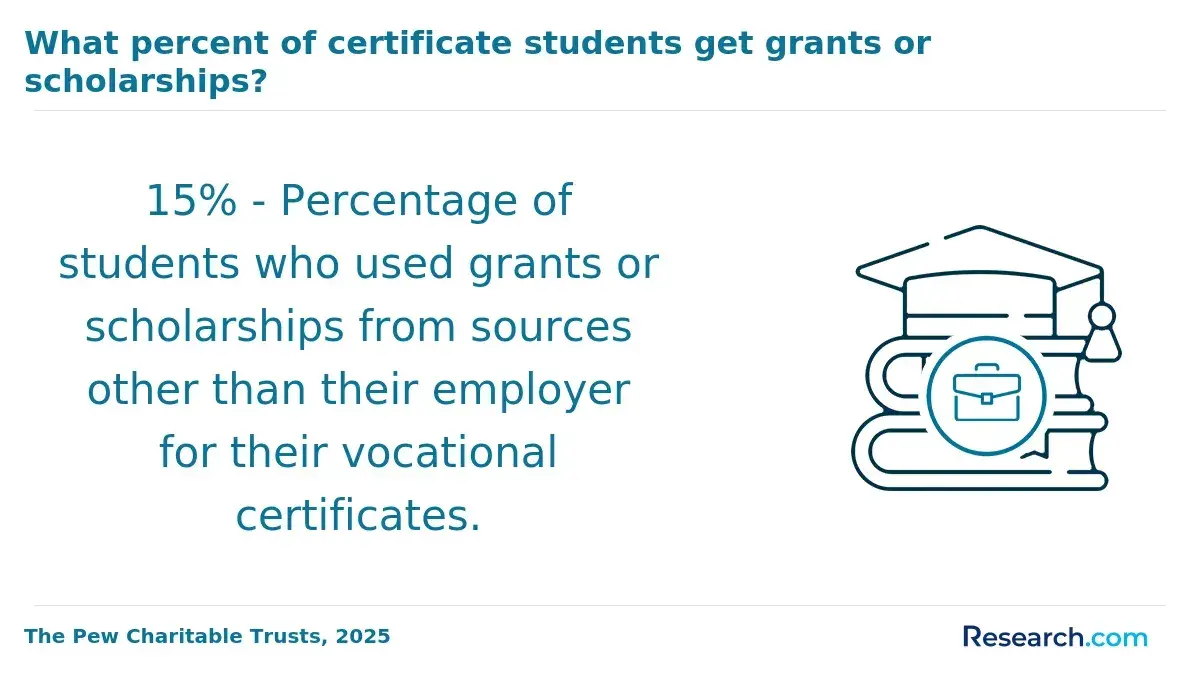
Compare the total price, not the headline tuition. Ask whether the quoted amount includes textbooks, examination vouchers, required equipment, background checks, clinical placement support, and extensions if you need more time. Credit-bearing college certificates may be eligible for aid in some circumstances, but eligibility depends on the institution, program, enrollment status, and current federal rules; noncredit certificates commonly are not.
What admission requirements do self-paced online certificate programs typically have?
Admission requirements depend on the credential provider. Many short, noncredit self-paced certificates use open enrollment and require only payment, basic computer access, and readiness for the course level. College-issued certificates may require an application, identity documentation, placement steps, prerequisites, or prior college coursework. Graduate certificates normally require a bachelor's degree and may require field-specific preparation.
Applicants should separate "can enroll" from "is prepared to succeed." Programs in coding, accounting, health information, engineering technology, and advanced design may expect prior mathematics, software, writing, or professional knowledge even when no GPA minimum is published.
Before applying, ask for a written answer to the following practical questions:
- Is the award academic credit, noncredit continuing education, or a provider completion certificate?
- What prerequisites, technology, identity-verification, and proctoring requirements apply?
- How long does access last, and what happens if you do not finish by the deadline?
- Are prior learning, transfer credit, military training, or industry certifications accepted?
- Which assignments, projects, or examinations must be passed to receive the certificate?
Do not select a program solely because it has no GPA requirement. Minimal admissions screening can be useful for access, but it does not prove the curriculum meets an employer's, transfer institution's, or licensing board's standards.
What coursework and skills do students learn in self-paced certificate programs?
Self-paced certificate coursework is usually narrower than a degree curriculum. It focuses on a defined task set, software platform, body of knowledge, or entry-level occupational area. Good programs make learning outcomes visible and show how assessments demonstrate those outcomes.
Common skill categories include technical knowledge, workflow practice, documentation, communication, and job-search evidence such as projects or portfolios. The mix should match the occupation - not simply the provider's most marketable topic.
| Program area | Common coursework | Evidence of learning to look for |
| Business and technology | Spreadsheets, data handling, project tools, coding, cybersecurity, cloud fundamentals | Projects, practical assignments, version-controlled work, proctored assessments |
| Healthcare administration | Medical terminology, reimbursement, records, privacy, coding foundations | Case exercises, coding practice, compliance scenarios, exam-alignment details |
| Skilled trades theory | Safety, measurements, blueprints, codes, systems fundamentals | Competency checks plus a clear path to required hands-on experience |
| Creative fields | Design principles, software workflows, editing, user research, visual communication | Portfolio pieces, critique, revision history, rights to retain completed work |
AI tools are changing task expectations in office, technology, and creative work. A credible program should teach learners to verify outputs, protect confidential information, document their work, and apply human judgment rather than presenting automation as a substitute for foundational skills.
What careers can self-paced online certificate programs help you qualify for?
Self-paced online certificates can support entry-level applications, promotion within a current employer, a career pivot, or preparation for a separate certification examination. They are most useful when the target role has a clear, demonstrable skill requirement and employers recognize the training or the work samples it produces.
The table distinguishes realistic uses from situations where additional education, supervised experience, or licensure is usually necessary.
| Career direction | How a certificate may help | Important limitation |
| Administrative support | Can build office software, bookkeeping, medical office, or customer-service skills. | Employers may still prioritize experience, communication, and job-specific software ability. |
| IT support and digital work | Can develop foundational technical skills, project evidence, or preparation for a separate industry certification. | Advanced roles usually require deeper experience, a portfolio, certifications, or a degree depending on the employer. |
| Creative services | Can provide projects for a design, editing, or web portfolio. | Hiring depends heavily on quality of work and client-ready communication. |
| Healthcare support | May prepare learners for administrative work or an external exam. | Direct patient-care and licensed roles commonly require approved education and clinical training. |
| Skilled trades | Can establish theory, safety, and code knowledge. | Employment progression often depends on apprenticeship hours and local licensing rules. |
A certificate may not be the best investment if your target job explicitly requires a degree. Learners who need graduate-level advancement rather than a short career credential can compare what is the easiest masters degree to get online while still checking accreditation, workload, and career relevance.
What salaries and earning potential are linked to self-paced certificate careers?
Salary information should be used as labor-market context, not as a promise attached to a certificate. The U.S. Bureau of Labor Statistics reports that the 2024 median annual wage for computer user support specialists was $60,340, while medical records specialists had a 2024 median annual wage of $50,250. These are occupation-wide figures: workers enter through different combinations of education, credentials, experience, location, and employer type.
This comparison helps readers see why matching training to a specific occupation matters more than choosing a certificate based on a broad salary claim.
| Occupation | 2024 U.S. median annual wage | How to use the figure |
| Computer user support specialists | $60,340 | Compare program coverage with employer postings and any requested technical certifications. |
| Medical records specialists | $50,250 | Check whether employers prefer coding credentials, prior experience, or specific health-record systems. |
| All occupations | $49,500 | Use as a broad national benchmark, not as a local wage or certificate outcome. |
Wages vary by metropolitan area, work setting, shift, experience, and specialization. Estimate return on investment by comparing the full program cost and the income you may forgo while studying against local entry-level job postings - not against the highest national salary shown in promotional material.
How can students choose a reputable self-paced online certificate program?
A reputable self-paced certificate program makes its credential type, provider identity, total cost, pacing rules, instructor support, and career limitations easy to verify. Start with the role you want, then work backward to the education, license, portfolio, examination, or experience that role actually requires.
Use this process before you enroll:
- Review several current job postings in your target area and list the skills, credentials, software, and experience employers repeatedly request.
- Decide whether you need academic credit, a portfolio, preparation for an external certification exam, state-approved training, or a short noncredit skill credential.
- Confirm the provider's accreditation or industry standing, and verify any claims about exam eligibility, transfer credit, clinical placement, or licensing with the responsible organization.
- Calculate all costs, including supplies, software, exams, travel for labs or clinicals, and the cost of needing an extension.
- Read the completion policy, refund policy, assessment method, accessibility support, and instructor-response practices before paying.
- Ask whether the program publishes completion, employment, or exam-pass information and how those outcomes are defined.
Common mistakes include confusing a course-completion certificate with a professional certification, assuming online delivery meets state licensure rules, and paying for training before confirming that local employers recognize it. Another red flag is an "accelerated" claim without a stated workload or expiration date. The best program is not necessarily the fastest or cheapest; it is the one whose verified outcomes and requirements align with your specific next step.
Other Things You Should Know About
Employer acceptance depends on the field, provider reputation, assessment quality, and proof of skill. They tend to be more useful when they produce a portfolio, prepare for a recognized external certification, or teach software and tasks named in job postings.
Often, yes, if lessons are available immediately and you can devote consistent time to study. However, enrollment deadlines, proctored exams, instructor grading, clinicals, and required projects can limit acceleration.
Sometimes a program can provide part of the required education, but completion alone rarely grants a license. Check your state board's rules for approved education, supervised hours, examinations, background review, and application requirements.
Some credit-bearing certificates at eligible institutions may qualify under applicable aid rules. Many noncredit and third-party certificates do not. Ask the provider's financial aid office about eligibility, fees, payment plans, employer reimbursement, and refund terms before enrolling.
References
- Five Factors for Successful Online Learning https://www.ppic.org/blog/five-factors-successful-online-learning/
- Are online education programs worth it? Understanding their value - MSU Denver https://www.msudenver.edu/innovative-lifelong-learning/blog/are-online-education-programs-worth-it-understanding-their-value/
- Is Self-Paced Learning Legit? https://www.onlineu.com/resources/college-planning/is-self-paced-learning-legit
- Financial Aid For Online Colleges https://www.affordablecollegesonline.org/financial-aid/financial-aid-for-online-colleges/
- What is Self Paced Learning? Definition, Benefits and Tips | Digital Learning Institute https://www.digitallearninginstitute.com/blog/what-is-self-paced-learning-definition-benefits-and-tips
- Online Career Training | Certificate Programs | CareerStep https://www.careerstep.com/
- Self-Paced vs Instructor-Led Training Guide - LMSPedia https://lmspedia.org/self-paced-learning-vs-instructor-led-training/
- Online Certificate Programs | Certifications Programs https://www.uscareerinstitute.edu/online-certificate-programs
- ILT vs Self-Paced Training: Which Should You Use? https://www.trytami.com/ilt-vs-self-paced
- Best online courses and certificate programs to master new skills in 2025 https://nypost.com/article/best-online-classes/