2027 Best Certificate Programs With Part-Time Study Options

Co-Founder and Chief Data Scientist
Choosing a certificate while working means balancing class schedules, cost, and whether the credential actually supports your target job. Part-time programs can make career training more manageable, but a short program is not automatically a license, professional certification, or direct route to employment. U.S. Bureau of Labor Statistics projections published in 2024 show above-average growth in several certificate-aligned fields, including medical assisting and HVAC work. This guide compares practical options, explains online and campus trade-offs, and helps adults verify that a program fits their career, budget, and state requirements.
Key Things You Should Know
- Part-time certificates usually take longer than full-time formats, but they let working adults complete credit-bearing or noncredit career training without leaving employment; confirm the weekly workload and required campus or clinical hours before enrolling.
- Certificate completion is different from professional certification or state licensure: healthcare, skilled-trade, and legal-support roles may require an exam, supervised experience, background check, or state approval after school.
- Labor-market data can guide choices: BLS reported a 2024 median annual wage of $62,350 for electricians and projected 15% growth for medical assistants from 2023 to 2033, but occupational figures do not guarantee outcomes for certificate holders.
Top 10 Best Certificate Programs With Part-Time Study Options
Popular Trade School Programs
Part-time trade certificates commonly cover electrical technology, HVAC/R, welding, plumbing, industrial maintenance, and automotive service. They suit adults who want hands-on, occupation-focused training and can attend evening, weekend, or hybrid lab sessions. Programs often run through community colleges, technical schools, unions, or employer-sponsored apprenticeships. A certificate may help qualify a learner for entry-level work, but many trades require a registered apprenticeship, supervised hours, or state licensing before independent practice. Choose campus-based training when equipment practice is essential; online theory alone rarely replaces lab or field experience.
Healthcare Programs
Criminal Justice / Law Programs
Part-time certificates in paralegal studies, legal studies, corrections, crime-scene support, and cybersecurity-related justice work can strengthen foundational knowledge for administrative or support roles. A paralegal certificate is especially useful for people who already hold a degree or have office experience, but it does not authorize someone to practice law. Check whether employers in your area prefer an American Bar Association-approved paralegal program, even though ABA approval is voluntary. Students aiming for senior policy, research, or academic roles may eventually consider advanced options such as an online PhD criminal justice no dissertation program.
Arts & Design Programs
Part-time certificates in graphic design, UX/UI design, digital media, photography, animation, and web design can help career changers build software skills and a portfolio. They work best when courses include project feedback, current tools, and portfolio development rather than software tutorials alone. Employers often evaluate design applicants by work samples, problem-solving, and communication, so a credential without a strong portfolio has limited value. Online programs can work well for digital production, while campus studios may benefit learners who need equipment access, structured critique, or networking. Confirm whether courses teach accessible and AI-aware design workflows.
What are part-time certificate programs and who are they best suited for?
A part-time certificate program is a focused course sequence completed at less than a full-time academic load. It may be a college-issued, credit-bearing academic certificate; a continuing-education, noncredit certificate; or career training from a technical school. The format is designed for adults with work, caregiving, or financial responsibilities, but the credential's value depends on the provider, field, and required next step.
Part-time study is usually a good fit for employed adults, career changers testing a field, and students who need to spread tuition payments over more terms. It may be a poor fit for someone who needs rapid entry into a licensed occupation, cannot attend required daytime clinicals, or needs a credential that transfers easily into an associate or bachelor's degree.
The distinctions below matter because they affect cost, recognition, and what completion allows a student to do.
| Option | What the learner earns | Best use | Key limitation |
| College certificate | Institutional academic credential; may carry credit | Entry-level preparation or stackable education | Credits may not transfer automatically |
| Noncredit career certificate | Completion credential from a school or provider | Targeted skill development | Usually does not create academic credit |
| Professional certification | Credential from a certifying body | Demonstrating assessed professional competence | May require an exam, experience, or renewal |
| Associate degree | College degree with general education and major coursework | Broader preparation and transfer options | Usually takes longer and costs more |
Before choosing a short program, compare it with a fastest degree to get if your target employer or state board expects an associate degree rather than a standalone certificate.
How do online and campus-based part-time certificate programs compare?
Online part-time certificates can reduce commuting and make lecture-based study easier to fit around work. Campus-based programs provide direct access to labs, clinical equipment, studios, instructors, and peers. Hybrid delivery is often the practical middle ground: theory is online, while skill checks occur in person.
This comparison shows which format generally fits different learning and regulatory needs.
| Factor | Online | Campus-based | Hybrid |
| Scheduling | Often asynchronous for lecture work | Usually fixed meeting times | Flexible theory with scheduled practical sessions |
| Best for | Business, coding, billing, and digital design foundations | Trades, clinical care, and equipment-heavy learning | Programs requiring both knowledge and hands-on assessment |
| Equipment access | Student may need personal hardware or materials | School typically supplies specialized equipment | Shared responsibility depends on the course |
| Licensure preparation | Must be verified carefully by state | Often easier to coordinate required practice | Common for regulated career programs |
| Networking | Requires intentional virtual engagement | More direct instructor and employer contact | Includes both virtual and in-person opportunities |
Do not assume "online" means self-paced. Ask whether lectures are live, whether attendance is mandatory, where practical training occurs, and whether the program accepts students from your state. For healthcare and trades, a school should clearly identify how it documents hands-on competency.
What admission requirements and prerequisites do part-time certificate programs typically have?
Admission standards depend on the credential type and provider. A community-college certificate may require an application, placement assessment, high school completion or equivalent, and prerequisite courses. A continuing-education or vendor certificate may only require registration and payment. Selective healthcare programs may add minimum grades, entrance testing, vaccination documentation, drug screening, criminal background checks, CPR training, and health clearances because clinical sites set participation rules.
Applicants should request requirements in writing before paying a deposit. The most important checks are:
- Whether the credential is credit-bearing, noncredit, or designed to prepare for a separate industry examination.
- Whether prior college credit, military training, or work experience can satisfy prerequisites and whether any accepted credit will apply to a later degree.
- Whether clinical, lab, internship, or externship hours occur at fixed times that conflict with work.
- Whether a background issue, prior conviction, or missing health documentation could prevent clinical placement, licensure, or employment.
GPA and standardized tests are not universal certificate requirements. Treat any school that promises admission to a regulated career without discussing eligibility, clinical placement, or state rules as a warning sign.
How long do part-time certificate programs take and what do they cost?
Part-time certificates commonly take about two to six terms, though clock-hour trade programs and clinical programs may follow fixed cohorts. The same curriculum generally takes longer part-time because students take fewer courses each term. Completion time can also extend when a required class, lab, or clinical placement is offered only once a year.
Use this cost framework to compare offers that appear similar on the surface.
| Cost factor | Why it changes the total | Question to ask |
| Tuition or clock-hour charge | May differ by residency, credits, or program pace | What is the total charge to complete, not the per-course price? |
| Tools, kits, and software | Common in trades, design, and technical programs | Which items are mandatory and reusable? |
| Clinical, lab, and exam fees | May be separate from tuition | Are testing, background, and liability costs included? |
| Transportation and placement costs | Part-time students may travel to labs or sites | Where and when are required sessions held? |
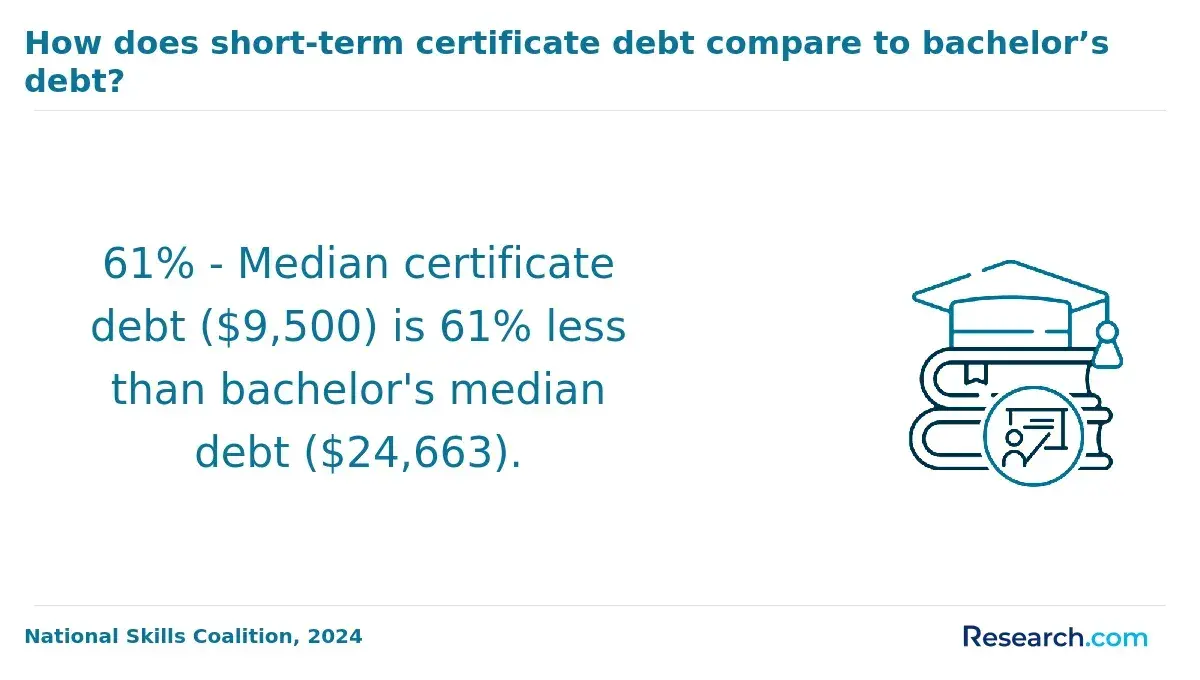
| Financial support | Eligibility varies by program type and enrollment status | Is federal aid, workforce funding, employer assistance, or a payment plan available? |
Accelerated programs can shorten calendar time but often increase weekly workload. Compare their pace with fast track schools only when you can realistically sustain the required study and attendance hours.
How can students verify program accreditation and institutional quality for certificates?
Institutional quality and program approval are separate checks. For a credit-bearing college certificate, start by confirming that the institution is recognized by an institutional accreditor accepted by the U.S. Department of Education or the Council for Higher Education Accreditation. Then check whether the particular program has the approval required for its field. Nursing, allied health, aviation, and some technical programs may need specialized approval or meet state-board rules.
Follow these steps before enrolling:
- Identify the exact job, certification examination, or license you want after completion.
- Check the relevant state licensing board, certifying organization, or employer postings for education requirements.
- Match those requirements to the school's written curriculum, delivery format, clinical or lab hours, and eligibility statement.
- Ask for the program's completion, examination, placement, and licensure information, including how each measure is defined.
- Confirm whether the approval applies to your campus, online format, and anticipated graduation period.
Red flags include vague claims of "accreditation" without naming the accreditor, pressure to enroll before reviewing disclosures, promises of guaranteed jobs, and no written explanation of licensing eligibility. Accreditation alone does not ensure that a certificate transfers, qualifies for a license, or meets every employer's preference.
What certificates lead to the strongest career outcomes and entry-level job roles?
The strongest career outcomes tend to come from certificates that align with a specific employer-recognized skill, regulated entry pathway, or local labor need. Examples include HVAC/R, electrical or industrial maintenance foundations, medical assisting, pharmacy technology, coding and billing, commercial driving training, IT support, and paralegal studies. However, the right choice depends on local postings, state rules, and whether employers hire at the certificate level.
The following roles illustrate how a certificate can fit an entry point without overstating what it guarantees.
| Certificate field | Possible entry-level role | What employers may also require | When to consider more education |
| HVAC/R | HVAC helper or service technician trainee | EPA Section 608 certification for refrigerant work; employer training | For advanced systems work or business ownership |
| Medical assisting | Medical assistant | Clinical competency; employer-preferred certification in some markets | For nursing or other licensed clinical roles |
| IT support | Help desk technician or support specialist | Portfolio, troubleshooting ability, or vendor certification | For specialized engineering or management work |
| Paralegal studies | Legal assistant or paralegal support role | Writing, research, software skills, and employer preferences | For attorney roles, which require law school and bar admission |
| Digital design | Production designer or junior digital-content role | Portfolio and current software workflow knowledge | For roles requiring deeper UX, strategy, or technical skills |
Use local job descriptions as a reality check. If the role repeatedly requests a degree, license, apprenticeship, or named certification, a standalone certificate may be a first step rather than the complete qualification. Learners focused primarily on earnings can also compare broader academic paths among the most lucrative degrees.
What salary ranges and earning potential are linked to common certificate fields?
Occupational wage data is useful for comparing fields, but it is not a promise of pay after completing a certificate. Wages vary by state, employer, experience, schedule, union coverage, and whether a worker has completed required licensure or apprenticeship milestones. The U.S. Bureau of Labor Statistics reported these national median annual wages for 2024.
| Occupation | 2024 median annual wage | 2023-33 projected growth | Certificate context |
| Electricians | $62,350 | 11% | Training commonly combines technical instruction with apprenticeship and licensing. |
| Heating, air conditioning, and refrigeration mechanics and installers | $59,810 | 9% | Certificates can support entry, but refrigerant work requires EPA certification. |
| Medical assistants | $44,200 | 15% | Certificates are common preparation; employer requirements vary. |
| Paralegals and legal assistants | $61,010 | 1% | Education preferences vary; a certificate may complement a prior degree. |
| Graphic designers | $61,300 | 2% | Portfolio quality and experience remain central to hiring. |
Higher median wages can reflect years of experience, geographic concentration, overtime, licensing, or apprenticeship progression. Compare local starting-pay postings and the full training path, not national median pay alone, when estimating return on investment.
What licensing or professional certification steps follow completion of a certificate program?
Finishing a certificate program and earning a professional credential are often separate events. A school awards a certificate for completing its curriculum. A licensing board, government agency, or independent certifying organization may then require an examination, verified education, supervised hours, a background check, continuing education, or periodic renewal.
Common post-completion steps include the following:
- HVAC students may need EPA Section 608 certification before handling refrigerants, while additional local licensing rules can apply to contractors.
- Medical-assisting graduates may pursue a national certification when eligible, but requirements and employer preferences differ by credential and location.
- Practical nursing and other licensed nursing paths require graduation from an approved program and passing the applicable NCLEX examination before a state issues a license.
- Paralegal certificates do not create a law license; voluntary professional certifications may have separate education or experience rules.
- IT and design certificates may be supplemented by vendor certifications, portfolios, and documented project work rather than state licensing.
Verify the current requirements directly with the relevant board or certifying body before enrolling, especially if you plan to study online or move states. Rules can change, and a school's marketing language should not replace official eligibility guidance.
How should adults choose the best part-time certificate program for their goals?
The best part-time certificate is the one that closes a clearly identified gap between your current experience and a realistic next role. Start with job postings within commuting distance or in your intended remote market. Note the repeated requirements, then select the shortest credible program that meets them without sacrificing required hands-on training, eligibility, or employer recognition.
Use this decision sequence to narrow your options:
- Define the target role and determine whether it requires a certificate, certification, degree, apprenticeship, or license.
- Choose a part-time schedule you can sustain after accounting for study, commuting, labs, clinicals, and family responsibilities.
- Compare total completion cost, including supplies, examinations, and unpaid placement time, against likely local entry-level opportunities.
- Verify institutional quality, field-specific approval, transfer policy, and any certification or licensure eligibility in writing.
- Ask whether the curriculum is current, includes supervised practice or portfolio work, and offers career support relevant to your field.
A community college is often a strong option when you want lower published tuition, academic credit, and a possible path into an associate degree. A specialized provider may make sense when an employer recognizes its training and the program teaches a narrowly defined skill. Avoid enrolling solely because a program is fast, fully online, or heavily advertised.
Other Things You Should Know About
Often, yes, especially in online, evening, weekend, or hybrid formats. Confirm the required weekly study time and any fixed lab, clinical, internship, or examination appointments. Programs involving patient care or skilled equipment may not be fully flexible.
They can be worthwhile when the curriculum matches a specific entry-level role, employer requirement, certification examination, or stackable education plan. They are less compelling when the target job requires a degree, license, or apprenticeship that the certificate does not provide.
Sometimes. A certificate program may satisfy education eligibility for an industry certification examination, but the certification is awarded separately by the certifying organization. Check examination eligibility, experience requirements, fees, and renewal rules before enrolling.
Employers may accept online certificates when the provider is credible and the learner can demonstrate relevant skills. For hands-on or regulated roles, employers and licensing bodies may expect documented in-person labs, clinical practice, or supervised experience in addition to online coursework.
References
- 2025's Best Online Graduate Certificate Programs in the U.S. https://www.onlinemastersdegrees.org/graduate-certificate-programs/
- The Top 5 Certificate Programs for Jobs With Growth Potential | CourseStorm https://www.coursestorm.com/blog/top-certificate-programs-for-jobs
- Facts about working full-time as a full-time student https://www.luminafoundation.org/topics/todays-students/working-adults/
- Study: Modest earnings gains from short-term training https://www.ccdaily.com/2025/11/study-modest-earnings-gains-from-short-term-training/
- Student Loans for Certificate Programs: Paying for Career Training https://www.credible.com/student-loans/student-loans-for-certificate-programs
- Companies That Pay For College | Find 36 Top Options https://www.educationconnection.com/financial-aid/companies-that-pay-for-college/
- Online Certificate Programs | Certifications Programs https://www.uscareerinstitute.edu/online-certificate-programs
- 7 in-demand certifications in 2025 | edX https://www.edx.org/resources/in-demand-professional-certifications
- How does a college degree improve graduates' employment and earnings potential? - APLU https://www.aplu.org/our-work/publicuvalues/employment-earnings/
- Vocational programs and alternative pathways - Institute for Collaborative Education http://www.iceschoolnyc.org/vocational-programs-and-alternative-pathways