2027 Most Affordable Online Short Certificate Programs

Co-Founder and Chief Data Scientist
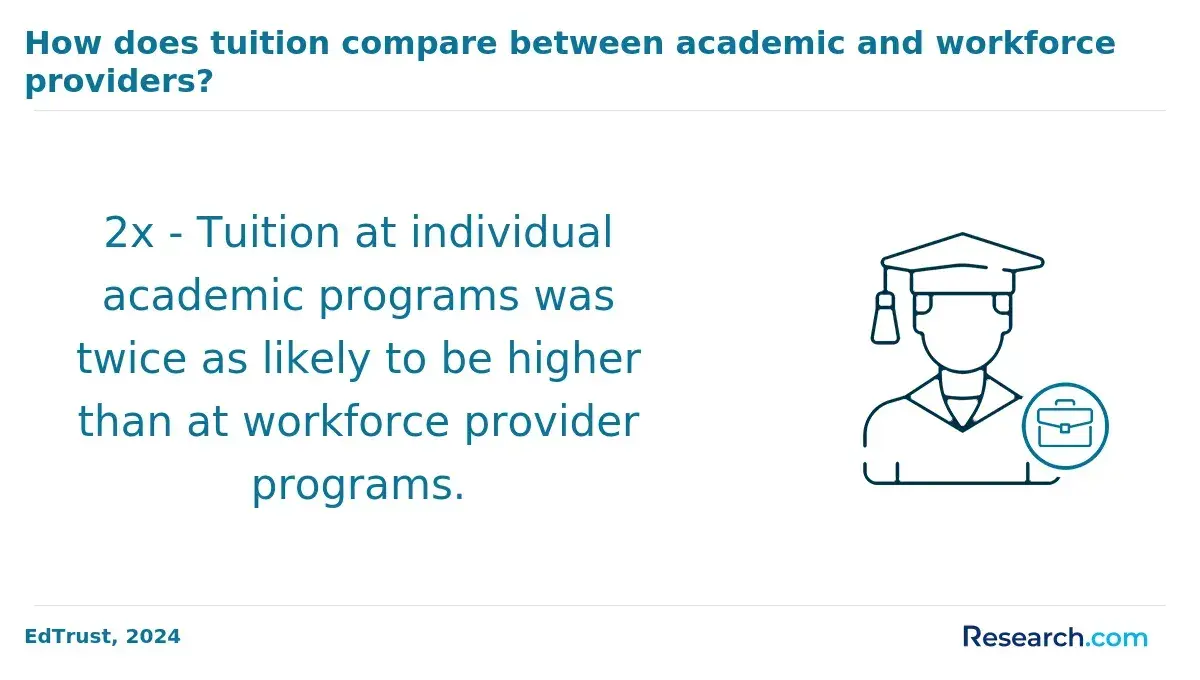
A low tuition price can be misleading if an online certificate does not meet employer, certification, or state licensing requirements. Affordable short certificate programs can build focused skills in weeks or months, often without committing to a degree.
For cost context, the College Board reported average 2024-25 published tuition and fees of $4,050 for public two-year colleges for in-district students. This guide helps career changers, working adults, and budget-conscious learners compare low-cost options, total expenses, job fit, and the questions to ask before enrolling.
Key Things You Should Know
- The least expensive credible option is often a credit-bearing community-college certificate, especially for in-district students; the 2024-25 average published tuition and fees at public two-year colleges was $4,050, though individual certificate prices vary by credits and residency.
- A certificate is education completed through a school or training provider; a certification is a professional credential typically issued by an industry body after an exam or other requirements. Confirm which one employers actually request.
- Short online programs can support entry-level skills, but hands-on trades, clinical healthcare roles, and licensed occupations may require campus labs, supervised practice, an exam, background checks, or state approval beyond online coursework.
Top 10 Most Affordable Online Short Certificate Programs
Popular Trade School Programs
Affordable online trade certificates commonly cover construction estimating, HVAC fundamentals, welding theory, electrical theory, drafting, manufacturing, and workplace safety. They fit learners seeking foundational knowledge or advancement in a related job.
However, programs for electricians, HVAC technicians, welders, and plumbers usually cannot replace required hands-on practice, apprenticeships, or state-regulated licensing steps. Choose fully online study for theory and exam preparation; choose hybrid training when employers or licensing boards expect lab competencies. Ask whether tools, proctoring, kits, and in-person assessments are included in the published price.
Healthcare Programs
Low-cost online healthcare certificates may include medical billing and coding, medical office administration, health information support, pharmacy technician preparation, and community health. These are typically career-training or academic certificates, not professional certifications.
Clinical paths such as nursing assistant, phlebotomy, medical assisting, and practical nursing generally require supervised in-person clinical education and may be regulated by the state. Medical records specialists had a $50,250 median annual wage in May 2024, according to the U.S. Bureau of Labor Statistics; that figure describes the occupation, not a guaranteed outcome from any certificate.
Criminal Justice / Law Programs
Online short programs in criminal justice, legal studies, paralegal support, court administration, and legal research can help learners explore public safety or legal-office work. A short certificate may be useful for administrative or support skills, but it does not qualify a person to practice law, become a police officer, or meet every paralegal employer's expectations.
Paralegals and legal assistants had a May 2024 median annual wage of $61,010. Learners targeting paralegal work should verify whether a program meets employer preferences and whether credits can stack into an associate degree.
Arts & Design Programs
Online certificates in graphic design, digital illustration, UX fundamentals, photography, video editing, and web content creation are often flexible and comparatively inexpensive because they rely on portfolio work rather than labs. They suit learners who can practice independently and build samples for employers or clients.
Graphic designers had a May 2024 median annual wage of $61,300, but hiring commonly depends on portfolio quality, software capability, and experience rather than a certificate alone. Budget for design software, a capable computer, portfolio hosting, and possible equipment upgrades.
Which online short certificate programs cost the least?
The lowest-cost online short certificates are usually workforce certificates from public community colleges, employer-supported training, and noncredit programs with transparent all-in pricing. A self-paced third-party course can cost less upfront, but it may not carry academic credit, qualify for aid, or meet a licensing rule. If you need a credential tied to an industry exam, compare the course against the exam's eligibility rules rather than choosing solely by price.
This comparison shows why the smallest advertised tuition is not always the lowest total-cost path.
| Option | Typical affordability advantage | Best use | Important limitation |
| Public community-college certificate | In-district tuition can be lower than private-school pricing | Credit-bearing career preparation and stackable study | Residency, fees, and course sequencing can affect total cost |
| Noncredit workforce certificate | Shorter curriculum may reduce tuition and textbook costs | Targeted job skills or employer upskilling | Usually does not transfer as college credit |
| Industry-provider course | Self-paced delivery can reduce scheduling costs | Software, business, and digital-skills training | Recognition varies substantially by employer |
| Employer-funded program | Tuition reimbursement or direct payment can lower out-of-pocket cost | Workers building skills relevant to their current role | May require continued employment or prior approval |
For a broader comparison of exam-based credentials and career-oriented options, review what certifications can I get online. Keep in mind that an industry certification may require separate exam fees, renewal fees, or documented work experience.
Are affordable online certificates accredited and reputable?
Affordable programs can be reputable, but price does not establish quality. For a credit-bearing college certificate, check that the institution holds recognized institutional accreditation and that the certificate appears in its official catalog. For noncredit or industry training, evaluate the provider's curriculum, instructor expertise, assessment method, employer recognition, refund policy, and whether the credential is verifiable.
Accreditation is especially important when you need federal aid eligibility, transfer credit, licensure preparation, or a path into a degree. It is less directly applicable to a standalone vendor course, where job relevance and the issuer's reputation matter more. Do not assume that a school's institutional accreditation means every program meets specialized approval requirements.
A common mistake is treating a completion badge as proof of professional qualification. Before paying, ask the relevant licensing board, certifying organization, or prospective employer whether the exact program is accepted.
What jobs can short online certificates lead to?
Short online certificates can lead to interviews for support, administrative, technical, and entry-level roles when the curriculum matches local hiring needs and you can demonstrate the skill. They are most useful when paired with a portfolio, relevant experience, an internship, or a required industry exam. They are less suitable when an occupation legally requires a degree, supervised clinical training, apprenticeship hours, or a license.
The following roles illustrate realistic directions rather than automatic job outcomes.
| Certificate focus | Possible entry-level direction | What employers may also expect |
| Medical billing and coding | Billing support or medical records work | Knowledge of coding systems; some employers prefer certification |
| Bookkeeping | Accounts payable, payroll, or bookkeeping support | Spreadsheet and accounting-software proficiency |
| IT support | Help desk or user support | Troubleshooting ability and an industry certification may help |
| Digital design | Junior design or content-production support | A portfolio with relevant work samples |
| Legal studies | Legal administrative support | Office software, research skills, and employer-specific training |
Certificate study makes the most sense when the role has a clear, accessible entry point. If your goal requires broader general education, management preparation, or a credential that employers routinely list as a degree requirement, compare the certificate against the easiest bachelor degree to get online before committing.
How long do online short certificate programs take?
Online short certificate programs commonly take from a few weeks to about one year, depending on the number of courses, prerequisites, and whether the learner studies part time. Noncredit, self-paced programs can be quicker, while college certificates often follow academic terms and may require sequential courses. A program labeled "short" is not necessarily accelerated; it may simply contain fewer credits.
Fast completion is valuable only if the pace leaves enough time to practice and meet required competencies. Learners balancing work should confirm weekly workload, assignment deadlines, live-session requirements, exam windows, and whether a practicum must be scheduled separately. If speed is your primary goal, compare the calendar and workload against accelerated college programs, which may offer a longer credential with a structured fast pace.
What are the admission requirements for online certificate programs?
Admission requirements depend on the provider and credential type. A noncredit online course may require only payment, basic computer access, and an account. A college certificate may require an application, identity documentation, placement assessment, prerequisite courses, or proof of high school completion. Graduate certificates generally require a bachelor's degree, while professional programs may require prior work experience.
Before applying, confirm the exact requirements for the certificate - not just the college. Programs in healthcare, public safety, and other regulated fields can add immunizations, drug screening, background checks, CPR training, clinical placement rules, or state residency requirements. Standardized tests are uncommon for short certificates, but prerequisite academic skills may still affect placement and completion time.
Do not pay an application or enrollment fee until you know whether prior learning, transfer credit, or an employer-recognized certification can reduce required coursework. A flexible alternative for some degree-seeking learners is a competency-based degree, where progress may be tied to demonstrating mastery rather than completing fixed-length terms.
How much do online short certificate programs cost?
Total cost includes more than tuition. Credit-bearing certificates may charge per credit plus institutional and technology fees. Career-training providers may bundle curriculum but charge separately for vouchers, lab kits, background checks, software, proctoring, or certification exams. For comparison, request a written estimate through completion, not a single-course price.
Use this cost checklist to compare two programs that appear similarly affordable.
| Cost item | Why it changes affordability |
| Tuition or course fee | May be charged per credit, per course, per term, or as one bundled price |
| Mandatory institutional fees | Can apply even when instruction is fully online |
| Books, software, and supplies | May be recurring or required before the first class |
| Exam, license, and background-check fees | Often fall outside advertised tuition for regulated fields |
| Travel and clinical or lab costs | Can be significant for hybrid, practicum, or testing requirements |
| Lost work time | Matters when mandatory sessions occur during working hours |
Financial aid eligibility varies. Eligible college certificates at approved institutions may qualify for federal aid if the program meets federal rules, while most standalone noncredit courses do not. Ask about payment plans, workforce grants, veteran education benefits where applicable, and employer tuition assistance before borrowing.
Which short certificate programs offer the best salary potential?
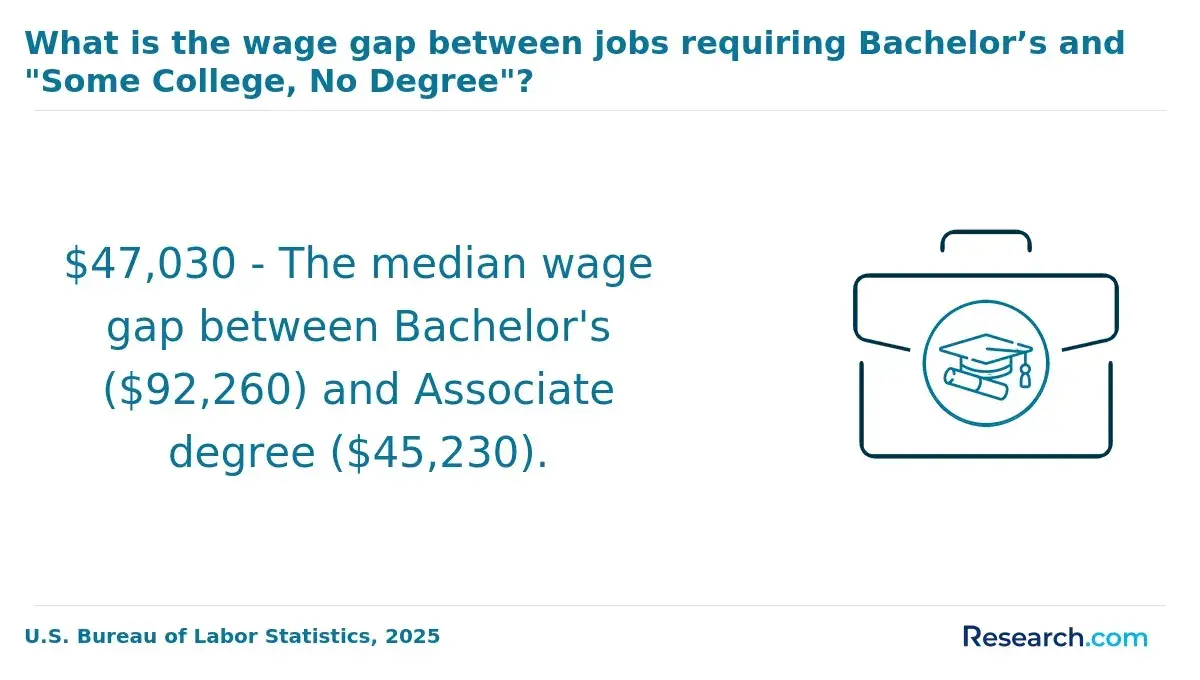
The best salary potential usually comes from certificates that support work in technical, healthcare-information, or business systems roles, but occupational wages reflect many factors beyond education. Experience, location, employer, licensure, industry certification, and a degree can all influence pay. A low-cost certificate is strongest financially when it opens a defined entry point or builds on experience you already have.
This wage context can help you compare fields, while avoiding the mistake of treating an occupational median as a certificate-graduate salary.
| Occupation | May 2024 median annual wage | Certificate relevance |
| Web developers and digital designers | $95,380 | Short programs can develop portfolio skills, but employers may expect demonstrated experience |
| Paralegals and legal assistants | $61,010 | A certificate can be relevant; employer preferences and education expectations vary |
| Graphic designers | $61,300 | Portfolio quality is commonly central to hiring |
| Medical records specialists | $50,250 | Training may support entry, and certification can be preferred by some employers |
Higher wage potential does not automatically mean better return on investment. Compare the program's full cost, required unpaid training, likelihood of local openings, and the additional credentials needed to compete.
Do online certificate programs require licensure or certification?
Some online certificate programs prepare learners for an external certification or license, but completing the course itself is usually not the same as receiving that credential. Certification requirements are set by certifying organizations; licensure is granted by a government authority and can vary by state. Review the official eligibility criteria before enrolling.
Licensure is most likely to matter in clinical healthcare, skilled trades, education, and other regulated fields. An online-only program may cover theory but not satisfy clinical hours, supervised fieldwork, lab training, or state-specific coursework. Ask whether graduates are eligible to sit for the relevant exam, whether the school provides required documentation, and whether the program is approved in the state where you intend to work.
How do you choose the best affordable online certificate program?
Choose based on the job or next credential you want, then work backward to the least expensive program that meets that requirement. Avoid schools that emphasize urgency, vague employment promises, or monthly payments while withholding the total price. The most affordable choice is the option with the lowest realistic cost to reach your goal, including required exams and follow-on training.
Use these steps before enrolling.
- Identify two or three target job postings and note the stated education, software, certification, and experience requirements.
- Decide whether you need a college certificate, a noncredit career program, an industry certification, or a longer degree pathway.
- Request the full program cost, including fees, materials, exams, travel, and any required in-person components.
- Verify institutional accreditation, program approval, and licensing or certification eligibility when those factors apply.
- Confirm the delivery schedule, withdrawal policy, student support, and whether credits transfer or stack into a larger credential.
- Compare the remaining out-of-pocket cost after employer aid, grants, or other assistance - not only the advertised tuition.
A certificate is a good fit when it addresses a specific skill gap at a manageable cost. Consider an associate or bachelor's degree instead when your target occupation consistently requires one, you need broad transferable coursework, or you expect to advance into roles where a short credential alone has limited value.
Other Things You Should Know About
They can be worthwhile when the curriculum matches a clear job requirement, the provider is credible, and the full cost is low relative to the skills gained. They are a weak investment when the program is unrecognized by employers or does not meet a required licensing or certification standard.
Possibly. Some eligible credit-bearing college certificate programs can qualify for federal financial aid, but many short noncredit and third-party programs do not. Ask the school's financial aid office whether the specific certificate - not merely the institution - qualifies.
Yes, particularly for fields with entry-level support roles such as IT support, billing, bookkeeping, design, and administrative work. A career change is more realistic when you also build a portfolio, complete practical projects, gain experience, or earn a required industry credential.
Employers may accept them when the provider, curriculum, and skills are relevant. Acceptance is strongest when the certificate comes from a recognized college or respected industry provider and when you can show practical competency. For licensed work, employer acceptance does not replace legal eligibility requirements.
References
- What You Should Know About Short-Term Certification Programs https://www.learnhowtobecome.org/career-resource-center/short-term-certifications
- The HEA Group (@theheagroup) on Threads https://www.threads.com/@theheagroup/post/DcTadBboF17/theres-a-lot-of-buzz-around-short-term-certificate-programs-as-a-faster-more/
- How does a college degree improve graduates' employment and earnings potential? - APLU https://www.aplu.org/our-work/publicuvalues/employment-earnings/
- How to finance edX courses | edX https://www.edx.org/resources/how-to-get-financial-assistance-for-edx-courses
- Online Certificate Programs | Certifications Programs https://www.uscareerinstitute.edu/online-certificate-programs
- Taking A Short Course? Get These 3 Requirements Ready https://bukas.ph/blog/3-requirements-youll-need-to-apply-for-short-courses/
- Positive Outcomes from Short Term Training Programs https://www.womenintrucking.org/blog/positive-outcomes-from-short-term-training-programs
- Financial Aid Guide for Students at Online Colleges - OnlineColleges.net https://www.onlinecolleges.net/for-students/financial-aid-online-students/
- Explore Online Certificate Programs Approved by FAFSA https://www.edumed.org/online-schools/fafsa-approved-certificate-programs/