2027 Best Certifications for Work-Life Balance

Co-Founder and Chief Data Scientist
Choosing a credential is not just about getting hired; it is about avoiding a career path with unpredictable shifts, mandatory overtime, or costly training that does not fit your life. This guide compares certifications and short programs that can lead toward office-based, remote-capable, or schedule-stable roles. U.S. Bureau of Labor Statistics projections for 2024-2034 show continued growth in fields such as medical records and web development, but job conditions vary sharply by employer and role. Learn how to compare credentials, costs, requirements, flexibility, and realistic career outcomes before enrolling.
Key Things You Should Know
- Credentials most compatible with work-life balance usually support administrative, technical, design, records, bookkeeping, or remote-capable work rather than emergency, shift-based, or on-call roles.
- Medical records specialists are projected to see 7% employment growth from 2024 to 2034, according to the U.S. Bureau of Labor Statistics, making coding and health-information credentials worth comparing for stable daytime work.
- Prioritize the actual job schedule, employer expectations, exam and renewal costs, and licensure rules—not just a program's advertised completion time or tuition.
Top 10 Best Certifications for Work-Life Balance
Popular Trade School Programs
Trade programs can offer predictable schedules when they lead to planned maintenance, estimating, drafting, or shop-based roles rather than emergency service. HVAC certificates, welding certificates, electrical technician programs, and computer-aided design (CAD) certificates commonly take months to two years. Apprenticeships may cost less but require worksite schedules; college certificates may be credit-bearing and stack into an associate degree. Evening service calls, physical demands, and local licensing requirements can reduce flexibility, so ask employers how often technicians take after-hours assignments.
Healthcare Programs
Healthcare certificates vary widely in schedule stability. Medical billing and coding, health information technology, pharmacy technician, dental assisting, and medical assisting programs can prepare students for entry-level work, but only some roles are primarily weekday-based. A medical coding certificate is educational training; credentials such as Certified Professional Coder are separate certifications earned through an exam. Clinical programs may require in-person labs and unpaid clinical experiences. Verify whether a program meets state rules and whether local employers prefer certification before paying for training.
Criminal Justice / Law Programs
Paralegal studies certificates and associate degrees can suit people seeking document-focused legal support work with more regular business hours than policing or corrections. A certificate may be postsecondary, undergraduate, or post-baccalaureate; it is not a law license and does not authorize independent legal practice. Some employers prefer American Bar Association-approved paralegal education, although approval is program-specific rather than required nationwide. Court deadlines, trial preparation, and law-firm culture can still create intense periods, so investigate workload expectations before choosing a specialty.
Arts & Design Programs
Graphic design, UX design, digital marketing, web design, photography, and animation certificates can develop portfolio-based skills for freelance, agency, or in-house work. Flexible study does not automatically mean flexible employment: client deadlines and self-employment income can be unpredictable. A credit-bearing design certificate may transfer into an associate or bachelor's degree, while a provider-issued professional certificate usually does not. Choose programs that require portfolio projects, current design software, feedback from working professionals, and clear disclosure of equipment and subscription costs.
Which professional certifications offer the best work-life balance and flexible schedules?
Professional certifications most likely to support flexible schedules are those tied to roles with measurable, project-based work and limited emergency coverage. Strong options include bookkeeping certifications, medical coding certifications, Salesforce Administrator certification, CompTIA IT certifications for help desk or systems roles, project-management credentials, and digital marketing certifications. The credential alone does not determine balance; the employer, industry, seniority, and workload do.
This comparison separates credentials that are commonly confused. A certificate is training completed through a school or provider, while a certification is a professional designation awarded by an organization after meeting its rules, often through an exam.
| Credential path | Typical fit | Schedule trade-off | Important limitation |
| Medical coding certification | Detail-oriented learners interested in healthcare records | Many employers offer daytime or hybrid work after experience | Entry-level remote jobs can be competitive |
| Bookkeeping certification | People comfortable with numbers and client service | Small business and remote work can be flexible | Month-end, tax, and payroll deadlines can be demanding |
| Salesforce Administrator certification | Business systems and customer-relationship-management users | Often office-based or remote-capable | Employers may expect hands-on platform experience |
| CompTIA A+ or similar IT certification | Entry-level technology support candidates | Some roles use standard business hours | Help desk and infrastructure jobs may include shifts or on-call work |
| Project management certification | Experienced coordinators or project staff | Planning work can be flexible by employer | Deadlines and stakeholder demands can create overtime |
People seeking a direct income-focused comparison can also review online certificate programs that pay well, while remembering that higher pay and lower stress do not always occur in the same job.
How do online certification programs compare with campus options for work-life balance?
Online certification programs can improve work-life balance during training because asynchronous coursework lets students study around jobs and caregiving. Campus programs can be better when learning requires supervised labs, equipment, clinical practice, or immediate instructor feedback. Neither format guarantees a remote-friendly career.
The practical difference is usually structure rather than quality. Compare these features before choosing a delivery format:
| Factor | Online format | Campus or hybrid format |
| Scheduling | May offer asynchronous modules and flexible pacing | Usually follows fixed class, lab, or clinic times |
| Best for | Self-directed learners with reliable technology | Hands-on learners and regulated clinical or technical training |
| Networking | Requires deliberate virtual outreach | Can provide local peer and employer connections |
| Hidden constraints | Proctored exams, group projects, deadlines, required practicums | Commuting, parking, daytime attendance, limited section choices |
| Recognition check | Confirm employer acceptance and exam eligibility | Confirm the same items; location alone is not proof of quality |
For learners whose priority is lower tuition alongside flexible delivery, comparing the most affordable online colleges can help identify longer degree pathways that may be a better fit than a short noncredit credential.
What admission requirements and prerequisites do work-life-balance-friendly certifications have?
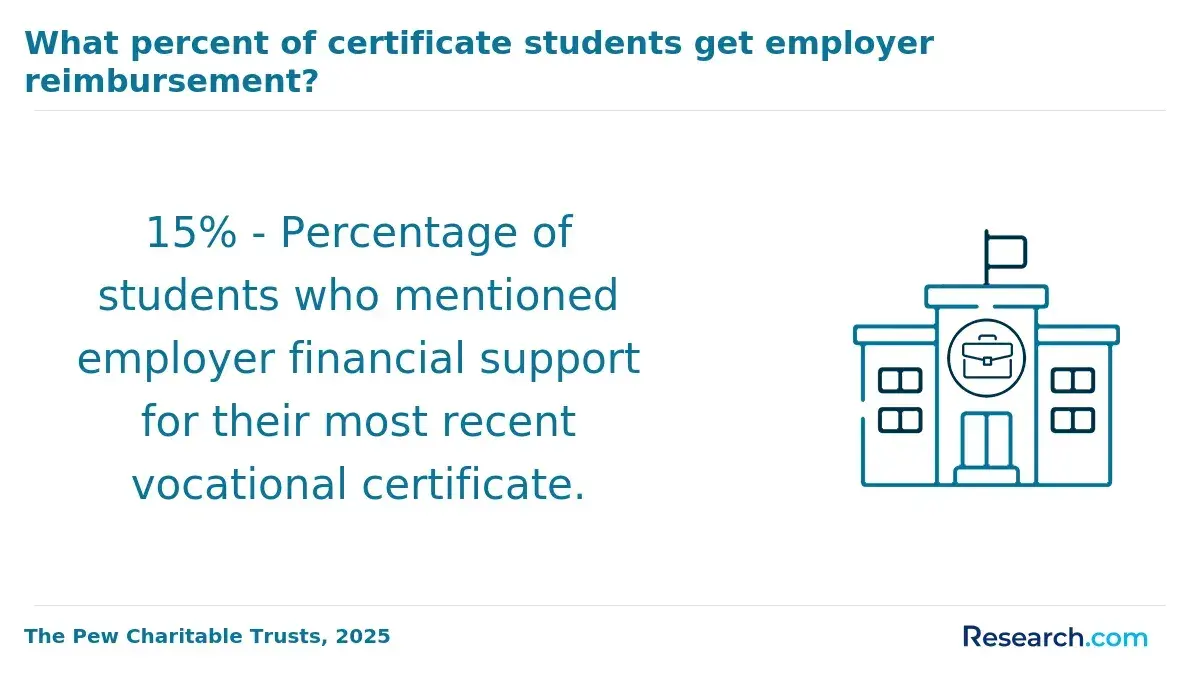
Requirements depend on the credential type. A community-college certificate may require a high school diploma or equivalent and placement steps. A third-party certification often has no college admission process but may require an exam fee, documented work experience, training hours, or agreement to a professional code of conduct. Clinical and regulated programs can add immunizations, background checks, drug screening, CPR training, or prerequisite science courses.
Before applying, confirm the exact requirements in writing. The following sequence prevents a common mismatch between a training program and the credential a learner actually wants:
- Identify whether the goal is an academic certificate, an industry certification, a license, or an employer-required skill credential.
- Read the certifying organization's current eligibility rules instead of relying only on a school's marketing page.
- Ask whether coursework makes you eligible for an exam, includes the exam, or merely prepares you to study for it.
- Confirm required clinical hours, supervised experience, technology, background checks, and state-specific conditions before paying a deposit.
A low-GPA or open-admission program may still have demanding course prerequisites or employer screening. Do not treat accessible admission as evidence that the path is easy, low-stress, or a guaranteed route to a job.
How can students verify accreditation and industry recognition for certification programs?
Accreditation and recognition answer different questions. Institutional accreditation evaluates a college or school. Programmatic accreditation evaluates certain professional programs. Industry recognition concerns whether employers and certifying bodies accept a provider's training or credential. A reputable option should be able to explain which of these applies and why.
Use these checks to verify a program without assuming that every short credential needs the same type of approval:
- For colleges, verify institutional accreditation through the U.S. Department of Education database or the Council for Higher Education Accreditation directory.
- For regulated healthcare, legal, technical, or trade programs, check the relevant state board and certifying organization for approved education requirements.
- Review job postings in your target area to see whether employers request the named certification, a degree, specific software skills, or prior experience.
- Ask for the program's completion rate, exam pass-rate methodology, refund policy, instructor qualifications, and total required fees.
- Be cautious if a provider promises licensing, employment, remote work, or high earnings without explaining the conditions and limitations.
Recognition is especially important for noncredit programs. A polished course completion badge may build skills, but it may not carry the same weight as a certification issued by an established professional body.
What program lengths, tuition costs, and financial aid options should applicants expect?
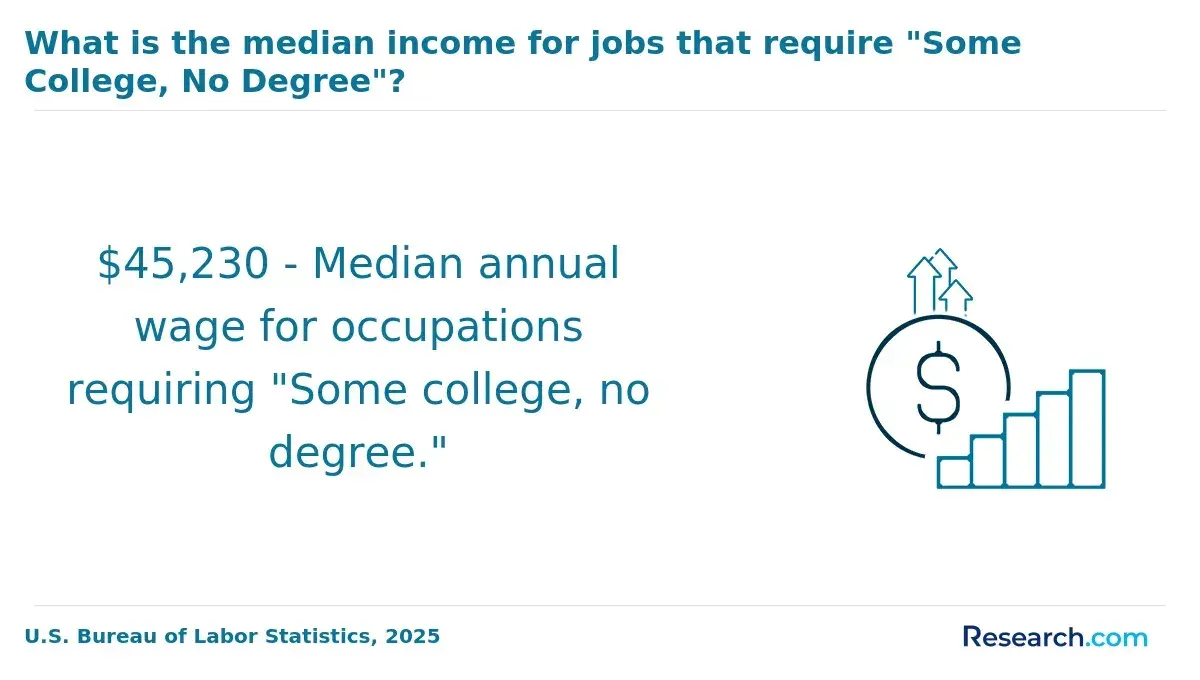
Program length ranges from a few weeks for self-paced vendor training to about one year for many college certificates; associate degrees generally take about two years of full-time study. Tuition is only one cost. Include exam attempts, application fees, books, software, equipment, background checks, travel, and lost work hours for required in-person training.
The table shows the cost questions that matter because funding options differ by provider and credential type:
| Program type | Common duration | Typical funding route | Cost caution |
| Third-party online certificate course | Weeks to months | Employer reimbursement, payment plan, personal funds | Often not eligible for federal student aid |
| Community college certificate | Months to about one year | Federal aid when the eligible program and student qualify, state aid, scholarships | Fees, supplies, and exams may be separate |
| Industry certification exam | Preparation time varies | Employer support, workforce grants, personal funds | Renewal and retake costs can continue after the exam |
| Associate degree | About two years full-time | Federal aid when eligible, grants, scholarships, employer aid | Longer completion time can increase total living and opportunity costs |
Complete the FAFSA when considering an eligible college-based program, but do not assume federal aid applies to every certificate. If a short program does not offer aid, compare its total price and employer value with degree options at most in demand master's degrees only if your career goal truly requires graduate-level advancement.
Which careers and job roles align with work-life-balance-focused certifications?
Work-life-balance-focused credentials align best with careers where work is scheduled around records, systems, deliverables, clients, or business operations. They are less aligned with jobs built around emergency response, inpatient care, field dispatch, rotating shifts, or high-volume commission targets. Job design matters more than the credential label.
This table connects common pathways with realistic role examples and the scheduling questions to ask during a job search:
| Pathway | Possible job roles | Schedule-related question to ask |
| Medical coding or health information | Medical records specialist, coding assistant, health information clerk | Is the role production-based, remote, hybrid, or tied to hospital coverage? |
| Bookkeeping | Bookkeeper, accounts payable clerk, payroll assistant | What overtime is expected at month-end, quarter-end, and tax time? |
| IT support | Help desk technician, desktop support specialist, junior systems support | Are evening shifts, weekend coverage, or on-call rotations required? |
| Paralegal studies | Legal assistant, paralegal, records specialist | How often do litigation deadlines require evening work? |
| Design or digital marketing | Graphic designer, content coordinator, marketing assistant | Is workload managed by predictable internal deadlines or client-driven rush work? |
Applicants with a record should review employer policies and licensing restrictions early rather than investing in a program that limits local employment options. Resources on the best degree for felons can help compare broader education routes and practical barriers.
What salary ranges and earning potential come with these certifications?
Salary should be treated as an occupational context, not as a return guaranteed by any certificate or certification. Pay varies by location, experience, industry, work arrangement, education level, and employer. The U.S. Bureau of Labor Statistics reported a 2024 median annual wage of $50,250 for medical records specialists and $61,010 for paralegals and legal assistants. These figures describe workers in those occupations, not the earnings of all program completers.
Use salary data to compare the possible ceiling and entry route, then check local postings for the qualifications employers actually request.
| Occupation | 2024 U.S. median annual wage | Credential interpretation |
| Medical records specialists | $50,250 | Certificates and coding credentials may be relevant, but employer requirements differ. |
| Paralegals and legal assistants | $61,010 | A certificate or associate degree may help; some employers prefer a bachelor's degree or specialized experience. |
| Bookkeeping, accounting, and auditing clerks | $49,210 | Bookkeeping training can support entry, but software skills and experience influence hiring. |
| Graphic designers | $61,300 | A portfolio is often as important as formal training; a certificate alone may not be enough. |
Higher-paying roles can sometimes carry heavier deadlines, leadership duties, or availability expectations. Evaluate earnings alongside commute, benefits, paid time off, workload, and control over hours.
How do licensing and continuing education requirements affect long-term work-life balance?
Licensing and continuing education can either support or complicate long-term work-life balance. Licensing is a legal requirement set by a state or jurisdiction for specific occupations. Certification is generally a voluntary or employer-preferred professional credential, although it may be required by an employer or payer. Continuing education, renewal fees, ethics training, and recertification exams create recurring time and cost commitments.
Before committing, ask the credential issuer these questions:
- How long is the credential valid, and what education, work experience, fees, or exams are required to renew it?
- Can required continuing education be completed online and on a self-paced schedule?
- Does the credential transfer if you move to another state or change employers?
- Will a license be required for the job itself, even if the school awards a certificate?
- What happens if renewal is missed, and what reinstatement costs or testing requirements apply?
Renewal is not automatically a drawback. In fast-changing fields such as healthcare coding, cybersecurity, and software platforms, current knowledge can improve employability. The best fit is a renewal cycle you can realistically maintain.
What criteria should students use to choose a reputable, low-stress certification program?
A reputable low-stress program is one that fits your target role, budget, learning style, and schedule—not necessarily the shortest or cheapest option. A key red flag is a provider that uses broad claims such as "work from home" or "career-ready" without naming the credential issuer, required exams, local hiring partners, or total costs.
Use this decision process to narrow your choices:
- Start with two or three target job titles and read current local and remote job postings for required credentials, software, experience, and schedule expectations.
- Choose an academic certificate when you need structured coursework or future college credit; choose an industry certification when employers specifically recognize the certifying body.
- Compare total cost, study hours per week, required in-person sessions, exam fees, renewal costs, and whether the training is credit-bearing.
- Verify school accreditation or credential eligibility directly with the appropriate accreditor, state board, or certification issuer.
- Ask about instructor access, career services, withdrawal rules, and whether graduates can realistically complete the program while working.
- Test the field first through an introductory course, informational interview, volunteer task, or entry-level software practice when possible.
A different path may be better if you need immediate income, dislike screen-based work, need a license quickly, or want a role that requires extensive clinical practice. In those cases, an apprenticeship, associate degree, employer training route, or more directly licensed program may provide a clearer path.
Other Things You Should Know About
There is no universal best choice, but medical coding, bookkeeping, Salesforce administration, selected IT support certifications, and digital marketing credentials can support more predictable or remote-capable work than shift-heavy fields. Check the actual schedule attached to target jobs.
It can build relevant skills, but remote work is determined by the employer and role. Entry-level remote jobs are often competitive, and some employers require prior experience before allowing remote work.
Not always. A certificate program may include multiple courses and school fees, while a certification may require exam preparation, exam fees, retakes, and renewal costs. Compare the full cost over several years.
Some can lead toward solid-paying roles, but pay depends on occupation, experience, location, and employer. A higher salary can also come with deadlines, client pressure, or on-call responsibilities, so assess total job conditions rather than pay alone.
References
- 6 Best Compensation & Benefits Certifications https://hrcertification.com/blog/best-compensation-benefits-certification-programs-2026-2027-biid1000375
- The Value of Certifications: Employers Weigh In! - Career Horizons https://www.career-horizons.com/the-value-of-certifications-employers-weigh-in/
- ISQOLS https://isqols.org/Work-Life-Balance-Certification
- Courses for Work/Life Balance - Skillsoft https://www.skillsoft.com/channel/worklife-balance-77e1f890-e71b-11e6-9835-f723b46a2688
- Best Career for Work Life Balance https://www.oxfordhomestudy.com/courses/leadership-and-soft-skills/best-career-for-work-life-balance
- Work life balance | Mental Health America https://mhanational.org/resources/work-life-balance/
- Explained: Here's why industry-specific certifications are in demand | News | Indegene https://www.indegene.com/news/explained-heres-why-industry-specific-certifications-are-in-demand
- The Value of Certification Programs https://www.socialworktoday.com/archive/Winter25p16.shtml
- The importance of work-life balance https://thehappinessindex.com/blog/importance-work-life-balance/
- Certificate Programs - Employers Council https://www.employerscouncil.org/training-and-development/training-and-development-certificate-programs/