2027 Best Online Certificate Programs With Short Courses

Co-Founder and Chief Data Scientist
Choosing a short online certificate is difficult because a fast credential can build useful skills without necessarily meeting licensing, employer, or degree requirements. The U.S. Bureau of Labor Statistics projects healthcare support occupations to grow 15% from 2023 to 2033, faster than the average for all occupations.
This guide helps career changers, working adults, and first-time students compare short online programs, distinguish certificates from certifications, evaluate quality, estimate costs, and select training that fits a realistic job target.
Key Things You Should Know
- A short online certificate usually takes weeks to about one year; it may be credit-bearing or noncredit, and it is not automatically the same as an industry certification or occupational license.
- Programs tied to regulated work, including nursing, medical assisting, electrical work, and legal services, may require clinical hours, supervised experience, state approval, or a separate examination that cannot be completed fully online.
- BLS projects healthcare support employment to grow 15% from 2023 to 2033, while many skilled-trade and digital roles also have demand; compare the specific occupation, local licensing rules, total cost, and employer expectations before enrolling.
Top 10 Best Online Certificate Programs With Short Courses
Popular Trade School Programs
Short online trade certificates commonly cover HVAC fundamentals, electrical theory, welding safety, construction management, plumbing concepts, automotive service, and OSHA safety. Online coursework can teach codes, estimating, diagnostics, and blueprint reading, but hands-on trades usually require lab work, apprenticeships, or employer-supervised practice. An associate degree in applied science may add general education and broader technical training. Choose a short certificate for entry preparation or upskilling; choose an apprenticeship or approved hybrid program when a state license or documented field hours are required.
Healthcare Programs
Online healthcare certificates may focus on medical billing and coding, pharmacy technician preparation, medical assisting theory, health information technology, patient care, or medical office administration. Associate degree options include nursing, radiologic technology, respiratory therapy, and health information management. Programs involving direct patient care generally require in-person clinical placements. A school certificate can prepare students for an external certification exam, but it does not itself grant certification or a clinical license. Confirm that clinical placement, exam eligibility, and state approval apply in your location before paying a deposit.
Criminal Justice / Law Programs
Short online certificates in criminal justice may cover corrections, homeland security, crime analysis, cybersecurity, or legal studies. Legal-support certificates often teach legal research, document drafting, litigation support, and ethics; associate degrees may offer a broader paralegal or criminal justice curriculum. Paralegals are not lawyers, and certificate completion does not authorize legal practice. Some employers prefer American Bar Association-approved paralegal education, while law-enforcement hiring commonly has agency-specific physical, background, and academy requirements. Match the program to the role rather than assuming any justice credential leads to police work.
Arts & Design Programs
Online arts and design certificates commonly teach graphic design, UX design, digital illustration, photography, animation, web design, and video editing. Associate degrees may provide longer portfolio development, studio critique, and general education coursework. Short courses work best for learners building a focused software skill or updating a portfolio, especially in Adobe Creative Cloud, Figma, or motion graphics. Employers often evaluate work samples more closely than course titles, so select programs with instructor feedback, portfolio projects, and clear ownership of completed work. A certificate alone does not guarantee freelance clients or design employment.
What are online certificate programs with short courses and how do they work?
An online certificate program with short courses is a structured sequence of classes that awards a certificate after completion. It can be offered by a community college, university, trade school, employer, professional association, or private learning provider. Academic certificates may carry college credit; noncredit career-training certificates usually do not. A professional certificate shows completion of provider-designed training, while an industry certification is separately awarded by a certifying body after its standards, examination, or experience requirements are met.
Most programs use recorded lessons, readings, assignments, quizzes, discussion boards, and scheduled virtual sessions. Technical and clinical fields may add simulations, proctored exams, campus labs, externships, or clinical rotations. For learners comparing quick credentials with easy certifications to get, the key question is whether employers recognize the provider certificate, require a separate certification, or require a license.
The comparison below separates common short-credential models so that you can avoid paying for the wrong type of credential.
| Credential type | What it shows | Typical provider | Best use |
| Academic certificate | Completion of a defined college curriculum | College or university | Credit, career entry, or degree stacking |
| Professional certificate | Completion of career-focused training | University or training provider | Skill development and portfolio evidence |
| Industry certification | Meeting an independent credential standard | Certifying organization | Roles where employers request a named credential |
| License | Legal authority to practice a regulated occupation | State licensing board | Regulated clinical, trade, or legal work |
How do online certificate programs compare to campus-based options for flexibility and outcomes?
Online programs are often the better fit when flexibility is the deciding factor: asynchronous coursework lets working adults study around shifts, and virtual delivery can reduce commuting and housing costs. Campus-based study is often stronger when learning depends on equipment, immediate coaching, clinical practice, or a local employer network. Neither format is inherently better; outcomes depend on curriculum quality, student support, completion, hands-on training, and whether the credential meets the hiring or licensing requirement.
Use this comparison to decide whether online delivery matches the occupation you want rather than choosing solely for convenience.
| Decision factor | Fully online may fit when | Hybrid or campus may fit when |
| Schedule | You need evening, weekend, or self-paced coursework | You can attend fixed labs or cohort sessions |
| Hands-on skill | Work is primarily digital, administrative, or analytical | Equipment practice, clinical skills, or shop supervision is essential |
| Networking | You already have industry access or can network remotely | You need local internships, employer events, or apprenticeship contacts |
| Licensing | The board accepts distance theory instruction | The board requires approved labs, clinicals, or supervised hours |
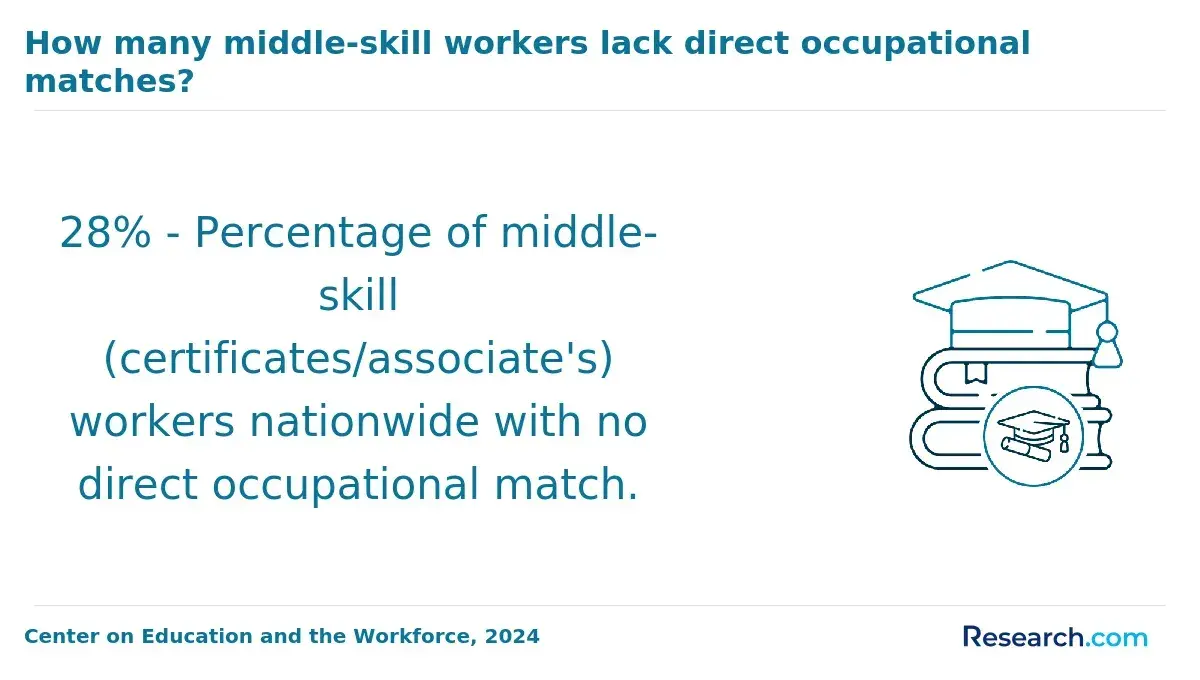
Online study is not the same as easier study. Ask for the weekly workload, live-session attendance rules, instructor response times, tutoring availability, and the policy for making up missed assignments. If your long-term aim is a degree rather than immediate skills, compare an online certificate with a best 1 year bachelor degree online option; a longer credential can make more sense when the target occupation routinely requires a bachelor's degree.
How can students verify accreditation and quality for online certificate programs?
Quality verification starts with identifying the provider and the credential. For a credit-bearing college certificate, check institutional accreditation through the U.S. Department of Education or Council for Higher Education Accreditation directories and verify that the institution - not merely a marketing partner - is issuing the credential. For career training, evaluate industry recognition, instructor qualifications, curriculum currency, assessment methods, and documented student-support policies.
Some fields need more than institutional accreditation. Nursing and allied-health programs may need programmatic approval; career schools may need state authorization; and licensing boards may specify approved education. Ask the licensing board directly, because a school representative cannot override state rules.
Before enrolling, use these checks to identify meaningful quality signals and common red flags.
- Confirm the exact credential name, issuing institution, credit status, and transcript availability.
- Verify institutional accreditation or the relevant program approval through the appropriate official directory or state board.
- Compare the curriculum with the job posting, certification examination blueprint, or licensing education rule for your intended role.
- Request written confirmation of clinical placement, lab requirements, externships, and extra fees when applicable.
- Read withdrawal, refund, complaint, and transfer-credit policies before accepting financing.
Red flags include vague claims that a program is "accredited" without naming the accreditor, promises of guaranteed employment, pressure to enroll immediately, missing instructor information, and statements that imply a certificate is a license. Also be cautious when a provider will not state whether credits transfer; transfer acceptance is determined by the receiving institution, not promised by the sending school.
What admission requirements and prior education do short online certificate programs need?
Admission requirements vary widely because short online credentials are not one uniform product. Many noncredit certificates require only an application, payment, and basic technology access. Credit-bearing undergraduate certificates commonly require a high school diploma, GED, or equivalent, although placement testing, prerequisite courses, or minimum age rules may apply. Graduate certificates usually require a bachelor's degree and may require prior coursework or professional experience.
Programs with clinical, safety-sensitive, or regulated training can add background checks, immunizations, drug screening, CPR training, health insurance, fingerprinting, or proof of English and math readiness. These are participation requirements, not necessarily admissions standards, and can add time and cost.
The following distinctions help applicants avoid assuming that college-style requirements apply to every short course.
| Program model | Common entry point | Important limitation |
| Noncredit professional certificate | Registration or basic eligibility | Usually does not create transferable college credit |
| Undergraduate academic certificate | High school completion or equivalent | Prerequisites may extend completion time |
| Graduate certificate | Bachelor's degree, sometimes related experience | May not qualify a learner for a new profession alone |
| Clinical or licensed pathway | Academic admission plus compliance screening | Online theory does not replace required in-person practice |
Do not treat an open-enrollment course as proof that you are eligible for a job or certification examination. Obtain the external organization's eligibility rules in writing before choosing a program marketed as exam preparation.
How long do online certificate programs with short courses take and what do they cost?
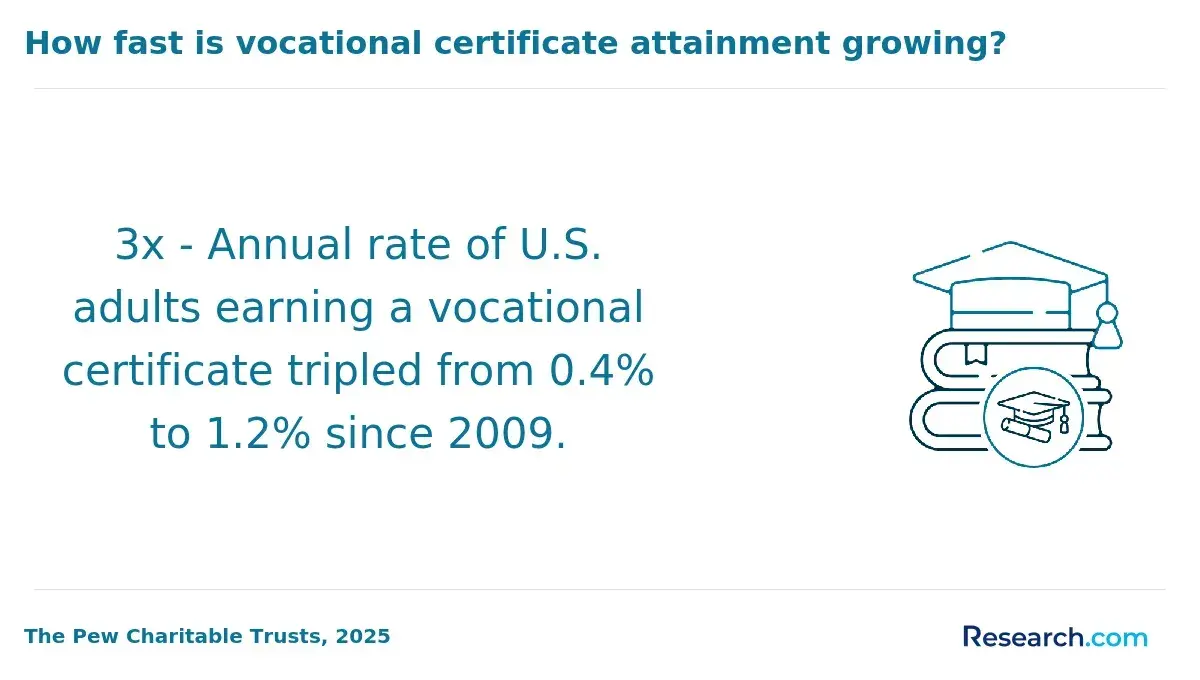
Short online certificate programs can run from a few weeks for a narrow software or business skill to roughly 6-12 months for a multi-course academic or career-training sequence. Self-paced courses may finish faster, but the realistic timeline depends on weekly study time, assignment deadlines, prerequisite knowledge, and required labs or clinical placements. A program advertised as "eight weeks" may still require substantially more time if it includes a capstone or exam preparation.
Total cost is broader than tuition. Compare the full enrollment estimate, not just the headline price.
- Tuition or subscription charges for courses and required terms
- Application, registration, technology, proctoring, and graduation fees
- Books, software licenses, tools, uniforms, supplies, and exam vouchers
- Travel, background checks, immunizations, insurance, and clinical costs for regulated programs
- Lost wages or reduced work hours if the schedule includes required live sessions or placements
Credit-bearing certificates may be eligible for federal aid only when the institution and program meet federal requirements; eligibility is not automatic. Noncredit courses commonly rely on payment plans, employer tuition assistance, workforce grants, veterans' education benefits where approved, or personal payment. Compare net cost after grants, but do not borrow based on a salary promise. If an associate or bachelor's degree would materially improve access to your target role, compare its added cost and time with other good degrees to get before selecting the shortest option.
What curriculum, short courses, and skills are typically included in these certificate programs?
Short-course curricula usually prioritize a concentrated job skill rather than broad general education. A strong program makes its learning outcomes visible and maps assignments to recognizable workplace tasks. For example, a data certificate may include spreadsheets, SQL, visualization, and a capstone; a medical billing program may cover coding systems, reimbursement, privacy, and claims workflows; a design program may include typography, interface tools, and portfolio projects.
Look for a sequence that progresses from foundations to applied work. The most useful evidence of learning may be a portfolio, simulation, coding project, case analysis, lab competency, or instructor-reviewed capstone rather than a completion badge alone.
When reviewing syllabi, distinguish between skills that can be learned online and requirements that need external validation.
| Skill category | Common short-course content | How employers or boards may assess it |
| Digital and business | Software, analytics, project workflows, communication | Portfolio, interview task, or work sample |
| Technical trade theory | Safety, codes, measurement, diagnostics, estimating | Practical assessment, apprenticeship, or licensing route |
| Healthcare administration | Terminology, records, coding, privacy, billing | Employer test or voluntary certification exam |
| Patient care | Anatomy, procedures, ethics, patient communication | Supervised clinical competency and possible licensure exam |
Artificial intelligence is increasingly part of workplace software and course design. Favor programs that teach responsible use, verification, privacy, and domain judgment instead of presenting AI tools as a substitute for foundational skills. In health, legal, and regulated settings, learners must understand when AI-generated work requires human review.
What careers and job roles can short online certificate programs help you access?
A short online certificate can help a learner prepare for entry-level work, a role transition, or advancement within an existing field, but it is not a universal substitute for experience, a degree, certification, or licensure. The strongest match occurs when the certificate teaches a clearly requested skill and the learner can show evidence through a project, practicum, prior work history, or external examination.
These role pathways illustrate the difference between preparation and qualification.
| Certificate focus | Potential related roles | Typical additional requirement to check |
| IT support or cybersecurity | Help desk technician, support specialist, junior security support | Vendor certification, portfolio, or prior technical experience |
| Medical billing and coding | Billing specialist, coding assistant, medical office specialist | Employer preference for coding certification or experience |
| Project management | Project coordinator, operations assistant, administrative coordinator | Documented project experience for advanced credentials |
| Digital design | Production artist, junior designer, content creator | Portfolio and software proficiency |
| Skilled-trade fundamentals | Helper, apprentice, maintenance trainee | Apprenticeship, supervised hours, and state licensing rules |
People rebuilding a career after justice involvement should check employer and occupational restrictions before paying for training. Education can expand options, but background policies vary by state, employer, and license. This overview of degrees for felons can help readers compare longer-term education paths with short-term certificates.
A certificate may not be the right first step if job postings consistently require an associate or bachelor's degree, if the occupation is licensed, or if you need substantial supervised practice. In those cases, choose an approved degree, apprenticeship, academy, or employer training route instead.
What salary ranges and earning potential are associated with careers from these certificates?
Salary information should be used as labor-market context, not as a promise attached to certificate completion. The U.S. Bureau of Labor Statistics reported a 2023 median annual wage of $62,350 for electricians, while entry into that occupation generally requires apprenticeship training and state or local licensing rather than an online certificate alone. BLS also projects electrician employment to grow 11% from 2023 to 2033, which suggests continuing demand but does not eliminate local competition or licensing barriers.
Pay varies by region, shift, employer, experience, union status, commissions, and education level. Entry-level workers may earn far below an occupation's median, while experienced workers with specialized skills may earn more. Healthcare administration, IT support, design, legal support, and trades each have different advancement structures.
Use this salary-screening process before treating a program as an investment.
- Find the exact occupation in current BLS Occupational Outlook Handbook or Occupational Employment and Wage Statistics data.
- Check the education, training, work-experience, and licensure requirements listed for that occupation.
- Review local job postings to see whether employers request a degree, named certification, portfolio, or prior experience.
- Compare local entry-level pay and likely work hours with the program's full cost and the time needed to complete it.
- Ask the school for outcomes definitions, reporting period, sample size, and whether reported jobs are related to the field.
Be skeptical of providers that present a high occupational median wage as though every certificate graduate receives it. A credible program explains its limits and distinguishes wage data for an occupation from outcomes for its own students.
How can students choose the best online certificate program for their career and licensing needs?
The best online certificate program is the one that meets the requirements of a specific next step: an entry-level job, a promotion, an industry exam, an apprenticeship, a college degree, or a license. Start with three to five current job postings in your target area and identify the repeated requirements. Then select education that closes the most important gap without buying unnecessary coursework.
Use this practical selection sequence to compare programs consistently.
- Name the exact job title you want within the next one to three years and identify whether it is regulated.
- Confirm whether employers value a school certificate, an industry certification, college credits, a portfolio, or documented experience.
- Verify accreditation, state authorization, program approval, and licensing-board eligibility where relevant.
- Calculate full cost, required equipment, examination fees, travel, and the opportunity cost of scheduled labs or clinicals.
- Compare delivery format, weekly workload, instructor access, career services, refund terms, and transfer or stackability policies.
- Request written answers to questions about completion, job-placement methodology, externships, and any guarantees advertised.
Choose a low-cost, short, noncredit option when you need a targeted skill and employers primarily evaluate work samples or a named exam. Choose a credit-bearing certificate when you may continue to an associate or bachelor's degree, but get transfer policies in writing from the receiving institution. Choose a hybrid or campus program when physical practice, clinical hours, or equipment access is central to competence.
The most common mistake is selecting a program because it is fast rather than because it satisfies the target employer or board. Another is comparing tuition while ignoring exam fees, tools, and required travel. A careful match between credential, occupation, and local requirements is more valuable than a widely marketed completion badge.
Other Things You Should Know About
They can be worthwhile when they teach a skill requested in your target job postings, fit your schedule and budget, and provide a credential employers recognize. They are less useful when the desired role requires a license, substantial supervised practice, or a degree that the program does not provide.
Possibly, especially in administrative, digital, support, and entry-level technical roles. Hiring depends on the occupation, local market, prior experience, portfolio, external certifications, and employer requirements. A certificate is evidence of completed training, not a guarantee of employment.
The fastest options are usually narrow, self-paced noncredit courses that can take weeks. Faster is not always better: confirm the course teaches the skills employers need and does not omit required lab work, clinical experience, examination preparation, or licensing education.
Some credit-bearing certificates may apply toward a degree, particularly at the same institution, but transfer is never automatic. Noncredit certificates generally do not transfer as college credit. Ask the receiving college for a written transfer evaluation or policy before enrolling.
References
- Accredited Online Courses: How to Pick Programs That Actually Count https://www.upskillist.com/blog/accredited-online-courses-how-to-pick-programs-that-actually-count/
- Course Completion Rate Benchmarks: Improve Yours (2026) | Ruzuku https://www.ruzuku.com/learn/articles/course-completion-rates
- eLearning Courses: Study for Free https://www.elearningcollege.com/
- Best free certificate courses | Alison https://alison.com/certificate-courses
- Welcome to DEAC | DEAC https://www.deac.org/
- Financial Aid For Online College Students | LearnHowToBecome.org https://www.learnhowtobecome.org/career-resource-center/financial-aid-for-online-colleges/
- Are online education programs worth it? Understanding their value - MSU Denver https://www.msudenver.edu/innovative-lifelong-learning/blog/are-online-education-programs-worth-it-understanding-their-value/
- List of Online Colleges by Accreditation https://www.onlineu.com/resources/accreditation
- 10 Best Online Learning Platforms 2026 | Guide for UK Learners https://royalopencollege.org/blog/education/best-online-learning-platforms/
- Short-term credentials and the labor market: Who stands to benefit? https://fedcommunities.org/short-term-credentials-labor-market-who-stands-benefit/