2027 Best Stackable Credentials With Low GPA Options

Co-Founder and Chief Data Scientist
A low GPA can make traditional college admission feel out of reach, but it does not eliminate career training options. Stackable credentials let learners start with a short certificate, build documented skills, and potentially apply credits toward a diploma or associate degree later.
The U.S. Bureau of Labor Statistics projects healthcare support occupations to grow faster than average from 2023 to 2033, making focused training especially relevant. This guide helps you compare low-GPA-friendly pathways, verify whether credentials truly stack, and avoid programs that do not support your career goal.
Key Things You Should Know
- Many workforce certificates, noncredit programs, and open-admission community college pathways do not set a minimum GPA, but competitive healthcare and licensure programs may use prerequisite grades, placement tests, interviews, or background checks instead.
- A stackable pathway should clearly show how a short certificate applies to a later credential; confirm the number of transferable credits, expiration rules, and whether the receiving program accepts them before enrolling.
- According to BLS 2023-33 projections published in 2024, healthcare support occupations are projected to grow much faster than the average for all occupations, but program choice should still match state licensing rules and local employer demand.
Top 10 Best Stackable Credentials With Low GPA Options
Popular Trade School Programs
Trade pathways often prioritize readiness, attendance, aptitude testing, or a high school diploma over GPA. Common stackable options include welding certificates leading to advanced welding training, HVAC certificates leading to technician diplomas, electrical pre-apprenticeship certificates, and industrial maintenance credentials. These programs may be offered by community colleges, technical schools, unions, or private career schools.
Choose credit-bearing training if you may want an associate degree later. For electricians, plumbers, and HVAC technicians, verify that course hours count toward apprenticeship, exam, or state requirements; a school certificate alone may not create eligibility for licensure.
Healthcare Programs
Healthcare stackable routes can begin with nursing assistant, phlebotomy, medical billing, medical assisting, or patient care certificates and continue into practical nursing, registered nursing prerequisites, health information, or allied-health degrees. GPA requirements vary sharply: entry certificates may be open access, while nursing and selective clinical programs often review prerequisite science grades.
Clinical placements commonly require immunizations, drug screening, CPR, and a background check. Confirm that an online program includes approved local clinical experiences and that its curriculum meets the rules of the state where you intend to work.
Criminal Justice / Law Programs
Criminal justice certificates may stack into associate degrees in criminal justice, corrections, public safety, or homeland security. Legal studies and paralegal certificates can also provide an entry point, although employers may prefer an associate or bachelor's degree for some roles.
Admissions may be open or minimally selective, but law-enforcement agencies independently set hiring standards involving age, citizenship or work authorization, physical fitness, driving history, background investigation, and academy training. A certificate does not replace police academy requirements, state peace-officer standards, or attorney-supervised experience where paralegal work is concerned.
Arts & Design Programs
Graphic design, digital media, web design, photography, animation, and UX-focused certificates can stack into associate degrees or portfolio-based professional certificates. Lower GPA applicants may find open-enrollment continuing education and community college certificate options particularly accessible. In these fields, a current portfolio, software proficiency, and project experience can matter more to employers than GPA.
Compare whether training is credit-bearing and whether it teaches industry-standard tools. Short programs are useful for targeted skill building, but learners seeking art direction or advanced design roles may eventually need a broader degree and substantial portfolio development.
What are stackable credentials and why do they matter for low GPA students?
Stackable credentials are intentionally connected education milestones. A learner might complete a credit certificate first, use those credits toward a diploma or associate degree, and later add an industry certification.
The terms are not interchangeable: a certificate is awarded by an education provider for completing a course of study, while a certification is typically awarded by an independent professional body after meeting its standards.
For students with a lower GPA, stackability reduces the risk of committing immediately to a long program. It creates a shorter first checkpoint, lets you demonstrate recent academic performance, and may preserve earned credits for a later credential. It is not a workaround for every selective program: nursing, radiologic technology, and other clinical routes can still require strong prerequisite grades.
The most useful distinction is between credit-bearing and noncredit programs. Credit-bearing certificates may be eligible for transfer under a school's written policies; noncredit career training can be valuable for skills but usually does not convert automatically into college credit.
Which stackable certificate programs accept students with lower GPA requirements?
Programs with the most flexible entry standards are commonly offered through open-admission community colleges, adult education divisions, workforce agencies, and some technical schools.
"No minimum GPA" does not mean "no requirements." Schools may still require a diploma or GED, placement assessment, orientation, proof of identity, or completion of developmental coursework.
These options are commonly worth investigating when GPA is the main obstacle:
- Credit certificates in business software, bookkeeping, IT support, logistics, manufacturing, and early childhood education, subject to each college's placement rules.
- Noncredit workforce certificates in customer support, digital marketing, basic coding, construction safety, and office administration, which may have few academic admission barriers.
- Pre-apprenticeship programs in construction and skilled trades, where aptitude, physical capacity, and employer or union eligibility can matter more than transcript GPA.
- Short healthcare support programs, provided the student can meet clinical, immunization, background, and state-specific eligibility requirements.
Ask admissions staff for the published minimum GPA, not just a verbal assurance. Also ask whether a certificate can be applied to a named degree program and whether credits must be completed within a particular time limit.
Applicants considering a longer undergraduate route can also compare easy bachelor degrees online when a short credential would not meet the requirements of their intended profession.
How do online stackable credential programs compare to campus-based options?
Online stackable programs can work well for theory-heavy subjects such as business, IT, legal studies, and digital design.
Campus-based or hybrid formats are usually stronger for hands-on trades and clinical healthcare programs because equipment access, labs, supervised practice, and local employer connections are central to training quality.
This comparison highlights the decision points that matter more than format alone.
| Factor | Online or hybrid option | Campus-based option |
| Best fit | Working adults and theory-based training | Hands-on, lab, clinical, and equipment-intensive training |
| Schedule | Often flexible, but may include fixed virtual sessions | Usually fixed class and lab times |
| Networking | May require proactive outreach to employers | May offer local labs, instructors, and employer relationships |
| Licensure preparation | Must confirm local clinical or practicum approval | Often easier to coordinate required supervised hours |
| Stackability | Depends on whether courses carry institutional credit | Often clearer within one college system |
Do not assume online means self-paced. Check assignment deadlines, proctored exams, practicum hours, required residencies, and technology costs. A fully online course may still be unsuitable if your target occupation requires in-person clinical training, shop hours, or state-approved field experience.
What accreditation and licensing should stackable credential programs have?
Accreditation and licensing review protect you from paying for a credential that employers, transfer institutions, or regulators will not recognize.
For credit-bearing college certificates and associate degrees, start by confirming institutional accreditation through the U.S. Department of Education or the Council for Higher Education Accreditation directories. Programmatic accreditation matters only in fields where it is required or strongly expected, particularly many healthcare disciplines.
Before enrolling, verify the following items directly with the school and, where relevant, your state board:
- Whether the institution is accredited and authorized to operate in your state.
- Whether the specific program has any required programmatic approval or accreditation.
- Whether graduates are eligible to take a required certification or licensure examination.
- Whether online clinical, internship, or practicum placements satisfy your state's rules.
- Whether credits transfer into the exact diploma or degree you may pursue next.
A major red flag is language suggesting that a program "prepares" students for licensure without stating whether graduates are actually eligible for the required exam. Get that answer in writing.
For shorter job-focused credentials that do not require a license, compare the employer recognition of relevant certifications for jobs with the educational certificate you are considering.
What admission requirements do stackable credential pathways typically include?
Admission requirements depend on the provider and credential level. Open-admission academic certificates often accept students with a high school diploma, GED, or equivalent and may use placement tests instead of GPA cutoffs.
Private career schools and noncredit providers may use simpler enrollment requirements, while selective programs use additional screening because seats, labs, or clinical placements are limited.
Low-GPA applicants should prepare for these common requirements without assuming every program uses all of them:
- Submit a high school transcript, GED record, or prior college transcript if requested.
- Complete placement testing or developmental coursework when reading, writing, or math readiness is required.
- Document prerequisite courses, especially for healthcare, technical, or advanced IT programs.
- Meet nonacademic screens such as an interview, background check, drug test, immunization record, or physical-capacity standard when the field requires them.
- Ask whether recent college work, a personal statement, work history, or an appeal process can strengthen an application.
Applicants should separate school admission from program admission. Being admitted to a college does not automatically mean admission to a limited-enrollment nursing, allied-health, or advanced technical cohort. If application costs are a concern while exploring options, consider institutions listed among universities with no application fee.
How long do stackable credential programs take and what do they cost?
Completion time ranges from a few weeks for a narrow noncredit training course to roughly one year for many academic certificates; an associate degree commonly takes longer. The real timeline depends on prerequisites, course sequencing, clinical availability, transfer credit, and whether you attend part time.
A "fast" certificate is only a good value when it meets the next employer, certification, or degree requirement.
Total cost includes more than tuition. Use this comparison to estimate what to request from each provider.
| Cost category | Why it matters | What to ask |
| Tuition and mandatory fees | May differ for credit and noncredit training | What is the total published program price? |
| Books, tools, software, and uniforms | Can be significant in trades, healthcare, and design | Which materials are required versus optional? |
| Exam, background, and licensing fees | May be required after program completion | Which outside fees are not included in tuition? |
| Transportation and clinical costs | Can affect hybrid and placement-based programs | Where are labs or placements located? |
| Lost work time | Intensive schedules can reduce employment hours | Can the program be completed part time? |
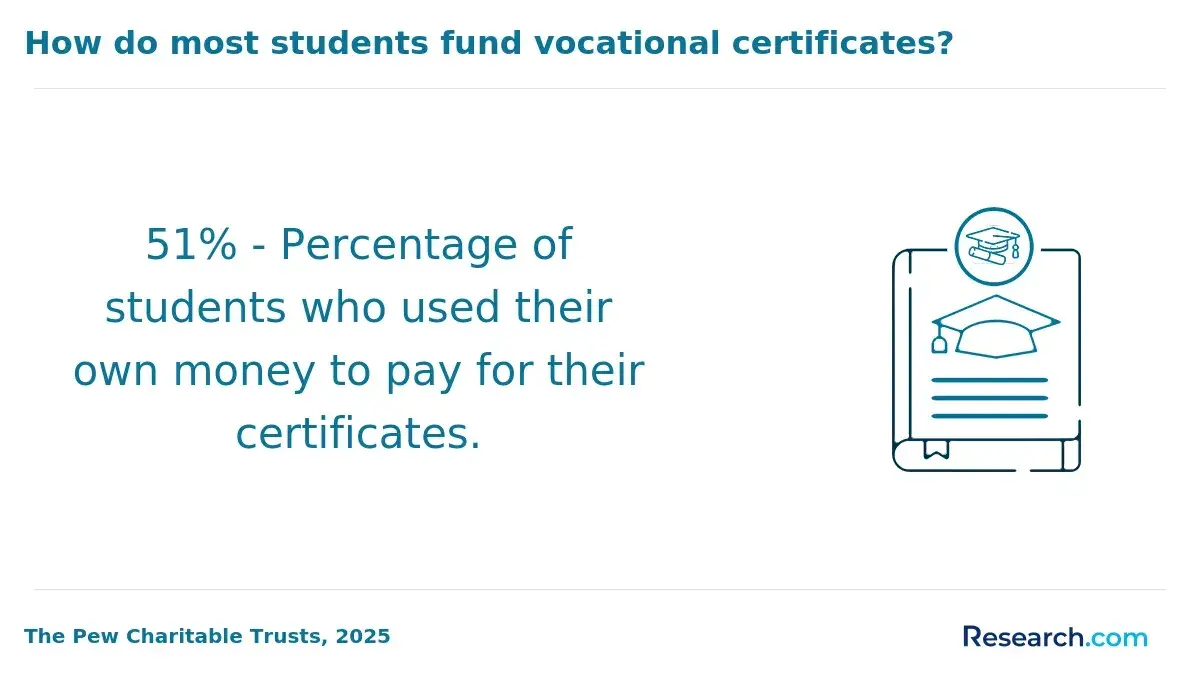
Federal aid eligibility generally depends on the institution and whether the program meets federal requirements; many short noncredit programs are not eligible. Ask about workforce grants, state aid, employer tuition assistance, payment plans, and whether credits remain usable if you pause.
Learners who already have a bachelor's degree and need a compact advanced option may also examine 12 month master's programs online, though these normally have substantially different admissions standards.
What careers and job roles can stackable credentials lead to?
Stackable credentials can support entry-level employment, advancement in a current field, or progression toward a degree. Their value is strongest when the first credential corresponds to a recognized job task and the next credential adds clear responsibility, not simply more coursework with a similar name.
The following examples show realistic pathways rather than guaranteed outcomes.
| Starting credential area | Potential early role | Possible next stack |
| IT support certificate | Help desk or user support trainee | Networking, cybersecurity, or associate degree coursework |
| HVAC certificate | Installer helper or service trainee | Apprenticeship hours, advanced refrigeration, or technician diploma |
| Medical billing certificate | Billing or medical records support | Health information certificate or associate degree |
| Paralegal studies certificate | Legal administrative support | Associate degree or specialized legal coursework |
| Digital design certificate | Production design or content support | Portfolio development, UX coursework, or associate degree |
Some occupations require more than a certificate. Registered nurses need state licensure, electricians usually need apprenticeship and licensing steps, and many advanced cybersecurity roles expect experience. Treat a credential as one component of a documented career plan.
What salary range and earning potential do stackable credential graduates see?
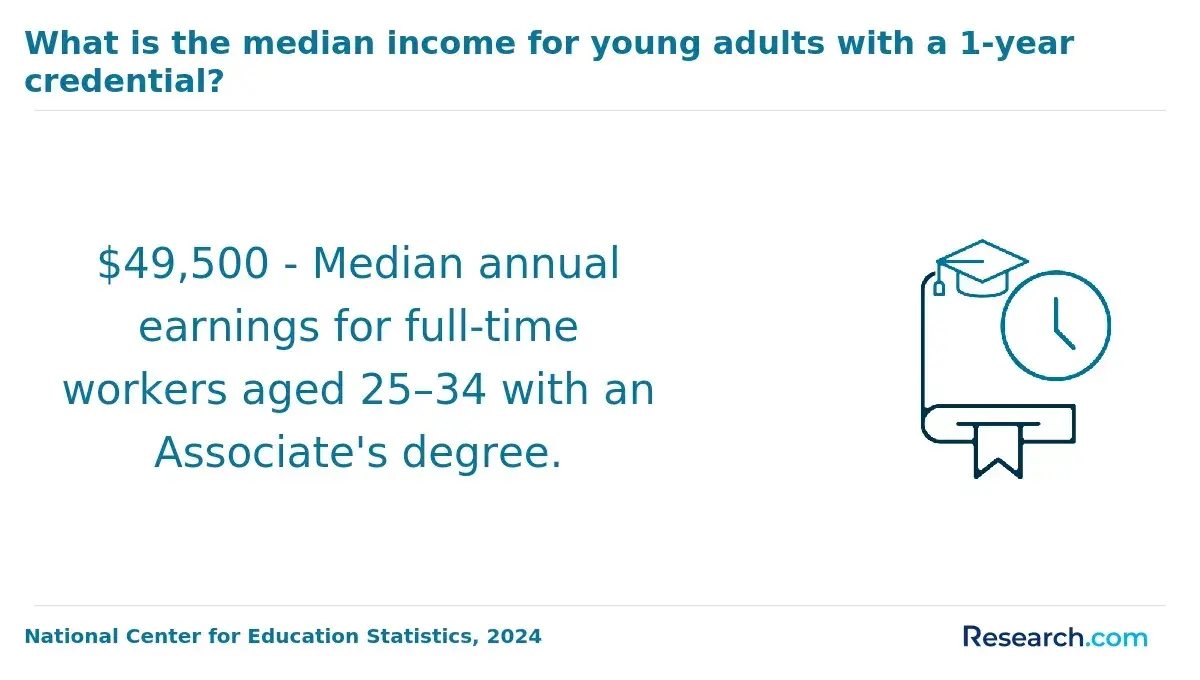
Earning potential varies by occupation, location, experience, shifts, credentials held, and employer - not simply by completing a certificate. Use occupational data to judge the field's ceiling and entry conditions, then ask local employers which credentials they actually value.
BLS occupational employment and wage data released in 2024 reported a national median annual wage of $48,780 for medical assistants in May 2023. That figure describes the occupation across workers, not the expected pay of any particular certificate graduate, and medical assisting requirements vary by employer and state.
In contrast, occupations such as registered nursing or electrical work generally require additional licensure, education, supervised experience, or all three.
For a practical return-on-investment estimate, compare the program's full cost and time away from work with entry-level job postings in your area. Be cautious of schools that advertise a high occupational wage without showing whether their program qualifies graduates for that occupation.
How can students choose reputable stackable credential programs with strong job outlooks?
Choose a program by working backward from the job you want. First identify whether the role requires a license, certification exam, apprenticeship, degree, portfolio, or prior experience. Then compare programs based on their ability to meet that exact requirement rather than on broad promises about career readiness.
Use these steps before paying an enrollment deposit:
- Find 10 to 20 current local job postings and note required education, credentials, software, schedules, and experience.
- Request the program's full curriculum, total-cost estimate, completion policy, and written stackability or transfer policy.
- Confirm accreditation, state approval, and exam eligibility directly with the appropriate regulator when licensure is involved.
- Ask how the school secures clinicals, internships, apprenticeships, or employer introductions and whether placement is guaranteed, competitive, or student-arranged.
- Compare the first credential with a lower-cost alternative such as an apprenticeship, employer training, community college course, or recognized industry certification.
- Speak with an admissions advisor about your GPA honestly and ask what academic support, placement remediation, and appeal options are available.
Common mistakes include selecting a noncredit program when transferable college credit is needed, assuming a certificate creates licensure eligibility, overlooking equipment and exam fees, and choosing an online program before confirming local clinical placement rules. The best low-GPA option is not necessarily the least selective one; it is the program with transparent requirements and a documented next step toward your target role.
Other Things You Should Know About the Best Stackable Credentials
Often, yes. Many open-admission community colleges, technical schools, and noncredit workforce programs do not use a strict GPA minimum. Selective programs may still evaluate prerequisite grades, placement scores, interviews, or clinical eligibility.
No. Credits transfer only under the receiving institution's policies. Confirm in writing which courses apply, how many credits count, grade minimums, and any time limits before starting.
They can be, especially in IT, business, and digital fields, when the provider is reputable and the program teaches relevant skills. For licensed or hands-on careers, employers and regulators may also require approved labs, clinicals, supervised hours, or examinations.
Possibly, but not always. Eligibility depends on the school, program length, accreditation or institutional status, and federal or state rules. Ask the financial aid office about aid eligibility, workforce grants, employer assistance, and payment plans.
References
- USHE initiative helps students earn meaningful credentials on their way to a degree - Utah System of Higher Education https://ushe.edu/stackable-credentials-help-students-earn-credentials-on-their-way-to-a-degree/
- What Are Stackable Credentials in Business? | Empowerly https://empowerly.com/applications/what-are-stackable-credentials-in-business/
- What are Stackable Credentials? https://assess.com/stackable-credentials/
- What Are Stackable Credentials and Why Do They Matter? https://www.pltw.org/blog/what-are-stackable-credentials
- What Employers Look for in Credential Evaluations | ECE® https://www.ece.org/Blogs/Employers-Credential-Evaluations.htm