2027 Best Online Career Training Programs That Pay Well

Co-Founder and Chief Data Scientist
Choosing online career training is difficult because a short program can save time and money, but the wrong credential may not meet employer or licensing requirements. U.S. Bureau of Labor Statistics projections released in 2024 show healthcare support and skilled-trade occupations continuing to create opportunities through 2033.
This guide helps career changers, recent graduates, and working adults compare program types, verify quality, estimate costs, and identify training paths connected to realistic higher-paying occupations.
Key Things You Should Know
- Online career training can be a practical route to well-paying work when the program matches a specific employer-recognized certification, apprenticeship, or state licensing path; it is not automatically equivalent to a college degree.
- According to BLS 2023 wage data, electricians had a median annual wage of $61,590, HVAC mechanics and installers earned $57,300, and paralegals earned $60,970; local pay varies by experience, location, and employer.
- Prioritize programs with required hands-on training, transparent total costs, and clear exam eligibility: fully online study alone usually cannot satisfy clinical, laboratory, driving, trade, or supervised-practice requirements.
Top 10 Best Online Career Training Programs That Pay Well
Popular Trade School Programs
Online trade programs commonly deliver theory for electrician, HVAC, welding, plumbing, construction management, and industrial maintenance pathways. Certificates may take months, while associate degrees usually take about two years and may include general education courses. Electrician and plumbing careers typically require paid apprenticeships and state or local licensing; online coursework does not replace supervised field hours. Choose a certificate for focused entry preparation or an associate degree when employers value broader technical coursework and you may want future transfer options. Confirm lab kits, externships, tools, and licensing eligibility before enrolling.
Healthcare Programs
Common online or hybrid healthcare options include medical billing and coding certificates, medical assisting certificates, pharmacy technician training, health information technology associate degrees, and practical nursing prerequisites. Many programs teach online but require in-person clinicals, simulations, or externships. A school certificate shows completion of education; a certification, such as a coding credential earned through an independent certifying body, usually requires an exam. Verify that the curriculum qualifies graduates for any required state approval, clinical placement, or certification examination. Programs without arranged clinical support can be a poor fit for patient-care careers.
Criminal Justice / Law Programs
Online certificates and associate degrees may cover paralegal studies, legal support, criminal justice, corrections, emergency management, or cybersecurity foundations. Paralegal education can support entry-level legal assistant work, but it does not authorize someone to practice law. An associate degree offers broader academic credit and may transfer more readily than a noncredit certificate. Learners seeking law enforcement should also investigate agency fitness standards, background checks, academy training, and local hiring rules. For paralegal study, compare legal research training, writing assignments, software exposure, and whether employers in your area prefer an approved program.
Arts & Design Programs
Online arts and design training includes graphic design certificates, UX/UI courses, digital media certificates, web design programs, animation training, and associate degrees in visual communication. Portfolio quality often matters more than the credential title, so select programs with instructor critique, project briefs, copyright instruction, and software practice. Short noncredit training can help experienced creatives update skills, while credit-bearing certificates or associate degrees may suit beginners who need structured foundations. AI-assisted design tools are changing workflows, making typography, accessibility, research, client communication, and original portfolio evidence especially important.
What are online career training programs and how do they differ from degrees?
Online career training programs are focused educational experiences designed to build job-specific knowledge and skills. They may be offered by community colleges, universities, trade schools, employers, nonprofit organizations, or private training providers. Their outcome may be a credit-bearing academic certificate, a noncredit certificate of completion, an associate degree, or preparation for an external certification exam.
Unlike a bachelor's degree, career training generally has a narrower curriculum and shorter timeline. It works best when an occupation has a clear entry route, such as coding, HVAC theory, bookkeeping, IT support, or medical administration. Learners seeking rapid foundational study can also compare 6-week online courses with certificates, but should not assume a brief course alone meets regulated-career requirements.
The comparison below distinguishes common options so readers can avoid treating every credential as interchangeable.
| Option | What it usually awards | Best use | Key limitation |
| Noncredit career training | Certificate of completion | Fast skill building or exam preparation | May not transfer for college credit |
| Academic certificate | College certificate, often credit-bearing | Focused college-level career preparation | May not by itself meet licensure rules |
| Professional certification | Credential from a certifying organization | Validating tested competence | May require an exam, fees, or experience |
| Associate degree | Usually an AA, AS, AAS, or applied degree | Broader entry preparation and advancement | Longer and often more expensive |
How can you compare online vs campus career training for quality and flexibility?
Online training is strongest for theory-heavy material, recorded demonstrations, software practice, test preparation, and assignments that fit around work. Campus or hybrid delivery is usually stronger when learners need labs, equipment, clinical supervision, live performance critique, or direct employer contact. The right choice depends less on convenience than on whether the delivery method teaches every required competency.
Working adults should compare attendance rules before applying. Programs at online schools with multiple start dates may offer more frequent entry points, but a flexible start date does not mean that clinicals, proctored tests, or group projects are self-paced.
Use this comparison to identify the format that fits both your schedule and the occupation's training requirements.
| Decision factor | Mostly online program | Campus or hybrid program |
| Schedule control | Often better for asynchronous coursework | Usually includes fixed meeting or lab times |
| Hands-on practice | May require local placement or short residencies | Usually provides scheduled labs and equipment |
| Networking | Requires deliberate use of virtual career services | May offer easier local faculty and employer access |
| Best fit | Administrative, IT, business, and theory-heavy roles | Clinical, skilled-trade, laboratory, and studio-intensive roles |
How do you verify accreditation and industry recognition for online career programs?
Accreditation and industry recognition answer different questions. Institutional accreditation generally evaluates a college as an institution and can affect credit transfer and federal student aid eligibility. Programmatic accreditation evaluates specific programs in selected fields. Industry recognition means an employer, licensing board, apprenticeship sponsor, or certifying organization accepts the training for a stated purpose.
Before paying a deposit, verify claims directly with the relevant accreditor, state licensing board, certification organization, or employer. A provider's marketing language is not proof that a credential is accepted.
Use these checks to reduce the risk of enrolling in training that cannot support your intended next step.
- Identify the exact job title, state, and employer type you are targeting.
- Ask whether the program is credit-bearing, noncredit, institutionally accredited, programmatically accredited, or none of these.
- Confirm in writing whether completion meets education requirements for a certification exam, license application, apprenticeship, or clinical placement.
- Review completion, withdrawal, refund, and job-placement definitions rather than relying on broad employment claims.
What admission requirements and prerequisites do online career training programs typically have?
Admission requirements depend on the provider and credential level. Short noncredit programs may require only age, identity, payment, and basic computer access. College certificates and associate degrees may require an application, high school completion or an equivalent credential, placement testing, transcripts, and prerequisite courses. Healthcare programs can add immunizations, background checks, drug screening, CPR training, and clinical-site requirements.
An associate degree is not always the easiest route, but it can provide more transferable coursework than a short certificate. Compare options such as the easiest 2 year degree to get only after checking whether the program supports the job or further education you actually want.
Applicants should ask admissions staff these questions before committing.
- Which requirements must be complete before enrollment, and which must be complete before an internship, clinical, or practicum?
- Are prior courses accepted for transfer, and will the school evaluate them before tuition is paid?
- Does the program require proctored exams, daytime placement hours, travel, equipment, or a background check?
How long do online career training programs take and what do they cost?
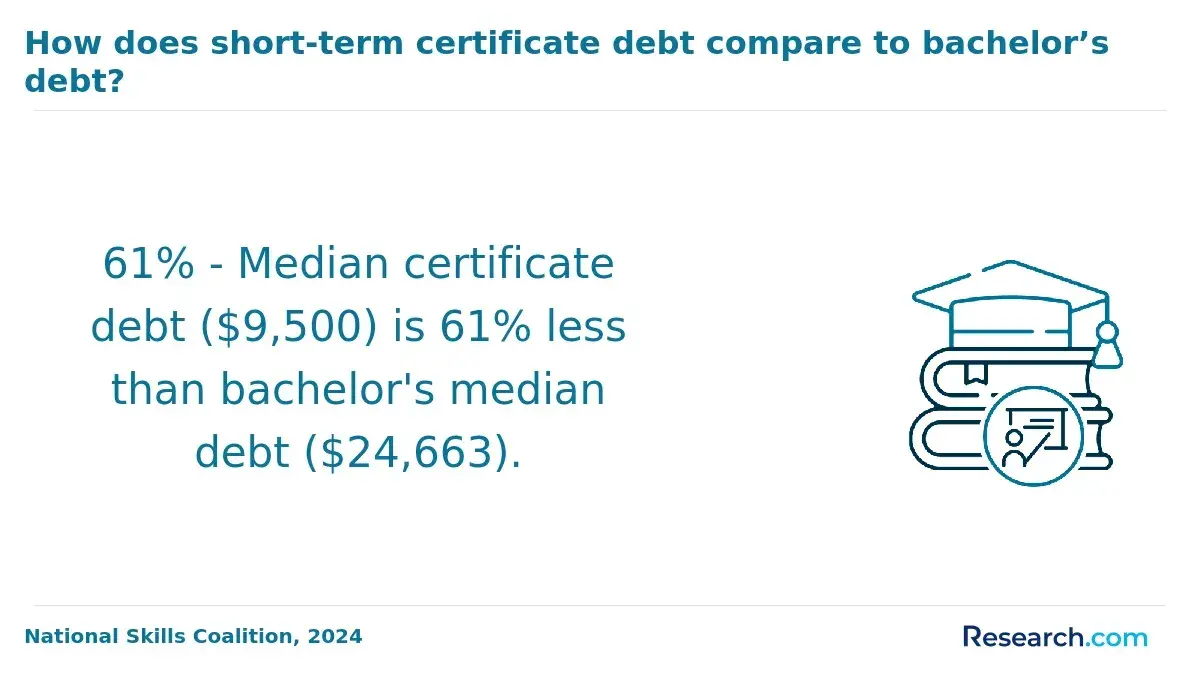
Program length ranges from a few weeks for narrow exam-prep courses to roughly two years for most associate degrees. Cost depends on whether training is offered by a public college, private school, university, or third-party provider, plus books, software, tools, exam fees, background checks, travel, insurance, and clinical supplies. Compare the total cost required to become employable, not tuition alone.
Federal financial aid may be available for eligible students in qualifying credit-bearing programs at eligible institutions, while noncredit courses often rely on personal payment, employer assistance, workforce grants, or payment plans. Learners considering a longer academic route after training can compare cheap doctoral programs if a future profession truly requires advanced study; a doctorate is not a substitute for entry-level occupational licensing.
This cost framework helps distinguish a low advertised price from the likely all-in investment.
| Cost category | Why it matters | What to confirm |
| Tuition and mandatory fees | Forms the stated base price | Per-credit versus flat-rate billing |
| Equipment and materials | Can be substantial in trades and clinical programs | Required tools, kits, uniforms, and software |
| Licensing or certification costs | May be required after completion | Exam, application, fingerprinting, and renewal fees |
| Lost work time | Can affect affordability during placements | Clinical, lab, practicum, or apprenticeship schedule |
What classes, skills, and hands-on training do top online career programs include?
Top online career programs connect each class to a job task and show how learners will practice it. Depending on the field, instruction may include technical vocabulary, safety, documentation, regulations, customer communication, software, troubleshooting, ethics, and job-search preparation. Strong programs use realistic scenarios rather than relying only on video lectures and multiple-choice quizzes.
Hands-on requirements should be specific and observable. For example, a quality healthcare program explains where clinical practice occurs; a trade program identifies lab or field components; and a design program requires portfolio projects with feedback.
Compare the curriculum against job postings and certification exam outlines using this practical checklist.
- Map each required course to a skill named in local job postings for your target role.
- Confirm who secures the practicum, externship, lab access, or supervised experience and whether placement is guaranteed.
- Ask to see sample assignments, software requirements, instructor qualifications, and the grading rubric for practical work.
- Choose programs that provide a portfolio, work sample, competency record, or exam-preparation plan you can use after completion.
What high-paying jobs can you get after completing online career training programs?
Higher-paying outcomes are most realistic when training leads to a defined occupation with employer demand, a recognized certification, an apprenticeship, or a required license. Some roles need more than online training: electricians complete apprenticeships, registered nurses need approved nursing education and licensure, and many IT roles reward demonstrated experience alongside certificates.
BLS employment projections for 2023-33, published in 2024, identify faster-than-average growth in several technology and healthcare-related occupations. Growth is useful for screening options, but it does not measure local openings, entry-level competition, or an individual applicant's hiring prospects.
The occupations below illustrate where career training may contribute to an entry path and where additional requirements matter.
| Occupation | Typical training connection | Important qualification note |
| Electrician | Trade coursework plus apprenticeship | Most states require licensing |
| HVAC mechanic or installer | HVAC certificate or diploma | EPA refrigerant credential may be needed |
| Medical records specialist | Health information or coding training | Employers may prefer certification |
| Paralegal or legal assistant | Paralegal certificate or associate degree | Requirements vary by employer and state |
| Web developer or digital interface designer | Portfolio-based web or UX training | Employers commonly assess skills and portfolio |
What salaries and earning potential can graduates of online career programs expect?
Salary data describes an occupation, not the pay a certificate holder will automatically receive. Experience, geography, union status, shift differentials, licensing, specialization, and employer type can materially affect earnings. Use occupational wages to compare longer-term possibilities, then check local postings for entry-level ranges.
BLS May 2023 national median annual wages were $61,590 for electricians, $60,970 for paralegals and legal assistants, $57,300 for HVAC mechanics and installers, $48,780 for medical records specialists, and $58,910 for graphic designers. These figures are national medians across workers in each occupation, not starting salaries or program outcome guarantees.
Evaluate return on investment by comparing the full training cost and time away from work with a realistic local entry wage, likely advancement requirements, and the probability that you can complete required field experience.
What licenses, certifications, and exams are required for careers after online training?
A certificate of completion, professional certification, occupational license, and academic degree are separate credentials. A school may teach material aligned with an examination, but only the relevant external body can award a certification or state board can issue a license. Requirements can change by state and sometimes by employer.
Common examples include EPA Section 608 certification for technicians who handle regulated refrigerants, state licensing for many electricians, nursing-board approval and the NCLEX for nurses, and optional or employer-preferred certifications in coding, IT, project management, and design software. Do not enroll based solely on a statement that a program is "certification ready."
Take these steps before selecting a regulated or exam-based pathway.
- Find the official licensing board or certification organization for the occupation and state where you intend to work.
- Read the current education, supervised-hours, examination, background-check, and renewal requirements.
- Request written confirmation from the school explaining exactly which requirements its curriculum fulfills and which remain your responsibility.
- Budget for the post-program exam, application, continuing education, and renewal costs when applicable.
Other Things You Should Know About
They can be worthwhile when they teach skills employers need and lead to a recognized next step, such as an exam, portfolio, apprenticeship, or entry-level role. They are less valuable when the provider cannot explain employer recognition, required hands-on training, or total costs.
The fastest appropriate option depends on the occupation. Administrative, software, IT support, bookkeeping, and some design skills may be learned relatively quickly, while clinical and licensed trade careers require longer supervised training. Choose based on required qualifications, not program speed alone.
Sometimes, but a certificate alone may not be sufficient. Higher-paying paths often also require experience, a portfolio, an apprenticeship, an external certification, a license, or an associate or bachelor's degree. Review actual job postings in your location before enrolling.
Verify the provider, total cost, refund policy, instructor qualifications, and any accreditation or licensing claims independently. Be cautious of guaranteed jobs, guaranteed salaries, pressure to pay immediately, vague curriculum descriptions, and programs that will not document exam or licensure eligibility.
References
- CourseCareers https://coursecareers.com/blog-posts/how-to-choose-the-right-online-career-training-program
- 5 In-Demand Skills to Learn Online in 2026| High-Paying & Future-Proof https://ebsedu.org/blog/in-demand-skills-to-learn-online/
- Tech Training Programs for Career Transition - Merit America https://meritamerica.org/career-track/
- 9 Best Online Certificate Programs that Lead to Higher Pay https://blackstone.edu/9-best-online-programs-for-higher-pay/
- Coursera Reviews: Are Online Courses Worth It for Career Growth? - ProLabs https://ftp.prolabs.com/coursera-reviews-are-online-courses-worth-it-for-career-growth
- Best Online Courses to Take to Get a Job https://quickcv.io/blog/best-online-courses-to-get-a-job
- Are Online HR Certifications Legit? What You Should Know https://hrcertification.com/blog/are-online-hr-certifications-legit-biid1000050
- Best Online Degrees for Working Adults in 2026 https://www.straighterline.com/blog/degreecompletion-best-online-degrees-for-working-adults-in-2026
- Why Choosing the Right Certifications Can Help Your Career https://www.managementconcepts.com/resource/why-choosing-the-right-certifications-can-define-and-accelerate-your-career/
- Which Online Certification Programs Are Recognized by Employers in the U.S.? https://fellow.msicertified.com/blog/which-online-certification-programs-are-recognized-by-employers-in-the-u-s