2027 Best Non-Degree Programs With Conditional Admission

Co-Founder and Chief Data Scientist
Conditional admission can offer a practical route when you are not ready for standard college entry requirements but need career-focused training quickly. These programs range from healthcare certificates to skilled-trades training, and requirements vary sharply by provider and state.
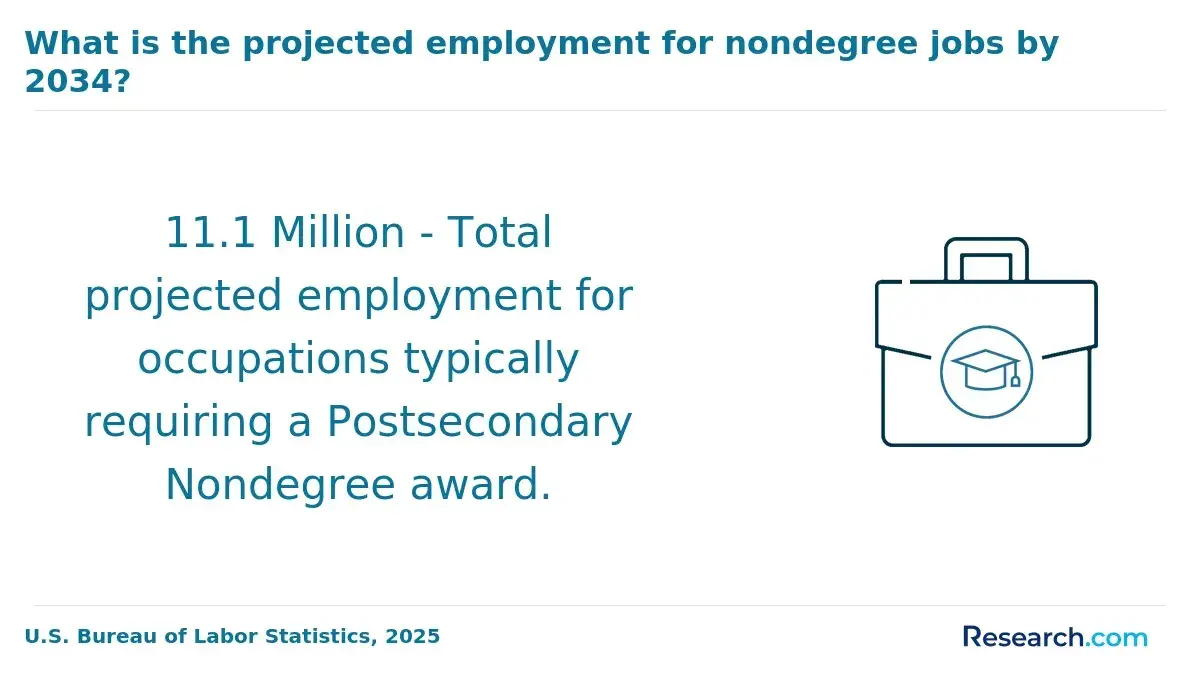
The U.S. Bureau of Labor Statistics projects healthcare support occupations to grow faster than average from 2024 to 2034, making program quality and licensing alignment especially important. This guide explains the best-fit program types, realistic outcomes, costs, and the questions to ask before enrolling.
Key Things You Should Know
- Conditional admission usually means acceptance with requirements to complete first, such as prerequisite coursework, placement testing, English-language support, background checks, or maintaining a minimum grade during an initial term.
- Career-training options can be short and accessible, but a school certificate is not the same as an industry certification or state license. Healthcare, legal, and trade roles may require separate exams, supervised hours, or board approval.
- Use 2024-2034 BLS occupational projections as labor-market context, not a promise of employment. Demand is strongest when the program leads to a recognized credential, required license, or documented hands-on skill.
Top 10 Best Non-Degree Programs With Conditional Admission
Popular Trade School Programs
Conditional admission is common in career training for HVAC, welding, electrical, plumbing, diesel technology, and industrial maintenance. Programs may admit applicants before they complete math placement, basic-skills modules, physical-capacity reviews, or safety orientation.
A certificate can build entry-level technical skills; an associate degree generally includes more general education and may support advancement. Apprenticeship may be a better choice for people who need paid, work-based training. Before enrolling, confirm whether local employers recognize the school and whether the curriculum supports any required state or local licensing pathway.
Healthcare Programs
Common options include medical assisting, pharmacy technician, dental assisting, practical nursing prerequisites, nursing assistant, phlebotomy, and medical billing and coding. Conditional admission often depends on immunizations, CPR training, drug screening, criminal-background review, entrance testing, or completion of anatomy and medical-terminology courses.
Clinical programs require particular caution: online coursework alone may not meet practical-training or state licensing rules. A certificate may prepare a student to seek a separate certification examination, but eligibility rules differ by certifying body. Verify clinical-placement support before paying a deposit.
Criminal Justice / Law Programs
Non-degree options include paralegal studies certificates, legal administrative assistant training, corrections training, emergency dispatch, security officer preparation, and crime-scene support coursework. Conditional acceptance may require writing support, placement testing, background checks, or completion of introductory legal research classes.
A paralegal certificate can be useful for people who already hold a degree or have office experience, but it does not authorize someone to practice law. For security, corrections, and public-safety roles, employer standards, academy requirements, firearms rules, and state regulations can matter more than a general certificate.
Arts & Design Programs
Graphic design, digital photography, web design, UX foundations, animation, interior decorating, fashion, and digital marketing are common non-degree choices. Conditional admission may allow applicants to begin without a portfolio while completing foundational software, drawing, or communication classes. These programs work best when they produce a polished portfolio, current software skills, and work samples relevant to a target role.
A short program alone may not substitute for the portfolio depth expected in competitive design hiring. Ask whether students receive instructor feedback, portfolio reviews, and access to required creative software.
What are non-degree programs with conditional admission and who are they best for?
Non-degree programs with conditional admission are career-training, certificate, continuing-education, or preparatory programs that let a student enroll before meeting every usual entry requirement.
The acceptance is conditional, not automatic or unconditional: the student must satisfy stated conditions by a deadline to remain in the program, enter clinical training, or progress to advanced coursework.
They are often best for adults returning to school, applicants rebuilding an academic record, career changers missing a prerequisite, and students who need developmental or English-language support. They can also help someone test a field before committing to a longer credential.
Readers comparing these options with easy degrees that pay well should separate short-term access from long-term advancement potential.
The comparison below shows when this route is likely to fit and when another path is safer.
| Situation | Conditional non-degree program may fit when | Consider another option when |
| Missing prerequisite | The school provides a written pathway to complete it before advanced courses | The prerequisite is required for state licensure and cannot be completed in time |
| Career change | You need targeted, entry-level skills and can verify employer demand | The target role normally requires a degree, apprenticeship, or license |
| Academic record concern | You can meet probation-grade conditions and use tutoring support | The provider cannot explain progression or dismissal policies |
| Need flexibility | Clinical, lab, and assessment requirements fit your schedule | Required in-person hours conflict with work or caregiving duties |
How do admission requirements work for programs offering conditional acceptance?
Requirements are set by the provider, so "conditional acceptance" can describe very different arrangements. A community college may admit a learner to the institution while requiring placement or prerequisite completion before entry to a selective certificate.
A private career school may admit a student provisionally pending identity documents, financing, or an entrance assessment. A workforce program may require only that participants complete orientation and attendance benchmarks.
Ask admissions to put the exact condition in writing. The most useful questions focus on what must happen, when it must happen, and what occurs if it does not.
- Request the admission letter, catalog policy, and program progression requirements.
- Identify every condition: course grade, test score, background check, health record, payment deadline, or orientation.
- Confirm whether you may attend core classes, labs, clinicals, or externships while conditional.
- Ask whether failed conditions lead to tutoring, a repeat option, transfer to another program, or dismissal.
- Calculate the cost of prerequisite classes, retesting, uniforms, tools, exams, and travel separately from published tuition.
A red flag is vague language such as "guaranteed placement" without a written explanation of academic progression, clinical eligibility, or employment limits. Conditional admission should clarify a pathway, not conceal a barrier that appears after tuition is paid.
Are non-degree programs with conditional admission accredited and widely recognized?
Recognition depends on the provider and the occupation. Institutional accreditation is most relevant for credit-bearing college certificates and associate degrees. Career schools may instead hold state authorization, programmatic approval, or approval to deliver a specific workforce curriculum.
Industry certifications are separate credentials awarded by independent organizations; completing a school program may prepare you for an exam but does not automatically confer certification.
For regulated fields, licensing-board eligibility is the decisive check. Nursing assistant, practical nursing, dental, pharmacy, electrical, and security pathways can have state-specific curriculum, supervised-hour, examination, background-check, or provider-approval rules. Do not assume that national advertising means a program is accepted in your state.
Use this distinction when evaluating recognition.
| Type of recognition | What it can indicate | What it does not prove |
| Institutional accreditation | A college meets standards set by a recognized accreditor | That a particular program meets licensing rules |
| Program approval | A program meets requirements of a regulator or specialized body | That every graduate will pass an exam or find work |
| State authorization | The provider may operate or offer training in a state | That credits transfer or employers prefer the credential |
| Industry certification eligibility | Coursework may align with an outside examination | That the certificate itself is a professional certification |
What career paths and job roles can these non-degree programs lead to?
These programs can support entry-level roles, career transitions, or advancement for people who already have related experience.
The realistic outcome depends on the occupation's legal requirements, local employer preferences, work experience, and whether the program includes credible practical training. A medical billing certificate, for example, may help with administrative healthcare roles but does not qualify a student to become a licensed nurse.
The BLS projects employment for wind turbine service technicians and solar photovoltaic installers to grow much faster than average between 2024 and 2034, illustrating why targeted technical training can be valuable when it aligns with actual entry requirements. Growth projections describe occupations overall, however, not placement results for any individual school.
Common pathways include the following.
- Trade certificates can support helper, technician trainee, installer, maintenance, fabrication, or apprenticeship-entry roles.
- Healthcare certificates can support supervised support roles such as medical assistant, nursing assistant, phlebotomist, pharmacy technician, or billing specialist when state and employer requirements are met.
- Legal and criminal justice training can support legal-support, records, dispatch, security, corrections-support, or administrative roles.
- Design programs can support junior production, content, marketing-support, freelance, or portfolio-building work, especially when paired with demonstrable projects.
If your goal is a role that typically requires a bachelor's degree, compare the training route with the best bachelor degrees before investing in a short program that may limit advancement.
How do online and campus-based conditional admission programs compare in quality and flexibility?
Online conditional-admission programs can be a strong option for theory-heavy subjects, software training, medical terminology, coding, business administration, and foundational coursework.
Campus-based or hybrid delivery is usually stronger where students need equipment, instructor observation, labs, shop safety practice, clinical skills, or employer-connected externships. Quality is determined less by the label "online" than by assessment integrity, faculty access, practical training, and credential recognition.
For caregivers and adults with variable schedules, online courses for stay at home moms can help identify flexible study options, but flexibility should not be confused with self-paced clinical or licensing eligibility.
This comparison highlights the trade-off most applicants face.
| Factor | Online format | Campus or hybrid format |
| Schedule | Often more flexible for lectures and assignments | Usually fixed meeting times, especially for labs |
| Hands-on learning | May require local placements or scheduled intensives | Direct access to equipment, labs, and supervised practice |
| Best fit | Administrative, technical, design, and prerequisite coursework | Clinical, skilled-trade, and equipment-heavy training |
| Main risk | Assuming online completion meets local licensing rules | Underestimating commute, childcare, and schedule demands |
What curriculum, coursework, and skills do conditional admission non-degree programs typically cover?
Curriculum usually begins with foundation skills and progresses to occupation-specific practice.
Conditional students may be required to complete developmental math, writing, digital literacy, English-language support, or introductory field courses before they can enter advanced modules. This structure can be helpful when the support is built into the schedule rather than added as an unexpected delay.
Typical coursework falls into several categories.
- Foundational coursework may cover workplace communication, computer skills, safety, customer service, documentation, and basic math.
- Technical coursework may cover trade tools, diagnostic procedures, software platforms, coding systems, legal research, or design applications.
- Applied learning may include labs, simulations, portfolios, externships, clinical practice, or supervised shop work.
- Career preparation may include résumé development, interview practice, professional ethics, and preparation for a separate certification examination.
Review the syllabus rather than relying on a program title. Employers generally value evidence of competence: completed projects, verified practical hours, current technology exposure, and the ability to follow safety and documentation standards.
How long do these programs take, and what tuition, fees, and funding options exist?
Completion time ranges from a few weeks for narrow workforce training to roughly one year for many college certificates; associate degrees commonly take longer because they include broader coursework.
Conditional requirements can add time if a student must complete prerequisites, remediation, health clearances, or repeated assessments before progressing. Accelerated pacing is useful only when it still includes the supervised practice required for the occupation.
Total cost is more than tuition. The National Center for Education Statistics reported average published tuition and fees for public two-year institutions for the 2023-24 academic year, a useful benchmark, but your actual cost can differ substantially by residency, program, and supplies.
Working learners can compare scheduling models through degree programs for working adults when a longer, credit-bearing route may better match their goals.
Ask for a complete written estimate that includes the following categories.
- Tuition, registration charges, technology fees, and payment-plan fees.
- Books, software subscriptions, tools, uniforms, protective equipment, and transportation.
- Testing, certification-exam, licensing, background-check, immunization, and fingerprinting costs where applicable.
- Clinical, externship, practicum, or replacement-course costs if progression is delayed.
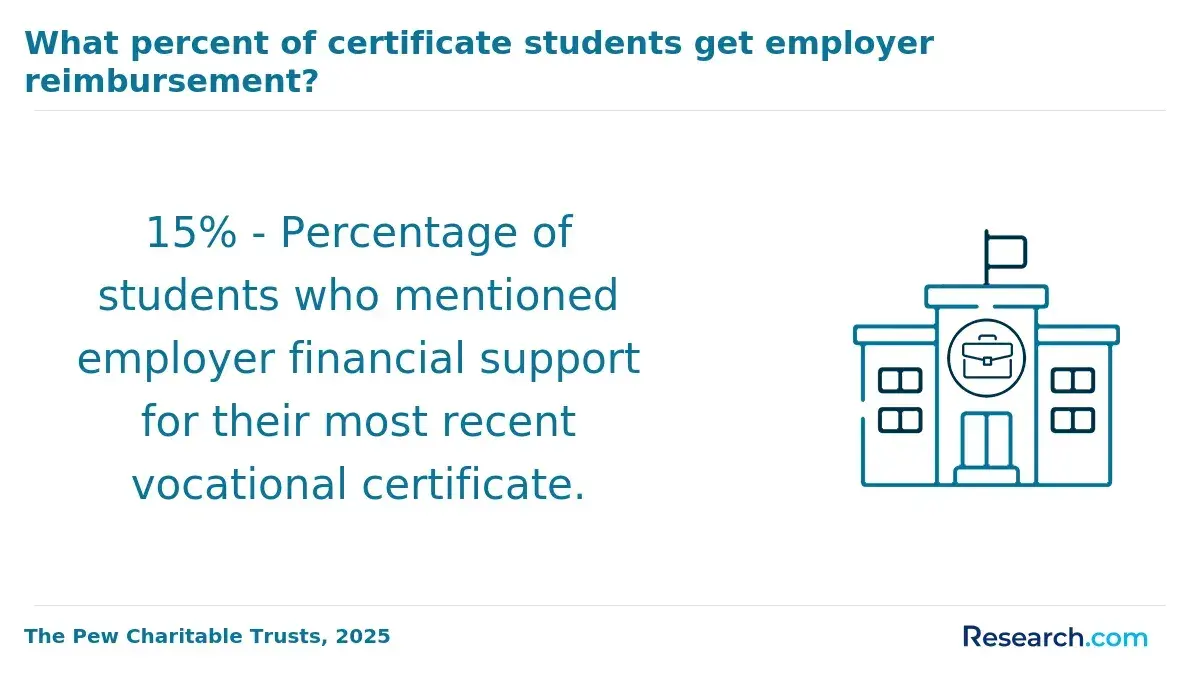
Federal aid may be available for eligible students in eligible programs at qualifying institutions, but many short noncredit programs do not qualify. Ask about employer tuition assistance, workforce-agency grants, veterans' education benefits, state aid, scholarships, and refund policies before borrowing.
What salaries, advancement prospects, and long-term job outlook can graduates expect?
Salary and advancement depend on the occupation, location, shift, employer, licensure, experience, and education level, not simply on finishing a non-degree program. Use occupational wage data to judge whether a target career can support your financial goals, then verify that the program actually meets the occupation's entry requirements.
For example, the BLS reported a 2024 median annual wage of $48,780 for medical assistants. That figure describes the occupation, not earnings guaranteed to certificate completers; some employers may require certification, experience, or additional training. Entry-level pay can also be lower than an occupation-wide median.
Advancement is strongest when a credential is stackable. A nursing assistant may later pursue practical or registered nursing education; a technician may enter an apprenticeship; a design student may build a portfolio into more specialized work.
If credits matter, obtain written confirmation of whether they transfer before enrolling. Noncredit career-school certificates often do not transfer, while credit-bearing college certificates may have clearer pathways, though transfer is never automatic.
How can students choose a reputable conditional admission program that meets licensing needs?
Choose a program by working backward from the job you want. Start with job postings and the relevant state licensing board or regulator, then compare schools against those requirements.
This prevents a common and expensive mistake: enrolling in a broad program that sounds relevant but does not qualify you for the exam, license, clinical placement, or apprenticeship you need.
Before signing an enrollment agreement, complete these checks.
- Identify the exact entry-level role, required credential, and any state-specific license or registration.
- Verify the provider's authorization, accreditation where relevant, program approval, and certification-exam eligibility directly with the appropriate body.
- Request the full curriculum, conditional-admission terms, progression standards, completion timeline, and all costs in writing.
- Ask how hands-on training, clinical placements, externships, labs, and employer connections are arranged.
- Compare withdrawal, refund, leave-of-absence, retake, and transfer-credit policies before paying.
- Speak with recent students or local employers about whether the credential is recognized for the role you want.
Major red flags include pressure to enroll immediately, vague claims about "accreditation," promised jobs or salaries, unclear clinical placement policies, and refusal to provide total costs. A reputable provider should be able to explain what its credential is, what it is not, and the conditions required to complete it.
Other Things You Should Know About the Best Non-Degree Programs
It means you may enroll provisionally but must meet stated conditions, such as passing prerequisites, submitting health records, completing placement requirements, or maintaining a specified grade. Read the written policy to learn whether you can continue if a condition is not met.
It can be a starting point, but admission status itself does not lead to licensure. You must confirm that the completed program meets your state board's education, clinical-hour, examination, and background-check requirements.
They may have more flexible initial entry requirements, but they are not necessarily easier to complete. Students can still face rigorous academic, attendance, clinical, safety, or progression standards after enrollment.
Possibly. Eligibility depends on the institution, program length, credential type, and your personal aid eligibility. Ask the financial-aid office whether the specific program qualifies and compare grants, employer support, and total borrowing costs.
References
- Student Loan Options for Non-Degree Seeking Students https://www.studentloanplanner.com/non-degree-seeking-student-loans/
- Admission and Enrollment https://catalog.tsu.edu/graduate/admission-requirements/admission-enrollment/
- Non-Degree Seeking Students https://www.jcsu.edu/admissions/non-degree-seeking-students
- Non-Degree Admissions | University of Colorado Denver https://www.cudenver.edu/admissions/non-degree-admissions
- Strengthening California's Transfer Pathway - Public Policy Institute of California https://www.ppic.org/publication/strengthening-californias-transfer-pathway/
- Aid for Non-Traditional Students - Finaid https://finaid.org/otheraid/nontraditional/
- The Non-Degree Market: Oasis or Mirage? https://www.encoura.org/resources/wake-up-call/the-non-degree-market-oasis-or-mirage/
- Types of Pathways - The Education Trust-New York https://newyork.edtrust.org/types-of-pathways/
- Understanding the Viability and Growth of the Non-Degree Market https://encoura.org/resources/wake-up-call/understanding-the-viability-and-growth-of-the-non-degree-market/