2027 Best Short Certificate Programs for Students With Low GPA

Co-Founder and Chief Data Scientist
A low GPA can limit admission to selective degree programs, but it does not eliminate practical career training options. Short certificates can offer skills-focused entry points in trades, healthcare support, legal services, and design, often with more flexible admissions review. The U.S. Bureau of Labor Statistics projected 15% employment growth for medical assistants from 2023 to 2033, illustrating why career-focused training deserves careful comparison. This guide explains what programs to consider, what a GPA does and does not affect, and how to choose training that supports a realistic next step.
Key Things You Should Know
- A low GPA is rarely the only admission factor for short certificates: many community-college and workforce programs use open admission, placement, prerequisite courses, interviews, or background checks instead.
- Choose the credential based on the job requirement: a school certificate may build skills, while a separate industry certification or state license may be required before employment in fields such as healthcare or skilled trades.
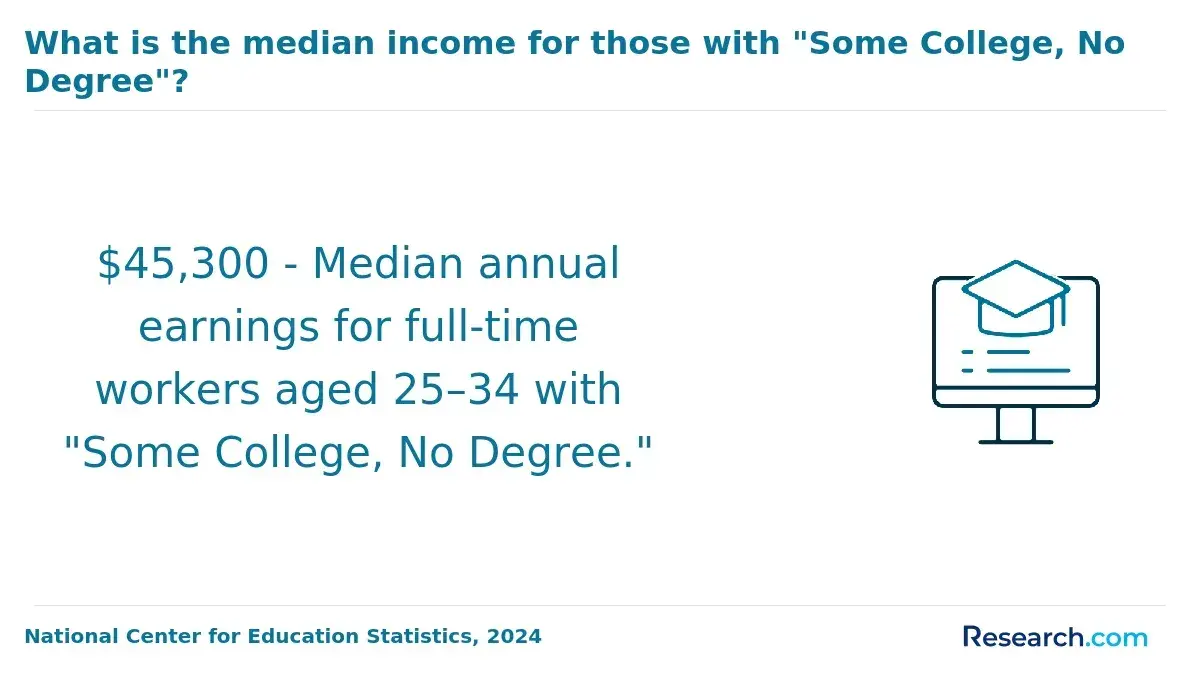
- Cost and duration vary widely: public two-year colleges charged average tuition and fees of $3,990 for in-district students in 2022-23, according to NCES data published in 2024, but tools, exams, uniforms, and clinical requirements can raise total costs.
Top 10 Best Short Certificate Programs for Students With Low GPA
Popular Trade School Programs
Trade certificates can suit students who learn best through hands-on practice. Common options include welding, HVAC/R, electrical technology, plumbing, automotive service, diesel technology, and commercial driving. Programs may last weeks to about one year, but apprenticeships often provide the required supervised work experience for licensed trades. Choose a credit-bearing community-college certificate if you may pursue an associate degree later; choose employer-recognized training when immediate job preparation is the priority. Verify tool costs, safety requirements, apprenticeship connections, and whether the curriculum prepares you for a required exam.
Healthcare Programs
Short healthcare programs commonly prepare students for roles such as medical assistant, phlebotomy technician, pharmacy technician, nursing assistant, medical billing specialist, or EKG technician. Admission may depend more on immunizations, drug screening, criminal-background review, prerequisite grades, and clinical-site eligibility than overall GPA. A certificate is not automatically a professional certification: for example, a program may prepare a learner to take a national certification exam. Confirm that clinical hours, program approval, and exam eligibility meet the rules of the state and employer you plan to work for.
Criminal Justice / Law Programs
Arts & Design Programs
What are short certificate programs and how do they support students with low GPAs?
A short certificate program is a focused course sequence that teaches a defined set of academic, technical, or job-related skills. It is usually shorter than an associate degree and may be credit-bearing through a college or noncredit through a workforce provider. It is not the same as a professional certification, which is typically awarded by an independent certifying body after an exam or other eligibility requirements.
For students with lower grades, these programs can create a fresh academic record, demonstrate attendance and skill development, and provide a lower-risk way to test a career field. Some certificates stack into diplomas or associate degrees, while others do not. Students who ultimately want a degree can compare easy degrees to get after confirming whether certificate credits will transfer.
A short certificate is most useful when it matches a clearly identified entry-level role or required skill. It is less suitable when the target occupation requires a bachelor's degree, a state license with extensive supervised hours, or a credential the program does not provide.
What admission requirements do short certificate programs have for applicants with lower grades?
Admissions requirements depend on the provider and credential. Community colleges often have broad access policies, but a career-program cohort may still require placement testing, prerequisite coursework, minimum grades in specific subjects, health documentation, or a background check. Private career schools may use different standards and may not ask for a high school GPA at all.
The comparison below separates common entry requirements from factors that can matter more than an overall GPA.
| Program type | Common entry requirement | Low-GPA consideration |
| Open-admission college certificate | High school completion or equivalent | Placement results may determine whether developmental courses are needed. |
| Healthcare clinical certificate | Prerequisites, immunizations, screening, and health records | Selective cohorts may review science-course grades separately. |
| Trade or workforce training | Age, physical-safety standards, and basic skills assessment | Hands-on aptitude and attendance may matter more than GPA. |
| Noncredit online certificate | Provider registration and payment | Usually no GPA review, but it may not carry college credit or licensure eligibility. |
Before applying, request the written admissions checklist and ask whether the stated GPA is cumulative, program-specific, or limited to prerequisite classes. If you fall short, ask about conditional admission, placement options, repeating a prerequisite, or beginning with a nonselective foundational course. Do not assume "no GPA requirement" means no other screening.
How do online short certificate programs compare to campus-based options for flexibility and support?
Online certificates can reduce commuting and allow students to study around work or family obligations, but flexibility is not the same as less work. Fully online options are often strongest for billing, coding theory, legal research, IT support, business software, and digital design. Campus or hybrid delivery is usually more appropriate when learners need labs, equipment, simulations, clinical practice, or direct supervision.
Students considering later graduate study should understand that a short certificate rarely substitutes for undergraduate preparation. If a degree is the eventual goal, review easy masters degrees online only after building the required undergraduate credentials and academic record.
Compare support, not just format. A high-quality online program should clearly state instructor access, assignment feedback, proctoring, technology requirements, career services, deadlines, and whether any practicum must occur in person. Campus programs generally offer more immediate equipment access and peer contact, while online programs can be a better fit for disciplined learners with reliable internet and a predictable study schedule.
Which accredited schools offer reputable short certificate programs that accept lower GPAs?
Reputable options are commonly found at public community colleges, technical colleges, and state-approved career schools. Examples of institutions that offer certificate-level workforce education include Houston Community College, Wake Technical Community College, Pima Community College, and Austin Community College. Availability, delivery format, and admission requirements vary by campus and program, so an institution's general reputation does not confirm eligibility for every certificate.
For a credit-bearing college certificate, verify institutional accreditation and confirm that the exact program is offered at the location or online division you are considering. For career training tied to a license or certification exam, also verify programmatic approval or recognition from the relevant state board, clinical site, or certifying organization.
A trustworthy school will provide a catalog describing program length, required courses, total estimated charges, withdrawal rules, academic support, and credential awarded. If a school will not provide these details in writing, compare other options before paying a deposit.
How long do short certificate programs typically take and what do they cost to complete?
Many short certificates take from a few weeks to about one year, but the right pace depends on required labs, clinical hours, and whether you can attend full time. A six-month program may be practical for a defined entry-level skill, while regulated healthcare and trade pathways may require additional supervised experience after coursework.
Students seeking a compressed option can compare 6 month programs, but should treat advertised completion time as a schedule estimate rather than proof of job or licensing eligibility.
Total cost is more than published tuition. This comparison identifies the expenses that most often change the real price of completion.
| Cost category | What it may include | Why it matters |
| Tuition and mandatory fees | Course charges, registration, technology, and lab fees | Public in-district pricing can be substantially lower than private career-school pricing. |
| Required materials | Books, tools, software, uniforms, and protective equipment | Trade and clinical programs can have significant upfront supply costs. |
| External requirements | Exam fees, fingerprints, background checks, vaccinations, and licensure applications | These costs may not appear in a tuition quote. |
| Attendance costs | Transportation, parking, childcare, and unpaid clinical time | Schedule demands can affect affordability even when tuition is low. |
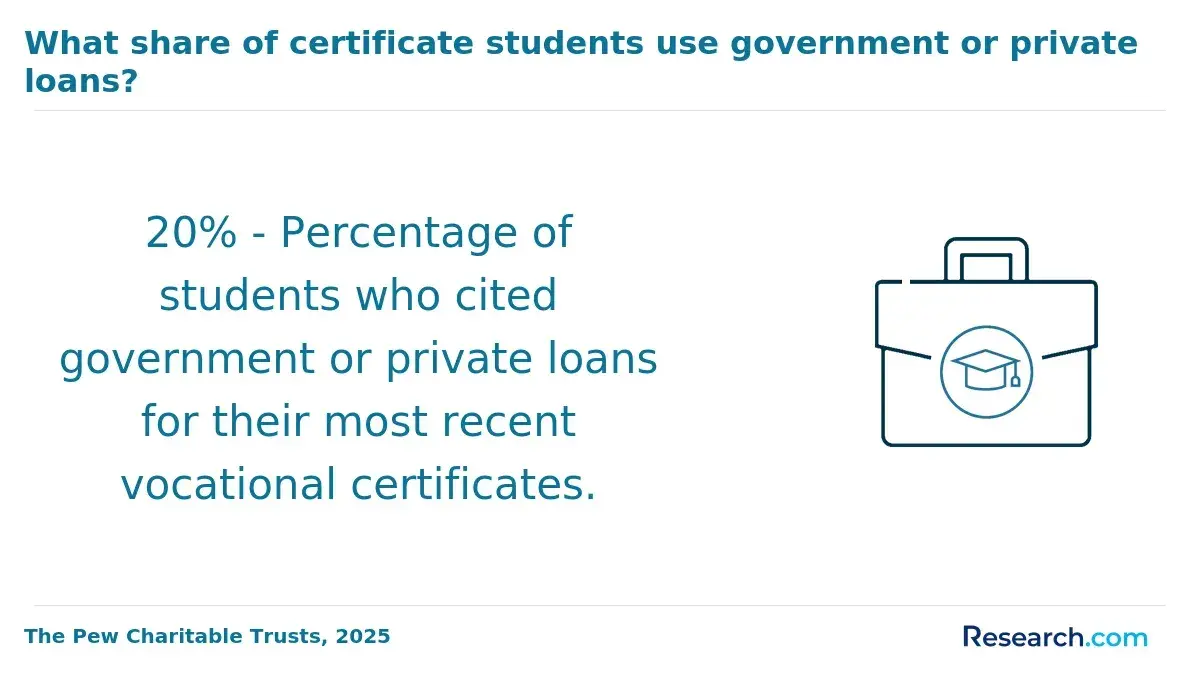
Ask for the total estimated cost through completion, not only the per-credit rate. Eligible credit-bearing certificates at approved schools may qualify for federal aid when the program meets federal requirements; noncredit courses often do not. Employer tuition assistance, workforce-agency funding, and payment plans can also matter, but eligibility varies.
What career paths and entry-level jobs can short certificate programs lead to?
The most realistic outcome from a short certificate is access to entry-level work, an apprenticeship, or a stronger application for further training. Employers may still require experience, an external certification, a license, a portfolio, or a background review. Use the program's stated occupational target to determine whether the credential is aligned with the job you want.
The following examples show how program type, additional requirements, and likely entry point fit together.
| Certificate focus | Possible entry-level path | Common next requirement |
| HVAC or electrical technology | Helper, installer trainee, or apprentice | Employer training, apprenticeship hours, or state licensing pathway |
| Medical assisting | Medical assistant in a clinic or physician office | Employer-preferred national certification may be requested |
| Paralegal studies | Legal assistant or document specialist | Office experience and legal software proficiency |
| Digital design | Production artist, content assistant, or freelance junior designer | Portfolio and current software skills |
For learners who need a faster route to a broader academic credential, a fast track degree may make more sense than a standalone certificate, especially when the desired job explicitly requires an associate or bachelor's degree. Compare that added time and cost with the certificate's ability to stack into later study.
What salary ranges and wage growth can graduates of short certificate programs expect?
Occupational wage data describes workers in an occupation, not what every certificate graduate earns. Pay varies by state, employer, shift, experience, licensing status, and whether the worker has completed an apprenticeship or earned an independent certification. Still, wage and projected-growth data can help students compare the market behind a training choice.
These U.S. Bureau of Labor Statistics figures use May 2024 median annual wages and 2023-33 employment projections published in 2024. They are useful for comparing occupations, but a short certificate alone may not qualify a person for every role listed.
| Occupation | May 2024 median annual wage | Projected employment change, 2023-33 |
| Electricians | $62,350 | 11% |
| Heating, air conditioning, and refrigeration mechanics and installers | $59,810 | 9% |
| Medical assistants | $44,200 | 15% |
| Paralegals and legal assistants | $61,010 | -1% |
| Graphic designers | $61,300 | 2% |
For a student with a low GPA, the practical takeaway is to weigh the certificate against the full pathway. Trades may pair classroom learning with paid apprenticeship progression; healthcare may require clinical eligibility and certification; creative work may depend heavily on a portfolio. A higher wage figure is not enough if the program does not lead toward the role's actual entry requirements.
What licensing or professional certification requirements apply to common short certificate fields?
Licensing and certification rules are field-specific. A college certificate confirms completion of a course of study. A professional certification generally confirms that an individual met standards set by a certifying organization. Licensure is legal authorization from a state to practice a regulated occupation. These terms should not be used interchangeably.
In HVAC, technicians who handle regulated refrigerants typically need EPA Section 608 certification. Electricians and plumbers often need state or local licensure after documented work experience and examinations, not simply a classroom certificate. Medical assistants are not licensed in every state, but employers may prefer national certification; pharmacy technicians, nursing assistants, and phlebotomy workers can face state-specific registration, training, or exam rules.
Before enrolling, identify the state where you expect to work and ask the school whether its curriculum meets that state's education or clinical requirements. Obtain the answer in writing, especially for online programs. A program that is valid in one state may not satisfy another state's licensing board.
How can students with low GPAs choose a trustworthy short certificate program and avoid scams?
Students with lower GPAs can be especially vulnerable to high-pressure marketing that promises easy admission, rapid credentials, or guaranteed employment. Open admission can be legitimate; the concern is whether the program's cost, oversight, and job relevance are transparent.
Use these checks before you enroll. They help distinguish a practical training investment from a program that creates debt without recognized value.
- Match the program to a specific job posting and identify whether employers request a certificate, certification, license, degree, portfolio, or experience.
- Confirm the school's institutional accreditation when academic credit or federal aid matters, and confirm program approval when the field is regulated.
- Request a written total-cost estimate that includes equipment, testing, clinical, background-check, and licensure expenses.
- Ask whether credits transfer or stack into an associate degree, and get the receiving institution's policy rather than relying on verbal assurances.
- Review refund rules, completion expectations, schedule requirements, and any mandatory in-person clinical or lab work before paying.
Red flags include "guaranteed job" language, pressure to sign the same day, vague claims about accreditation, refusal to identify the credential issuer, and salary claims without occupational context. A good program can explain exactly what graduates receive, what it does not guarantee, and what additional steps may be needed.
Other Things You Should Know About
Possibly. Many open-admission and noncredit programs do not use a minimum cumulative GPA, but selective healthcare cohorts and programs with prerequisites may review specific course grades. Ask each school for the exact rule for the program, not the college's general policy.
Many do not. Community colleges and career-training providers may instead use placement testing, prerequisite completion, or basic-skills assessments. Requirements vary by school and program.
They can be when the provider is reputable and the training matches the job's needs. For regulated or hands-on work, confirm that online coursework includes required labs, clinical experiences, approval, or exam eligibility. Employers may care more about the credential issuer, demonstrated skills, and required certification than delivery format alone.
A credit-bearing certificate completed with strong grades may demonstrate recent academic progress and can sometimes provide transferable credits. It does not erase a prior GPA, and transfer policies differ, so confirm how a future college will evaluate the coursework.
References
- Aid for Non-Traditional Students - Finaid https://finaid.org/otheraid/nontraditional/
- Positive Outcomes from Short Term Training Programs https://www.womenintrucking.org/blog/positive-outcomes-from-short-term-training-programs
- Short-term programs bring lasting benefits - when student centered https://www.luminafoundation.org/focus-magazine/spring-2023/short-term-programs-bring-long-lasting-benefits-when-designed-with-students-in-mind/
- What You Should Know About Short-Term Certification Programs https://www.learnhowtobecome.org/career-resource-center/short-term-certifications/
- Options for Financing Your Education https://lesley.edu/costs-financial-aid/options-for-financing-your-education
- How does a college degree improve graduates' employment and earnings potential? - APLU https://www.aplu.org/our-work/publicuvalues/employment-earnings/
- A Complete Guide to Certificate Programs in NYC | NYIM https://training-nyc.com/blog/certificates-nyc