2027 Best Online Career Training Programs for Transfer Students

Co-Founder and Chief Data Scientist
Transfer students often discover too late that a fast online program will not accept prior coursework, meet state licensing rules, or lead to the role they want. This guide compares transfer-friendly online career training options, from credit-bearing certificates and associate degrees to noncredit workforce programs.
The U.S. Bureau of Labor Statistics projects about 19 million job openings per year, on average, from 2024 to 2034, largely from replacement needs. Learn how to evaluate credit transfer, total cost, hands-on requirements, credentials, and realistic career outcomes before enrolling.
Key Things You Should Know
- Transfer-friendly programs evaluate official transcripts individually; a school may accept general education credits while declining technical courses that do not match its curriculum or time-limit rules.
- For credit-bearing options, prioritize institutionally accredited colleges and written transfer evaluations; for noncredit training, prioritize employer recognition, exam eligibility, and documented skill outcomes instead.
- Career outcomes vary sharply: BLS projects 9% growth for electricians and 8% growth for heating, air conditioning, and refrigeration mechanics and installers from 2024 to 2034, while some fields have slower growth.
Top 10 Best Online Career Training Programs for Transfer Students
Popular Trade School Programs
Transfer students can find online or hybrid certificates and associate degrees in HVAC, electrical technology, welding, construction management, automotive service, and industrial maintenance. Theory, code study, estimating, and safety coursework can be online, but lab practice, clinical-style shop hours, or apprenticeships usually occur locally.
A credit-bearing associate degree may preserve more transfer value than a short noncredit course. Choose a program aligned with the employer, union, apprenticeship, or state credential pathway you plan to use; avoid programs that cannot arrange required hands-on training.
Healthcare Programs
Common online or hybrid options include medical billing and coding certificates, medical assisting certificates, health information technology associate degrees, pharmacy technician training, and practical or registered nursing pathways. Administrative programs may be largely online, while patient-care programs require supervised clinical placements.
Prior anatomy, physiology, English, and math credits may transfer into degree programs, but clinical eligibility remains separate. Confirm whether the curriculum meets certification-exam requirements and, for licensed roles, your state board's education standards. A certificate does not automatically create eligibility for every healthcare occupation.
Criminal Justice / Law Programs
Transfer-friendly choices include criminal justice certificates or associate degrees, legal studies programs, paralegal studies certificates, cybersecurity-related public safety training, and court reporting pathways. General education and introductory criminal justice credits often have the strongest transfer potential in college programs.
Paralegal education can support entry-level legal support work, but employers may prefer programs approved by the American Bar Association or candidates with a degree. Police officer, corrections, and investigative roles can have agency-specific academy, background-check, physical-fitness, and state requirements that online coursework alone does not satisfy.
Arts & Design Programs
Online certificates and associate degrees in graphic design, web design, digital media, UX design, photography, and animation can fit students bringing art, communications, or general education credits. Portfolio quality usually matters as much as the credential for creative hiring.
Credit-bearing programs may accept foundation courses, but studios often require portfolio review or course sequencing. Confirm access to industry software, instructor critique, collaborative projects, and a portfolio capstone. A short software certificate is useful for a targeted skill, while an associate degree can offer broader foundations and transfer options.
What defines an online career training program that is transfer-friendly for prior credits?
A transfer-friendly online career training program has a transparent, documented way to evaluate learning completed elsewhere and apply eligible credit toward a recognized credential. It is not simply a program advertised as "fast." The strongest choices publish credit-transfer limits, minimum grades, course-age rules, residency requirements, and whether prior learning assessments, military training, industry certifications, or workplace learning can count.
Transfer friendliness matters most for credit-bearing certificates and associate degrees. Noncredit career training may accept prior experience informally through placement or course waivers, but it generally does not award transferable college credit. The comparison below helps distinguish the options:
| Program type | How prior learning may help | Best fit | Main limitation |
| College certificate | Transferred academic or technical credits may reduce required courses | Students needing a focused, credit-bearing credential | Credits can have grade, age, and equivalency limits |
| Associate degree | General education and major courses may transfer | Students seeking broader preparation or future bachelor's transfer | Usually includes residency and sequencing requirements |
| Noncredit workforce program | Experience may support advanced placement or exemptions | Career changers pursuing a specific practical skill | Usually does not transfer as college credit |
| Industry certification preparation | Existing experience may meet exam prerequisites | Workers pursuing a vendor or professional credential | Training completion and certification are separate achievements |
Choose a credit-bearing route when you want a portable academic record, federal aid eligibility where available, or a future degree pathway. Choose a noncredit program when speed, a local employer partnership, or preparation for a specific exam matters more than academic transfer. In either case, get the evaluation and all promised exemptions in writing before paying a deposit.
How can students verify accreditation and quality standards for online career training programs?
Accreditation and quality review depend on the credential. For a college certificate or associate degree, verify that the institution is recognized by an institutional accreditor accepted by the U.S. Department of Education and that any programmatic approval required for your field is current. For nondegree workforce training, examine the provider's approval to offer training, instructor qualifications, employer relationships, exam pass-rate disclosures when relevant, and refund policies.
Quality checks should be concrete rather than based on marketing claims. Before enrolling, use this sequence to protect your time and transferred credits.
- Ask the school for its accreditor, approval status, and the exact credential awarded.
- Confirm whether your occupation needs programmatic accreditation, state approval, clinical authorization, or a licensing-board-approved curriculum.
- Request a written transfer-credit evaluation showing accepted courses, remaining requirements, and the completion plan.
- Review graduation, retention, job-placement, and licensure-exam information only when the school defines its methodology and reporting period.
- Contact the relevant state board or certification organization directly before choosing a regulated program.
Red flags include vague claims that credits "will transfer," guaranteed employment language, no explanation of practicum placement, and pressure to enroll before reviewing a catalog or agreement. A legitimate provider should clearly state what it can and cannot promise.
What admission requirements and transfer credit policies do online career training programs use?
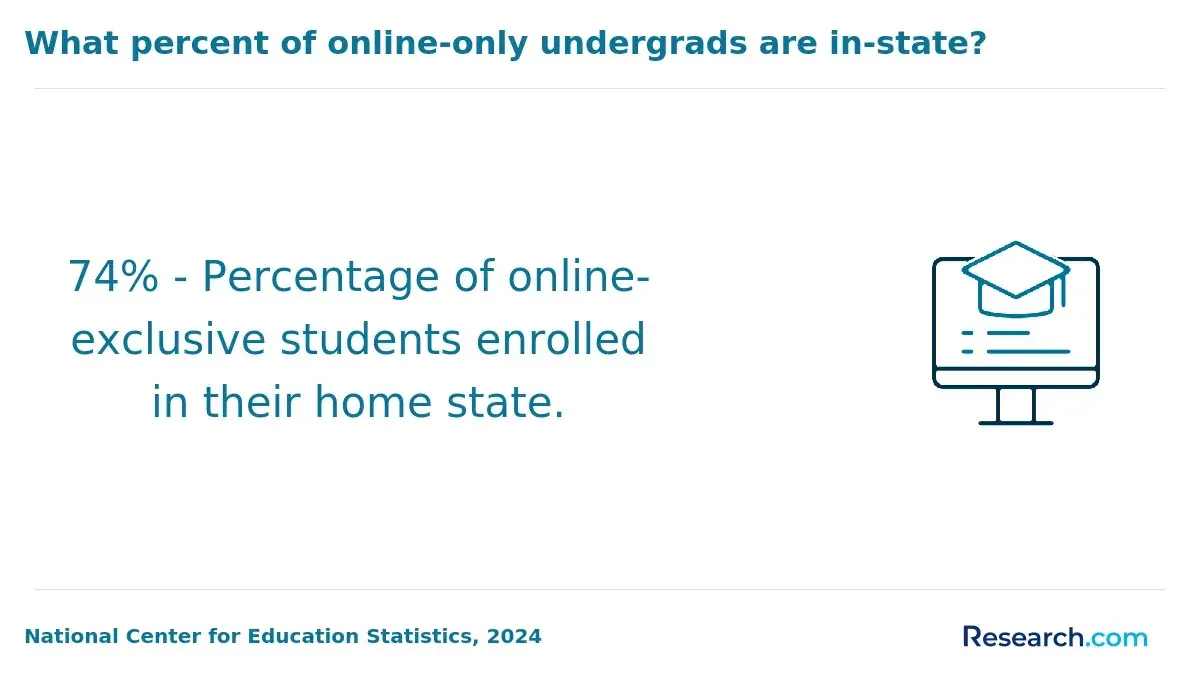
Admissions requirements differ by provider. Community colleges and universities commonly request an application, official transcripts, identity or residency information, and placement information when needed. Some short workforce programs require only a high school diploma or equivalent, while advanced healthcare, technical, and legal programs can require prerequisite courses, background checks, immunizations, drug screening, placement testing, or a minimum GPA.
Transfer policies usually consider course equivalency, grade earned, credit level, and recency. Schools often accept more general education credit than specialized technical credit because technology, codes, and clinical standards change. Ask whether transferred courses count toward graduation requirements or only as elective credit; those outcomes affect completion time differently.
Applicants comparing several institutions can reduce upfront friction by exploring an online college free application option, but a waived fee should not replace a careful review of transfer and program requirements.
Do not assume a prior certificate transfers automatically. A certificate records completion of a course of study; its underlying courses may be evaluated individually. A professional certification, by contrast, is typically awarded by a certifying body after meeting its standards and may or may not carry academic credit.
How do online career training formats compare to campus programs for flexibility and support?
Online career training can offer scheduling flexibility, but it is not automatically easier than campus study. Asynchronous courses allow students to view lectures and complete assignments around work schedules, while synchronous classes provide live instruction at set times. Hybrid programs combine online academic work with required labs, simulations, clinicals, externships, or proctored assessments.
This comparison identifies the practical trade-offs transfer students should weigh, especially when they need to finish remaining requirements while working:
| Factor | Primarily online format | Campus or hybrid format |
| Schedule | Often flexible for lectures and assignments | Fixed meeting, lab, or clinical times are more common |
| Hands-on skill development | May use simulations, kits, or local placements | Direct access to labs, equipment, and instructors |
| Transfer planning | Convenient for completing general education or theory courses | May better support sequenced technical requirements |
| Student support | Requires proactive use of virtual tutoring and advising | Offers more in-person access, depending on the school |
| Best use case | Self-directed students with reliable technology and appropriate local placement options | Students needing extensive supervised practice or immediate equipment access |
Before choosing online delivery, confirm time-zone expectations, attendance rules, proctoring technology, disability support, tutoring, career services, and who secures any required practicum site. If a program needs substantial physical practice, a local hybrid option can be a safer investment than a fully online program with unclear placement arrangements.
What curriculum and coursework should transfer students expect in career-focused online programs?
Transfer students should expect a curriculum built from three layers: foundational knowledge, occupation-specific technical learning, and applied assessment. A medical coding certificate may combine terminology, coding systems, compliance, and practice cases. An HVAC program may combine electrical theory, refrigeration principles, troubleshooting, and lab work. An associate degree typically adds composition, mathematics, communications, and other general education courses.
Transferred credits can shorten the foundational layer, but they rarely remove all major requirements. In career programs, course sequence matters because advanced classes assume specific equipment, safety, clinical, or software competencies. Ask an advisor to map each accepted course against the curriculum rather than merely report a total number of credits accepted.
Artificial intelligence is also changing coursework and entry-level expectations. Programs in design, IT, business support, and legal work increasingly need to teach responsible use of AI tools, verification, privacy, documentation, and human review. Training that promises job readiness while omitting current tools, employer-facing projects, or ethical practice deserves closer scrutiny.
Look for a curriculum that produces evidence of skill: lab checkoffs, a supervised practicum, case files, code samples, a portfolio, or certification-aligned practice. These artifacts can help employers understand what you can do, but they do not substitute for licenses, experience, or exams where those are required.
How long do online career training programs take and what do they typically cost?
Completion time depends less on the program's advertised length than on the number of remaining requirements after transfer evaluation, course sequencing, and required field experiences.
A short noncredit program can take weeks or months; a credit-bearing certificate commonly takes less than a year of full-time study; and an associate degree commonly takes about two years from the start, although accepted credits can shorten that path. Part-time enrollment, clinical availability, and repeated courses can extend it.
Cost comparisons should include more than tuition. The table separates the expenses that can change the value of an otherwise low-priced program:
| Cost factor | Why it matters for transfer students |
| Tuition and required fees | May be charged per credit, term, clock hour, or program |
| Transfer evaluation | Some schools charge transcript or evaluation fees |
| Books, software, and equipment | Technical programs may require tools, uniforms, kits, or licensed software |
| Clinical, lab, and travel expenses | Hybrid programs can add commuting, parking, immunization, and placement costs |
| Exams and licensing | Certification tests, background checks, and applications may be separate |
| Lost work time | Required daytime labs or clinicals can affect earnings while enrolled |
For eligible college programs, ask the financial aid office about federal aid, state aid, institutional scholarships, and whether your enrollment intensity affects eligibility. Noncredit programs may instead use workforce grants, employer tuition assistance, payment plans, or veterans' education benefits when approved.
Students considering an eventual graduate pivot should compare an online master degree pathway only after confirming that their undergraduate credential meets admission prerequisites.
What career paths and job roles do online career training programs prepare transfer students for?
Online career training can prepare transfer students for entry-level roles, advancement in a current field, or a structured next step toward a degree. The correct program starts with a target job, not a broad subject label.
For example, an IT support certificate may support help-desk work, while a cybersecurity analyst role often requires deeper experience, skills, or education. Likewise, a medical billing certificate differs from clinical training for patient-care roles.
The following examples show how credential level and hands-on requirements affect realistic pathways:
| Training area | Possible entry or adjacent roles | Important qualification note |
| HVAC or electrical technology | Helper, installer trainee, maintenance technician | Apprenticeship, local licensing, and supervised work may be required |
| Health information | Medical records specialist, billing support, coding trainee | Employers may prefer recognized coding credentials |
| Paralegal studies | Legal assistant, paralegal support roles | Job expectations vary by employer and jurisdiction |
| Digital design | Production artist, junior designer, web content support | Portfolio and software skills are central to hiring |
| IT support | Help-desk technician, desktop support trainee | Industry certifications and practical troubleshooting skills can help |
Use occupational research to test whether your target role actually aligns with the program. Readers comparing longer academic paths can also review highest paying college majors when deciding whether an associate degree, bachelor's degree, or focused career credential better fits their long-term plans.
What salary ranges and job outlook can graduates of online career training programs expect?
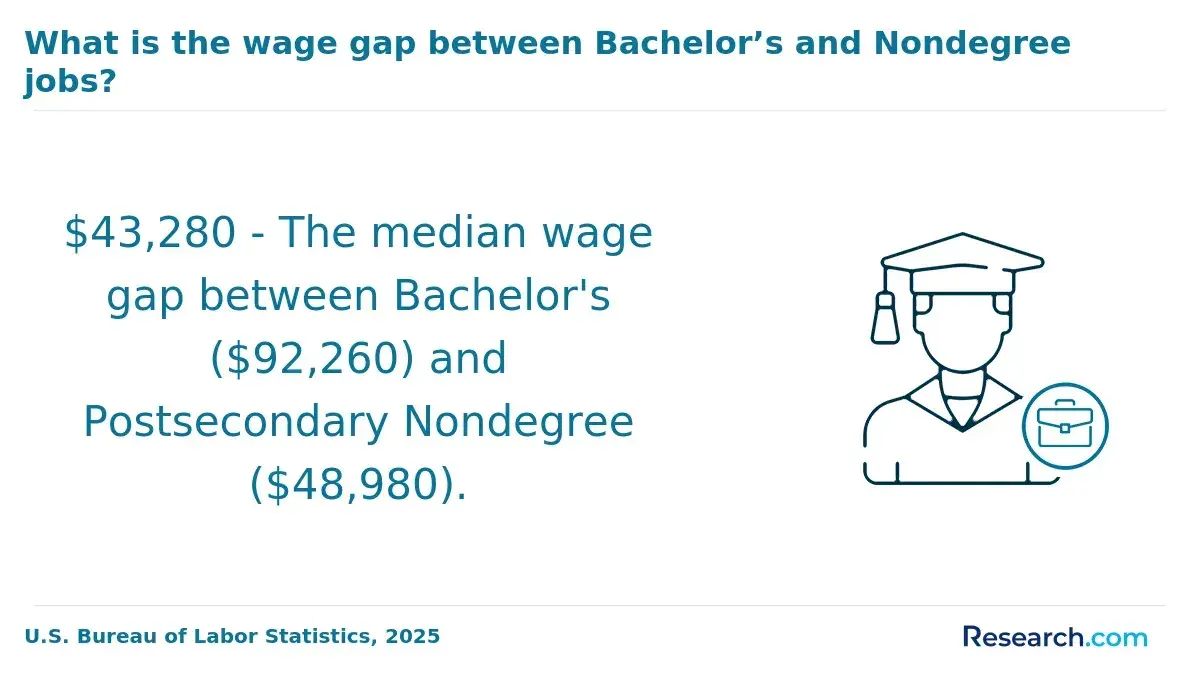
Salary and outlook data describe occupations, not a guaranteed return from any one online program. Pay varies by state, employer, shift, experience, union coverage, licensure, and degree level. Still, BLS data can help transfer students avoid investing in training that does not match local opportunity.
The latest national BLS occupation profiles provide useful benchmarks for several fields commonly connected to career training:
| Occupation | Median annual wage, 2024 | Projected employment change, 2024-2034 | Program decision context |
| Electricians | $62,350 | 9% | Typically requires apprenticeship and licensing in addition to coursework |
| HVAC mechanics and installers | $59,810 | 8% | Technical training can support entry, but employers value hands-on experience |
| Registered nurses | $93,600 | 6% | Requires an approved nursing program and licensure; short certificates are not substitutes |
| Paralegals and legal assistants | $61,010 | -1% | Program quality, specialization, and local legal-market conditions matter |
| Graphic designers | $61,300 | 2% | Portfolio quality and digital skills heavily influence opportunities |
Use these figures as national reference points, then check postings in your intended region for required credentials, software, schedules, and experience. If your goal is a higher-level management or specialized professional role, compare the prerequisite and opportunity cost of career training with the most lucrative masters degrees rather than assuming a shorter program is always the better financial choice.
How do licensing, certification, and exam requirements affect online career training choices?
Licensing, certification, and program completion are separate concepts. A school-issued certificate shows that you completed its curriculum. A professional certification is awarded by an independent organization after a candidate meets eligibility standards, often including an examination.
A license is legal permission from a government authority to practice a regulated occupation. One program may prepare you for an exam without awarding the certification or license itself.
This distinction is especially important in nursing, practical nursing, dental assisting, pharmacy technology, electrical work, HVAC work, cosmetology, real estate, and some public-safety roles. State rules can determine required curriculum, clinical or supervised hours, background checks, examinations, and whether online instruction is acceptable.
Before enrolling in a regulated pathway, take these precautions:
- Identify the exact job title and the state where you intend to work.
- Check the applicable state board's education and examination requirements directly.
- Ask the school whether its online or hybrid format meets those requirements in your state.
- Confirm who arranges clinicals, labs, externships, or supervised hours and what happens if placement is delayed.
- Budget separately for exams, fingerprints, applications, renewals, and continuing education where applicable.
A program that cannot confirm state eligibility in writing may still offer useful education, but it is a high-risk choice for someone pursuing a license-dependent career.
Other Things You Should Know About
Some can, especially programs focused on business, coding, design, administration, or IT theory. Trades, clinical healthcare, and license-track programs commonly require in-person labs, supervised placements, exams, or skills assessments.
There is no universal amount. Acceptance depends on course equivalency, grade, age of the course, accreditation or provider status, and the receiving school's residency rules. Request a written evaluation before enrolling.
A certificate can be better for a narrow skill, faster entry, or certification preparation. An associate degree is usually better when you need general education, broader career options, or a possible transfer route to a bachelor's degree.
Only if the program meets the relevant board or certifying organization's requirements. Verify exam eligibility and state authorization directly; do not rely solely on a school's general marketing language.
References
- Best Online Schools for Transferring Credits [2026 Guide] https://www.straighterline.com/blog/transfer-best-online-schools-for-transferring-credits
- Online High School Credit Transfer | USCI - USCI https://www.uscareerinstitute.edu/online-high-school/credit-transfer-policy
- Transfer Credit | ACE https://ace.edu/tuition-and-admissions/transfer-credit/
- Transferology https://www.transferology.com/
- Transfer Evaluation https://www.ensign.edu/transfer-evaluation
- Welcome to PA College Transfer https://collegetransfer.pa.gov/
- Top Online Schools That Accept Transfer Credits https://www.edvisorly.com/student-guides/online-schools-that-accept-transfer-credits
- Why ASU Online is One of the Best Transfer-Friendly Colleges https://asuonline.asu.edu/newsroom/online-learning-tips/choosing-best-program-transfer-credits/