2027 Best Certificate Programs With Generous Transfer Credit Policies

Co-Founder and Chief Data Scientist
Previous college courses should reduce the time and cost of a career certificate, but policies vary sharply by school and program. This guide is for learners returning to school, changing careers, or building toward a degree. It explains how to identify credit-bearing, stackable certificates, compare online and campus options, verify licensing fit, and avoid credits that will not apply.
The Bureau of Labor Statistics projects healthcare occupations to grow faster than the average for all occupations from 2023 to 2033, making efficient, recognized training especially important for career changers.
Key Things You Should Know
- Choose a credit-bearing academic certificate when you want prior coursework evaluated and potentially applied to a future degree; noncredit career certificates usually do not accept or award transferable college credit.
- A generous policy evaluates official transcripts course by course, accepts equivalent coursework from appropriately accredited institutions, and states residency limits, grade minimums, age limits, and program-specific exclusions before enrollment.
- Transfer credit can shorten billed instructional time, but it does not automatically reduce every fee or establish eligibility for licensure, certification exams, or federal aid; confirm the written evaluation before paying a deposit.
Top 10 Best Certificate Programs With Generous Transfer Credit Policies
Popular Trade School Programs
Credit-bearing certificates in welding, HVAC/R, electrical technology, automotive service, industrial maintenance, and construction management may accept technical courses, general education, or prior learning. An associate degree is often the better fit when a learner wants broader math, communications, and management coursework to transfer later. Hands-on labs, safety training, tools, and employer-required credentials can limit how much an online or transferred course replaces. Choose a program aligned with the local apprenticeship, contractor, or employer pathway; a short certificate alone may not meet state licensing requirements.
Healthcare Programs
Healthcare certificates include medical assisting, practical nursing, phlebotomy, pharmacy technology, coding, billing, and sterile processing. Many schools can apply transferred anatomy, physiology, English, or psychology credits, while requiring their own clinical, lab, and competency courses. A nursing or allied-health associate degree may provide a stronger route when the intended role requires licensure. Students should verify clinical placement rules, immunizations, background checks, and state approval before enrolling. A certificate of completion is not the same as a professional certification or a license, both of which may require separate exams or eligibility standards.
Criminal Justice / Law Programs
Certificates in criminal justice, paralegal studies, legal assisting, homeland security, and cybersecurity commonly accept transferable general education credits. They can suit working adults seeking foundational legal terminology, report writing, or public-safety knowledge, but they do not independently qualify graduates to practice law. Paralegal employers may prefer programs with substantial legal specialty coursework, and some states or employers impose their own expectations. An associate degree can be more useful for learners planning to transfer into a bachelor's program. Confirm whether criminal justice credits meet the receiving school's major-course and residency rules.
Arts & Design Programs
Graphic design, web design, digital media, photography, interior design, and UX-focused certificates can accept transferable art history, studio, software, and general education courses. Portfolio quality often matters as much as the credential for creative roles, so review required project work before assuming transferred credits will replace it. A credit-bearing certificate can be a focused bridge into an associate or bachelor's degree, whereas a noncredit portfolio course may be faster but less transferable. Learners targeting regulated interior-design work should check state-specific requirements because a certificate alone may not meet them.
What makes a certificate program's transfer credit policy truly generous and student-friendly?
A student-friendly policy does more than advertise a high maximum number of credits. It gives applicants a timely, written determination of exactly which courses satisfy certificate requirements, identifies what remains, and allows an appeal with syllabi or course descriptions. The most useful policies recognize equivalent learning rather than relying solely on matching course titles.
Use this comparison to separate meaningful flexibility from marketing language.
| Policy feature | Why it matters | Question to ask |
| Published transfer maximum | Shows the ceiling, not the likely award | How many credits can apply to this exact certificate? |
| Residency requirement | Sets the minimum credits that must be completed at the school | Which required courses must I take here? |
| Course-equivalency review | Can capture comparable content with different course names | May I submit syllabi for review? |
| Prior-learning assessment | May recognize exams, military training, or documented learning | Which methods count, and what are their fees? |
| Written evaluation before enrollment | Lets you compare remaining cost and time | Will the evaluation be binding after I enroll? |
Be cautious when a school promises "up to" a large number of credits but will not evaluate transcripts until after tuition is paid. Also ask whether transferred credits count toward prerequisite sequencing, graduation residency, and aid enrollment status.
How do online and campus-based certificate programs differ in transfer credit acceptance?
Online delivery does not inherently make transfer credit easier or harder. The receiving institution controls the decision, and a well-designed online certificate can use the same catalog, learning outcomes, and transcripted credits as its campus counterpart. Online programs are often best for general education, business, IT theory, coding, and administrative coursework; campus or hybrid study is usually more practical when labs, equipment, clinicals, studios, or supervised skills assessments are essential.
The comparison below highlights the trade-off that matters after credits are accepted: whether the remaining requirements can be completed in your preferred format.
| Factor | Online certificate | Campus or hybrid certificate |
| Transcript evaluation | Usually comparable when credits are institutionally recorded | Usually comparable when credits are institutionally recorded |
| Schedule | Often stronger for asynchronous academic courses | Better for fixed lab, studio, and clinical schedules |
| Hands-on requirements | May require local placements or short residencies | Direct access to facilities and supervised practice |
| Licensure preparation | Must be checked for state and placement eligibility | May simplify local placement coordination, but still verify approval |
Before selecting an online option, confirm where practical experiences occur, who arranges them, and whether the school accepts students in your state. Learners who ultimately need a degree can compare accredited online degree programs for a broader pathway after the certificate.
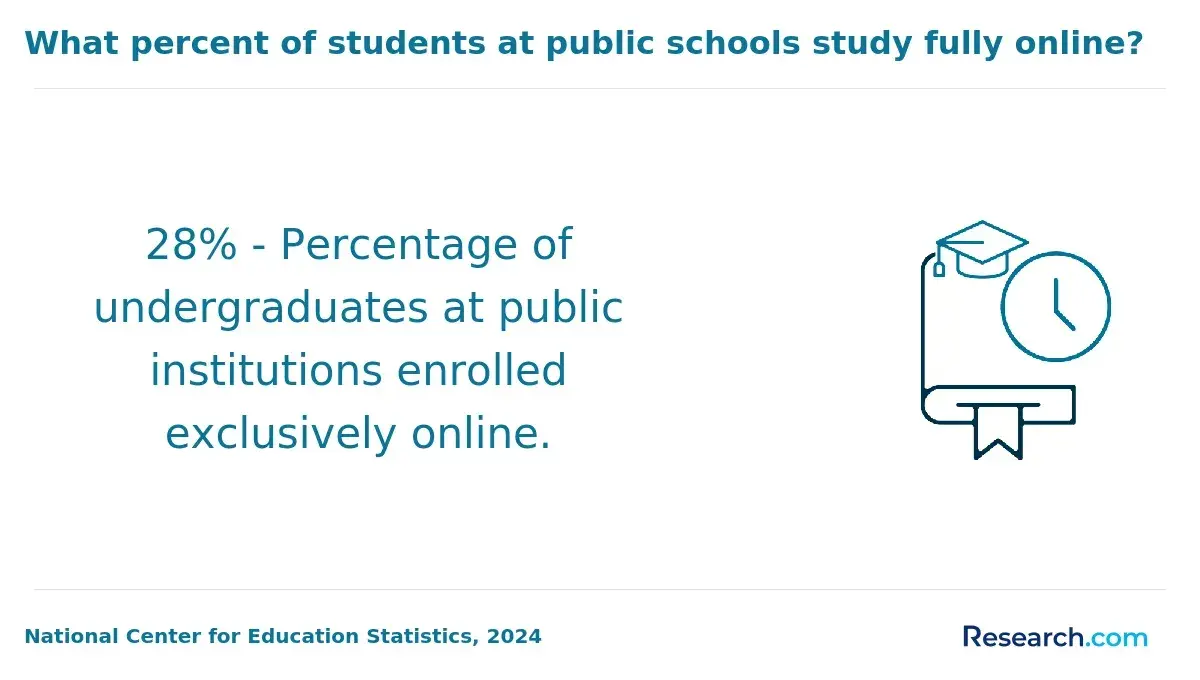
Which types of accredited schools offer the most flexible certificate transfer credit options?
Public community colleges, technical colleges, and universities offering undergraduate certificates are often the clearest choices for transfer because their courses appear on a college transcript and may be built into associate or bachelor's curricula. Institutional accreditation is an important quality signal, but it does not compel another school to accept credit. Programmatic approval matters separately in regulated fields such as nursing and some allied health programs.
Provider type affects both the likelihood of credit acceptance and the learner's next-step options.
| Provider type | Typical transfer flexibility | Best use case |
| Community or technical college | Often strong within statewide or institutional pathways | Affordable career entry with an associate-degree option |
| University certificate program | Often structured for internal degree progression | Advanced study or a defined bachelor's pathway |
| Career school | Varies widely; verify transcripted credit status | Focused practical training with employer relevance |
| Third-party training provider | Usually noncredit unless a college formally awards the credit | Skill building or preparation for an industry certification |
Do not confuse institutional accreditation with automatic portability. Obtain a course-by-course evaluation from the school where you intend to finish, especially if you may later pursue a bachelor's degree.
What admission requirements apply when you enroll using transfer credits for certificates?
Applicants using transfer credit generally submit an application, official transcripts from every prior college, and any required program materials. Open-access certificates may not require a high GPA or standardized tests, while selective healthcare, advanced technical, or graduate certificates can require prerequisite grades, placement testing, background clearance, portfolios, or professional experience. The credential level matters: an undergraduate certificate normally requires high school completion or an equivalent, while a graduate certificate normally requires a bachelor's degree.
Complete these steps before committing to a start date so the evaluation does not delay required sequencing.
- Request official transcripts early; some schools will not review unofficial copies for a final award.
- Match completed courses to the certificate's current curriculum and save syllabi, catalogs, and lab-hour documentation.
- Ask for a written transfer evaluation showing accepted credits, denied credits, remaining courses, and the appeal deadline.
- Verify separate eligibility rules for clinical placement, licensure, internships, or certification-exam preparation.
A common mistake is applying only to the certificate without asking whether its courses can later count toward an associate or bachelor's degree. If degree completion is the goal, map both credentials with an advisor before registering.
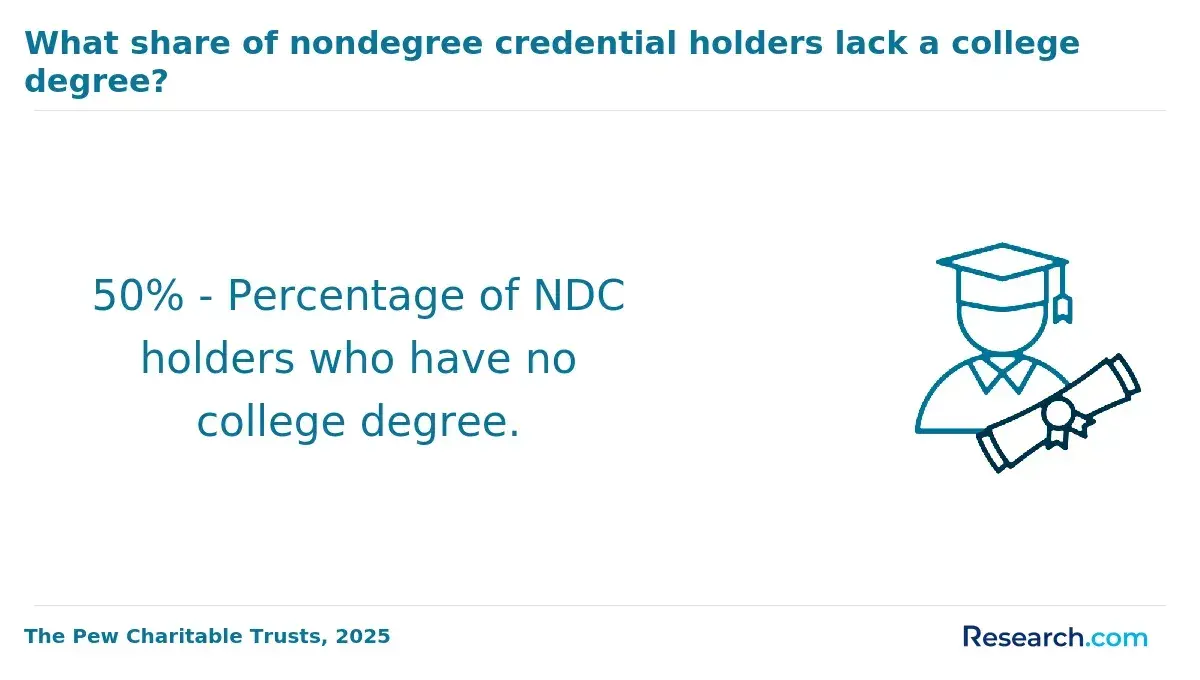
How do program length, total cost, and financial aid change with transfer credits?
Accepted credits can reduce the number of courses you must take, but the savings depend on the school's per-credit tuition, required residency, course fees, books, equipment, exams, and clinical or lab charges. Transfer credit may also change your enrollment intensity. Federal aid eligibility and the amount available depend on the student, program, school participation, and enrolled credits; do not assume a shorter certificate receives the same aid as a degree program.
Compare the total remaining investment, not simply the catalog price.
| Cost or timeline factor | How transfer credit can change it | What may remain unchanged |
| Tuition | Fewer required credit hours may lower tuition | Application, technology, and graduation fees |
| Completion time | Previously completed prerequisites may accelerate entry into core courses | Fixed-term cohorts, clinical hours, and course sequence |
| Materials | May avoid duplicate textbooks or introductory supplies | Tools, uniforms, exams, and consumables |
| Financial aid | May reduce borrowing needs | Eligibility rules tied to program and enrollment status |
Students who need a faster route to a full degree should compare certificate stacking with accelerated programs. Ask the financial-aid office for a net-cost estimate after, not before, transfer credit is posted.
Which career paths and job roles align best with stackable certificate programs?
Stackable certificates work best when each credential has independent value while also applying toward a larger award. Examples include IT support to networking or cybersecurity, medical billing to health information management, welding fundamentals to advanced fabrication, and design foundations to digital media. This structure can let learners test a field, seek an entry-level role, and continue later without repeating completed coursework.
The following career alignment shows where a certificate may be a useful first step and where additional education, licensure, or experience is commonly needed.
| Certificate pathway | Potential entry focus | Typical next stack |
| IT support | Help desk or user support | Networking, cybersecurity, or an associate degree |
| Medical coding or billing | Revenue-cycle support | Health information management and relevant certification preparation |
| HVAC/R fundamentals | Installer or technician trainee work | Advanced service training, apprenticeship, or licensing pathway |
| Paralegal studies | Legal support work | Associate or bachelor's coursework and employer-specific experience |
| Digital design | Production or junior design portfolio work | Advanced portfolio courses or a design degree |
Choose stackability only when the receiving degree publishes how each certificate applies. Learners with a completed bachelor's degree who need a focused advanced credential may instead consider 1 year masters programs, which serve a different academic level and admission profile.
How do salaries and long-term earnings compare for students who use transfer credits?
Using transfer credits can improve the financial efficiency of training by avoiding repeated coursework, but it does not change an occupation's wage structure or guarantee employment. For context, the Bureau of Labor Statistics reported a 2024 median annual wage of $48,780 for all occupations in the United States. Many certificate-aligned roles fall above or below that benchmark depending on location, experience, industry, shift work, union status, licensure, and the employer's education requirements.
Evaluate earnings potential by the target occupation, not by the certificate label. Compare local job postings with each program's required skills, then ask whether the certificate supplies recognized preparation, a portfolio, clinical eligibility, or a pathway to the credential employers actually request.
The strongest ROI case is usually a short, credit-bearing program that eliminates duplicate courses and leads to a documented next step. Be skeptical of schools that present broad occupational salary figures as though every certificate completer will earn them.
What accreditation, licensing, and industry certification rules affect transferred coursework?
Transferred coursework must satisfy more than a college's academic rules in regulated fields. A school may accept anatomy or introductory technical credits toward graduation while a licensing board, clinical site, certifying body, or employer requires recent coursework, specific lab hours, supervised practice, an approved curriculum, or a separate examination. Professional certification is awarded by a certifying organization; an academic certificate is awarded by an educational provider and may only prepare a student for that certification.
Verify these points in writing before relying on prior credit:
- Whether the institution is appropriately accredited and whether the specific program holds any required specialized approval.
- Whether transferred courses meet recency, laboratory, clinical, contact-hour, and grade requirements for the intended license or examination.
- Whether the program is approved for students seeking licensure in the state where they plan to work.
- Whether an industry certification requires separate fees, work experience, background checks, or an exam after program completion.
This check is essential for nursing, practical nursing, dental, pharmacy, electrical, HVAC, and other fields with state or employer controls. A transfer award on a transcript is not proof of professional eligibility.
How can prospective students evaluate and choose reputable certificate programs for transfer?
Start with the career outcome, then choose the shortest credible path that meets it. A certificate is a strong option for learners who need focused, transcripted coursework or a stackable entry point. It is a weaker choice when the target role requires a degree, a license with extensive supervised hours, or a portfolio that the program does not help build. Students exploring less intensive bachelor's routes can also compare easy bachelor degrees, while still checking whether "easy" aligns with employer and licensing expectations.
Use this screening process to compare reputable programs rather than relying on a transfer-credit headline.
- Identify the exact job, required license or certification, and preferred work location.
- Confirm whether the credential is credit-bearing, what credential appears on the transcript, and whether it stacks into a named degree.
- Send official transcripts and request a written, course-by-course evaluation before accepting an offer.
- Calculate remaining tuition, mandatory fees, supplies, travel, exams, and lost work time after accepted credits.
- Review faculty, facilities, clinical or lab arrangements, completion rules, and career-support services.
- Compare the program's curriculum with local employer postings and ask how graduates build required experience.
Red flags include vague transfer promises, pressure to enroll before an evaluation, missing state-authorization information, unverified claims about certification eligibility, and a refusal to explain which credits must be completed in residence. Keep copies of every evaluation and catalog version because program requirements can change.
Other Things You Should Know About
No. Credit-bearing college certificates are the most likely to evaluate prior college coursework. Noncredit certificates, bootcamps, and many vendor training programs may not accept academic transfer credits at all.
There is no universal limit. Schools commonly require students to complete a minimum number of credits in residence, and specialized courses, clinicals, labs, and capstones may have stricter limits than general education courses.
They can lower tuition when accepted courses replace required classes. They may not reduce fixed fees, tools, uniforms, examination fees, clinical costs, or the cost of courses that must be taken at the institution.
No. A certificate is usually an educational award for completing a program. Professional certification is typically issued by an industry or professional organization and may require an exam, experience, continuing education, or other standards.
References
- Sinclair Certificates: Skills for Success https://www.sinclair.edu/academics/certificates/
- 5 Credit Transfer Myths Debunked - And What to Do Instead https://www.straighterline.com/blog/5-credit-transfer-myths-debunked-and-what-to-do-instead
- The Importance of Understanding Transfer Credit Policies https://www.sophia.org/blog/higher-education/understanding-transfer-credit-policies/
- Transferology https://www.transferology.com/
- How Do Transfer Credits Work? A Guide for Adult Learners | Whitworth Online https://online.whitworth.edu/news-articles/how-do-transfer-credits-work-when-you-go-back-to-school/
- Giving Credit Where Credit is Due | All4Ed https://all4ed.org/publication/giving-credit-where-credit-is-due/
- 5 Common Challenges in Credit Transfer Evaluation (And How to Solve Them) https://www.stellic.com/resources/transfer-credit-evaluation
- Top Online Schools That Accept Transfer Credits https://www.edvisorly.com/student-guides/online-schools-that-accept-transfer-credits
- Choosing an Online School as a Transfer Student | OEDb.org https://www.oedb.org/advice/choosing-an-online-school-for-transfer-students/
- Career and Technical Education Certificate Programs | ECC https://elgin.edu/academics/degrees-certificates/career-and-technical-education-certificate-programs/