2027 Best Online Non-Degree Programs With Evening Classes

Co-Founder and Chief Data Scientist
Choosing training that fits after work can be harder than choosing the subject itself. Online non-degree programs with evening classes can help adults build job-ready skills without committing to a full degree, but schedules, licensure rules, and employer recognition vary widely.
The U.S. Bureau of Labor Statistics projects total employment to grow 3.1% from 2024 to 2034, adding about 5.2 million jobs. This guide helps you compare flexible certificate, career-training, and professional credential options, identify credible providers, estimate real costs, and choose a path aligned with your career goal.
Key Things You Should Know
- Evening-friendly online programs are usually asynchronous, but live labs, exams, clinical placements, and internships may still occur during daytime hours.
- A certificate documents completion of education; a certification is a separate professional credential that typically requires an exam, work experience, or both.
- BLS projects medical assistant employment to grow 12% from 2024 to 2034, while career outcomes in other fields depend heavily on licensure, portfolio quality, local demand, and prior experience.
Top 10 Best Online Non-Degree Programs With Evening Classes
Popular Trade School Programs
Online evening trade programs commonly cover HVAC fundamentals, electrical theory, welding safety, construction management, automotive service theory, and industrial maintenance. They work best for learners who need flexible coursework before completing required hands-on labs locally. A short certificate can build foundational knowledge, while an associate degree usually includes broader general education and may transfer more easily. Do not enroll based on online delivery alone: electricians, HVAC technicians, welders, and automotive technicians often need supervised practice, apprenticeship hours, employer training, or state-specific licensing before working independently.
Healthcare Programs
Evening online healthcare options include medical billing and coding, pharmacy technician preparation, medical assisting coursework, health information technology, and patient care certificates. These programs may suit career changers, but clinical roles are rarely fully online. Medical assisting and practical nursing pathways commonly require in-person labs and clinical rotations that may follow facility schedules rather than evening hours. Before enrolling, confirm whether the program prepares you for a certification exam, meets your state's rules, and has clinical-placement support. Billing and coding may be more flexible, though employers often prefer recognized credentials and relevant software experience.
Criminal Justice / Law Programs
Online evening options include criminal justice certificates, legal studies certificates, paralegal studies, court reporting fundamentals, and compliance training. A non-degree legal studies certificate can support administrative, records, victim-services, or compliance-related work, while a paralegal certificate may be more relevant for legal support roles. However, requirements vary: some employers prefer an associate or bachelor's degree, and paralegals cannot provide legal advice or practice law. Choose a program with practical research, writing, ethics, and document-management coursework rather than one that makes broad promises about law-enforcement or legal employment.
Arts & Design Programs
Online evening programs in graphic design, UX design, digital marketing, photography, animation, and web content creation generally emphasize software skills and portfolio projects. They can be useful for beginners building samples for freelance or entry-level work, especially when classes include instructor feedback. A certificate may be enough for a focused skill upgrade, but an associate degree offers more structured design foundations and broader portfolio development. Compare programs by the quality of student work, software access, critique opportunities, and portfolio support. In creative fields, demonstrable work often matters more than the credential title alone.
What Are Online Non-Degree Programs?
Online non-degree programs are organized learning experiences that do not award an associate, bachelor's, master's, or doctoral degree. They can include college certificates, continuing-education certificates, workforce training, bootcamps, microcredentials, and employer or industry preparation programs.
The best option depends on what you need the credential to do. A credit-bearing college certificate may be useful when you want coursework that could stack into a later degree. A noncredit career-training program may be a better fit when speed, a narrow technical skill, or preparation for an external exam matters more than academic credit. Learners pursuing advanced academic routes can also compare a competency based masters degree when their experience allows them to progress by demonstrating mastery rather than following a conventional term schedule.
This comparison clarifies the terms that providers sometimes blur in marketing.
| Option | What you earn | Best use case | Key limitation |
| Academic certificate | College-issued certificate, sometimes for credit | Career entry or a stackable path toward a degree | Transfer rules vary by institution |
| Professional certificate | Provider-issued completion credential | Focused skill development or career exploration | Employer recognition differs by provider and field |
| Industry certification | Credential from a certifying body | Validating job-specific knowledge or skills | May require an exam, renewal, or experience |
| Career-training program | Completion record or school certificate | Fast preparation for a defined entry-level function | May not carry college credit or meet licensure rules |
Which Online Programs Offer Evening Classes?
The most workable evening programs use asynchronous coursework: recorded lectures, readings, discussion boards, simulations, and assignments that can be completed after work. Programs with a scheduled live session may still be workable if the session is consistently held at night and attendance expectations are clear.
Fields with substantial practical requirements are less flexible. Healthcare programs may require daytime clinical rotations; skilled trades may require on-campus labs; and some proctored exams are scheduled in fixed windows. Ask for a sample term calendar before applying, not just a statement that the program is "online."
Use the delivery model below to judge whether a program truly fits your schedule.
| Format | Evening compatibility | Usually best for | Watch for |
| Fully asynchronous | High | Working adults with variable shifts | Weekly deadlines and limited real-time support |
| Live online evenings | Moderate to high | Learners who want instructor interaction | Mandatory attendance and time-zone differences |
| Hybrid | Moderate | Programs requiring equipment or supervised practice | Campus labs that occur during business hours |
| Online coursework plus placement | Variable | Clinical, practicum, and field-based programs | Placement hours controlled by an outside site |
Are Online Non-Degree Programs Accredited?
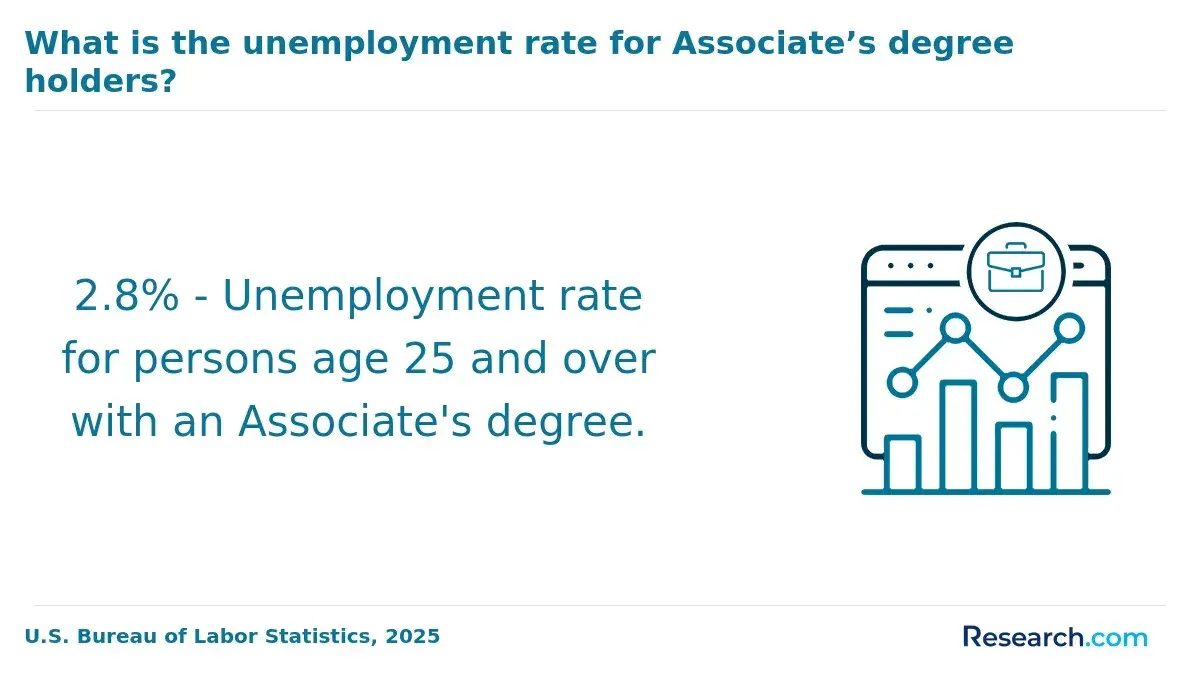
Accreditation applies primarily to institutions and certain professional programs, not to every non-degree course. A college may hold institutional accreditation while a specific noncredit certificate does not carry academic credit. In regulated fields, specialized programmatic approval can matter more than institutional accreditation because it may affect eligibility for licensure or certification examinations.
For example, a healthcare program should be evaluated against the requirements of the relevant state board, certifying organization, or employer - not merely its online marketing claims. For a technology or design course, industry-recognized curriculum, instructor expertise, and a strong portfolio may be more meaningful than programmatic accreditation. Never assume an accredited school's individual program automatically meets every state's professional requirements.
A practical check is to request the credential's exact name, whether it is credit-bearing, the accreditor or approving body if applicable, and written confirmation of exam or licensure eligibility. If the provider will not answer directly, treat that as a red flag.
How Do You Choose a Reputable Online Program?
A reputable program makes its schedule, total charges, curriculum, credential type, instructor qualifications, refund policy, and career-services limits easy to verify. "Job-ready" is a marketing phrase, not proof that a program leads to a license, certification, or hiring advantage.
Before committing money, use these steps to compare providers on evidence rather than convenience.
- Match the program to a specific target role and review job postings to identify the skills, degree level, license, or certification employers request.
- Confirm whether coursework is credit-bearing, whether credits can transfer, and whether the school provides the policy in writing.
- Ask for the required live-session times, expected weekly workload, lab dates, clinical or practicum obligations, and exam-proctoring rules.
- Verify any claimed exam eligibility with the actual certifying body or licensing board, not only the school representative.
- Compare total cost, including software, books, tools, exam fees, background checks, uniforms, and travel for required in-person work.
- Review cancellation terms and avoid providers that pressure you to enroll before giving you written details.
Common mistakes include choosing the lowest tuition without calculating required extras, assuming "self-paced" means no deadlines, and selecting an online program before confirming practical-placement availability. A less accelerated program with transparent support may be the better investment if you need feedback, scheduling certainty, or a recognized pathway.
What Admissions Requirements Do These Programs Have?
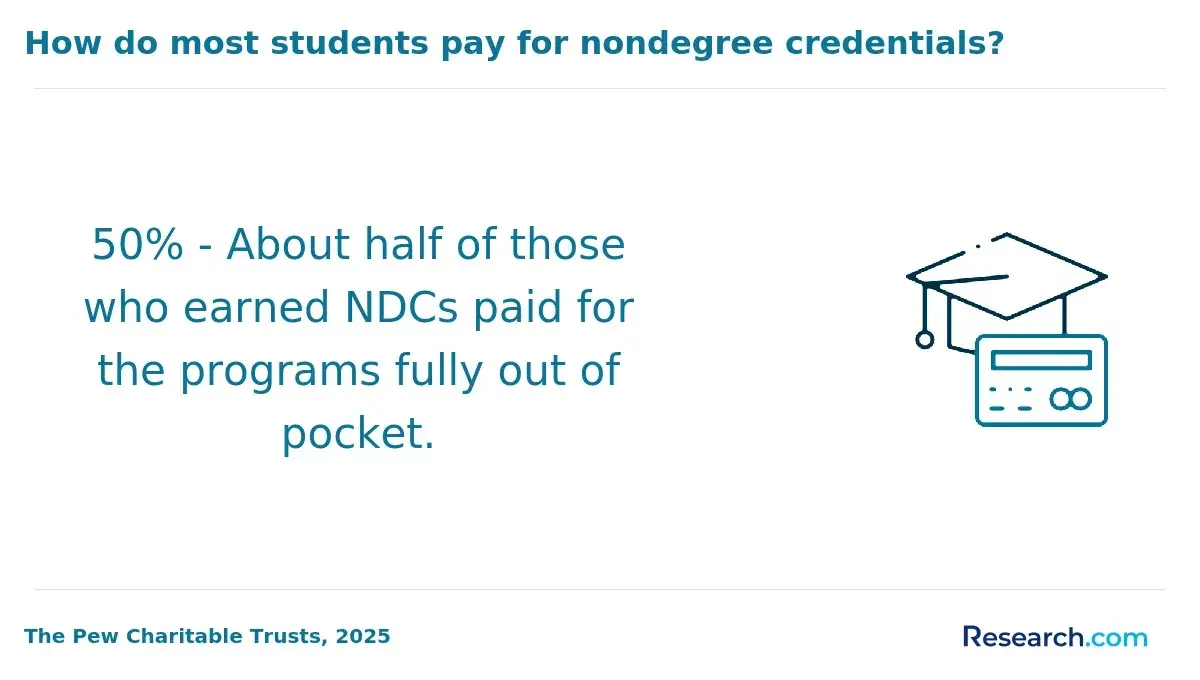
Admissions requirements depend on the provider and credential level. Many noncredit online programs require only an application, payment arrangement, and basic computer access. Credit-bearing college certificates may require a high school diploma or equivalent, placement testing, transcripts, or prerequisite courses. Programs designed for experienced professionals can require prior education or work experience.
Healthcare and public-safety-related programs may add background checks, immunizations, drug screening, CPR training, physical-capacity documentation, or minimum-age requirements when clinical or field placement is involved. These are not universal online-program requirements; they arise from the placement site, state rules, or profession.
Ask admissions staff whether requirements apply at enrollment, before a practicum, or before graduation. That timing matters for working adults: discovering a clinical, lab, or background-check requirement mid-program can delay completion or create costs that were not included in advertised tuition.
How Long Do Online Non-Degree Programs Take?
Completion time ranges from a few weeks for a focused noncredit course to roughly one year for many college certificate programs. Associate degrees generally take longer because they include general-education requirements and more credits. An evening schedule can extend the timeline when students take one course at a time, but it can also make study sustainable for adults who cannot pause employment.
Program pacing matters more than the advertised fastest completion date. Asynchronous programs offer flexibility but still require consistent weekly progress; cohort programs may provide better accountability but have fixed start dates and sequenced classes. If your goal is a recognized exam credential, allow additional time for application review, exam preparation, and retesting if needed.
People considering a longer academic progression rather than short workforce training may find that a cheapest doctorate degree comparison is more relevant after they have identified a field requiring advanced credentials.
How Much Do Online Non-Degree Programs Cost?
There is no single price for an online non-degree program. Community-college certificates, university continuing-education programs, private career schools, and third-party platforms use different tuition models. The advertised charge may exclude books, software subscriptions, exam vouchers, supplies, lab fees, travel, and fees tied to clinical or practicum placement.
For eligible students in eligible programs, the maximum Federal Pell Grant for the 2025-26 award year is $7,395. That amount is not automatic, and many short noncredit programs do not participate in federal student-aid programs. Check program eligibility before assuming grants or loans can be used.
Use this cost review to compare the real financial commitment, especially when an evening format reduces work hours or requires travel for hands-on components.
| Cost factor | Why it changes the total | Question to ask |
| Tuition model | Programs may charge per course, credit, term, or package | What is the total charge through completion? |
| Required materials | Software, textbooks, tools, and equipment may be separate | Which items must I buy myself? |
| Exam and licensing fees | External credentials may require separate payment | Is the first exam attempt included? |
| In-person requirements | Labs, clinicals, and proctoring can create travel and time costs | Where and when are these scheduled? |
| Lost income or overtime | Fixed sessions may conflict with work shifts | Can I complete required activities outside business hours? |
Employer tuition assistance, workforce-agency funding, payment plans, and scholarships can reduce out-of-pocket cost, but confirm whether they cover noncredit training and external exam fees. Avoid borrowing for a program until you know the credential is requested for your intended role.
What Careers Can These Programs Support?
These programs can support career exploration, entry-level preparation, advancement in an existing role, or preparation for a separate industry certification. They are strongest when the target occupation has a clear skills pathway and employers recognize the training provider, portfolio, or external credential. They are weaker substitutes for occupations that legally require a degree, license, apprenticeship, or extensive supervised experience.
Possible pathways include medical billing support, medical assisting, pharmacy support, legal assistant work, compliance support, IT support, digital design, web content production, HVAC support, and electrical or construction pre-apprenticeship. Completion alone does not guarantee hiring; employers may also assess experience, technical ability, communication, background eligibility, and local demand.
If your goal is a role with a recognized exam-based credential, compare training against the best certifications for jobs and verify whether the certificate you are considering actually prepares you for that certification. A certificate can provide instruction; the certification may be the credential an employer expects.
Choose a non-degree route when it closes a clearly identified skill gap. Consider an associate or bachelor's degree instead when job postings consistently require one, when you need transferable credits, or when you expect to change specialties later.
What Salaries And Job Outlook Can Graduates Expect?
Occupational wage and outlook data describe the job, not what every certificate completer will earn. Pay differs by location, employer, experience, shift, licensure, and education. The figures below are U.S. Bureau of Labor Statistics median annual wages and projected employment change for 2024-34; use them to compare field direction, not as an earnings promise.
| Occupation | 2024 median annual wage | Projected change, 2024-34 | Important qualification context |
| Medical assistants | $44,200 | 12% | Employers may prefer certification; clinical duties vary by state. |
| Electricians | $62,350 | 9% | Typically requires apprenticeship training and licensure, not an online certificate alone. |
| Graphic designers | $61,300 | 2% | A portfolio is central; employers may prefer a degree for some roles. |
| Paralegals and legal assistants | $61,010 | -1% | Requirements vary by employer; a certificate may supplement prior education. |
Medical assisting shows comparatively strong projected growth, while legal-support and design paths can be more competitive or shaped by technology changes. AI tools are increasingly part of administrative, design, and research workflows, making practical software skills, verification habits, and human judgment valuable alongside any credential.
Readers whose priority is maximizing long-term earnings should compare occupation requirements rather than choosing a program solely by length. This overview of what career makes the most money can help distinguish careers where short training may open a door from those that usually require extensive degree-based preparation.
Other Things You Should Know About
Sometimes. Fully asynchronous programs are the most evening-friendly, but labs, clinical rotations, internships, proctored exams, and live sessions can have fixed times. Request a term-by-term schedule before enrolling.
They can be, particularly when issued by a recognized college, employer, or industry organization and tied to demonstrable skills. Recognition depends on the field, provider, credential type, and whether employers expect a separate certification or license.
It may, if the program and institution participate in eligible aid programs and you meet student eligibility requirements. Many short, noncredit, and third-party training programs are not eligible for federal student aid, so verify before applying.
A non-degree program is often better for a focused skill, rapid career exploration, or certification preparation. An associate degree is usually better when employers require a degree, you need broader education, or you want credits that may transfer toward a bachelor's degree.
References
- Degree Programs for Working Adults - Online & In Person | NEIT https://www.neit.edu/the-neit-edge/degree-pathways/for-working-professionals
- How to Build a Strong Continuing Education Program That Actually Works https://moderncampus.com/blog/strong-continuing-ed-program.html
- Online Degree vs. Traditional | University of Arkansas Grantham https://www.uagrantham.edu/blog/pros-cons-online-degree-vs-traditional-university/
- Best Online Degrees for Working Adults in 2026 https://www.straighterline.com/blog/degreecompletion-best-online-degrees-for-working-adults-in-2026
- Online Student Trends and Success Factors - OnlineEducation.com https://www.onlineeducation.com/guide/who-studies-online
- Affordable Accredited Online Colleges https://www.onlineu.com/online-schools/low-tuition
- Career Development, Community & Continuing Education https://www.wvncc.edu/community-education/career-development-community-and-continuing-education/117
- Career Development and Training | Gulf Coast Workforce Solutions https://www.wrksolutions.com/job-seekers/career-development-and-training
- Are Weekend and Evening Courses the Future of Higher Ed? https://www.keg.com/news/are-weekend-and-evening-courses-the-future-of-education
- In-Person Learning vs. Online Learning: Which Is Right for You? | ACE Blog https://ace.edu/blog/examining-in-person-instruction-from-a-virtual-mindset-what-can-we-improve/