2027 Best Stackable Credentials With Scholarship Options

Co-Founder and Chief Data Scientist
Choosing short-term training can be risky when a certificate does not transfer, meet licensing rules, or lead to the next credential. Stackable credentials solve that problem by building smaller certificates into larger academic awards or career pathways. U.S. Bureau of Labor Statistics data for 2024 show a $62,350 median annual wage for electricians, illustrating why clearly sequenced skilled-trade training can matter.
This guide helps career changers, recent graduates, and working adults compare pathways, scholarship options, costs, and realistic outcomes before enrolling.
Key Things You Should Know
- Choose a credit-bearing stack only when the school documents exactly how each certificate applies to an associate or bachelor's degree; noncredit training may be useful for skills but often has limited transfer value.
- Scholarships can reduce direct tuition, but learners should also budget for exams, tools, uniforms, clinical requirements, background checks, and licensing fees that may not be covered.
- Strong options align each step with a job milestone: electrician roles had a 2024 median annual wage of $62,350, registered nurses had a $93,600 median, and outcomes still depend on location, experience, licensure, and employer demand.
Top 10 Best Stackable Credentials With Scholarship Options
Popular Trade School Programs
Trade stacks usually pair a short certificate with an apprenticeship, diploma, or associate degree. Common examples include electrical technology, HVAC/R, welding, industrial maintenance, automotive service, construction management, and commercial driving. Entry certificates can teach safety, tools, and foundational theory; later coursework may add advanced diagnostics or supervisory preparation. These pathways fit hands-on learners seeking paid work experience, but many trades require an apprenticeship, employer training, or state-specific license beyond school. Ask whether the certificate awards college credit and whether it satisfies local licensing or apprenticeship entry requirements.
Healthcare Programs
Healthcare stacks may begin with nursing assistant, medical assisting, phlebotomy, health information, practical nursing, or allied-health prerequisites and progress toward an associate degree. A certificate is educational training; a separate certification examination or state license may be required to practice. Clinical placement capacity, immunizations, background screening, and state approval matter as much as tuition. These programs suit learners who can meet in-person clinical obligations. Confirm whether credits apply to a nursing or allied-health degree and whether an online course includes approved local clinical arrangements.
Criminal Justice / Law Programs
Criminal justice stacks can combine certificates in corrections, policing foundations, cybersecurity, emergency management, or crime analysis with an associate degree. Legal studies and paralegal certificates can build toward an associate or bachelor's degree, but they do not authorize independent legal practice. Programs work best when matched to a target employer: police agencies commonly set separate academy, fitness, background, and residency rules, while paralegal employers may prefer degree-level education. Verify internship opportunities, software training, and whether the credential is credit-bearing before assuming it will advance a law-related career.
Arts & Design Programs
Design stacks often start with certificates in graphic design, UX/UI foundations, digital media, photography, animation, or web production and can lead into an associate degree. A portfolio usually carries more hiring weight than the certificate title alone, so review student work and project requirements. These options suit learners building demonstrable skills while working, especially when courses provide current software access and feedback. Confirm ownership of portfolio work, software costs, and credit transfer rules. For regulated design fields such as architecture, a short credential is not a substitute for professional degree and licensure requirements.
What are stackable credentials and how do they work with scholarship funding?
A stackable credential is a deliberately connected sequence of smaller educational credentials. A learner might complete a 12-credit certificate, apply those credits toward a 30-credit diploma, and later use the same coursework in an associate degree. The key distinction is documented progression: courses must be accepted by the next credential, not merely similar in topic.
Scholarship funding can support one step or several steps, but eligibility is program-specific. Credit-bearing certificates at eligible colleges may qualify students for federal aid if they meet federal and institutional requirements; noncredit workforce programs often rely instead on workforce grants, employer sponsorship, institutional scholarships, or state and local aid. Scholarships generally do not need repayment, while loans do.
Before applying, separate the funding sources that can realistically pay for your route.
- Institutional merit or need-based scholarships may require enrollment in a particular certificate, minimum credit load, academic progress, or a separate application.
- Workforce-development scholarships may prioritize in-demand occupations, residents of a service area, unemployed workers, or learners referred through a workforce center.
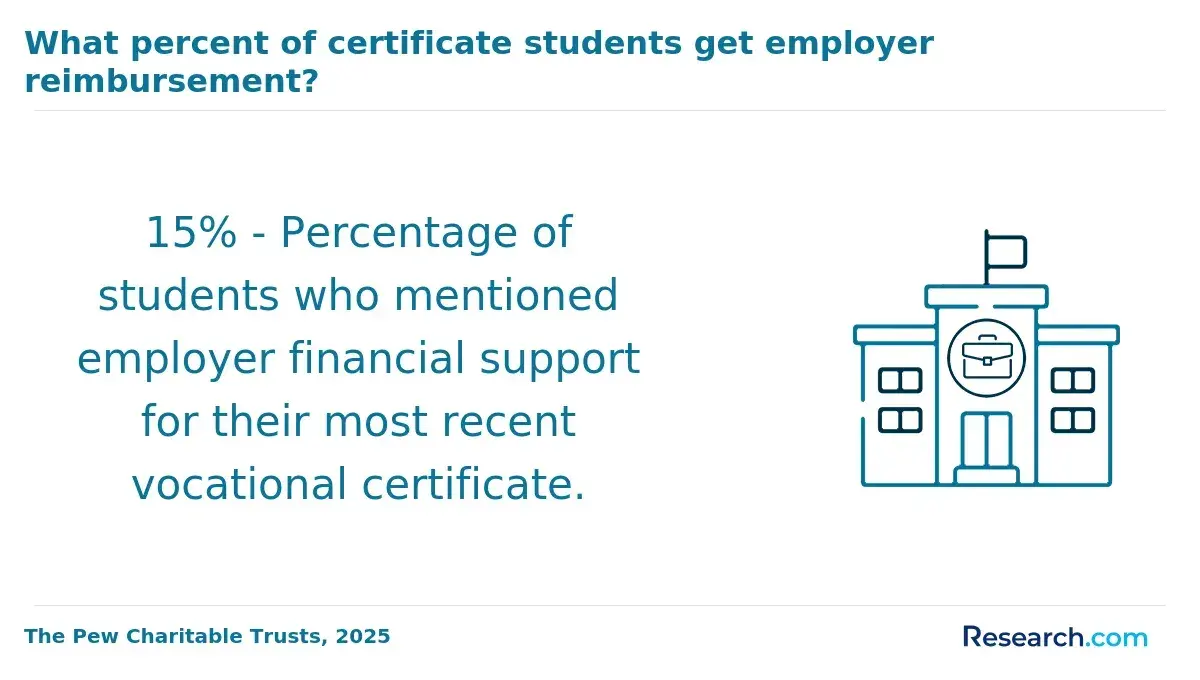
- Employer tuition assistance can be valuable for incumbent workers, but reimbursement rules, grade requirements, and continued-employment obligations vary.
- Professional associations, unions, and trade groups may fund training, examinations, tools, or apprenticeships, often with narrow eligibility criteria.
Do not assume a scholarship renews when you move to the next stack. Get the award terms in writing, including covered charges, renewal conditions, whether funds apply to summer terms, and how a change from certificate to degree enrollment affects eligibility.
Which fields offer the strongest stackable credential pathways and career outcomes?
The strongest pathway is not necessarily the shortest one; it is the one whose first credential has labor-market value and whose next step is clearly recognized by employers, colleges, or licensing bodies. Technical, healthcare, information technology, and business operations routes often offer the clearest progression because entry-level competencies can be verified before the learner commits to a longer degree.
The comparison below distinguishes occupational wage data from credential outcomes. Median wages are U.S. Bureau of Labor Statistics 2024 figures for the occupation and are not a promise that certificate completers will earn that amount.
| Field and stack example | First practical milestone | Next credential decision | 2024 occupation median annual wage |
| Electrical technology certificate → apprenticeship → advanced coursework | Apprenticeship entry or electrical helper work | Complete apprenticeship and meet state licensing rules | Electricians: $62,350 |
| Practical nursing certificate → RN bridge or associate degree | Eligibility for practical-nurse licensure after approved training and exam | Bridge only if nursing goals require RN preparation | Registered nurses: $93,600 |
| Health information certificate → coding specialization → associate degree | Entry revenue-cycle or records support work | Add certification or degree based on employer requirements | Medical records specialists: $50,250 |
| IT support certificate → network or cybersecurity coursework → degree | Help-desk or technical support portfolio | Choose vendor certification or academic degree based on target role | Computer user support specialists: $60,340 |
For learners who want a longer academic ladder after an initial credential, comparing best 4 year degrees can clarify whether an associate-to-bachelor's transfer is worth the added time and cost. In technology, AI is increasing the value of applied problem-solving, security, data literacy, and documented project work; a short credential is more durable when it leads to those capabilities rather than a single software tool.
How can students find accredited stackable credential programs with scholarships?
Start with the end point: the job, certification, license, or degree you want after the first credential. Then verify that the school, program, and funding arrangement support that end point. Institutional accreditation is most relevant when you need federal aid or transfer credit; programmatic approval is especially important in regulated healthcare training.
Use this sequence to screen programs before submitting applications.
- Identify the occupation and check whether a state board, employer, union, or certifying body requires approved education, supervised hours, an exam, or a background review.
- Request a written curriculum map showing the exact certificate courses that apply to the next credential, the minimum grade required, and any expiration period on credits.
- Confirm the institution's accreditation status and, where relevant, the program's approval or specialized accreditation with the appropriate regulator or accreditor.
- Ask the financial-aid office whether the exact certificate is aid-eligible and ask scholarship staff whether an award follows you into the next stack.
- Compare total required charges, clinical or lab access, scheduling, student support, completion expectations, and local employer relationships.
Working adults who need compressed terms should also compare accelerated degree programs for working adults. Acceleration can reduce time away from work, but it raises weekly workload and may leave less room to repeat a demanding course.
What admission requirements and prior education do stackable credential programs expect?
Admission requirements depend on the credential type. Many entry-level college certificates require a high school diploma or equivalent and placement assessment, while selective healthcare cohorts may require prerequisite science courses, minimum grades, entrance testing, immunizations, and background screening. Industry training providers may require only payment and basic technology access. A certification exam may impose separate education or experience rules that the training program itself does not control.
Applicants should confirm these details early because a stack can have gates between stages.
| Program type | Common entry expectation | Common progression requirement | What to verify |
| Credit-bearing college certificate | Diploma or equivalent; placement or advising may apply | Minimum course grades and satisfactory academic progress | Whether credits automatically apply to the named associate degree |
| Healthcare clinical program | Prerequisites and health or background documentation may apply | Clinical performance and program-specific academic standards | State approval, clinical placement, and exam eligibility |
| Industry certificate course | Provider-specific eligibility, often minimal | Completion of modules or assessments | Employer recognition and whether it carries transferable academic credit |
| Apprenticeship-linked training | Employer or sponsor selection requirements | Work hours plus related instruction | Wage progression, sponsor recognition, and journey-level pathway |
A common mistake is treating a school's admission as admission to a limited-enrollment program. Ask whether acceptance is to the college, the certificate, or the clinical cohort, and obtain the answer before paying nonrefundable fees.
How do online stackable credential programs compare to campus options for flexibility and support?
Online stackable programs can be a strong fit for theory-heavy fields such as business, IT, health information, and design. They are less flexible when learning requires labs, equipment, studio critique, internships, or clinical practice. The best format is the one that preserves required hands-on learning while allowing you to persist through each stack.
This comparison highlights the trade-off to assess beyond convenience.
| Factor | Online or hybrid stack | Campus-based stack |
| Schedule | May offer asynchronous coursework and part-time pacing | Usually fixed meeting times, with direct access to facilities |
| Hands-on requirements | May require local clinicals, proctors, residencies, or partner labs | Labs and equipment are generally integrated into the schedule |
| Support | Quality depends on remote advising, tutoring, technical help, and placement coordination | Often easier to access instructors, peers, labs, and career offices in person |
| Best fit | Self-directed learners with reliable technology and a verified local placement plan | Learners needing structured practice, equipment access, or frequent face-to-face support |
Do not assume "online" means fully remote. For licenses and clinical careers, verify where practical hours occur, who arranges them, and whether your state accepts the program. Learners pursuing a graduate-level next step may also consider a fastest online master's degree only after confirming that their prior academic credentials meet admission requirements.
What are typical program lengths, tuition costs, and scholarship types for stackable credentials?
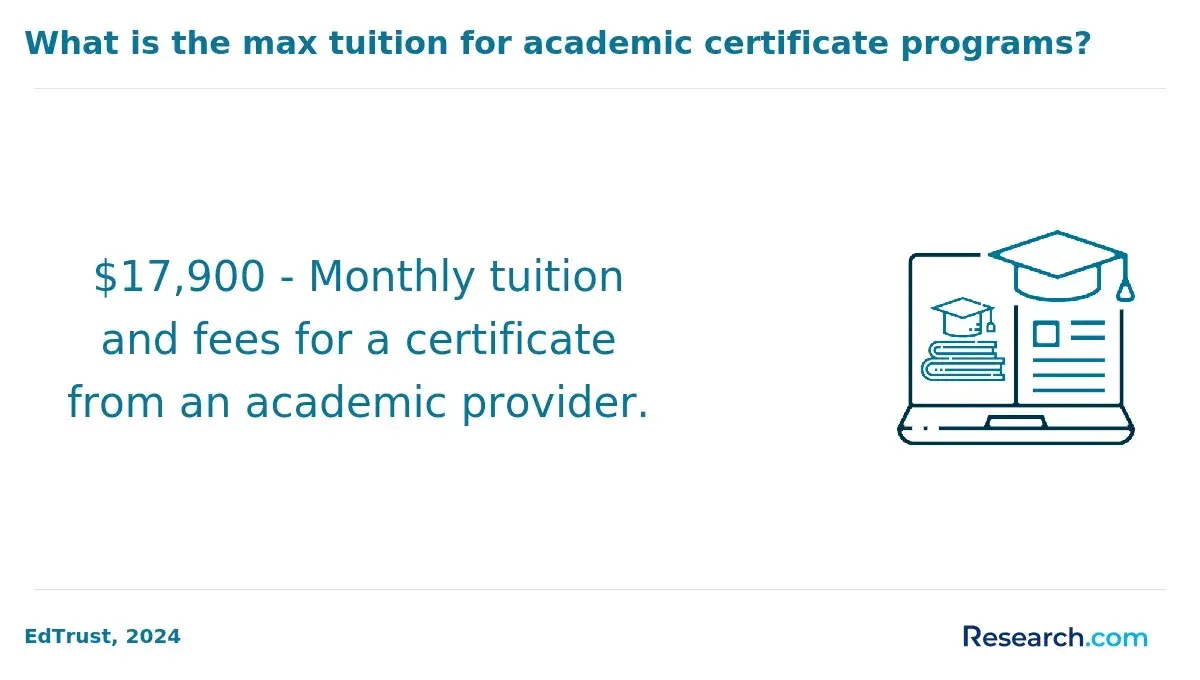
Program length and price vary more by field, delivery model, and residency than by the word "certificate." A short noncredit course may take weeks, while a credit-bearing sequence can take one or more years part time. Use the school's net price and required-fee disclosures rather than sticker tuition alone.
These cost categories help learners compare an affordable first step with the full price of reaching the intended career milestone.
| Expense or timeline factor | Why it changes the investment | Scholarship question to ask |
| Tuition and mandatory institutional fees | Credit load, residency, and course format can change charges | Does the award cover tuition only, or mandatory fees too? |
| Tools, supplies, uniforms, software, and equipment | Trade, clinical, and design programs can have material costs outside tuition | Can scholarship funds be used for required materials? |
| Testing, certification, licensing, and background costs | These may be necessary for the next employment or licensure step | Is exam or licensing support included or reimbursable? |
| Time to completion | Part-time pacing can protect income but delay the next credential | Can aid be renewed across terms and sequential certificates? |
Federal Student Aid reported that the maximum Federal Pell Grant for the 2024-25 award year was $7,395. That figure is a ceiling, not a typical award, and eligibility depends on federal need calculations, enrollment, and whether the program qualifies. Compare grants and scholarships first, then consider employer aid and borrowing only after estimating the full stack.
For a learner whose target genuinely requires graduate education, 1 year master's programs online may be an alternative to a longer sequence, but accelerated graduate study is usually appropriate only after completing the required bachelor's degree and prerequisites.
Which stackable credentials lead to licensure or professional certification in regulated careers?
Some stackable pathways support preparation for licensure or a professional certification, but the educational credential itself is not the license or certification. Licensure is granted by a government authority; professional certification is awarded by a certifying organization that sets its own eligibility standards. Both can change by state, occupation, and employer.
Regulated pathways deserve extra verification because an unapproved program can leave a learner unable to take a required exam. Common examples include practical nursing and registered nursing, dental hygiene, emergency medical services, cosmetology, commercial driving, electrical work, and HVAC work involving refrigerants. Healthcare programs may require state approval and supervised clinical education. Electrician licensing commonly depends on documented work hours and examination requirements, while EPA Section 608 certification is required for technicians who handle regulated refrigerants.
Before enrolling, obtain confirmation from the relevant state board or regulator that the exact program meets educational requirements in your state. Also ask whether a certificate merely prepares you for an exam, whether the exam is included in tuition, and what supervised experience remains after completion. A school's general accreditation does not automatically establish professional licensure eligibility.
What salaries and job outlook can graduates expect from stackable credential career pathways?
Career outcomes depend on the occupation, local demand, prior experience, geographic location, and whether you complete the required license, apprenticeship, degree, or professional certification. Use occupation-level data as a market signal, not as an earnings guarantee for graduates of any particular certificate.
Recent BLS projections can help distinguish growth potential from immediate qualification requirements.
| Occupation | Typical pathway consideration | 2024 median annual wage | Projected employment change, 2024-34 |
| Electricians | Usually requires apprenticeship and state-specific licensure progression | $62,350 | 9% |
| Heating, air conditioning, and refrigeration mechanics and installers | Certificate can support entry; employers may expect EPA certification | $59,810 | 8% |
| Registered nurses | Requires an approved nursing program and RN licensure; a short certificate alone is insufficient | $93,600 | 5% |
| Medical records specialists | Certificate or associate education may be relevant; employer requirements vary | $50,250 | 7% |
| Paralegals and legal assistants | Certificate or degree expectations vary by employer; not a license to practice law | $61,010 | 0% |
For return-on-investment planning, compare the total stack cost with conservative local entry-level job postings, likely work hours during training, and the cost of any required next step. The most common error is stopping at a first certificate when the target role actually requires an apprenticeship, license, portfolio, or degree.
How should learners evaluate and choose reputable stackable credential programs and schools?
A reputable stackable credential program makes its sequence, costs, requirements, and outcomes easy to verify. "Best" should mean best fit for your career goal and finances, not simply the fastest advertised completion date or the largest scholarship headline.
Use these questions in conversations with admissions, financial-aid, and program staff.
- Which exact courses and grades transfer into the next credential, and can the school provide that policy in writing?
- Is the program credit-bearing, institutionally accredited when relevant, and approved by the necessary state board or regulator?
- What is the complete cost through the credential I actually need, including equipment, exams, transportation, and clinical or lab charges?
- Which scholarships apply to my exact program, what conditions renew them, and what happens if I attend part time?
- What hands-on learning, career services, employer partnerships, and placement support are available in my area?
- Does completion prepare me for a separate licensing or certification exam, and what additional experience is still required?
Red flags include vague claims that credits "may transfer," pressure to enroll before receiving a cost breakdown, claims of guaranteed jobs or salaries, and online clinical programs that cannot identify approved placement arrangements. A good next step is to compare two or three programs using the same target job, full-stack cost, written transfer map, scholarship terms, and licensing check.
Other Things You Should Know About
They can, but eligibility depends on the specific program and funder. Credit-bearing certificates at eligible schools may qualify for institutional, state, or federal aid, while noncredit programs often use workforce grants, employer assistance, or private scholarships. Always confirm coverage for your exact certificate.
They can be worthwhile when the first credential has standalone value and all coursework applies to a documented next step. They are less attractive when credits do not transfer, the target job requires a degree or license the stack does not provide, or the total cost exceeds realistic local career value.
Many academic and technology-focused stacks are available online or hybrid. Programs involving clinical care, labs, equipment, or licensing commonly require in-person practice, local placements, proctored exams, or residencies. Verify these requirements before enrolling.
A certificate is generally awarded by an educational provider after completing a course of study. A certification is generally awarded by a professional organization after meeting its standards, which may include an exam, work experience, or continuing education. One may prepare you for the other, but they are not interchangeable.
References
- California Scholarships To Fund Your Skills-Based Career https://skillpointe.com/news-and-advice/california-scholarships-fund-your-skills-based-career
- What are Stackable Credentials? https://assess.com/stackable-credentials/
- What Are Stackable Credentials and Why Do They Matter? https://www.pltw.org/blog/what-are-stackable-credentials
- FAQ- Frequently Asked Questions: Resources: Scholarships: Cumberland Community Foundation https://www.cumberlandcf.org/scholarships/resources/faq--frequently-asked-questions--ccf-scholarship-programs.html
- Scholarships for Students Pursuing Career Education https://career.org/web/web/Multimedia/CER/Articles/Scholarships-for-Students-Pursuing-Career-Education.aspx
- 7 common scholarship information requirements https://www.citizensbank.com/student/articles/information-required-for-scholarship-applications.aspx
- Building Stackable Credentials That Truly Deliver Value and Economic Mobility: 7 Steps for Success https://mcacs.talentfirst.net/building-stackable-credentials-that-truly-deliver-value/
- JAX Scholarship FAQ https://www.jax.org/scholarship/faq
- Scholarships | Nurturing the future of cybersecurity https://www.fsisac.com/scholarships
- Stackable Certificates & Credentials - Complete College America https://completecollege.org/our-approach/structure/stackable-certificates-credentials/