2027 Best Stackable Credentials With Evening Classes

Co-Founder and Chief Data Scientist
Choosing training around a full-time job is difficult when a program's schedule, licensing value, and transfer options are unclear. Stackable credentials with evening classes let learners earn a short certificate first and apply eligible credits toward an advanced certificate or associate degree later.
This matters in fields with clear entry routes, the U.S. Bureau of Labor Statistics projects medical assistant employment to grow 15% from 2024 to 2034. This guide helps working adults compare evening pathways, verify career eligibility, estimate costs, and avoid credentials that do not support their long-term goal.
Key Things You Should Know
- Choose a credit-bearing certificate when you may want an associate degree later; confirm in writing which courses transfer, how long credits remain valid, and whether the next credential uses the same curriculum.
- Evening programs work best when classroom theory can occur after work and required labs or clinical rotations fit your schedule; healthcare and skilled trades may still require daytime, weekend, or full-shift placements.
- Use occupational data as context rather than a promise: BLS projects 15% growth for medical assistants from 2024 to 2034, while eligibility for many jobs depends on state rules, employer preferences, certification, or licensure.
Top 10 Best Stackable Credentials With Evening Classes
Popular Trade School Programs
Evening trade pathways often begin with a certificate in electrical, HVAC/R, welding, industrial maintenance, or construction technology and may stack into an advanced certificate or Associate of Applied Science. They suit hands-on learners who can attend scheduled labs. Electrical and HVAC programs can build technical knowledge, but apprenticeships, supervised hours, and state or local licensing rules may still be required before independent work. Ask whether lab access, tools, safety training, and exam preparation are included. A short program is usually a poor substitute for an apprenticeship where employers or licensing boards require one.
Healthcare Programs
Common evening options include nursing assistant, medical assisting, pharmacy technician, practical nursing, medical billing and coding, and health information technology certificates. Some programs stack into an associate degree, especially practical nursing-to-RN or allied-health pathways. Clinical education is the key constraint: even when lectures are held at night, clinical sites may assign daytime, early-morning, weekend, or rotating hours. Confirm programmatic accreditation, state approval, certification-exam eligibility, background-check requirements, immunizations, and clinical scheduling before paying a deposit. A noncredit course may build skills but may not meet eligibility requirements for certification or licensure.
Criminal Justice / Law Programs
Evening certificates and associate degrees in criminal justice, paralegal studies, legal assisting, homeland security, and cybersecurity support entry-level administrative, compliance, public-safety, and legal-support paths. A paralegal certificate is educational preparation, not a license to practice law; attorneys supervise paralegals, and hiring requirements vary. Learners considering police work should check agency-specific age, fitness, academy, background, and residency standards rather than assuming a certificate qualifies them. Credit-bearing legal studies courses may be useful for later degree completion, while noncredit legal-support courses may be better for targeted skills refreshers.
Arts & Design Programs
Evening certificates in graphic design, digital media, web design, UX fundamentals, photography, and animation can stack into an associate degree at some colleges. These programs are strongest for learners who need portfolio projects, software practice, and instructor feedback while keeping daytime employment. Employers often evaluate demonstrated work alongside education, so compare programs by portfolio outcomes, software access, critique opportunities, and internship connections. A certificate can support junior creative or production roles, but it does not automatically establish professional-level design ability. Verify whether courses use current tools and whether credits apply to a longer design credential.
What are stackable credentials with evening classes and who are they best for?
Stackable credentials are intentionally connected educational awards. A learner may complete a short certificate, use some or all of its credits toward an advanced certificate, and eventually apply them toward an associate degree. The sequence can also include a separate industry certification, but the two are different: a certificate is awarded for completing education, while a certification is awarded by a certifying body after meeting its requirements.
They are best for working adults, career changers, and recent graduates who need a manageable first step rather than committing immediately to a two-year or four-year program. They are less suitable for people whose target occupation requires a bachelor's degree, a regulated license, or a full-time apprenticeship before entry.
The strongest pathway has a documented progression, not just several unrelated short courses. Before enrolling, obtain the catalog language showing the credential sequence and ask whether credits are automatically applied or require a separate admission application.
| Pathway type | Typical first award | Best fit | Main caution |
| Credit-bearing college pathway | Certificate of completion or career certificate | Learners planning toward an associate degree | Transfer rules can change by catalog year |
| Noncredit workforce pathway | Workforce certificate or badge | Fast skills training and employer upskilling | May not carry academic credit |
| Industry certification pathway | Exam-based professional certification | Fields with recognized vendor or professional standards | May require an exam, renewal, or work experience |
| Apprenticeship-linked pathway | Pre-apprenticeship or technical certificate | Trades requiring supervised work experience | School completion alone may not meet licensing rules |
How do evening stackable credential programs work compared to traditional degrees?
Traditional degrees are usually designed as a complete curriculum with general education, major coursework, and a fixed graduation requirement. Evening stackable pathways divide that journey into shorter milestones. You can leave with a usable educational award after one stage, then return when finances, family obligations, or career goals permit.
The trade-off is that flexibility can extend total time to completion. Evening courses commonly meet one or two nights weekly, and students often take fewer credits per term. A carefully designed stack can reduce duplicated coursework, but only if the institution accepts the earlier credential's courses toward the later award.
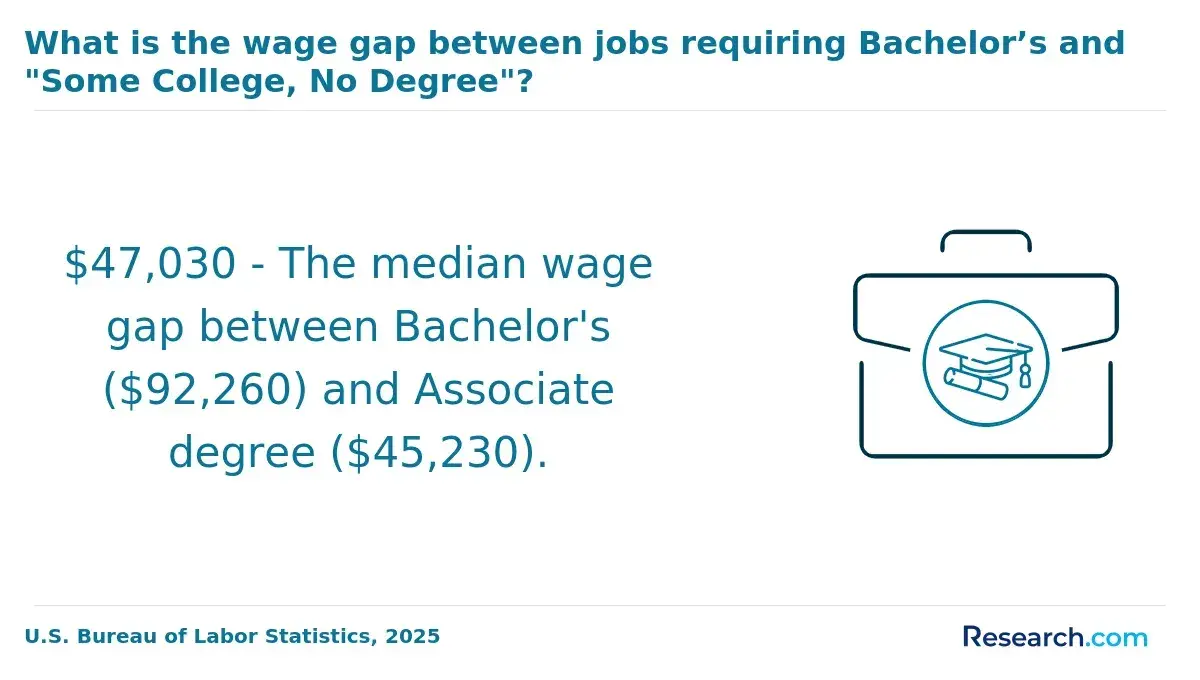
For learners who ultimately need a bachelor's degree, compare the stack with accelerated programs. An accelerated degree may be better when you can sustain an intensive schedule and need the broader credential sooner; an evening stack is usually better when work continuity and lower term-by-term commitment matter more.
The comparison below highlights the practical differences that affect working students.
| Factor | Evening stackable pathway | Traditional degree path |
| Exit points | Multiple certificates or awards along the way | Usually strongest value at degree completion |
| Course load | Often part-time and scheduled after work | May be full-time, part-time, daytime, or mixed |
| Curriculum focus | Job-specific skills first | Major, general education, and broader electives |
| Transfer risk | Depends on written articulation policies | Depends on institutional and receiving-school rules |
| Best use | Incremental career entry or advancement | Occupations requiring a degree or broader advancement options |
What admission requirements do evening stackable credential programs typically have?
Admission requirements depend on whether the program is a credit-bearing college certificate, a noncredit workforce course, an apprenticeship-related program, or a regulated healthcare pathway. Many entry-level college certificates use open admission, but that does not mean every course has no prerequisites.
Applicants should expect schools to review the following items when relevant to the field and award level.
- A high school diploma, GED, or equivalent for many college certificate and associate programs.
- Placement results, prior coursework, or prerequisite classes for college-level math, English, anatomy, or technical courses.
- Background checks, drug screening, immunizations, CPR training, and health documentation for many clinical programs.
- Age, driving-record, physical-capacity, or employer sponsorship requirements for some trade and public-safety pathways.
- Portfolio submissions or basic computer access for selected arts, design, and technology programs.
Do not assume a GPA or entrance exam is required - or absent - without checking the institution's current catalog. Ask whether admission to the college is separate from admission to a limited-enrollment program. Nursing and clinical cohorts, for example, may have additional selection criteria even at an open-admission college.
How can students compare online and campus-based evening stackable credential options?
Online evening learning can reduce commuting and make lectures easier to fit around work. Campus-based formats provide scheduled lab access, equipment, peer practice, and immediate supervision. Hybrid delivery is often the realistic middle ground for technical and healthcare credentials: theory is online, while labs, skills checks, and clinicals occur in person.
Use this comparison to identify the format that matches the tasks required in your intended occupation.
| Comparison point | Online or mostly online | Campus or hybrid evening |
| Best for | Business, coding, billing, theory-heavy legal studies, and selected design coursework | Trades, clinical skills, equipment-based learning, and supervised practice |
| Scheduling benefit | Greater flexibility for lectures and assignments | Predictable live meetings and instructor access |
| Key cost consideration | Technology, proctoring, and required home workspace | Commuting, parking, tools, uniforms, and campus fees |
| Career-readiness check | Confirm remote learning meets employer or exam expectations | Confirm lab and placement times work with employment |
Students needing a fully online degree after completing a first credential can compare affordable online degree programs. Do not choose online delivery solely for convenience when a program leads to a license or requires hands-on competencies; ask where and when every in-person requirement occurs.
Which accreditation and licensing standards should evening stackable credential programs meet?
Accreditation matters most when it affects financial aid, credit transfer, employer confidence, certification eligibility, or licensure. For credit-bearing college certificates and associate degrees, start by confirming that the institution is accredited by an agency recognized by the U.S. Department of Education or the Council for Higher Education Accreditation. Institutional accreditation does not automatically mean every program meets industry or licensing standards.
Programmatic approval is especially important in regulated fields. Nursing programs may need state board approval; medical assisting, surgical technology, and other allied-health programs may need programmatic accreditation for graduates to qualify for particular certification examinations. Paralegal, trade, and design programs have different expectations, often shaped more by employers, state boards, or professional associations than by a universal licensing standard.
Before enrollment, complete these checks rather than relying on marketing language.
- Identify the exact job title, certification, or license you want after training.
- Check the relevant state board, certification organization, or employer requirement for educational eligibility.
- Match that requirement to the school's current approval, accreditation, and curriculum status.
- Request written confirmation that your cohort and delivery format meet the stated eligibility standard.
- Verify whether the credential is credit-bearing and how it stacks into the next award.
A major red flag is a school that says a program is "accredited" but cannot name the accreditor, approval date, or outcome the approval supports.
What core courses and skills are covered in common stackable credential pathways?
Common stackable pathways start with foundational employability and technical skills, then add advanced coursework, supervised practice, or specialization. The exact sequence should mirror a real progression in responsibility, not simply add unrelated electives.
The table shows typical course themes and the skills each stage is intended to build. Actual course titles, contact hours, and prerequisites vary by school.
| Pathway | Early stack coursework | Advanced stack coursework | Skills developed |
| Electrical or HVAC | Safety, tools, blueprint reading, basic circuits | Controls, diagnostics, code concepts, advanced systems | Troubleshooting, measurement, safe equipment use |
| Medical assisting | Medical terminology, anatomy, office procedures | Clinical procedures, pharmacology basics, practicum | Patient support, documentation, infection control |
| Legal support | Legal terminology, writing, civil procedure basics | Research, litigation support, ethics, document management | Research, communication, confidentiality, case organization |
| Digital design | Design principles, typography, imaging software | UX, portfolio production, motion or web design | Visual communication, software fluency, portfolio presentation |
Ask whether the program includes durable skills employers increasingly value, such as digital documentation, data privacy, client communication, problem solving, and responsible use of AI-enabled tools. AI can speed drafting, design ideation, scheduling, and documentation, but it does not replace supervised clinical judgment, safety procedures, legal ethics, or a portfolio demonstrating original work.
How long do evening stackable credential programs take and what do they cost?
Completion time depends on credit load, prerequisites, clinical or lab hours, and whether courses are offered every term. A first certificate may take several months to about a year part-time; a stack culminating in an associate degree commonly takes longer because evening students often take fewer courses each term. "Fast" should mean that course availability supports your planned sequence, not merely that the first certificate has few credits.
For a tuition benchmark, College Board reported average published tuition and fees of $4,050 for public two-year colleges in 2024-25. This national figure is not the price of a specific evening credential: residency status, program fees, books, tools, exams, uniforms, background checks, and clinical costs can materially change the total.
Compare the full cost categories below before judging a program by advertised tuition alone.
| Cost category | Why it matters for evening students |
| Tuition and mandatory fees | May be charged per credit, term, clock hour, or course |
| Books, software, and supplies | Can include specialized technical manuals, licenses, or design software |
| Tools, uniforms, and protective equipment | Common in trades, healthcare, and lab-based programs |
| Testing and credential fees | May be separate from tuition and may recur for certification renewal |
| Transportation and time costs | Evening labs, clinicals, and campus parking can affect work and family schedules |
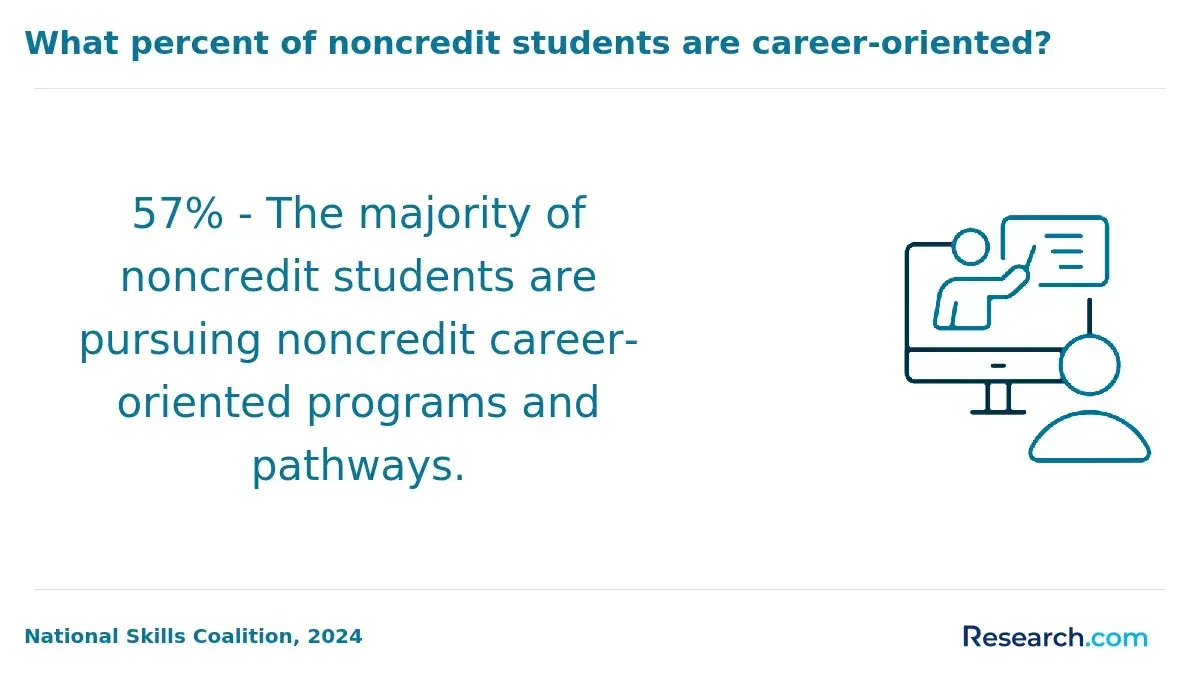
Credit-bearing programs at eligible institutions may offer federal aid to qualifying students, while noncredit training may not. Ask the financial-aid office whether the specific certificate - not just the college - qualifies. Employer tuition assistance, workforce grants, and payment plans can help, but compare repayment conditions and whether you must remain employed.
What careers, job roles, and industries do evening stackable credentials lead to?
Stackable credentials can support entry into occupations where employers value documented technical training, but the award alone may not meet every hiring, certification, or licensing requirement. The best path starts with a target role and works backward to the required education, supervised experience, examination, and background standards.
Examples of realistic pathways include the following.
- Electrical or HVAC certificates can support helper, installer, maintenance, or apprentice-track roles; independent licensure generally requires additional supervised experience and jurisdiction-specific steps.
- Medical assisting certificates can prepare learners for clinical and administrative support roles, subject to employer requirements and any certification exam eligibility rules.
- Paralegal studies certificates can support legal assistant or paralegal roles under attorney supervision; they do not authorize legal practice.
- Digital design certificates can support junior production, content, layout, or web-support work when paired with a strong portfolio.
- Health information or billing certificates can support records, revenue-cycle, coding-support, or patient-access roles, depending on training and employer needs.
If your goal is broader management, engineering, teaching, or professional practice, a short stack may be only the first stage. Explore good majors in college when a bachelor's degree would better align with your intended occupation and advancement plans.
What salary ranges and job outlook can graduates with stackable credentials expect?
Salary and outlook vary by occupation, location, experience, union status, work schedule, and employer - not simply by holding a certificate. BLS occupational figures are useful for comparing potential fields, but they do not show the earnings of every stackable-credential graduate or guarantee that a particular program leads to that role.
The following U.S. BLS May 2024 wage and 2024-34 projection data provide directional context for occupations often associated with these pathways.
| Occupation | Median annual wage, May 2024 | Projected growth, 2024-34 | Credential caution |
| Electricians | $62,350 | 9% | Typically requires apprenticeship training and licensing; a certificate alone is not usually sufficient. |
| Heating, air conditioning, and refrigeration mechanics and installers | $59,810 | 8% | Employer training, EPA refrigerant certification, and local requirements may apply. |
| Medical assistants | $44,200 | 15% | Employers may prefer certification; scope and duties vary by state and setting. |
| Paralegals and legal assistants | $61,010 | -1% | Employers may seek a degree, certificate, or relevant legal experience. |
| Graphic designers | $61,300 | 2% | Portfolio quality and software skills are important; a certificate is one possible preparation route. |
Use wage data to compare occupations, then review local job postings for evening-shift availability, required credentials, and experience expectations. Demand can be favorable while entry-level openings remain competitive, particularly in creative fields and jobs concentrated in a small number of employers.
Readers seeking a shorter, income-focused training route can also review short certificate programs that pay well online, while confirming that online delivery fits any hands-on or licensing requirement.
Other Things You Should Know About
Sometimes, especially for business, technology, legal-support, and design coursework. Trades, healthcare, and other hands-on programs may require labs, clinicals, testing, or internships during daytime or weekend hours. Get the full schedule for every term before enrolling.
No. Some are designed to transfer within the same institution, while others are noncredit or have expiration limits. Ask for the written program map, the number of credits applied, minimum grade requirements, and the catalog year governing the agreement.
No. A certificate is typically earned by completing a school's curriculum. A professional certification is usually awarded by an outside organization after an examination and sometimes education, experience, or renewal requirements.
They can be worthwhile when the first credential supports a realistic job step and its credits apply to your next goal. Compare total costs, required equipment and exams, schedule feasibility, licensing eligibility, local openings, and the value of a longer alternative before deciding.
References
- Stackable Credentials in Career Education at California Community Colleges https://www.ppic.org/publication/stackable-credentials-in-career-education-at-california-community-colleges/
- What Are Stackable Credentials, and How Can You Build Programs Around Them? https://www.jenzabar.com/blog/what-are-stackable-credentials-and-how-can-you-build-programs-around-them
- SEE MORE https://iticollege.edu/blog/stackable-credentials-how-certificate-programs-can-be-your-fast-track-to-a-degree/
- College Bridge Programs and Stackable Credentials Guide https://www.c4lacademy.com/from-diploma-to-college-credential
- California Teaching Credential Program | Vanguard University https://explore.vanguard.edu/degree-programs/credential/teaching/
- Building Stackable Credentials That Truly Deliver Value and Economic Mobility: 7 Steps for Success https://mcacs.talentfirst.net/building-stackable-credentials-that-truly-deliver-value/
- USHE initiative helps students earn meaningful credentials on their way to a degree - Utah System of Higher Education https://ushe.edu/stackable-credentials-help-students-earn-credentials-on-their-way-to-a-degree/
- Stackable Credential Programs | Martin University https://www.martin.edu/stackableprograms
- What Are Stackable Credentials and Why Do They Matter? https://www.pltw.org/blog/what-are-stackable-credentials
- Stackable Certificates & Credentials - Complete College America https://completecollege.org/our-approach/structure/stackable-certificates-credentials/