2027 Best Certifications With Low Textbook Costs

Co-Founder and Chief Data Scientist
Choosing a short credential can become expensive when required books, access codes, tools, uniforms, and exam fees are left out of the advertised tuition. This guide is for U.S. learners seeking career-focused certificates or associate degrees with fewer textbook expenses. The U.S. Bureau of Labor Statistics projects about 19 million occupational openings per year from 2023-2033, largely from replacement needs. Compare low-material-cost pathways, realistic job options, delivery formats, and the questions that reveal a program's true price before you enroll.
Key Things You Should Know
- Low-textbook-cost options are usually digital-first academic certificates, online professional certificates, and some associate degrees; hands-on trades and healthcare programs can save on books but often require tools, kits, uniforms, clinical fees, or exams.
- BLS projects about 19 million occupational openings annually from 2023-2033, but a short certificate is not automatically sufficient for every opening; licensing, employer training, and experience requirements can still apply.
- Compare the itemized total rather than tuition alone: required course materials, platform charges, equipment, background checks, testing, transportation, and whether digital resources remain available after the course ends.
Top 10 Best Certifications With Low Textbook Costs
Popular Trade School Programs
Electrical, HVAC, welding, construction technology, and industrial maintenance certificates can be practical choices for learners who prefer applied work. Digital manuals may reduce book costs, but protective gear, tools, consumable supplies, and lab charges can be substantial. A community-college certificate may be credit-bearing and stack into an associate degree; a private career-school program may not transfer. Choose this route when the curriculum includes required hands-on hours and local employers recognize it. Consider a registered apprenticeship instead when paid work-based learning is available.
Healthcare Programs
Medical assisting, pharmacy technician, billing and coding, dental assisting, and nursing assistant programs often use digital courseware, but clinical programs may add immunizations, drug screening, uniforms, liability coverage, and certification-exam costs. A school certificate documents program completion; national certification is a separate credential where available. Verify whether the program meets state rules and whether clinical placement is included before paying. Medical billing and coding generally has lower material costs than patient-care programs, but it does not lead to clinical licensure.
Criminal Justice / Law Programs
Certificates in legal studies, paralegal support, court reporting fundamentals, and criminal justice commonly rely on statutes, cases, library databases, and instructor-selected digital readings rather than costly lab equipment. A credit-bearing paralegal certificate can be useful for people who already hold a degree, while an associate degree provides broader general education. Neither credential makes someone an attorney, police officer, or licensed investigator. Check local hiring standards, background requirements, and whether employers prefer an American Bar Association-approved paralegal education pathway.
Arts & Design Programs
Graphic design, digital media, web design, photography, and drafting certificates can keep textbook spending low because tutorials, digital portfolios, and software-based assignments replace many print texts. The trade-off is software, a capable computer, storage, printing, or creative equipment. A portfolio usually matters more to entry-level hiring than the certificate name alone. Choose a credit-bearing program if you may pursue an associate or bachelor's degree later; choose a short professional certificate when you need focused software or production skills quickly.
What types of certifications typically have lower textbook and materials costs?
Programs with primarily digital, reading-based, or software-based instruction tend to have the lowest traditional textbook burden. "Low textbook cost" does not necessarily mean "low total cost," especially when a program includes required technology, practical supplies, or external testing.
This comparison separates book expenses from the other charges that can determine whether a credential is genuinely affordable.
| Credential pathway | Typical textbook pattern | Common non-textbook expenses | Best fit |
| Online professional certificate | Often included digital lessons or readings | Subscription, optional exam, computer, internet | Career changers building a targeted skill |
| Community-college academic certificate | May use open educational resources or library materials | Tuition, course fees, technology, proctoring | Learners wanting academic credit or stackability |
| Business, IT, legal-support, or design certificate | Frequently lower print-book need | Software, certification exam, portfolio tools | Office, digital, and analytical work |
| Clinical or skilled-trade certificate | Books may be modest, but not always | Kits, PPE, tools, uniforms, labs, clinical clearance | Hands-on occupations with required practice |
Open educational resources (OER) are teaching and learning materials that can be freely accessed and, depending on the license, reused or adapted. Ask whether every required section uses OER; one access-code course can erase savings from several no-cost courses.
How do online certification programs keep textbook expenses lower than campus options?
Online programs can reduce textbook costs by delivering readings through learning platforms, electronic library collections, OER, simulations, and instructor-created modules. They may also avoid commuting and campus parking costs. However, online delivery does not remove the cost of a computer, reliable internet, certification vouchers, remote proctoring, software licenses, or mailed lab kits.
The best online value is a program that clearly distinguishes included digital content from separately billed access codes. Learners who eventually need a research-intensive graduate credential should compare scheduling and workload carefully; online PhD programs for working professionals are a different commitment from a short certificate and usually have different admission and research expectations.
Before enrolling, request a term-by-term materials list, ask how long e-books remain accessible, and confirm whether practical requirements can be completed near your home. Online learning is a poor fit when a state requires in-person clinical, lab, or supervised field hours that the provider cannot arrange.
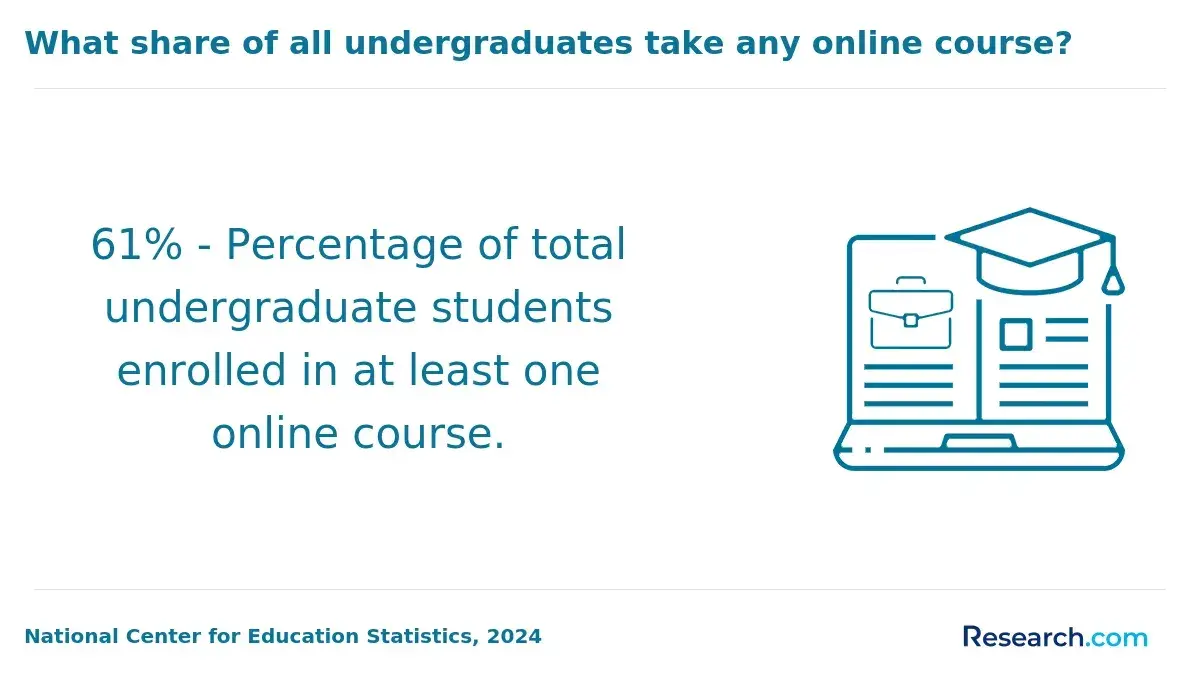
What accredited schools offer budget-friendly certification programs with minimal textbook fees?
Accredited public community colleges are often the strongest starting point for budget-conscious, credit-bearing certificates because resident tuition can be lower than private career-school pricing and many colleges use OER or zero-textbook-cost course sections. Examples to investigate include Tidewater Community College, accredited by SACSCOC, and Portland Community College, accredited by NWCCU; course-level OER availability and program fees can change by term.
Use school accreditation as one quality check, not as proof that every certificate has minimal material fees. For a broader comparison of distance-learning options, review cheapest online college choices, then verify whether the specific certificate is offered online and whether materials are included.
Use the following screening steps before applying.
- Confirm institutional accreditation through the U.S. Department of Education or CHEA database and identify the program's credential level.
- Find the exact program map and mark courses listed as OER, zero-textbook-cost, inclusive-access, or requiring publisher access codes.
- Request an itemized estimate covering tuition, mandatory fees, books, software, equipment, examinations, and travel or clinical costs.
- Ask whether credits transfer or stack into an associate degree and whether the credential meets any applicable state or industry requirement.
What admission requirements apply to low-cost certification programs in the U.S.?
Admission rules depend on the provider and credential type. A college credit certificate may require a high school diploma or equivalent, placement steps, residency documentation, and prerequisite courses. An online professional certificate may only require account registration and payment. Selective healthcare programs can add prerequisite grades, immunization records, CPR training, background checks, drug screening, and fitness requirements because of clinical placement rules.
Do not assume that an open-admission college means automatic entry into a limited-enrollment program. Likewise, do not assume a noncredit provider's enrollment process creates eligibility for federal aid, college credit, or transfer. If aid matters, ask whether the credential is eligible at that institution and whether its length meets applicable aid rules.
Applicants should match their documents to the program rather than overprepare for requirements that do not apply.
- For a credit-bearing certificate, ask about transcripts, placement, prerequisites, transfer credit, residency, and the deadline for financial-aid processing.
- For a career-training certificate, ask whether a diploma, work experience, software access, or placement test is actually required.
- For regulated fields, get written confirmation of state eligibility, required supervised hours, and any background-related limits before enrolling.
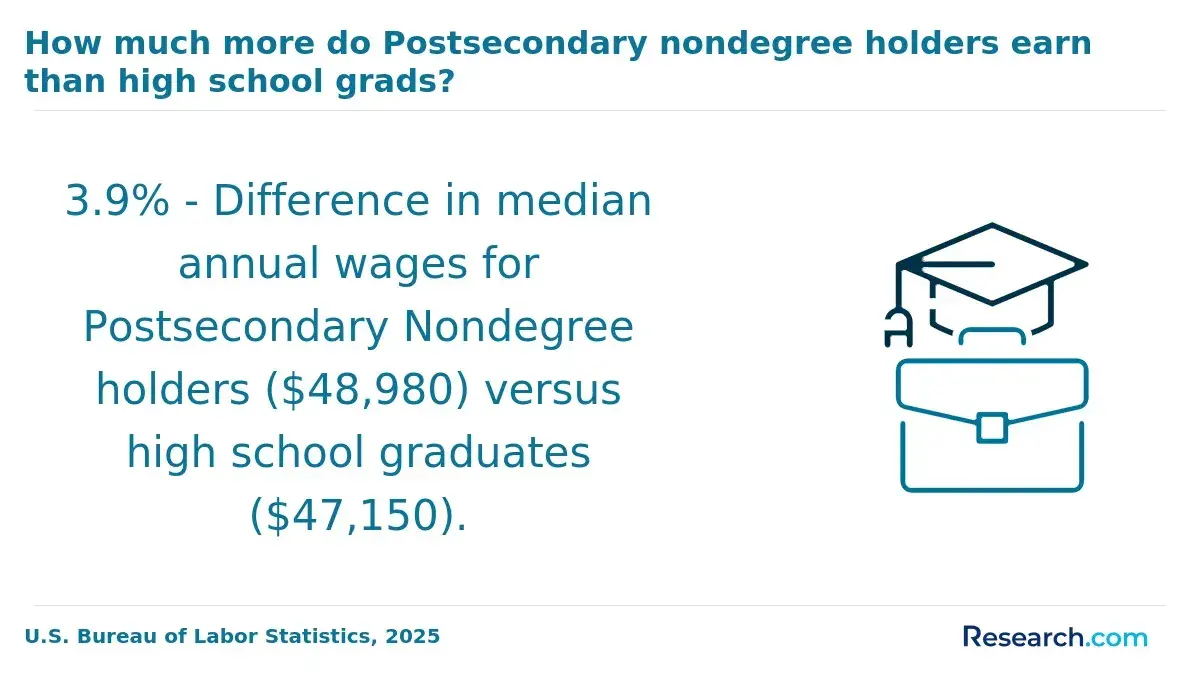
How long do these certifications take to complete and what total costs should you expect?
Completion time ranges from a few weeks for a self-paced professional certificate to roughly one academic year for many college certificates; associate degrees generally take about two years of full-time study. Part-time enrollment, prerequisite courses, clinical scheduling, and failed or repeated courses can extend the timeline. A faster program is not automatically cheaper if it charges a premium or requires intensive outside work that prevents employment.
There is no reliable single total cost for low-textbook certifications because residency, provider, course load, and required equipment vary. Build a personal estimate using this calculation: tuition and mandatory institutional fees, plus materials and technology, plus required examinations or clearances, plus transportation or lost work time. Compare that figure with the cost of repeating a course, withdrawing, or paying for a credential that does not meet local licensing standards.
A short noncredit certificate may have transparent bundled pricing but usually does not transfer as college credit. A credit-bearing community-college certificate can cost more upfront in fees, yet may be the better value when it stacks toward an associate degree or satisfies an employer's education preference.
What coursework and learning resources replace traditional textbooks in these programs?
Low-book-cost programs typically replace traditional texts with digital readings, OER, library databases, recorded demonstrations, simulations, discussion boards, project briefs, and instructor-developed assignments. In technical and creative programs, the core learning evidence may be a lab competency check, work sample, portfolio, or software project rather than a textbook-based exam.
These alternatives can be effective only when access is dependable and the resources match the required outcomes. Confirm whether the school provides assistive technology support, downloadable materials for limited internet access, and current versions of any required software. For licensing or certification preparation, ask whether practice tests and exam blueprints are included; course completion alone may not prepare you for a separate credentialing examination.
A red flag is a program that advertises "no textbooks" but requires multiple nonrefundable publisher codes, proprietary devices, or recurring subscriptions after enrollment. Get the required-materials list in writing and distinguish optional study aids from mandatory purchases.
What careers and job roles can you access with low-textbook-cost certifications?
Low-textbook-cost credentials can support entry-level work in offices, technology support, design, skilled trades, and selected healthcare support roles. The appropriate job target depends on the credential's level, hands-on training, local rules, and an employer's hiring practices - not simply its short duration.
This table shows common directions rather than guaranteed outcomes. Employers may require experience, a portfolio, a separate industry certification, a background check, or state authorization.
| Program focus | Potential entry-level roles | Important limitation |
| IT support or software fundamentals | Help desk technician, technical support specialist | Employers may prefer vendor certifications or demonstrated troubleshooting experience |
| Medical billing, coding, or assisting | Billing specialist, coding support, medical assistant | Patient-care roles may require clinical training and employer preferences vary |
| Legal studies or paralegal support | Legal assistant, file clerk, paralegal support | Requirements vary by employer; this is not attorney licensure |
| Digital design or web production | Production artist, junior designer, web-content assistant | A current portfolio is often essential |
| Electrical, HVAC, or welding | Helper, apprentice, technician trainee | Licensing and supervised work-hour requirements vary by state and locality |
People who prefer independent, detail-focused work may also explore high paying jobs for introverts, while checking whether the role requires a degree, certification, portfolio, or apprenticeship beyond a short program.
What salary ranges and earning potential are realistic with these certification pathways?
Earnings vary far more by occupation, location, experience, industry, schedule, and licensure than by textbook spending. The U.S. Bureau of Labor Statistics' May 2024 national median pay figures below describe workers in each occupation, not the expected pay of certificate completers and not a promise of employment.
| Occupation | May 2024 national median annual pay | Credential context |
| Electricians | $62,350 | Typically requires apprenticeship training and may require licensure |
| Heating, air conditioning, and refrigeration mechanics and installers | $59,810 | Certificates can support entry, but hands-on experience is important |
| Paralegals and legal assistants | $61,010 | Employers may prefer a degree or relevant legal experience |
| Graphic designers | $61,300 | Portfolio quality and degree expectations vary by employer |
| Medical assistants | $44,200 | Clinical training and certification preferences vary by employer and state |
Use occupational pay data as a benchmark for a mature workforce, then look at local entry-level postings before calculating return on investment. If your target occupation consistently requires broader education, compare the certificate's stackability with accelerated bachelor degree programs rather than assuming repeated short credentials will be less expensive.
How can students verify licensing, certification standards, and program quality before enrolling?
Verify quality before paying a deposit. Institutional accreditation is especially relevant for credit-bearing college certificates and financial-aid eligibility, while programmatic approval, state authorization, or industry recognition can matter more in regulated or occupation-specific training. A legitimate provider should state exactly what credential you earn and what it does not qualify you to do.
Ask admissions staff for written answers to the questions below, then compare them with the relevant licensing board, certifying organization, or employer requirements.
- Is this a school certificate, an academic credit certificate, or preparation for a separate professional certification exam?
- Which accreditor, licensing board, or industry body recognizes the institution or program, and is that recognition current?
- Does the curriculum meet my state's educational and supervised-practice requirements, if the occupation is regulated?
- What are the full required charges, including digital codes, kits, exams, clinical clearances, and retake fees?
- Can I see completion, job-placement, or licensure-exam information with definitions for how the school calculated it?
Common mistakes include choosing solely by advertised tuition, assuming online delivery meets local clinical rules, and confusing a completion certificate with a professional certification. Avoid these errors by obtaining the catalog description, materials list, refund policy, and applicable state requirements before enrollment.
Other Things You Should Know About
No. Online programs may replace print books with included digital resources, but some charge for access codes, proctoring, software, equipment, or certification exams. Compare the complete required-cost list.
Possibly. Eligibility depends on the school, whether the program is credit-bearing and eligible at that institution, enrollment status, and the student's federal and state aid eligibility. Noncredit professional certificates often use payment plans or employer reimbursement instead.
No. A certificate usually documents completion of an educational program. A professional certification is awarded by a certifying organization after meeting its standards, which may include an exam, experience, continuing education, or renewal.
Request a written, term-by-term estimate that separately lists tuition, mandatory fees, books and access codes, software, tools, uniforms, exams, background checks, clinical costs, and transportation. Compare that estimate with the school's refund and withdrawal policies.
References
- Exam Preparation | NBCC https://www.nbcc.org/examinations/preparation
- 7 in-demand certifications in 2025 | edX https://www.edx.org/resources/in-demand-professional-certifications
- What Professional Certificates Boost Your Career Fast? https://www.csinow.edu/blog/what-professional-certificates-boost-your-career-fast/
- 5 Time Management Tips for Studying for a Certification https://www.surgent.com/blog/5-essential-time-management-strategies-when-studying-for-a-certification/
- Best CPA Exam Prep Courses | Accounting.com https://www.accounting.com/resources/cpa-courses/
- HR Certification Exam Preparation https://www.hrci.org/certifications/certification-preparation
- Professional Business Certifications to Boost Your Career in 2025 https://www.business.com/articles/best-business-certifications/
- 20 Necessary IT Certifications + Salaries I Skillsoft - Skillsoft https://www.skillsoft.com/blog/top-paying-it-certifications
- Preparing for Certification Exams: Study Tips and Resources | Fast Forward https://fastforwardva.org/preparing-for-certification-exams-study-tips-and-resources/
- 7 Overlooked Strategies That Cut College Costs https://www.cuofco.org/resources/7-overlooked-strategies-cut-college-costs