2027 Best Certifications With Part-Time Study Options

Co-Founder and Chief Data Scientist
Choosing a credential while working means balancing schedule flexibility against employer recognition and hands-on requirements. Part-time options range from college certificates to industry certifications, but they do not lead to the same outcomes.
The U.S. Bureau of Labor Statistics (BLS) projects healthcare occupations to grow 8% from 2024 to 2034, faster than the average for all occupations. This guide compares practical part-time paths, explains costs and timelines, and helps you identify the credential that fits your target role rather than simply the shortest program.
Key Things You Should Know
- A certificate is an educational award from a college or training provider, while a certification is a professional credential usually earned through an industry organization's exam, experience, or renewal requirements.
- For working adults, the best option is usually an asynchronous or evening program with a published weekly workload, predictable lab or clinical dates, and a credential employers in the intended field recognize.
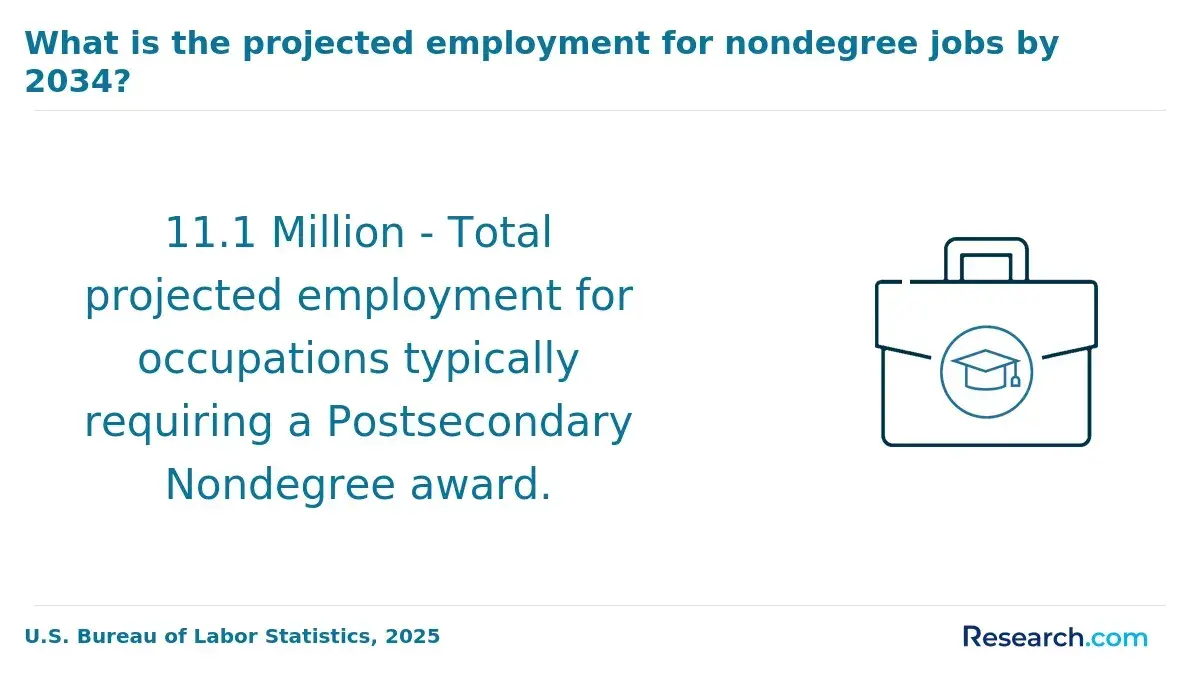
- BLS projects diagnostic medical sonographer jobs to grow 13% from 2024 to 2034, while paralegal employment is projected to show little or no change; demand should influence the credential you choose, not just program length.
Top 10 Best Certifications With Part-Time Study Options
Popular Trade School Programs
Part-time trade options include HVAC certificates, electrical technology certificates, welding certificates, automotive service programs, and construction technology associate degrees. Certificates generally focus on job-ready technical skills and may prepare learners for an employer or vendor exam; an associate degree includes broader general-education coursework. Evening and hybrid formats work well for theory, but welding, electrical labs, and equipment training require scheduled campus attendance. Apprenticeships can be a better fit for learners who want paid supervised experience, especially in licensed trades where classroom completion alone does not authorize independent work.
Healthcare Programs
Flexible healthcare pathways include medical billing and coding certificates, pharmacy technician certificates, medical assisting certificates, practical nursing diplomas, and diagnostic imaging associate degrees. Online coursework may suit coding and administration, but clinical programs require approved in-person labs and placements. A school certificate is not automatically professional certification or state licensure. For example, nursing and imaging roles have state-specific rules, while coding employers may prefer an industry certification. Confirm clinical-hour scheduling before enrolling; a nominally part-time program can still require daytime placement availability.
Criminal Justice / Law Programs
Part-time options include paralegal certificates, legal studies certificates, criminal justice certificates, cybersecurity-forensics certificates, and criminal justice associate degrees. A paralegal certificate can build legal research, writing, and litigation-support skills, but it does not make someone an attorney or permit independent legal practice. Programs are often available online or in evening formats because much coursework is reading and document based. Learners seeking law enforcement careers should also verify agency hiring standards, background checks, physical requirements, and academy expectations, which vary substantially by jurisdiction.
Arts & Design Programs
Part-time creative programs commonly include graphic design certificates, UX/UI certificates, digital marketing certificates, web design certificates, photography certificates, and visual arts associate degrees. Portfolio quality often matters as much as the credential, so choose programs with instructor feedback, project briefs, software access, and portfolio review. Online study can be effective for design software and theory, while studio-based disciplines may benefit from campus equipment. A short certificate is useful for targeted skill building; an associate degree may make more sense for students needing broader foundations and transferable academic credit.
What are the most in-demand certifications that offer flexible part-time study?
The most in-demand flexible credentials are typically tied to a defined technical skill, a recognized exam, or a regulated entry pathway. Demand alone is not enough: choose a credential only if it matches the job postings and hiring requirements in the location where you plan to work.
| Credential area | Typical part-time format | Best fit | Important limitation |
| IT support and cybersecurity certifications | Self-paced or instructor-led online study | Career changers building technical foundations | Employers may still expect hands-on projects or prior experience |
| Cloud and data credentials | Online courses plus vendor examination | IT professionals adding a platform-specific skill | Certification exams and renewal policies can change |
| Medical coding certificates | Online or hybrid coursework | Detail-oriented learners pursuing healthcare administration | Some employers prefer certification and prior billing experience |
| Skilled-trades certificates | Evening lecture with in-person labs | Learners who want practical technical work | Licensure, apprenticeship, or supervised hours may still be required |
| Project management certifications | Online exam preparation or continuing education | Professionals with qualifying project experience | Advanced certifications may require documented experience |
Technology hiring increasingly emphasizes demonstrable skills, but credentials are strongest when paired with projects, a portfolio, or supervised practice. In regulated healthcare and trade roles, prioritize programs that explicitly identify the required exam, clinical experience, or licensing pathway.
How do online part-time certification programs compare to campus-based options?
Online part-time certification programs are usually best for learners who need asynchronous lectures, reduced commuting, and the ability to progress around rotating work schedules. Campus-based programs are often better when equipment access, supervised practice, networking, or licensure-related lab and clinical hours are central to the outcome.
| Decision factor | Online part-time option | Campus or hybrid part-time option |
| Schedule control | Often strongest when courses are asynchronous | Set evening, weekend, or daytime meeting times |
| Hands-on learning | May use simulations, kits, or local placements | Direct access to labs, equipment, and instructors |
| Professional networking | Requires deliberate virtual participation | Usually easier through classmates, faculty, and local employers |
| Licensure preparation | Must verify state and placement eligibility | May simplify access to approved facilities and placements |
| Best use case | IT, business, coding, design, and theory-heavy study | Trades, clinical healthcare, and studio-intensive learning |
Do not assume "online" means entirely self-paced. Ask whether exams are proctored, whether labs occur on fixed dates, and whether clinical or internship placements are arranged by the provider. Learners comparing broader flexible study options can also review degree programs for working adults when a certificate may be too narrow for their long-term goal.
What accreditation and industry recognition should certification programs have?
Recognition should match the type of credential. For a college-issued credit certificate or associate degree, verify that the institution holds appropriate institutional accreditation recognized by the U.S. Department of Education or the Council for Higher Education Accreditation. For career training, confirm any programmatic approval required for the occupation or state.
For an industry certification, identify the certifying body, exam eligibility rules, renewal cycle, continuing-education requirements, and whether local employers actually request it. A training provider can prepare students for an exam without being the organization that awards the certification. That distinction matters when comparing marketing claims.
Red flags include vague claims of "national accreditation," no disclosure of the credential issuer, no exam pass-rate methodology, or promises that completion alone qualifies graduates for licensure. Before paying, check the relevant state licensing board for regulated occupations and request written confirmation of what the program does - and does not - prepare students to do.
What are typical admission requirements for part-time professional certificate programs?
Admission rules depend on the credential. Noncredit professional certificates and vendor exam-preparation courses may require only registration and payment. Credit-bearing college certificates may require an application, transcripts, placement steps, or prerequisite courses. Advanced industry certifications can require documented work experience before a candidate may sit for the exam.
Applicants should collect requirements before comparing tuition because an inexpensive program can become impractical if missing prerequisites add semesters of coursework. Students who need more flexible academic entry points may want to compare universities that accept 2.0 GPA if they are considering a credit-bearing certificate or associate-degree route.
- Confirm whether the program is credit-bearing, noncredit, or solely exam preparation.
- Ask whether prior coursework, industry training, military experience, or work experience can satisfy prerequisites.
- For clinical, trade, and public-safety programs, verify background checks, immunizations, physical requirements, drug screening, and placement rules.
- Request the exact eligibility requirements for any separate certification or licensure exam.
How long do part-time certification programs take and what do they cost?
Part-time completion can range from a few months for a focused noncredit or vendor-preparation course to roughly two years or longer for a part-time associate degree. The calendar length is less important than the required weekly workload, fixed lab dates, clinical placements, and whether a missed course is offered again soon.
| Program type | Typical duration pattern | Main cost factors | Transfer value |
| Industry certification preparation | Short, self-paced, or cohort-based | Training, exam voucher, retake, renewal, and study materials | Usually not academic credit |
| Noncredit career certificate | Short program with scheduled modules | Tuition, software, tools, supplies, and optional exam fees | Usually limited; verify before enrolling |
| Credit-bearing college certificate | Several terms when taken part-time | Per-credit tuition, fees, books, labs, and transportation | May apply toward a related degree if the school permits |
| Associate degree | Multiple terms with general education | Tuition, required courses, labs, and living or commuting costs | Potentially transferable, subject to receiving-school policies |
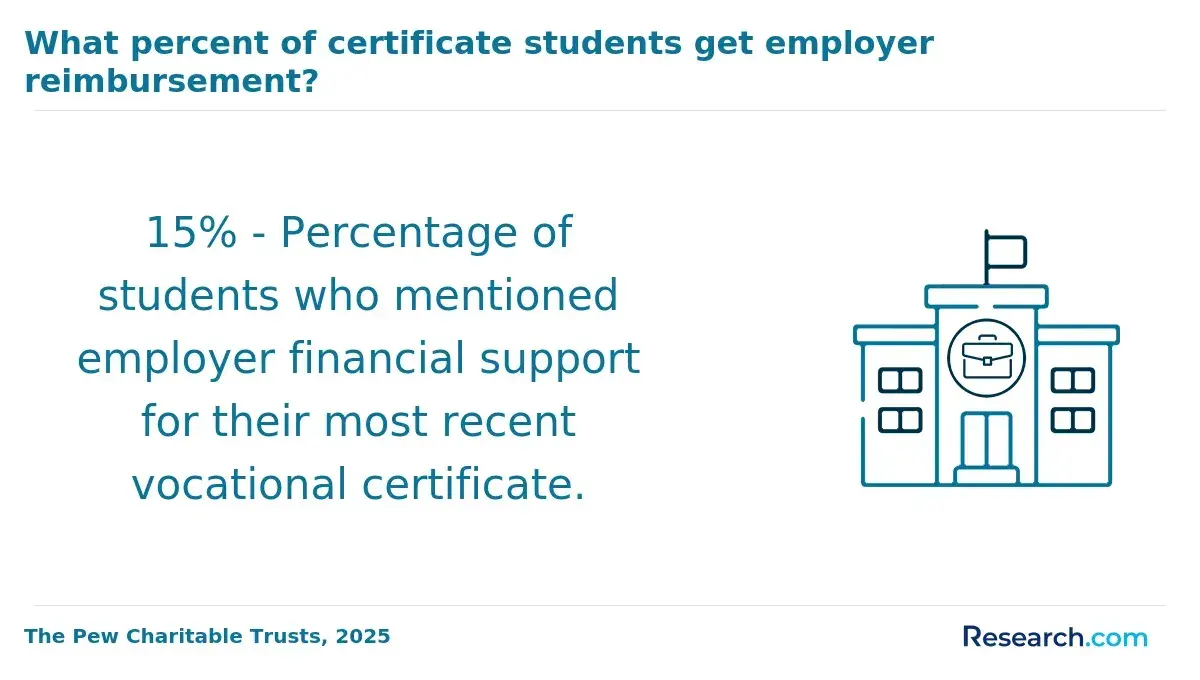
Compare total cost rather than advertised tuition. Include exam fees, tools, uniforms, software subscriptions, background checks, travel, and lost work time for required placements. Credit-bearing programs may have institutional aid options, while noncredit and third-party credentials often rely on payment plans, employer tuition assistance, workforce grants, or personal funding. For a broader affordability comparison, explore most affordable online colleges.
What coursework and skills do top part-time certification programs usually cover?
Top part-time programs concentrate on competencies employers can observe: technical execution, documentation, communication, troubleshooting, ethical practice, and the use of field-specific tools. The best curriculum aligns its assignments with the work learners expect to perform, rather than relying only on recorded lectures or multiple-choice quizzes.
| Field | Common coursework | Skills to demonstrate |
| Information technology | Networking, operating systems, cloud basics, security, and scripting | Ticket resolution, system configuration, troubleshooting, and documentation |
| Healthcare administration | Medical terminology, coding systems, privacy, billing, and reimbursement | Accurate coding, records handling, compliance awareness, and claim workflows |
| Skilled trades | Safety, technical math, electrical concepts, equipment, and code basics | Tool use, diagnostics, measurements, safe procedures, and job documentation |
| Legal support | Legal research, writing, civil procedure, ethics, and litigation support | Case-file organization, citation, drafting, research, and confidentiality |
| Design | Design principles, typography, user research, software, and portfolio development | Concept development, critique response, prototypes, and presentation |
Ask to see a current syllabus, software list, lab schedule, and examples of capstone work. If the program prepares for a certification exam, confirm that exam objectives are mapped to coursework and that instructors explain changes to the exam blueprint.
What career paths and job roles can these certifications lead to?
Credentials can help learners enter support roles, validate a specialization, or qualify for the next educational step. They are not interchangeable with a degree, required license, apprenticeship, or years of experience. Match the target job title to the actual credential requirement in local job postings before committing.
| Credential pathway | Potential entry or transition roles | Common next step |
| IT support or cloud certification | Help desk technician, desktop support specialist, junior cloud support role | Build a project portfolio and pursue a more specialized certification |
| Medical coding certificate | Medical records clerk, billing specialist, coding trainee | Gain experience and pursue a recognized coding certification where beneficial |
| HVAC or electrical certificate | Installer helper, maintenance technician, apprentice | Complete supervised experience and meet state or local licensing rules |
| Paralegal certificate | Legal assistant, paralegal assistant, litigation support staff | Develop practice-area experience; attorney roles require law school and licensure |
| UX or graphic design certificate | Junior designer, production artist, digital-content assistant | Strengthen a portfolio and seek specialized project experience |
A broader degree may be the better investment for occupations that regularly require one, for learners seeking management progression, or for those who need transferable general-education credit. Compare the academic routes associated with most profitable college majors before deciding that a short credential is the only option.
What salary ranges and earning potential are common for certified professionals?
Salary data describes occupations, not a guaranteed return from a certificate or certification. Pay varies by location, experience, employer, shift, union status, licensure, and responsibilities. A credential can strengthen eligibility, but it may not be sufficient for the higher-paying roles within a field.
| Occupation | 2024 U.S. median annual wage | 2024-2034 projected employment change | Credential context |
| Heating, air conditioning, and refrigeration mechanics and installers | $59,810 | 8% | Training supports entry, but licensing requirements vary by location |
| Paralegals and legal assistants | $61,010 | 0% | A certificate may help, but employers set hiring preferences |
| Diagnostic medical sonographers | $89,340 | 13% | Typically requires accredited education and may involve certification expectations |
| Web developers and digital designers | $95,380 | 7% | Portfolio and demonstrated skills can be important alongside education |
These BLS figures are national occupational medians for 2024, not starting pay or certificate-graduate outcomes. Use them as a benchmark, then compare local postings, entry-level wages, and the full cost of training. Higher median pay should not override licensing rules, fit with the work, or the time needed to gain experience.
How can students evaluate and choose a reputable part-time certification program?
A reputable part-time program makes its credential, schedule, total costs, instructor qualifications, and career limitations easy to verify. Start with the role you want, then work backward to the minimum education, credential, experience, and licensure requirements. Avoid choosing a program because it is fast, heavily advertised, or promises a vague "career credential."
Use the following process to compare options consistently before applying.
- Collect several current job postings for your target role and note the education, certification, software, and experience employers request.
- Determine whether you need a school certificate, an industry certification, an associate degree, an apprenticeship, a license, or a combination.
- Confirm the provider's institutional accreditation or field-specific approval when the occupation requires it.
- Request the complete cost sheet, including exam fees, supplies, labs, clinical screening, software, and retake expenses.
- Map class meetings, labs, clinical hours, and study time against your work and caregiving schedule.
- Ask whether credits transfer or stack into a degree, and obtain the policy in writing if that matters to you.
- Talk with recent students or local employers about whether the specific credential is recognized for the role.
Common mistakes include confusing exam preparation with the certification itself, assuming an online program meets every state's licensure rules, and comparing tuition without calculating required extras. A good provider will answer direct questions about these limits without guaranteeing employment, salary, certification passage, or licensing eligibility.
Other Things You Should Know About
Often, yes. Many IT, project management, business, and design certifications allow self-paced study followed by a scheduled exam. Programs involving clinical practice, shop work, or supervised field hours may be part-time overall but still require fixed in-person sessions.
Neither is universally better. Choose a certificate when you need structured education and practical coursework. Choose an industry certification when employers recognize a specific exam-based credential and you meet its eligibility requirements. Some career paths benefit from both.
It depends on the school and program. Eligible credit-bearing programs at participating institutions may qualify for certain aid, while noncredit and third-party training often does not. Ask the provider's financial-aid office whether the exact program is eligible before enrolling.
Expect coursework, assignments, exam preparation, and any required labs or placements in addition to class time. Ask for the provider's estimated weekly workload and plan extra time for technical problems, group work, and certification exam review.
References
- CourseCareers https://coursecareers.com/blog-posts/best-certifications-start-a-career
- How Long to Study for CompTIA A+: Real Study Hours from... https://crucialexams.com/posts/blog/how-long-to-study-for-comptia-a-real-study-hours-from-certified-pros
- Part-Time Students Must Be a Full-Time Priority - Complete College America https://completecollege.org/resource/cca-releases-new-brief-part-time-students-must-be-a-full-time-priority/
- Recognizing the Reality of Working College Students | AAUP https://www.aaup.org/academe/issues/106-2/recognizing-reality-working-college-students
- Online Certificate Programs | Certifications Programs https://www.uscareerinstitute.edu/online-certificate-programs
- Certification vs. Degree: Which is Right for You? - TechBuffalo https://www.techbuffalo.org/certification-vs-degree-which-is-right-for-you/
- Please wait... https://flighttrainingcentral.com/2024/12/how-many-hours-is-average/
- 2025's Best Online Graduate Certificate Programs in the U.S. https://www.onlinemastersdegrees.org/graduate-certificate-programs/
- Certification Programs vs. Degrees in Today's Market https://www.csinow.edu/blog/certification-programs-vs-degrees-in-todays-market/
- Online Business Courses & Certifications - Self-Paced | MSI https://courses.msicertified.com/