2027 Best Online Stackable Credentials With Competency-Based Programs

Co-Founder and Chief Data Scientist
Choosing a short online program is difficult when one credential may lead to another and a low-cost option may not transfer. Online stackable credentials combine certificates, college credits, or industry-aligned learning into a pathway, while competency-based education lets students advance after proving mastery. This guide helps career changers, working adults, and degree seekers compare program types, verify quality, estimate costs, and connect training to realistic job goals. For context, the Bureau of Labor Statistics projects healthcare support occupations to grow 15% from 2024 to 2034, faster than the average for all occupations.
Key Things You Should Know
- Choose a credit-bearing, stackable certificate when you may later want an associate or bachelor's degree; a noncredit certificate can build skills but may not transfer.
- Competency-based programs can shorten completion for experienced learners, but self-paced does not mean effortless: students still must meet assessed learning outcomes and course deadlines.
- Compare the full pathway, not the first credential alone: public two-year colleges charged average published in-district tuition and fees of $4,050 in 2024-25, but books, exams, labs, and licensure costs can raise the total.
Top 10 Best Online Stackable Credentials With Competency-Based Programs
Popular Trade School Programs
Online stackable trade pathways commonly begin with certificates in construction management, HVAC theory, electrical fundamentals, welding technology, industrial maintenance, or logistics. They can progress to an applied associate degree, but hands-on trades usually require campus labs, employer training, apprenticeships, or supervised fieldwork. Choose a hybrid pathway if the target occupation requires practical skill assessment. A fully online certificate is most useful for estimating, safety, blueprint reading, dispatch, project coordination, or pre-apprenticeship knowledge - not as a substitute for state-required licensing or documented work experience.
Healthcare Programs
Healthcare stacks may include medical billing and coding, health information technology, medical assisting, pharmacy technician preparation, or nursing prerequisites leading toward an associate degree. Online coursework can cover terminology, compliance, and records systems, while clinical programs generally require in-person labs and supervised placements. Confirm whether a program is credit-bearing and whether it meets the prerequisites for a separate certification exam or state license. For example, a medical assisting certificate alone does not automatically make a graduate eligible for every employer's preferred certification or for clinical duties regulated by state law.
Criminal Justice / Law Programs
Common online stacks include criminal justice certificates that lead to an associate degree, legal studies certificates, paralegal studies pathways, and cybersecurity or public-safety administration coursework. These programs can suit learners seeking support, records, compliance, victim advocacy, or administrative roles. They do not by themselves qualify someone to practice law, become a sworn officer, or meet every paralegal employer requirement. Learners targeting paralegal work should check whether employers prefer American Bar Association-approved education, a degree, prior legal experience, or a program with substantive legal specialty courses.
Arts & Design Programs
Stackable online options include graphic design, digital media, UX fundamentals, animation, web design, photography, and marketing content certificates that may apply toward an associate degree. These pathways work best when each credential produces portfolio-ready work, such as brand systems, prototypes, layouts, or motion pieces. Employers often evaluate creative applicants by portfolio quality and software fluency alongside education. Before enrolling, verify access to required software, critique opportunities, intellectual-property policies, and whether advanced credits build toward a recognized degree rather than repeating introductory material.
What are stackable credentials and competency-based programs in online education?
Stackable credentials are deliberately connected learning awards. A learner might earn a short certificate, apply its credits to a longer certificate or associate degree, and later transfer eligible credit into a bachelor's program. The "stack" has value only when the receiving institution confirms in writing how credits apply.
Competency-based education, often called CBE, measures progress through demonstrated mastery rather than seat time alone. Students may complete assessments after studying independently, with faculty support and defined academic terms. Some CBE programs are subscription-priced by term; others charge per course or credit. CBE is particularly practical for adults with relevant work experience, but it is less suitable for learners who need frequent scheduled instruction or must complete fixed clinical, lab, or apprenticeship hours.
| Option | What the learner earns | Best use | Important limit |
| Standalone noncredit certificate | Provider-issued completion credential | Targeted skill building | May not carry college credit |
| Credit-bearing certificate | Academic certificate and transcripted credits | Entry point to a degree pathway | Transfer is never automatic |
| Industry certification | Credential from a certifying body | Validating job-specific knowledge or skills | May require an exam, fees, or experience |
| Competency-based degree pathway | College credential based on mastered competencies | Experienced, self-directed learners | Progress depends on passing assessments |
How do online stackable credentials compare to campus programs for flexibility and pacing?
Online stackable programs generally offer more scheduling control than campus programs, especially for theory-heavy certificates and administrative, business, technology, or design coursework. A traditional campus program usually follows a fixed calendar, while CBE may allow faster movement through familiar material within a term. Neither format removes required deadlines, proctored assessments, group projects, or field placements.
Campus or hybrid delivery is often the stronger choice for learners who need equipment, live demonstrations, structured accountability, or locally arranged clinical and lab experiences. Online delivery is stronger for working adults who can consistently reserve study time and whose target credential does not require extensive in-person practice. Learners who plan beyond a first credential can compare these options with bachelor degree programs for working adults.
| Decision factor | Online or CBE advantage | Campus or hybrid advantage |
| Pacing | May permit accelerated progress after mastery | Predictable weekly structure |
| Hands-on learning | Useful for simulations and theory | Direct access to labs, equipment, and demonstrations |
| Networking | Can support broad virtual cohorts | More immediate local faculty and employer contact |
| Clinical or trade requirements | Often still requires local placement | May coordinate required in-person components |
How can students verify accreditation and quality for online stackable credential programs?
Quality review starts with the institution, then moves to the specific program and career outcome. Institutional accreditation matters most for federal aid eligibility and transfer review at degree-granting colleges. Programmatic accreditation can be essential in regulated fields, particularly healthcare. A provider's marketing language, completion badge, or partnership logo is not proof of accreditation.
Use the following checks before paying a deposit or enrolling. They help identify whether the credential will be recognized for the next step you actually intend to take.
- Confirm the school's current institutional accreditation through the U.S. Department of Education or Council for Higher Education Accreditation directories.
- Ask whether the credential is transcripted college credit, continuing education units, or a noncredit completion certificate.
- Request the written transfer or articulation agreement showing which courses apply to the next credential.
- For licensed or certified careers, verify requirements directly with the relevant state board or certifying organization.
- Review instructor qualifications, assessment methods, withdrawal policies, student support, and total required fees.
Red flags include vague claims that credits are "widely accepted," promises of licensure without naming the jurisdiction, pressure to enroll immediately, and a refusal to provide a catalog or written refund policy. A legitimate pathway can explain exactly what students earn and what it does not guarantee.
What admission requirements and prior learning credits apply to these online programs?
Admissions rules depend on the credential. Noncredit courses may require only registration and payment. College certificates and associate degrees commonly require an application, identity and education records, and placement or prerequisite review; they may not require standardized test scores. Graduate certificates usually require a completed bachelor's degree. CBE programs can add readiness screening because independent pacing requires strong time management.
Prior learning can reduce duplication, but each school sets its own limits. Ask whether it accepts transfer coursework, military training, portfolio assessment, standardized examinations, employer training, or industry certifications. Service members and veterans should also compare support policies at an online military college before assuming education benefits or military credit will apply.
| Applicant background | Likely entry point | Question to ask |
| No college experience | Entry certificate or associate pathway | Which first courses have prerequisites? |
| Some prior college credit | Certificate or degree with transfer evaluation | How many credits apply to required courses? |
| Relevant work experience | CBE or prior-learning assessment | What evidence can be assessed for credit? |
| Completed bachelor's degree | Graduate or professional certificate | Does this credential meet the intended career requirement? |
How long do online stackable competency-based programs take and what do they cost?
Completion time ranges from weeks for a focused noncredit microcredential to two years or more for a stacked associate pathway. In CBE, a learner's pace depends on prior knowledge, available weekly study time, assessment performance, and whether required practical experiences have fixed schedules. A program advertised as self-paced should still disclose term dates and maximum completion rules.
Cost comparisons should include more than tuition. The 2024-25 average published tuition and fees for in-district students at public two-year colleges was $4,050, according to College Board. That benchmark is useful for comparison, but it does not represent online certificate pricing or include living costs, technology, books, exam fees, tools, background checks, or clinical costs.
| Pathway type | Typical timing pattern | Primary cost structure | Best comparison question |
| Noncredit microcredential | Weeks to months | Flat course or subscription fee | Will employers recognize this provider? |
| Academic certificate | About one or more academic terms | Per-credit tuition and fees | How many credits apply to the next award? |
| Competency-based program | Varies by mastery and term rules | Often flat-rate per term | What is realistic progress per term? |
| Stacked associate pathway | Often multiple terms | Per-credit tuition plus program expenses | Are all earlier courses required in the degree? |
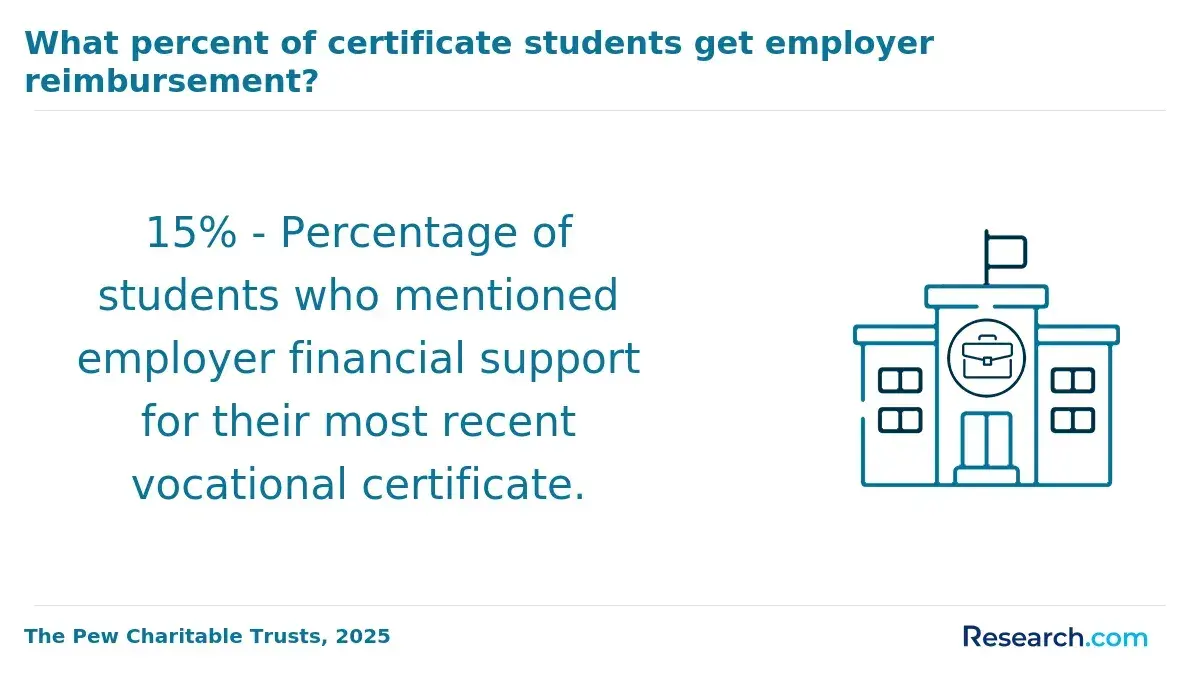
To control cost, obtain a written estimate for every required expense, compare employer tuition assistance, and ask the financial aid office whether the specific credit-bearing program is eligible for aid. Do not assume a short course qualifies simply because the college itself participates in federal aid programs.
What curriculum and coursework do typical online stackable credential pathways include?
A credible stack begins with foundational knowledge, adds technical practice, and ends with a credential that has a defined next step. Typical online coursework includes communication, digital literacy, ethics, career-specific terminology, documentation, software tools, and applied projects. Degree-connected pathways may also include general education courses.
The curriculum should show progression rather than a collection of unrelated classes. The following elements indicate that a pathway is designed to build capability and not merely issue multiple completion badges.
- Clearly stated competencies tied to assessments, projects, demonstrations, or supervised practice.
- Courses that identify prerequisites and show which later certificate or degree requirements they satisfy.
- Current tools and scenarios relevant to the field, including responsible use of AI where employers use AI-assisted workflows.
- Faculty feedback, tutoring, accessibility support, and assessment integrity measures for online learners.
- Required experiential components, including labs, practicums, internships, or apprenticeships when the field demands them.
AI-related coursework can be valuable in administration, marketing, design, technology, and analytics, but it should complement - not replace - foundational judgment, privacy awareness, communication, and field-specific skills. Ask how the school updates curriculum and whether students learn to validate AI-generated work.
What careers and job roles can online stackable credentials help you qualify for?
Stackable credentials can help learners enter support roles, demonstrate readiness for a new specialty, or build toward a degree. The most realistic outcomes depend on the job's legal requirements, employer preferences, work experience expectations, and the credential's content. A short certificate is strongest when it maps directly to a defined entry-level task set or advances a learner already working in the field.
Examples below distinguish roles that may be accessible with focused training from occupations that often need additional education, licensing, or experience.
| Pathway area | Potential role examples | Common additional requirement |
| Business and technology | Help desk specialist, project coordinator, data support assistant | Portfolio, vendor certification, or experience may be preferred |
| Healthcare administration | Medical records specialist, billing support specialist | Employer-specific certification preference may apply |
| Skilled trades support | Dispatcher, estimator assistant, maintenance trainee | Apprenticeship or supervised field experience for trade work |
| Legal and public service support | Legal assistant, records technician, victim-services support worker | Employer standards and background requirements vary |
| Creative work | Junior content designer, production assistant, freelance designer | Portfolio and software proficiency are central |
For learners whose goal is broader professional mobility, compare a stackable pathway with degrees that pay well. A bachelor's degree may be the more direct route when target postings routinely require one, while a stack can be a lower-risk way to test a field first.
What salary ranges and advancement opportunities are common with stackable credentials?
Salary information should be used as occupational context, not as a promise tied to completing a certificate. Pay varies by location, employer, shift, experience, degree level, licensure, union status, and specialty. Stackable learning can support advancement when it adds a recognized skill or meets a documented degree requirement, but it cannot substitute for requirements that employers or regulators set.
The Bureau of Labor Statistics reported these national median annual wages for 2024. They show the earnings context of selected occupations, not outcomes for every online credential holder.
| Occupation | 2024 national median annual wage | Credential caution |
| Electricians | $62,350 | Typically requires apprenticeship and state licensing requirements |
| Paralegals and legal assistants | $61,010 | Employers may prefer degree-level education or experience |
| Graphic designers | $61,300 | Portfolio quality and degree expectations vary by employer |
| Medical assistants | $44,200 | Training, certification preferences, and scope rules vary |
Advancement is more likely when each credential removes a specific barrier: qualifying for a higher-level course, documenting a software skill, meeting a certification prerequisite, or completing an employer-recognized specialization. Learners considering graduate study after building experience can also evaluate easiest masters degrees, while still checking whether the curriculum supports their actual career objective.
How is the job outlook and employer demand for stackable, competency-based credentials?
Employer demand is strongest when a stackable pathway aligns with an occupation that is growing, has recurring replacement needs, or requires quickly updated technical knowledge. The Bureau of Labor Statistics projects medical assistants to grow 12% and electricians to grow 9% from 2024 to 2034; these figures indicate labor-market demand for the occupations, not guaranteed hiring for credential completers.
Credential-based hiring is also expanding the value of demonstrable skills, portfolios, assessments, and industry certifications. At the same time, employers may screen for experience, licenses, degrees, or security clearances. Treat a stackable credential as evidence of learning within a larger employment strategy that includes projects, supervised practice, networking, and targeted applications.
A sound decision begins with five checks: identify several local or remote job postings, list their recurring requirements, map each requirement to the program curriculum, confirm what remains after graduation, and calculate whether the total cost and study time fit the likely benefit. Avoid programs that advertise "job-ready" outcomes without naming the roles, requirements, or evidence behind that claim.
Other Things You Should Know About
They can be worthwhile when each credential has standalone value and clearly applies toward a larger goal. They are less compelling when credits will not transfer, the provider is not recognized by employers, or the target occupation requires a degree, license, or apprenticeship the program does not provide.
Potentially. Learners who already know part of the material may progress quickly after passing assessments. Completion still depends on academic-term rules, assessment availability, required projects, and any fixed clinical or hands-on components.
Only if the receiving institution accepts them. Credit-bearing courses are generally more likely to be evaluated for transfer than noncredit courses, but acceptance, equivalencies, and the number of usable credits vary by school and program.
No. A certificate is usually awarded by an education provider after completing study. A professional certification is awarded by a certifying organization after meeting its standards, which may include an exam, work experience, continuing education, or renewal requirements.
References
- How Attaining Industry-Recognized Credentials in High School Shapes Education and Employment Outcomes https://fordhaminstitute.org/national/research/industry-recognized-credentials
- The Best Guide to Stackable Micro Credentials for Career Advancement https://sertifier.com/blog/stackable-micro-credentials-building-career-success-through-flexible-learning-pathways/
- Stackable Certificates & Credentials - Complete College America https://completecollege.org/our-approach/structure/stackable-certificates-credentials/
- Stackable Credentials: Living Links Between Learning and Work https://www.cael.org/resouces/pathways-blog/stackable-credentials-living-links-between-learning-and-work
- What Are Stackable Credentials and Why Do They Matter? https://www.pltw.org/blog/what-are-stackable-credentials
- USHE initiative helps students earn meaningful credentials on their way to a degree - Utah System of Higher Education https://ushe.edu/stackable-credentials-help-students-earn-credentials-on-their-way-to-a-degree/
- Rethinking Credentialing in Higher Education for the 21st Century https://moderncampus.com/blog/rethinking-credentialing-for-the-21st-century.html
- Building Stackable Credentials That Truly Deliver Value and Economic Mobility: 7 Steps for Success https://mcacs.talentfirst.net/building-stackable-credentials-that-truly-deliver-value/
- Six Types of Credentials Non-Traditional Students Want https://laurelridgeworkforce.com/six-types-of-credentials-non-traditional-students-want/
- Top 12 Competency-Based Training Tools in 2023 | SC Training (formerly EdApp) Microlearning https://training.safetyculture.com/blog/10-competency-based-training-tools/