2027 Best Online Certificate Programs With No Application Fee

Co-Founder and Chief Data Scientist
Application fees can make it expensive to explore several online certificate options before you even enroll. No-fee programs remove that upfront barrier, but they do not necessarily mean tuition-free, accredited, credit-bearing, or license-qualifying. The U.S. Bureau of Labor Statistics projects healthcare support occupations to grow faster than average from 2024 to 2034, making careful credential selection especially important. This guide helps career changers, working adults, and recent graduates compare no-application-fee online certificates by total cost, recognition, flexibility, and realistic career value.
Key Things You Should Know
- A no application fee means the school does not charge to submit an application; it does not eliminate tuition, course materials, exam fees, background checks, equipment, or graduation charges.
- Choose a credit-bearing college certificate when you may later pursue an associate or bachelor's degree; choose a noncredit professional certificate when you need focused job skills and the provider has employer recognition.
- For labor-market context, BLS projects employment of medical assistants to grow 15% from 2024 to 2034, but a certificate alone may not meet every state's licensing, employer, or certification requirements.
Top 10 Best Online Certificate Programs With No Application Fee
Popular Trade School Programs
Online trade certificates commonly cover construction management, HVAC theory, electrical fundamentals, welding safety, automotive service, industrial maintenance, and logistics. They suit learners who need technical foundations before hands-on labs, apprenticeships, or employer training. Fully online study is usually appropriate for estimating, safety, blueprint reading, and project coordination; it rarely replaces supervised practical training required for welding, electrical work, or HVAC refrigerant handling. Confirm whether labs are local, whether tools are required, and whether the curriculum prepares you for a separate industry exam. A credit-bearing certificate may stack into an associate degree; a short career-training certificate may not.
Healthcare Programs
No-fee online applications are common for medical billing and coding, health information, pharmacy technician theory, medical assisting coursework, and healthcare administration certificates. These programs can be useful for administrative or support pathways, but clinical occupations often require in-person externships, background checks, immunizations, CPR training, and state-specific approval. Medical coding certificates typically prepare learners for an optional or employer-preferred certification exam rather than award professional certification automatically. Before paying tuition, ask whether the program is institutionally accredited, whether it includes an externship, and whether its curriculum meets the eligibility rules of the certification exam you intend to take.
Criminal Justice / Law Programs
Online certificates in criminal justice, paralegal studies, legal office administration, cybersecurity law, and homeland security can build foundational knowledge for support roles. A paralegal certificate may be useful for people who already hold a degree or have legal-office experience, while an associate degree can offer broader general education and transfer options. Neither an online criminal justice certificate nor a paralegal certificate authorizes someone to practice law, become a police officer, or bypass agency hiring standards. Compare internship access, local employer relationships, background-check requirements, and whether the program follows standards recognized by the legal-services field.
Arts & Design Programs
Online certificates in graphic design, UX design, digital marketing design, photography, animation, and web content production are usually portfolio-focused. They can work well for learners who need structured projects, software practice, and feedback without pursuing a full degree. The key outcome is not merely the completion certificate: employers often evaluate a portfolio, technical workflow, communication skills, and relevant experience. Check whether software subscriptions, a capable computer, portfolio hosting, or live critiques add to the total cost. A certificate can be a practical entry point, but students seeking deep studio training may prefer a degree or hybrid program.
What types of online certificate programs can you apply to with no fee?
You can apply without an application fee to several kinds of online learning, but the credential and admissions process vary substantially. Community colleges and universities may waive fees for online academic certificates, while industry providers often use direct enrollment rather than a formal application.
| Program type | Typical provider | Best use | Important limitation |
| Credit-bearing undergraduate certificate | Community college or university | Entry-level skills and possible degree progression | Transferability depends on receiving institution policy |
| Graduate certificate | University | Focused advanced study for degree holders | Often requires a bachelor's degree and may not lead to licensure |
| Professional certificate | University extension or training provider | Job-specific skills and portfolio development | Usually noncredit and not automatically transferable |
| Career-training certificate | College, workforce provider, or private school | Preparation for a defined entry-level pathway | Quality and employer recognition differ widely |
People comparing short credentials with degree pathways can also review easiest degree to get online options when a certificate would be too narrow for their long-term goal.
How do you verify accreditation and quality for no-fee online certificate programs?
"No application fee" is a pricing policy, not a quality signal. For academic certificates, verify the college's institutional accreditation through the U.S. Department of Education or Council for Higher Education Accreditation directories, then confirm that the specific program is authorized to serve students in your state. For career training, evaluate employer recognition, instructor qualifications, curriculum transparency, student support, and whether the provider clearly identifies its credential.
Use this review sequence before enrolling:
- Confirm the legal name of the school and its institutional accreditation, when accreditation is relevant.
- Read the program page for credit hours, learning outcomes, required labs, practicum details, and completion policies.
- Check whether a specialized accreditor, state board, or certifying organization has separate program requirements.
- Request the complete cost sheet, including technology, books, exam preparation, clinical, and proctoring fees.
- Ask whether the certificate is credit-bearing, stackable, and accepted by the employer or school you plan to use next.
A major red flag is a provider that promises employment, licensure, or industry certification without explaining the independent requirements. Another is a vague claim of "accreditation" that does not name the accreditor.
What admission requirements and documents are needed for no-fee certificate programs?
Requirements depend on the credential level. Many noncredit online certificates use open enrollment and ask only for identity, payment, and basic technology access. College certificates may require an online application, official or unofficial transcripts, residency information, placement steps, and proof of prerequisite coursework. Graduate certificates commonly require a bachelor's degree and may request transcripts, a résumé, and a statement of purpose.
Prepare the following materials early so a waived fee does not become a rushed application:
- Government-issued identification and current contact information
- High school, college, or degree transcripts when the program requires them
- Documentation of prerequisites, such as prior coursework, certifications, or work experience
- Immunization, background-check, drug-screening, or CPR records for applicable clinical programs
- Reliable computer, internet access, and any software or equipment specified by the provider
Do not assume a waived fee means automatic admission. Competitive healthcare, limited-enrollment, and graduate programs may still have deadlines, GPA thresholds, or prerequisite requirements.
How do online certificate programs with no application fee compare to campus options?
Online and campus certificates can carry the same institutional credential when they share curriculum and faculty, but their learning experience differs. The better option depends on whether your field requires equipment, clinical practice, networking, or real-time coaching.
| Decision factor | Online certificate | Campus or hybrid certificate |
| Scheduling | Often flexible; asynchronous courses may suit working adults | Fixed meeting times and commute requirements |
| Hands-on learning | May require local placements or limited residencies | Direct access to labs, equipment, and supervised practice |
| Networking | Requires intentional virtual participation and outreach | More informal contact with instructors and local employers |
| Best fit | Administrative, technical, business, and portfolio-based skills | Clinical, skilled-trade, and equipment-intensive learning |
Online study is not automatically easier; self-paced formats require consistent time management. If you ultimately need broader academic preparation, compare certificate plans against what is the easiest masters degree to get online only after confirming that a graduate credential matches your experience and career target.
What is the typical length, workload, and schedule of these online certificate programs?
Short online certificates may take a few weeks, while college certificates often take one or more academic terms. Completion time depends on credit load, prerequisites, course sequencing, clinical placements, and whether the program is cohort-based or self-paced. A 12-credit academic certificate, for example, may be manageable over one term full time but take longer for a part-time learner.
Before committing, ask the program to clarify these workload details:
- Whether courses are asynchronous, live online, or hybrid
- Expected weekly reading, assignment, lab, and discussion time
- Whether courses must be taken in a fixed sequence
- Dates and locations for any practicum, exam, residency, or proctored assessment
- Maximum time allowed to complete self-paced coursework
Accelerated formats work best when you already have prerequisite knowledge and protected study time. They are a poor fit when the field requires extensive skills practice or when work and caregiving commitments leave little room for weekly deadlines.
How much do no-fee online certificate programs cost overall, and are they worth it?
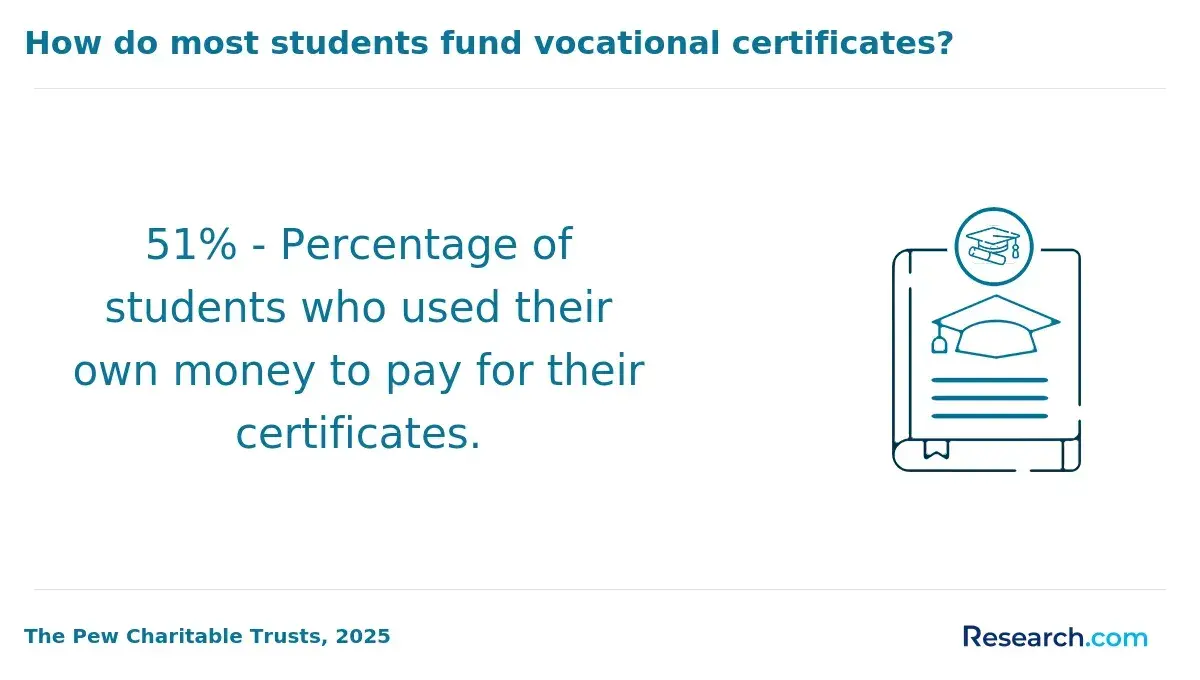
A waived application fee reduces the cost of applying, not necessarily the cost of earning the credential. Total expense can include per-credit tuition or subscription charges, books, software, lab kits, equipment, proctoring, background checks, exam fees, and travel for required in-person experiences. Credit-bearing programs may have federal aid eligibility if the institution and program qualify; many short noncredit programs do not, although employer tuition assistance or workforce funding may help.
This cost comparison helps distinguish an inexpensive application from an affordable program overall.
| Cost question | Why it affects value |
| What is tuition through completion? | Course-by-course pricing can obscure the full program total. |
| What required costs are outside tuition? | Licensing, software, clinical, and exam costs can materially change the budget. |
| Is the credential credit-bearing or stackable? | Future transfer or degree credit can improve long-term value. |
| Does it meet a verified job requirement? | A low-cost credential has limited value if target employers do not recognize it. |
A certificate is often worth it when it closes a specific skills gap at a manageable total cost and is recognized in your target market. For advanced learners weighing a larger investment, explore graduate degrees that are worth it before treating a short credential as a substitute for a degree employers require.
What careers and entry-level roles can these online certificates prepare you for?
Online certificates can prepare learners for entry-level or support roles when the curriculum aligns with actual job postings and, where relevant, required supervised training. They are most useful as a first step, a skills update, or a bridge to a degree - not as a universal replacement for experience, licensing, or a professional certification.
The roles below illustrate common pathways and the limits of certificate preparation.
| Certificate focus | Potential entry-level roles | Common next step |
| Medical billing and coding | Billing specialist, coding support assistant | Experience and an industry certification exam, if desired |
| IT support or cybersecurity fundamentals | Help desk technician, technical support specialist | Portfolio, vendor certification, or associate degree |
| Bookkeeping | Bookkeeping clerk, accounts payable assistant | Software proficiency and supervised work experience |
| Paralegal studies | Legal assistant, legal administrative assistant | Internship, employer training, or further paralegal education |
| Digital design | Production artist, junior content designer | Portfolio refinement and freelance or internship work |
AI tools are changing task design in administrative, technical, and creative work. Favor programs that teach verification, documentation, ethical use of tools, communication, and portfolio evidence instead of training only one software workflow.
What salary ranges and advancement opportunities are common after earning these certificates?
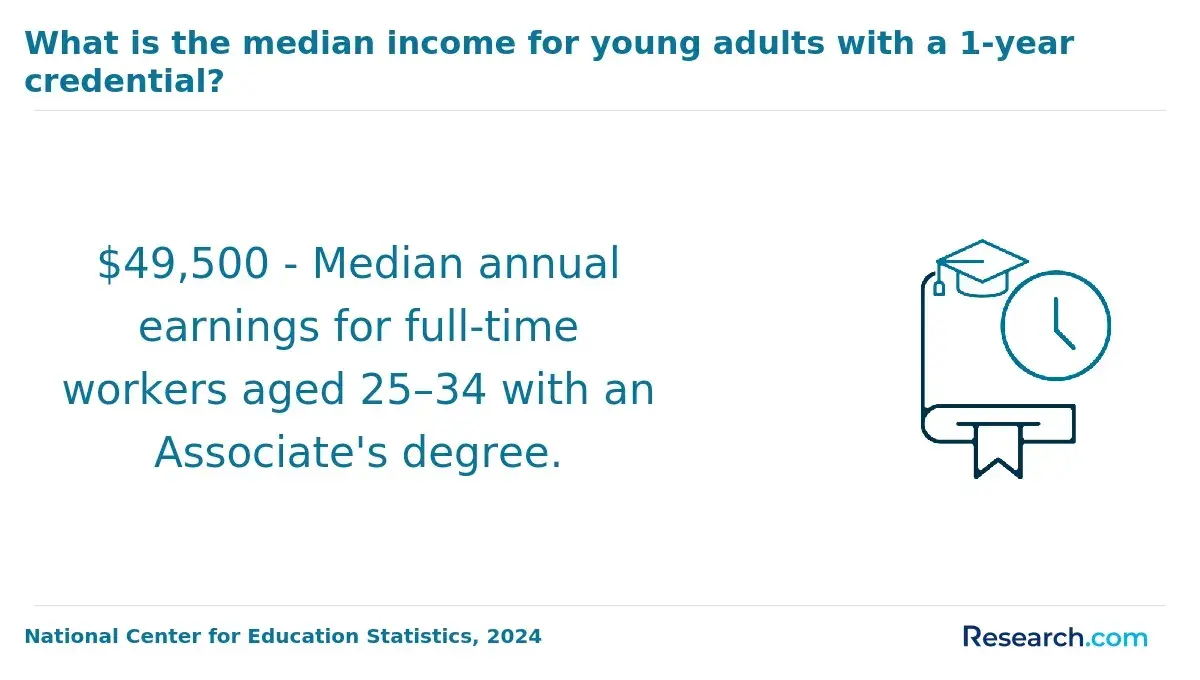
Salary information should be used as occupational context, not as a promise that a certificate graduate will earn a particular amount. Pay varies by location, employer, work experience, shift, industry, licensing status, and whether the role typically requires a degree. BLS reported a 2024 median annual wage of $44,200 for medical assistants; that figure describes the occupation and does not establish earnings for every certificate holder.
Advancement usually comes from combining a certificate with documented performance, experience, and, where applicable, a recognized certification or degree. A short certificate may help someone enter a support role, while an associate or bachelor's degree can be more appropriate for advancement into management, regulated practice, or technical specialization. Learners seeking the highest academic credential should understand that online doctoral programs without dissertation options are distinct from certificates and generally require substantial prior education.
Do these certificates meet licensing or professional certification requirements in key fields?
Some certificates prepare students for a separate certification or licensing process; completion itself is not the same as receiving a license or professional certification. This distinction is essential in healthcare, skilled trades, legal services, education, and other regulated fields. A school-issued certificate shows that you completed its curriculum. A professional certification is generally issued by an independent certifying body after eligibility requirements and often an examination. A license is granted by a government authority and is governed by state law.
Before enrolling in a regulated pathway, verify all of the following directly with the relevant board, employer, or certifying organization:
- Whether online coursework is accepted in your state
- Whether the program needs specialized accreditation or state approval
- Whether clinical hours, supervised practice, or an apprenticeship are required
- Whether graduation makes you eligible for an exam or whether additional experience is needed
- Whether a criminal background, age, education, or residency rule applies
A program that avoids answering these questions should not be treated as a reliable route to a regulated occupation.
Other Things You Should Know About
No. The waived fee usually applies only to submitting the application. Review tuition, required course materials, technology, exam, clinical, and graduation costs before enrolling.
Possibly. Eligibility depends on the institution, program length, credit status, and federal aid rules. Ask the financial aid office whether the specific certificate qualifies; noncredit programs often use different funding options.
Only if the courses are credit-bearing and the receiving school accepts them. Get transfer guidance in writing before assuming that a certificate will count toward an associate or bachelor's degree.
Verify the provider's identity, applicable institutional accreditation, curriculum, total cost, instructor information, refund policy, and any licensing or certification claims. Also check whether local employers recognize the credential.
References
- Online Certificates for Job-Ready Skills | Grow with Google https://grow.google/certificates
- Best Online Courses to Take in 2026: Skills, Jobs & Certificates https://www.infotech.edu.sg/blog/best-online-courses-for-job-ready-skills/
- Law Schools With No Application Fee https://www.enjuris.com/students/law-schools-without-application-fees/
- Online Degrees With No Application Fee - Start Faster, Spend Less https://www.collegetransitions.com/blog/online-degrees-no-application-fee/
- Course Completion Rate Benchmarks: Improve Yours (2026) | Ruzuku https://www.ruzuku.com/learn/articles/course-completion-rates
- Best free certificate courses | Alison https://alison.com/certificate-courses
- 16 Colleges & Universities With No Application Fee | Outlier https://articles.outlier.org/colleges-with-no-application-fee
- Certificate Programs | Seattle Colleges https://www.seattlecolleges.edu/programs/certificate-programs
- The Top 5 Certificate Programs for Jobs With Growth Potential | CourseStorm https://www.coursestorm.com/blog/top-certificate-programs-for-jobs
- Best online certificates for career growth | edX https://www.edx.org/certificates