2027 Best Online Short Certificate Programs That Pay Well

Co-Founder and Chief Data Scientist
A short online certificate can be a faster route into a new field, but the wrong program may not meet employer, certification, or state licensing requirements. The U.S. Bureau of Labor Statistics (BLS) projects healthcare support occupations to grow 15% through 2033, creating strong interest in job-focused training.
This guide helps career changers, working adults, and recent graduates compare online certificates by career fit, cost, duration, recognition, and realistic earning potential before enrolling.
Key Things You Should Know
- Short online certificates can take weeks to about one year, but a certificate of completion is not the same as an industry certification or state license.
- High-demand paths include healthcare support, skilled trades, legal support, IT, and business operations; BLS projects healthcare support employment to grow 15% through 2033.
- Compare total cost, required hands-on training, employer recognition, certification-exam preparation, and state eligibility before choosing the fastest program.
Top 10 Best Online Short Certificate Programs That Pay Well
Popular Trade School Programs
Online trade certificates work best for theory-heavy instruction paired with local labs, clinical sites, apprenticeships, or employer training. Common options include HVAC/R fundamentals, electrical technology, welding theory, construction management, automotive service, and industrial maintenance.
HVAC technicians had a 2024 median annual wage of $59,810, according to BLS, though a short certificate alone does not guarantee that role or pay. Choose a program that clearly states its hands-on requirement, safety training, EPA Section 608 exam preparation for refrigerant work, and whether credits can apply toward an associate degree.
Healthcare Programs
Online healthcare certificates commonly cover medical billing and coding, medical assisting coursework, pharmacy technician preparation, dental assisting theory, and health information support. Programs involving patient care usually require in-person clinical practice, background checks, immunizations, and sometimes state approval.
Medical assistants had a 2024 median annual wage of $44,200, but employers may prefer candidates with national certification and supervised clinical experience. Verify whether the school prepares students for an exam from a recognized certifying body, whether clinical placement is arranged, and whether completion meets rules in the state where you plan to work.
Criminal Justice / Law Programs
Legal studies, paralegal, legal secretary, court reporting, cybersecurity, and criminal justice certificates can build specialized knowledge for support roles. A paralegal certificate is educational training; it does not authorize someone to practice law.
BLS reported a 2024 median annual wage of $61,010 for paralegals and legal assistants, although employers may seek an associate or bachelor's degree plus relevant experience. Look for legal research, writing, ethics, e-discovery, and practical software coursework. For court reporting or private security work, confirm state-specific licensing or examination rules before relying on an online program.
Arts & Design Programs
Short online certificates in graphic design, UX design, digital marketing design, web production, photography, and animation can help learners create a portfolio quickly. They are usually nonlicensure credentials, so employer recognition and demonstrable work matter more than institutional credit.
Graphic designers had a 2024 median annual wage of $61,300, according to BLS; earnings vary substantially by location, specialty, experience, and freelance demand. Select programs with portfolio reviews, current design software, accessibility basics, AI-assisted workflow guidance, and project briefs that resemble real client work rather than only lectures.
What are short online certificate programs and who are they best suited for?
A short online certificate is a focused educational credential awarded after completing a defined course sequence. It may be credit-bearing through a college, noncredit through a school or employer-training provider, or a professional certificate issued by a university or platform. It differs from a certification, which is generally awarded by an independent professional body after a qualifying exam or other standards are met.
These programs are best for people who need targeted skills, want to test a field before pursuing a degree, or need a career-relevant credential while working. A credit-bearing certificate may be a better choice when future degree transfer matters; learners exploring an easiest online associate's degree may prefer certificates that clearly apply toward that longer program.
The comparison below shows when a short certificate is a sensible investment and when another route may fit better.
| Path | Best fit | Main limitation |
| College certificate | Students wanting academic credit or a stackable pathway | May take longer and cost more |
| Professional certificate | Career changers building job-specific skills | Transfer credit is often unavailable |
| Industry certification | Workers needing employer-recognized validation | May require an exam, experience, or renewal |
| Associate degree | Roles requiring broader general and technical education | Usually requires more time and tuition |
How long do online short certificate programs take and what do they cost?
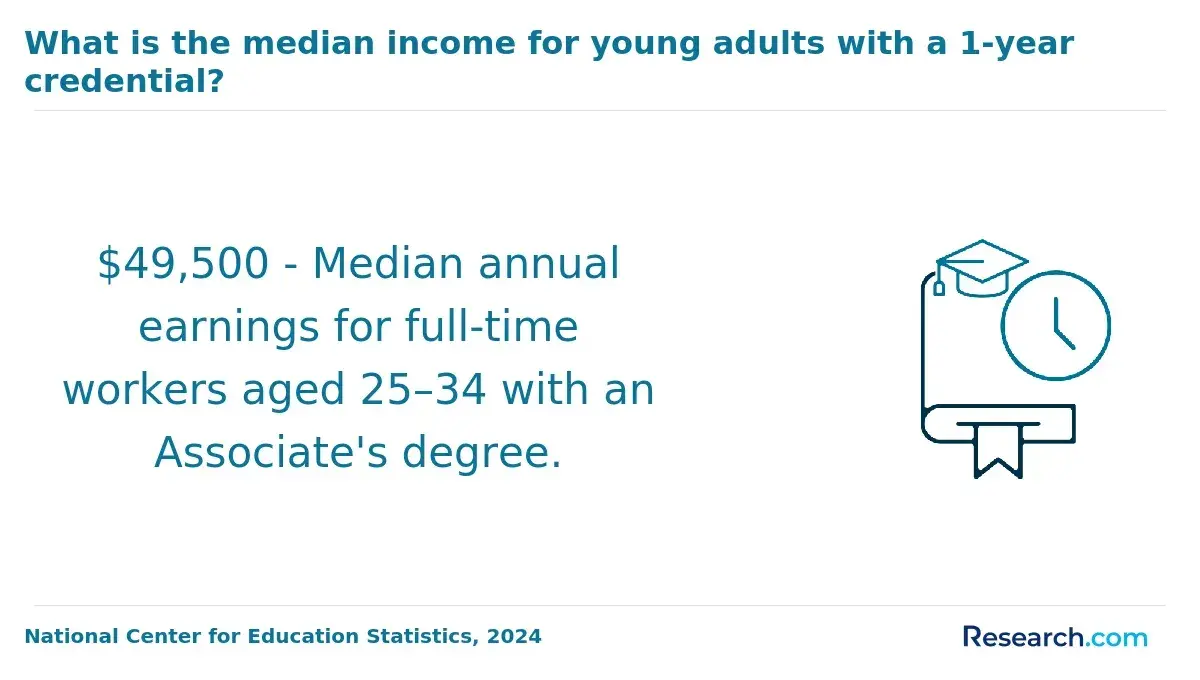
Most short online certificate programs run from several weeks to 12 months. Self-paced noncredit programs can be quicker, while credit-bearing college certificates often follow academic terms and may include required labs, clinicals, or externships. "Online" does not always mean fully remote: healthcare and trade programs frequently require supervised local practice.
Cost depends on provider type, residency, credit load, materials, exams, tools, uniforms, background checks, and clinical or lab fees. For learners who need a rapid enrollment timeline, online colleges that start immediately may offer more frequent start dates, but availability and program quality still need review.
Use this cost lens before comparing advertised tuition figures.
| Cost category | What to verify | Why it matters |
| Tuition | Total price, per-credit rate, and residency rules | Advertised monthly payments may not show the full price |
| Required materials | Books, software, tools, scrubs, and equipment | Career programs can have substantial non-tuition costs |
| Exam and licensing fees | Whether fees are included or separate | Completion may only prepare you for a later exam |
| Clinical or lab travel | Site location, transportation, and schedule | Required in-person training affects total affordability |
How can you compare online versus campus-based short certificate programs effectively?
Choose online delivery when the subject can be learned effectively through digital instruction, you can manage independent deadlines, and the provider offers accessible faculty and career support. Choose campus, hybrid, or employer-based training when equipment practice, clinical supervision, live performance feedback, or state rules are central to the occupation.
A direct comparison should focus on outcomes and required experiences, not on convenience alone.
| Decision factor | Online advantage | Campus or hybrid advantage |
| Scheduling | Often supports asynchronous study around work | Provides a fixed routine and live accountability |
| Hands-on learning | Can cover theory and simulations | Supports equipment, labs, clinicals, and demonstrations |
| Networking | May reach broader professional communities | Can provide local employer and instructor contacts |
| Licensure preparation | Useful if state-approved requirements are met | Often easier to coordinate required practical hours |
Ask each provider for the weekly workload, live-session expectations, instructor access, clinical-placement policy, withdrawal policy, and outcomes for students with a similar background. Avoid programs that describe themselves as "career ready" but cannot explain what job tasks, exams, or employer requirements their curriculum addresses.
Which high-paying careers can you pursue with short online certificates?
High-paying potential is most realistic when the certificate connects directly to a regulated pathway, a recognized industry exam, an employer's skills shortage, or stackable education. The certificate may help a candidate qualify for entry-level work, but experience, geography, licensing, and employer requirements strongly affect advancement.
These examples distinguish occupations from the credential that may help prepare a learner for them.
| Career direction | Useful short training | Important qualification note |
| HVAC technician | HVAC/R certificate and EPA exam preparation | Employers commonly value hands-on training and refrigerant credentials |
| Medical coder | Medical coding certificate | Certification may improve competitiveness; requirements vary by employer |
| Paralegal or legal assistant | Paralegal studies certificate | Some employers prefer a degree or prior legal experience |
| IT support specialist | IT support certificate plus vendor certification preparation | Portfolios and certifications can matter as much as coursework |
| Commercial driver | CDL training program | Requires a commercial driver's license and medical eligibility |
Veterans and service members should also compare tuition policies, credit for military learning, and flexible schedules; military-friendly online colleges can be a useful starting point for finding institutions designed to support those needs.
What salary ranges and earning potential do these certificates typically offer?
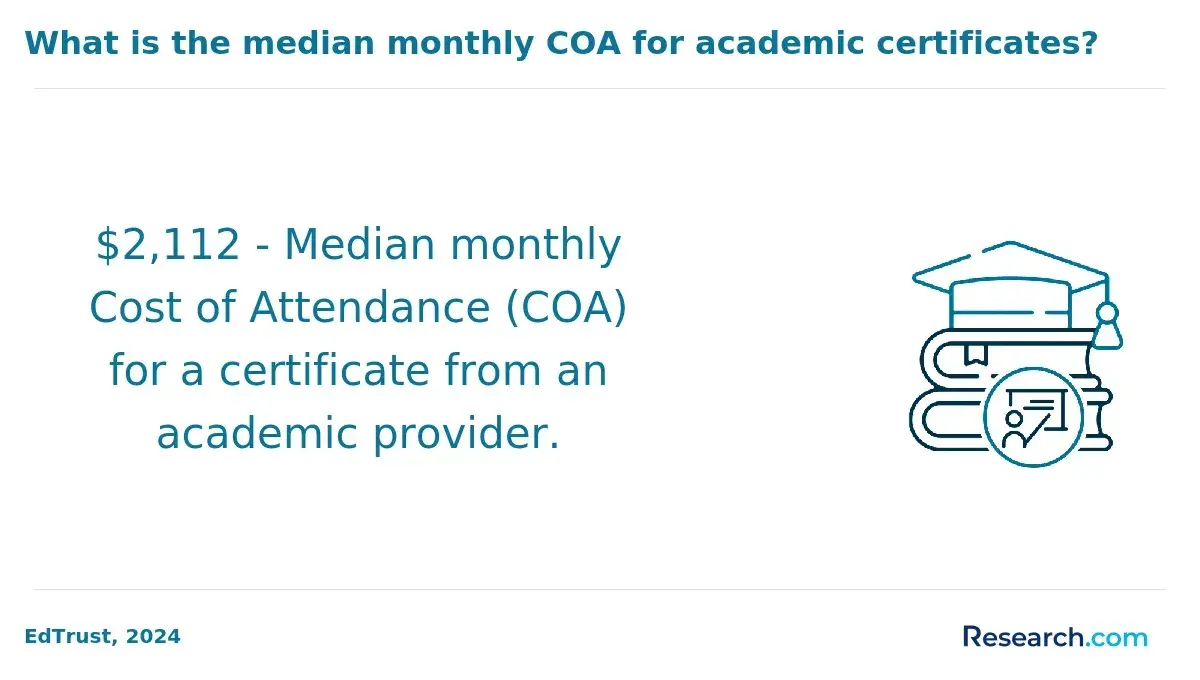
Salary data describes an occupation, not a guaranteed return from a particular certificate. BLS reported 2024 median annual wages of $59,810 for heating, air conditioning, and refrigeration mechanics and installers; $61,010 for paralegals and legal assistants; and $44,200 for medical assistants. These figures show that some certificate-adjacent occupations can provide solid earnings, but local demand, prior experience, shifts worked, union coverage, and education level influence actual pay.
Use the following framework to judge earning potential without treating a median wage as a promise.
| Question | How to use the answer |
| Is a certificate sufficient for entry? | Check current local job postings and state rules |
| Is an exam or license required? | Add preparation time and fees to the investment |
| What is the entry-level pathway? | Expect wages to differ from an occupation-wide median |
| Can the credential stack? | Consider later certificates, an associate degree, or a bachelor's degree |
For careers that ultimately require advanced academic preparation rather than a short credential, compare the longer route separately, including options described in 1-year PhD programs online free, while verifying whether "free" refers to tuition, funding, or another cost arrangement.
How do accreditation and state licensing affect the value of online certificates?
Accreditation and licensing are not universal requirements for short certificates, but they can determine whether the credential has practical value. Institutional accreditation matters most for credit-bearing college programs, transferability, and some financial-aid eligibility. Programmatic approval may matter for specific healthcare, technical, or public-safety training.
Licensing is separate from school accreditation. A program can be delivered online and still fail to meet a state board's clinical-hour, lab, supervised-practice, or curriculum rules. Before paying, confirm requirements directly with the relevant state licensing board and ask the school whether graduates in your state have been eligible for the required examination.
Red flags include vague claims of "national accreditation," no named accreditor, promises of licensure without state disclosures, and refusal to provide a written curriculum or refund policy.
What admission requirements and prerequisites do most short online certificates have?
Admission requirements depend on the credential type. Noncredit professional certificates may require only an account, payment, and basic computer access. College certificates can require an application, high school completion or equivalent, placement information, and prerequisites for advanced coursework. Healthcare and regulated technical programs may add immunizations, drug screening, criminal-background checks, CPR training, or proof of age.
Before applying, confirm these practical requirements because they can affect both timeline and eligibility.
- Ask whether the program is credit-bearing, noncredit, or designed solely for exam preparation.
- Confirm prerequisite courses, required software, internet specifications, and any proctored assessments.
- Request the policy for clinical placement, externships, background findings, and out-of-state students.
- Check whether prior learning, military training, or transfer credits can reduce coursework when applicable.
A program with open enrollment can be useful for rapid upskilling, but it is not automatically a better choice than a selective program with stronger clinical support or employer relationships.
How can you evaluate curriculum quality and coursework in online certificate programs?
A quality curriculum names the skills learners will practice, the tools they will use, and the assessments that demonstrate competence. It should be current enough to address changing workplace technology, including AI-enabled software where relevant, while still teaching judgment, ethics, privacy, safety, and foundational skills.
Use these questions to compare curricula before committing funds or time.
- Match every course outcome to a real job task, certification exam domain, or licensing requirement.
- Review whether instructors have current field experience and accessible office hours or feedback channels.
- Check for applied assignments such as coding cases, design portfolios, troubleshooting exercises, legal documents, or simulations.
- Ask how often course content, software, and industry standards are updated.
- Confirm whether career services provide resume feedback, interview practice, employer connections, or only general resources.
A weak program often relies on recorded content alone, provides no meaningful feedback, and makes broad employment claims without explaining how students demonstrate skills to employers.
What is the job outlook and industry demand for roles requiring short certificates?
Demand is strongest where employers need practical, verifiable skills and where replacement needs combine with growth. BLS projects healthcare support occupations to grow 15% through 2033, faster than the average for all occupations. That does not mean every healthcare certificate leads to immediate employment; it signals a broad labor-market need that learners should narrow by occupation, state rules, and local openings.
Automation and AI are also changing certificate value. Routine tasks in coding, design, administrative work, and IT can be augmented by software, so programs that teach verification, client communication, security, compliance, troubleshooting, and portfolio-quality work may offer more durable preparation than tool-only training.
Check current employer postings in your target area before enrolling. Look for repeated requirements, such as a named certification, clinical experience, a driver's license, software fluency, or shift availability, then choose training that closes those specific gaps.
Other Things You Should Know About
In 2027, high-paying short certificate programs often require skills like data analysis, cybersecurity, digital marketing, or programming. Programs may also require knowledge of software such as Python for coding or Tableau for data visualization, depending on the field of study.
The fastest appropriate option depends on the job and local requirements. IT support, medical billing, bookkeeping, HVAC fundamentals, and commercial driving training can be relatively short, but the best choice is the one that matches local employer demand and any required credentialing steps.
Possibly, especially in entry-level support roles, but a certificate alone may not be enough. Improve your chances with projects, internships, externships, clinical experience, a portfolio, volunteer work, or an industry certification where employers value one.
Many employers do when the provider is credible and the certificate demonstrates relevant skills. Acceptance is strongest when the program includes recognized exam preparation, supervised practical work, current tools, and clear evidence of what you learned.
References
- The Top 5 Certificate Programs for Jobs With Growth Potential | CourseStorm https://www.coursestorm.com/blog/top-certificate-programs-for-jobs
- 10 Quick Certifications That Lead To High-Paying Jobs | Become With Lantern https://www.learnhowtobecome.org/career-resource-center/quick-certifications-that-pay-well/
- 9 Best Online Certificate Programs that Lead to Higher Pay https://blackstone.edu/9-best-online-programs-for-higher-pay/
- 15 Certificate Programs That Lead to High-Paying Jobs in Under a Year https://www.moneytalksnews.com/certificate-programs-that-lead-to-high-paying-jobs-in-under-a-year/
- Online Certificate Programs | Certifications Programs https://www.uscareerinstitute.edu/online-certificate-programs
- Associate degrees and certificates are more valuable than you may think https://fordhaminstitute.org/national/commentary/associate-degrees-and-certificates-are-more-valuable-you-may-think
- Online Certificates for Job-Ready Skills | Grow with Google https://grow.google/certificates
- Best online certificates for career growth | edX https://www.edx.org/certificates
- Can Short-Term Certificates Compete with Full Degrees in 2026? https://www.scholaro.com/db/News/can-short-term-certificates-compete-250
- Which Online Certification Programs Are Recognized by Employers in the U.S.? https://fellow.msicertified.com/blog/which-online-certification-programs-are-recognized-by-employers-in-the-u-s